No, ground coffee and instant coffee are not the same thing. It's a common point of confusion, but they are fundamentally different products. Ground coffee is made from roasted coffee beans that have been ground up and still need to be brewed. Instant coffee, on the other hand, is coffee that has already been brewed and then dehydrated into a powder or crystals.
Understanding the Core Differences
So, what really sets these two coffee staples apart? While both start their life as a coffee bean, their paths from farm to cup diverge pretty dramatically, leading to completely different experiences in your mug. One offers a rich, aromatic ritual, while the other gives you unmatched speed and simplicity. Getting this fundamental divide is the key to picking the right coffee for any situation.
Ground coffee is what most people think of when they picture making coffee at home—it's the traditional method and dominates the global coffee market. The process involves grinding roasted beans for a specific brewing method, like a drip machine, French press, or espresso maker, to extract all those complex flavors and aromas.
Instant coffee is all about convenience. It’s made by brewing coffee into a highly concentrated liquid, which is then dehydrated into soluble granules. This is done through either spray-drying or freeze-drying, leaving behind a powder that dissolves instantly in hot water. This distinction isn't just a technicality; it changes everything from taste to how long it takes to make your morning cup.
A Quick Comparison
To really see these differences side-by-side, a quick comparison table helps break things down. Here’s a high-level look at what defines each type of coffee.
Core Differences: Ground Coffee vs. Instant Coffee
| Attribute | Ground Coffee | Instant Coffee |
|---|---|---|
| Form | Finely ground roasted coffee beans | Dehydrated, soluble coffee crystals or powder |
| Preparation | Requires a brewing process (drip, press, etc.) | Dissolves instantly in hot water; no brewing |
| Equipment | Needs a brewer (coffee maker, French press, etc.) | Only requires a mug and hot water |
| Flavor Profile | Complex, aromatic, and nuanced | Generally smoother, milder, and more consistent |
| Shelf Life | Best when fresh; loses flavor after opening | Very long shelf life when sealed properly |
This table makes it clear where each one shines and why you might choose one over the other.
The key takeaway is this: Ground coffee is an ingredient for brewing, while instant coffee is a finished beverage waiting to be rehydrated.
For a long time, instant coffee had a reputation for sacrificing quality for convenience. But that's really starting to change. Premium brands like Cartograph Coffee are completely shifting that perception by using high-quality organic beans and advanced freeze-drying techniques. This new wave of instant coffee means you don't have to choose between a great-tasting cup and a quick prep time, making it an excellent choice for busy mornings, travel, or camping trips.
How Coffee Gets from the Bean to Your Cup
To really get to the heart of what separates ground and instant coffee, you have to look at how they're made. Both start their lives as humble coffee cherries on a plant, but after they're picked, their paths split in completely different directions. This journey is what defines everything about them, from taste and smell to how you make your morning cup.
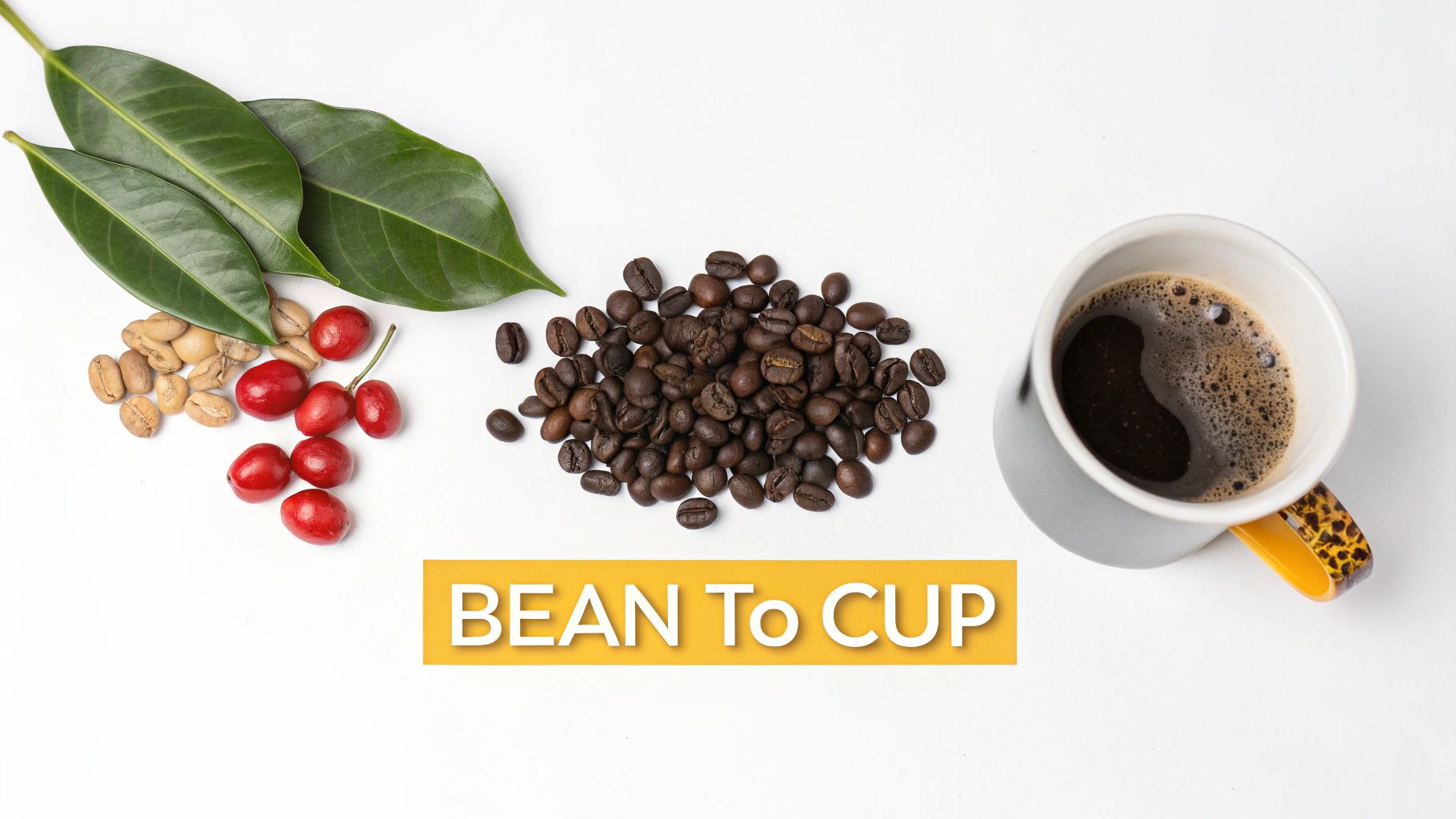
Think of ground coffee's path as a classic, time-honored tradition. It's all about preserving the bean's integrity so you can be the one to unlock its flavor.
The Ground Coffee Journey
For ground coffee, the process is one of careful refinement. Once the cherries are harvested and the green beans inside are processed and dried, they're shipped off to be roasted.
Roasting is where the real magic happens. This is the step that transforms the raw beans, developing the hundreds of aromatic compounds that give coffee its incredible complexity. After roasting, the beans are simply ground down. That's it. This final product is an ingredient, and the size of the grind is everything—it dictates how you'll brew it.
- Coarse Grind: Perfect for a French press. The longer brew time needs bigger particles to extract full-bodied flavor without getting bitter.
- Medium Grind: This is your workhorse for standard drip coffee makers, striking a nice balance for a classic cup.
- Fine Grind: Essential for espresso. The high-pressure, super-fast extraction needs a huge amount of surface area to pull a proper shot.
What you get in the bag is just that: roasted and ground coffee beans. Nothing added, nothing taken away. It's pure, unadulterated coffee, waiting for you to work your magic.
The Instant Coffee Transformation
Instant coffee's journey is a whole different beast. It’s not an ingredient; it's a finished product that’s been taken a few giant steps further. The process starts the same—roasting and grinding—but then it takes a sharp turn. The ground coffee is brewed on a massive industrial scale into a super-concentrated liquid.
From there, the goal is to get rid of all the water, leaving behind just the soluble coffee solids. This happens in one of two ways.
The real takeaway is this: ground coffee is prepared for you to brew, while instant coffee has already been brewed and then dehydrated. This one difference is the root of all the others, from flavor to convenience.
The dehydration method used makes a world of difference in the final quality. If you want to dive deeper into the science, we've got a full breakdown of how instant coffee works.
1. Spray-Drying: This is the old-school, cheaper, and more common method. The coffee concentrate is atomized into a fine mist inside a giant chamber of hot air, which can reach a scorching 480°F (250°C). The water flashes off almost immediately, and the dried coffee powder collects at the bottom. It's fast and efficient, but that intense heat torches many of the delicate, volatile oils that make coffee taste and smell so good. This is what gives most conventional instant coffees that notoriously flat, sometimes bitter profile.
2. Freeze-Drying: This is the modern, flavor-first approach used for premium instant coffee, including ours at Cartograph. Instead of heat, it uses cold. The coffee extract is first frozen solid to around -40°F (-40°C). This frozen block is then broken into granules and placed inside a low-pressure vacuum chamber. As the temperature is gently raised, the frozen water turns directly into vapor, skipping the liquid phase entirely in a process called sublimation.
By completely avoiding high heat, freeze-drying keeps the original, nuanced flavors and aromas of the coffee bean intact. The result is a richer, smoother, and much more aromatic cup that gets you remarkably close to the experience of freshly brewed coffee. It’s a game-changer and the reason why not all instant coffee deserves the bad rap it often gets.
A Detailed Sensory Profile Comparison
So, is ground coffee the same as instant? The moment you taste them side-by-side, you'll have your answer. The sensory experience—the aroma, the flavor, the way it feels in your mouth—is where these two really part ways. This isn't about "good" versus "bad," but about understanding their completely different characters.
When you brew fresh ground coffee, you're kicking off a dynamic and complex sensory event. That initial bloom when hot water hits the grounds releases a wave of volatile aromatic oils, filling the room with everything from floral and fruity notes to deep, chocolatey scents. This incredible aroma is a direct result of keeping the coffee bean’s essence locked away until the very moment of brewing.
The Nuances of Flavor and Mouthfeel
In the cup, this complexity translates into a flavor profile with real depth and layers. You can often pick out specific tasting notes that tell a story about the bean's origin, how it was processed, and its roast level. A quality light roast might surprise you with a vibrant, almost tea-like acidity and hints of citrus or berry, while a dark roast will deliver those familiar, comforting notes of dark chocolate and caramel.
The mouthfeel, or body, is another huge part of the experience. It can be light and silky or heavy and almost syrupy, depending entirely on how you brew it. This texture adds a richness that coats your palate and makes the whole experience more satisfying.
The biggest sensory difference really comes down to vibrancy. Freshly brewed ground coffee has a "live" taste, packed with bright acidity and delicate aromatic oils that disappear quickly. It's an experience defined by its freshness and complexity.
By contrast, traditional instant coffee has always been known for a much flatter, one-dimensional profile. The high-heat spray-drying method used for most mass-market brands simply incinerates many of those delicate oils. The result is often a straightforward, roasty, and sometimes slightly bitter taste that just can't compete with the layered notes of a fresh brew.
The Rise of Premium Instant Coffee
But the instant coffee world is changing. A lot. Premium, organic brands are closing the quality gap by starting with much better beans and using advanced freeze-drying techniques. This process gently removes water at low temperatures, preserving the coffee’s original flavor compounds instead of blasting them with heat.
A high-quality instant from a brand like Cartograph Coffee delivers a remarkably different experience. While it won't perfectly replicate the absolute peak vibrancy of a meticulously prepared pour-over, it offers a consistently smooth, balanced, and clean cup. The flavor is often rich and well-rounded, completely free of the harshness you might associate with the instant coffees of the past.
Let's break down the key sensory attributes to paint a clearer picture.
Sensory Breakdown: Ground vs. Premium Instant Coffee
The table below gets into the nitty-gritty of what you can expect from each cup, moving beyond simple "good" or "bad" labels to specific sensory characteristics.
| Sensory Attribute | Freshly Brewed Ground Coffee | Premium Organic Instant Coffee (e.g., Cartograph) |
|---|---|---|
| Aroma Complexity | Highly complex and multi-layered, with distinct floral, fruity, or nutty notes. | Milder but clean and inviting, with clear roasty and chocolatey notes. |
| Flavor Notes | Dynamic and nuanced; can feature bright acidity, sweetness, and specific origin characteristics. | Smooth and balanced; often showcases core flavors like chocolate and caramel without sharp edges. |
| Acidity | Can range from bright and sparkling to mellow, depending on the bean and roast. | Generally lower and smoother, creating a very approachable and easy-drinking profile. |
| Body (Mouthfeel) | Varies greatly with brew method, from light and tea-like to full and syrupy. | Consistently medium-bodied and smooth, offering a satisfying but not overpowering texture. |
| Aftertaste | Can be clean and crisp or long and lingering with complex notes. | Typically clean and pleasant, with a smooth, non-bitter finish. |
This evolution in quality isn't just anecdotal; it's showing up in market trends. While ground coffee still holds its own, the convenience and improved taste of modern instant are driving real growth, especially with younger consumers and in hybrid work setups. In fact, U.S. sales of instant coffee jumped 15% to $1.5 billion, with the freeze-dried segment leading the charge because of its superior flavor. Affordability is a huge factor, too—instant can be up to 50% cheaper than whole bean coffee, which is a big deal as prices rise. You can dig deeper into these market trends in the U.S. coffee sector.
Ultimately, the best choice really depends on what you're looking for. If you cherish the ritual and want to explore the subtle, complex notes of a single-origin bean, ground coffee will always be your best bet. But if you value a consistently smooth, rich, and ridiculously convenient cup without a major quality sacrifice, a modern, well-made instant is a fantastic alternative.
Choosing the Right Coffee for Any Situation
Knowing the technical differences between ground and instant coffee is helpful, but the real skill lies in knowing which one to grab and when. This whole debate isn't really about which is "better," but rather which is the right tool for the job. Your choice boils down to what you need in that exact moment—your priorities, your schedule, and your mood.
Instead of a generic pro/con list, let's walk through a few real-world situations. Thinking this way helps you see the decision not as a compromise, but as a smart, practical choice.
When to Choose Ground Coffee
Ground coffee is for those times when the process is just as important as the coffee itself. It's for moments when you have the time to slow down, appreciate the craft, and savor a more complex cup.
Think about those slow weekend mornings. You’re not in a rush, and the ritual of grinding the beans, measuring the grounds, and slowly brewing a pour-over becomes a peaceful, mindful start to your day. The reward for your patience is that incredible aroma and a rich, layered flavor you just can't fake.
Or maybe you're having friends over for brunch. Brewing a big pot of freshly ground coffee in a French press or a drip machine is a classic gesture of hospitality. It fills the air with a warm, inviting smell and gives everyone a sophisticated coffee experience that makes the whole occasion feel a little more special. In moments like these, quality and ritual easily trump convenience.
When to Choose Instant Coffee
Instant coffee, especially a high-quality organic one, is the undisputed champion of practicality. It’s built for those times when speed and simplicity are non-negotiable, but you’re not willing to settle for a bad cup of coffee.
Here are a few scenarios where it just makes sense:
- The Pre-Meeting Rush: You’ve got ten minutes before a video call and desperately need a caffeine hit. There’s no time to grind beans and brew a pot. A spoonful of good instant and some hot water gets you a surprisingly smooth, rich cup in under a minute.
- The Outdoor Adventure: You're out camping or hiking, and every ounce in your pack matters. Carrying a grinder, a brewer, and a bag of grounds is out of the question. A few lightweight packets of a premium instant mean you can have a genuinely delicious cup by the campfire without weighing yourself down.
- The Busy Household: Mornings are pure chaos, and everyone is on a different schedule. Instead of brewing pot after pot or dealing with messy grounds, everyone can make their own perfect cup instantly. It saves time and, just as importantly, cuts down on cleanup.
The best coffee is the one that fits your life at that exact moment. It's not about choosing a side but about having the right option available for any scenario, whether it demands a detailed ritual or immediate satisfaction.
This decision tree can help you visualize how your taste preferences might point you toward one or the other.
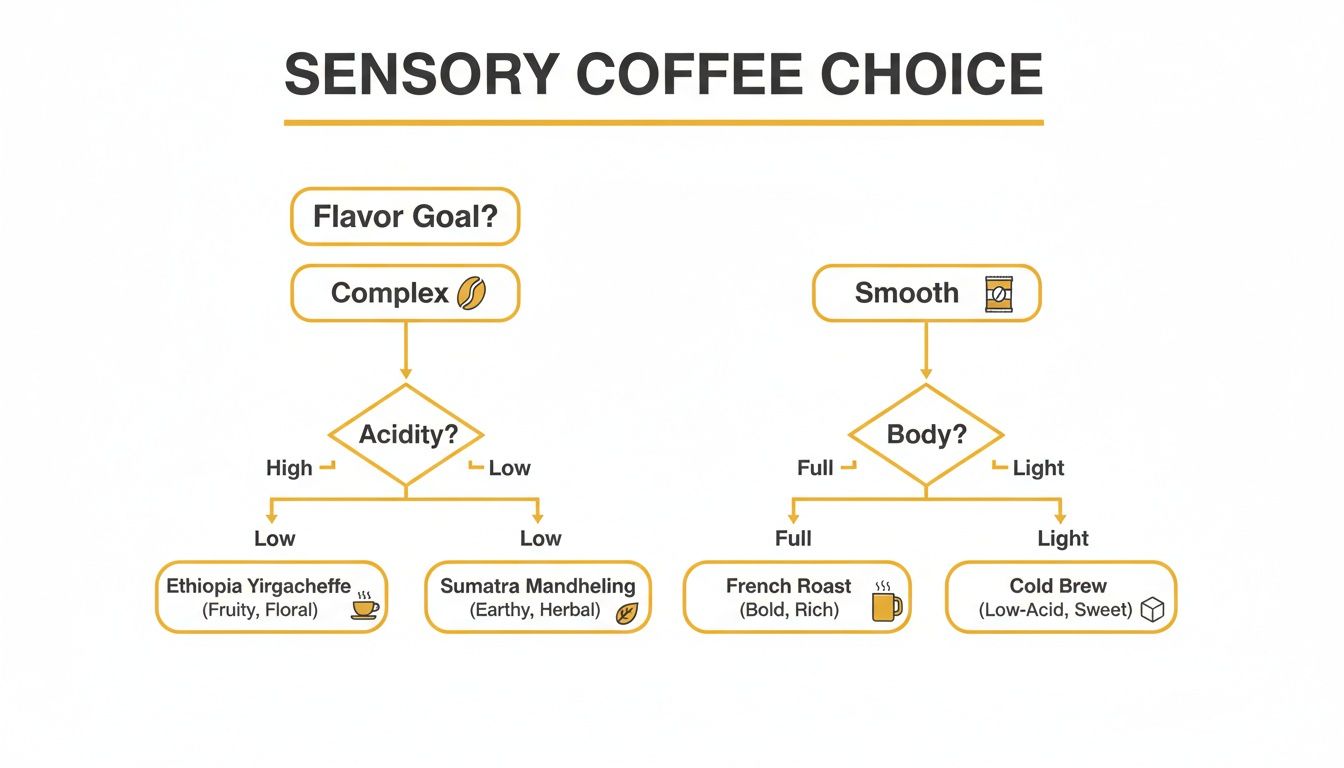
As the flowchart shows, if you're chasing a complex, nuanced flavor profile, ground coffee is your best bet. But if what you need is a consistently smooth and convenient cup, high-quality instant is the clear winner.
Making the Right Call
At the end of the day, choosing between ground and instant coffee isn’t a lifelong commitment. Most coffee lovers I know keep both in their pantry, treating them as different tools for different jobs. One isn’t a subpar version of the other; they just serve entirely different purposes.
Once you understand the distinct strengths of each, you can stop asking, "Is ground coffee the same as instant?" and start asking a much more useful question: "Which coffee is right for me, right now?"
Cost, Caffeine, and Convenience: The Deciding Factors
Beyond the nuances of aroma and flavor, the daily coffee ritual often boils down to three very practical things: cost, caffeine, and convenience. This is where the real-world differences between ground and instant coffee truly come to light, and understanding these trade-offs will make it much clearer which one fits your life.
When we talk about cost, it's not as simple as comparing the price tag on a bag versus a jar. You have to think in terms of "cost-per-cup." A bag of premium ground coffee might seem like a good deal, but the total investment grows once you add in the brewer, filters, a good grinder, and even the grounds you might waste. On the flip side, a high-quality instant coffee gives you access to a great brew with zero extra equipment costs.
Breaking Down the Cost-Per-Cup
The savings become obvious when you stack a premium instant coffee against a drink from a café. A top-tier organic instant coffee costs just a fraction of a coffee shop latte while still providing a genuinely rich and satisfying cup. But what about when compared to brewing ground coffee at home?
It’s interesting to see how younger generations, like Gen Z and millennials, are fueling the growth of instant coffee, drawn in by its speed and significant savings. Market analysis reveals that instant coffee can be up to 32% cheaper than ground coffee and an impressive 52% less expensive than pods. As global coffee prices continue to climb, that's a huge advantage. It's no wonder nearly half of all coffee drinkers worldwide prefer instant—its economic appeal is hard to ignore. You can dig deeper into these shifting consumer habits and market dynamics.
The Caffeine Question
There's a common myth that instant coffee is the weakling of the coffee world. People assume that because it’s quick, it must be low on caffeine, but that's not the whole story. While a standard cup of instant coffee often has a little less caffeine than its brewed counterpart, the difference isn't always dramatic.
A typical cup of brewed coffee usually lands around 95 mg of caffeine, whereas an instant coffee often has somewhere between 60-80 mg. But this isn't set in stone. The final caffeine kick is completely up to you.
The real beauty of instant coffee is how easy it is to customize. Want a stronger, more caffeinated brew? Just add more coffee crystals. It’s that simple. You can dial in the perfect intensity for your taste without fiddling with brew ratios or grind settings.
For anyone who's a bit sensitive to caffeine or just wants a gentle afternoon pick-me-up, that slightly lower caffeine level can be a major plus. For a more detailed look at the numbers, check out our guide to instant coffee caffeine content.
Convenience and Shelf Life
This is where instant coffee wins, hands down. The convenience isn't just about making a cup in under a minute; it’s about the entire, streamlined process. There’s no grinder to dust off, no soggy grounds to deal with, and no complex brewer to scrub clean. It’s the definition of a low-maintenance coffee.
This hassle-free nature extends to its incredible shelf life.
- Ground Coffee: The moment you open a bag of ground coffee, the clock starts ticking. Its delicate aromatic oils are exposed to air and begin to break down. For the best flavor, you really need to use it up within a week or two.
- Instant Coffee: An unopened jar of instant coffee can sit in your pantry for years. Even once opened, as long as you keep it sealed and away from moisture, it stays fresh for months. This makes it a reliable, no-waste option.
This long-lasting quality makes a high-quality instant coffee the perfect solution for people who don't drink coffee every single day but still want a fantastic cup ready to go whenever the mood strikes.
Why Premium Instant Coffee Is a Game Changer
For years, the question of whether ground coffee was the same as instant coffee had a clear and resounding answer: absolutely not. The quality gap was massive. Instant coffee was what you drank out of necessity, not desire—a quick fix when you were out of options. But that old stereotype is getting turned on its head by a new generation of premium instant coffees.
This isn't your grandparents' instant coffee. Companies like Cartograph Coffee are completely rewriting the rules, starting with high-quality, single-origin organic beans—the same kind you’d expect to find at a top-tier café. From there, they use sophisticated production methods designed to protect the bean's character, not destroy it.
The Power of Modern Production
The biggest leap forward has been the shift to freeze-drying over the old-school spray-drying method. Spray-drying, as we've covered, blasts the coffee with intense heat that scorches the delicate aromatic compounds, leaving behind a flat, often bitter taste. Freeze-drying is the polar opposite; it's a gentle, low-temperature process.
By sublimating the ice from frozen coffee extract at sub-zero temperatures, freeze-drying meticulously preserves the nuanced flavors and rich aromas of the original beans. It’s the single biggest reason why a modern instant can taste remarkably close to a fresh brew.
This careful technique means you no longer have to sacrifice taste for convenience. The final product is an instant coffee that's smooth, balanced, and full of character, delivering a truly satisfying cup without the harshness tied to older brands. If you're curious about the science behind it, check out our detailed guide on what freeze-dried coffee is and why it makes all the difference.
A New Role for Instant Coffee
This evolution has completely changed the game. Premium instant coffee isn't a lesser substitute for ground coffee anymore; it's a high-quality alternative for different situations. It's the perfect tool for moments when the time-honored ritual of brewing just isn't practical.
Think of it as your go-to for hectic mornings, camping trips, or travel—anytime you need a fantastic cup of coffee without the equipment or the wait.
Ultimately, choosing between ground and a premium instant is no longer about accepting a huge drop in quality. It’s about picking the right coffee for the right moment. Thanks to modern advancements, you can finally get the convenience you need without giving up the rich, authentic coffee experience you deserve.
Frequently Asked Questions
When it comes to coffee, a few practical questions always seem to pop up, especially when comparing ground beans to instant crystals. We get it. So, let's clear up some of the most common queries to help you choose the right coffee for your mug, your machine, and your recipes.
Can You Use Instant Coffee in a Coffee Maker?
This is a hard no. Pouring instant coffee granules into a drip machine, espresso maker, or even a pour-over dripper is a surefire way to make a mess. Remember, instant coffee is already brewed; it just needs hot water to rehydrate.
Trying to run it through a machine creates a thick, gummy paste that can clog up the works and potentially ruin your equipment for good. Stick to the basics: spoon it into a mug and just add hot water.
Is Instant Coffee Weaker Than Ground Coffee?
Not necessarily—you’re the one in control here. While a standard teaspoon of instant might give you a slightly less caffeinated cup than a typical brewed coffee, its strength is completely up to you.
Want a bolder, more intense flavor? Just add another spoonful of granules. This is one of the best things about a quality instant coffee; you can dial in the exact strength you're craving on the fly.
The final strength of your coffee is a direct result of the coffee-to-water ratio you choose. With instant coffee, you have complete and immediate control over this, allowing you to craft a cup that is as bold or as mild as you like.
Is Organic Instant Coffee Actually Better?
When you choose organic instant coffee, you're getting more than just a great taste. The "organic" label certifies that the beans were grown without synthetic pesticides and fertilizers.
This is a big deal. It's better for the environment, healthier for the farmers, and means you avoid consuming unwanted chemical residues. While the nutritional value is largely the same, going organic—like with Cartograph Coffee—ensures a cleaner product from farm to cup and supports more sustainable growing practices.
Can You Substitute Ground Coffee for Instant in Recipes?
It’s not a good idea to swap them one-for-one. They act completely differently when you cook or bake with them. Instant coffee dissolves seamlessly, infusing smooth coffee flavor into everything from brownies and marinades to smoothies without changing the texture.
Ground coffee, on the other hand, won't dissolve. It will just leave you with a gritty, sandy texture in your finished dish. If you absolutely have to make a switch, you’ll need to brew the ground coffee first, then use the liquid coffee in your recipe, which means you'll have to adjust all the other liquids to get the consistency right.
Ready to experience the convenience of a premium, organic instant coffee without sacrificing flavor? Cartograph Coffee delivers a rich, smooth, and satisfying cup in seconds. Explore our collection today!