If you're hunting for the instant coffee with the highest caffeine, you're looking at brews that pack 200-300mg or more per serving. These aren't your standard instant coffees, which typically hover around 60-80mg. High-octane options are specifically formulated for maximum kick, almost always using potent Robusta beans.
To find the strongest cup, you have to look past the marketing hype and get down to what really matters: the beans and the brand's formulation.
Understanding High Caffeine Instant Coffee
The quest for the strongest instant coffee isn't new, but it's definitely picked up steam. People want that powerful boost without giving up the sheer convenience that makes instant coffee a go-to. It’s part of a bigger trend where what’s in your cup is just as important as how it tastes.
The modern coffee drinker often seeks more than just a morning ritual; they're looking for functional energy. High-caffeine instant coffee meets this need by delivering a significant, reliable kick in seconds, perfect for demanding schedules and active lifestyles.
Instant coffee has come a long way. When Starbucks launched its VIA Ready Brew back in 2007, its 130–140 mg of caffeine per serving was a game-changer. It nearly doubled the industry standard and really set a new bar for what people could expect. This hunger for stronger, better coffee helped push the global instant coffee market to over $22 billion by 2020. You can learn more about the evolution of high-caffeine instant coffee.
Today, brands like Cartograph Coffee are leading the charge. They've figured out how to balance a serious caffeine punch with the smooth, rich flavor you get from high-quality organic beans. The result? You get all the strength without having to sacrifice taste.
Quick Guide to Instant Coffee Caffeine Levels
Before you start shopping, it helps to know what the numbers actually mean. This quick guide breaks down the typical caffeine spectrum so you can find your ideal strength.
| Caffeine Level | Typical Range (mg per 8oz) | Common Bean Type |
|---|---|---|
| Low | 30-60 mg | Primarily Arabica |
| Average | 60-100 mg | Arabica/Robusta Blend |
| High | 100-200 mg | Primarily Robusta |
| Extreme | 200-300+ mg | Specially Processed Robusta |
This table gives you a solid baseline. Anything over 100mg is considered high, and once you cross the 200mg mark, you're in a category designed specifically for those who need a serious jolt.
What Determines Caffeine in Instant Coffee?
If you've ever felt like some instant coffees give you a real kick while others barely register, you're not imagining things. The caffeine punch in your cup is no accident. It’s a direct result of two key decisions made long before the coffee ever reaches you: the type of bean used and how it’s processed.
Knowing a little about these two factors is your best tool for finding the instant coffee with the highest caffeine. It helps you see past the marketing hype and choose a coffee based on what’s actually inside the packet.
The Deciding Factor: Robusta vs. Arabica Beans
The single biggest influence on caffeine content comes down to the bean itself. In the world of coffee, the two heavyweights are Arabica and Robusta, and they are miles apart when it comes to caffeine.
- Arabica Beans: This is the bean you’ll find in most specialty coffee shops. Prized for a smooth, aromatic, and slightly sweet flavor, Arabica beans contain between 1.2% and 1.5% caffeine by weight. Taste is the name of the game here.
- Robusta Beans: Just like its name implies, Robusta is a much hardier plant. The beans pack a bolder, more intense, and earthy flavor. More importantly for our purposes, they contain almost double the caffeine of Arabica, landing somewhere between 2.2% and 2.7% by weight.
That massive difference is exactly why virtually all high-caffeine instant coffees start with Robusta beans. An all-Robusta coffee is always going to deliver a much bigger jolt than an all-Arabica one. We get into more of the specifics in our guide on the key differences between Arabica vs Robusta beans.
If you’re hunting for maximum caffeine, Robusta is the only way to go. The bean’s high caffeine content is a natural defense mechanism against insects, and that biological advantage translates directly into a more powerful brew for us.
How Production Methods Impact Potency
Once the beans are chosen, the journey to becoming instant coffee granules begins. This is the second place where caffeine levels can be affected. The two main production methods, freeze-drying and spray-drying, each leave their own mark on the final flavor and potency.
Spray-drying is the quicker, cheaper route. It involves blasting a fine mist of liquid coffee into hot air, which evaporates the water almost instantly. The downside? That intense heat can burn off some of the coffee's delicate aromatic compounds and slightly reduce the final caffeine content.
Freeze-drying is a much gentler, more meticulous process. Here, the coffee extract is frozen solid and then placed in a powerful vacuum. This causes the frozen water to turn directly into vapor, skipping the liquid phase entirely. It’s fantastic at preserving the original aroma and flavor. Because it avoids harsh temperatures, it also does a better job of keeping the caffeine concentration intact. This is why quality-focused brands like Cartograph Coffee lean on freeze-drying to deliver a potent caffeine kick without sacrificing great taste.
Comparing the Strongest Instant Coffee Brands
When you're on the hunt for the instant coffee with the highest caffeine, it's easy to get lost in a sea of marketing claims. To find the real heavy hitters, we need to look past the hype and compare them based on what actually matters. Brands are always trying to one-up each other, but the "best" option really boils down to what you're looking for: pure, unadulterated energy, a well-rounded flavor, or high-quality, organic ingredients.
This comparison gets into the nitty-gritty, pitting the top high-caffeine instant coffees against each other. We’ll break down everything from the raw caffeine numbers and bean origins to the flavor you can expect in your cup. This head-to-head analysis will help you pinpoint the right brew for your routine, whether you need to fuel an intense workout or just find a reliable daily kickstart.
Head-to-Head High-Caffeine Brand Showdown
In the world of strong instant coffee, the numbers on the label tell a big part of the story. The main thing that sets these brands apart is the caffeine per serving, which can start at a respectable 150 mg and climb to an eye-watering 300 mg or even more. That kind of power almost always comes from using high-quality Robusta beans, which naturally pack nearly twice the caffeine punch of their Arabica cousins.
This infographic gives a great visual breakdown of what drives that caffeine content, from the bean itself to how it's processed.
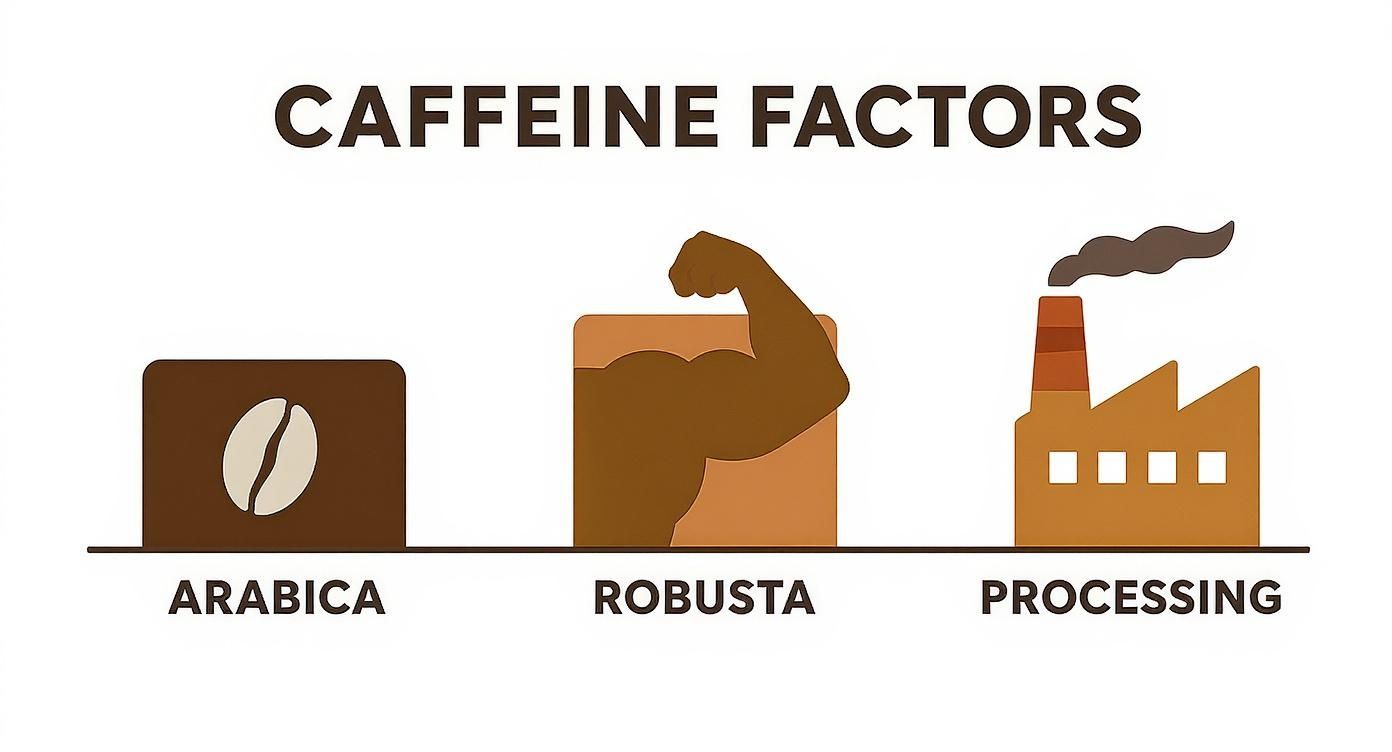
As you can see, starting with Robusta beans gives you a huge head start on caffeine. The trick for premium brands is to preserve that potency through careful processing so it all makes it into your cup.
To help you sort through the options, I’ve put together a showdown of some of the strongest contenders out there. For an even deeper dive, our guide to the best instant coffee brands has more on what makes these top performers stand out.
High-Caffeine Instant Coffee Brand Showdown
This table breaks down some of the most popular high-caffeine options, helping you see at a glance how they stack up in terms of power, taste, and ideal use.
| Brand | Caffeine per Serving (mg) | Bean Type | Flavor Profile Notes | Best Use Case |
|---|---|---|---|---|
| Death Wish Coffee | ~300 mg | Robusta & Arabica Blend | Bold, dark roast, low acidity, with hints of cherry and chocolate. | A pre-workout jolt or when you need to fight off serious fatigue. |
| Waka Coffee | ~115 mg | 100% Robusta (Varies) | Strong, full-bodied, and slightly bitter with classic earthy tones. | A powerful daily driver for those who love a traditional, potent coffee flavor. |
| Alpine Start | ~120 mg | 100% Arabica | A smooth, balanced medium roast with a surprisingly clean finish. | Perfect for outdoor adventures like hiking and camping where taste matters. |
| Cartograph Coffee | ~110 mg | Organic Arabica & Robusta Blend | Rich and smooth, offering complex notes without any harshness. | A balanced, flavorful daily brew that still delivers a serious energy kick. |
As the table shows, there’s more to a high-caffeine coffee than just a number. Each brand offers a unique experience, so the best one for you really depends on your priorities.
Finding Your Perfect High-Caffeine Match
It’s pretty clear that "strongest" is subjective. Every brand strikes a different balance between raw power and a pleasant taste, making each one suited for different moments.
- For Maximum Potency: If your only goal is to get the biggest caffeine hit possible, Death Wish Coffee is in a league of its own. It’s engineered from the ground up for an extreme jolt.
- For Balanced Strength: Brands like Waka Coffee and Cartograph Coffee manage to deliver a solid caffeine kick without making you wince. They give you that strong, reliable boost in a brew that’s genuinely enjoyable to drink every day.
Choosing the right high-caffeine coffee is a personal journey. Think about when you’ll be drinking it. A 300 mg blast might be exactly what you need before a long hike, but it could be overkill for a quiet morning at your desk.
Beyond the Caffeine Content
While caffeine is definitely the main attraction, other details make a huge difference in the overall experience. Things like bean sourcing and processing methods are what separate a good coffee from a great one. Brands that opt for organic beans, like Cartograph Coffee, tend to have a cleaner taste and give you peace of mind that your powerful brew is free from synthetic pesticides.
The flavor profile is just as important. Let’s be honest, an extremely potent coffee can sometimes taste harsh or unpleasantly bitter. The best brands use high-quality Robusta and master their roasting techniques to create a brew that's both strong and smooth. The goal is to find a coffee that wakes you up without forcing you to sacrifice taste—that way, your high-caffeine cup is something you look forward to, not just something you tolerate.
How to Read Between the Lines on a Coffee Label
When you're on the hunt for a seriously caffeinated instant coffee, you have to become a bit of a detective. Brands love to plaster their packaging with words like "extra strong" or "intense," but honestly, those terms are often just marketing noise. To find a truly potent brew, you need to ignore the hype and look for cold, hard numbers.
Start by scanning the nutritional panel or product description for the magic number: the caffeine content in milligrams (mg) per serving. A label that says "200mg of caffeine per serving" is giving you a solid fact. A label that just says "power brew" is giving you… well, not much at all. Always favor brands that are transparent enough to give you the data.
Look Past the Buzzwords
Marketers are clever. They use language that implies strength without actually making a verifiable claim. Here’s how to spot the difference between a real caffeine metric and just fluff:
- Flavor vs. Fuel: Don't be fooled by descriptions like "robust," "bold," or "dark roast." These are all about taste. In fact, a dark roast can sometimes have a little less caffeine than a lighter roast from the same origin, since the roasting process can burn off some of it.
- The Robusta Hint: If you see "100% Robusta" on the label, that’s a pretty good sign you're in high-caffeine territory. Robusta beans naturally pack a bigger punch than Arabica. Still, it's not as precise as a specific milligram count.
- The Serving Size Trick: Pay close attention to the recommended serving size. A company might boast about a high caffeine number, but they could be basing it on two scoops or packets instead of the standard one. It’s an easy way to inflate the numbers.
If you can find the caffeine content listed per gram, you've hit the jackpot. This is the most reliable way to compare different coffees because it cuts through all the noise about serving sizes. It’s a true apples-to-apples measurement of potency.
Can You Test It Yourself?
Short of sending a sample to a lab, you can't measure the exact milligrams at home. But you can get a pretty good sense of a coffee’s relative strength with a simple side-by-side taste test.
Grab two different instant coffees and prepare them identically—same amount of powder, same amount of water, same temperature. A genuinely high-caffeine coffee, especially one heavy on Robusta beans, will almost always have a more bitter, intense, and punchy flavor. It's not a perfectly scientific method, but your taste buds can often tell you when one brew is significantly more potent than another.
Of course, the ultimate test is how it makes you feel. If you’re a regular coffee drinker, you know your baseline. When you try a product that claims to have a higher dose, you'll probably notice the difference. Pay attention to your body's response. This kind of personal biofeedback, combined with smart label reading, is your best strategy for finding an instant coffee that truly delivers the kick you're looking for.
How to Brew Your Instant Coffee for Maximum Potency
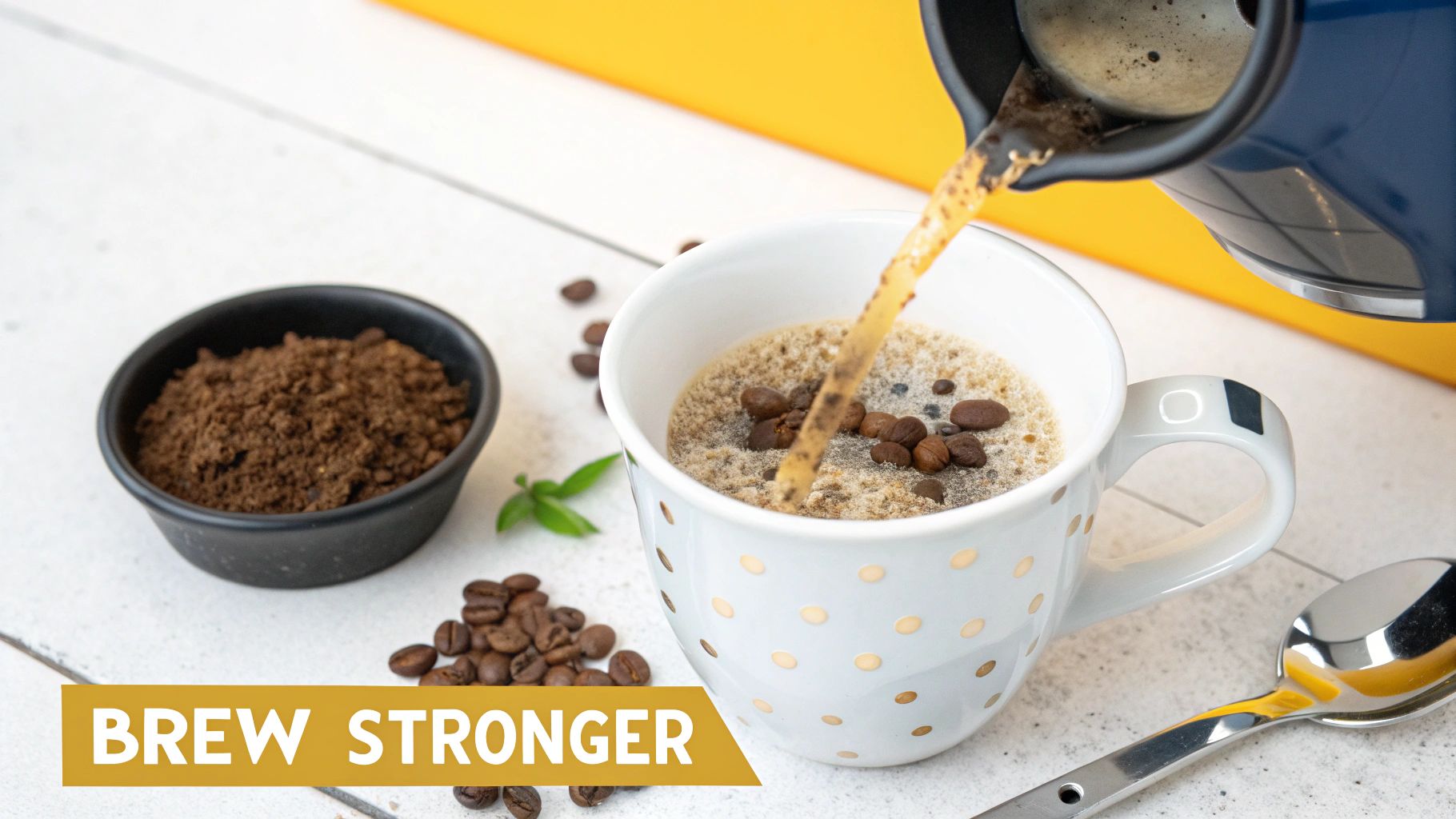
Picking a high-caffeine instant coffee is just the first step. The real magic happens in how you brew it. With a few simple tweaks to your routine, you can pull every last bit of caffeine out of those granules and turn a strong coffee into a truly potent brew.
It all boils down to two key factors: your water temperature and the coffee-to-water ratio. Get these right, and you'll have complete control over the strength of your coffee, no matter which brand you're using.
Optimize Your Water Temperature
Water temperature isn't just a minor detail—it's crucial for proper caffeine extraction. It’s tempting to pour boiling water straight from the kettle, but that's a mistake. Water that’s too hot can scorch the coffee granules, leaving you with a bitter, harsh taste that ruins the flavor.
For the best results, you want your water to be just off the boil. The sweet spot for dissolving instant coffee and extracting maximum caffeine is between 195°F and 205°F (90°C to 96°C). This temperature range is hot enough to pull out the caffeine without burning the coffee, so you get a potent and smooth cup.
Pro Tip: Just let your kettle sit for about 30 to 60 seconds after it clicks off. This simple pause is usually all it takes to bring the temperature down to the ideal range.
Master the Coffee to Water Ratio
If you want a stronger cup of coffee, the most straightforward way to get there is by adjusting how much coffee you use. The directions on the package are just a starting point, usually aimed at the "average" coffee drinker. To really ramp up the caffeine, you'll need to either use more coffee or less water.
Start with the brand's recommendation, then experiment. If the label suggests one teaspoon for eight ounces of water, try using a heaping teaspoon instead. Or, keep the coffee the same and reduce the water to six ounces. Both methods create a more concentrated brew, boosting the caffeine in every sip.
If you want to dive deeper into finding that perfect balance, check out our guide on how much instant coffee per cup for more detailed tips on dialing in your measurements.
When Does High-Caffeine Instant Coffee Make Sense?
Knowing the numbers is one thing, but figuring out when to reach for the instant coffee with the highest caffeine is where the real magic happens. Let's be honest, a super-charged brew isn't what most of us want for a lazy Sunday morning. But in the right situation, it's an absolute game-changer.
Think of these potent coffees as a specialized tool in your arsenal, perfect for those moments that demand you bring your A-game, mentally or physically.
For Peak Physical Performance
Anyone who takes their fitness seriously knows that a strong cup of coffee can be a powerful, natural pre-workout. The right caffeine hit can sharpen your focus, help you push through that last rep, and delay the feeling of fatigue during a grueling gym session or a long-distance run.
What you're looking for here is pure, clean power. You need a straightforward jolt of energy without any weird additives. A dose in the 200-300 mg caffeine range is often that sweet spot for boosting physical output.
Fuel for Mental Endurance
We've all been there: staring down a late-night study session, a project deadline that’s approaching way too fast, or a long drive that just won't end. This is exactly when a high-caffeine instant coffee can cut through the mental fog and keep you sharp.
The goal is sustained alertness, not a jittery mess that shatters your concentration. It’s a fine line to walk.
The right coffee should be a tool that helps you focus, not a distraction. For long mental tasks, you want a potent blend that's smooth enough to provide clean energy without a harsh, agitating edge.
Lightweight Energy for Outdoor Adventures
For backpackers, hikers, and campers, every single ounce in the pack counts. High-caffeine instant coffee is a brilliant solution—it's ultralight, compact, and delivers a serious energy boost with just a bit of hot water.
A single packet can be the fuel you need to conquer that final steep climb or power through the last few miles of a challenging trail. This is where a brand like Cartograph Coffee really stands out. You get that reliable caffeine kick from high-quality organic beans, but you don't have to sacrifice flavor for function, even when you're miles from civilization.
A Few Common Questions
Is High-Caffeine Instant Coffee Actually Safe to Drink?
For most healthy adults, the general consensus is that up to 400 mg of caffeine per day is perfectly fine. The catch is that some of these high-octane instant coffees can pack 200-300 mg (or even more) into a single cup. That means one serving could easily account for more than half of your daily recommended limit.
If you know you're sensitive to caffeine, are pregnant, or have a pre-existing health condition, it's always a good idea to chat with your doctor before diving into these super-charged brews. It's all about being aware of your total intake.
Can I Just Add More Powder to Make My Coffee Stronger?
Absolutely. Adding more instant coffee powder to your water will definitely ramp up the caffeine and give you a stronger brew. But there's a trade-off to consider.
Be careful not to overdo it, as you can quickly cross the line from "strong" to "bitter and undrinkable." The best approach is to start with the suggested serving size and then tweak it little by little. You'll eventually find that sweet spot where you get the kick you want without sacrificing the flavor.
How Does Instant Coffee's Caffeine Content Stack Up Against Brewed Coffee?
Your average cup of instant coffee usually has a bit less caffeine, typically landing in the 60-80 mg range, while a standard brewed coffee can have anywhere from 95-165 mg.
But this is where specialty high-caffeine instant coffees completely change the game. They are specifically designed to blow past those numbers, often delivering anywhere from 150 mg to over 300 mg of caffeine per serving. This makes them a much more potent option than your typical drip coffee, perfect for when you need a serious energy boost.
Ready to try a coffee that nails the balance between a powerful, clean caffeine kick and a genuinely rich, organic flavor? Give Cartograph Coffee a shot and see why it’s becoming the go-to for people who demand both energy and taste.
Explore our blends and find your new favorite at the official Cartograph Coffee website.