You're standing at a campsite with a bottle of cold water, or sitting at your desk while the office coffee machine is busy again. You want a smooth iced coffee, but you don't have a grinder, filter, kettle, or time for an overnight steep. Instant coffee can solve that problem, provided you dissolve it properly instead of dumping a dry pile straight into cold water.
Cold brew with instant coffee isn't traditional cold brew in the strictest sense. Regular cold brew extracts coffee grounds slowly, while instant coffee has already been brewed and dried, so you're rehydrating a finished coffee. The result can still be cool, smooth, and less sharp than hot-dissolved instant coffee, with almost no equipment or cleanup.
Why Cold Brew with Instant Coffee Works So Well
At a campsite, add instant coffee to a water bottle, shake it, and drink without carrying a French press or handling loose grounds. At work, a jar and spoon are enough for a quick iced coffee between meetings. At home, the method avoids heating the kitchen and waiting through a full brew cycle.
The shortcut works because instant coffee is made to dissolve. Traditional cold brew requires water to extract soluble compounds from grounds, followed by filtration. Instant coffee has already been brewed and dried, so cold water only needs to rehydrate it. That makes the drink faster and cleaner to prepare, while also explaining why it is not the same extraction process as regular cold brew.
Cold water is the trade-off. Granules dissolve more slowly than they do in hot water, and a large dose dropped into a full glass can float, clump, or leave the cup uneven. Give the coffee enough time to disperse before judging its strength.
The small step that changes the result
Start with a small amount of cold water and stir the granules into a smooth paste. Every particle gets wet before the rest of the water is added, which reduces clumping and produces a more even cup. The approach also matches Cartograph Coffee's guide to making instant coffee with cold water.
Cold water can give instant coffee a gentler, smoother impression than dissolving it directly in hot water. It will not turn every product into traditional cold brew, though. Roast level, drying method, and coffee quality still control the flavor, while the lower equipment and cleanup burden make the method useful for camping, office brewing, and quick drinks at home. Compare it with iced instant coffee and traditional cold brew by taste, texture, and preparation time, then use it when that trade-off suits the situation.
What You Need Before You Start
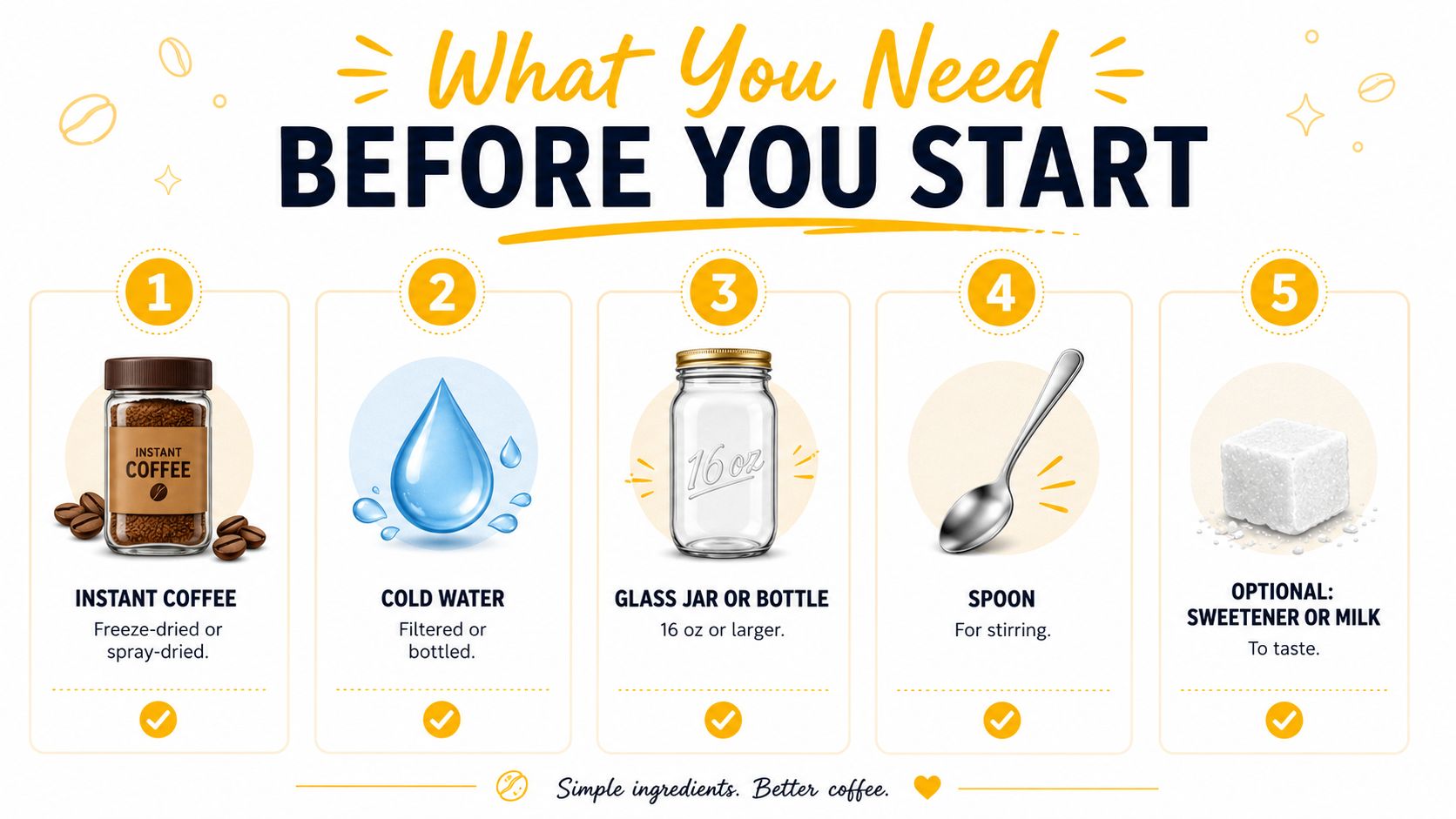
Your setup can stay compact, but the container affects mixing and serving. Prepare:
- Instant coffee: Freeze-dried granules are a practical starting point because they usually dissolve cleanly. Choose a roast and product you already enjoy, since cold water will not hide harsh flavor.
- Cold water: Filtered or bottled water gives a clearer result when tap water tastes hard or strongly mineralized.
- Ice: Add it at serving time, or chill the drink first so melting ice does not dilute the first sip.
For one serving, use 1 to 2 teaspoons of instant coffee per 8 ounces, or 240 ml, of cold water. Start at the lower end for a lighter drink and use the higher end for a stronger cup. This ratio is also outlined in this practical guide to cold-water instant coffee. If you are comparing this method with traditional cold brew, keep the water volume consistent so strength and flavor are easier to judge.
Choose equipment for your setting
At home, use a jar holding at least 12 ounces, a measuring teaspoon, and a spoon. That extra capacity leaves room for stirring without splashing. A fine mesh strainer, roughly 400 microns or finer, is optional. Properly dissolved instant coffee should leave no grounds, but a sieve can catch coarse particles or hardened pieces.
A kitchen scale helps when you are testing several coffees and want repeatable doses. A small whisk or milk frother is useful for making the first paste smooth, especially at the stronger end of the ratio.
For work or camping, choose a sealed bottle, shaker, or insulated tumbler with a secure lid. Leave headspace for shaking, and test the seal before adding ice. The container matters less than the order: coffee first, a small amount of water next, then thorough mixing before the remaining water. This keeps the method practical where traditional cold brew takes more equipment and waiting.
The Brewing Method Step by Step
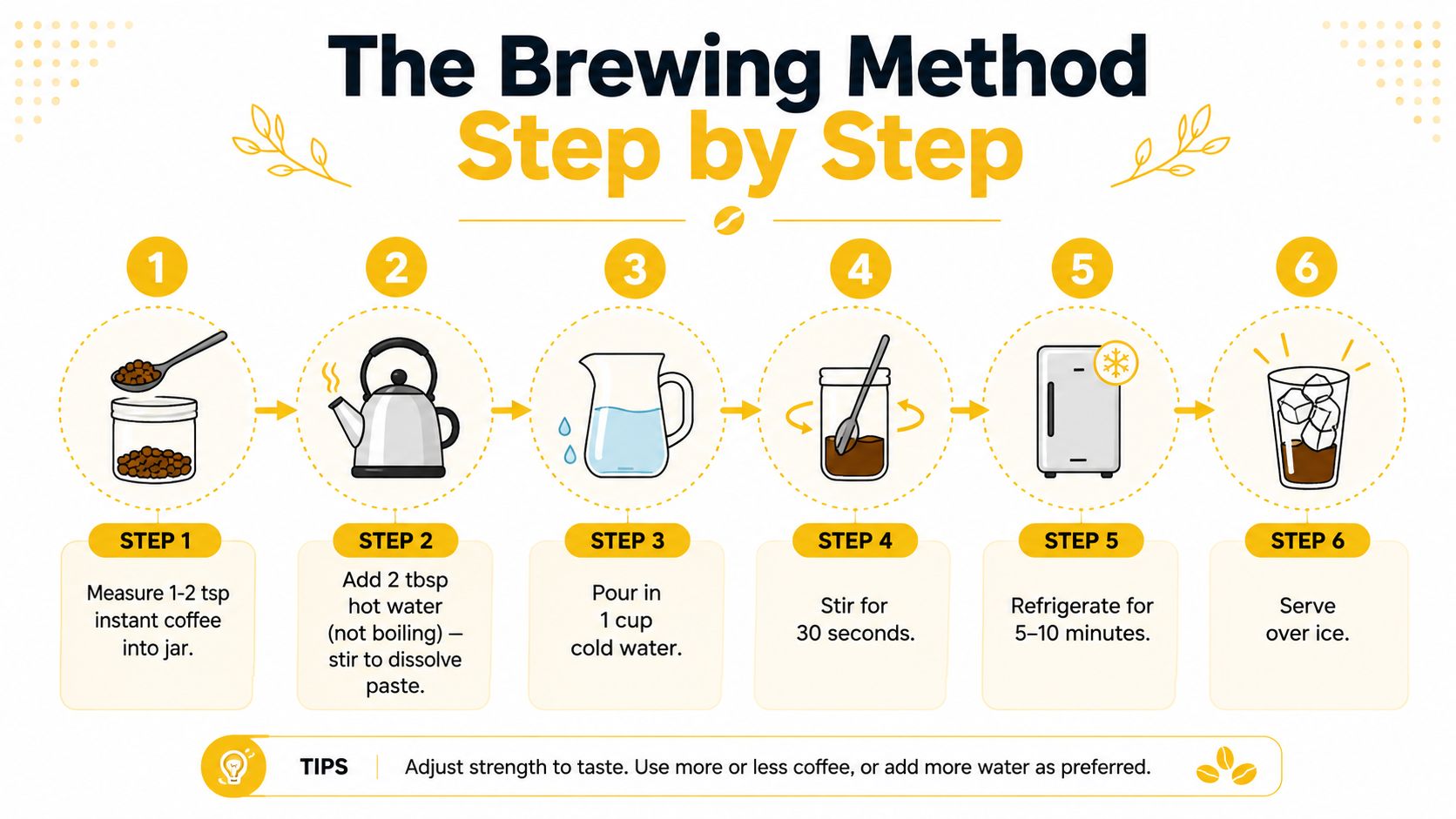
This method takes only a short active preparation period. The optional chilling stage adds a little time, but full overnight steeping isn't necessary because instant coffee has already been extracted before it reaches your kitchen.
1. Measure the coffee
Add 1 to 2 teaspoons of instant coffee to a jar, bottle, or shaker. Pair the dose with about 8 ounces, or 240 ml, of water per teaspoon as a starting point. If you're using a concentrate-style drink, you can make it stronger and dilute it later.
2. Make a paste
Add roughly one tablespoon of cold or room-temperature water. Stir with a spoon, whisk, or milk frother until the coffee becomes a smooth paste with no dry pockets.
This is the most important step. Cold water wets the outside of a dry granule first, and a large pile can cling together before the center disperses. A paste prevents that sealed, lumpy texture.
3. Add the remaining water slowly
Pour in the rest of the cold water while stirring. Don't tip everything in at once. A slow pour keeps the coffee moving through the liquid and gives the granules time to dissolve evenly.
4. Mix and chill
Stir or shake for about 30 seconds, then check the bottom and sides of the container. If you still see particles, continue mixing until the liquid looks uniform. For an immediately cold drink, add ice. For less dilution, refrigerate the sealed drink for 10 to 15 minutes before serving.
If you prepare a larger concentrate for later use, clean storage and a sealed container matter. The same general principles apply to cold brew tea storage tips from Pep Tea, particularly keeping a prepared drink covered and chilled rather than exposed.
5. Taste before committing to the final glass
Taste the coffee before adding milk or sweetener. If it's weak, add a small extra scoop and mix thoroughly. If it's too intense, add water, milk, or more ice. The best ratio depends on the instant coffee, your serving vessel, and whether you want a straight black drink or a milk-based one.
Practical rule: Never fix clumping by adding more water alone. Break up the paste first, then dilute.
Instant Cold Brew vs Iced Instant Coffee vs Traditional Cold Brew
These three drinks overlap, but they aren't interchangeable. Instant cold brew uses the paste-first method to create a more controlled, rounded cold drink. Iced instant coffee skips the paste and usually tastes quicker, thinner, and more direct. Traditional cold brew relies on grounds, extended contact, and filtration, so it offers a different body and workflow.
| Method | Prep Time | Equipment | Flavor | Best For |
|---|---|---|---|---|
| Instant cold brew | A few minutes, plus optional chilling | Jar or bottle, spoon | Smooth, convenient, adjustable | Camping, office use, fast home preparation |
| Iced instant coffee | Very short | Glass or bottle, spoon | Lighter and sharper, with less control over dispersion | When speed matters more than texture |
| Traditional cold brew | Long steeping process | Jar, coarse grounds, filter or strainer | Fuller body and a more developed cold-brew character | Planned batches and drinkers who enjoy the traditional profile |
Traditional cold brew is a slow extraction method. Guides such as Love and Lemons' cold brew instructions describe combining coarse grounds and cold water, then filtering after an extended steep. That process gives you a concentrate, but it also creates wet grounds, cleanup, and a storage container.
Instant cold brew makes sense when portability and repeatability outweigh maximum body. Iced instant coffee wins when you're rushing and don't mind a less polished texture. Traditional cold brew wins when you're planning ahead and want the characteristic richness that comes from grounds steeping over time.
Best Moments to Use This Method
The office is one of the strongest use cases. You can keep instant coffee in a drawer, use a clean bottle or jar, and avoid monopolizing a shared machine. The paste-first method also works when you have only a water dispenser, provided the water is cold and you give the granules time to disperse.
Camping rewards the same simplicity. Instant coffee weighs little, travels cleanly, and doesn't leave a filter full of grounds behind. Add the coffee and a small splash of water to your bottle, shake until smooth, and finish with the rest of the water. For hiking, that reduction in gear and cleanup can matter more than matching the body of a carefully prepared batch.

Situations where convenience is the point
This method fits hot mornings, hotel rooms, family routines, and travel days. It doesn't require a grinder, a filter, or a brewing appliance, and you can make one serving instead of preparing a large batch.
Organic instant coffee is also a relevant option for shoppers who prioritize certified sourcing and simpler ingredient expectations. Organic instant coffee consumption in Europe has been estimated at 8 to 12%, with the organic share of instant coffee sales rising to roughly 10 to 13% by 2025, according to IndexBox's European organic instant coffee analysis. Those figures describe the category, not a guarantee about any particular product, so check the package and certification.
Cartograph Coffee is one option for people looking for organic instant coffee designed around home, office, and outdoor use. The practical advantage here isn't a promise of identical traditional cold brew. It's having a coffee format that can move easily between those settings.
Troubleshooting Strength Flavor and Clumping
Clumps usually come from the first pour. If dry granules meet a full glass of cold water, the outside can hydrate and stick before the interior dissolves. Make the paste with a tablespoon of water, smooth it completely, and only then add the rest.
Weak coffee has two common causes, too much final water or too little instant coffee. Adjust gradually rather than doubling the dose. Add a small amount of coffee, mix until fully dissolved, and taste again. If the drink is already mixed with milk or ice, reduce the dilution next time instead of trying to rescue the finished glass.
Bitterness usually means the coffee itself is harsh, the dose is too high, or the paste sat around longer than necessary. Instant coffee doesn't need an overnight extraction.
For a cleaner result, use a better-quality instant coffee and keep the process short. A small amount of cold water should be enough to create the paste. Don't leave a concentrated slurry sitting while you do other tasks.
More detailed ratio guidance is available in Cartograph Coffee's instant coffee water ratio guide. Treat the starting ratio as a reference, not a rule. Different coffees vary in roast character, granule density, and perceived strength.
Flavor adjustments that work
- Oat milk: Adds body and softens a lean black cup.
- Cinnamon or cardamom: Brings warm spice without requiring a syrup.
- Vanilla extract: Use a small amount for a rounder profile.
- Maple syrup: Mix it into the paste or a small amount of water so it disperses cleanly.
- Ice: Add it after tasting, since melting ice can make a balanced drink seem weak.
Serving Ideas Storage and Quick Answers
Pour the finished coffee over ice for a straightforward black drink. For an iced latte, dilute it with cold milk or oat milk until the coffee holds its flavor without dominating. Cream, condensed milk, vanilla, cinnamon, or maple syrup can turn the same base into a more dessert-like drink, while a blender can turn it into a frappé-style beverage.
Store prepared coffee in a sealed glass jar in the refrigerator and use it promptly. For longer flavor preservation, freezing the coffee into ice cubes can be useful, especially for drinks where gradual dilution is acceptable. Don't leave the concentrate at room temperature. For broader guidance on keeping instant coffee fresh before mixing, see Cartograph Coffee's instant coffee shelf-life guide.
Quick answers
Can you use decaf instant coffee? Yes. Use the same method and adjust the dose for flavor rather than relying on caffeine strength.
Can you dissolve it in hot water first and chill it? You can, but that's closer to iced instant coffee than cold-dissolved instant coffee. It's useful when you want the fastest, most complete dissolution.
How do you make it stronger? Start with the upper end of the recommended dose, use less final water, or prepare a concentrate and dilute it with milk or water.
Does espresso powder work? It can, but espresso powder may taste more intense and roasty. Begin with less and add gradually.
Which method travels best? Instant cold brew is usually the most practical for camping and offices because it avoids grounds and filters. Traditional cold brew is better when you have refrigeration, time, and a planned batch.
Cartograph Coffee offers organic instant coffee for practical brewing at home, work, and outdoors, including cold-water preparation like the method described here. Visit Cartograph Coffee to explore the available coffees and choose a format that fits your next desk coffee, hotel morning, or camping trip.