At its heart, making coffee is pretty simple: you mix ground coffee with hot water, then you separate the liquid from the grounds. That’s it. Whether you use a classic French press, a meticulous pour-over dripper, or a trusty automatic drip machine, the magic happens in the details—your beans, your grind, and your water temperature all play a huge part in what you end up tasting.
Your Journey to Better Home-Brewed Coffee
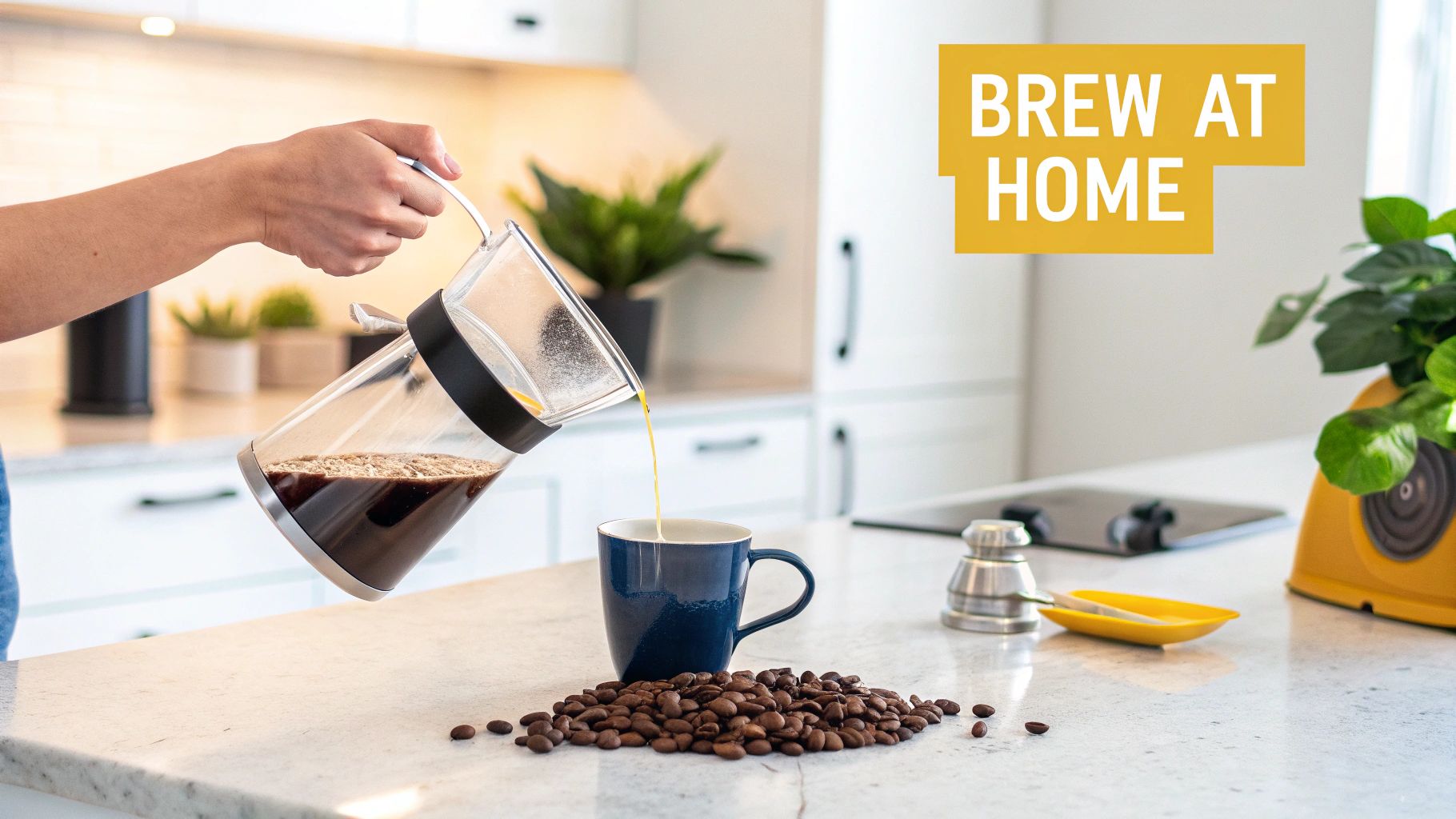
Welcome! If you've ever thought a truly exceptional cup of coffee was something you could only get from a professional barista, I'm here to show you otherwise. Making incredible coffee right in your own kitchen is easier than you think, no matter what gear you have or how new you are to this.
This guide is your roadmap. We'll walk through the fundamentals that really shape the taste in your cup, helping you turn that morning routine into a moment you genuinely look forward to. Think of it as your personal cheat sheet to brewing something special.
Why Brew at Home?
The move toward brewing coffee at home isn’t just some passing fad; it's a genuine shift in how we enjoy our favorite drink. By 2025, the global coffee market is expected to hit a staggering US$473.10 billion, with the at-home slice of that pie reaching US$96.45 billion. You can dig into more of the data on these global coffee consumption trends from Coffee BI.
This isn't just about saving a few bucks. It's about a desire for better quality, total control, and the simple satisfaction of making something yourself. When you brew at home, you get to:
- Control Every Variable: You call the shots—from the origin of the beans and the coarseness of the grind to the exact water temperature and brew time.
- Explore a World of Flavor: The same beans can taste wildly different. You can go from the heavy, rich body of a French Press to the crisp, clean notes of a Pour-Over just by changing your method.
- Save Money: Let's be honest, that daily café habit adds up fast. Brewing at home frees up cash, which you can then put toward better beans and gear.
"The beauty of home brewing is that it turns a daily routine into a personal craft. You're not just making a drink; you're creating an experience tailored exactly to your preferences."
What You'll Learn
Think of this guide as your go-to resource, whether you’re brewing your very first cup or just want to level up your existing skills. I’ll give you clear, step-by-step instructions for the most popular methods, help you fix the stuff that goes wrong, and even share some quick recipes for those days when you’re short on time.
We'll also look at great-tasting, convenient options like the organic instant coffee from Cartograph Coffee for when you need a fantastic cup without the fuss. My goal is simple: to give you the confidence and know-how to make amazing coffee, every single time.
Understanding the Fundamentals of Great Coffee
Before we get into the nitty-gritty of different brewing methods, let's talk about what actually makes a great cup of coffee. It really boils down to four key things: the beans, the grind, the water, and the ratio. If you can get a handle on these four pillars, you’re on your way to making coffee at home that can easily beat what you’d get at most cafes.
Honestly, nailing these fundamentals is way more important than having the fanciest gear. I’ve seen a simple pour-over cone produce a mind-blowing cup, all because the basics were right. On the flip side, a top-of-the-line espresso machine will still pull a disappointing shot if the beans are stale or the grind is off.
It All Starts With the Beans
You can’t fake quality. No matter how perfect your technique is, old or poorly sourced beans will always lead to a flat, uninspired cup of coffee. Freshness is, without a doubt, the most important factor. Coffee beans hit their flavor peak within a few days to a few weeks after being roasted, so timing is everything.
When you're buying a bag, always look for a “roasted on” date. A vague “best by” date doesn’t tell you much. The roast level—light, medium, or dark—is the next piece of the puzzle, as it completely shapes the flavor profile.
- Light Roasts are all about brightness and acidity, often with vibrant fruity or floral notes. They let the unique character of the bean’s origin shine through.
- Medium Roasts strike a beautiful balance. They have more body and a smoother, sweeter taste, bringing out those classic caramel and nutty flavors.
- Dark Roasts deliver that bold, rich profile many people love. They’re low in acidity and feature deep, chocolatey or even smoky notes that come from the roasting process itself.
Why Your Coffee Grind Matters So Much
Got great beans? Fantastic. The next step is grinding them correctly for your chosen brew method. A consistent grind is your secret weapon for a balanced extraction—that’s just the fancy term for dissolving the coffee's flavor into the water.
This is why I always recommend a burr grinder over a blade grinder. Burr grinders crush the beans into a uniform size, whereas blade grinders just chop them up randomly. That uniformity is crucial because it prevents your coffee from tasting both bitter (from over-extracted small particles) and sour (from under-extracted large particles) at the same time.
The right grind size is totally dependent on how you’re brewing. Here’s a quick guide to get you started.
Coffee Grind and Brew Method Cheat Sheet
Think of this table as your go-to reference for matching the right grind size to your favorite brewer. Getting this right is a game-changer for flavor.
| Grind Size | Texture Reference | Best For Brewing Methods |
|---|---|---|
| Extra Coarse | Peppercorns | Cold Brew, Cowboy Coffee |
| Coarse | Coarse Sea Salt | French Press, Percolators |
| Medium | Regular Sand | Drip Coffee Makers, Siphon Brewers |
| Fine | Table Salt | Pour-Over, Moka Pot, Aeropress |
| Extra Fine | Powdered Sugar | Espresso Machines, Turkish Coffee (Ibrik) |
Matching these up correctly ensures you’re getting the best possible flavor out of your beans every single time.
Don't Overlook the Water
It's easy to forget, but your brewed coffee is about 98% water. That means the quality of your H2O has a massive impact on the final taste. If you’re using straight tap water, you might be introducing chlorine or other minerals that can completely mask the delicate flavors of your coffee.
For a much cleaner and more vibrant cup, always try to use filtered water. Industries that depend on water purity, like breweries using specialized water for brewing, have known this for years, and the same principle applies right in your kitchen.
Temperature is just as critical. The sweet spot for brewing is between 195-205°F (90-96°C). If your water is too cool, you'll get a weak, sour cup. Too hot, and you’ll scorch the grounds, resulting in a bitter, harsh flavor.
A simple trick I use is to bring the water to a full boil, then take it off the heat and let it sit for about 30-45 seconds. This little pause usually lands it right in that perfect temperature window.
Finding the Perfect Ratio
Finally, let’s talk about the ratio of coffee to water. This is what determines the strength and body of your brew, and it's often what intimidates newcomers the most. But it’s really not that complicated.
A fantastic starting point for almost any brew method is a 1:16 ratio. In simple terms, that’s 1 gram of coffee for every 16 grams (or milliliters) of water.
One of the best investments you can make for your coffee setup is a small digital kitchen scale. It takes all the guesswork out of the equation and is the single best tool for ensuring you can repeat that perfect cup, day after day. For a more detailed breakdown, you can always explore our guide on the best way to prepare coffee at home.
Mastering Popular At-Home Brewing Methods
Alright, with the basic principles under our belt, it’s time to get our hands dirty. Knowing how to make coffee at home is really about finding the right brewing method that clicks with your taste and your morning routine. We’re going to walk through the most popular brewers out there, breaking down each process so you can start brewing with total confidence.
But before we jump into the specific gear, let's take a quick look at the core ideas that tie all of these methods together. These are the four pillars of a great cup of coffee, every single time.
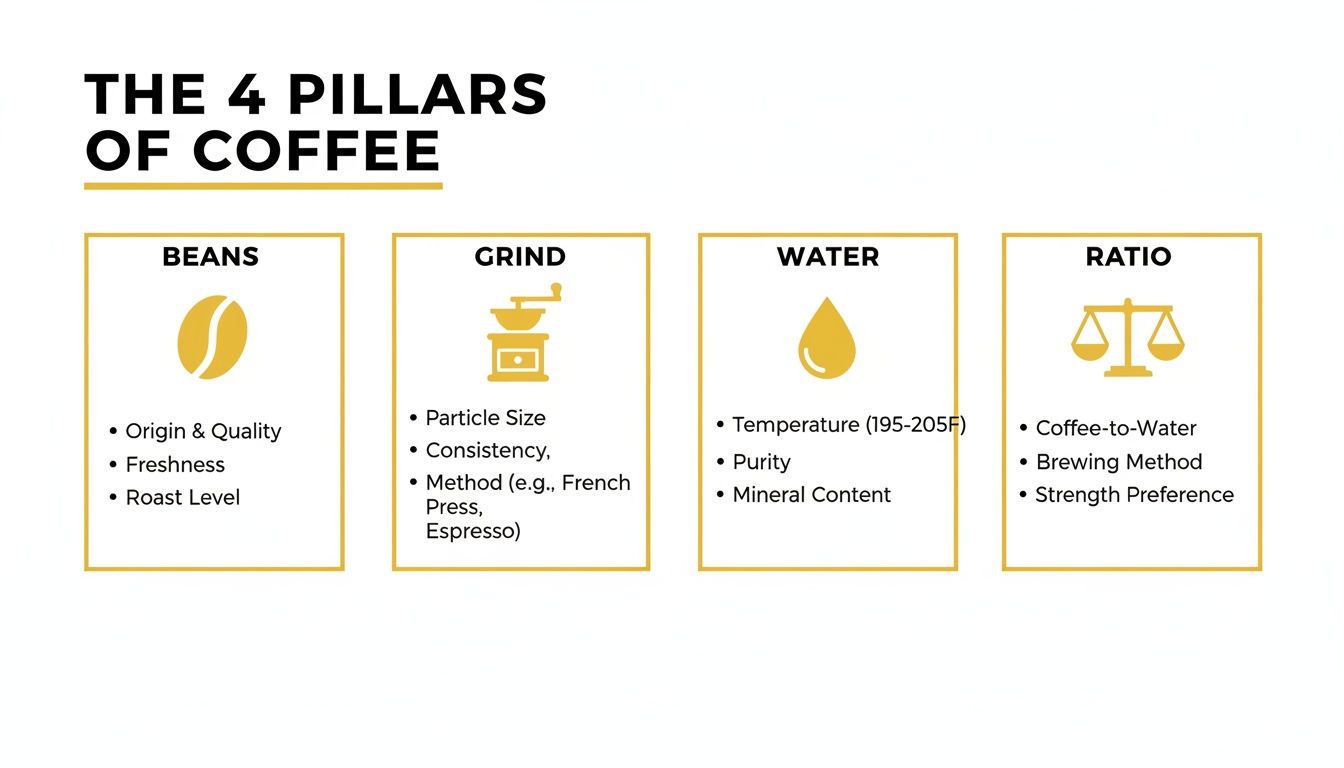
This image nails it. No matter what brewer you're using, success always circles back to these four things: the quality of your beans, the precision of your grind, the purity of your water, and the accuracy of your ratio.
The Art of the Pour-Over
For many coffee lovers, the pour-over is the pinnacle of manual brewing. It's celebrated for its ability to produce an incredibly clean, nuanced cup where the coffee’s unique flavors can really pop. You’re in complete control of every variable, from the water temperature to the speed of your pour, which is what allows the best qualities of a bean to shine.
To get started, you'll need a dripper (like a Hario V60 or Kalita Wave), a paper filter, and a gooseneck kettle for that all-important pouring precision. I highly recommend a scale, too—it's the best way to hit the ideal 1:16 coffee-to-water ratio. Your grind should be medium-fine.
The whole process kicks off with a "bloom." You'll pour just enough hot water to saturate the grounds, then pause for about 30-45 seconds to let them release trapped CO2. After that, continue pouring in slow, steady circles until you hit your target weight. The entire brew should take you somewhere between 2.5 and 4 minutes.
The magic of the pour-over is its meditative quality. It forces you to slow down and be present. The reward is a cup of coffee that reflects that care and attention to detail.
Embracing the French Press
The French Press is a classic for a reason. This immersion method is famous for producing a full-bodied, rich, and wonderfully robust cup of coffee. Because it uses a metal mesh filter instead of paper, more of the coffee's natural oils and fine particles make it into your mug, giving it that signature heavy, velvety mouthfeel.
Getting a French Press right all comes down to the grind. You need a coarse grind, something that looks like coarse sea salt. If your grind is too fine, it will sneak right through the filter, leaving you with a gritty, muddy mess. A good starting ratio is around 1:15 (that’s one part coffee to fifteen parts water).
Once you've added your grounds and hot water to the carafe, let it steep for exactly 4 minutes. Any longer and you risk over-extracting the coffee, which leads to bitterness. When the timer goes off, press the plunger down slowly and steadily. The key is to serve it all immediately to stop the brewing process.
Perfecting Your Drip Coffee Maker
The humble automatic drip coffee maker is the workhorse of countless kitchens, but let's be honest, it often gets a bad rap. The good news is that with a few simple tweaks, you can take its output from mediocre to genuinely great. It's all about feeding your machine the best ingredients.
First thing's first: use freshly ground, high-quality beans. Even the fanciest machine can't save stale, pre-ground coffee. A medium grind, similar to the consistency of regular sand, is just about perfect for this style of brewer.
Next, think about your water. Instead of filling the machine straight from the tap, use filtered water. This one small step can make a huge difference by removing chlorine and other impurities that dull the flavor. And finally, use a scale to measure your coffee and water. Sticking to the golden 1:16 ratio will ensure a balanced, consistent brew every single time.
The Boldness of the Moka Pot
Craving a strong, concentrated, espresso-like coffee without dropping a fortune on a machine? The Moka Pot is your answer. This iconic Italian stovetop brewer uses steam pressure to force water up through a bed of coffee, creating a brew that’s rich and incredibly intense.
For a Moka Pot, you'll want a fine grind, just a touch coarser than you'd use for a true espresso machine. Fill the bottom chamber with hot water, stopping just below the safety valve. Add your coffee to the filter basket, leveling it off without tamping it down.
Screw the top on tightly and place the pot on your stove over medium heat. You’ll hear it start to gurgle as the coffee fills the top chamber—that’s your cue! As soon as that sound starts, take it off the heat immediately to avoid a burnt, metallic taste.
Mastering Smooth Cold Brew
Cold brew has exploded in popularity, and it’s easy to see why. It's known for its incredibly smooth, low-acid, and naturally sweet flavor. The process couldn't be simpler, relying on time instead of heat to work its magic. This gentle extraction method is what gives you a less bitter and highly concentrated coffee.
All you need is an extra coarse grind, a large jar or pitcher, and cold, filtered water. The go-to ratio for making a concentrate is 1:8 (one part coffee to eight parts water), but feel free to play with that to suit your own taste.
Just combine the coffee and water in your container, give it a gentle stir to make sure all the grounds are wet, and let it steep. You can leave it at room temperature or pop it in the fridge for 12 to 24 hours. When it's done, strain out the grounds using a fine-mesh sieve, some cheesecloth, or a dedicated cold brew filter. The result is a concentrate you can dilute with water, milk, or ice.
If you're curious about diving even deeper into these different styles, our guide to the best coffee brewing methods has more tips and comparisons to help you find your perfect match.
Common Mistakes to Avoid
No matter which brewer you end up loving, a few common pitfalls can easily stand between you and a perfect cup. Just being aware of them is half the battle.
- Using the Wrong Grind Size: This is, without a doubt, the number one mistake. A grind that’s too fine for your method will over-extract and taste bitter. One that’s too coarse will under-extract and taste weak or sour.
- Ignoring Water Quality and Temperature: Tap water can bring all sorts of unwanted flavors to the party. And water that's either too hot or not hot enough will completely throw off the extraction. Always use filtered water heated to that sweet spot between 195-205°F.
- Inconsistent Ratios: Just "eyeballing" your coffee and water is a recipe for disaster one day and delight the next. A digital scale is a home brewer's best friend—it’s the key to making that perfect cup again and again.
- Using Stale Beans: Coffee is a fresh agricultural product. Its best flavors and aromas fade quickly after roasting. Do yourself a favor and always buy freshly roasted beans in small amounts, grinding them right before you brew.
By keeping an eye on these key details, you'll be well on your way to mastering how to make coffee at home. Your daily ritual is about to become a consistently delicious experience.
How to Troubleshoot Common Brewing Issues
Even the most meticulous home barista has off days. We’ve all made a cup that just didn't hit the mark. But instead of pouring it down the drain, think of it as a learning opportunity. A bad cup of coffee is just your beans trying to tell you that something in the process needs a little tweak.
Learning to brew great coffee at home is a journey of small adjustments and happy accidents. Once you learn to diagnose what went wrong, you can easily fix it and dial in your technique for next time. Let's walk through some of the most common problems you'll run into.
Fixing Bitter Coffee
You know that harsh, biting, and unpleasantly intense flavor? That’s bitterness, and it’s almost always a classic sign of over-extraction. It simply means you've pulled too much of the soluble stuff out of the coffee grounds, including the compounds that don't taste so great.
When bitterness rears its ugly head, a few usual suspects are to blame:
- Your grind is too fine: Finer grounds have a ton of surface area, which really speeds up extraction. If your grind is too fine for your brew method (think espresso-fine grounds in a French press), you're going to get a bitter cup. Try backing off the grinder to a slightly coarser setting.
- You brewed for too long: Letting a French press steep for six minutes instead of four, or having a pour-over that takes forever to drain, will lead straight to over-extraction. Keep a timer handy and stick to it.
- Your water is too hot: Water hotter than 205°F (96°C) can literally scorch the coffee grounds on contact, pulling out those bitter notes immediately. A good rule of thumb is to let boiling water sit for about 30-45 seconds before you start pouring.
If you suspect water temperature is your main issue, it’s worth a closer look. You can really get this variable dialed in by checking out our detailed guide on the best water temperature for brewing coffee.
Solving Weak or Sour Coffee
On the other end of the flavor spectrum is a cup that’s just… bland. It might taste weak, watery, or have a distinct and unpleasant sourness. This is a tell-tale sign of under-extraction—you didn't pull enough flavor from the coffee. The brew didn't have a chance to develop its full, sweet, and balanced profile.
Here’s how to troubleshoot a weak, disappointing brew:
- Your grind is too coarse: Water zips right through coarse grounds, not giving it nearly enough time to grab all the delicious flavors. Try tightening up your grind a notch or two.
- Your brew time was too short: If you plunge your French press after only two minutes, you're guaranteed a thin, lackluster cup. Give the coffee and water enough time to get acquainted.
- Your coffee-to-water ratio is off: This is probably the most common culprit. Not using enough coffee grounds for the amount of water will always result in a weak brew. A simple digital scale is your best friend here; the 1:16 ratio is a fantastic and reliable starting point for just about any method.
Key Takeaway: Think of extraction as a sliding scale. On one end, you have sour (under-extracted). On the other end, you have bitter (over-extracted). Right in the middle is that perfect sweet spot: a balanced, sweet, and complex cup. Your goal is always to land right in the middle.
Eliminating Grittiness and Sediment
There's nothing quite like the letdown of taking a big sip from a seemingly perfect French press, only to get a mouthful of grit. That muddy, sandy texture at the bottom of the cup comes from tiny coffee particles, often called "fines," that sneak past the filter.
For a cleaner cup, especially with immersion methods like French press, consistency in your grind is key. A quality burr grinder is worth its weight in gold because it produces a much more uniform particle size with fewer fines. Also, when you plunge your French press, do it slowly and steadily. A fast, aggressive plunge just churns up the coffee bed and forces that sediment right through the mesh filter.
Fast, Fun Coffee Recipes for When You're in a Hurry
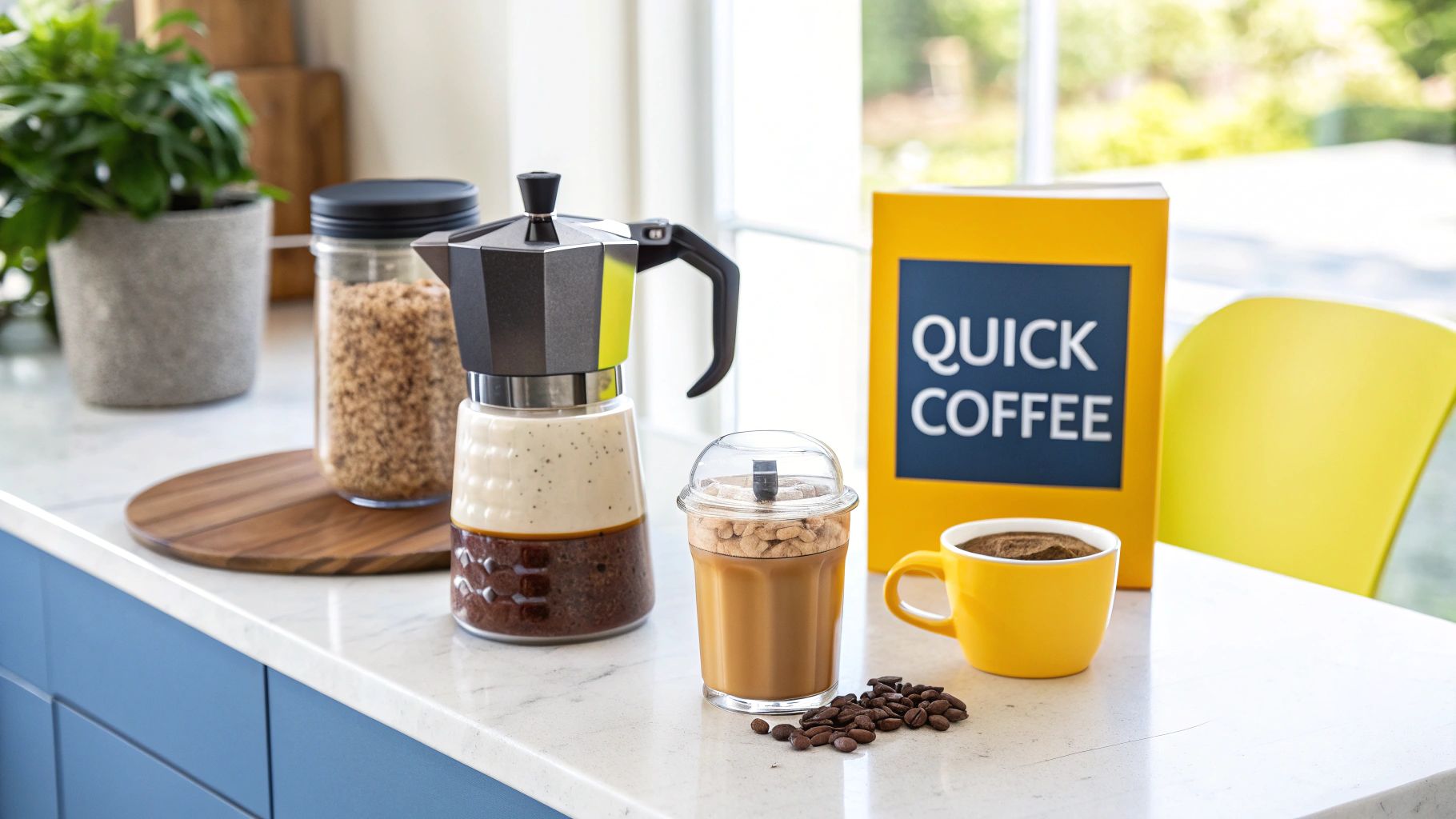
Let’s be real—some days, a meticulous, multi-step brewing ritual just isn't going to happen. But being short on time shouldn't mean you have to settle for bad coffee. This is where a truly good organic instant coffee, like ours from Cartograph Coffee, becomes your secret weapon.
Forget the bitter, dusty stuff you might remember. Modern instant coffee is a whole different game, crafted to keep the rich, nuanced flavors of the original beans. It gives you a fantastic coffee base in seconds, opening the door to all sorts of delicious, café-style drinks without the time commitment.
These recipes are all about speed and simplicity, proving that great coffee at home can be fun and creative, even on the most frantic days.
The Two-Minute Iced Latte
Why wait in a drive-thru line? You can whip up a perfect iced latte at home faster than it takes to find your keys. This one’s a lifesaver on warm afternoons or whenever you need that quick, cold caffeine kick.
- In a tall glass, dissolve one to two teaspoons of instant coffee in about two tablespoons of hot water. Stir until it’s perfectly smooth.
- Now, pack the glass with ice all the way to the top.
- Pour in your favorite milk—dairy, oat, almond, and soy all work great here. Just leave a little space at the top.
- If you have a sweet tooth, this is the time to add a pump of vanilla or caramel syrup. Give it one last stir, and you're good to go.
And that's it. A creamy, perfectly chilled iced latte in less than two minutes.
Speedy Mocha for a Rich Treat
When you’re craving something that feels truly decadent, this quick mocha hits the spot without any fuss. It's the perfect way to reward yourself after a long day or to get a cozy start on a chilly morning.
Start by mixing your instant coffee, a tablespoon of cocoa powder, and any sugar or sweetener right in your mug. Add just enough hot water to form a thick, chocolatey paste and stir like you mean it until there are no lumps.
All that’s left is to top it off with hot or steamed milk. If you want to go all out, a dollop of whipped cream and a dusting of cocoa powder takes it from a simple drink to a seriously indulgent experience.
Traveler’s Tip: I like to make my own "mocha packets" for trips. In a small reusable bag, I pre-mix a serving of instant coffee, cocoa powder, and sugar. When I need a boost, all I have to do is find some hot water.
Power Up with a "Proffee" Smoothie
"Proffee"—the mashup of protein and coffee—has become a go-to for anyone looking for a nutritious, energizing start to their day. It’s an awesome post-workout recovery drink or a surprisingly satisfying meal replacement when you’re on the move.
Making one couldn't be easier, and you can customize it endlessly.
- Build Your Base: In a blender, combine one scoop of protein powder (vanilla or chocolate are fantastic here), a ripe banana for natural sweetness, and a cup of milk or a dairy-free alternative.
- Get the Coffee Kick: This is where instant coffee shines. Dissolve one or two teaspoons in a splash of hot water and pour it right into the blender. It mixes in perfectly without watering down your smoothie's texture.
- Boost and Blend: Throw in a handful of ice, a spoonful of almond butter for healthy fats, or even some spinach if you’re feeling extra virtuous. Blend until it's completely smooth and creamy.
This smoothie gives you a solid balance of protein, carbs, and caffeine to fuel your body and mind, making it a seriously smart and delicious part of your home coffee routine.
Your Home Brewing Questions, Answered
Once you start brewing your own coffee, you’ll inevitably run into a few questions. That's a good thing—it means you're paying attention to the details! Here are some straightforward answers to the things we get asked most often.
How Should I Store My Coffee Beans?
The enemy of fresh coffee is oxygen, light, heat, and moisture. Your best defense is a simple one: store your beans in an airtight, opaque container and keep it in a cool, dark place like a pantry.
Whatever you do, don't put them in the fridge or freezer! That’s a common misconception that actually does more harm than good. The condensation can ruin the oils that carry all that wonderful flavor. For the best possible cup, only grind what you need right before you brew. It's the single best habit you can adopt to preserve those delicate aromas.
Can I Just Use Water From the Tap?
You can, but if you've invested in great beans, you're not doing them justice. Tap water often contains minerals and chlorine that can muddle the taste, hiding the very notes you're trying to coax out.
The easiest way to level up your brew is to simply use filtered water. It provides a clean, neutral canvas that lets the coffee’s true personality shine. It’s a small change that makes a massive difference in the final cup.
How Often Do I Really Need to Clean My Gear?
Think of it this way: you wouldn't cook in a dirty pan. Old coffee oils build up fast, go rancid, and will make every future brew taste bitter and stale. Keeping your equipment clean is non-negotiable.
- Drip Machines: Descale it once a month. Just run a cycle with a 50/50 mix of white vinegar and water, then follow it up with two rinse cycles of plain water.
- French Press & Moka Pots: These need a good rinse with hot water after every single use. Disassemble them to get all the gunk out.
- Grinders: A quick brush-out once a week will keep old grounds and oils from contaminating your fresh beans.
Is It Worth Splurging on Expensive Equipment?
Honestly, no—at least not at first. You can brew incredible coffee with a simple Pour-Over or French Press. Your technique matters so much more than the price tag of your brewer.
If you're going to invest in one piece of gear, make it a quality burr grinder. A consistent grind is the foundation of good coffee extraction. It will have a bigger impact on your flavor than almost any other variable. Start simple, dial in your process, and let your passion guide you on when (or if) it’s time to upgrade.
For those times you crave a perfect cup without the prep, Cartograph Coffee makes a premium organic instant coffee that’s ready in seconds. It’s the perfect answer for busy mornings or travel when you don't want to compromise on taste. Check out our collection at https://cartographcoffee.com.