The beauty of a café au lait lies in its simplicity. At its heart, it’s just two ingredients: strong brewed coffee and an equal measure of steamed milk. That's it. No espresso machine needed, which makes this elegant, creamy classic something you can easily whip up at home.
What Makes a True Cafe au Lait

Before we get to the how-to, let's talk about what makes this drink unique. It's easy to confuse a café au lait with a latte, but the difference is in the coffee itself. A true, traditional café au lait uses strong, drip-brewed or French-pressed coffee—not espresso.
This one change creates a completely different experience. You get a milder, more harmonious flavor where the coffee and milk truly blend together, rather than the bold, sharp profile of an espresso-based drink.
To really get it, you have to look at its roots in French cuisine, where it’s a beloved staple.
The Heart of French Cafe Culture
The café au lait has been a fixture in France since the 17th century, becoming a Parisian café icon by the 1850s. It wasn't just a drink; it was a morning ritual. By 1900, cafés in Paris alone were pouring over 5 million cups a year. It was, and still is, the quintessential French breakfast coffee.
This history is why its simplicity is so important. And today, you can get that same authentic experience even more easily. High-quality instant coffee, like ours from Cartograph, lets you create that rich, satisfying coffee base in just a few seconds. It proves you don't need fancy gear to enjoy a timeless classic.
Brewing With The Traditional French Press Method
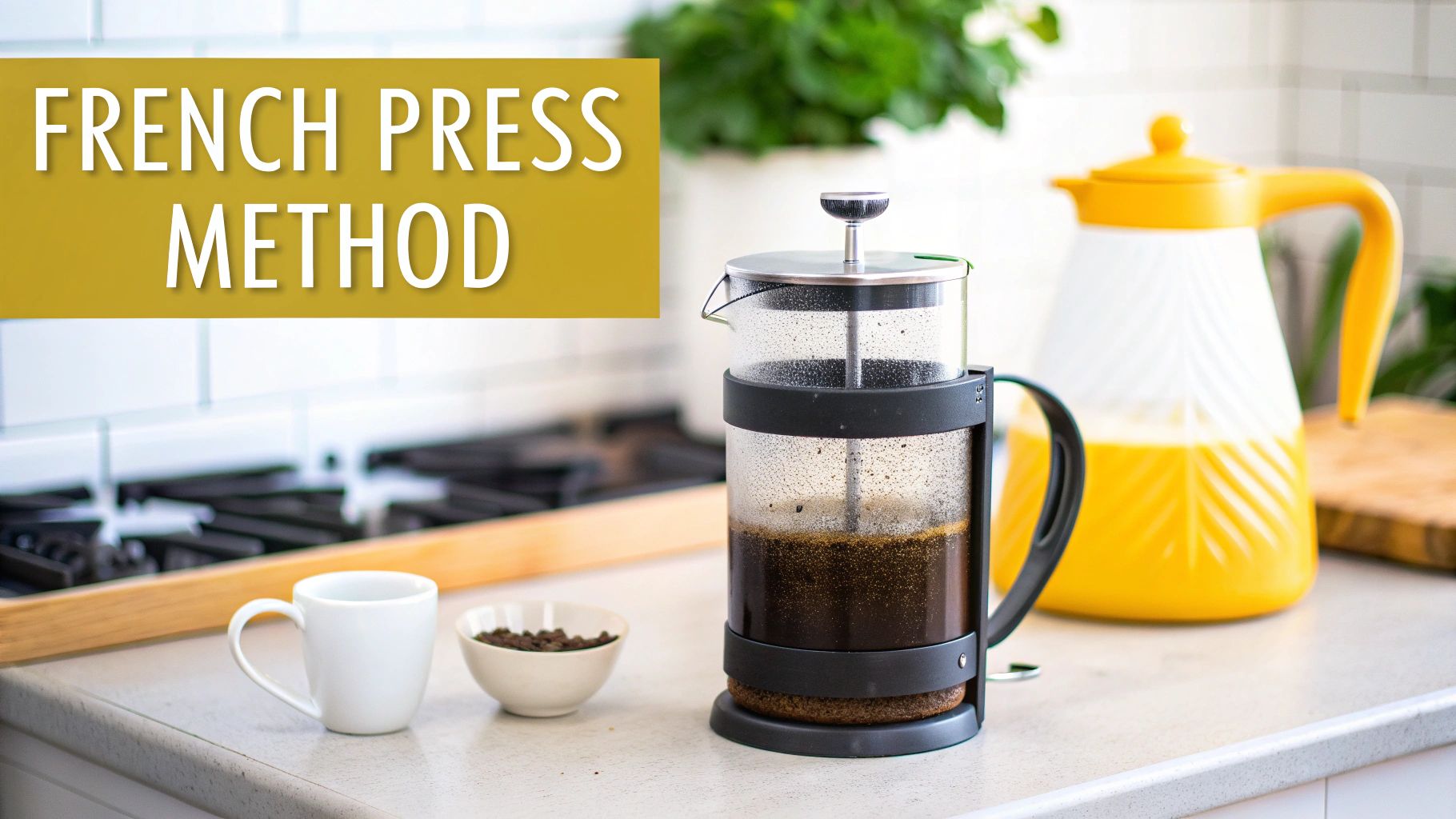
If you're after a truly authentic café au lait, nothing beats a French press. Known as a cafetière in its homeland, this simple device makes a rich, full-bodied coffee that perfectly complements the steamed milk. It’s a classic for a reason—it’s all about technique, not fancy gadgets.
Your journey starts with the coffee itself. You absolutely need coarsely ground beans. Anything finer, like an espresso grind, will slip right through the filter, leaving you with a gritty, muddy cup. Even worse, it can clog the press and lead to a bitter, over-extracted mess.
Perfecting The Brew And Milk
Once you have your coarse grounds, let's talk about water. Never use boiling water directly on your coffee; it will scald the grounds and give your brew a burnt, unpleasant taste. The sweet spot is between 195°F and 205°F (90-96°C). No thermometer? No problem. Just bring your kettle to a boil, then let it rest for about 30 seconds before you pour. Getting this right is a game-changer, and understanding the correct temperature for coffee will elevate every cup you make.
Add the hot water to your grounds and let it steep for four minutes. Four minutes exactly. This is the magic number for extracting all those wonderful flavors without tipping into bitterness.
Pro Tip: While your coffee steeps, get your milk ready. Pour it into a small saucepan and warm it gently over low-to-medium heat. You're looking for it to get steamy with small bubbles forming at the edges—don't let it boil, or you’ll compromise the flavor and texture.
If you’re new to this brewing style, getting comfortable with how to use a cafetière is the key to creating that perfect, rich foundation for your drink.
Now for the final, and most crucial, step: the pour. To get that signature creamy blend, you need to pour the brewed coffee and the warm milk into your bowl or cup simultaneously. It's this simple act that melds them together perfectly, creating the quintessential Parisian breakfast experience right in your own kitchen.
Making an Instant Cafe au Lait with Cartograph Coffee
Let's be real—not every morning allows for the relaxed ritual of a French press. When time is tight, a fantastic instant coffee is your best friend. It lets you whip up a rich, satisfying café au lait in less than two minutes without compromising on taste. Using a quality organic instant, like ours at Cartograph, means you get all the deep coffee flavor you want, with none of the hassle.
This quick method is a lifesaver whether you're at the office, out camping, or just need a great cup of coffee without the wait. The trick is to use an instant coffee that dissolves perfectly and has enough character to stand up to the milk. We're not talking about the bland, gritty stuff from decades past; today's premium instants are in a different league entirely. To see just how much things have changed, take a look at our detailed instant coffee review.
Crafting Your Quick Coffee Base
First, let's get that coffee concentrate ready. Just dissolve one to two teaspoons of Cartograph instant coffee into about four ounces of hot water. Aim for water that’s hot but not boiling, and stir until every last granule is gone. What you're left with is a smooth, strong coffee base, perfect for your drink.
The shift to making coffee at home is huge, and it’s a big reason why the US coffee market is a $45+ billion industry. With roughly 73% of Americans drinking coffee every day, many are looking for quick, milky options they can make themselves. This is exactly where a top-notch instant coffee fits in. You can dive deeper into the latest numbers with these current coffee consumption trends from the USDA.
Now, for the milk. You've got a couple of super-fast options:
- Handheld Frother: This is my go-to. Warm four ounces of milk in the microwave for 45-60 seconds, then hit it with a handheld frother for about 20 seconds. You’ll get a lovely, creamy foam in no time.
- Microwave Trick: If you don't have a frother, just pour your milk into a jar with a tight lid. Shake it like crazy for 30 seconds, then take the lid off and microwave for another 30 seconds. The heat sets the foam beautifully.
Once the milk is frothed and the coffee is ready, pour them into your mug at the same time. Letting them flow in together helps them mix perfectly, creating that velvety texture you’d expect from a good coffee shop.
Finding Your Perfect Coffee to Milk Ratio
The secret to a truly great café au lait isn’t about following a rigid recipe. It's all about personal taste and finding that perfect balance between rich coffee and creamy milk.
Traditionally, the French go for a simple 1:1 ratio. This creates that beautiful harmony where neither the bold coffee nor the sweet milk overpowers the other. It’s a smooth, well-rounded drink that’s stood the test of time for a reason. Think of this as your starting point, a reliable classic you can always come back to.
But the real fun begins when you start experimenting.
Adjusting The Ratio To Your Taste
Are you in the mood for something a bit milder and creamier? Try tilting the scales toward the milk with a 1:1.5 ratio—that's one part coffee to one and a half parts milk. This little adjustment makes for an incredibly soft, comforting drink.
On the flip side, if you need a serious coffee kick to cut through the richness, a 2:1 ratio will be your best friend. This puts the coffee’s character front and center, giving you a much more robust flavor to start your day. Of course, knowing how many grams of coffee per cup you’re brewing with is crucial for getting that base strength just right.
This handy guide breaks down how different ratios change the final drink.
Cafe Au Lait Ratio Guide
| Ratio (Coffee:Milk) | Flavor Profile | Best For |
|---|---|---|
| 1:1 | Balanced & Classic | The traditional experience where coffee and milk are equal partners. |
| 1:1.5 | Creamy & Mild | A softer, more milk-forward drink, perfect for a gentle morning. |
| 2:1 | Bold & Coffee-Forward | A robust brew where the coffee flavor is the star of the show. |
Ultimately, there's no right or wrong answer. Play around with these ratios until you land on what tastes best to you.
It turns out, a lot of people are on this same quest for the perfect milky coffee.
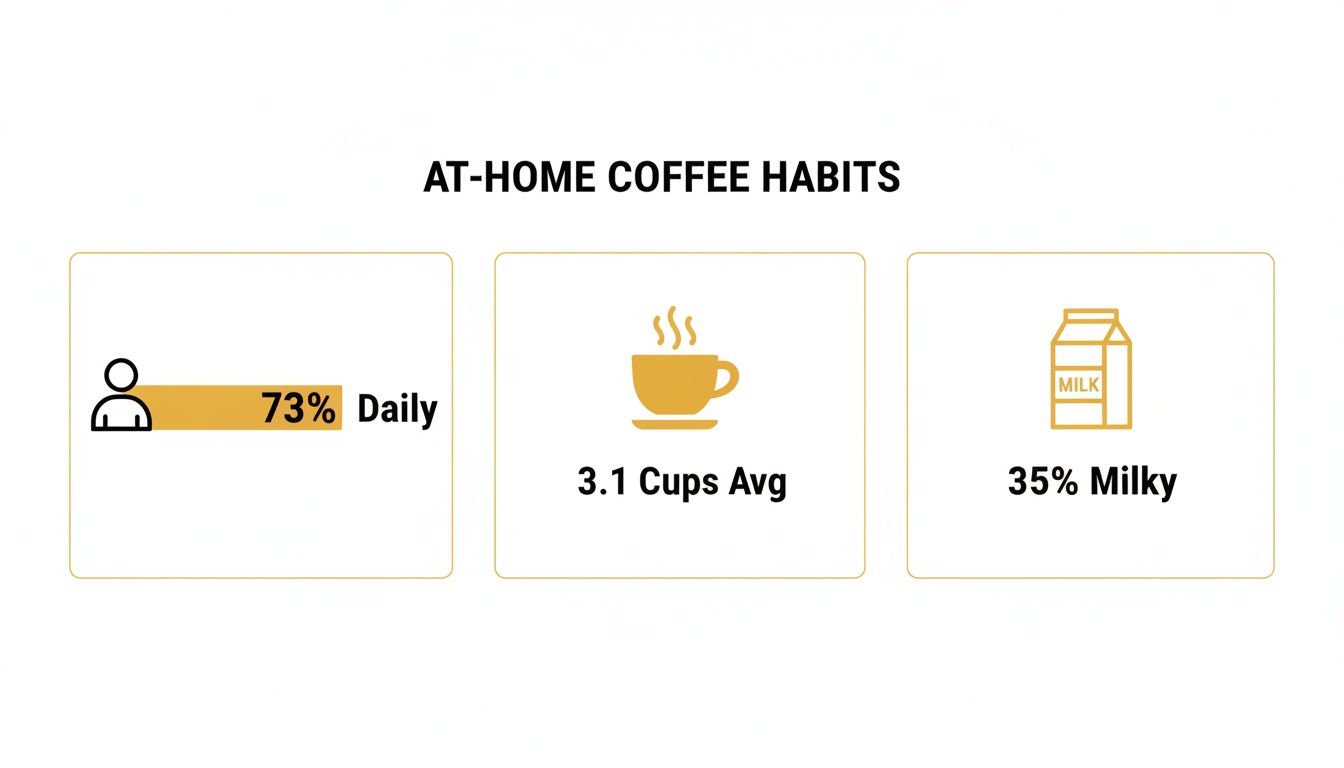
With 35% of at-home coffee consumption being milky drinks, it’s clear that getting that balance right is a top priority for many of us.
The strength of your initial brew is just as important as the ratio. A stronger coffee base will require more milk to achieve balance, while a weaker brew might get lost if you add too much.
Time to Get Creative: Café au Lait Variations

Once you've nailed down your preferred ratio, the classic café au lait is a fantastic starting point for all sorts of delicious experiments. It’s incredibly easy to adapt this simple drink for any season or mood. Let’s start with a warm-weather favorite: an iced version.
The trick to a truly great Iced Café au Lait is avoiding that watered-down flavor that happens when the ice melts. My personal method is to brew a stronger coffee concentrate. Whether you’re using a French press or our instant coffee, just double the grounds or powder while keeping the water amount the same.
Let that concentrate cool down a bit, then pour it over a tall glass packed with ice. Top it off with cold milk, and you’ll have a rich, refreshing drink that stays bold and flavorful right down to the last drop.
Dairy-Free and Flavored Twists
Going dairy-free with your café au lait is a breeze, and it’s fun to see how different plant-based milks change the character of your coffee.
- Oat Milk: This is my top pick for its incredible creaminess and ability to froth up, giving you a texture that's very close to whole milk.
- Almond Milk: If you want something a bit lighter, almond milk offers a subtle nuttiness that pairs beautifully with medium or dark roast coffees.
- Soy Milk: A classic choice that provides a balanced flavor and creates a pretty decent microfoam when you steam it.
Don’t be afraid to add your own personal touch. A little splash of syrup or a sprinkle of spice can turn your daily coffee into something special. It's the easiest way to make your drink exactly how you like it.
A pump of vanilla or caramel syrup adds a lovely sweetness. For something simpler, a dusting of cinnamon or nutmeg on top brings a warm, aromatic finish. These little tweaks are all it takes to elevate your homemade café au lait from good to great.
Answering Your Café au Lait Questions
Even the most straightforward coffee drinks can have their quirks. Let's tackle some of the most common questions that come up when you're making a café au lait at home. Think of this as a quick chat with a barista to clear up any confusion.
Cafe au Lait vs. Latte: What's the Real Difference?
This is easily the question I hear most often, and it all comes down to one thing: the coffee. A true café au lait is made with strong brewed coffee, like the kind you'd get from a French press or a drip coffee maker. A latte, on the other hand, is always built on a shot of espresso.
That single difference changes everything about the drink. A café au lait is softer, mellower, and more balanced. A latte, with its concentrated espresso base, is much bolder and more intense. You’ll also feel the difference in the milk—a café au lait uses gently warmed or steamed milk, while a latte has that distinct, velvety layer of microfoam on top.
It's a simple but crucial distinction: brewed coffee makes a café au lait, espresso makes a latte. One is a gentle morning companion, the other is a bold kickstart.
What Kind of Coffee Should I Use?
For a classic café au lait, you need a coffee with enough backbone to stand up to all that creamy milk. I always recommend a good medium to dark roast. Its deeper, more robust flavors won't get washed out. A classic French roast is perfect here, giving you those rich, slightly smoky notes that are just fantastic with warm milk.
The same logic applies if you're going the instant route. A high-quality instant like Cartograph's is designed to have that full-bodied character, so your quick coffee base is strong enough to create that perfect 50/50 balance.
Why Is It Sometimes Served in a Bowl?
Ah, the bowl! This is such a charming French tradition, and it's both practical and cozy. First, on a chilly morning, there's nothing quite like cupping a big, warm bowl of coffee in your hands.
But the main reason is for dipping. The wide opening of the bowl is perfectly designed for dunking a croissant or a piece of baguette right into the coffee. It’s not just for convenience—it's a core part of the French breakfast ritual, turning a simple drink and pastry into a single, satisfying experience.
Ready to make a perfect café au lait in seconds? Cartograph Coffee offers premium organic instant coffee that delivers rich, full-bodied flavor without the fuss. Try it today and elevate your daily coffee routine.