You're standing in front of a Keurig display, late for work or packing for a trip, staring at rows of pods labeled bold, extra dark, and double caffeine. The problem is that those words don't tell you the same thing. Some describe flavor, some describe marketing, and some point to a decidedly stronger dose.
The smartest way to shop for high caffeine K cups is to stop treating “high caffeine” as a fixed product category. Caffeine varies by bean, serving size, roast, grind, and brewing method, so the best pod depends on whether you want one concentrated cup, several manageable servings, a travel-friendly option, or a stronger flavor without a bigger caffeine load.
Why Caffeine Strength in K Cups Matters
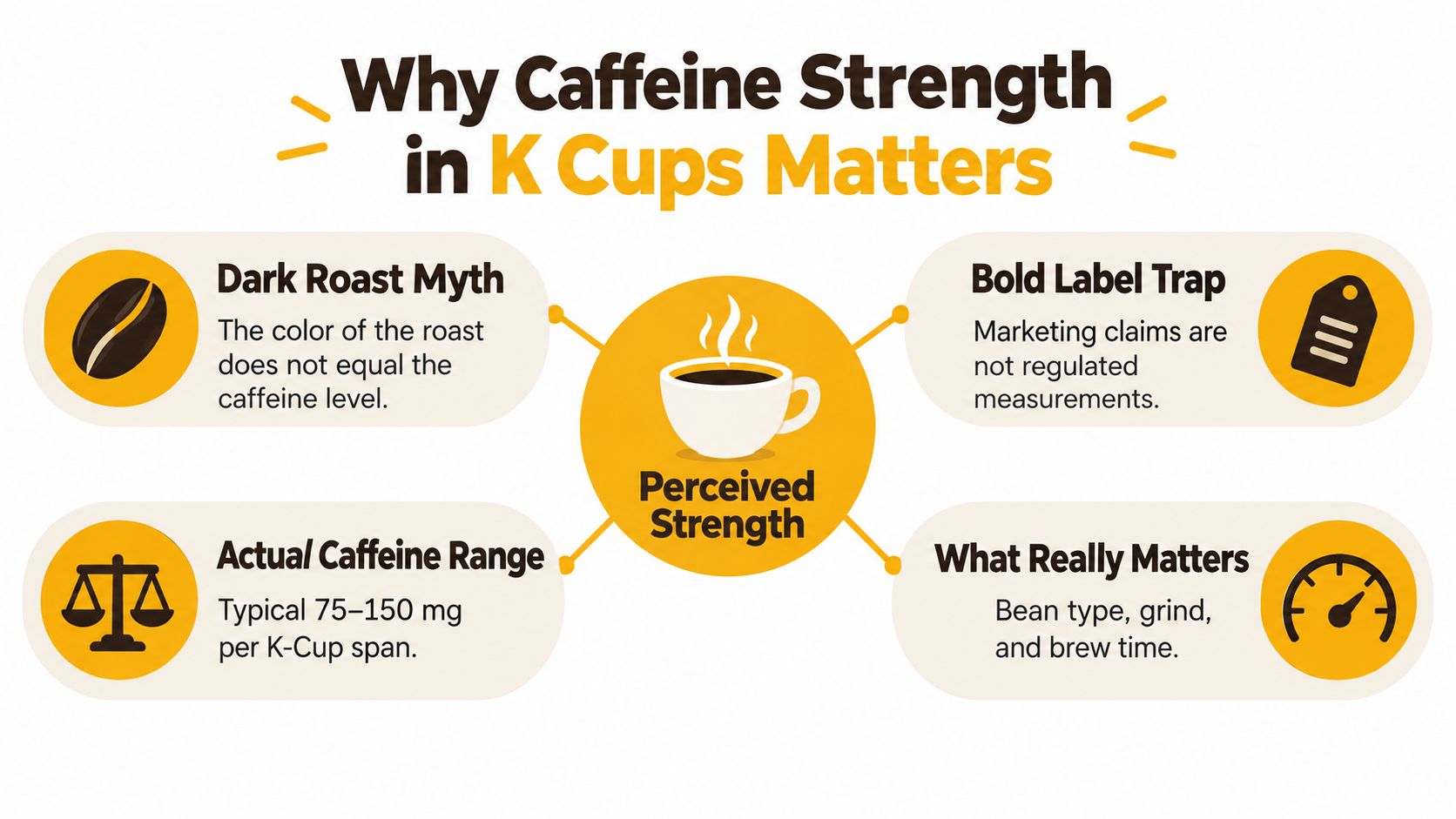
You grab a pod marked bold before an early drive, expecting a bigger kick. What you often get is a darker, heavier taste, not automatically more caffeine. Flavor strength and caffeine strength are separate measurements, and K-Cup labels blur that difference all the time.
That matters because “high caffeine” is not one neat pod category. It shifts with the coffee inside the capsule, the brew size you choose, and how much of that cup you drink. General guidance for Keurig-style servings places many pods around 75–150 milligrams per K-Cup, and an 8-ounce coffee serving often lands near 100 milligrams, according to the Center for Science in the Public Interest' caffeine guidance. So the smarter question is not “Which pod is strongest?” It is “Which pod gives me the amount I want for this routine?”
Per pod and per ounce answer different questions
Per-pod caffeine tells you your likely total intake from the capsule. Caffeine per fluid ounce tells you how concentrated the drink feels in the cup. Those are not the same thing, and if you mix them up, you buy the wrong pods.
Brew one capsule into a larger mug and the coffee usually tastes lighter because more water spreads out the flavor. The pod may still deliver a substantial total dose. Brew the same pod on a smaller setting and the cup tastes denser and sharper, even if the total caffeine from that capsule stays in a similar range.
This is why routine matters more than label drama. A commuter nursing one large mug, a parent reheating half-finished coffee, and a camper drinking two short cups can all use the same pod and experience it differently. Taste alone is a poor guide.
Read the label like a measurement, not a promise
Start with a stated caffeine amount per serving. If the package gives a number, check what that number applies to. Some brands frame it around the whole pod, others around a prepared serving size. Also check whether the pod is meant for a standard cup or a larger brew.
If the box gives you only words like “intense,” “bold,” or “dark,” read them as roast and flavor cues. They help with taste expectations. They do not reliably tell you caffeine strength.
Practical rule: Choose the pod by caffeine per serving first, then choose roast and flavor profile.
Caffeine Benchmarks You Can Trust
You grab a pod labeled extra bold before an early meeting. That sounds like a caffeine upgrade, but “high caffeine” is not a fixed product category. It is a moving target. The only benchmark that helps is a real number tied to a serving size.
For K-Cups, a practical starting range is 75–150 milligrams of caffeine per serving. The Mayo Clinic's coffee guidance lists average brewed coffee at 96 milligrams per 8 ounces, and instant coffee at 62 milligrams per 8 ounces in the same comparison set. For a broader method-by-method comparison, see Cartograph Coffee's guide to coffee caffeine content.
That frame matters because it keeps routine in view. A 150-milligram pod lands well above the instant benchmark and above the cited brewed-coffee average too. So if your normal habit is one standard mug, a pod near the top of the K-Cup range can already be your strong option. You do not need a dramatic label to get there.
Use the FDA benchmark as a ceiling
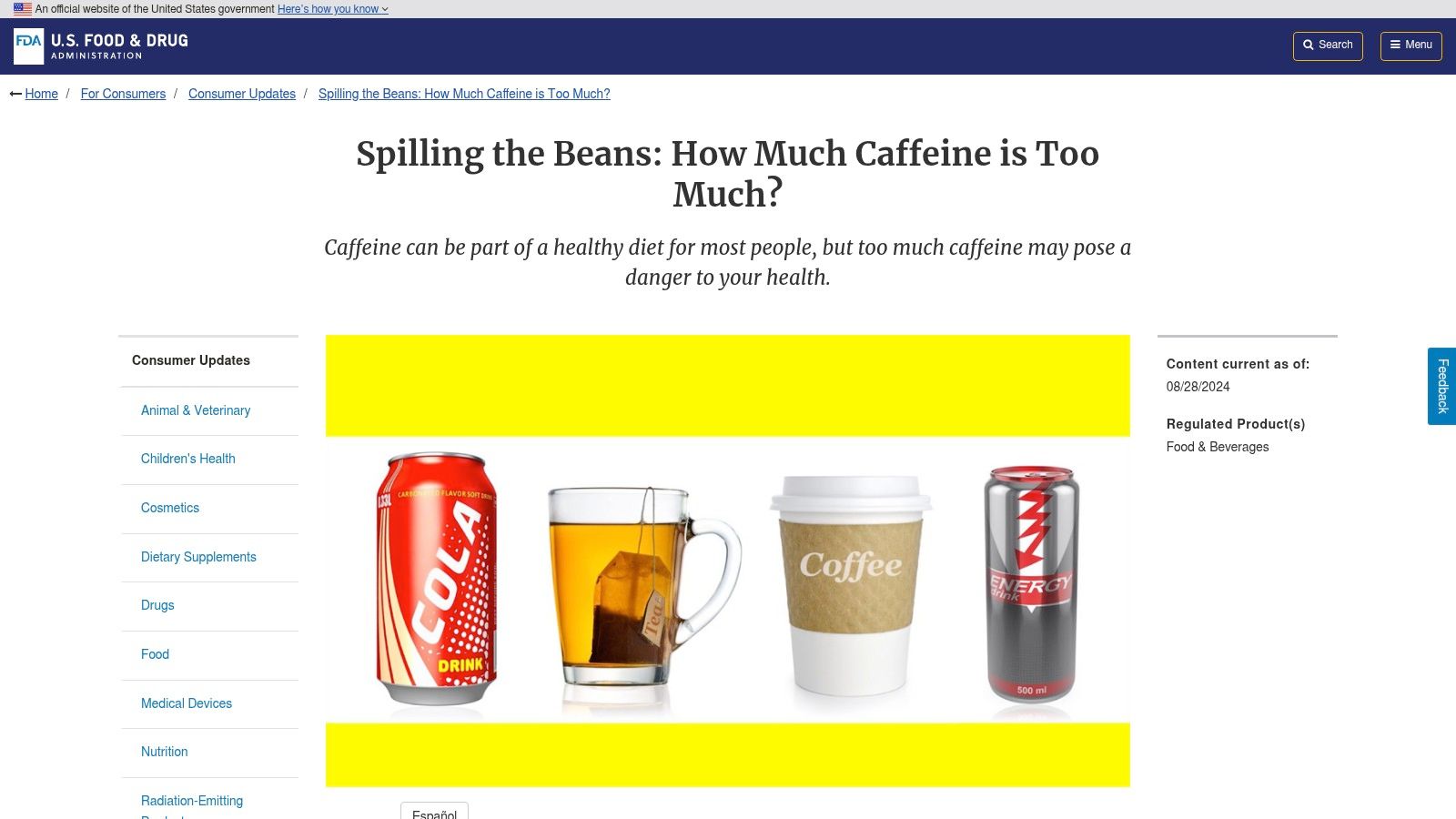
The daily reference point is simpler. FDA's caffeine guidance says 400 milligrams of caffeine per day is an amount not generally associated with negative effects for most adults, and describes that as roughly two to three 12-fluid-ounce cups of coffee. Use that as a ceiling, not a goal.
Here is what that looks like in pod math:
- Two 150-milligram pods add up to 300 milligrams, or 75% of that benchmark.
- Three 150-milligram pods total 450 milligrams, which is 50% above it.
- Four 100-milligram pods reach 400 milligrams before you count anything else.
Tea, soda, energy drinks, chocolate, and caffeine supplements all count in the same daily total.
Build a mental ruler
Use these numbers to match pods to your actual day. A pod near 75 milligrams fits a slower, refill-heavy routine better. A pod near 150 milligrams fits someone who wants one assertive cup and plans to stop there.
Repetition is what sneaks up on people. One pod in the car, one at work, and one during the afternoon can turn a manageable habit into an uncomfortable one fast. Judge any high-caffeine K-Cup against your total daily intake and your routine, not the shelf language on the box.
Comparing High Caffeine K Cup Options
You want a pod that actually changes your morning, not one that just tastes darker. That means treating “high caffeine” as a loose category, not a fixed product type. Some pods disclose a bigger dose. Some only taste stronger. Some give you more control than convenience. The best choice depends on whether you want one assertive cup at home, a simple office option, or a repeatable routine you can tune yourself.
There are four practical paths: buy a pod with a clearly stated higher caffeine amount, choose a product built around beans associated with stronger caffeine potential, use a larger serving format, or fill a reusable pod with coffee selected for the kind of strength you want.
| Option Type | Typical Caffeine per Serving | Price Tier | Keurig Compatibility | Flavor Trade-Off |
|---|---|---|---|---|
| Extra-bold dark roast pod | Often within the broad 75–150 mg K-Cup range when no higher figure is disclosed | Low to medium | Usually broad, but check the package | Roasty, bitter, and intense without necessarily adding more caffeine |
| Specialty high-caffeine SKU | Varies substantially by product and serving size | Medium to high | Check brewer and pod specifications | More caffeine can come with heavier body or sharper bitterness |
| Larger serving-size pod | Depends on the pod's labeled serving and extraction | Medium | Machine compatibility varies | Convenient volume, but larger cups can taste diluted |
| Reusable pod with selected grounds | Depends on the coffee, dose, and extraction | Low ongoing cost, with upfront equipment | Depends on the reusable pod and brewer | More control, but inconsistent results if grind and fill are poor |
Extra-bold isn't automatically stronger
This is the easiest mistake to make. Dark roast pods often taste more aggressive because roasting pushes smoky, bitter, and charred notes forward. That flavor intensity can make a cup seem stronger even when the caffeine is ordinary.
If your goal is alertness, shop by disclosed caffeine information first and roast profile second. A dark pod can still be the right pick if you want a heavier, more forceful cup, but it should not get an automatic pass as a high-caffeine option. For a useful flavor-focused comparison, see Cartograph Coffee's guide to dark roast coffee pods.
Specialty pods are the clearest shortcut
If you want the simplest answer, start here. Specialty pods marketed around higher caffeine are usually the most direct fit for people who want one stronger serving without trial and error. You are paying for clarity and convenience more than subtlety.
The trade-offs are straightforward. Selection can be narrower, compatibility sometimes needs a second look, and the flavor can be more divisive than standard breakfast blends. Many of these products use high-caffeine blends because the variety is associated with higher natural caffeine than arabica, but a bean claim still is not the same thing as a measured serving amount. If the package does not tell you the dose, you are still estimating.
Larger formats help some routines, not all
A larger serving-size pod makes sense for someone who wants one long mug instead of two smaller brews. That is a routine decision, not proof of a stronger pod. It can feel more satisfying in a travel mug, but the flavor may come across thinner if the extraction and water volume do not line up well.
Choose this format for convenience and volume, not because the box implies maximum kick.
Reusable pods give you the most control
Reusable pods are the best fit for people who want to shape the cup themselves. You can adjust grind, fill level, coffee origin, and water volume until the result matches your routine. If you care about reducing packaging waste, this route also makes practical sense. Someone buying low-waste coffee from Fillaree may prefer reusable brewing because bulk coffee supports a steadier, less disposable habit.
The downside is consistency. A reusable pod can disappoint fast if the grind is off, the coffee is stale, or the basket is overpacked. For commuting, shared kitchens, or anyone who wants zero fuss, factory-sealed pods usually win. For home use, reusable pods offer the most control and the widest range of outcomes.
Brewing Considerations That Change Your Cup
A high-caffeine pod can still produce a disappointing drink if the machine is poorly maintained or the brew settings don't match the coffee. The goal isn't to force every pod through the smallest button available. It's to create repeatable contact between hot water and grounds, then choose a cup size that fits the dose.
Adjust the machine before blaming the pod
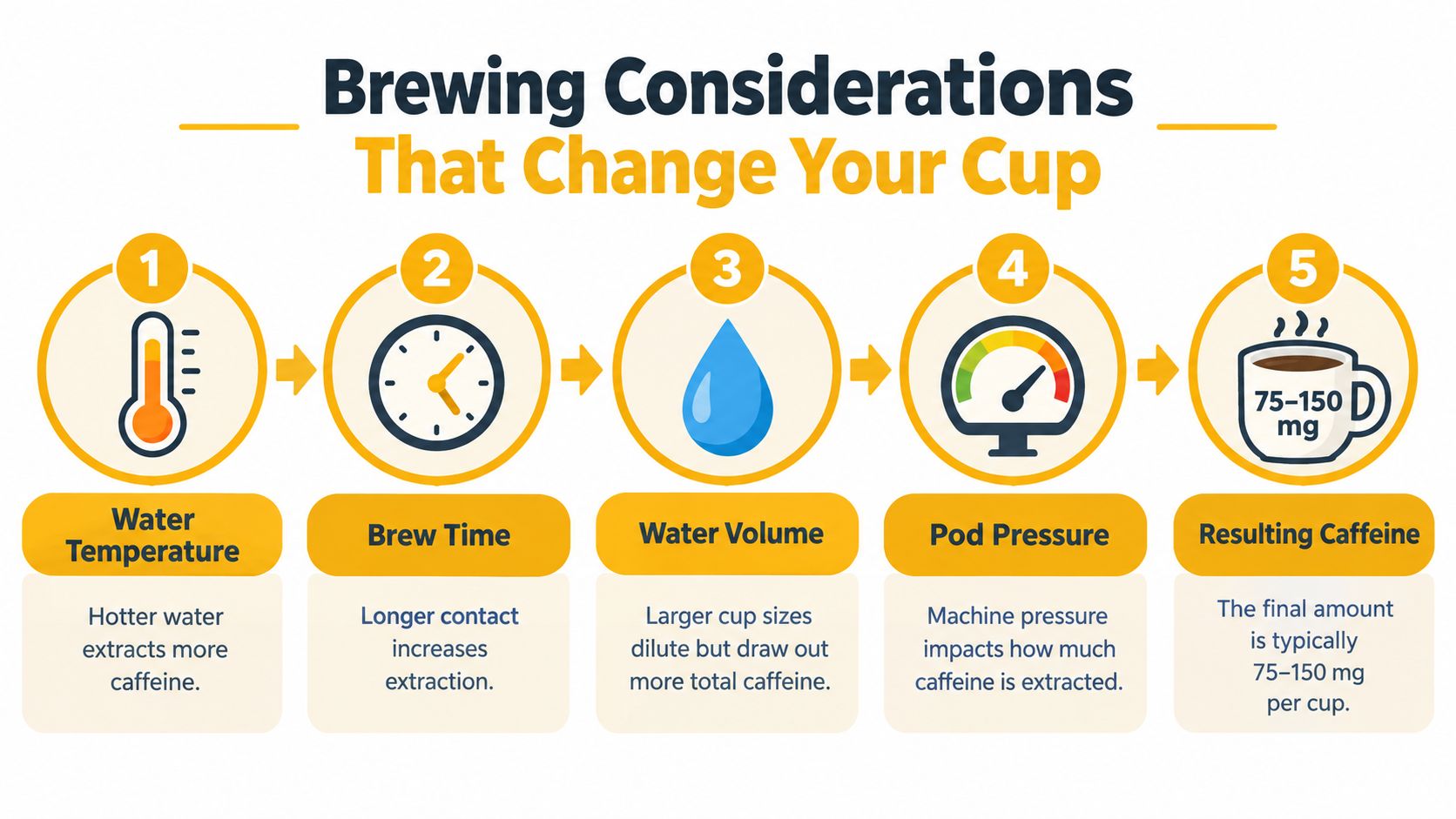
If your brewer has a Strong setting, use it when you want more extraction and a fuller cup. The machine may slow the brew or alter its process, giving water more contact with the grounds. That can improve body and perceived intensity, although it doesn't turn a low-caffeine pod into a high-caffeine one.
Water volume changes concentration. A smaller cup generally tastes stronger because the extracted coffee is diluted less. A larger mug can taste lighter, but it doesn't automatically mean the pod contained less caffeine. Brewing volume and total extracted caffeine are related, but they aren't interchangeable.
Temperature and preheating matter too. Run a water-only cycle if your machine starts cold, and keep the brewer descaled. Mineral buildup can interfere with flow and heat, producing a thin or inconsistent cup.
Reusable pods need a deliberate method
For reusable systems, grind size and fill level matter more than many expect. A grind that's too coarse can produce a weak drink, while overfilling can slow water flow and create a harsh extraction.
A double pass through a reusable pod may intensify flavor, but it also increases the chance of bitterness and does not guarantee a predictable caffeine amount. If you use this technique, test it with your own coffee and keep the routine consistent rather than assuming “more passes” always means “better.”
For help identifying drink styles before changing your brew method, use this practical barista's guide to coffee drinks from Monopack ltd.
Troubleshooting: Old or partially used pods are the fastest way to get a flat, disappointing cup. Use fresh pods, store them properly, and never expect a second brew from a capsule designed for one extraction.
For a stronger Keurig-style drink, the espresso shots for Keurig guide can help you compare concentrated formats with standard pod brewing.
Use Cases for Stronger Pods
The right high-caffeine K-Cup depends less on a universal “strongest” label and more on how your day is structured. One person needs a single concentrated cup. Another needs a moderate dose they can repeat without pushing too far.
The busy professional
If you drink coffee across a long workday, choose pods with a clearly disclosed caffeine amount near the lower or middle part of the typical range. That gives you more room to manage timing and other sources instead of spending most of your daily allowance in the first cup.
A labeled 100-milligram pod can be easier to plan than an opaque “extra intense” product. Brew it at a smaller volume when you want a denser flavor, but count the whole serving toward your daily intake.
The camper or hiker
Outdoor users should prioritize portability, reliable preparation, and a single satisfying serving. A sealed high-caffeine pod works well only if the trip includes a compatible brewer. If you're carrying gear away from electricity, a measured instant option may be more practical than hauling a machine or improvising with grounds.
For a campsite with a compatible brewer, choose a pod you've already tested at home. Don't make an unfamiliar, highly caffeinated product your first experiment on an early hike. Strong flavor, stomach sensitivity, and caffeine response are easier to evaluate in a normal routine.
The parent on a compressed morning
Parents juggling school drop-off usually need speed and consistency, not maximum intensity. A balanced pod with a known serving amount is the better choice because it provides a repeatable start without forcing a heavy roast or an extreme dose.
Use the cup size to control taste, not to convince yourself you've changed the caffeine content. A concentrated small cup may feel more satisfying than a large, diluted mug while remaining easier to finish before leaving the house.
The shared office machine
An office brewer creates a social problem as much as a coffee problem. You may want more caffeine, while everyone else wants a smooth, familiar cup.
Keep individually packaged stronger pods separate from the communal supply and label them clearly. Choose a product with disclosed caffeine when possible, and don't assume coworkers understand that “bold” can describe roast flavor rather than caffeine.
The weekend project
For a long repair, writing session, or household project, a stronger single cup can be reasonable if you don't plan to keep stacking servings. Pick a pod that delivers the flavor you actually enjoy. A bitter cup you force down won't make the routine better, even if the label sounds powerful.
The best choice here is usually the strongest pod you can tolerate comfortably, not the strongest product you can find.
Safety, Daily Limits, and When to Step Back
You grab a “high caffeine” pod to survive a packed day, then add an afternoon tea or energy drink without thinking much about it. That is how people overshoot. High caffeine is not a fixed category with one clear cutoff, and K-Cup labels do not make it easy. Treat every stronger pod as a variable dose, not a standard product type.
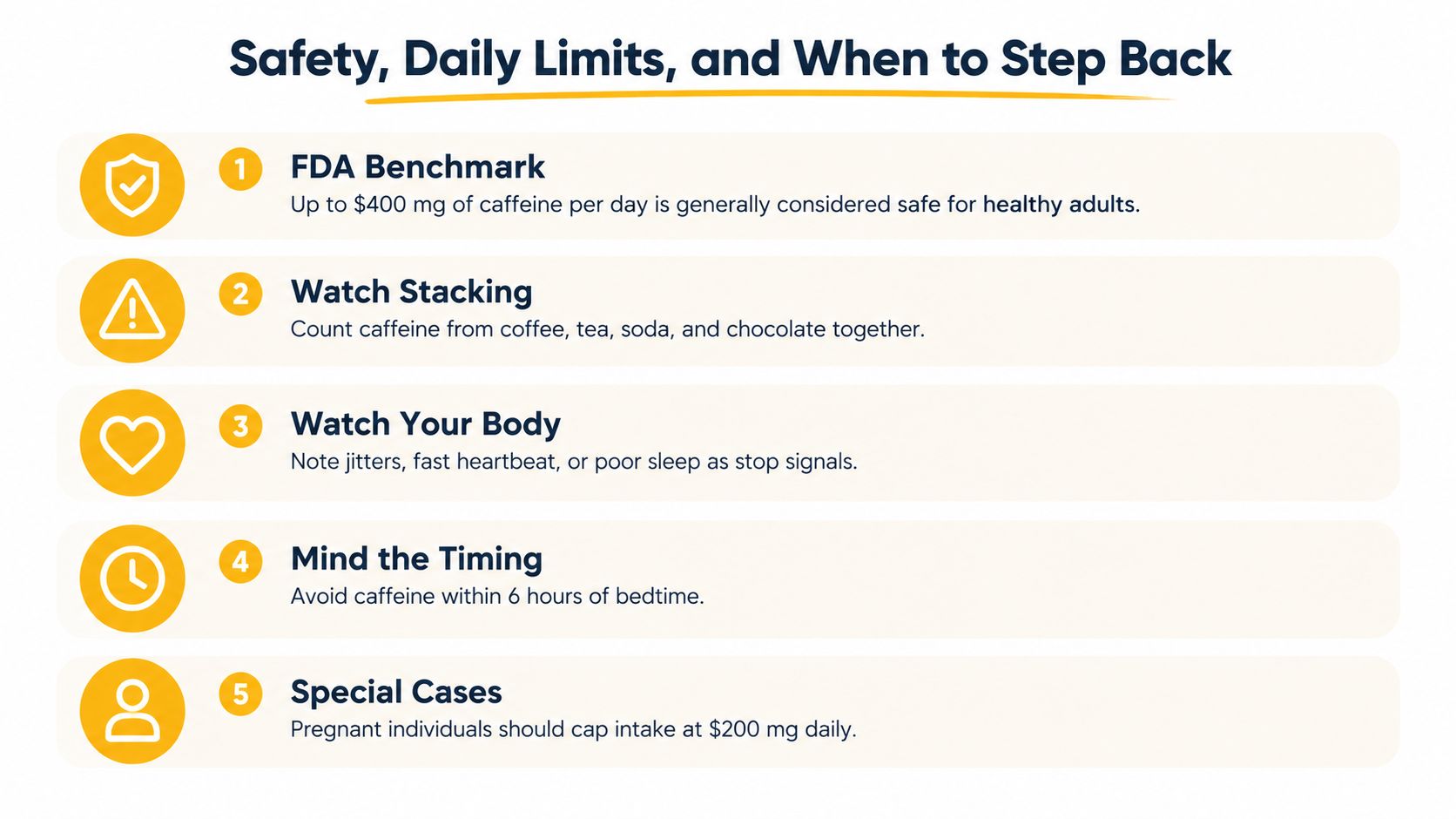
For most adults, the FDA's general benchmark is 400 milligrams per day. Use that as a ceiling, not a target. Pregnancy, certain medical conditions, medications, anxiety, sleep trouble, and cardiovascular concerns can all lower what makes sense for you. If any of those apply, get personal guidance from a qualified healthcare professional instead of relying on a general population number.
Count the whole day
A typical K-Cup can land somewhere around 75–150 milligrams, and an 8-ounce serving is often estimated at about 100 milligrams as noted in the CSPI caffeine reference. The problem is not one pod. The problem is the stack: coffee, soda, tea, chocolate, pre-workout, and caffeine tablets all count.
Write down one full day of intake if your routine feels fuzzy. Do it once. You will get a clearer answer than you will from guessing based on roast names or package language.
Treat symptoms as useful feedback
Jitters, restlessness, anxiety, a racing heartbeat, and poor sleep are clear signs that your current routine is too aggressive. Do not try to outsmart that by switching roast color, brewing a different cup size, or drinking the same pod faster. Cut the dose. Skip the next serving. Pay attention to how long it takes your body to settle down.
Sleep problems deserve extra respect. A pod that carries you through late afternoon can leave you chasing more caffeine the next morning, and that cycle gets old fast.
Consider a measured alternative
If you travel, camp, or work away from a brewer, organic instant coffee can be the cleaner option. It is easier to pack, easier to portion, and often easier to repeat consistently than a random strong pod used in an unpredictable routine.
Choose a caffeine level you can tolerate, count, and repeat. That is the smart way to use stronger coffee.
Choosing the Right High Caffeine K Cup for You
My recommendations are straightforward:
- For maximum caffeine in one pod, choose a product that clearly discloses a high caffeine amount or identifies a high-caffeine bean strategy, and accept that the flavor may be heavier, more bitter, or less familiar.
- For offices and family kitchens, choose a pod with a clearly stated serving amount and a balanced roast, then use a smaller brew volume when you want more concentration without changing the pod.
- For travelers, campers, and minimalists, choose measured organic instant coffee when carrying a brewer isn't practical. Portability and predictable preparation beat a theoretically stronger pod you can't brew properly.
Don't buy based on roast color alone. Don't assume “double” or “maximum” means the same thing across brands. If the label doesn't provide a caffeine amount, treat the product as an estimate and leave more room in your daily intake.
Track total daily caffeine, not package language. The strongest-looking pod isn't always the strongest pod, and the strongest pod isn't always the best one for your routine.
Cartograph Coffee offers organic instant coffee designed for workdays, travel, camping, and convenient brewing without a machine. Visit Cartograph Coffee to find a portable coffee option that fits your caffeine routine and your taste.