The healthiest coffee drink isn't automatically the one labeled functional, natural, or wellness-focused. A coffee blended with butter, mushroom extracts, collagen, or turmeric may sound more nutritious, but each addition changes the cup's calories, sugar, caffeine exposure, ingredients, dietary fit, and preparation demands. Some additions improve flavor without adding sugar. Others turn a low-calorie drink into a concentrated source of fat or sweetener.
The strongest evidence generally concerns coffee itself and moderate intake, not every ingredient added to it. Long-term observational research has linked moderate coffee consumption with favorable health outcomes, but those associations don't prove that coffee directly prevents disease. The practical question is simpler: What does each ingredient change, and does that change match your needs?
The following ranking starts with formats that preserve the coffee base and add little else. It then moves toward drinks that can suit a specific diet or routine, but carry clearer trade-offs. You don't have to abandon a favorite latte or sweetened coffee. You can adjust one variable at a time, beginning with portion size, added sugar, milk choice, caffeine dose, or timing.
1. Black Coffee with Organic Instant Coffee
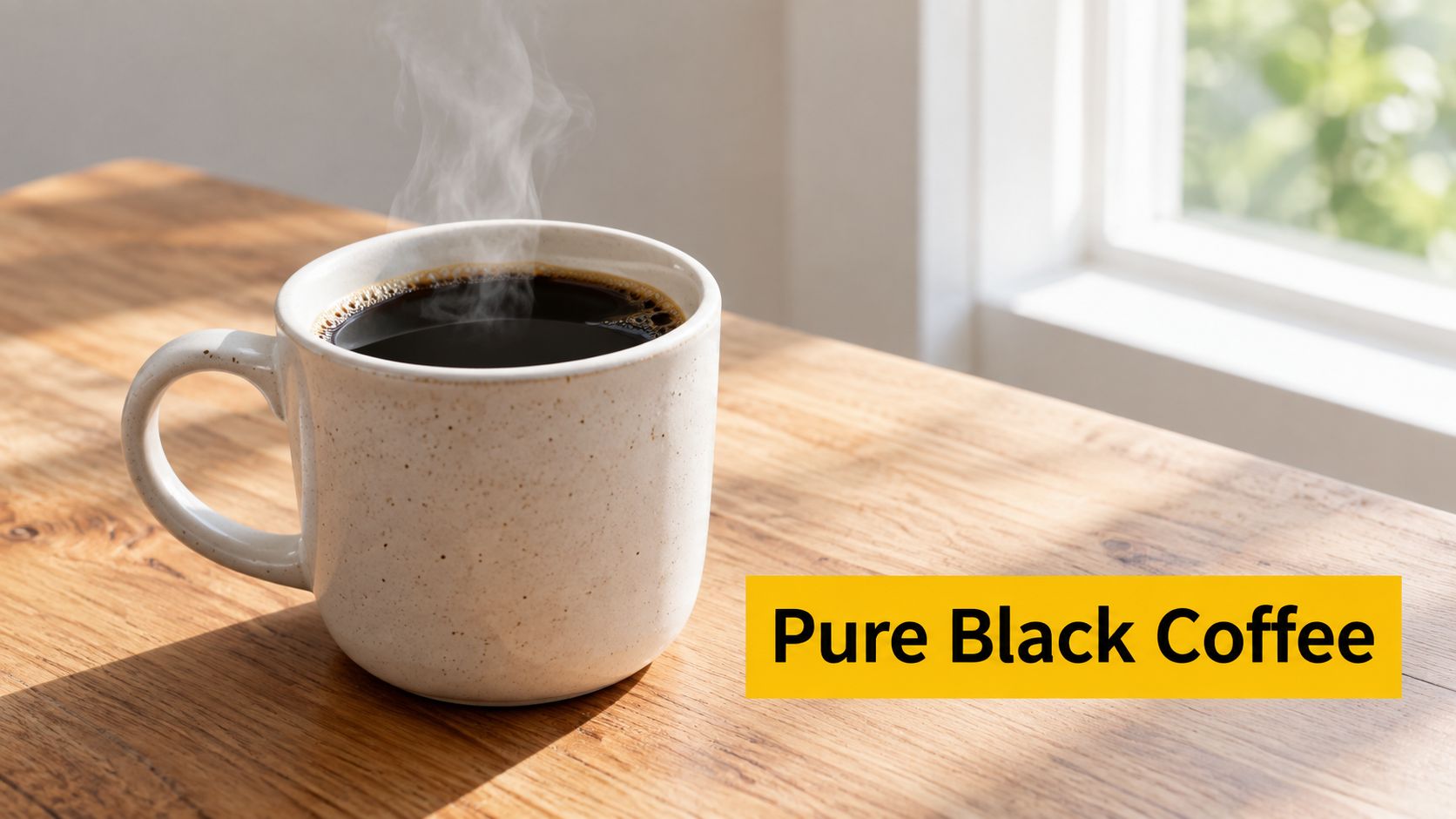
Black coffee earns the top position because it gives you the most control with the fewest nutritional complications. Plain brewed coffee, unsweetened coffee, and carefully measured instant coffee contain no added sugar from syrups or creamers, and the coffee base retains its naturally occurring compounds without turning the drink into a dessert.
A serving of regular brewed, non-specialty coffee can contain roughly 113 to 247 milligrams of caffeine per 12 fluid ounces, according to the U.S. Food and Drug Administration's caffeine guidance. That range is wide enough to make preparation and serving size matter. A large or unusually strong mug can use a substantial portion of the FDA's reference of up to 400 milligrams per day for most healthy adults, but that figure isn't a personal target. Sensitivity, medications, anxiety, sleep problems, pregnancy, and medical conditions can all change what's appropriate.
Organic instant coffee also suits people who need consistency. An office worker can prepare a measured cup without relying on a café recipe, while a camper can reduce equipment and avoid carrying a brewing setup. Cartograph Coffee's guide to organic instant coffee is relevant for readers comparing convenience with ingredient transparency.
Why this format ranks first
Coffee's potential benefits are concentrated in the unsweetened base, not in sugar, flavored syrups, whipped cream, or high-calorie creamers. That makes black coffee the clearest reference point for comparing every other drink on this list.
Use filtered water and adjust strength to taste rather than automatically making a larger serving. If coffee bothers your stomach, pairing it with food may be more comfortable than drinking it on an empty stomach. If you're sensitive to caffeine, measure your serving and count caffeine from other drinks, supplements, and medications instead of assuming every mug is equivalent.
Practical rule: Choose black coffee when your main priorities are minimal added sugar, simple ingredients, portability, and predictable preparation.
Airtight storage away from moisture helps instant coffee maintain its quality. The best version is the one you can prepare consistently without adding ingredients you do not want.
2. Bulletproof Coffee with Grass-Fed Butter
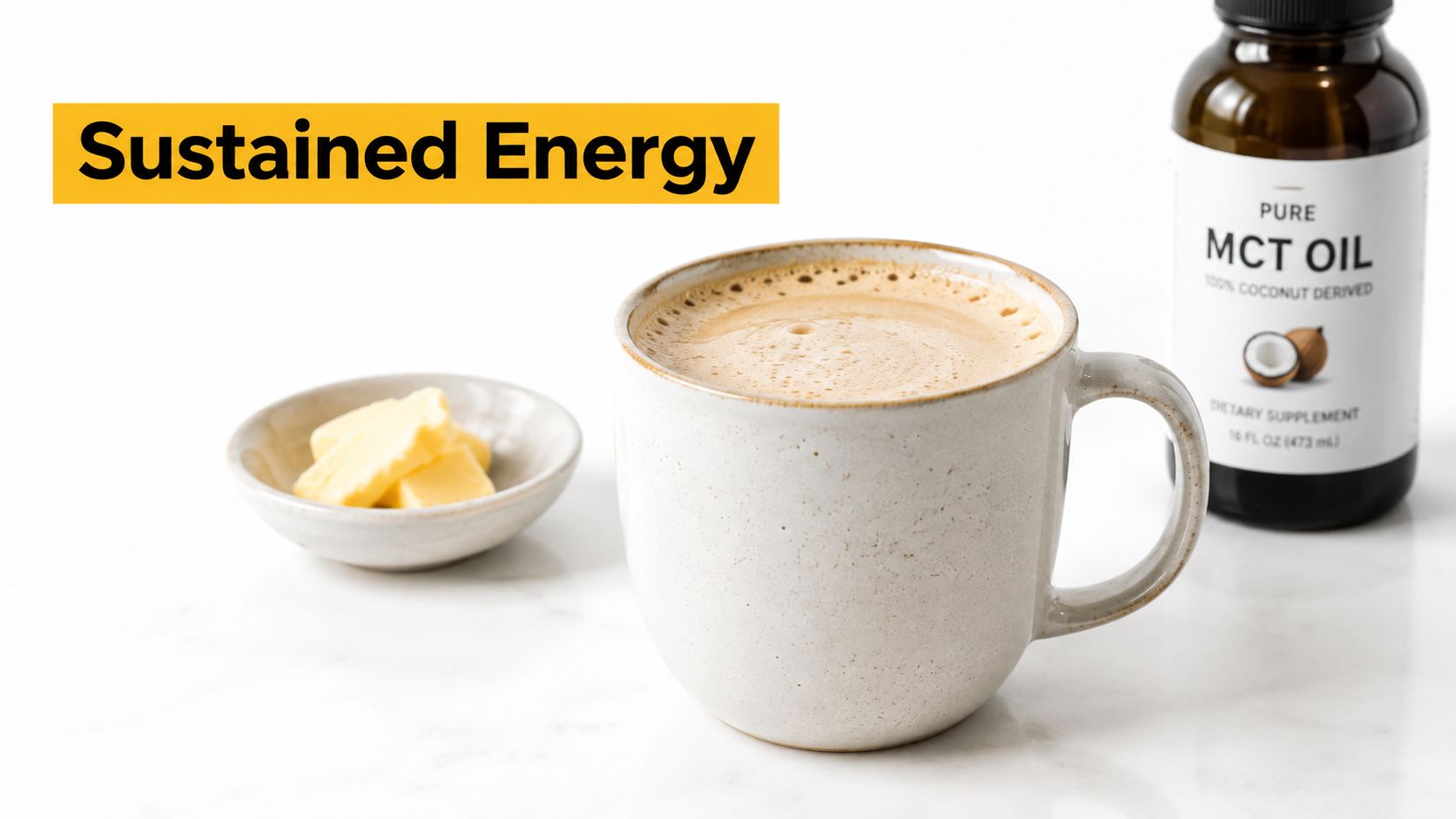
Grass-fed butter and MCT oil can make coffee more filling, but they do not make caffeine stronger or turn a high-calorie drink into a health food. The coffee remains sugar-free when prepared without syrup or sweetened creamer, while the added fats raise its energy content and saturated-fat contribution. That trade-off may suit a low-carbohydrate plan, but it gives the drink a different nutritional role from plain coffee.
The ingredient list matters. Butter supplies saturated fat, while MCT oil supplies fat without adding sugar. Grass-fed sourcing may influence the product's origin, but it does not remove the need to assess total fat intake. University Hospitals describes butter coffee as a high-fat, high-calorie format and cautions that butter raises saturated-fat intake. Its guidance on coffee additions offers useful context for separating those trade-offs from wellness marketing.
Who may find it useful
This format can fit ketogenic or paleo-style eating patterns, or a routine where a richer drink replaces part of breakfast. It may also help someone move away from sweetened creamers while keeping a creamy texture. For a person already eating a full breakfast, however, the butter coffee is usually an addition rather than a replacement, so its extra calories and saturated fat still count.
The drink is not established as a reliable source of sustained energy, mental clarity, or weight control. Those outcomes depend on total dietary intake, caffeine tolerance, and whether the beverage replaces food. MCT oil may cause digestive discomfort, particularly when introduced in a large amount, so starting cautiously is more reasonable than treating a higher dose as more effective.
Blend hot coffee with the fats until smooth. Emulsification improves texture, but it does not change the drink's calorie or fat profile. Cartograph Coffee's preparation guide for bulletproof coffee with heavy cream lets readers compare a cream-based variation with butter and MCT preparations.
“Keto” describes carbohydrate content, not overall health quality.
Choose this drink when added fat is intentional and fits the rest of the meal. Choose a lower-calorie coffee when saturated fat and energy intake matter more than richness.
3. Mushroom Coffee Blend
Mushroom coffee occupies a difficult evidence category. A blend may combine instant coffee with extracts from Lion's Mane, Cordyceps, Reishi, or other functional mushrooms, but the presence of a wellness ingredient doesn't establish that the finished beverage improves focus, immunity, stress, or long-term health.
The coffee itself has a stronger evidence base than most mushroom-specific marketing claims. A review of coffee compounds reports approximately 27.33 to 121.25 milligrams of chlorogenic acids per typical serving, with 5-caffeoylquinic acid making up roughly 36 to 40% of that content. The same review notes reported oral bioavailability of about 3 to 5%, which is why mechanistic findings shouldn't be presented as guaranteed clinical outcomes. See the review of coffee's bioactive compounds for the evidence and its limitations.
Evaluate the label before the promise
A mushroom blend can be a reasonable lower-sugar alternative to a flavored latte if it contains plain coffee and no sweetened creamer. It can also introduce extra ingredients, variable extract amounts, allergens, or a taste that leads you to add more sugar. The label matters more than the word “adaptogenic.”
Start with a modest portion if you're unfamiliar with the flavor or the added extracts. Compare the ingredient list with a plain instant coffee, then ask what the blend changes:
- Coffee base: Does it still provide a clearly stated caffeine amount?
- Added extracts: Are the mushroom types and quantities disclosed?
- Sweeteners: Does the product rely on sugar, syrup, or flavored creamer?
- Dietary fit: Does it suit your allergies, medications, and personal tolerance?
Busy professionals may enjoy the convenience of a single sachet, while a camper may appreciate a lightweight drink that needs only water. Readers interested in the mushroom categories can consult NexiHerb's functional mushroom guide, but general background shouldn't be mistaken for proof that a particular blend delivers a health outcome.
You can also control the coffee flavor by combining a plain organic instant coffee with a separate, clearly labeled product. This mushroom coffee recipe offers a practical starting point without requiring a heavily sweetened café drink.
4. Organic Coffee with Collagen Peptides
Collagen coffee is a convenience choice, not a guaranteed beauty or recovery drink. Unflavored collagen peptides can add protein-related nutrition without the sugar found in many flavored creamers. Their neutral taste also makes them practical at work or after exercise.
Marketing claims often extend beyond what this drink can establish. Collagen products are promoted for skin elasticity, joint health, anti-aging, and muscle recovery, but dissolving collagen in coffee does not prove any of those outcomes. Someone seeking additional protein may find the powder useful, yet collagen coffee does not replace a balanced meal or a varied protein source.
Make the add-in earn its place
Compare the drink with what it replaces. Against a syrup-heavy latte, unsweetened coffee with collagen can reduce added sugar. Against breakfast, it may provide less satiety and a narrower range of nutrients. Against plain coffee, it adds ingredients, expense, and preparation without necessarily improving the cup for every drinker.
Choose an unflavored product with a short ingredient list, and check for allergens and dietary restrictions. A whisk or handheld frother can limit clumping, especially when the powder goes in before milk. Keep coffee as the main ingredient rather than turning it into a delivery system for multiple powders.
The practical value depends on the person and the routine. Fitness enthusiasts may prefer collagen coffee as a post-workout ritual, while people who dislike protein shakes may find its flavor easier to tolerate. A dietitian's perspective on adding protein powder to coffee emphasizes convenience, while also recognizing that the drink does not replace a protein-rich breakfast, as discussed by University Hospitals on protein powder in coffee.
Collagen coffee can solve a convenience problem. It does not remove the need to assess the rest of the meal.
This format ranks below plain coffee because its value depends on a specific nutritional goal. It ranks above heavily sweetened coffee when it helps someone avoid syrup and deliberately add collagen, provided the powder fits their diet and the rest of the meal supplies what the drink lacks.
5. Cold Brew Coffee with Almond Milk
Cold brew with unsweetened almond milk is a strong choice for people who want a smoother, creamier format without a sweetened creamer. The key advantage is not that cold brewing makes coffee universally healthier. It's that the method and milk choice can make the drink easier to enjoy with fewer additions.
Cold brew's caffeine can still vary substantially with the coffee-to-water ratio, steeping method, concentrate strength, and serving size. A large glass can contain more caffeine than the drink's mild taste suggests. For that reason, “smooth” shouldn't be confused with “low caffeine,” and almond milk doesn't reduce the caffeine already extracted into the coffee.
What the milk changes
Unsweetened almond milk mainly changes texture and flavor. It can help someone transition from black coffee without introducing the added sugar found in flavored creamers, but product labels differ. Check whether the carton is unsweetened and look for added sugar, flavorings, and fortification that may affect dietary fit.
This format works well for a refrigerator routine, a commute, or a camping trip where you've prepared the coffee in advance. If you're making concentrate, dilute it according to taste and keep the final serving consistent. That makes your caffeine intake easier to track than pouring an unmeasured amount over ice.
People with reflux or other digestive concerns shouldn't assume cold brew will solve symptoms. Acidity, caffeine, meal timing, and individual sensitivity all matter, and a lower-acidity format may still be poorly tolerated by a particular person. If symptoms persist, medical advice is more useful than switching between coffee trends.
A plain cold brew is the better baseline. Add unsweetened almond milk for creaminess, then taste before adding sweetener. That sequence helps you identify whether you need sugar at all.
6. Organic Coffee with Cinnamon and Honey
Organic coffee does not become a low-sugar drink when honey and cinnamon are added. Cinnamon can make bitterness easier to accept, but honey remains an added sweetener. For a lower-sugar ranking, this format sits below black coffee and coffee with unsweetened milk. Its main advantage is flavor, not a special nutritional effect.
Cinnamon adds aroma, warmth, and complexity with minimal preparation. That may let you use less honey, changing the drink's sugar content without changing its basic structure. Claims that cinnamon reliably treats blood-sugar problems, inflammation, or other conditions go beyond what this recipe can establish. A spice can improve taste, but it does not offset the calories or added sugar from honey.
A better way to use sweetness
Add cinnamon first and taste the coffee before sweetening it. If it still needs sweetness, measure the honey rather than pouring freely. This makes the amount visible and easier to compare with flavored syrups, whose sugar can be less apparent. The combination may help families accept coffee with less bitterness, while people monitoring blood sugar can decide whether honey fits their individual plan.
The broader dietary context supports tracking these additions. Materials from the 2025 Dietary Guidelines Advisory Committee identify unsweetened coffee and tea as low-calorie choices and report that coffee and tea contribute 13 to 14% of added-sugar intake among U.S. adults aged 19 and older. A single sweetened cup may seem modest, but repeated servings can make the addition more relevant to the day's intake.
Cinnamon varies by type and source, so use it for flavor and follow the product label rather than treating a larger amount as a stronger intervention. People with diabetes, prediabetes, or medication concerns should discuss sweeteners and concentrated supplements with a healthcare professional.
Cinnamon can reduce the need for sweetness. It doesn't make honey disappear from the added-sugar total.
This drink works best as a measured transition away from flavored coffee. Choose it for the taste, keep the honey visible, and rank it below unsweetened options when sugar reduction is the priority.
7. Green Coffee with Turmeric and Black Pepper
Turmeric coffee is visually compelling, but its wellness reputation outruns what can be concluded about an ordinary cup. Turmeric contains curcumin, and black pepper contains piperine, yet adding both to coffee doesn't prove that the drink reduces inflammation, protects joints, or treats arthritis.
The format may still have a legitimate culinary role. Turmeric adds an earthy flavor and color, while black pepper adds heat. A small amount of milk or an unsweetened plant beverage can soften the taste, but it also changes the drink's calories, ingredients, and dietary fit. Coconut milk, ghee, or butter may make the beverage richer while moving it away from a low-calorie coffee.
Separate flavor from therapeutic claims
Green coffee, made from unroasted beans, should not be assumed to have superior health effects because it sounds less processed. The evidence about coffee compounds doesn't justify promising that a particular roast or turmeric combination will deliver a clinical result. A person who enjoys the flavor can include it as one beverage, while someone seeking treatment should use medical guidance rather than a coffee recipe.
Read supplement labels carefully, especially when a product combines multiple extracts. Concentrated botanicals may interact with medications or be unsuitable for particular conditions. The same caution applies to people who are pregnant, managing reflux, or sensitive to caffeine.
This drink can work for a wellness-oriented consumer who values flavor variety and accepts preparation effort. It ranks below cinnamon coffee because turmeric and black pepper add more uncertainty without removing caffeine or automatically reducing sugar.
A sensible preparation keeps the coffee unsweetened, uses a modest amount of spice, and avoids turning the drink into a sweetened golden-milk dessert. Taste it before adding honey or syrup. If the earthy flavor requires a large amount of sweetener, the nutritional trade-off may no longer fit the original goal.
8. Espresso with Oat Milk and Cinnamon
An oat-milk espresso can be a satisfying dairy-free choice, particularly for people who want café-style texture without dairy. Its health profile depends heavily on the oat milk label and serving size. Some products are unsweetened, while others contain added sugar or flavorings, so “oat” alone doesn't tell you whether the drink is a lower-sugar choice.
Cinnamon can add aroma without requiring syrup. The espresso provides concentrated coffee flavor, but the amount of caffeine still depends on the product and preparation. A small-looking drink isn't automatically low in caffeine, and a plant-based milk doesn't change the caffeine already present in the espresso.
Compare the carton, not the category
Look for unsweetened oat milk and review the ingredient list before choosing a barista-style product. Barista formulations are designed to foam and may not have the same nutritional profile as a simpler unsweetened beverage. If you're ordering at a café, ask whether the oat milk is sweetened and skip flavored syrups unless you've deliberately included them in your day.
This format suits vegan consumers, people avoiding dairy, and busy workers who want a familiar latte texture. It can also help families reduce reliance on heavy cream while preserving the ritual of a warm coffee drink. However, oat milk isn't automatically lower in calories or sugar than every other milk alternative, so the label and serving size remain more useful than the plant-based marketing.
Cinnamon makes a practical flavor addition, but it shouldn't be used to imply that the latte has therapeutic benefits. The healthiest version is usually espresso, unsweetened oat milk, and a small amount of cinnamon, with no syrup or whipped topping.
For readers who want convenience, an instant coffee base can reproduce the format without café equipment. For readers prioritizing the lowest possible added sugar, black coffee or cold brew with unsweetened almond milk remains easier to control.
Healthiest Coffee Drinks: 8-Point Comparison
| Item | Implementation Complexity 🔄 | Resource Requirements ⚡ | Expected Outcomes ⭐📊 | Ideal Use Cases 💡 | Key Advantages ⭐ |
|---|---|---|---|---|---|
| Black Coffee with Organic Instant Coffee | 🔄 Very low, hot water only; instant prep | ⚡ Minimal, instant coffee, hot water, cup | ⭐ High antioxidants; 📊 Zero calories; improved alertness | Intermittent fasting, busy mornings, camping | ⭐ Pure flavor; ⚡ Fast, low-cost, nutrient-dense |
| Bulletproof Coffee with Grass‑Fed Butter | 🔄 Medium, requires emulsifying/blending | ⚡ Moderate, grass‑fed butter, MCT oil, blender | ⭐ Sustained energy & focus; 📊 Appetite suppression; high calories | Keto, long fasting, high‑cognitive demand mornings | ⭐ Long-lasting satiety; supports ketone production |
| Mushroom Coffee Blend | 🔄 Low–Medium, mix powders; dose titration advised | ⚡ Moderate, mushroom extracts (higher cost) | ⭐ Cognitive support; reduced jitters; immune modulation | Nootropic users, stress management, wellness routines | ⭐ Adaptogens + caffeine balance; anti‑inflammatory benefits |
| Organic Coffee with Collagen Peptides | 🔄 Low–Medium, mix, avoid high heat to protect peptides | ⚡ Moderate, hydrolyzed collagen (grass‑fed preferred) | ⭐ Supports skin/joint health; 📊 Adds 10–15g protein per serving | Post‑workout recovery, anti‑aging routines, fitness | ⭐ Protein enrichment; supports connective tissue recovery |
| Cold Brew Coffee with Almond Milk | 🔄 Higher prep time (12–24h) but low hands‑on effort | ⚡ Moderate, time, container, unsweetened almond milk | ⭐ Lower acidity (~65%); 📊 Gentler digestion; smooth flavor | Sensitive stomachs, make‑ahead routines, summer refreshment | ⭐ Smooth, less bitter; longer refrigerated shelf life |
| Organic Coffee with Cinnamon and Honey | 🔄 Low, simple mixing; temperature care for honey | ⚡ Minimal, Ceylon cinnamon, raw honey (adds calories) | ⭐ Blood‑sugar stabilization; anti‑inflammatory; added calories | Families, metabolic support, natural sweetening preference | ⭐ Natural sweetness; antimicrobial properties; flavor depth |
| Green Coffee with Turmeric and Black Pepper | 🔄 Medium, ingredient pairing and proper dosing required | ⚡ Moderate, green coffee, high‑curcumin turmeric, black pepper, fat | ⭐ Strong anti‑inflammatory action; cognitive + joint support; lower caffeine | Anti‑inflammatory protocols, joint health, afternoon beverage | ⭐ Enhanced curcumin bioavailability; dual antioxidant effect |
| Espresso with Oat Milk and Cinnamon | 🔄 Medium, concentrated brew and milk heating/frothing | ⚡ Moderate, barista oat milk, instant espresso/concentrate | ⭐ Plant‑based creaminess; beta‑glucan digestive benefits; cafe texture | Vegan diets, lactose‑intolerant consumers, specialty coffee lovers | ⭐ Vegan‑friendly; sustainable choice; natural sweetness and texture |
Make Your Regular Order Healthier
The best choice depends on what you're trying to change. If you want the lowest-complexity drink with minimal added sugar, choose black coffee. If you prefer a smoother format, try cold brew, but remember that a mild taste doesn't reveal the caffeine content. If you want creaminess, use an unsweetened plant milk and check the label rather than assuming every almond, oat, or coconut product has the same nutritional profile.
Treat functional additions as targeted choices, not automatic upgrades. Butter and MCT oil add fat and can suit a specific low-carbohydrate routine, but they also make coffee more energy-dense. Collagen may be convenient for someone who has intentionally chosen it, but it doesn't turn coffee into a complete meal. Mushroom extracts, turmeric, and black pepper can add flavor or variety, yet promotional claims about focus, immunity, inflammation, or recovery require more caution than the label often suggests.
Added sugar deserves special attention because coffee can become a repeated source of sweetener across the day. The Dietary Guidelines Advisory Committee materials specifically identify coffee and tea as contributors to added-sugar intake among adults, so reducing syrup, sweetened creamers, and oversized portions can be more meaningful than adding a fashionable powder.
Caffeine also needs a personal framework. The FDA's population-level benchmark doesn't apply equally to everyone. A person with sleep problems may need an earlier cutoff, while someone who is pregnant, takes certain medications, or experiences anxiety may need individualized guidance. A 2025 evidence review cited by the Centers for Disease Control and Prevention discusses a pregnancy limit of no more than 200 milligrams of caffeine per day and notes that an ordinary 8-ounce coffee may contain about 137 milligrams. Those figures show why cup size and total daily intake matter.
Make changes one ingredient at a time. First remove syrup, then reassess taste. Next compare unsweetened milk options, then consider whether a functional add-in solves a real dietary need. Keep track of how the drink affects sleep, digestion, anxiety, and appetite rather than judging it only by its calorie label.
If you have caffeine sensitivity, reflux, blood-sugar concerns, medication interactions, or a medical condition affected by coffee, ask a healthcare professional for individualized advice. Cartograph Coffee's organic instant coffee can fit a measured, portable routine for work, home, or outdoor use, but the healthiest result still depends on what you add and how much you drink.
Cartograph Coffee offers organic instant coffee made for convenient preparation at work, at home, or outdoors, with a focus on a straightforward coffee base and no added sugar or flavoring. Compare your current drink with a measured serving, then visit Cartograph Coffee to explore an easier starting point for lower-sugar coffee choices.