Have you ever followed a French press recipe that says “two tablespoons per cup,” only to discover that another guide calls for three? Both answers can be reasonable, because a tablespoon measures volume, while coffee recipes work most reliably by weight. The question isn't how many tablespoons you should use. It's how much coffee your particular spoon, grind, roast, and press are holding.
A dependable starting point is a 1:15 coffee-to-water ratio, meaning one gram of coffee for every fifteen grams of water. That ratio gives you a practical foundation, while tablespoons offer a convenient shortcut when you don't have a scale. Once you understand why the shortcut shifts, you can brew a balanced cup without treating any single tablespoon count as a permanent rule.
What the French Press Coffee Ratio in Tablespoons Really Means
Why can two correct French press recipes call for different tablespoon counts? The answer starts with the water volume, then branches into grind, roast, and scoop style. A small press holds less water than a large one, so the same tablespoon count cannot serve both without changing the brew's strength.
The most reliable baseline is 1:15 by weight, or one gram of coffee for every fifteen grams of water, as described in this French press coffee-to-water ratio guide. For example, 30 grams of coffee with 450 grams of water follows that relationship. The same guidance offers a household shortcut of roughly 2 level tablespoons per 6 ounces of water, though spoon measurements are less exact.
Ratio first, tablespoons second
A ratio shows how coffee and water move together. Add water while keeping the coffee dose fixed, and the cup becomes milder. Keep the water fixed while adding coffee, and it becomes more concentrated. “Three tablespoons” means little until you know how much water those spoons are meant to serve.
For a standard 8-cup French press holding about 34 ounces, roughly 11 tablespoons total is a practical starting point under the cited baseline guidance. Use that number to get close, then judge the cup rather than treating it as a permanent rule.
Practical rule: Use tablespoons to get close, then use taste to decide whether your next brew needs a ratio adjustment.
A level spoon works like a small measuring cup. Its volume stays fairly consistent when each scoop is leveled the same way. The coffee dose still changes if the grounds are unusually dense, the grind is different, or one spoon is level while another is rounded. That explains why two guides can both look reasonable while differing by about 30 percent in their tablespoon recommendation.
Why press size changes the answer
A small press needs fewer tablespoons because it contains less water. A larger press needs more, although rounded charts may not increase in tidy whole-spoon steps. Roast and grind affect the calculation too. Darker-roasted coffee is generally less dense, while a coarse grind leaves more air between particles, so equal spoonfuls can hold different weights.
Strength preference changes the target as well. A milder brew can move toward 1:17, while a stronger brew can move toward 1:12, ranges documented in this French press measurement reference.
Use the tablespoon as an estimate. The recipe is the coffee-to-water relationship, and adjusting that relationship gives you more control than adding another scoop.
Tablespoons to Grams and Why the Conversion Is Not Exact
Why can two correct tablespoon recommendations differ by about 30%? A tablespoon measures volume, while a scale measures weight. Many home brewers use about 5 grams per tablespoon as a starting estimate, but the grounds inside that spoon may be lighter, denser, level, or rounded.
Grind size explains much of the variation. Fine particles settle together like sand, leaving fewer air gaps. Coarse grounds behave more like small pebbles, so more space remains between them. Roast level matters too. Darker-roasted beans are generally less dense than lighter-roasted beans, meaning the same spoon volume can weigh less.
A practical comparison
The table below is an estimate, not an exact laboratory conversion. It shows why two tablespoon answers can both seem reasonable while producing different coffee doses.
| Grind Size | Approx. Grams per Tablespoon | Level Scoop |
|---|---|---|
| Fine | About 7–8 grams | More particles fit into the same volume |
| Medium | About 5–7 grams | A practical everyday estimate |
| Coarse | About 4.5–5 grams | Larger particles leave more air gaps |
These ranges reflect the measurement uncertainty described in this coffee measurement guide. The difference does not automatically mean one chart is wrong. Guides may use different grinds, roasts, spoon shapes, or leveling habits. For broader context on grams per cup, see this grams per cup guide.
Where the 30% difference comes from
Suppose one level tablespoon of coarse, airy coffee weighs about 5 grams, while a denser tablespoon weighs about 7 grams. The same spoon volume then contains about 30% more coffee, based on the range in this French press measurements guide. Across several tablespoons, that gap can make one press taste noticeably stronger or weaker.
Eight tablespoons therefore do not always represent the same dose. One brewer might use a light roast with a coarse grind, while another uses a darker roast with more compact grounds.
Without a scale, choose one spoon and level it the same way each time. Keep the roast and grind consistent while you learn your preferred brew. A scale gives better repeatability because it removes the density question and lets the 1:15 ratio guide the coffee-to-water balance. Use tablespoons to get close, then adjust the ratio when the cup tastes too weak or too strong.
Measuring Your Coffee and Brewing a Balanced Cup
A balanced French press brew starts before the water touches the grounds. Use a coarse, even grind, then level every tablespoon with the back of a knife or your finger. Don't scoop one spoon loosely and another with a mound on top. Consistency matters more than chasing a supposedly perfect spoonful.
For the grind itself, aim for a texture similar to coarse breadcrumbs. This French press grind guide explains why a coarse grind suits the metal mesh filter and helps limit excessive sediment. Very fine grounds can pass through the filter and continue extracting while the coffee sits in the press.
Building the brew
Heat the water until it reaches the brewing range just below a full boil. The research brief supports a practical approach of heating it to just off boiling, then pouring slowly over the grounds. Add your measured tablespoons to the empty press and distribute them across the bottom before pouring.
Pour enough water to wet all the grounds, moving the stream around the surface instead of flooding one spot. A gentle stir after the pour helps break up dry clumps that might cling to the wall or float above the water. Stir only enough to combine the coffee and water. Aggressive agitation can push more fine particles into suspension.
Let the coffee steep for four minutes, the classic timing used in the provided brewing guidance. Place the lid on the press with the plunger raised, so the heat stays in the brewer while the grounds remain immersed. The ratio controls the relative amount of coffee and water, while time and grind influence how much flavor the water draws from those grounds.
Pressing without stirring up the cup
When the steep finishes, press the plunger slowly and steadily. If you force it down quickly, you can disturb the settled grounds and send more sediment through the mesh. A smooth plunge gives the particles time to stay below the filter.
Pour the coffee out of the press rather than leaving it sitting on the grounds. Even after plunging, the coffee remains in contact with some sediment, so serving it promptly helps preserve the flavor you created.
Level the spoon, repeat the scoop, and change only one variable when you adjust the recipe.
The tablespoon count gets you close, but the ratio governs strength. If the cup tastes weak, don't automatically pile in more grounds. First ask whether the water volume, scoop weight, grind, or steep time changed from your last brew.
Quick Reference Chart for Different Press Sizes
A chart helps when you want coffee without doing ratio math before breakfast. The figures below use the 1:15 baseline and the practical assumption that a rounded tablespoon holds about 8 grams of ground coffee. Because spoon volume varies by roast and grind, treat every number as a starting point rather than a fixed standard.
The water amounts use common press-size references from the supplied brewing guidance. French press “cup” labels can differ from ordinary mug sizes, so check the capacity marked on your brewer whenever possible.
| Press Size | Water | Mild (1:17) | Standard (1:15) | Strong (1:12) |
|---|---|---|---|---|
| 3-cup | About 12 ounces | About 2 tablespoons | About 3 tablespoons | About 4 tablespoons |
| 4-cup | About 17 ounces | About 3 tablespoons | About 4 tablespoons | About 5 tablespoons |
| 8-cup | About 34 ounces | About 8 tablespoons | About 11 tablespoons | About 14 tablespoons |
| 12-cup | About 51 ounces | About 11 tablespoons | About 14 tablespoons | About 18 tablespoons |
How to use the chart
The standard column follows the broad 1:15 starting point. The mild column uses more water per gram of coffee, creating a lighter concentration. The strong column uses less water per gram, creating a more concentrated brew.
Rounding explains why the chart won't always match another tablespoon guide. One chart may assume 5 grams per tablespoon, while another may use 7 or 8 grams. A 12-cup press can also appear to use slightly less coffee per serving than simple doubling suggests because whole-spoon rounding changes the final total.
For a smaller brewer, start with the standard column and taste the result. If the cup feels too light, move toward the strong column on the next brew. If it feels heavy, move toward the mild column. Don't change the grind at the same time, or you won't know whether the ratio caused the improvement.
Adjusting Strength by Ratio Instead of Just Adding More
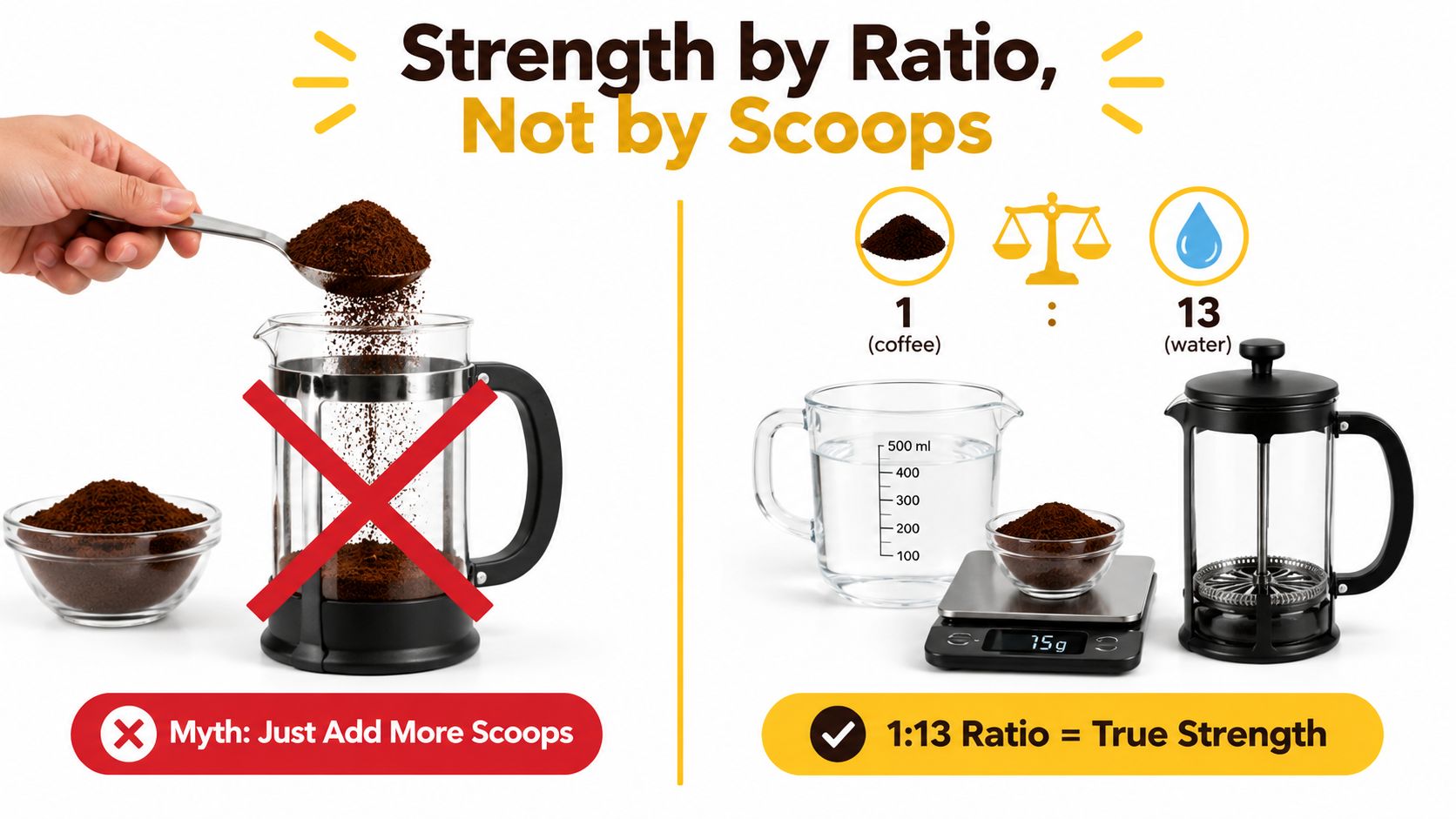
Many home brewers respond to weak coffee by adding another tablespoon. That can work, but it hides the actual decision. Strength comes from the relationship between coffee and water, not from the number of scoops in isolation.
Moving from 1:15 to 1:12 creates a stronger coffee-to-water relationship. Moving toward 1:17 creates a milder one, as outlined in this French press ratio guide. The adjustment is more meaningful when you think in terms of the full brew rather than adding a random spoonful.
What changes when the ratio moves
A stronger ratio usually gives the cup more body and a more pronounced coffee flavor. It can also make bitterness or roast-heavy flavors more noticeable if the grind is too fine or the coffee steeps too long. A milder ratio gives water more room relative to the grounds, which can make the drink feel lighter.
The cleanest method is to hold the grind and steep time steady while changing the ratio. Brew the next batch with the same water volume and adjust the coffee dose deliberately. Taste the difference before making another change.
A very aggressive dose can overwhelm the immersion brew, especially when paired with fine grounds and extended contact. The provided guidance supports working within the practical range from 1:12 to 1:17, rather than treating a larger pile of grounds as an automatic improvement.
Let the tablespoon serve one purpose
A tablespoon should answer, “How much volume am I adding?” It shouldn't be your only answer to, “How strong should this coffee be?” That decision belongs to the ratio.
If you own a kitchen scale, weigh the coffee and water. The coffee golden ratio reference provides a useful framework for making that adjustment repeatable. If you don't have a scale, level each spoon and record what you used, then change one tablespoon or one strength category at a time.
Troubleshooting Common French Press Problems
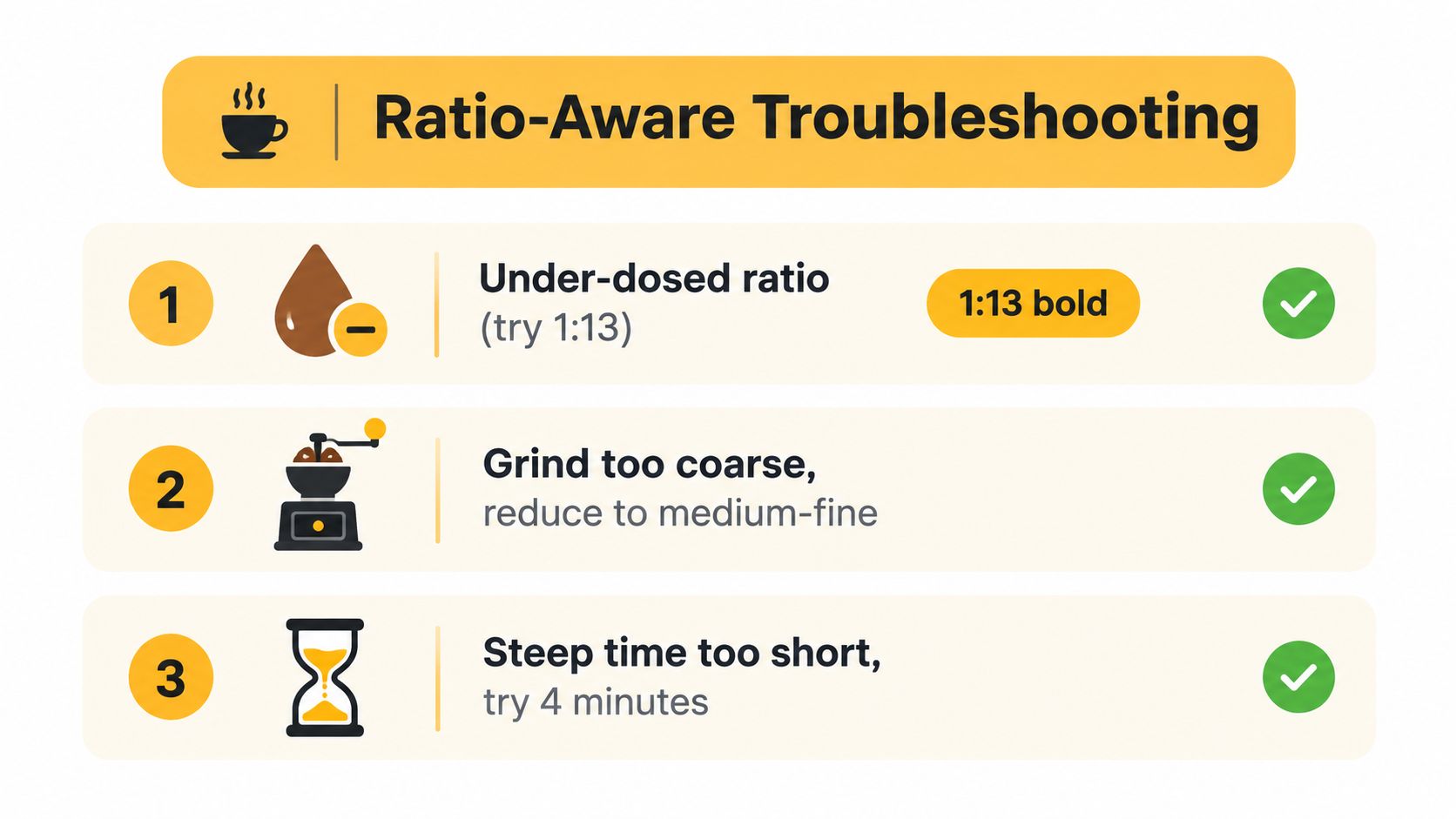
French press problems usually come from one of three levers: ratio, grind, or steep time. Isolating those levers turns a disappointing cup into a useful diagnosis. Instead of changing everything at once, identify the flavor and texture problem first.
When the coffee tastes weak
Weak or watery coffee usually means the brew contains too little coffee for its water volume, though an unsuitable grind or short steep can contribute. Try moving the ratio toward 1:13, then keep the grind and steep time unchanged so you can judge the dose clearly.
A grind that's too coarse can slow extraction and leave the cup underdeveloped. If the coffee tastes thin and lacks flavor, use a slightly less coarse grind on the next batch. A steep that's too short can have the same effect, so allow the coffee to reach the full four-minute brewing time supported by the provided guidance.
Don't solve a weak cup by adding several unmeasured scoops. A controlled ratio change tells you more and makes the next brew easier to repeat.
When the coffee tastes bitter or harsh
Bitterness can result from too much extraction. A grind that's too fine exposes more surface area and can allow excessive extraction during immersion. Steeping beyond four minutes can also push the flavor in a harsher direction.
Start by using a coarser grind or shortening contact time back to the established brewing point. If you also used an unusually heavy dose, return to the standard ratio before experimenting again. Changing the ratio, grind, and time together makes the cause impossible to identify.
When the cup feels gritty or muddy
Grit usually points to fine particles passing through the mesh filter. Move coarser and look for a more even grind, particularly if you're using a blade grinder that creates a mixture of particle sizes. Letting the brew settle before plunging can also help keep suspended sediment lower in the press.
Press gently. If the plunger meets strong resistance, the grounds may be too fine for the filter and immersion time. After pressing, pour carefully and leave the last sediment-heavy portion behind if the texture bothers you.
Before the next brew, ask one question: was the problem the ratio, the grind, or the time?
For a visual summary of those decisions, use the following troubleshooting video after considering the flavor and texture of your cup:
Key Takeaways and a Simple Brewing Checklist
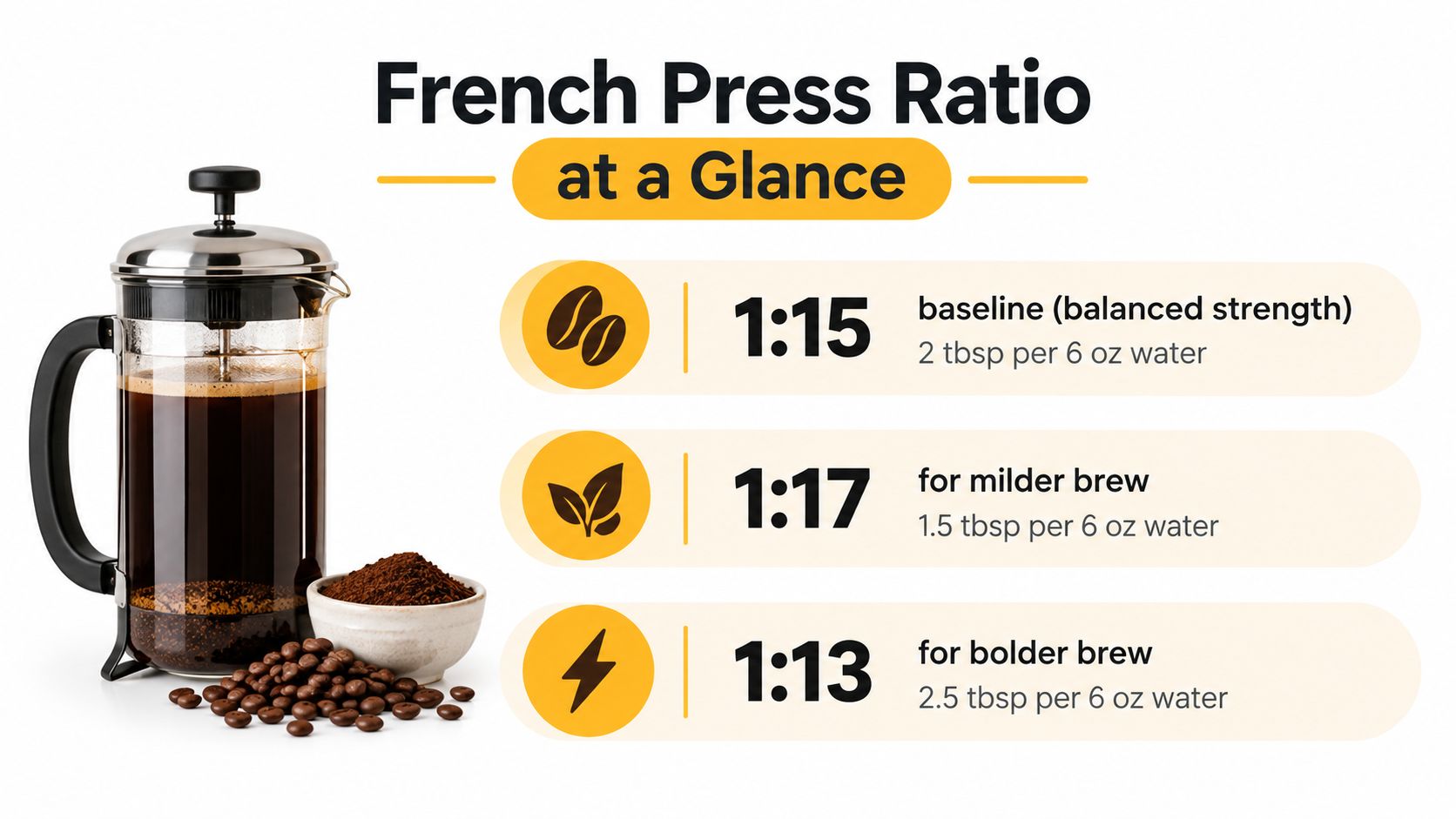
Two tablespoon answers can both be reasonable because the spoon is only an estimate. Start with the 1:15 baseline, then match the dose to the amount of water. A useful shortcut is about 2 level tablespoons per 6 ounces of water. For a standard 8-cup press holding about 34 ounces, that works out to roughly 11 tablespoons total.
Treat those figures as starting points, not fixed rules. Move toward 1:17 for a milder brew or 1:13 for a bolder brew. A chart may treat one rounded spoon as roughly 7 grams, yet roast, grind size, and the way you fill the spoon can change its actual weight. Two “correct” tablespoon counts may therefore differ noticeably. The ratio keeps the comparison fair, especially when a scoop is rounded in one recipe and level in another.
A repeatable brewing checklist
Use this routine when you want to reset the recipe:
- Choose the grind: Use a coarse, even grind suited to a French press mesh filter.
- Set the ratio: Begin at 1:15 by weight, or select the matching chart column when using tablespoons.
- Level each spoon: Fill every spoon the same way. Do not alternate between level and heaping scoops.
- Heat the water: Bring it to just off boiling before pouring.
- Wet every ground: Pour slowly and stir gently so no dry pockets remain.
- Steep for four minutes: Keep the plunger raised during brewing.
- Press slowly: Apply steady pressure to limit sediment movement.
- Serve promptly: Pour the coffee out of the press instead of leaving it on the grounds.
Change one variable at a time. A weak cup calls for a ratio adjustment. Bitterness or muddiness points first to grind and steep time. If the flavor is close, make a small ratio change rather than adding several extra spoonfuls.
Cartograph Coffee offers organic instant coffee for home, work, camping, and other situations where a full French press routine is inconvenient. Visit Cartograph Coffee to explore its coffee options when weighing or measuring tablespoons is not practical.