You've just set down your morning coffee when a drop lands on your favorite shirt. The brown mark looks small, but coffee can cling tightly to fabric, especially once it dries or passes through a heated dryer. The right response depends on how fresh the stain is, what the coffee contains, and which material you're treating.
White vinegar can be a useful first-response cleaner, but it isn't a universal stain remover. It can help with some fresh coffee spills, yet the same acidity that loosens tannins can create problems on delicate fibers, finishes, and surfaces. Timing and material testing matter as much as the vinegar itself.
Why Vinegar Works on Fresh Coffee Stains
A coffee splash on a washable cotton shirt is usually easier to manage while it remains damp. Much of the liquid is still near the surface, so prompt blotting can remove coffee before its brown compounds settle into the fibers. Once the mark dries, or heat passes through it, treatment becomes less predictable.
Coffee contains tannins, plant compounds that create its brown color and can bind to textile fibers. White vinegar contains 5–8% acetic acid. That mild acidity can help loosen coffee tannins, as explained in this guide to white vinegar's role in breaking down coffee stains.
Coffee stain vinegar treatment fits fresh spills on washable, colorfast materials such as cotton, linen, and some sturdy synthetics. It is a poor choice for every fabric, however. Test an unseen area first, especially on dyed garments, delicate fibers, or items with a special finish. Vinegar can alter color, weaken sensitive fibers, or affect surface treatments.
Practical rule: Treat the mark while it is still damp. Do not wait for a fresh spill to become a dried stain.
Coffee type also changes the job. Black coffee usually leaves a simpler residue than coffee with milk, cream, or sugar. Those additions can leave protein, fat, or sticky material behind, so vinegar alone may not remove the entire mark.
Act promptly and avoid friction. Blotting lifts excess liquid, while a cold-water rinse can carry dissolved coffee away. Scrubbing spreads the stain and pushes residue deeper into the weave. Heat can make any remaining discoloration harder to remove.
Vinegar remains useful because it is available, inexpensive, and suitable as an early household treatment when the material passes a safety test. For context on coffee's own acidity, Cartograph Coffee explains how coffee acidity can be reduced. Brewed coffee acidity and cleaning vinegar's acetic acid are different chemical conditions.
Use vinegar narrowly: apply it early to a suitable washable material, then rinse and launder. Repeated soaking is not a safer substitute for checking the fabric first.
Step-by-Step Vinegar Treatment for Fresh Stains
A fresh coffee spill on a washable shirt or cushion needs controlled handling, not a large amount of liquid. Check the care label first and identify the fabric. Vinegar can suit many sturdy, colorfast materials, but test an inconspicuous seam or hem before treating the visible mark, especially on dyed items or fabrics with a special finish.
Follow the sequence, not just the recipe
- Blot immediately. Press a clean white cloth or paper towel onto the spill, then lift it. Repeated pressing removes excess coffee without spreading tannins or forcing them deeper into the fibers.
- Rinse from the back with cold water. Hold the stained area under cold running water, directing the flow from the reverse side so coffee moves out through the front. If the drink contained milk, this step matters even more. Heat can set protein residue before vinegar has a chance to help.
- Test the vinegar. Dab undiluted white vinegar or a diluted mixture on an inside seam. Wait long enough to check for color change, altered texture, or yellowing. Stop if the fabric reacts.
- Apply a measured treatment. Use undiluted white vinegar only on a sturdy, colorfast washable fabric that passed the test. For a gentler first attempt, use a 2:1 mixture of water to vinegar. Guidance for fresh coffee and tea marks commonly pairs this dilution with a short soak of about 30 minutes, as described in this reference on white vinegar dilution and contact guidance.
- Blot and rinse. Work from the outside toward the center. Lift the loosened residue with a clean cloth, then rinse thoroughly so both coffee and vinegar leave the material.
- Launder promptly. Follow the care label and choose the coolest suitable wash setting. Inspect the mark in good light before using a dryer. Dryer heat can make remaining discoloration harder to remove.
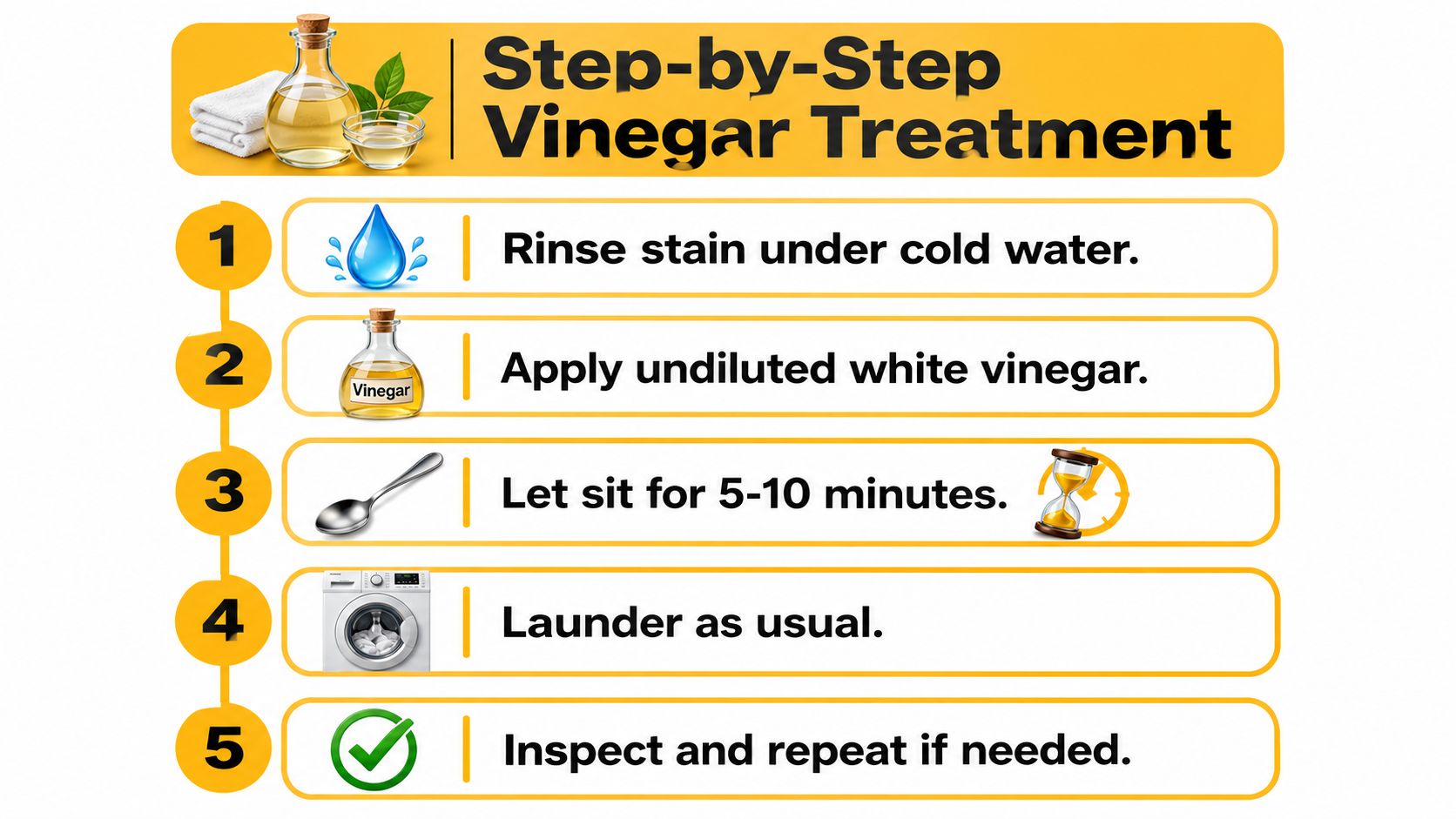
Contact time depends on the fabric and the amount of coffee. A longer soak is not automatically better. Acid exposure can harm sensitive material, particularly if the treatment is repeated without another fabric check.
Vehicle upholstery needs even tighter control. Its backing can retain moisture, so blot the surface and avoid saturating the seat. These stain removal tips for car upholstery offer useful surface-specific context.
Here's a visual demonstration of the overall treatment flow:
If washing leaves a shadow, let the item air-dry and reassess its fabric and stain age before choosing another method. Repeating vinegar without checking those factors can create a material problem instead of solving the mark.
The Science Behind Vinegar and Coffee Tannins
Coffee's brown color comes partly from tannins, plant compounds that can attach to fibers. A fresh spill gives those compounds less time to settle, so rinsing followed by a controlled acidic treatment may loosen visible residue. Timing matters because vinegar has a better chance before drying or heat fixes the mark.
White vinegar usually contains 5–8% acetic acid. That acidity changes the conditions around the stain and can disrupt compounds contributing to the brown color. The treatment is not a universal solvent. Its result depends on the solution's strength, contact time, fabric structure, dye stability, and whether milk or sugar is mixed into the spill.
A mild acid can help on suitable washable fabric, but the same acidity raises the risk of color change or fiber damage on delicate materials. Test an inconspicuous area first, keep contact brief, and rinse rather than assuming a longer soak will clean better.
What testing suggests
Comparative textile-stain testing found that vinegar-based methods can work, with results changing according to the formulation and conditions. One study gave apple cider vinegar a coffee stain-removal score of 3.5, rising to 4.0 when paired with baking soda, on a 5-point scale (comparative vinegar and baking-soda stain testing). The practical conclusion is limited but useful: vinegar can contribute cleaning action, yet no single mixture performs consistently on every textile.
The same study reported near-complete removal, 99.74%–99.86%, from a citrus-based acid solution after 30 minutes under optimized conditions. That result applies to a specific solution and protocol, not ordinary kitchen vinegar used casually. It does show why ratio and dwell time affect acid-based treatment, and why copying a long soak onto fabric is poor practice.
Tannins also help explain why coffee and tea leave similar marks. What makes coffee taste bitter offers useful context about coffee's bitter compounds, while stain removal still depends on the textile and the spill's age.
Vinegar is most useful for fresh stains on acid-tolerant fabric. Dried residue, heat exposure, milk, or sugar can require a different method.
When Vinegar Is the Wrong Choice for Stain Removal
A fresh coffee splash on a washable cotton shirt may respond well to diluted vinegar. The same treatment can harm wool, silk, stone, or a finished surface. The material determines whether acetic acid is a sensible choice, not the stain alone.
Wool and silk are protein-based fibers, so strong or repeated acid exposure can affect their structure, color, or finish. Spandex blends also require caution because soaking may stress the elastic component. Valuable garments should go to a professional cleaner rather than receive an untested household treatment.
Repeated exposure can weaken cotton over time, and some synthetic materials may yellow. One carefully tested application will not always cause damage, but strong solutions, long contact, repeated treatments, and inadequate rinsing raise the risk. Test the diluted mixture on a hidden area first, then rinse thoroughly.
Surfaces that need a different plan
Choose another method, or seek material-specific advice, for:
- Wool, silk, and spandex blends, where fiber strength and elasticity may matter more than removing one mark.
- Aluminum, which can discolor or react with acidic cleaners.
- Natural stone, where acid can etch the surface.
- Waxed wood, where the finish may deteriorate.
- Delicate dyes and specialty finishes, which can change color or sheen.
Carpet needs additional control because liquid can move below the visible pile and reach the backing. Use only a lightly damp treatment rather than flooding the area. Guidance on carpet cleaning using vinegar in Birmingham can help when the carpet construction or backing is uncertain.
Timing also determines whether vinegar is worth trying. Guidance on coffee-stain treatment reports that vinegar-only methods often fail on stains older than 48 hours, particularly after heat-setting (limitations of vinegar on older and heat-set coffee stains). For an old mark, a suitable detergent, enzyme-based pretreatment, or color-safe oxidizing product may work better, provided the care label permits it. Stop using vinegar if the fabric changes color, feels rough, or shows a damaged finish.
Advanced Techniques for Older or Set-In Stains
A dried coffee stain requires a different plan. Vinegar is mainly useful as an early treatment. If the mark has dried, been ironed, or gone through a dryer, repeating the same step may expose the fabric to more acid without loosening the residue.
Identify what the coffee contained. Black coffee leaves tannin-rich discoloration. Milk or cream adds protein and fat, while sugar can leave a sticky film that holds residue against the fibers. Each component responds to different cleaning actions, so one household ingredient may not remove the entire mark.
A safer escalation path
- Rehydrate carefully. Dampen the area with cool water and blot. Avoid saturating thick fabric, carpet, or upholstery, since trapped moisture can create a second problem.
- Address milk or cream residue. Apply a mild detergent or a surfactant-based product according to the garment's care instructions. Surfactants help lift oily residue, and enzymes may help break down protein-based material.
- Use vinegar only after testing the fabric. If the material shows no color or texture change, apply a controlled, diluted treatment to the remaining tannin discoloration, then rinse thoroughly. Never combine vinegar directly with an alkaline oxidizing product. Use them in separate stages, rinsing fully between applications.
- Consider an oxygen-based alternative. On suitable white or colorfast washable fabrics, an oxidizing stain remover may address an older mark more effectively than another vinegar soak. Follow the label and test first. A product labeled “color-safe” may still affect a particular dye or finish.
- Wash and inspect before drying. Heat can make any remaining mark harder to remove. Air-dry the item until you confirm that the stain has disappeared.
Baking soda sometimes appears in comparative vinegar treatments. An independent stain-removal test comparing vinegar with baking soda recorded a higher result for vinegar paired with baking soda than for apple cider vinegar alone on its stated 5-point scale (independent stain-removal test comparing vinegar with baking soda). Treat that result as limited guidance, not a universal formula. Vinegar and baking soda react with each other, reducing the distinct properties of both, and abrasive scrubbing can roughen some surfaces.
For silk, wool, bespoke clothing, upholstery with uncertain backing, or any garment already exposed to drying heat, professional cleaning is often the safer endpoint. A cautious service is easier to justify than permanently weakening a valuable item.
Quick-Reference Checklist for Coffee Stain Emergencies
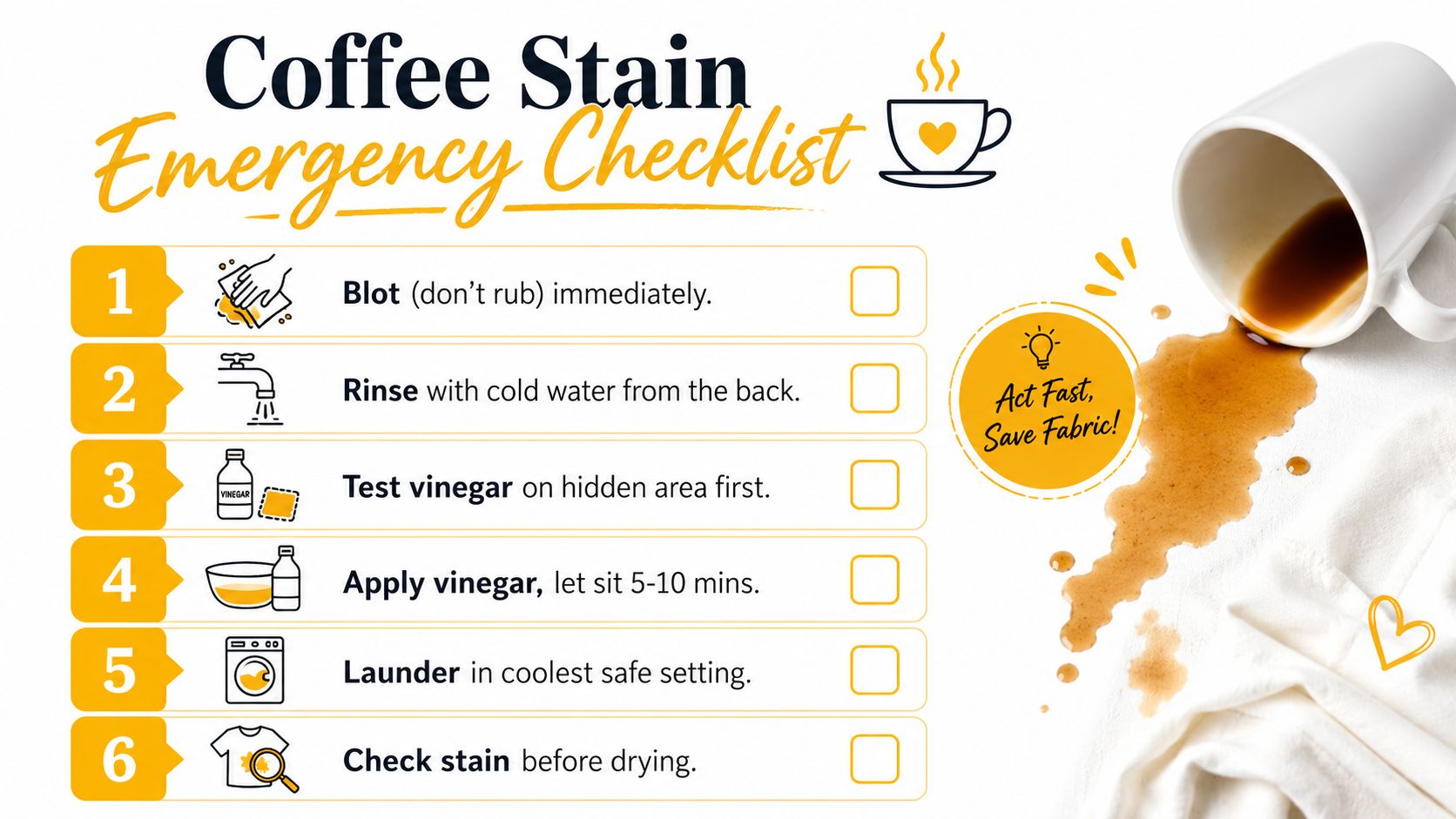
A fresh spill on a shirt, tablecloth, or work bag needs quick, ordered decisions. Remove excess liquid first, identify the material, then choose the least aggressive treatment.
- Blot, don't rub: Lift coffee with a clean white cloth. Rubbing drives tannins deeper and can spread the ring.
- Rinse from behind: Flush with cold water from the reverse side, pushing coffee away from the visible surface.
- Check the fiber: Do not apply vinegar casually to wool, silk, spandex blends, natural stone, aluminum, or waxed wood.
- Test discreetly: Dab the planned solution on an inside seam or hidden area. Stop if color, sheen, or texture changes.
- Treat selectively: For a fresh stain on a suitable washable material, use undiluted white vinegar or a 2:1 water-to-vinegar mixture, following fresh-stain vinegar guidance.
- Keep contact controlled: Use a short treatment rather than assuming a longer soak will work better. Vinegar can weaken or dull sensitive finishes.
- Launder promptly: Follow the care label, then rinse thoroughly so acidic residue does not remain.
- Inspect before heat: Air-dry or check the mark before ironing or tumble-drying. Heat can set what remains.
- Escalate older stains: A dried or heat-set mark may need suitable detergent, enzyme pretreatment, or an oxygen-based product instead of repeated vinegar.
- Call a professional: Choose expert cleaning for delicate, valuable, upholstered, or structurally uncertain items.
A different stain may require a different first move. These blood and wine stain tips reinforce the same rule: match stain chemistry to fabric safety rather than applying one household remedy everywhere.
Prevention also matters during commutes, workdays, and travel. A leak-resistant container can reduce spills before treatment is needed. Cartograph Coffee's guide to on-the-go coffee cups covers practical options for carrying coffee.
For silk, wool, valuable clothing, or upholstery with uncertain backing, professional cleaning is safer than repeated home experiments. A cautious decision can prevent permanent weakening or discoloration.
Cartograph Coffee makes organic instant coffee for busy mornings, travel, camping, and easy coffee at home, with a focus on quality and convenience. Visit Cartograph Coffee to find a better way to enjoy coffee without adding unnecessary steps to your day.