If that first cup of coffee leaves you feeling more puffed up than perked up, you're definitely not alone. It often comes down to two key components of your daily brew: its natural acidity, which can tell your stomach to produce more acid, and caffeine, which basically hits the fast-forward button on your entire digestive system.
These two troublemakers are usually the main reason behind that familiar post-coffee bloat.
Why Your Morning Brew Might Cause Bloating
That comforting morning ritual can sometimes backfire, leaving you with an uncomfortable, bloated feeling. For a lot of people, this isn't just a coincidence; it's a direct result of how coffee interacts with the unique environment of their gut. Getting to know the key players in your cup is the first step to figuring out what’s causing the discomfort so you can get back to enjoying your coffee, minus the unwanted side effects.

And this is far from a niche problem. Coffee is a global phenomenon, with people around the world drinking over 2.25 billion cups every single day. With such massive consumption, any digestive side effects are bound to impact a huge number of people. In fact, since about 25% of the population deals with functional dyspepsia—indigestion without an obvious cause—coffee is frequently looked at for its potential role in symptoms like bloating and stomach pain. You can dive deeper into coffee's effects on digestion in this comprehensive study.
The Main Triggers in Your Cup
So, what’s really going on in your gut after that first sip? It usually boils down to a few core elements that are part of the coffee experience.
- Acidity: Coffee is naturally acidic, containing compounds like chlorogenic acids. This can signal your stomach to produce more of its own acid, and if you have a sensitive stomach, that extra acid can lead straight to irritation and bloating.
- Caffeine: Caffeine is a well-known stimulant, but it doesn't just wake up your brain. It also speeds up your digestive process, an effect known as increasing gut motility.
- Additives: Sometimes, the coffee itself isn't the problem—it’s what we put in it. Dairy, artificial sweeteners, and sugary syrups are notorious for causing bloating, particularly for anyone with an intolerance or sensitivity.
Think of your digestive system as a finely tuned assembly line. Caffeine is like someone turning up the speed on the conveyor belt. Food moves through too quickly to be processed properly, which can easily lead to gas and bloating down the line.
To make things even clearer, here’s a quick rundown of the common culprits behind coffee-related bloating.
Quick Guide to Coffee and Bloating Triggers
This table gives you an at-a-glance overview of the primary factors in your daily coffee that can contribute to bloating and digestive discomfort.
| Trigger | How It Contributes to Bloating |
|---|---|
| Acidity | Increases stomach acid, which can irritate the gut lining and cause discomfort. |
| Caffeine | Speeds up digestion (gut motility), potentially leading to gas and cramps. |
| Milk & Creamers | Can cause bloating for those with lactose intolerance or sensitivity to dairy. |
| Sweeteners | Sugar alcohols and artificial sweeteners are known to cause gas and digestive upset. |
Keeping these triggers in mind can help you start experimenting with your coffee routine to find what works best for your body.
How Coffee Interacts with Your Digestive System
To get to the bottom of the coffee and bloating connection, it helps to think of your digestive system as a finely tuned, rhythmic orchestra. When everything is in sync, food moves along smoothly. But for some people, introducing coffee is like bringing in a new conductor who suddenly speeds up the tempo for everyone.

This new "conductor" uses two main batons to stir things up: caffeine and acid. Let’s break down how each one can throw your gut's performance out of whack.
The Caffeine Effect on Gut Motility
Caffeine is a well-known stimulant. It wakes up your brain, but it does the exact same thing to your intestines. It can significantly increase gut motility, which is just the fancy term for the muscle contractions that push food through your digestive tract.
Normally, this is a steady, predictable process. But when caffeine hits your system, it can slam the accelerator. Food gets rushed through the digestive process before it can be fully broken down.
When that partially digested food arrives in your large intestine, the resident gut bacteria have a feast. They start fermenting it, which produces a whole lot of gas. That excess gas is what leads to that all-too-familiar feeling of pressure, discomfort, and bloating. This is also why so many people feel that urgent need to visit the bathroom right after their morning brew.
The Role of Stomach Acid
Coffee isn't just caffeine; it’s packed with natural compounds like chlorogenic acids. These are part of what gives coffee its classic taste and aroma, but they also signal your stomach to ramp up its production of hydrochloric acid (stomach acid).
For many people, this isn't an issue. But if you have a sensitive stomach or an underlying digestive condition, that extra acid can be a real problem. It can irritate the delicate lining of your stomach and small intestine, leading to indigestion, a burning sensation, and—you guessed it—bloating.
Think of your stomach lining like sensitive skin. A gentle cleanser is fine, but dousing it in a harsh, acidic chemical will cause irritation and inflammation. For some, the acids in coffee act just like that harsh chemical, creating an environment ripe for discomfort.
This acidic reaction can leave you feeling bloated long after you’ve finished your last sip.
Coffee and Your Gut Microbiome
Beyond just speeding things up and adding acid, coffee has a direct conversation with the trillions of bacteria living in your gut—your gut microbiome. These tiny microbes are critical for healthy digestion, and keeping them in balance is essential for a happy gut.
Emerging research shows that coffee drinkers have a noticeably different microbiome composition than non-drinkers. One study found that a specific bacterium, Lawsonibacter asaccharolyticus, is 4.5 to 8 times higher in people who drink coffee. While scientists are still piecing together what this all means, it’s clear that coffee actively shapes your internal ecosystem.
You can dive deeper into these fascinating findings on coffee and gut bacteria. This complex interaction helps explain why coffee's digestive effects are so incredibly personal, varying from one person to the next.
Is It The Coffee or What You Add To It?
Sometimes, that morning cup of coffee takes the blame for bloating when the real culprits are the things we stir into it. Before you give up on coffee entirely, it’s worth playing detective and taking a closer look at what’s really in your mug.

Let’s be honest, many of us don’t drink our coffee black. We reach for milk, sugar, creamers, or flavored syrups—and each one has the potential to stir up digestive trouble. By isolating these additions, you can often get to the bottom of your discomfort.
Dairy: The Common Culprit
For a huge number of people, dairy is the number one trigger for bloating. When you add milk or cream to your coffee, you’re also adding lactose, a natural sugar that needs a specific enzyme called lactase to be digested.
If you’re lactose intolerant, even just a little, your body doesn't produce enough of that enzyme. This means the lactose can’t be broken down properly. Instead, it ends up fermenting in your gut, leading to those all-too-familiar symptoms: gas, cramping, and bloating. It's often the simplest explanation.
Think of it this way: Your gut is a locked door, and lactase is the only key that can open it for lactose. Without the key, the lactose is left stuck outside, causing a commotion (bloating and gas) as it waits.
A simple test? If you feel bloated after a creamy latte but feel just fine after a black Americano, dairy is almost certainly the suspect.
Sweeteners and Hidden Sugars
The next place to look is the sweetener you're using. A lot of those popular sugar-free syrups and sweeteners rely on sugar alcohols like sorbitol, xylitol, or erythritol to deliver sweetness without the calories.
They might seem like a guilt-free choice, but these compounds aren't fully absorbed by your small intestine. Once they travel to the large intestine, your gut bacteria have a field day fermenting them, which produces a lot of gas and leads to significant bloating for many people. If you're curious about how these mix-ins stack up, you can dive deeper into how many calories are in coffee and its various additions.
Even plain old table sugar isn't off the hook. Over time, it can feed the less-friendly bacteria in your gut, leading to an imbalance that can also cause bloating.
How Coffee Can Amplify Existing Conditions
It's also important to remember that coffee can act like an amplifier, turning up the volume on digestive issues you already have. An estimated 73% of people drink coffee daily, but its impact is incredibly personal and depends on your unique physiology.
For example, about 45% of patients with Crohn’s disease say coffee makes their symptoms worse. In contrast, only about 20% of those with irritable bowel syndrome (IBS) directly connect their flare-ups to coffee, showing just how different our reactions can be. For someone with IBS, coffee’s natural ability to stimulate gut movement can be enough to trigger a bout of bloating and cramping.
By methodically looking at what you add to your cup and paying close attention to how your body responds, you can finally figure out if the problem is the coffee or its companions.
How to Enjoy Coffee Without the Bloat
Alright, we've talked about the "why" behind that post-coffee bloat. Now for the good part: the "how." How do you actually build a better, more comfortable coffee ritual?
Think of this as your playbook. With a few smart, simple tweaks to your routine, you can keep enjoying the coffee you love without that dreaded puffy, uncomfortable feeling afterward. Let's get practical.
It All Starts With the Beans
Believe it or not, not all coffee beans are the same when it comes to your stomach. The type of bean and, more importantly, how it’s roasted, can make a world of difference in its acidity—a key trigger for bloating.
Here’s what to look for on your next coffee run:
- Go for Darker Roasts: The roasting process actually breaks down the acidic compounds in coffee beans. A longer roast time means fewer of these compounds survive. So, a dark roast is almost always a gentler choice for a sensitive gut than a light or medium roast.
- Stick with 100% Arabica: As a rule of thumb, Arabica beans are naturally less acidic than their bolder cousin, Robusta. A bag of 100% Arabica, especially a dark roast, is a fantastic starting point.
- Seek Out "Low-Acid" Coffee: You're not alone in this! Many roasters now offer specific low-acid coffee blends that have been processed to be as stomach-friendly as possible.
Rethink How You Brew
The way you make your coffee is just as critical as the beans you choose. Different brewing methods pull out different compounds from the coffee grounds, directly affecting the final acidity and even the oil content of your cup.
If there’s one superstar for stomach-friendly coffee, it’s cold brew. By steeping the grounds in cold water over a long period (12-24 hours), you get a brew that can be up to 67% less acidic than a typical hot brew. This one change alone can be an absolute game-changer. For a deeper dive, check out our guide on how to reduce the acidity of coffee.
But cold brew isn't the only option. Choosing the right method is about balancing your taste preferences with what your stomach can handle.
Choosing a Brewing Method for a Happier Stomach
This quick table breaks down the most common methods to help you find the right fit for your gut.
| Brewing Method | Acidity Level | Caffeine Content | Ideal For |
|---|---|---|---|
| Cold Brew | Very Low | High (but sipped slowly) | Those with acid sensitivity who still want a caffeine kick. |
| French Press | Medium | High | People who aren't sensitive to coffee oils but want a rich flavor. |
| Drip Coffee | Medium-High | Medium | A standard method that can be harsh if you're sensitive. |
| Espresso | Medium | High (per ounce) | Quick, concentrated coffee that can be intense on the stomach. |
As you can see, a simple switch from your standard drip coffee to a cold brew concentrate could make all the difference in how you feel.
Be Smart About Your Add-Ins
Finally, let's talk about what you stir into your mug. As we’ve covered, dairy and certain artificial sweeteners are notorious troublemakers for digestion.
Think of your coffee as the main event and the additives as the supporting cast. If the supporting cast is causing chaos, the whole performance suffers. Swapping them out can fix the entire show.
Try these easy exchanges:
- Switch to Plant-Based Milk: If you even slightly suspect lactose is the issue, give oat, almond, or soy milk a try. Oat milk is a fan favorite for its creamy texture that comes surprisingly close to dairy.
- Avoid Sugar Alcohols: Check the ingredients on your sugar-free sweeteners. If you see anything ending in "-ol" (like sorbitol, xylitol, or erythritol), it could be the culprit. Try a little real sugar, maple syrup, or stevia instead.
- Add Digestive-Friendly Spices: A pinch of cinnamon or ginger doesn't just add great flavor. Both are known for their anti-inflammatory properties and can help soothe your digestive system.
By methodically working through these three areas—your beans, your brew, and your add-ins—you can pinpoint what's causing your bloating and finally build a coffee routine that perks you up without weighing you down.
Lifestyle Habits to Support Your Coffee Routine
Sometimes, enjoying your coffee without discomfort has less to do with what's in your mug and more to do with your daily habits. Making a few simple, conscious tweaks to your routine can completely change how your body reacts to that morning brew. These aren't drastic changes, but they create a much friendlier environment for your digestive system, helping ensure coffee and bloating don't become a package deal.
One of the most crucial factors is timing. Sipping coffee on a totally empty stomach can be a direct path to irritation, as the acid hits your stomach lining without any kind of buffer. Think of food as a protective shield. Pairing your coffee with a balanced, fiber-rich meal can dramatically cushion its acidic punch.
Master Your Morning Timing
Picture your stomach first thing in the morning: it’s an empty room with bare walls. Pouring in acidic coffee is like blasting loud music in there—it just echoes and creates a harsh, irritating environment.
Now, imagine that same room furnished with thick rugs and heavy curtains. This is your breakfast. The music is absorbed, and the whole experience feels much smoother. That's exactly why eating first can make such a difference.
A meal with fiber, healthy fats, and protein actually slows down the rate at which your stomach empties. This gives the coffee acid less time to cause trouble and provides your digestive system a better chance to process everything calmly. Here are a few great breakfast pairings to try:
- Oatmeal with nuts and berries: The fiber in oats forms a soothing, gel-like layer in your stomach.
- Avocado toast on whole-wheat bread: This combo of healthy fats and complex carbs gives you a slow, sustained energy release.
- A smoothie with spinach and protein powder: You get a nutrient-packed base before the caffeine even enters the picture.
Just by shifting your routine to eat before you drink, you set yourself up for a much more comfortable, bloat-free day.
Hydration Is Non-Negotiable
It's a classic mistake to forget that coffee is a diuretic, which is just a technical way of saying it makes you pee more and lose water. While one or two cups won't dehydrate you in a serious way, it can easily disrupt your fluid balance just enough to contribute to issues like bloating and constipation.
Think of hydration as the oil that keeps your digestive machinery running smoothly. When everything is well-lubricated, your system works efficiently, preventing the kind of digestive traffic jams that lead to bloating and discomfort.
To counteract coffee's diuretic effect, make it a point to drink plenty of water all day long. A fantastic rule of thumb is to have a full glass of water before your coffee and another one right after. This one small habit helps keep your digestive tract moving happily, letting you enjoy your coffee without the annoying side effects.
This image sums up a few key choices you can make to build a bloat-free coffee habit.
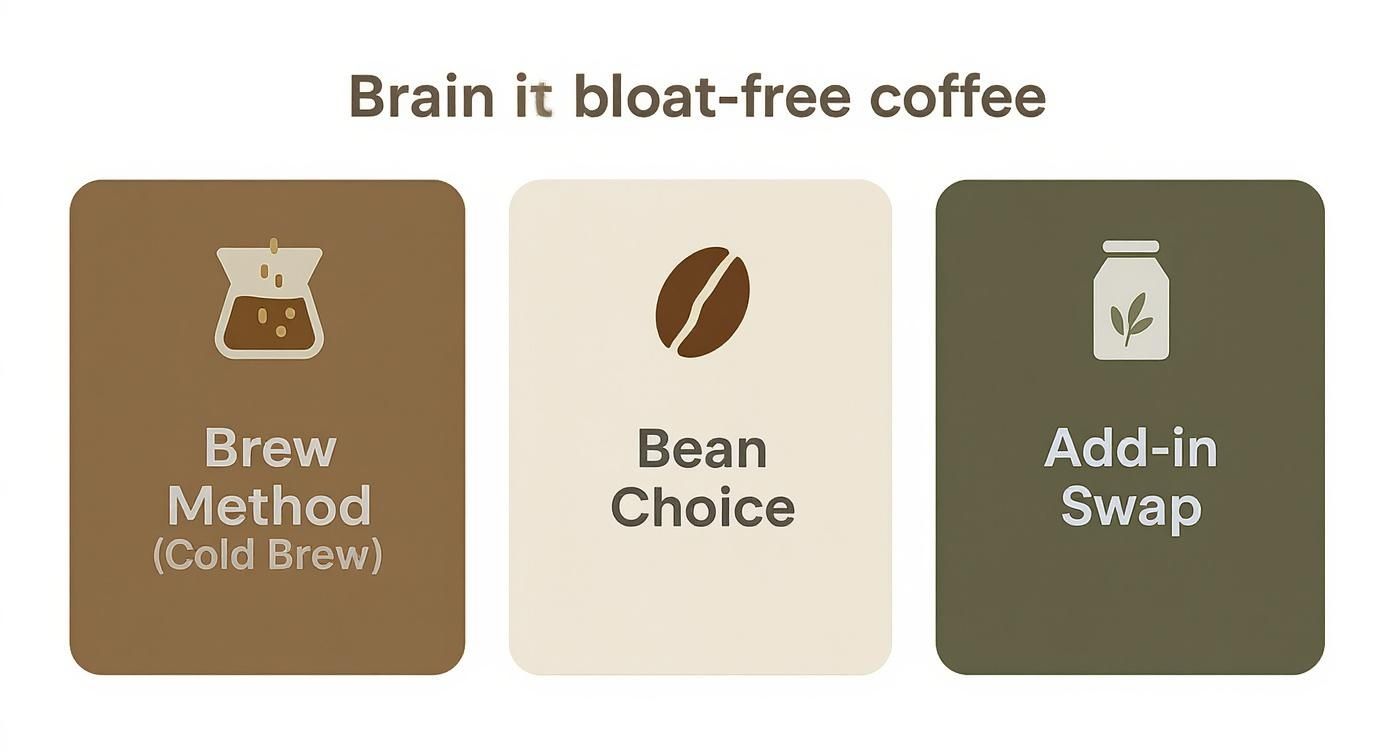
By focusing on your brewing method, bean choice, and add-ins, you can create a cup that is much gentler on your system.
When Your Bloating Is More Than Just a Coffee Problem
Tweaking your coffee routine is often all it takes to calm down that post-cup bloat. But sometimes, that discomfort is your body's way of telling you something more serious is going on.
Think of it this way: if your bloating is occasional and mild, it’s a yellow light. It's a sign to pay attention and maybe make a few changes. But if the bloating is constant, severe, or comes with other worrying symptoms, that’s a red light.
Red Flags to Watch For
If your bloating comes with severe pain, unexplained weight loss, or major changes in your bowel habits (like constipation or diarrhea that won't go away), it’s time to talk to a doctor. These aren't typical reactions to coffee. They could be signs of an underlying condition that your coffee habit is simply making worse.
To get the most out of a doctor's visit, a little prep work goes a long way. Start keeping a simple symptom diary.
Note what you eat and drink, exactly when the bloating hits, and any other symptoms you feel. This simple log gives your doctor a clear, detailed map of your digestive health, making it much easier to figure out what’s really causing your discomfort.
While this guide can help you troubleshoot your coffee, it’s no substitute for professional medical advice. Other symptoms, like queasiness, can also be tied to your daily brew. For more on that, check out our complete guide on whether coffee can cause nausea. Taking these proactive steps is the best way to get the right diagnosis and find real relief.
Answering Your Top 2 Questions About Coffee and Bloating
Alright, let's wrap this up by digging into some of the most common questions people ask when they're trying to figure out the connection between their morning coffee and that uncomfortable bloated feeling. Think of this as your quick-reference guide to solving the puzzle.
Does Decaf Coffee Cause Less Bloating?
For a lot of folks, the answer is a definite yes. Since decaf has only a tiny fraction of the caffeine found in a regular cup, it doesn't rev up your digestive system in the same way. If you suspect that caffeine’s stimulant effect is what’s causing your gut to go into overdrive, making the switch to decaf could make all the difference.
But keep in mind, decaf isn't a silver bullet for everyone. It still contains the same natural acids as regular coffee, which can be a real problem for a sensitive stomach. If you've noticed that acidic foods and drinks are your main trigger, you might still get that bloated feeling. In that case, hunting down a low-acid decaf blend is your best bet—it tackles both potential culprits at once.
Is Cold Brew Coffee Better for My Stomach?
It often is! Cold brew has become a go-to for coffee lovers with sensitive stomachs, and for good reason. The magic is in the brewing method. By steeping the grounds in cold water for a long time (usually 12-24 hours), the process extracts the flavor compounds without pulling out as many of the harsh acids.
The result is a coffee concentrate that is significantly less acidic than its hot-brewed counterpart. This gentler profile means less potential for stomach irritation and acid reflux, which are major players in the bloating game. If you love coffee but hot-brewed varieties feel too harsh, cold brew is definitely worth a try.
Can Milk or Cream Make Bloating Worse?
Without a doubt. This is probably one of the biggest and most overlooked culprits. If you have even a mild case of lactose intolerance, adding dairy milk or cream to your coffee is a surefire recipe for bloating, gas, and cramping. When your body can't properly break down lactose (the sugar in milk), your gut bacteria have a field day, producing gas as a byproduct.
Pay close attention to your symptoms. If you can drink a black Americano just fine but feel awful after a creamy latte, you’ve likely found your trigger. The fix is simple: try swapping dairy for a lactose-free milk or a plant-based alternative like almond, oat, or soy milk. You might be surprised at how quickly your symptoms vanish.
Does the Coffee Roast Matter for Bloating?
You bet it does. As a general rule, darker roasts are kinder to the stomach. The longer roasting time actually breaks down more of the acidic compounds that can cause irritation. As an added bonus, dark roasts also tend to have slightly less caffeine than light roasts.
The type of bean matters, too. 100% Arabica beans are known for being naturally less acidic than the more bitter-tasting Robusta beans. So, for a stomach-friendly brew, a dark roast made from high-quality Arabica beans is a smart and simple upgrade. It's an easy way to make your daily coffee experience much more comfortable.
Ready to enjoy a better, bloat-free brew? Cartograph Coffee specializes in high-quality, organic instant coffee designed for convenience without compromise. Perfect for busy mornings or outdoor adventures, our coffee is crafted to be as delicious as it is easy on your stomach. Explore our collection today at https://cartographcoffee.com.