Let's get right to it. On its own, a cup of plain, black coffee is virtually calorie-free. A standard 8-ounce cup has fewer than 5 calories, making it one of the best choices you can make if you're watching your intake. The calorie count only starts to climb once you reach for the milk, sugar, or flavored syrups.
The Surprising Truth About Coffee Calories
It seems almost too good to be true, doesn't it? A drink so rich and flavorful has to have a catch. But the science behind it is refreshingly simple. When you brew coffee, the hot water is really just pulling out the aromatic compounds and oils—the things that give coffee its incredible taste and smell. Most of the solid, calorie-dense parts of the bean get left behind in the grounds.
Because of this super-efficient extraction, your morning mug stays incredibly light. An 8-ounce serving of black coffee typically contains just 2 calories. That’s it. This tiny number makes it a perfect fit for almost any diet or health plan. For a deeper dive, you can explore more about the calorie content in organic coffee.
The real conversation about coffee calories isn't about the brew itself, but what we stir into it. A simple, unadorned cup is a guilt-free pleasure. But think of it as a blank canvas—the moment you add sugar, cream, or a pump of syrup, that nutritional picture changes completely. Knowing this difference is the key to enjoying your coffee just the way you like it, without accidentally sabotaging your health goals. It’s not the coffee; it’s the additions.
So, Why Is Black Coffee Practically Calorie-Free?
It seems almost too good to be true, right? A drink packed with such rich, complex flavor that has virtually no calories. The secret is all in the brewing. At its core, brewing is a process of extraction, and it’s surprisingly picky about what it pulls from the coffee bean.
Think of it this way: calories are just units of energy your body gets from fats, proteins, and carbs. Whole coffee beans do contain natural oils, which are fats. But when you brew coffee, the hot water is incredibly good at dissolving and pulling out the water-soluble compounds—the very things that give coffee its amazing aroma and taste.
What isn't the water good at? Grabbing those fatty, calorie-dense oils. Most of the oils and solids get left behind in the coffee grounds you toss out.
Brewing: All of the Flavor, None of the Fat
The real magic of making coffee is that you get the essence of the bean without its full caloric load. I like to compare it to making a really good vegetable stock. You might simmer carrots, onions, and celery for hours to pull all that savory goodness into the water, but you strain out the actual vegetables. The resulting broth is bursting with flavor but has very few calories. Your coffee brewer does the exact same thing.
This holds true for just about any method you can think of—drip machines, a French press, pour-over, you name it. They are all designed to be flavor extractors, not to transfer the physical substance of the bean into your cup. Our complete guide to black coffee calories dives even deeper into how different brewing styles all end up with a similarly low-calorie drink.
The moment you add anything to your coffee, the game changes. Black coffee is the calorie-free baseline, but as soon as milk, cream, or sugar goes in, the calorie count starts climbing fast.
This is why it's so helpful to know what’s really in your mug. The "zero-calorie" reputation of coffee only applies as long as it stays black. If you're curious about coffee consumption habits and other stats, you can explore the latest research on Cafely.com.
How Add-Ins Quietly Pack on the Calories
This is where your simple, nearly calorie-free cup of coffee starts to change. That innocent black coffee is a blank canvas, but the additions we stir in are what really decide if it's a healthy pick-me-up or a sneaky dessert in a mug. Even a small splash or spoonful can make a big difference.
Think of your black coffee as an empty piggy bank. Every teaspoon of sugar, dash of milk, or pump of syrup is a deposit, and these calories can accumulate faster than you think. For instance, a single teaspoon of white sugar adds about 16 calories. That might not sound like a lot, but if you enjoy two cups a day with two spoonfuls each, that’s an extra 64 calories you’re consuming without even realizing it.
From a Splash to a Serving
The type of add-in you choose is just as crucial as the amount. The simple choice between different milks and creams can completely change your coffee's final calorie count.
Let's break down some common choices:
- Whole Milk: A standard two-tablespoon splash will add around 18-20 calories.
- 2% Milk: The same amount is slightly lighter, coming in at about 15 calories.
- Skim Milk: This is your leanest dairy option, with only 10 calories per splash.
- Heavy Cream: This one is the real heavyweight. Just one tablespoon can pack in over 50 calories.
Then you have the flavored syrups—the secret behind most cafe favorites. A single pump of vanilla or caramel syrup usually adds another 20-30 calories along with a hefty dose of sugar. A typical flavored latte might get three to five pumps, which can easily push your drink into the triple-digit calorie range before you even factor in the milk or whipped cream.
As this infographic shows, the brewing process itself is designed to extract flavor and caffeine, leaving the solid, calorie-dense parts of the bean behind.
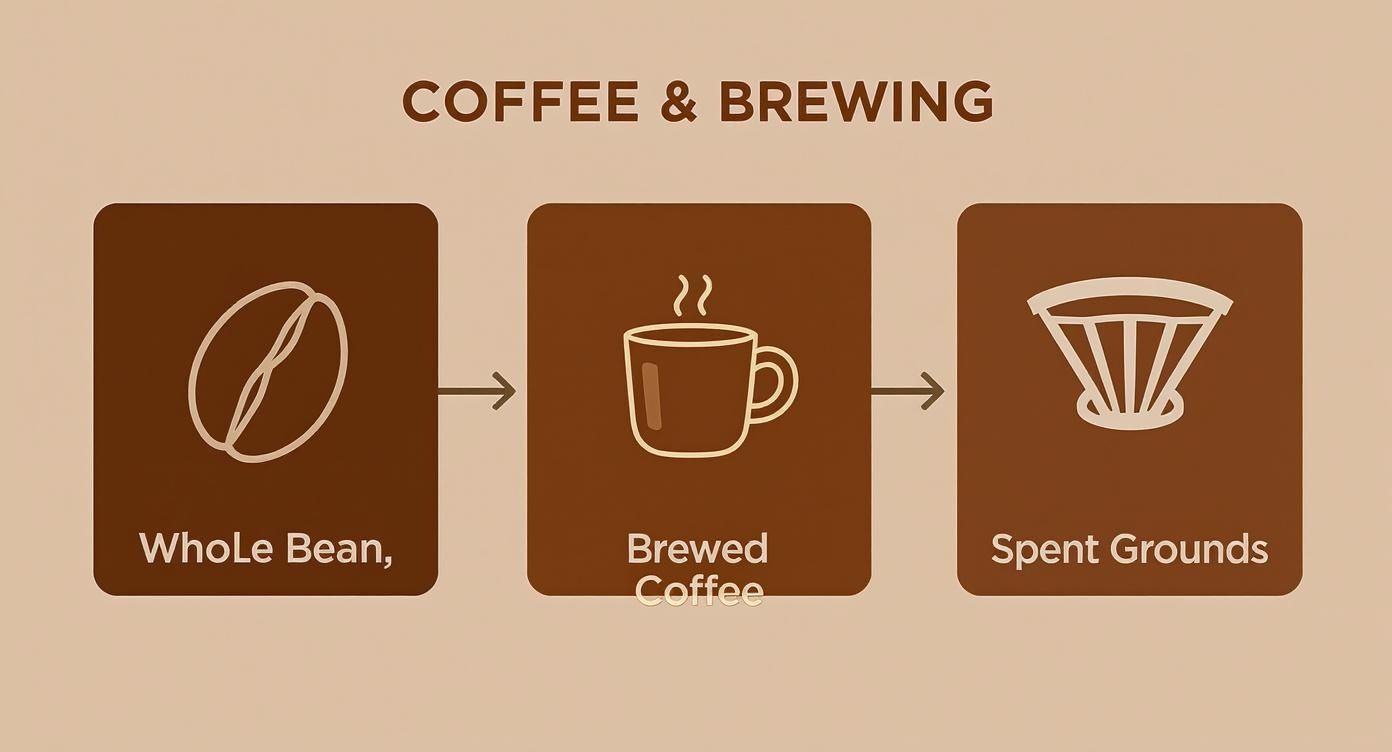
What you’re left with is mostly water infused with coffee’s essence, which is why the add-ins become the main calorie source.
The Calorie Budget of Your Coffee
It helps to think about your daily coffee in terms of a "calorie budget." A simple cup you make at home with a splash of skim milk might only cost you 15-20 calories. On the flip side, a medium latte from a coffee shop made with whole milk can start at 150 calories—and that’s before adding any sugar or flavorings. This applies to all coffee types, and you can learn more specifically about instant coffee calories in our other guide.
Here's a quick look at how quickly things can add up with common additions.
Calorie Guide for Popular Coffee Add-Ins
| Ingredient (Serving Size) | Typical Calorie Count | Notes |
|---|---|---|
| Granulated Sugar (1 tsp) | 16 calories | A common culprit that adds up fast. |
| Skim Milk (2 tbsp) | 10 calories | The lightest dairy option for adding creaminess. |
| 2% Milk (2 tbsp) | 15 calories | A good middle-ground choice. |
| Whole Milk (2 tbsp) | 18-20 calories | Richer and creamier, but with a few more calories. |
| Half-and-Half (2 tbsp) | 40 calories | A significant jump from milk. |
| Heavy Cream (1 tbsp) | 50 calories | The most calorie-dense option, used for its rich texture. |
| Flavored Syrup (1 pump) | 20-30 calories | Mostly sugar; a latte might have 3-5 pumps. |
| Whipped Cream (dollop) | 50-100 calories | Varies widely based on size and sugar content. |
This table makes it clear how different choices impact the final count. A splash of skim milk is a world away from a pump of syrup and a dollop of whipped cream.
To put it in perspective, a standard 16-ounce Caramel Macchiato from a big coffee chain can easily pack over 250 calories and 33 grams of sugar. That's more sugar than you'd find in a can of soda, all hiding in your morning brew.
Once you know what’s going into your cup, you’re in control. Simply understanding that a pump of syrup has more calories than two teaspoons of sugar empowers you to make smarter choices for your health without having to give up the coffee ritual you love.
Decoding the Modern Cafe Menu
Walking into a coffee shop these days can feel a little overwhelming, especially if you're keeping an eye on calories. Your trusty black coffee is one thing, but the moment you start looking at the specialty menu, the game completely changes. Those tempting lattes, cappuccinos, and mochas are built from a few core ingredients that can really pack a caloric punch.
The biggest culprit? Milk. Most of those creamy, delicious drinks start with a base of steamed milk—often whole milk. Then come the extras. Syrups, sauces, and drizzles are loaded with sugar. Just one pump of a flavored syrup can tack on an extra 20-30 calories, and a standard medium-sized drink often gets three, four, or even five pumps.
How a Simple Order Can Add Up
This is how a simple coffee order quickly morphs into something more like a dessert. A classic mocha, for instance, isn't just espresso. It’s espresso, a generous amount of steamed milk, and chocolate sauce, usually finished with a swirl of whipped cream. Every single one of those ingredients adds to the total, easily pushing a standard drink over 300 calories. Even knowing the subtle difference between a cappuccino and a latte can give you a better sense of how much milk you're actually getting.
It's no secret that the cafe scene is massive. The money spent on coffee outside the home is projected to hit a mind-boggling US$376.70 billion in 2025. This just goes to show how many of us are regularly making these choices, which makes it all the more important to know what we're actually drinking.
Think about this: a standard 16-ounce Caramel Macchiato from a big coffee chain can pack in over 250 calories and 33 grams of sugar. That's more sugar than you'll find in a can of soda, hiding in plain sight in your morning coffee.
The good news is, you're not powerless here. You're the one placing the order, and a few simple tweaks can make a huge difference.
- Go easy on the syrup. Ask for just one or two pumps instead of the standard amount, or see if they have a sugar-free version.
- Swap your milk. Opt for skim milk or a plant-based alternative like almond or oat milk to cut down on fat and calories.
- Skip the whip. Just saying "no whipped cream" can instantly save you anywhere from 50 to 100 calories.
Making these small changes means you can still enjoy your favorite coffee shop treat without completely derailing your health goals. Once you know how the drinks are constructed, you can take apart any item on the menu and build a version that works for you.
Smart Swaps for a Healthier Cup of Coffee
Enjoying a lower-calorie coffee doesn't mean forcing yourself to drink it black. With a few simple tweaks, you can craft a rich, satisfying brew without piling on the calories. The secret is learning how to add flavor, not just fat and sugar.
One of the best tricks in the book is to raid your spice rack. A dash of cinnamon or a sprinkle of unsweetened cocoa powder can work wonders. They add a warm, complex flavor that often satisfies the craving for sweetness, and they do it for virtually zero calories. It's a huge flavor payoff for a tiny change.
Rethink Your Sweeteners and Milks
When you absolutely need a little sweetness, you've got better options than plain old sugar. Natural, zero-calorie sweeteners like stevia or monk fruit give you that sweet kick without moving the needle on your daily calorie intake. Even a single drop of vanilla extract can add a fragrant sweetness and aroma for next to nothing.
The milk you choose also makes a huge difference. While a splash of whole milk is a classic, many plant-based alternatives are much lighter.
- Unsweetened Almond Milk: This is often the leanest choice, coming in at just 30-40 calories per cup.
- Unsweetened Soy Milk: A bit creamier and a great source of protein, it contains about 80 calories per cup.
- Oat Milk: It's incredibly popular for its creamy, dairy-like texture, but be mindful that it's also higher in calories, often 120 calories or more per cup.
The ultimate swap? It might just be upgrading your coffee beans. When you brew truly high-quality, freshly roasted coffee from a roaster like Cartograph Coffee, the flavor is so rich and complex that you might find you don't even want to cover it up with anything else.
By shifting your focus from masking bitterness to enhancing flavor, you can easily turn your daily coffee into a healthier ritual that still feels like a treat.
Got Questions About Coffee Calories? We've Got Answers.
Even after you get the basics down, a few specific questions always seem to come up. Let's tackle some of the most common ones so you can feel totally in control of your daily brew.
Is Espresso More Caloric Than Regular Drip Coffee?
It's a common myth, but no. A single one-ounce shot of espresso actually has only about 3 calories.
Even though the flavor is much more intense and concentrated, the serving size is tiny. That's why it ends up having a calorie count that's just as insignificant as a full 8-ounce mug of black drip coffee. The real calorie creep happens when that espresso shot becomes the foundation for a latte or cappuccino—it's the steamed milk that adds up, not the espresso itself.
Does Decaf Coffee Have Calories?
Nope, not really. Decaf coffee clocks in with the same super-low calorie count as regular coffee, which is usually under 5 calories for an 8-ounce cup.
The process used to remove the caffeine is highly specific and doesn't really alter the coffee's nutritional makeup. So, just like with its caffeinated sibling, the calories in your cup of decaf depend entirely on what you stir into it.
The Bottom Line: Whether you're drinking drip, espresso, or decaf, the coffee itself is practically calorie-free. The things that pack a caloric punch are always the add-ins: milk, sugar, cream, and flavored syrups.
So, What's the Deal with Bulletproof Coffee?
Now this is a completely different story. Bulletproof coffee is very high in calories, but that's by design. It's a mix of black coffee, butter, and MCT oil, intended to be a high-fat, high-energy meal replacement.
Think about it this way: a single tablespoon of butter contains around 100 calories, and a tablespoon of MCT oil adds another 130. That means one cup can easily top 200 calories, almost all of which come from fat. It's really in a category all its own.
At Cartograph Coffee, we believe that when coffee tastes this good, you won't want to cover it up. Discover our high-quality, organic instant coffee and see how delicious a low-calorie cup can be. Explore our collection today!