You're halfway out the door, coffee in hand, when plain coffee suddenly feels too predictable. A little cocoa and hazelnut can change that familiar mug into something warmer and more layered, without turning it into an elaborate café project. The same flavor can suit a slow morning, an iced afternoon drink, an office break, or a camping trip where a kettle is the only equipment available.
Chocolate hazelnut coffee is easiest to understand when you treat it as a coffee-first ritual. The coffee provides structure, while chocolate, hazelnut, milk, and sweetness adjust the mood. Once you know how each ingredient behaves, you can choose a hot, iced, or instant format with confidence and make small changes without losing balance.
Why Chocolate Hazelnut Coffee Works
A familiar morning routine can start feeling flat after repeated cups. Cocoa and hazelnut give that same coffee a darker center, toasted aroma, and softer finish without hiding its identity. Coffee supplies the roasted foundation, while chocolate rounds sharper edges and hazelnut adds a warm, lightly buttery note. The result can be adjusted for a quiet breakfast, an office break, or a portable drink outdoors.
Consider the drink a flavor-layering exercise. Coffee forms the base, chocolate strengthens the cocoa impression, and hazelnut fills the middle with nutty fragrance. Unsweetened cocoa gives a drier, more direct flavor. Chocolate syrup brings sweetness, hazelnut syrup emphasizes aroma, and a small amount of hazelnut spread creates a fuller texture. Each option changes the cup, so the ingredient choice matters as much as the amount.
One profile, several daily uses
Hot preparation highlights aroma because warmth makes the cup feel fuller and more expressive. Milk or cream adds body. Mixing the flavorings into a concentrated coffee base first helps the coffee remain recognizable.
Iced preparation tastes lighter and more refreshing. Ice softens aroma and makes sweetness more noticeable, so begin with a concentrated base before adding cold milk and ice. This format suits an afternoon drink when a warm cup feels too heavy.
Instant coffee changes the priorities. It reduces equipment and cleanup while still allowing the same flavor structure. A little hot water dissolves cocoa and syrup efficiently. Add warm milk for a comforting cup at home, or cold milk for a portable office or camping drink.
Practical rule: Build the coffee before building the sweetness. Taste the base, then add chocolate and hazelnut in small steps.
The functional side also calls for restraint. A peer-reviewed study of flavored Turkish coffee reported nearly identical total antioxidant status values for chocolate-flavored, hazelnut-flavored, and plain coffee: 3.22 ± 0.012 mmol TE/L for chocolate, 3.22 ± 0.010 mmol TE/L for hazelnut, and 3.23 ± 0.009 mmol TE/L for plain coffee (peer-reviewed flavored Turkish coffee study). That result does not promise a health effect for every product. It supports a narrower point: adding flavor does not automatically make the drink something other than coffee.
Understanding the Chocolate Hazelnut Flavor
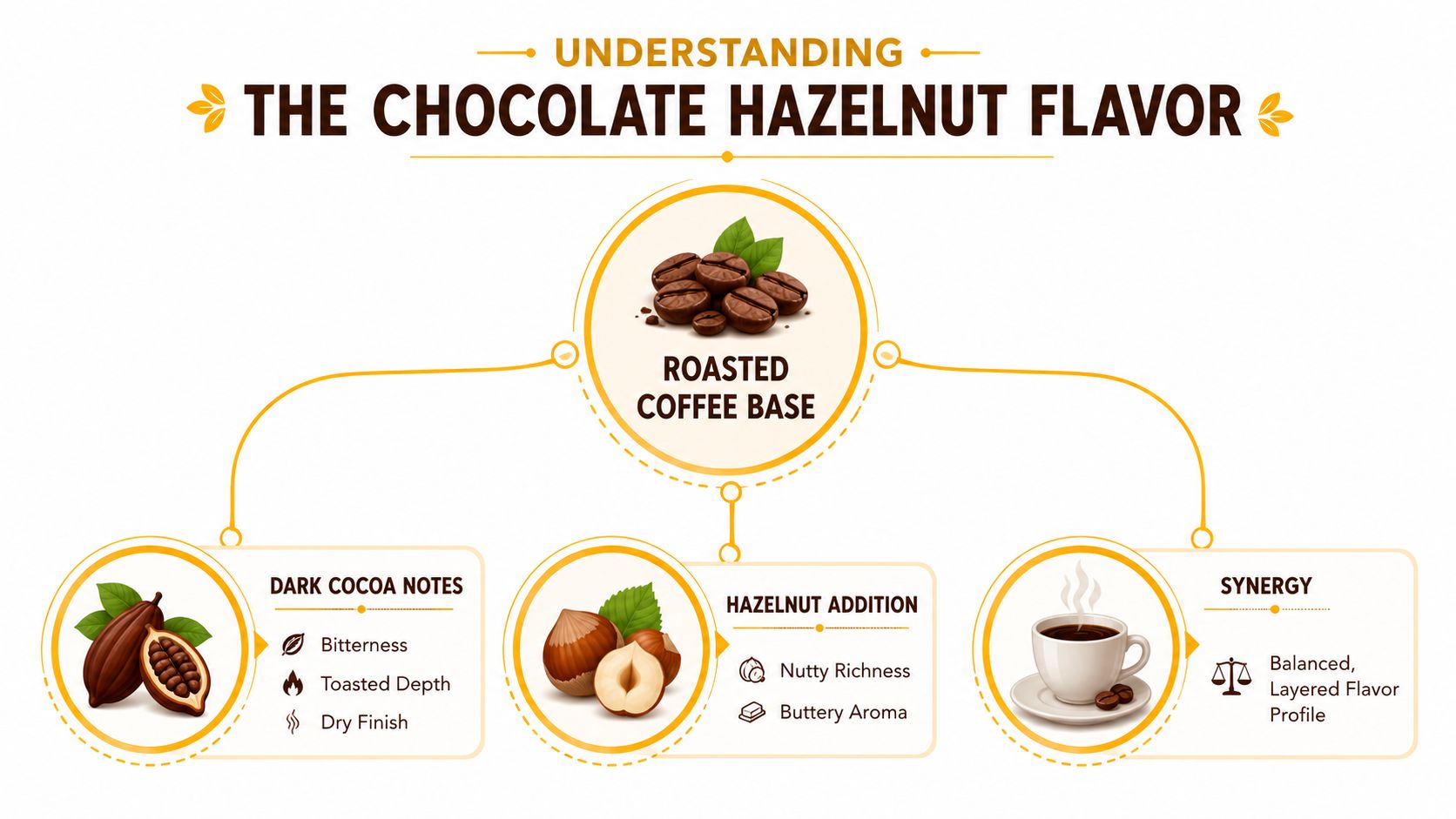
The flavor starts in the roast, before any syrup or cocoa enters the cup. Roasting can create aromas that suggest cocoa, toasted grain, nuts, or dark chocolate, even when the beans contain none of those ingredients. Peer-reviewed coffee analysis connects 2-methylpyrazine with nutty, roasted, and chocolate notes, while 2-ethyl-6-methylpyrazine is associated with roasted-hazelnut character (coffee aroma analysis).
A useful way to read the drink is as a three-part sensory ensemble. Coffee provides the bass line: bitterness, roast, and structure. Chocolate adds a round cocoa note, while hazelnut contributes a fragrant, toasted accent. If one element dominates, the cup can taste flat, overly sweet, or bitter. Balanced proportions let the parts support one another.
Read the cup as a map
Taste the coffee in stages before changing the recipe:
| Sensory element | What to notice |
|---|---|
| Aroma | Toasted nut, cocoa, caramel, or roasted coffee |
| Sweetness | Natural sweetness from milk or added syrup |
| Bitterness | Coffee's dark edge and roast intensity |
| Body | Thin, creamy, silky, or heavy texture |
| Finish | The flavor that remains after swallowing |
A dark roast may emphasize cocoa and toast. A gentler coffee can leave more room for added hazelnut. Longer roasting profiles have been positively correlated with higher pyrazine levels in coffee studies, so roast development can influence how strongly this flavor family appears. Use the aroma evidence above as a guide, not as a guarantee that every coffee will taste the same.
Flavor labels also need checking. A bag marked hazelnut may contain flavoring, roasted nut ingredients, or neither, depending on the product. If you use real nuts, baking with hazelnuts advice can help develop a fresher toasted aroma. A hazelnut note alone does not prove that the drink contains hazelnuts.
Choosing Hot, Iced, or Instant Preparation
Choose the format according to the moment, not according to a fixed idea of quality. Hot coffee is the aroma-forward choice, iced coffee is the dilution-sensitive choice, and instant coffee is the portable, portion-friendly choice.
For a hot drink, brew the coffee first and add cocoa or syrup while the liquid is still warm. Heat helps cocoa disperse and lets hazelnut aroma open before milk softens the texture. A strong drip coffee or espresso-style base works well because milk and flavorings add volume.
Iced coffee needs more concentration. Dissolve cocoa, syrup, or other sweeteners in a small amount of hot coffee before chilling or pouring over ice. If you add powders directly to cold liquid, they may clump, leaving the first sip weak and the last sip gritty. For a useful instant-based iced method, see this guide to iced coffee with instant coffee.
Instant preparation fits an office drawer, travel bag, or campsite. It mixes directly in the cup, requires minimal equipment, and lets you adjust the coffee strength before adding milk or ice. Water and milk can dilute the base quickly, so taste the concentrate before finishing the drink.
| Method | Best for | Flavor focus | Preparation note |
|---|---|---|---|
| Hot | Slow mornings and cozy breaks | Aroma, cocoa, creamy body | Mix flavorings into hot coffee before milk |
| Iced | Warm afternoons and cold drinks | Sweetness, refreshment, concentrated coffee | Dissolve flavorings first and use a strong base |
| Instant | Work, travel, and camping | Consistency and portability | Mix in the serving vessel and control dilution |
A naturally mellow coffee suits a softer dessert-like cup. A darker roast can carry more cocoa and milk without disappearing. In every format, ingredient order matters because concentrated coffee combines with flavorings more evenly than a fully diluted drink.
Quick Recipes for Every Coffee Setup
These recipes use the same principle, but each one handles temperature and dilution differently. Keep the coffee concentrated until the chocolate and hazelnut elements are fully incorporated.
Hot mug
Ingredients
- Coffee: Freshly brewed strong coffee or espresso
- Chocolate: Unsweetened cocoa powder
- Hazelnut: Hazelnut syrup
- Milk: Warmed milk, dairy or plant-based
Method
- Pour the hot coffee into a mug.
- Stir in cocoa powder and hazelnut syrup until smooth.
- Add warmed milk and stir again.
- Froth a little extra milk and spoon it over the surface if you want a café-style finish.
Start with a modest amount of cocoa and syrup, then adjust after tasting. Cocoa adds chocolate body without requiring as much sweetness as syrup, while hazelnut syrup contributes both aroma and sugar. A whisk or handheld frother helps prevent cocoa from settling.
Iced glass
Ingredients
- Coffee: Chilled strong coffee or cold brew
- Milk: Cold milk or oat milk
- Hazelnut: Hazelnut syrup
- Ice: Enough to chill the drink without leaving it empty and diluted
Method
- Combine the chilled coffee and hazelnut syrup in a jar or shaker.
- Stir or shake until the syrup is evenly distributed.
- Fill a glass with ice.
- Pour in the coffee mixture, then add cold milk.
- Stir once and taste before adding more sweetness.
Use a stronger coffee base than you'd choose for a hot drink because ice and milk soften intensity. If the drink tastes thin, increase coffee concentration next time rather than adding more syrup.

Instant packet
Ingredients
- Coffee: Instant coffee
- Water: A small amount of hot water
- Chocolate: Cocoa powder
- Milk: Cold or warm milk
- Hazelnut: Hazelnut syrup
Method
- Dissolve the instant coffee and cocoa in a small amount of hot water.
- Stir in hazelnut syrup until the mixture looks uniform.
- Add warm milk for a hot drink or cold milk for an iced version.
- For iced coffee, pour the concentrate over ice after it has dissolved completely.
The concentrate-first approach keeps the flavor from becoming watery. If you prefer a sweeter drink, add syrup gradually. For a deeper coffee profile, increase the coffee portion before increasing sugar. This mocha with instant coffee follows the same useful logic of dissolving the flavoring before adding the final liquid.
Pairings and Add-Ins That Build the Flavor
The best add-in strengthens one part of the drink without covering every other part. Unsweetened cocoa deepens the cup while leaving sweetness under your control. Dark chocolate syrup creates a richer, more dessert-like result, while milk chocolate syrup makes the drink softer and sweeter. Chocolate shavings or cocoa nibs contribute aroma and texture with less dissolved sweetness than syrup.
Hazelnut ingredients behave differently. Syrup spreads evenly and works well in iced coffee. Hazelnut spread creates body but can be difficult to dissolve unless you blend it into hot coffee first. Toasted chopped hazelnuts add crunch and aroma at the surface, but they won't distribute smoothly through the liquid.
| Add-In | Flavor role | Sweetness impact | Risk level |
|---|---|---|---|
| Unsweetened cocoa | Adds dark chocolate depth | Low | Low, if whisked thoroughly |
| Dark chocolate syrup | Adds richness and sweetness | Medium to high | Medium |
| Hazelnut syrup | Adds roasted-nut aroma | Medium to high | Medium |
| Warm milk | Rounds bitterness and body | Low to medium | Low |
| Oat milk | Adds creamy texture and mild sweetness | Medium | Low |
| Cinnamon | Adds warmth | Low | Low |
| Cardamom | Adds aromatic lift | Low | Medium, use lightly |
| Whipped cream | Creates a dessert finish | High | High |
| Salt | Sharpens cocoa perception | None | Low, when used sparingly |
Dairy milk usually gives a familiar creamy body. Oat milk can make the cup feel naturally sweeter, while unsweetened nut or soy alternatives may leave more room for the coffee itself. Always consider the ingredient label when allergies matter.
A small pinch of cinnamon can support roasted notes. Cardamom creates a brighter contrast, but too much can overwhelm hazelnut. A tiny amount of salt can make chocolate taste more distinct without turning the drink salty.
For food, choose something plain enough to leave space for the coffee. A simple biscuit, lightly sweet pastry, or breakfast toast works better than a heavily frosted dessert. If you want a more deliberate pairing, this guide to coffee and dark chocolate offers a useful contrast between bitter cocoa and roasted coffee.
Allergens, Ingredients, and Nutrition Claims
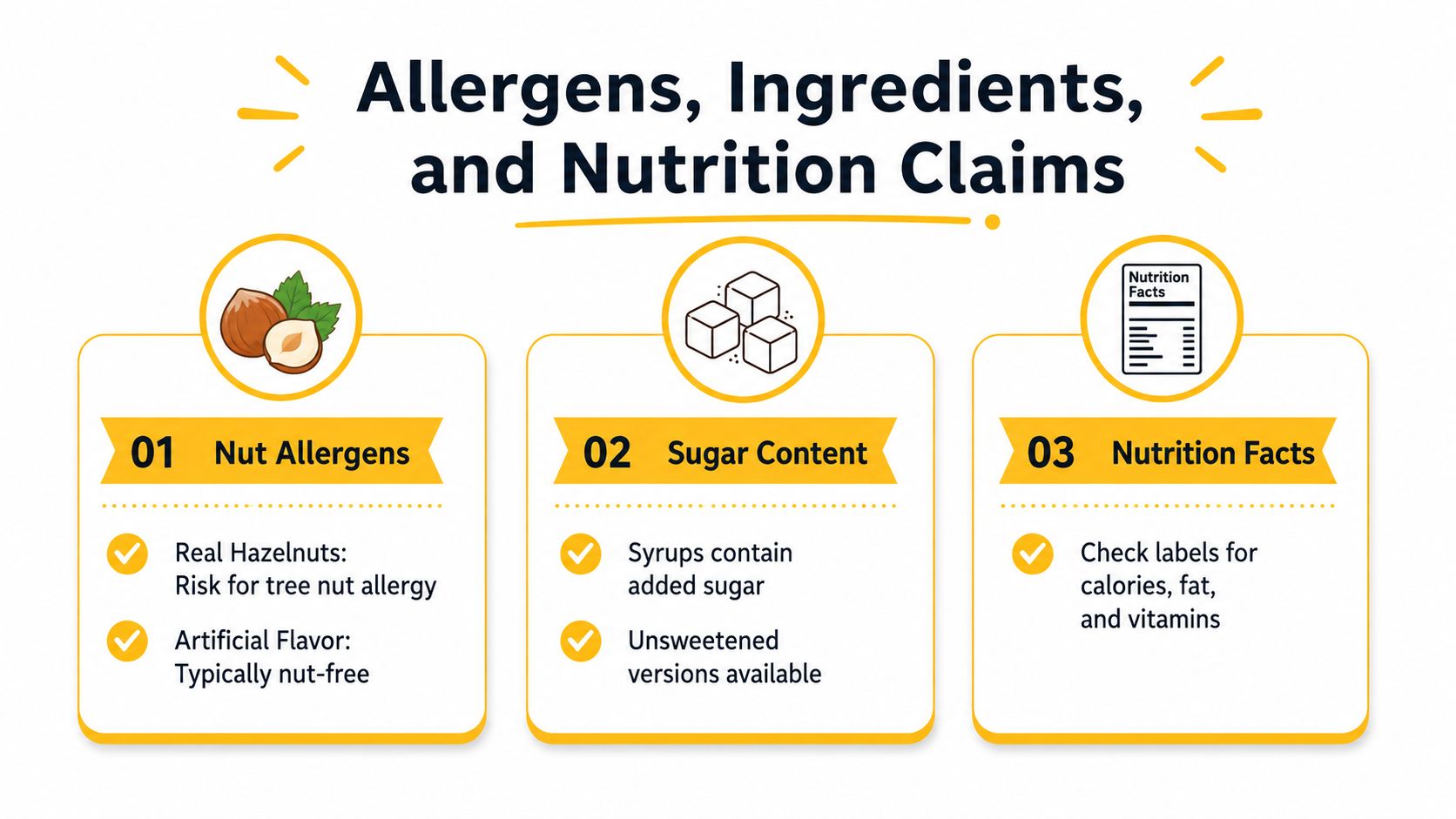
A hazelnut flavor doesn't automatically mean a drink contains hazelnuts. Some products use actual nut ingredients, while others use flavor compounds that create a hazelnut aroma without adding the nut itself. The only reliable way to distinguish them is to read the ingredient list and allergen statement.
Look for terms such as hazelnut, hazelnut paste, nut milk, dairy, soy, or statements about shared equipment. A café can also introduce allergens through milk alternatives, toppings, sauces, or preparation surfaces. If you have a tree-nut allergy, ask specific questions instead of relying on the drink name.
A label-first checklist
- Real hazelnut: Check whether hazelnut appears as an ingredient.
- Flavoring only: A natural or artificial flavor label doesn't confirm nut content or absence.
- Dairy and soy: Review milk, creamer, syrup, and chocolate ingredients separately.
- Added sugar: Syrups, sweetened creamers, chocolate sauces, and spreads can all add sugar.
- Serving size: Compare the listed serving with the amount you prepare.
- Nutrition facts: Check calories, fat, sugar, and any stated nutrients rather than trusting flavor language.
Flavor intensity isn't a nutrition claim. A drink can taste strongly of chocolate while containing cocoa flavoring, or taste nutty while containing no hazelnut. For a gift or serving situation where ingredients matter, a clearly labeled gift box of chocolates can be easier to evaluate than an unnamed café topping.
Making a Cartograph Signature Coffee
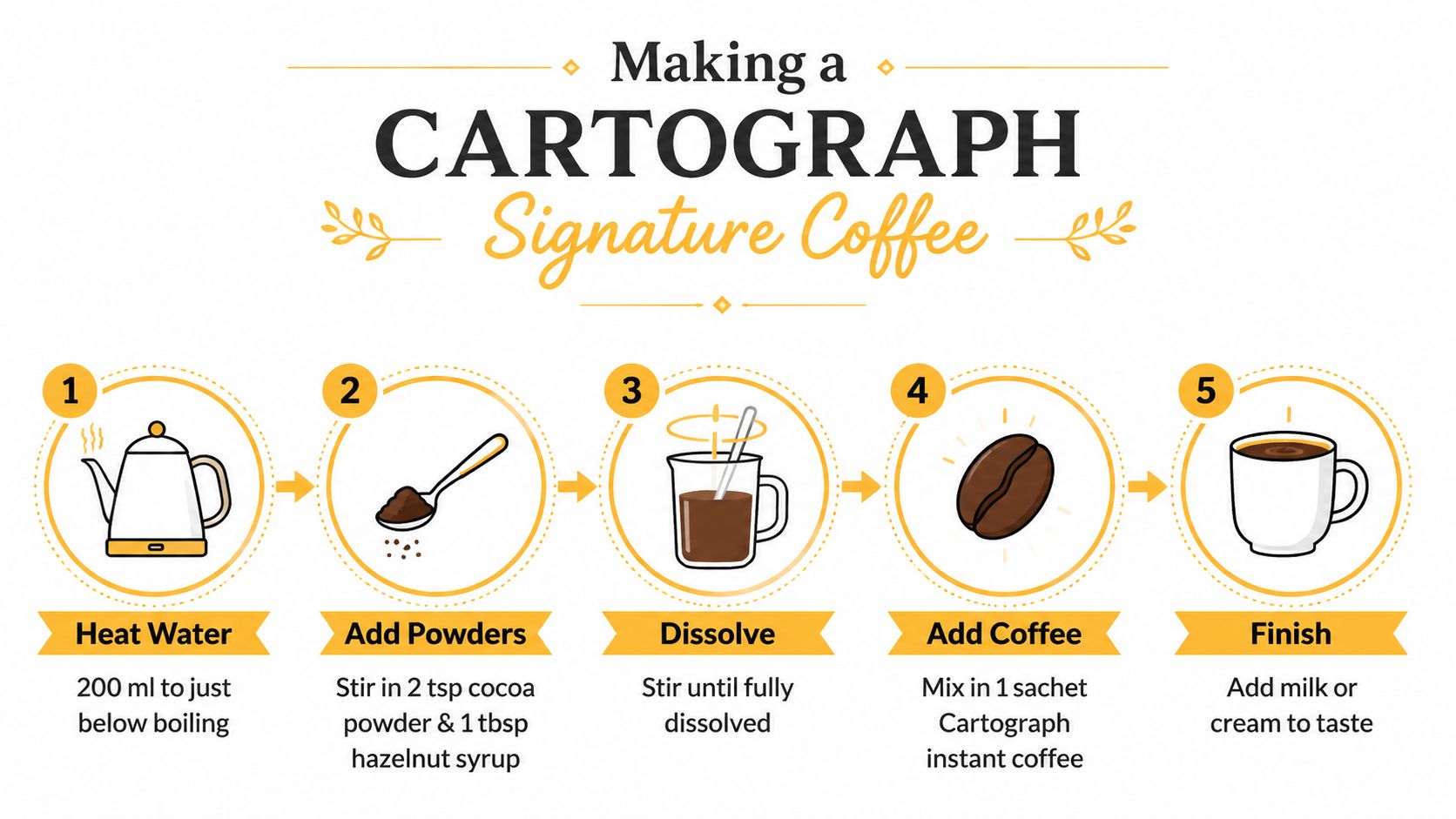
This instant recipe creates a concentrated chocolate-hazelnut base before milk enters the cup. That order protects the flavor from becoming diluted and helps the cocoa dissolve evenly.
Ingredients and sequence
- Heat 200 ml of water until it's just below boiling.
- Stir in 2 teaspoons of cocoa powder and 1 tablespoon of hazelnut syrup.
- Continue stirring until the cocoa is fully dispersed.
- Add 1 rounded teaspoon of Cartograph instant coffee and whisk briskly.
- Finish with 80 ml of warmed milk and a small pinch of salt.
Cocoa provides the chocolate body. Hazelnut syrup supplies sweetness and roasted-nut aroma. The coffee adds the central roasted structure, milk rounds the texture, and salt lifts the perception of chocolate. The method uses a small amount of finished milk, so the coffee remains present instead of disappearing beneath the add-ins.
Three ways to adapt it
Iced path: Prepare the cocoa, syrup, and coffee concentrate with the hot water. Let it cool briefly, pour it over ice, and top with cold milk. Keep the concentrate strong because ice will soften the flavor.
Camping path: Use a sealed jar to combine the coffee, cocoa, syrup, and water. Shake until smooth, then add powdered milk if refrigeration and fresh milk aren't practical. Open the jar carefully after shaking, since pressure can build if the liquid is warm.
Stronger path: Add half a teaspoon more Cartograph to the concentrate. This changes coffee intensity without forcing you to add more sugar, which is the better adjustment when the drink tastes too mild.
Serve the hot version in a pre-warmed mug and finish with a light dusting of cocoa if you want a more fragrant surface. If the drink becomes too sweet, reduce syrup before reducing coffee. If cocoa tastes dusty, use a whisk and dissolve it completely before adding milk.
Your Best Chocolate Hazelnut Coffee Ritual
The right format depends on the setting. Choose hot coffee for a slow morning when aroma matters, iced coffee for a warm afternoon, and instant coffee for work, travel, or camping when minimal equipment is part of the appeal.
Before adjusting the recipe, inspect the ingredient label. Decide whether you want real hazelnut, a hazelnut flavoring, dairy, plant-based milk, unsweetened cocoa, or added syrup. Then calibrate strength by changing the coffee-to-water balance, not by automatically adding more sugar.
Cartograph Coffee's organic freeze-dried instant coffee packets are one convenient base for this approach, particularly when you want a coffee with chocolate notes and a portable preparation. The coffee can be dissolved in hot water for the signature mug or mixed into a concentrate for an iced version.
Three small habits make the final cup more consistent:
- Pre-warm the mug for a hotter, more settled drink.
- Taste before sweetening so you can separate coffee strength from sugar.
- Pair it with a plain biscuit when you want the cocoa and hazelnut layers to remain clear.
Try the recipes with your preferred coffee format, then visit Cartograph Coffee to explore organic instant coffee packets suited to chocolate hazelnut coffee at home, at work, or outdoors. Choose a hot, iced, or camping variation and make the next cup part of a repeatable daily ritual.