You can technically reuse coffee grounds for another cup, but the second brew is usually weaker and more bitter because most flavor and caffeine are pulled out on the first pass. After that first extraction, the grounds are chemically changed, not empty, so they're usually better used for compost, cleaning, or odor control than for another drink.
If you've ever stared at a soggy filter and wondered why people keep telling you to “reuse” grounds at all, that's the core question. Are they still useful, or are they just kitchen leftovers with a better reputation than they deserve?
The Science of the Second Brew
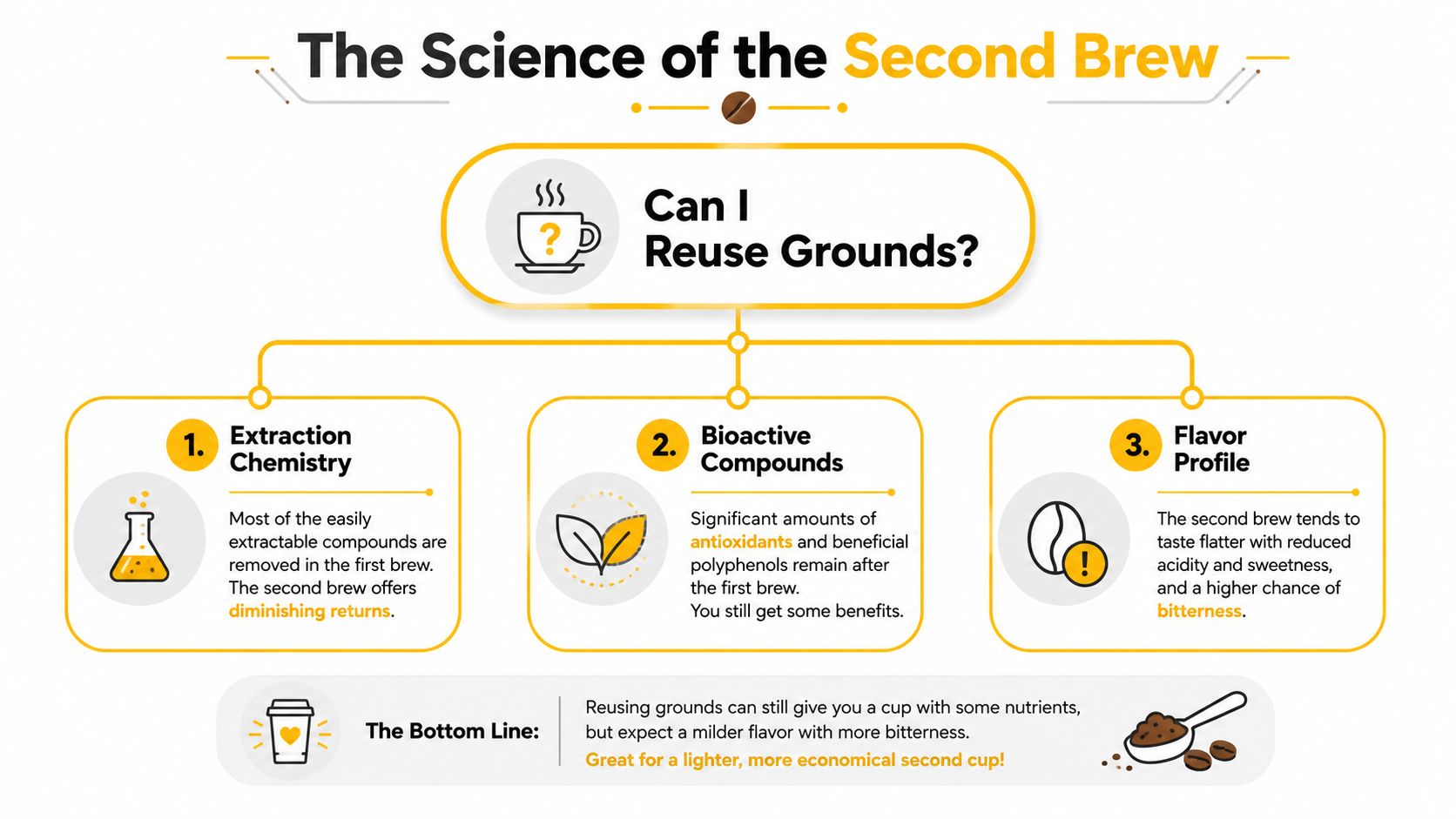
Coffee extraction is a one-way trip for most of what makes a cup taste lively. The first brew pulls out the readily soluble oils, phenolics, caffeine, and aromatics, and what remains is mostly insoluble lignocellulosic material. That is why a second cup usually comes out thin, flat, and often harsh rather than balanced Frontiers in Chemical Engineering.
Used grounds behave like a squeezed sponge. They still hold moisture and a few trace compounds, but the best-tasting material has already been drawn out. A food-science review also notes that spent grounds still retain bioactive compounds such as caffeine, chlorogenic acids, and polyphenols after brewing, so they are not empty, just much less rewarding for a second cup SUEZ review on reuse of coffee grounds.
Practical rule: if you want a cup you actually want to drink, fresh grounds win every time. Reused grounds are chemically interesting, but they are a poor route to good flavor.
The chemistry also depends on the first brew itself. Water temperature changes how quickly soluble compounds leave the grounds, so the brewing-water guide at the best water temperature for brewing coffee is useful if you want to understand why one extraction can taste round and another can feel thin.
A useful household analogy is a kitchen sponge used to wipe up a spill. The sponge still exists afterward, but no one expects it to clean the same spill twice with the same efficiency. Coffee works the same way, only the thing being pulled out is flavor chemistry instead of dishwater.
That is also why the science behind a second brew matters less as a flavor strategy and more as a reminder of what spent grounds are good for next, whether that is compost, cleaning, odor control, or a dry storage routine that keeps mold from starting in the first place. For a related hygiene example, see this guide for household infection prevention.
Safety First: How to Store Wet Grounds Without Mold
Wet grounds need a different rulebook. The biggest mistake is leaving them in a jar on the counter and assuming they will be fine later, because moisture gives mold exactly what it needs, especially in a warm kitchen Good Housekeeping on storing old coffee grounds.
Same-day use is the safest window
If you want to reuse grounds for a household task, use them the same day or dry them right away. That keeps them out of the damp middle stage where spoilage starts. For deodorizing, scrubbing, or dyeing, the grounds should feel dry to the touch before they go into storage, not just “less wet.”
A practical source of practical mold prevention advice points to the same basic routine, dry it fast, keep it dry, and do not trap moisture in a closed container. That is the whole logic.
Keep wet grounds off the counter for long. If they are not drying, they are decaying.
A strict drying routine
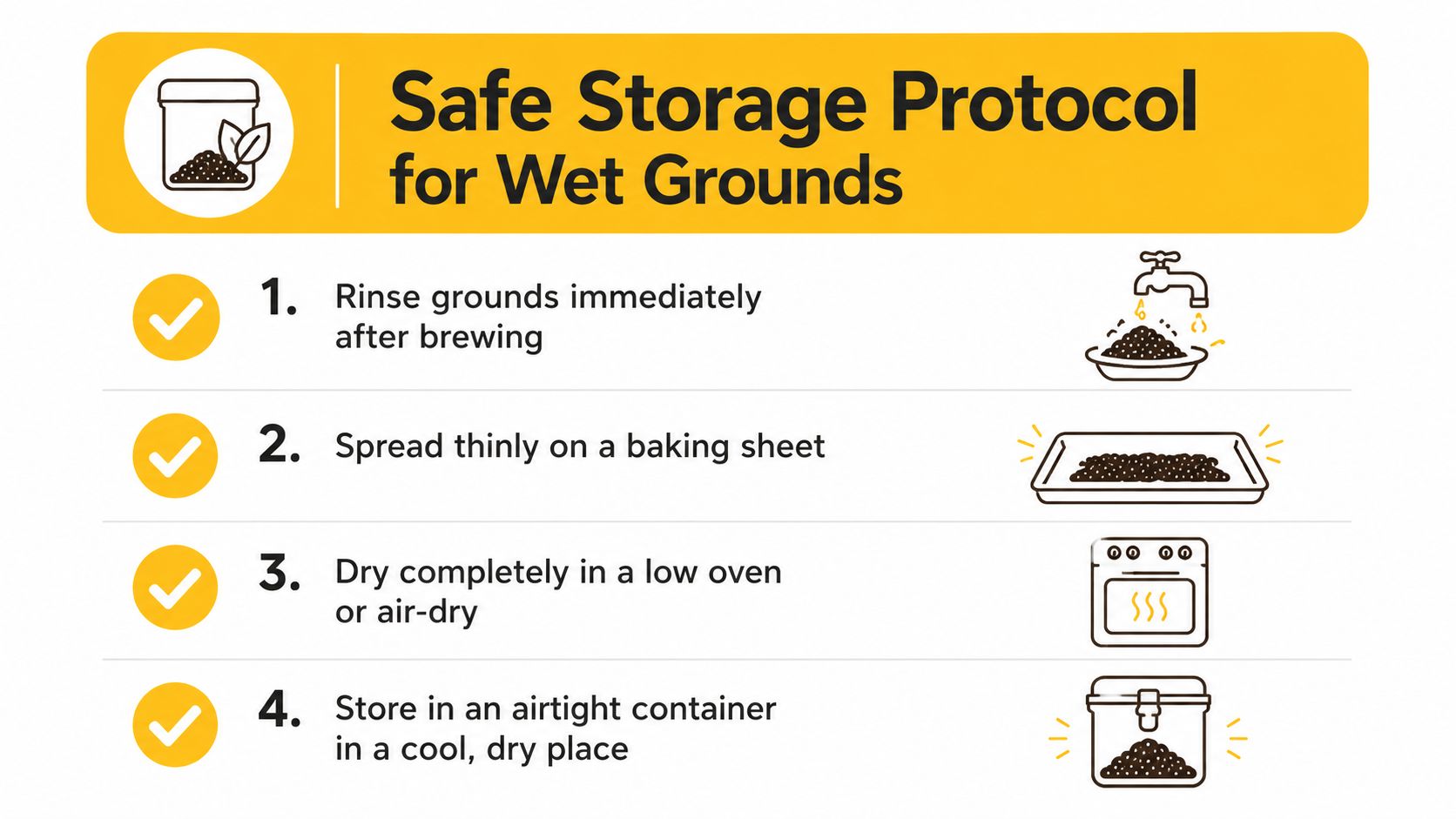
Spread the spent grounds in a thin layer on a baking sheet or tray. Air-dry them if the layer is small and your room is dry, or use a low oven for larger amounts, which is the more dependable way to get them fully dehydrated for later use Good Housekeeping on storing old coffee grounds.
Once dry, store them in an airtight container in a cool, dry place. If you notice a sour smell, visible fuzz, clumping that will not break apart, or a musty odor, skip the reuse plan and compost them instead. If you want to freeze grounds for later household use, the storage note at how to freeze coffee grounds fits well, but only after they are already dry.
For a broader home-storage mindset, practical mold prevention advice also applies to coffee grounds, sponges, cloths, and any other damp material you want to keep safe.
If you keep a “grounds jar,” treat it like a drying station, not a holding pen. The moment it starts smelling like a damp towel, it is no longer a reuse project.
Gardening with Grounds: When They Help and When They Hurt
The garden is where coffee grounds get overpraised the fastest. People like the idea that any brown, earthy material must help plants, but that shortcut ignores how fresh grounds, spent grounds, and fully composted grounds behave very differently in soil Ampersand Coffee on ways to reuse coffee grounds.
Compost ingredient, yes. Thick raw mulch, usually no
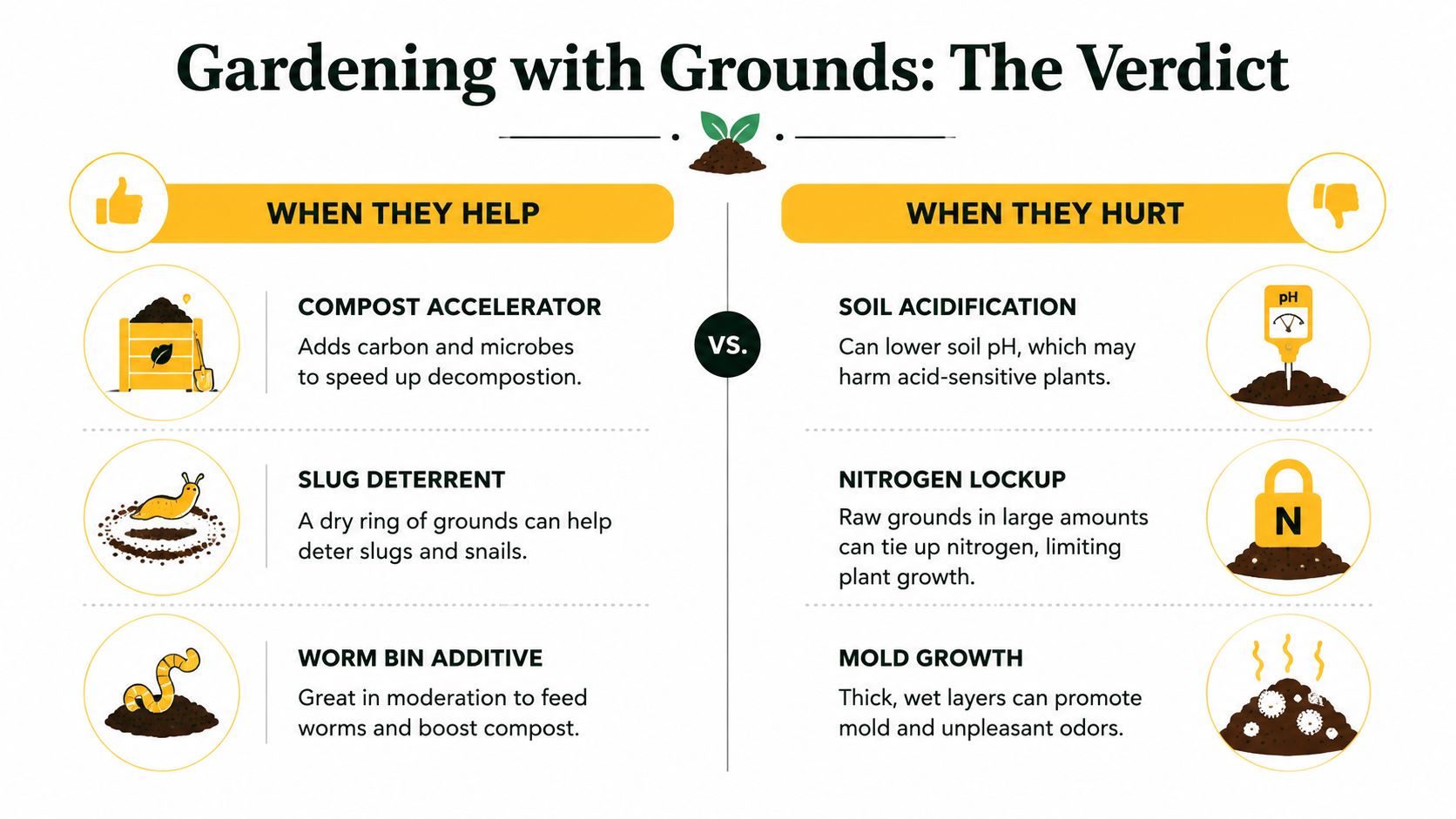
Grounds work best as part of compost, where they are mixed with enough brown material to keep the pile balanced and breaking down properly. In compost, they become a useful ingredient rather than a stubborn layer that mats down and stays wet. That is the difference between feeding the pile and smothering the soil surface.
A controlled plant study in the food science literature found that fresh coffee powder and 7-day mocha suspensions were unsuitable for cultivation, while 30-day fermented suspensions were promising as a natural fertilizer, which shows that processing time really matters Majlesi Journal of Food Science and Technology review. The same basic lesson applies in the home garden. Raw coffee waste is not automatically plant food.
Best garden use: mix grounds into compost first, then let the compost mature before putting it near roots.
When grounds help
Used properly, grounds can support composting, some worm bin systems in moderation, and certain soil-building projects. They may also work as a light barrier in some garden setups, but thin application matters. A light sprinkle behaves very differently from a wet blanket of grounds spread across a bed.
For a small-scale example of that same logic, the indoor composting journey shows why damp kitchen scraps need structure, airflow, and patience instead of being piled up and forgotten. Coffee grounds fit that pattern too. They are more useful when they are part of a system that keeps them moving toward decomposition.
When grounds hurt
Fresh or thickly applied grounds can cause problems for seedlings, compacted soil, and container plants with limited drainage. They can also be a poor fit for acid-sensitive plants if the grower assumes “coffee equals fertilizer” without checking plant needs. The useful question is whether coffee grounds are composted, diluted, and applied lightly enough to support growth.
For anyone building a small compost system indoors, Little Green Leaf's indoor composting journey is a handy companion piece because the same logic applies there too. Grounds become more valuable when they are part of a process, not just a shortcut.
A simple test helps. If the soil looks coated, dense, or soggy after application, you have probably used too much. If it looks blended and crumbly after composting, you are on the right track.
Household Hacks Odor Control and Natural Cleaning
Dried grounds earn their keep in the house because they're gritty, absorbent, and easy to repurpose. They're not magic, just useful physics. That's why they can help with scrubbing, deodorizing, and even dyeing when handled carefully.
Scrubbing pots without chasing perfection
Used grounds can act like a mild abrasive on stainless steel pans and pots. Sprinkle a small amount into the pan, add warm water, and scrub gently with a soft sponge or cloth. The goal is to lift stuck-on residue, not grind the surface down.
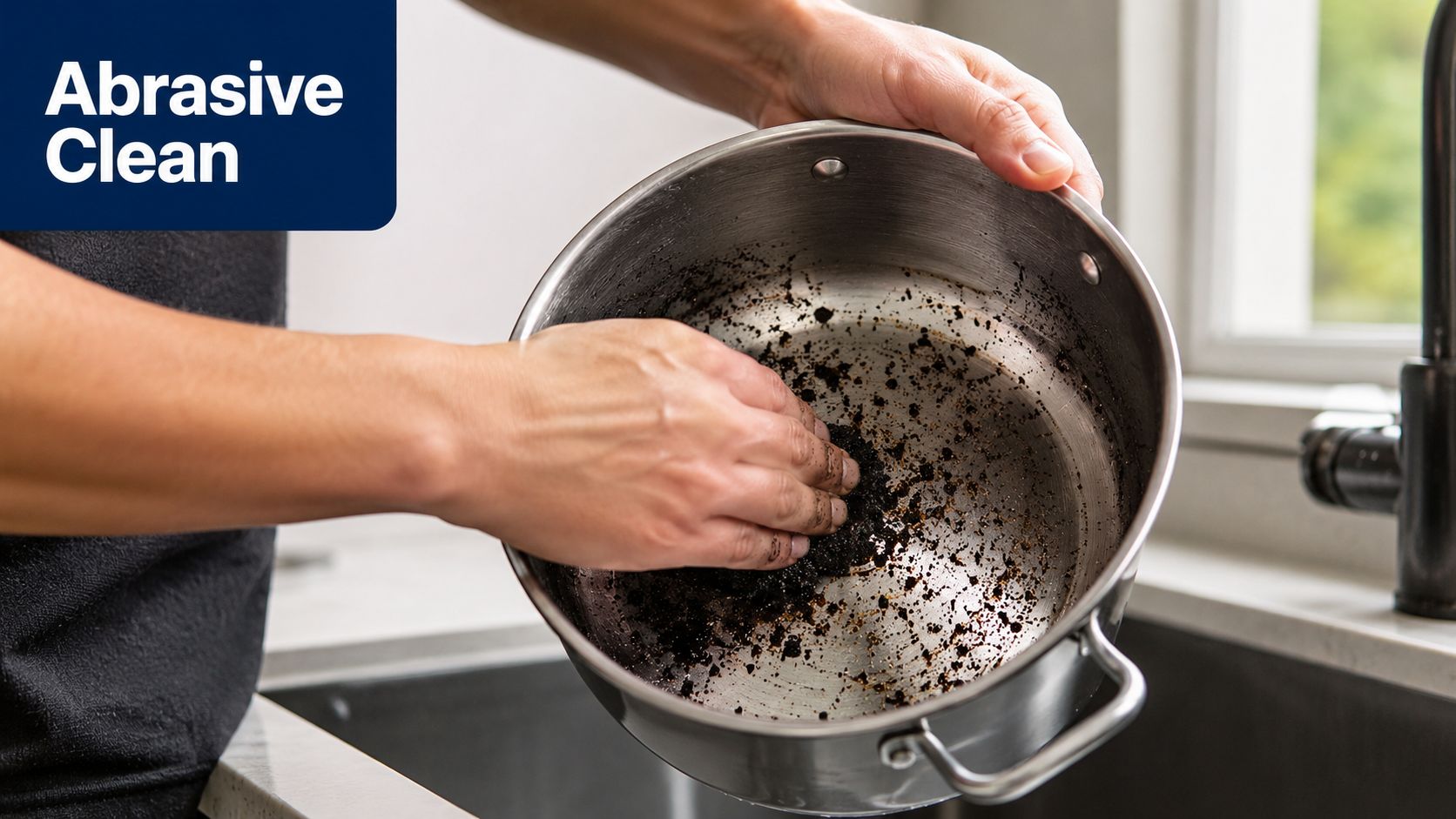
Avoid using them on non-stick cookware, glass, mirrors, or porous materials like unsealed wood and some stone, because the residue can scratch or stain those surfaces. If you're unsure about a finish, test on a hidden spot first. That's the safest way to avoid a cleaning win that turns into damage.
Deodorizing small spaces
Dried grounds can help absorb odors in fridges, trash bins, shoes, or closets. Put them in an open bowl, a breathable sachet, or an old sock and leave them in a small enclosed space. Since they also hold moisture, they need to be fully dry before they go anywhere near shoes or drawers.
The general rule is simple. If the goal is odor control, dry grounds behave like a pantry helper. If they're still damp, they can turn into a mildew problem instead of a deodorizer.
A few smart uses and precautions
- Fridge odors: set out a small bowl of dry grounds and replace them when they lose their effectiveness.
- Shoes and gym bags: use a cloth pouch, not loose grounds, so cleanup stays easy.
- Natural dye: simmer or steep only if you're okay with a warm brown tint and possible staining.
For a broader household-storage lens, indoor composting journey may also give you ideas for where to send the grounds after their cleaning life is over.
Is Rebrewing Ever Worth It
Can you brew coffee grounds a second time and still get something worth drinking? For most coffee drinkers, the answer is still no. The first brew removes most of the readily soluble flavor compounds and caffeine, so the second pass usually tastes thin and can drift toward a harsher bitterness Frontiers in Chemical Engineering. A second extraction is not useless, but it rarely stands on its own as a satisfying cup.
The few situations where a second pass can make sense
A second brew can work if you do not need a full coffee experience. For baking, a cake soak, a marinade, or a kitchen test, a very weak coffee liquid can be fine because precision matters less than a light coffee note. In those cases, the result behaves more like a coffee-flavored base than a proper brewed cup.
That same logic is why some people use spent grounds for cold coffee experiments where subtle flavor is not the goal. The second extraction can still bring color and a little taste, but it will not have the body, aroma, or finish of fresh grounds. If you are aiming for depth in the cup, fresh coffee does the job better.
The caffeine myth
Spent grounds still contain some bioactive material after brewing, including caffeine SUEZ review on reuse of coffee grounds. The second cup has less caffeine than the first, and it also has fewer of the flavor compounds that make coffee taste complete. For a closer look at how fresh and stale coffee differ in the cup, see this guide to whether expired coffee is still drinkable. If you are trying to manage stimulant intake, do not count on reused grounds for a dependable caffeine boost.
If you want coffee flavor, use fresh grounds. If you want a faint coffee note for another recipe, a second pass can be enough.
The best rule is simple. Match the grounds to the goal. Drink a second brew only if you are happy with something weak, use it in cooking when you only need a light coffee character, and compost the leftovers when you want the most reliable value from what is left.
The Cartograph Guide to Zero Waste Coffee
The most practical way to think about grounds is not “waste” or “miracle hack,” but resource with a short first life. Once brewed, they still have use, just not usually in the cup. That makes the best decision easy to remember.
| Application | Verdict | Key Precaution |
|---|---|---|
| Rebrew for drinking | Usually avoid | Expect weak, bitter flavor |
| Compost ingredient | Strong choice | Mix with enough brown material |
| Dryer-based odor control | Good use | Dry completely first |
| Pot scrubbing | Good use | Avoid delicate or non-stick surfaces |
| Garden mulch | Use carefully | Don't apply thick, wet layers |
| Seedling or fresh-bed use | Avoid | Raw grounds can backfire |
The cleanest routine is simple. Brew your coffee, enjoy the cup, dry the grounds if you plan to reuse them, and send the rest where they'll do the most good. That mindset turns a single-use habit into a small, everyday circular system.
If you want coffee that makes the first cup worth it, while still respecting the value left in the grounds, explore Cartograph Coffee. You'll find a quality-focused approach to coffee that fits the same zero-waste mindset this guide is built around.