When you're trying to figure out the calories in your instant coffee, the real story isn't about the coffee granules themselves. It's about what you add to them.
Plain, black instant coffee is one of the lowest-calorie drinks you can find, right up there with water and plain tea. A typical cup made with one teaspoon of granules (about 2 grams) and hot water has just 2 to 4 calories. That's it. This tiny amount has virtually no impact on your daily intake.
The Surprising Truth About Your Daily Cup
So, if the coffee itself is practically calorie-free, where do the calories come from? The milk, the sugar, the syrups, and the creamers.
Think of a cup of black instant coffee as a blank canvas. It’s simple, pure, and a fantastic choice for anyone watching their calorie count. The process used to make instant coffee, whether it's freeze-drying or spray-drying, just removes the water. It doesn't add any fat or sugar, which is why the baseline is so incredibly low.
The most important thing to remember is this: the coffee granules are not the source of significant calories. The caloric story of your drink is written by what you choose to add to it.
Understanding this foundation changes everything. It shifts the question from "Is instant coffee fattening?" to "What am I adding to my instant coffee that's increasing the calories?" The journey from a 4-calorie drink to a 100-calorie beverage happens one teaspoon of sugar or one splash of cream at a time. This is a crucial distinction, and you can learn more about the topic in our guide on whether coffee has calories.
Calorie Count for Plain Instant Coffee
Here’s a quick look at the base calories in black instant coffee before any additions.
| Serving Size | Estimated Calorie Range |
|---|---|
| 1 teaspoon of granules (~2g) | 2-4 calories |
| 1 standard 8 oz cup (black) | 2-4 calories |
As you can see, water adds nothing to the count. This basic cup is lighter than almost any other beverage out there. By starting with this knowledge, you can make smarter, more informed choices when you build your perfect cup of coffee each morning.
How Add-Ins Transform Your Coffee's Calorie Count
A cup of plain, black instant coffee is a wonderfully simple thing. On its own, it’s just hot water and coffee—warm, flavorful, and packing a negligible 2 to 4 calories. Think of it as a blank canvas, a perfect, low-calorie starting point.
But the moment you start adding things, you begin painting a completely new caloric picture. And those numbers can climb surprisingly fast.
Every teaspoon of sugar, every splash of milk, every pump of syrup adds its own layer of calories. While one little addition might seem insignificant, they quickly stack up, turning that simple cup of coffee into something far more calorie-dense. This is where the real story of your coffee's final calorie count begins.
This chart really puts it into perspective, showing the huge difference between plain coffee granules and a fully prepared cup. The coffee itself is barely a blip on the radar.
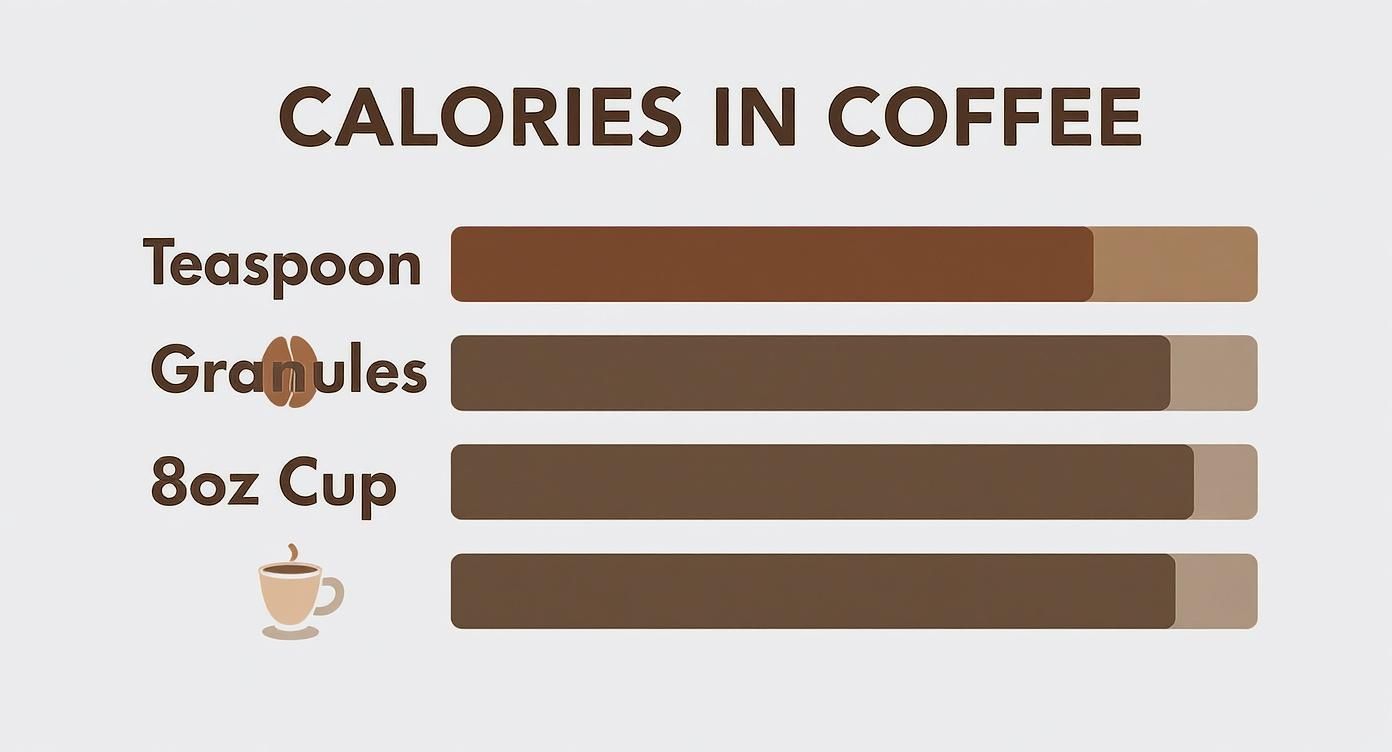
As you can see, the base calories are incredibly low. It’s not the coffee we need to watch; it's what we decide to stir into it.
The Most Common Calorie Culprits
Let’s break down the most popular additions to see exactly how they stack up. Once you know the impact of each ingredient, you can craft your perfect cup without accidentally derailing your health goals.
Sweeteners are usually the first thing people reach for. That one little teaspoon of sugar? It adds about 16 calories. If you're a two-teaspoon person, you've just dropped 32 calories into your mug, potentially multiplying the drink's total calorie count by eight times or more.
- Granulated Sugar: Roughly 16 calories per teaspoon.
- Honey: A bit more, around 21 calories per teaspoon.
- Maple Syrup: Similar to sugar, at about 17 calories per teaspoon.
- Flavored Syrups (like vanilla or caramel): These can be all over the map, ranging from 20 to 50 calories per tablespoon, depending on the brand.
These small amounts add up, especially if you enjoy a few cups throughout the day. It’s a slow creep of calories that can easily go unnoticed.
The journey from a 4-calorie drink to a 150-calorie beverage is paved with seemingly innocent additions. Being mindful of each scoop and splash is the key.
Milk and Creamers: The Creamy Calorie Boost
Next up are the dairy and non-dairy additions that give coffee that satisfying, creamy texture. While they're essential for many of us, they are also a major source of calories, fat, and sometimes sugar.
A "splash" of milk might not seem like much, but the type of milk and how heavy-handed your pour is can make a world of difference. Heavy cream and half-and-half are at the top of the calorie chart, while skim milk or an unsweetened almond milk are much lighter choices.
Here’s a quick side-by-side comparison of common options (per tablespoon):
| Add-In | Estimated Calories |
|---|---|
| Heavy Cream | 52 calories |
| Half-and-Half | 20 calories |
| Whole Milk | 9 calories |
| Skim Milk | 5 calories |
| Unsweetened Almond Milk | 2 calories |
The difference is stark. Choosing heavy cream over whole milk can tack on over 40 extra calories for every single tablespoon you use. This is especially true if you’re trying to make creamy, café-style drinks at home. For some tips on making a great-tasting, lower-calorie drink, check out our guide on creating the perfect instant coffee latte with smarter ingredients.
When you understand these numbers, you become the master of your own coffee bar. You're in complete control, able to build a delicious, satisfying cup of instant coffee that perfectly fits your taste and your health goals, one mindful ingredient at a time.
Comparing Instant Coffee to Your Favorite Café Drinks
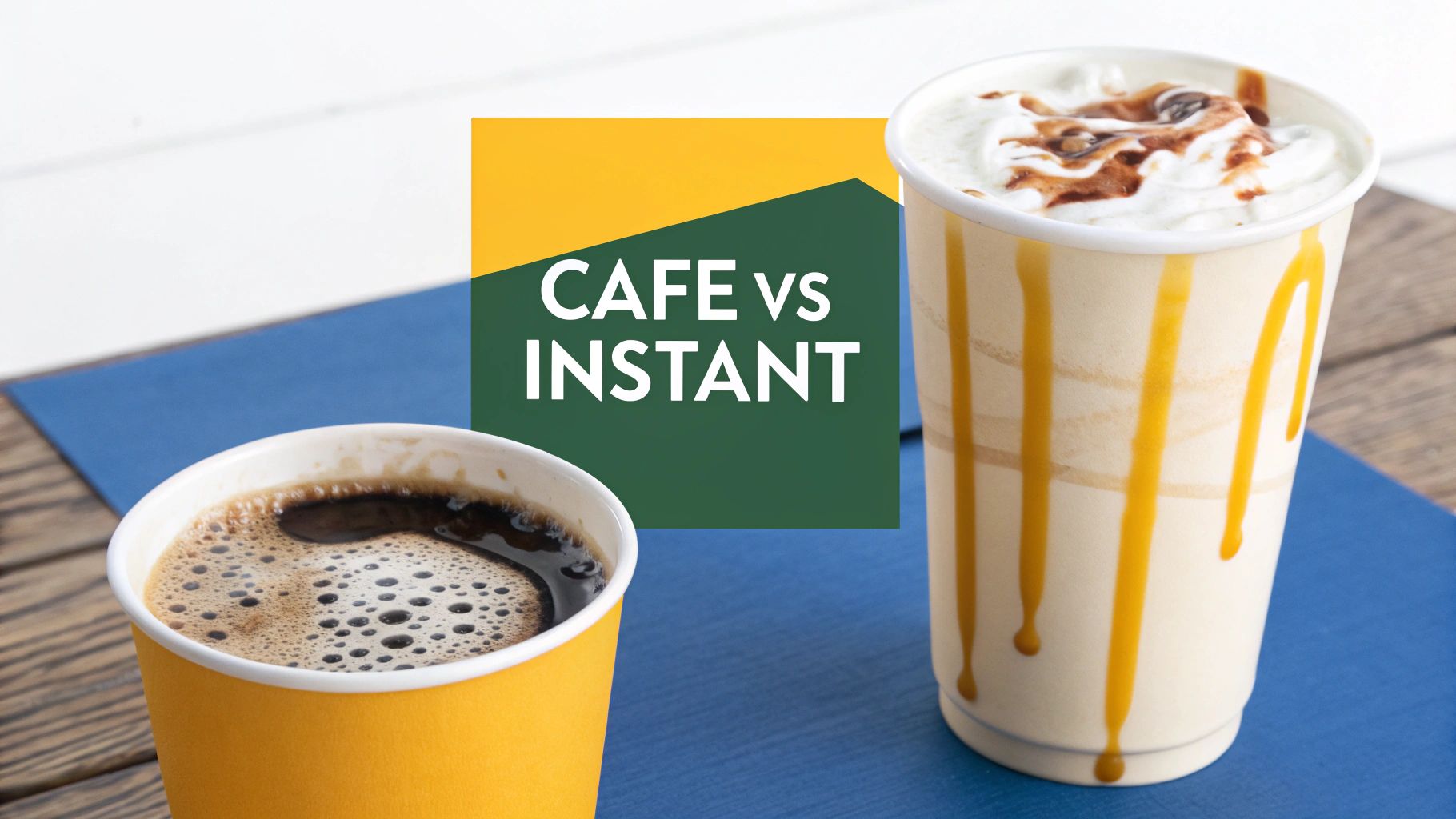
It’s easy to lump all coffee together, but the nutritional gap between a simple mug of instant and a fancy café creation can be staggering. When you peek behind the curtain, you’ll see that the coffee itself is almost never the issue.
Whether we’re talking about instant granules, freshly ground beans, or a finely packed espresso shot, the base coffee is practically calorie-free. A standard black coffee, no matter how it starts, clocks in with just a handful of calories.
The real caloric story begins with the add-ins. This is where those hundreds of hidden calories creep in, thanks to the milk, sugar, and flavored syrups that define most coffee shop drinks. A homemade instant coffee puts you in the driver's seat, while a café beverage often has its caloric fate decided for you.
Deconstructing the Café Favorites
Let's see how a simple shot of espresso, the foundation of most café drinks, can transform into a high-calorie treat. An espresso shot on its own has about 3 calories—a starting point as negligible as instant coffee. But the popular drinks built on top of it are a different story.
Take a standard 12-ounce latte. It starts with that single espresso shot but then gets filled with about 10 ounces of steamed whole milk. That milk alone contributes around 150 calories before you even think about adding sugar or a pump of vanilla syrup, which can tack on another 20 to 80 calories.
It’s the same story for other menu mainstays:
- Cappuccino: While it has a bit less milk than a latte due to the extra foam, a 12-ounce cup made with whole milk still lands around 110 calories.
- Mocha: Once you add chocolate syrup and whipped cream to the mix, a mocha can easily soar past 250 to 350 calories.
- Caramel Macchiato: With its signature vanilla syrup base and caramel drizzle on top, this favorite can pack over 200 calories, mostly from sugar.
These drinks feel like a simple coffee break, but nutritionally, they’re much closer to a liquid dessert. The problem isn’t the coffee; it’s the sheer volume of high-calorie dairy and sugar.
Coffee Calorie Showdown (8 oz, Black)
To really see how different coffees stack up at their core, let's compare them black. This table strips away all the extras and looks only at the calories from the coffee itself in a standard 8-ounce cup.
| Coffee Type | Typical Calories (Black) | Key Preparation Difference |
|---|---|---|
| Instant Coffee | ~4 calories | Soluble coffee crystals dissolved in water. |
| Drip/Brewed Coffee | ~5 calories | Hot water filters through ground coffee beans. |
| Espresso (shot) | ~3 calories | Hot, pressurized water forced through fine grounds. |
| Cold Brew | ~5 calories | Coffee grounds steeped in cold water for hours. |
As you can see, the starting line is virtually identical for every type of coffee. The calories in instant coffee are right in line with everything else—it's what happens next that makes all the difference.
At home, you start with a blank canvas. A café often hands you a finished painting, complete with layers of high-calorie additions you might not have chosen yourself.
This isn’t about shaming your go-to café order. It’s about being aware of what you’re actually consuming. When you grab that latte, you’re not just getting a coffee; you’re getting a drink that is mostly milk and sugar, with a little coffee added in.
Choosing instant coffee at home is one of the simplest ways to manage your daily intake. It gives you the power to enjoy that rich coffee flavor you love without the hidden caloric baggage of café-style drinks.
Simple Swaps for a Lighter Cup of Instant Coffee
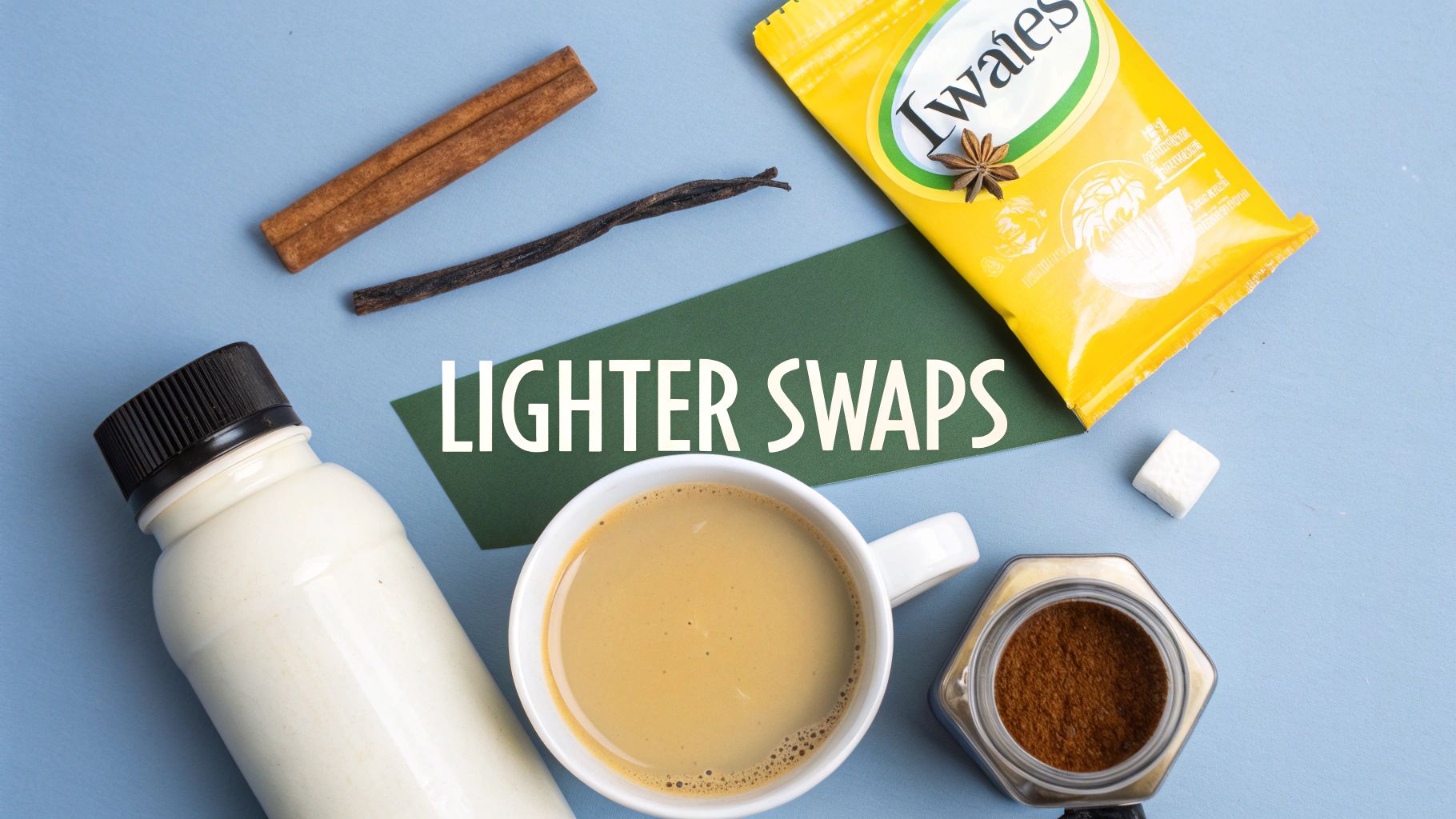
Knowing how quickly calories can pile up is one thing. Now for the fun part: making a few simple tweaks to create a delicious cup of instant coffee that's still light and satisfying.
These little adjustments are easy to work into your daily routine, but they can make a huge difference in the final calorie count. You definitely don’t have to drink your coffee black to keep it healthy—it’s all about being a bit more thoughtful with what you stir in.
Rethink Your Sweetener
The biggest and easiest win is usually sugar. Just one teaspoon of the white stuff adds about 16 calories, and let's be honest, who stops at just one? Changing this one habit can have a massive impact.
Instead, give these a try:
- Stevia or Monk Fruit: Both are fantastic natural, zero-calorie options that won't mess with your blood sugar.
- Erythritol: This is a sugar alcohol that tastes remarkably like real sugar but has almost zero calories.
Making this simple swap means you can get the sweetness you crave while keeping the calories in your instant coffee practically nonexistent. It’s a smart, effective way to ditch empty calories right at the start of your day.
Choose Your Milk Wisely
Who doesn't love a creamy cup of coffee? The good news is you don’t have to sacrifice that texture. A splash of heavy cream might pack in over 50 calories, but there are plenty of lighter alternatives that feel just as luxurious.
The goal isn’t to eliminate creaminess but to achieve it smartly. Swapping a high-fat dairy for a lighter plant-based milk can save you hundreds of calories over the course of a week.
Unsweetened almond milk is a game-changer here, adding only about 2 calories per tablespoon. Skim milk (at 5 calories) or unsweetened soy milk are also excellent choices. If you want to explore all the options, our guide on the best substitute for milk in coffee can help you find your new favorite.
Add Flavor Without the Sugar
Those flavored syrups sitting by the coffee pot are often calorie bombs loaded with sugar. But you can get that same rich, complex taste from natural, zero-calorie sources you probably already have in your spice cabinet.
Next time, try mixing a dash of one of these into your instant coffee granules before you add the hot water:
- Cinnamon: Gives a warm, sweet-spicy kick.
- Nutmeg: Adds a cozy, aromatic depth.
- Unsweetened Cocoa Powder: Instantly creates a rich, mocha-like flavor for very few calories.
- Vanilla Extract: Just a drop or two brings that classic vanilla taste without a single gram of sugar.
These tiny changes let you create a custom, gourmet-style coffee right in your own kitchen. When you’re intentional with your ingredients, you can enjoy a flavorful, low-calorie cup every single time.
Why At-Home Coffee Is the New Smart Choice
Making your own coffee at home has always been part of the morning routine, but now it’s become something more. It’s a savvy choice for anyone looking to manage their health, save time, and keep more money in their pocket. This isn't just about skipping the café line; it’s about taking back control over what you're actually drinking.
When you're the barista, you call the shots. No hidden sugars, no surprise high-fat milks, and no mysterious syrups adding hundreds of unwanted calories to your day. You get to craft a cup that aligns perfectly with your own wellness goals.
Taking Control of Your Calories and Costs
The shift toward brewing coffee at home is changing how we think about our daily cup. Economic shifts and a greater focus on personal health have pushed more of us to make our coffee in our own kitchens, especially with simple options like instant coffee leading the way.
It turns out we're not alone. Globally, about 70% of coffee drinkers now brew at home every day. A huge reason for this is cost—55% of people admit that rising café prices have sent them looking for better options. In this new reality, instant coffee is an obvious solution, delivering speed and savings without sacrificing a great coffee experience. You can dig into more insights about this global consumer study to see how habits are changing.
By making coffee at home, you get total transparency. You’re not just saving money; you're investing in your health by managing the exact number of calories in your instant coffee.
Instant Coffee as a Smart Wellness Tool
This is exactly where a high-quality product like Cartograph Coffee’s organic instant coffee comes in. It gives you a rich, flavorful, and practically zero-calorie foundation to build on—a perfect blank canvas for your morning. You get that premium coffee taste without the café price tag or the extra calories.
Whether you're a busy professional needing a fast start, a camper looking for a lightweight companion, or just someone who loves a great cup without the fuss, instant coffee fits right in. It’s the ultimate combination of quality, convenience, and control, making it a genuinely smart choice for enjoying coffee on your own terms.
Frequently Asked Questions About Instant Coffee
Even after breaking down the numbers, there are always a few common questions that come up about instant coffee. Let's tackle them head-on to clear up any confusion and help you feel totally confident about your daily cup.
Think of this as a quick-fire round to answer those lingering thoughts about how instant coffee fits into a healthy lifestyle.
Is Instant Coffee "Fattening"?
Absolutely not. On its own, black instant coffee is about as close to a zero-calorie drink as you can get, clocking in at just 2 to 4 calories per cup. That’s a truly negligible amount in the grand scheme of your daily diet.
The "fattening" reputation some coffees get has nothing to do with the coffee itself. It’s all about the high-calorie extras we tend to pour in—think sugar, heavy cream, and those sweet flavored syrups. If you stick to just the coffee, or are mindful of your additions, instant coffee is an incredibly lean and satisfying choice.
Does Decaf Instant Coffee Have Fewer Calories?
You'd think the decaffeination process might change things, but the calorie difference between regular and decaf instant coffee is virtually zero. Both start as roasted coffee beans that get brewed and dehydrated, and stripping out the caffeine doesn't really add or remove calories.
So, whether you’re reaching for the caffeinated kick or a smooth decaf, you’re looking at the same minimal 2 to 4 calories in your plain black cup. The nutritional profile is nearly identical.
The choice between regular and decaf instant coffee is purely about caffeine preference, not calorie management. Both start from the same incredibly low-calorie baseline.
How Many Calories Are in One Teaspoon of Instant Coffee Granules?
One level teaspoon of dry instant coffee granules—which is about 2 grams—contains just 2 to 4 calories. This is the core number to remember, as it’s the starting point for any instant coffee you make.
It's a really helpful metric because it drives home the point: the coffee granules themselves aren't where the calories are coming from. The real impact comes from whatever you mix them with.
Can Drinking Instant Coffee Help with Weight Loss?
While it’s definitely not a magic diet potion, instant coffee can be a fantastic tool in a weight management plan. Here's why it can help:
- It’s Extremely Low-Calorie: Swapping out a sugary soda or a fancy café latte for a simple black instant coffee can save you hundreds of calories a day. That adds up fast.
- It Can Boost Metabolism: The caffeine in regular instant coffee is known to give your metabolic rate a small, temporary nudge, helping you burn a few extra calories.
- It May Curb Your Appetite: Many people find that a warm cup of coffee helps keep cravings at bay and tides them over between meals.
At the end of the day, its biggest superpower is being a satisfying, nearly calorie-free beverage that can easily replace much more calorie-dense drinks. That simple swap can help create the calorie deficit needed for weight loss over time.
Ready to take control of your coffee experience? Cartograph Coffee offers premium organic instant coffee that provides a rich, delicious, and low-calorie base for your perfect cup. Discover the difference quality makes and craft a beverage that fits your life and your goals.