Is café au lait really just a latte with a different name, or does the coffee underneath change the entire drink? The answer matters most at home, where many people have a drip brewer, French press, stovetop pot, or instant coffee, but no espresso machine.
Both drinks combine coffee and milk, yet they begin with different coffee traditions. Café au lait starts with brewed coffee, while café latte starts with espresso. That choice affects the milk ratio, texture, flavor, equipment, and the way you should order or prepare the drink.
| Feature | Café au lait | Café latte |
|---|---|---|
| Coffee base | Brewed coffee, such as drip or French press | Espresso |
| Milk proportion | Approximately equal parts coffee and milk | About 1 part espresso to 2–3 parts steamed milk |
| Milk texture | Heated or lightly steamed, with little or no foam | Steamed milk with a thin layer of microfoam |
| Flavor impression | Familiar brewed-coffee character | Concentrated espresso softened by creamy milk |
| Equipment | Drip brewer, French press, stovetop pot, or instant coffee | Espresso machine, or a concentrated substitute plus milk frothing |
What Makes These Two Drinks Different
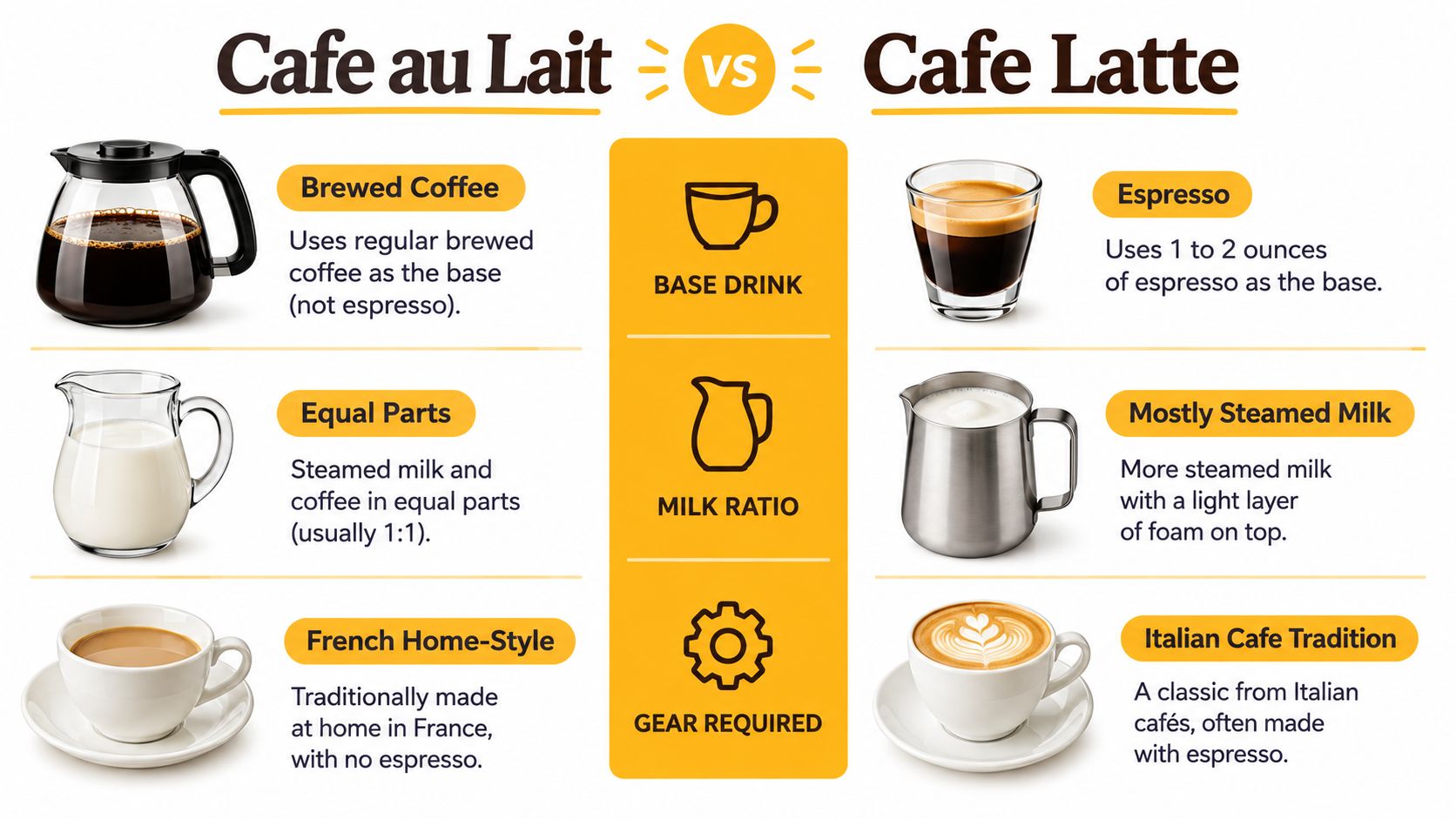
The simplest answer to the cafe au lait vs cafe latte question is the coffee base. A café au lait uses brewed coffee, such as drip coffee or French-press coffee, mixed with heated milk. A café latte uses espresso, then adds considerably more steamed milk and a light layer of microfoam. The distinction is described clearly in this guide to café au lait's traditional structure.
That difference isn't merely a translation issue. Brewed coffee fills more of the cup with a relatively large coffee portion, while espresso delivers a compact, concentrated base. The milk then plays a different role. In an au lait, milk shares the cup with coffee in roughly equal measure. In a latte, milk surrounds and softens the espresso.
The names in everyday language
Café au lait means coffee with milk in French usage. In practical terms, think of a full-bodied brewed coffee paired with warm milk, often served without a noticeable foam cap. It suits someone who wants the character of filter coffee but a softer, rounder sip.
Café latte, or caffè latte, belongs to the espresso-and-milk family associated with Italian café culture. The espresso remains the concentrated flavor core, while steamed milk creates a smoother body and a thin layer of foam.
Menus don't always follow these distinctions perfectly. A café may use the name “café au lait” for a drink made with espresso, or call a brewed coffee with milk a latte. If the names seem unreliable, ask one useful question: “Is the coffee brewed or espresso?” That answer tells you more than the label.
Origins Coffee Base and Milk Ratios
The two drinks developed around different ways of making coffee. French coffee traditions commonly pair brewed coffee with warm milk, an approach that works naturally with a press or filter pot. Italian espresso-bar traditions build drinks around concentrated espresso, then use steamed milk to create a larger, textured beverage.
The result is a difference you can measure in the cup, even though these are conventions rather than universal rules. A café au lait commonly follows an approximately 1:1 coffee-to-milk ratio, while a latte often uses 1 part espresso to 2–3 parts steamed milk, finished with a thin layer of microfoam. Serving sizes and milk textures vary by café and country.
| Attribute | Café au lait | Café latte |
|---|---|---|
| Coffee base | Brewed coffee, including drip or French press | Espresso |
| Milk volume | Roughly equal to the coffee volume | Substantially greater than the espresso volume |
| Foam level | Little or no foam | Thin microfoam layer |
| Typical preparation | Coffee and heated milk combined together | Espresso blended with steamed milk |
| Traditional serving feel | Simple, generous, home-style coffee | Creamy, espresso-bar beverage |
The contrast becomes easier to remember if you focus on the equipment behind each tradition. Brewed coffee produces a larger coffee component, so the milk can match it without crowding out the coffee. Espresso is concentrated, so it can remain noticeable even after a larger amount of milk is added.
Practical rule: If the recipe begins with a pot of coffee, you're in café-au-lait territory. If it begins with an espresso extraction, you're making a latte.
This is also why knowing what brewed coffee means helps when you're comparing recipes. “Brewed” describes coffee made by passing or steeping water through ground coffee, rather than forcing a small amount of water through an espresso puck under pressure.
Neither structure is more authentic just because it uses more specialized equipment. Each drink reflects the method that made sense in its original café setting. At home, the useful question is which structure matches the tools and texture you truly want.
How They Actually Taste and Feel
A café au lait tastes like coffee with milk, not like milk flavored by espresso. The brewed base usually gives the drink a familiar grain, roast, or toast-like character, depending on the beans and brewing method. Heated milk rounds the edges without adding the dense, glossy texture associated with microfoam.
A latte feels more layered. Espresso brings a compact roasted intensity, while steamed milk adds body and a velvety texture. The foam isn't just decoration. Tiny air bubbles change how the milk sits on the palate and help create the smooth finish people associate with a café latte.
Strength isn't the same as concentration
Many comparisons call the au lait “stronger” and the latte “milder,” but that shortcut can mislead you. Perceived strength depends on the bean, roast, coffee dose, extraction, serving size, and amount of milk. A carefully brewed au lait can taste vivid, while a latte made with a more intense espresso can taste richly roasted even though it contains more milk.
Caffeine also can't be determined from the drink name alone. The actual coffee dose and serving size matter more than whether the menu says au lait or latte. A latte made with additional espresso may contain more caffeine than a brewed-coffee drink, while a large au lait may use a substantial coffee portion.
Milk changes the experience in its own way. Whole milk can make either drink feel fuller, while a lighter milk may leave the coffee more exposed. Plant-based milks also vary in sweetness, thickness, and foaming behavior. Added syrups can dominate the flavor and alter the nutritional profile more dramatically than the choice of name.
Match the cup to the moment
Choose an au lait when you want the brewed coffee to remain central and prefer a straightforward, low-fuss drink. Choose a latte when the attraction is espresso intensity plus silky milk texture. The first resembles an upgraded morning coffee. The second feels more like a prepared café beverage that invites you to slow down.
Making Café au Lait at Home
You don't need an espresso machine for a satisfying café au lait. Start with a strong brewed coffee, heat an equal volume of milk, and combine them while both are warm. For a practical 12-ounce benchmark, use about 6 ounces of strong coffee and 6 ounces of hot milk, following the proportions outlined in this café au lait preparation guide.

A simple brewed method
Use a drip brewer or French press and make the coffee slightly more concentrated than you'd drink black. You can also use a stovetop brewer if you prefer a heavier, stronger base. The goal isn't to imitate espresso. It's to make sure the coffee remains present after you add the milk.
- Prepare the coffee portion. Brew about 6 ounces of strong coffee.
- Heat the milk separately. Warm about 6 ounces until hot and lightly steaming, but don't boil it.
- Choose a broad cup. A wide ceramic mug or bowl gives the drink a traditional, comfortable presentation and makes stirring easy.
- Combine gently. Add the coffee and milk together, then stir once or twice.
You don't need thick foam. If you use a steam wand, keep the milk texture light. If you heat milk in a saucepan or microwave, leave it smooth and pourable.
The instant-coffee adaptation
Instant coffee works especially well here because the recipe depends on a concentrated coffee portion, not espresso extraction. Mix your instant coffee with a smaller amount of hot water than you would use for a plain cup, dissolve it completely, then add an equal volume of heated milk. Follow the product's serving guidance rather than assuming that a teaspoon or gram amount applies to every instant coffee, since crystal size and strength vary.
For a portable version, prepare the concentrated coffee in a small travel mug or camping cup, heat milk separately when available, and combine at the same 1:1 starting point. Cartograph Coffee's instructions for making café au lait are relevant to this kind of simple instant-coffee workflow.
If the drink tastes thin, strengthen the coffee portion before adding more coffee after the fact. If it tastes weak but watery, use less dilution when dissolving the instant coffee or brew a more concentrated base. Milk should soften the coffee, not erase it.
Making Café Latte at Home
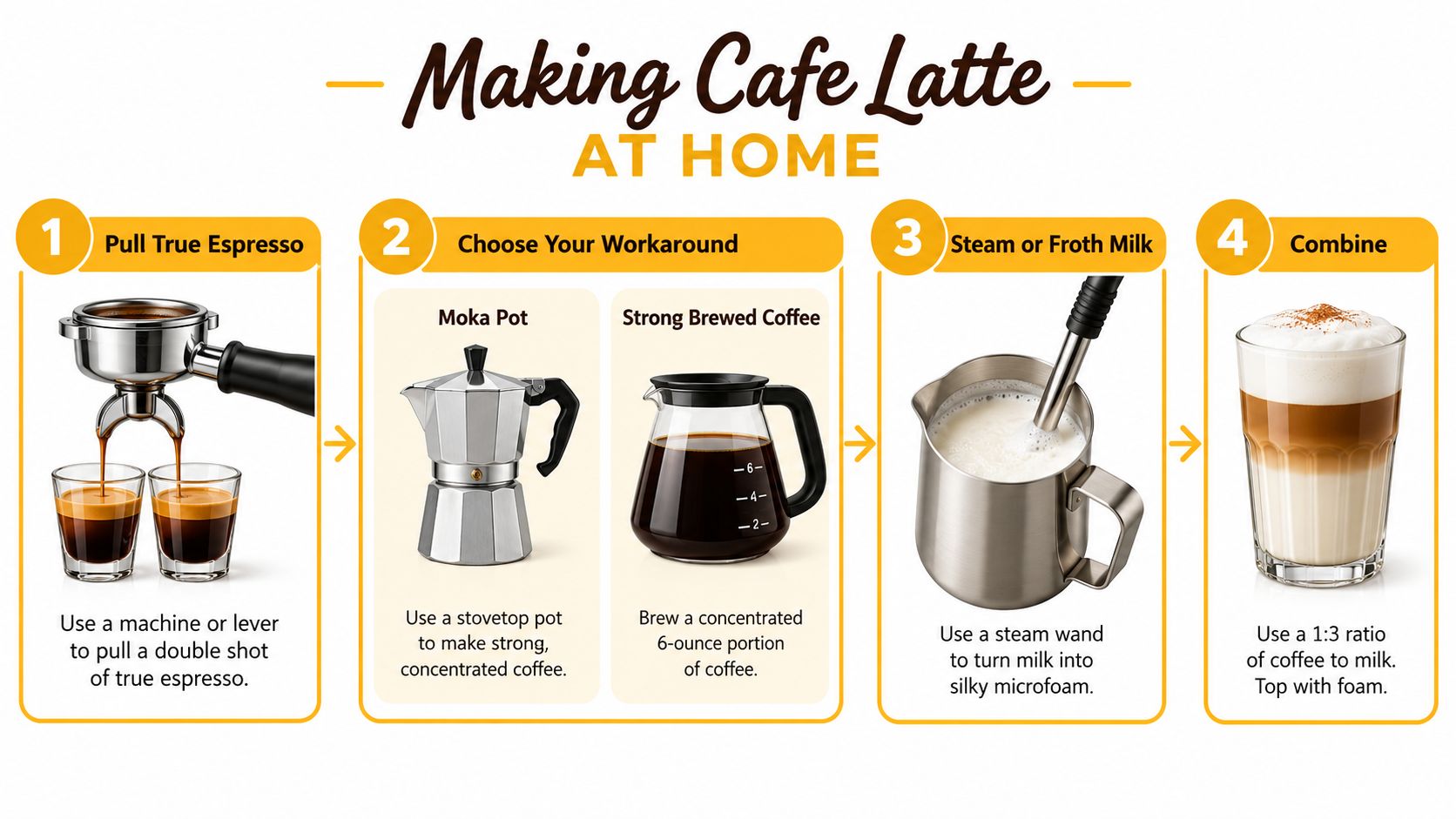
A traditional café latte begins with espresso, steamed milk, and a thin layer of microfoam. If you have an espresso machine, pull your espresso into a warmed cup, steam the milk until it becomes glossy and lightly aerated, then pour the milk into the espresso while leaving a small amount of foam on top.
The classic structure uses roughly 1 part espresso to 2–3 parts steamed milk, though the cup size and café's recipe can change the result. The key is not to flood the espresso with untextured milk. A latte should feel integrated, smooth, and creamy.
Three workable home routes
With an espresso machine, use a true espresso extraction and steam the milk with the wand. Swirl the milk pitcher after steaming to distribute the foam, then pour steadily so the liquid milk and microfoam blend instead of separating.
With a Moka pot, make a concentrated stovetop coffee and use it as a latte-style base. It isn't espresso, but its intensity can stand up to milk better than a regular dilute brew. Keep the milk volume proportionally larger than the coffee, and add a small amount of foam if you want the familiar latte finish.
With an AeroPress, brew a compact concentrate by using less water and a controlled steep. This produces a clean, strong coffee base for milk, although it still isn't espresso. The result is best described as a latte-style drink, not a machine-made espresso latte.
Texturing milk without a steam wand
Warm the milk gently, then use a French press to introduce air. Fill the press modestly, move the plunger through the milk until it becomes visibly smoother and lightly foamy, and tap the vessel to break up larger bubbles. A handheld frother can also work, but stop before the milk becomes stiff or dry.
A latte needs more milk and more texture than an au lait, so the process is less forgiving. If you regularly want foam and espresso character, an espresso setup makes the drink easier to repeat. If convenience matters more, the au lait format is the more direct choice.
For a concise home method using instant coffee, milk, and frothing techniques, see Cartograph Coffee's coffee latte recipe.
Which One Should You Actually Order
The better drink depends on what you need from the cup. If you're choosing for a slow weekend breakfast, café au lait gives you a generous brewed-coffee flavor without requiring espresso preparation. It also works well when everyone at the table wants a different serving size, because you can brew a pot and add milk to each cup.
For a rushed weekday, the au lait usually wins on simplicity. Brewed coffee or concentrated instant coffee can be prepared with fewer steps, and heated milk doesn't need the texture control required for a latte. Outdoor users and campers may find the same advantage when carrying an espresso machine isn't realistic.
A latte makes more sense when the experience matters as much as the caffeine. Choose it for a café-style pause, a creamy after-dinner drink, or any moment when silky milk and espresso concentration are the main attractions. A Moka pot or AeroPress can approximate the structure, but the drink remains more equipment-dependent.
Don't confuse “stronger” with “healthier”
The drink name doesn't tell you which option is healthier or which one will provide the energy and fullness you want. Coffee dose, milk type, and sweetener choices can change the result substantially. If you're limiting added sugar, check syrups and flavor powders. If allergens matter, ask which milk the café uses and whether the alternative milk is prepared separately.
The National Coffee Association reported that 46% of American adults consumed specialty coffee on a given day in January 2025, compared with 42% who consumed traditional coffee in the same report, as detailed in its specialty coffee consumption update. The report also found that specialty drinkers were more likely to have coffee prepared outside the home, where portions, milk choices, and syrups vary. That makes a practical decision more useful than declaring one drink universally superior.
Hospitality teams choosing seasonal menus may also benefit from the SimHospitality winter drink guide, especially when deciding how warm beverages should fit different service settings.
Use this quick decision filter:
- Choose café au lait for brewed-coffee flavor, simple preparation, flexible volume, or travel.
- Choose café latte for espresso intensity, steamed-milk texture, microfoam, or a café ritual.
- Ask about the recipe if the menu uses both names, because local practice may differ.
Quick Answers to Common Questions
Does café au lait have more caffeine than a latte?
Not automatically. Caffeine depends on the coffee dose, serving size, and number of espresso shots, not the beverage name. Compare the actual recipe if caffeine is important to you.
Can you use instant coffee?
Yes. Instant coffee works naturally in a café au lait when you dissolve it into a concentrated coffee portion and add an equal volume of hot milk. It can also make a latte-style drink, especially when paired with frothed milk, although it won't be espresso.
Is one drink healthier?
Neither wins by name alone. Milk choice, sweeteners, portion size, and the amount of coffee matter more. Ask for the ingredients and adjust the recipe to your own needs.
How should you order them?
Ask for brewed coffee with hot milk if you want café au lait. Ask for espresso with steamed milk and light foam if you want a latte. If a café uses the terms loosely, describing the base and milk texture will get you closer to the cup you expect.
Cartograph Coffee offers organic instant coffee designed for convenient preparation at home, at work, or outdoors. Visit Cartograph Coffee to explore an instant-coffee option that fits the café au lait and latte-style methods described here, then try both with the same milk and compare the difference for yourself.