You're halfway through a latte when your Bodum Schiuma suddenly loses its whirl. The whisk slows, the foam turns thin, or the motor makes a faint clicking sound without spinning. Before you assume the frother has failed, check the part of the design that powers nearly everything it does: the Bodum milk frother battery setup.
The Schiuma is a compact handheld tool built around two AA batteries, with the cells housed in the base and not included at purchase, as documented in its product manual and listing details. That choice affects daily use, troubleshooting, travel, storage, and recycling. This guide walks through each battery task in plain language, so you can get back to making foam without guesswork.
Why Your Bodum Frother Stopped Working Mid-Pour
A Schiuma that stops during use usually gives you a clue first. The whisk may create a weaker whirl than usual, the indicator may look dim or fail to light, or the motor may click while the whisk barely moves. Those signs often point to low power, but a battery swap shouldn't be your first action.
Start with the quick checks
Remove the frother from the milk and switch it off. Look at the whisk shaft and confirm that the whisk is seated correctly. A loose attachment can make the motor sound normal while producing little or no movement.
Next, check the control area and lid or cap. If your model has a removable battery cover, make sure it's closed firmly. Moisture inside the battery bay can interrupt contact and damage the electrical parts, so inspect the compartment before installing anything.
Use this short sequence:
- Stop the motor: Take the whisk out of the liquid before investigating.
- Check the whisk: Confirm that the attachment sits straight and securely.
- Inspect the base: Look for milk, water, or condensation near the battery compartment.
- Test the switch: Press the control briefly with the whisk away from your drink.
- Replace both cells: If the unit still struggles, install a fresh matched pair.
The Schiuma's small footprint, about 1.5 inches by 8.1 inches, and its 5.6-ounce weight suit short handheld frothing sessions rather than continuous operation, according to the same Schiuma reference listing. That makes a clean, correctly installed battery pair especially important during each brief cycle.
Practical rule: Never diagnose a wet battery compartment while the batteries are installed. Remove the cells first, dry the area completely, and then continue.
If you need foam without a powered whisk, keep a manual method in mind with this guide to making coffee without electricity. For the powered Schiuma, the next step is confirming exactly which cells your model takes.
Confirming the Correct Battery Type for Your Model
A Schiuma that stops halfway through a pour often points you toward the battery compartment first. For this product line, the AA battery is a central design choice: two replaceable cells keep the frother cordless, compact, and practical for short sessions at home or while travelling. The documented Schiuma product information identifies the format as two AA batteries, installed in the base and supplied separately from the frother.
Before buying replacements, confirm the exact model. Schiuma versions can share a similar shape while using different markings, and a worn label can make the compartment easy to misread. Treat the markings like a small map: they identify the cell size, show the direction of installation, and help you avoid forcing an unsuitable battery into the handle.
Check the compartment markings and polarity diagram
Find the model code near the battery cap, beneath the handle, or on the product label. Record it, then check these three details:
- Battery compartment: Molded letters or symbols usually state AA or another cell size.
- Polarity diagram: Plus and minus marks show where each end belongs.
- Printed documentation: The instruction sheet can confirm the required battery type and number of cells.
The two batteries normally sit in series. Their voltage combines to run the motor, so the pair should be treated like two links in one chain. Replace both cells together rather than leaving one weak battery beside a new one. A mismatched pair can produce uneven power and make a healthy motor seem defective.
Use the model family as a cross-check
A Schiuma listing records 2 x AA batteries, and a separate manual gives the same instruction. Later retailer records continue to show this format through 2026, according to the Bodum Schiuma product record. That repeated specification supports continuity across the documented Schiuma line, while the compartment label remains the final check for your individual unit.
| Model Line | Battery Type | Cell Count | Voltage |
|---|---|---|---|
| Bodum Schiuma, including documented D3043-16 family | AA | 2 | Confirm on the compartment label |
If the label has faded, match the exact model number with Bodum's support materials or the manual supplied with the frother. Do not use lithium coin cells, or mix alkaline, NiMH, and lithium AA batteries. Match the size, chemistry, and cell count shown for your model.
Replacing the Batteries Safely Step by Step
A battery replacement is simple when you treat the base cap and metal contacts gently. The aim is to install a matched pair without bending the springs, trapping the gasket, or bringing moisture into the compartment.
Prepare the frother
Switch the Schiuma off and remove it from the milk. Wipe the exterior dry, especially around the lower handle and cap. Keep the whisk pointed away from the counter edge while you work.
Follow the arrow or lock symbol printed on the base. Depending on the version, the cap may rotate or slide. Don't twist harder when it resists. Recheck the direction mark, then open it with steady pressure.
Remove and inspect
Lift each spent battery from the compartment instead of prying against the metal contacts. If a cell is tight, press it gently toward the spring end to create room, then lift the opposite side.
Look at the terminals. A dry cotton swab can remove dust. If you see green or chalky residue, stop and handle the area carefully. Corrosion can damage contacts, and a leaking battery may require more extensive cleaning or professional advice.
Place the replacement cells beside the compartment and compare their markings before inserting them. The plus symbol on each battery must match the plus symbol inside the bay. The second cell may face the opposite physical direction because the contacts are arranged in series, so follow the diagram rather than copying the first battery blindly.
Close and test
Seat each battery flat. The cells shouldn't rock, bow, or sit on top of a contact. Replace the cap and turn it in the marked direction until it closes securely. If the cap includes a gasket, make sure it isn't folded or pinched.
Wash your hands after handling batteries. Test the frother briefly with the whisk away from liquid. A smooth spin suggests the installation is correct. If it doesn't respond, remove the batteries and repeat the orientation check rather than holding the switch down.
Never submerge the handle, cap, or battery bay. Clean the whisk separately according to the product instructions, then dry it completely before storage.
How Long Batteries Last in Daily Use
You are halfway through a morning pour when the Schiuma slows down. That pause usually reflects workload, battery condition, or whisk resistance, not a fixed number of cups. A brief pass through a small amount of milk asks less of the motor than a longer session with thicker liquid. Battery chemistry, freshness, temperature, and contact quality all affect the result.
The AA battery is a central part of the Schiuma's compact design. It lets the frother work without a charging cable, which suits a drawer, office, or suitcase. The trade-off is that runtime depends on how hard and how often the motor works. One short morning use may keep a pair performing well for some time, while repeated drinks can expose a weak cell sooner.
Milk temperature and thickness change the load too. The motor must push against both the liquid and the spinning whisk, much like a bicycle needs more effort on a hill than on level ground.
What affects battery life
- Whip duration: Longer operation uses more energy each time.
- Motor load: A dirty or obstructed whisk makes the motor work harder.
- Battery chemistry: Alkaline and rechargeable NiMH cells provide power differently.
- Storage conditions: Heat, age, and poor contact can reduce usable performance.
- Cell matching: One weak battery can limit the pair even when the other is fresh.
The Schiuma is made for short bursts, matching its compact handheld form and documented 5.6-ounce weight in the manual reference. A noticeable speed drop is a practical replacement signal. Waiting for a complete shutdown can leave the motor struggling during use.
Choose cells for your routine
Standard alkaline AA batteries suit occasional use because they are widely available and ready to install. Rechargeable NiMH AA batteries may suit frequent use, provided you have a compatible charger and a charged spare pair.
Premium lithium AA batteries can help with travel because they are light and store well, but check the instructions before changing chemistry. The battery bay and motor are designed for a specified format, so unrelated cell types are not a safe experiment.
If performance drops immediately after replacement, check orientation, contact cleanliness, and whisk condition before judging battery life. Fresh, matched cells give you a clear baseline for later troubleshooting. Dispose of spent cells through an appropriate battery recycling point rather than leaving them in general waste.
Troubleshooting Power and Performance Issues
The quickest diagnosis comes from matching the symptom to the behavior of the batteries and contacts. Start with a fresh, matched pair of the correct type. If the frother works normally afterward, the original cells were depleted or uneven. If it still fails, inspect the contact path before blaming the motor.
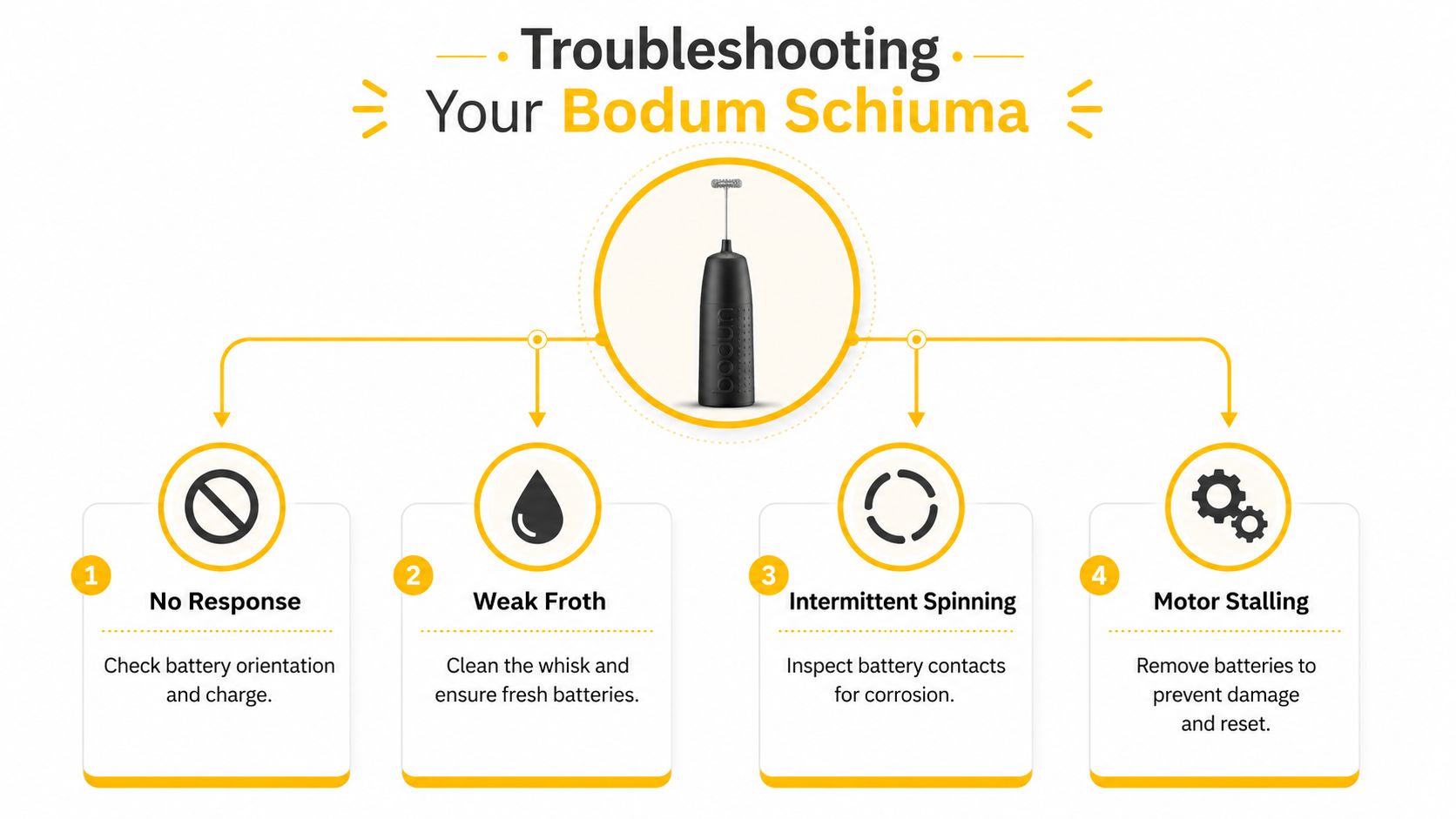
Match the symptom to the likely cause
No response usually means depleted batteries, reversed polarity, or a cap that isn't pressing the cells against the contacts. Remove the pair, verify the plus and minus marks, and reinstall both cells. Check for visible residue on the springs.
Weak froth can come from low voltage, but the whisk may also carry dried milk or face too much resistance. Clean and dry the whisk, then test with fresh batteries. A clean whisk gives the motor less work to do.
Intermittent spinning often points to a loose cell or oxidized contact. Press the battery gently toward the spring and test again. If green corrosion appears, remove the batteries and clean only after the compartment is dry. A small amount of isopropyl alcohol on a cotton swab can help with residue, but keep liquid away from the motor and circuit area.
Motor stalling calls for an immediate stop. Don't keep holding the switch while the whisk is stuck. Remove the batteries, clear the whisk, and allow the unit to reset before trying fresh cells.
A useful tactile check: With the whisk away from liquid, press the control briefly and gently rock the handle. A motor that starts sluggishly or recovers slowly after a brief load needs fresh cells or clean contacts.
After installing fresh batteries, compare the sound and speed with the frother's normal behavior. If the motor remains silent, overheats, or produces only a clicking sound despite clean contacts and correct polarity, the fault may be mechanical or electrical rather than battery-related.
For a broader perspective on household electrical load, see this explanation of coffee maker wattage. It won't diagnose the Schiuma, but it reinforces why a small cordless appliance still depends on a stable power source.
A short demonstration can also help you recognize normal movement before testing your own unit.
Travel Storage and Long-Term Battery Care
The Schiuma travels easily because it doesn't need a wall outlet or a proprietary charger. Its documented 2 AA battery design makes it practical for a desk drawer, weekend bag, or coffee kit, as long as you protect the whisk and prevent accidental activation.
For a flight, place the frother in a carry-on where you can inspect it easily. Remove the batteries before packing. Even if the switch seems unlikely to move, a button pressed inside a bag can drain the cells or start the whisk against nearby items.
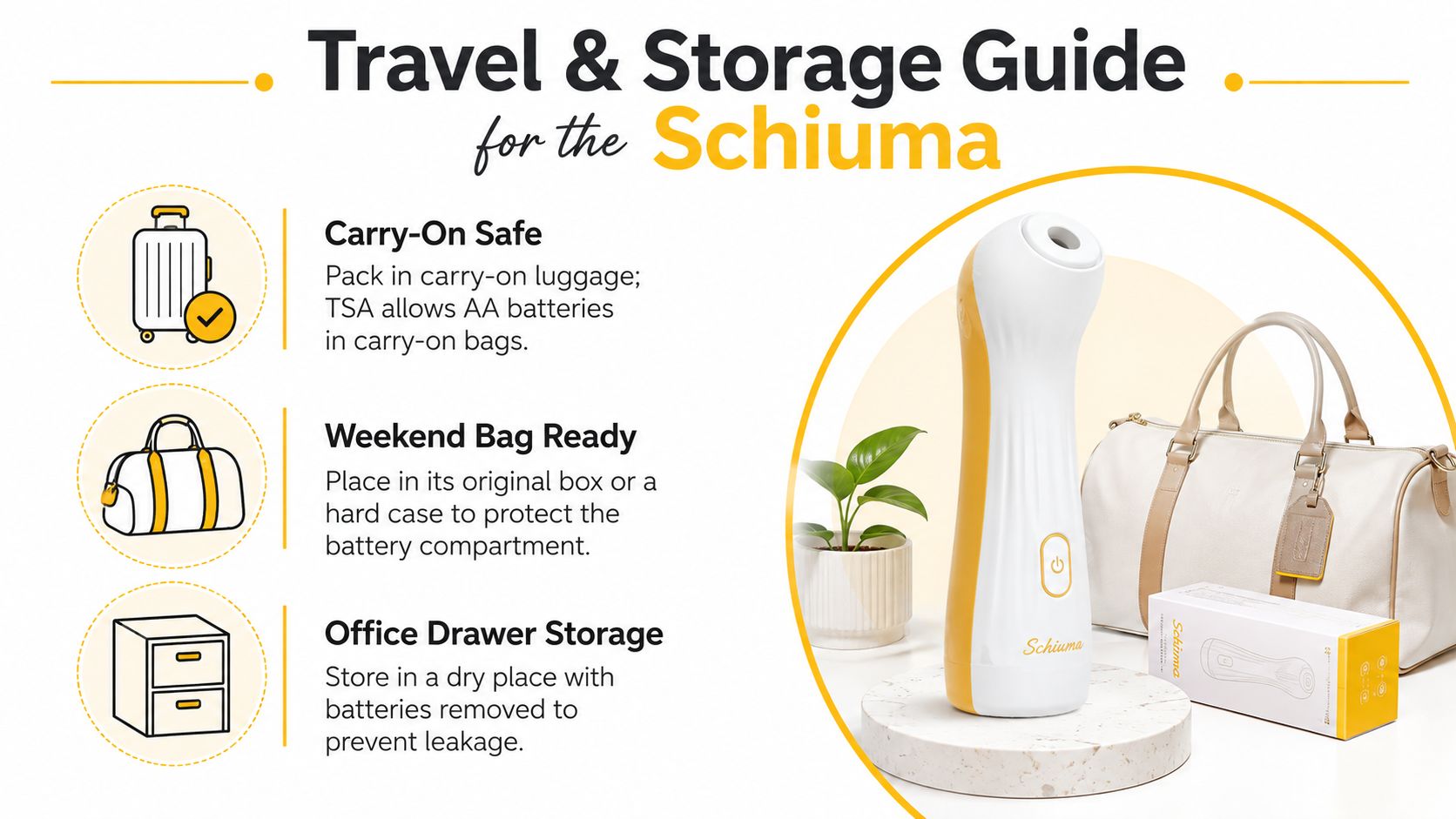
Pack for the situation
A hard case or the original packaging keeps the whisk from bending and stops other objects from pressing the control. In a weekend bag, wrap the dry whisk or use a small protective sleeve. At work, store the unit upright in a dry drawer with the batteries removed.
AA batteries are generally permitted in cabin baggage under aviation safety rules, but airline and regional requirements can vary. Check the current guidance for your route before flying, and protect loose cells from contact with keys or other metal objects.
Store the battery bay intelligently
Remove the batteries before any storage period longer than a month. Slow discharge can eventually cause leakage or corrosion at the terminals, particularly when cells are left inside an unused appliance.
Avoid leaving the frother in a hot car or near a strong heat source. Excessive heat can shorten battery life and may cause an alkaline cell to rupture. Keep spare batteries in their retail packaging or a non-conductive case rather than loose in a pocket.
For camping or outdoor use, pair the frother with a simple coffee routine described in this guide to instant coffee for camping. The same principle applies in an office: remove the cells after use if the frother will sit untouched, and reinstall them when you're ready for the next drink.
Disposal Recycling and Final Checklist
Used batteries shouldn't go into a coffee-station wastebasket by default. Find a local household battery collection point, municipal e-waste center, or retailer take-back program. Requirements vary by chemistry and location, so follow the instructions provided at the drop-off site.
If a cell leaks, put on disposable gloves, remove it without touching the residue directly, and keep the material away from skin and food-preparation surfaces. Don't use the frother again until the compartment has been assessed and cleaned safely. Rechargeable and lithium cells may have additional collection requirements, so a dedicated lithium battery recycling guide can help you identify the correct handling route.
Keep this checklist near the coffee station
- Confirm the model: Read the model number and compartment markings.
- Match the cells: Use the specified battery size, chemistry, and count.
- Install carefully: Work with clean, dry hands and follow the polarity diagram.
- Test the spin: Run a brief test away from milk before making your drink.
- Watch performance: Treat slow or intermittent operation as a reason to inspect the cells and contacts.
- Remove for storage: Take batteries out when the frother won't be used for an extended period.
- Recycle responsibly: Tape exposed terminals when required and use an approved collection point.
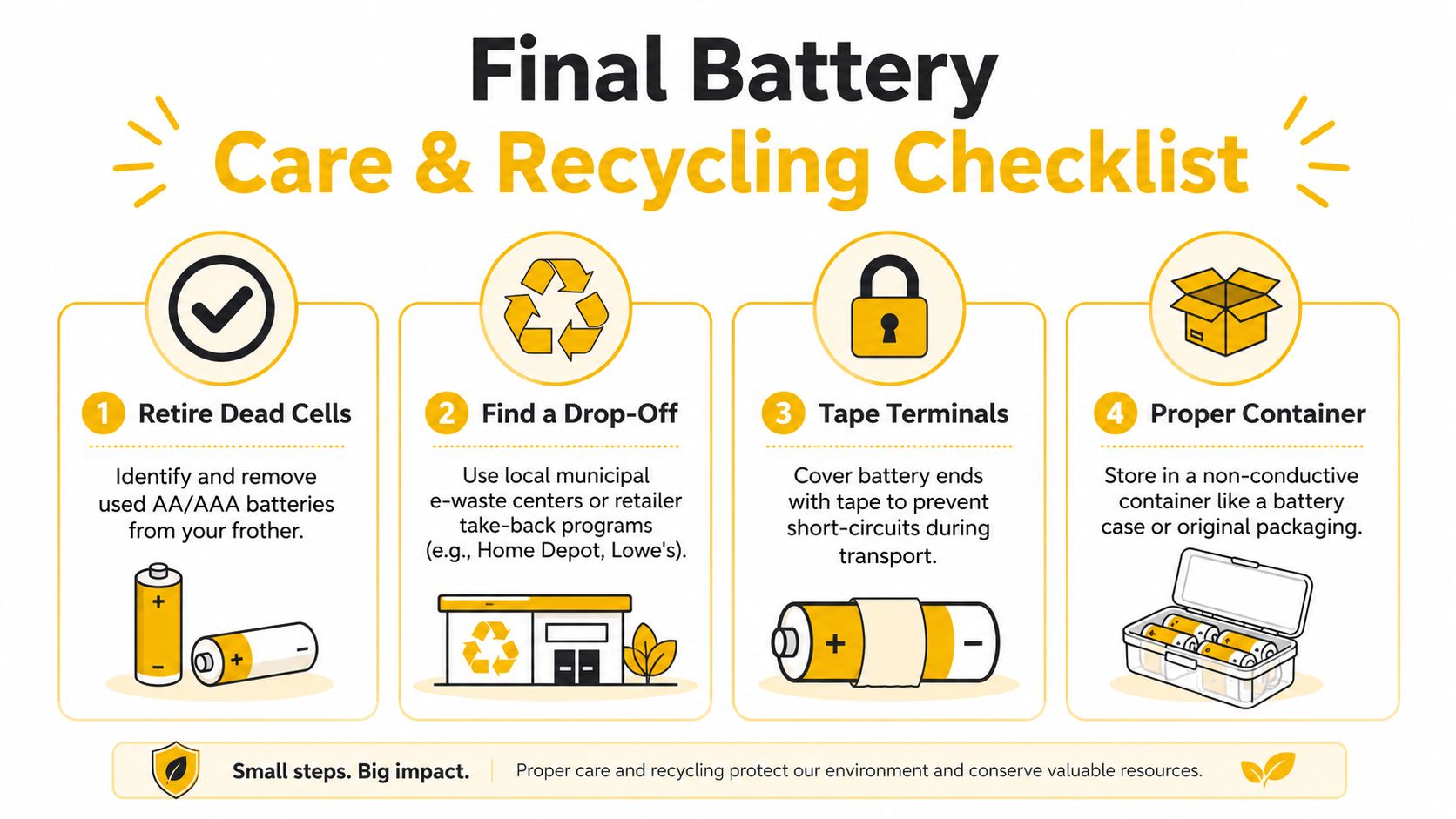
The AA format may seem like a minor specification, but it shapes the entire ownership experience. You can replace the cells almost anywhere, pack the frother without a charger, remove the batteries for safe storage, and send them through the appropriate recycling stream when their useful life ends.
Cartograph Coffee makes organic instant coffee for convenient drinks at home, at work, or outdoors, and a handheld frother can turn it into a simple latte-style drink. Visit Cartograph Coffee to explore the coffee options, then keep a correctly installed AA pair ready for your next pour.