When you dial in your coffee, what’s the one variable that often gets overlooked? Grind size gets all the attention, and brew time is a close second. But the real game-changer, the secret ingredient that unlocks incredible flavor, is water temperature.
For consistently amazing coffee, aim for a water temperature between 195°F and 205°F (that’s 90°C to 96°C). This isn’t just a random number; it's the sweet spot where the magic of extraction happens, turning ground coffee and hot water into a balanced, aromatic, and deeply satisfying cup.
Why Water Temperature Can Make or Break Your Brew
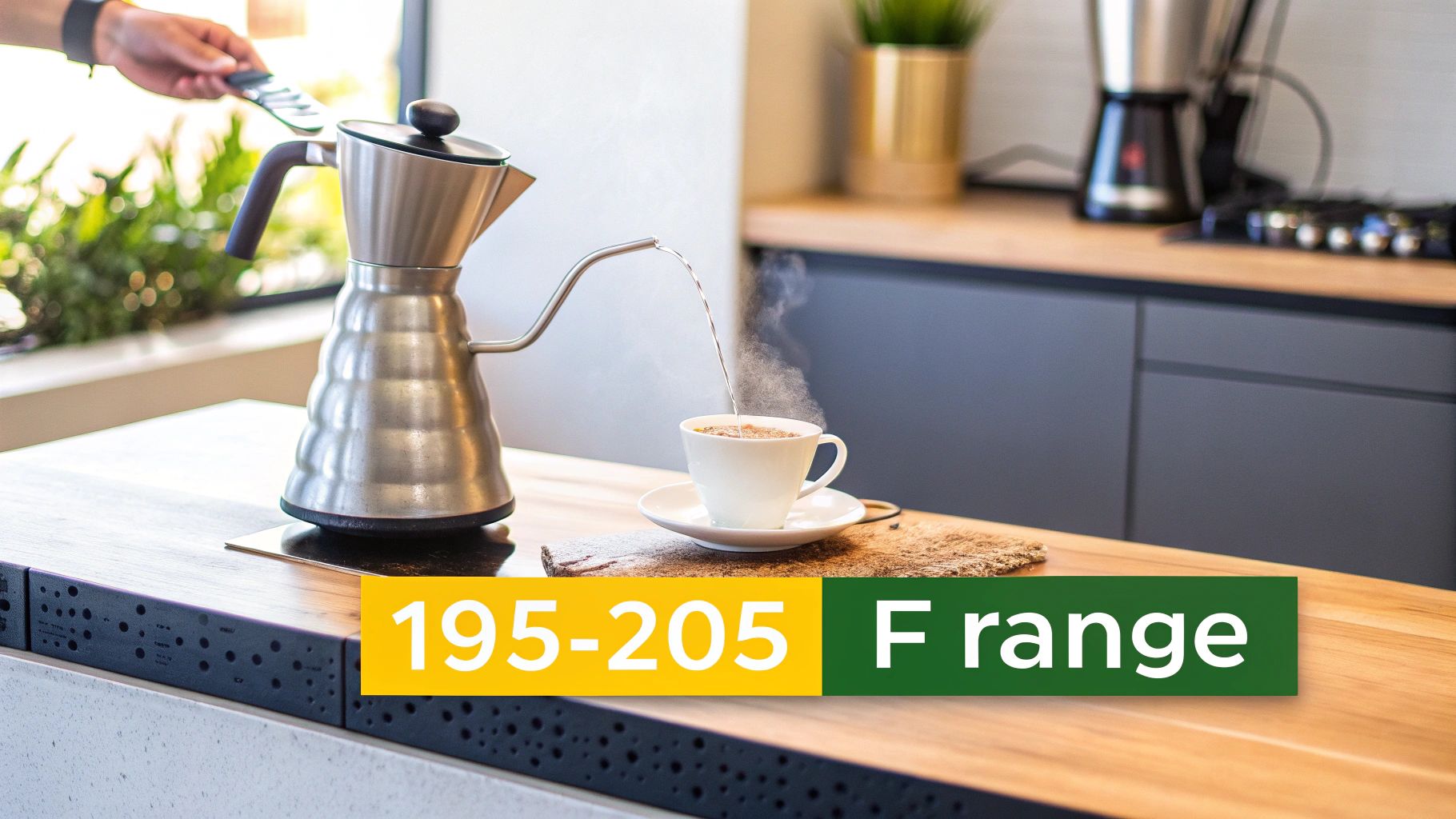
Think of temperature as the engine driving the whole brewing process. It dictates how much flavor the water can pull from your coffee grounds—a process we call extraction.
Here’s a simple way to picture it: try dissolving a sugar cube in a glass of ice water. It takes forever, right? Now, imagine dropping it into a mug of steaming hot water. It disappears almost instantly. The heat gives the water molecules the energy they need to break down the sugar. Coffee extraction works the exact same way.
The Science of Taste: Finding the Flavor Sweet Spot
Getting your water into that ideal 195°F to 205°F window ensures you’re extracting all the good stuff (sugars, delicate acids, aromatic oils) without pulling out the nasty bits. Veer too far in either direction, and you’ll taste the consequences immediately.
-
When Water Is Too Cool: Brewing with water below 195°F results in under-extraction. The water just doesn't have enough energy to dissolve the complex sugars and deeper flavors. The result? A cup that tastes disappointingly sour, grassy, or weak—like a watered-down version of what it could have been.
-
When Water Is Too Hot: On the flip side, using boiling water (212°F or 100°C) is a surefire way to get over-extraction. The intense heat is too aggressive, essentially scorching the grounds. It violently strips out bitter, astringent compounds, leaving you with a harsh, hollow, and often burnt-tasting brew.
"The golden ratio for a great americano is two parts hot water to one part espresso... Add 90-100ml of water that’s around 93C (200F)."
This little piece of barista wisdom shows just how critical temperature precision is, even in a seemingly simple drink. It’s why you’ll often hear the advice to let your kettle sit for 30 to 60 seconds after it boils. That brief pause is all it takes for the water to cool down and enter that perfect brewing window.
By paying attention to temperature, you move from just making coffee to crafting it. You gain control, eliminate guesswork, and start brewing consistently delicious coffee every single time.
The Science Behind a Great Cup of Coffee
Ever wonder what separates a truly amazing cup of coffee from one that just falls flat? It’s not some mystical secret held by baristas. The answer is extraction, and once you get a handle on this one idea, you’re in complete control of your brew.
Think about making simple syrup. If you just dump sugar into cold water, it's a clumpy, slow-dissolving mess. But use hot water, and that sugar disappears almost instantly. Coffee is no different. The temperature of your water is the engine that drives extraction, deciding what flavors get pulled out of the grounds and how fast it all happens.
How Flavors Emerge Over Time
The moment hot water meets coffee grounds, a fascinating chain reaction begins. Hundreds of different flavor compounds start to dissolve, and they do it in a very specific order. First to show up are the bright, fruity acids. After that, the mellow sweetness from sugars and caramels joins the party. Last to arrive are the deep, heavy, and sometimes bitter compounds.
Your goal is to stop this process right in that sweet spot. Finding the best water temperature is all about hitting that perfect balance—pulling out all the good stuff without venturing too far into bitter territory.
"Extraction is the process of dissolving flavors from coffee grounds, and water temperature is the main catalyst that determines which flavors are extracted."
This is why a few degrees here or there really matter. It can be the one thing standing between a vibrant, delicious cup and a deeply disappointing one.
Under-Extracted vs. Over-Extracted Coffee
Two common problems can wreck your morning coffee, and both come down to water temperature:
-
Under-extraction (Too Cold): When your water isn't hot enough, it just doesn't have the energy to dissolve those heavier sugars and deeper flavor notes. All it can manage to pull out are the initial sour acids. The result? A cup that tastes weak, grassy, and unpleasantly acidic. It's like cutting a song off before the chorus even hits.
-
Over-extraction (Too Hot): On the flip side, water that's boiling (or close to it) is way too aggressive. It violently strips everything from the grounds, scorching the delicate compounds and dissolving an excess of bitter elements. This leaves you with a harsh, astringent, and hollow-tasting coffee.
The Specialty Coffee Association (SCA) has a famously tight window for brewing, recommending that water temperature be between 92°C (197.6°F) and 96°C (204.8°F). That's the industry gold standard for most drip brewers, and it shows just how much a small shift can impact taste. Of course, this gets tricky at high altitudes where water boils at a lower temperature. For a deeper dive, you can learn more about how elevation affects brewing temperature on perfectdailygrind.com.
Once you understand extraction, you're no longer just winging it. You can taste a sour cup and know it was probably under-extracted, meaning you need to bump up the temperature next time. Getting a bitter brew? You’ll know to let the water cool down for a minute before pouring. This simple piece of knowledge gives you the power to troubleshoot and brew a better cup, every single time.
Matching Your Temperature to Your Brewing Method
While that golden 195°F to 205°F range is a fantastic starting point, it’s not a one-size-fits-all rule. The best water temperature really depends on how you're making your coffee. Think of it like cooking: you wouldn't use the same heat for a delicate fish as you would for a thick steak. Each brew method has its own personality, and each demands a slightly different temperature strategy.
The key difference is how long the water and coffee grounds are actually in contact, which we call immersion time. A quick-brewing pour-over needs hotter water to get the job done efficiently. On the other hand, a French press, where the grounds steep for minutes, needs cooler water to keep bitterness from taking over. Learning to match your temperature to your technique is how you really start to master your brew.
This is all about hitting that sweet spot between under- and over-extraction. Get it wrong, and your coffee can be sour and weak or harsh and bitter. Get it right, and it's perfectly balanced.
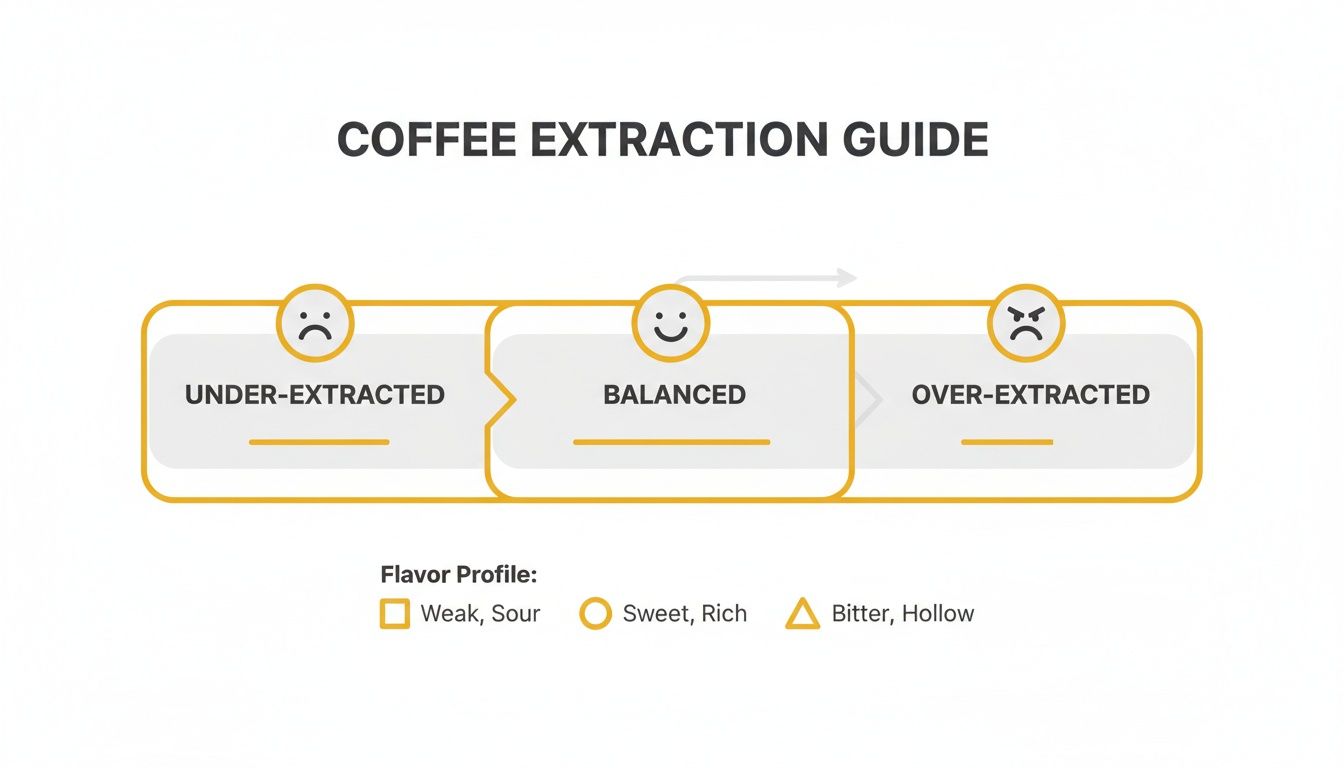
Nailing that "Balanced" middle ground is what we're all after, and tweaking your water temperature is one of the simplest ways to get there.
Pour-Over and Drip Coffee (Chemex, V60)
When you're making a pour-over with something like a V60 or Chemex, you're the one in control. For these methods, hotter water is your best friend. I'd recommend aiming for the higher end of the spectrum, right around 200°F to 205°F (93°C to 96°C).
Why so hot? Because the water starts losing heat the second it hits the brewer and the grounds. Starting with hotter water ensures the slurry—that beautiful mix of coffee and water—stays in the ideal extraction zone for the entire brew. It’s what helps you pull out all those bright, complex, and sweet flavors without a long steep time.
French Press and Full Immersion
With a French press, your coffee grounds are swimming in hot water for several minutes. That long contact time means you have to be more gentle with the heat if you want to avoid a bitter, over-extracted cup.
For this, dial it back a bit. A temperature between 195°F to 200°F (90°C to 93°C) is perfect. It's hot enough to kick off a robust extraction but not so aggressive that it starts pulling out those harsh, bitter compounds during the four-minute wait. It's the secret to getting that classic rich, full-bodied French press character. If you're looking to branch out, you can explore the best coffee brewing methods in our other guide.
Cold Brew: A Different Approach
Cold brew pretty much throws the entire rulebook out the window. Here, we're swapping heat for time—a lot of time. You'll use cool or even room-temperature water and let the coffee steep for 12 to 24 hours.
Because there’s no heat, the extraction happens incredibly slowly and gently. This is why cold brew has that signature smooth, low-acidity, and naturally sweet flavor. The compounds that make hot coffee bitter just don't dissolve easily in cold water.
Instant Coffee: Just Dissolve
Instant coffee is a totally different ballgame because the coffee is already brewed and dehydrated. Your only job is to get those crystals to dissolve again.
For this, water that’s just off the boil—around 190°F to 195°F (88°C to 90°C)—works best. It’s hot enough to dissolve the granules quickly and without any clumps, but it’s not so scalding that it gives the coffee a burnt taste. Using full boiling water is an easy way to make even a great instant coffee taste unnecessarily harsh.
When to Break the Rules and Use Cooler Water
The coffee world is full of "golden rules," but any seasoned pro will tell you they're more like guidelines. That famous 195°F to 205°F window is a fantastic starting point, but deliberately using cooler water is a powerful trick for fixing common taste issues and fine-tuning your brew.
Think of brewing as a three-way balancing act between temperature, grind size, and time. If you tweak one of these, you can almost always adjust another to bring the flavor right back where you want it. By intentionally dropping the temperature, for instance, you can get away with a finer grind or a longer brew time to pull out all the good stuff without any of the harshness.
This approach gives you a surprising amount of control and lets you "dial in" your coffee with real precision.
Taming Darker Roasts with Cooler Water
This technique is a game-changer for dark roasts. After spending more time in the roaster, these beans become more porous and soluble, which means their flavors extract very quickly. A common mistake is hitting them with water that’s too hot, which almost instantly pulls out bitter, ashy flavors.
Try dropping your water temperature to around 190°F or 195°F (88°C to 90°C). This slows everything down, giving the gentler, sweeter notes of chocolate and caramel a chance to dissolve before the bitterness crashes the party. It's often the simplest fix for a smooth, rich, and balanced cup from a dark roast. And if bitterness is a constant struggle, you might find some other useful tips in our guide on how to reduce acidity of coffee.
Of course, there are other times when you have to break from the ideal hot brewing temperature, especially when you're making delicious iced coffee.
This all points to a core idea in brewing: temperature isn't a rigid rule. It's a creative tool. When you learn to use it wisely, you can unlock the best possible flavor from any bean you have.
The Surprising Science of Lower Temperatures
You might assume that straying so far from the industry standard would give you a noticeably worse cup of coffee, but the science tells a different story. A fascinating study in SCA literature compared coffee brewed at the standard 93°C (200°F) against coffee brewed at a much cooler 87°C (189°F).
The results were eye-opening. As long as the overall extraction levels were the same, professional tasters couldn't tell the difference between the two brews.
This just goes to show that hitting a balanced extraction is way more important than obsessing over a specific number on your kettle. Don't be afraid to play around with it. Lowering the water temperature might just be the secret to your perfect cup.
Simple Ways to Control Temperature Anywhere
You don’t need a counter full of expensive gadgets to nail the perfect water temperature for your coffee. Seriously. With a little bit of practical know-how, you can get incredible control over your brew, whether you're in your kitchen or out in the middle of nowhere.
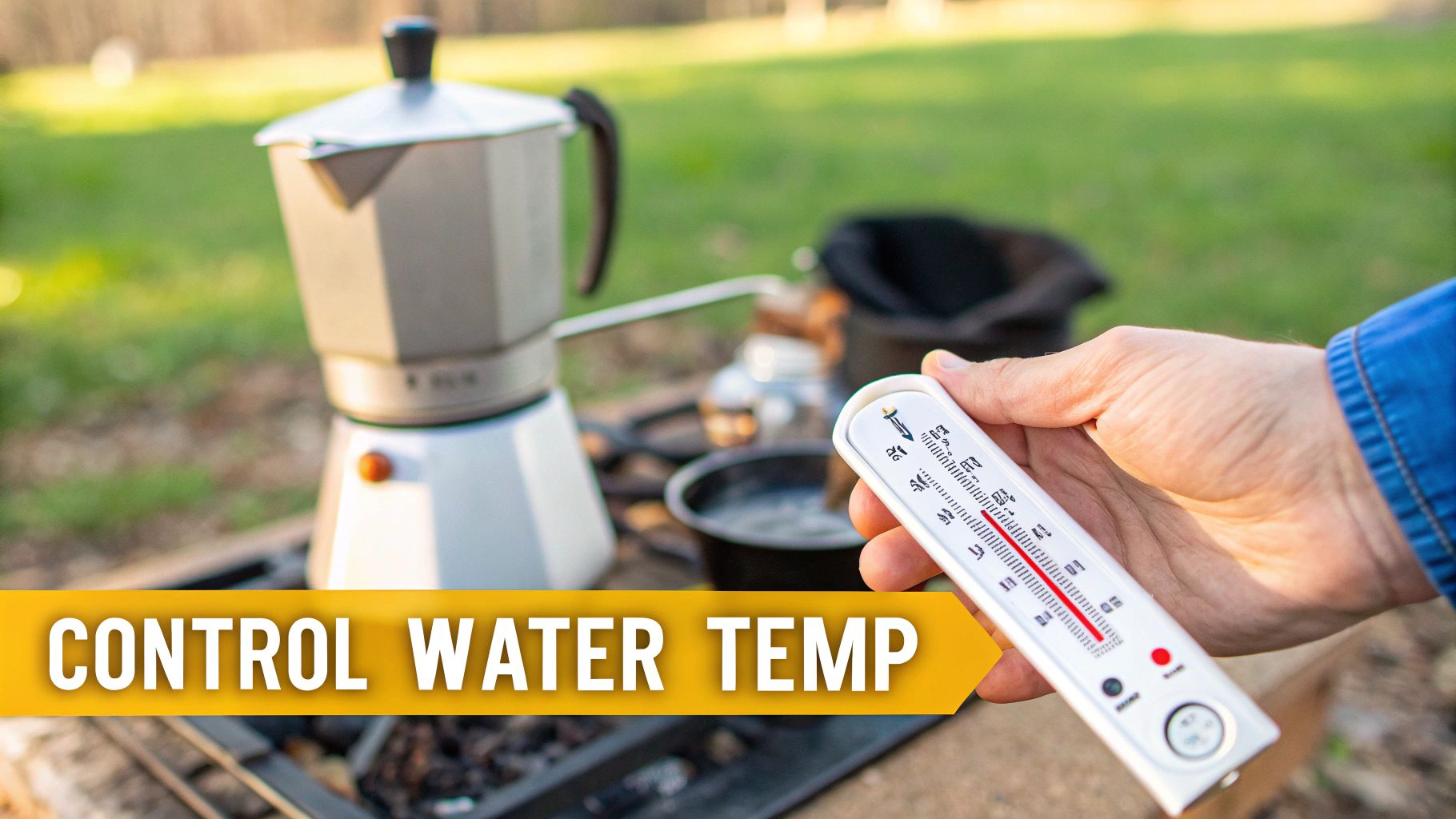
The easiest and most reliable trick in the book for home brewers is the "boil and wait" method. Just bring your water to a full, rolling boil, then click off the heat and let it sit. Waiting just 30 to 60 seconds is almost always enough for the water to cool down into that sweet spot of 195°F to 205°F. This simple pause is all it takes to keep from scorching your grounds, giving you a much smoother and less bitter cup.
Mastering Temperature on the Go
For all the campers, hikers, and anyone brewing away from a standard kitchen, learning to read the water is your secret weapon. When you're heating water over a camp stove or a fire, just keep a close eye on the pot.
- Look for "fish eyes": These are the first tiny bubbles that start to form on the bottom of the pot, long before it gets to a roaring boil. This is usually a great sign that your water is entering the ideal brewing range.
- Listen for the simmer: You're looking for a gentle, steady simmer—not a chaotic, vigorous boil. This visual check is a surprisingly accurate way to hit your temperature without a single piece of specialized gear.
This approach gives you the freedom to brew amazing coffee just about anywhere, even if all you have is a basic pot. If you're into minimalist brewing, you might want to check out our guide on how you can make coffee without a coffee maker.
If you want to make one small investment that pays off big, get a basic kitchen thermometer. For just a few dollars, it completely removes the guesswork and gives you the confidence to hit your target temperature every single time.
While there’s something satisfying about mastering these manual techniques, modern tools can certainly make life easier. Beyond temperature-control kettles, things like instant hot water dispensers can be a handy shortcut for a busy home setup.
In the end, controlling your water temperature is all about using what you have to get a delicious result. It proves that great coffee really is for everyone.
Your Coffee Temperature Questions, Answered
Alright, we’ve waded through the science and walked through the brew methods. But when you’re standing in front of your kettle at 7 AM, a whole new set of questions tends to pop up. Let's tackle some of the most common puzzles and myths about water temperature so you can nail your brew every time.
Does Water Temperature Matter For Instant Coffee?
It does, but not for the reason you might think. With instant coffee, all the heavy lifting of extraction has already been done—those little granules are just dehydrated coffee. Your job is simply to dissolve them.
For this, water that’s just off the boil, right around 195°F (90°C), is your best bet. It’s hot enough to dissolve the crystals quickly and fully, but not so scorching that it makes the coffee taste harsh and burnt. If your water is too cool, you'll end up with a clumpy, weak, and pretty disappointing mug.
What Happens If I Use Boiling Water For My Coffee?
This is one of the most common mistakes in coffee making. Pouring truly boiling water—that’s 212°F (100°C) at sea level—straight onto your coffee grounds is a recipe for a bad cup. That extreme heat shocks the coffee, aggressively yanking out all the bitter compounds in a flash, a process we call over-extraction.
The intense temperature essentially burns away the delicate, sweet notes before they even have a chance to shine. The result? A brew that tastes harsh, astringent, and hollow. That old piece of wisdom about letting your kettle sit for a minute after it clicks off? It’s all about avoiding this exact problem by letting the water cool down into that sweet spot of 195-205°F.
How Does Altitude Change My Brewing Temperature?
This is a big one that catches a lot of people by surprise. Altitude dramatically changes the boiling point of water. At sea level, we all know water boils at 212°F (100°C). But for every 500 feet you climb, that boiling point drops by roughly 1°F.
So, if you’re brewing in Denver at 5,280 feet, your water boils around 202°F (94°C). In this situation, you absolutely should use water right as it boils. It’s already in the perfect temperature zone! Not realizing this is why so many people in the mountains struggle with coffee that tastes sour and under-extracted.
If you're brewing at a high elevation, don't wait after the kettle clicks off. Your boiling water is already at the perfect temperature for a balanced extraction.
Is Brewing Temperature The Same As Drinking Temperature?
Not even close! And this is a super important distinction to make. That ideal brewing range of 195°F to 205°F is perfect for pulling flavor out of the coffee grounds, but it's way too hot for your tongue to taste anything besides "hot."
Our taste buds are at their best when things cool down a bit. In fact, studies on what people actually enjoy show that the sweet spot for drinking coffee is between 154-158°F (68-70°C). You can discover more insights about coffee temperature preferences and how our perception of taste changes with heat. This is exactly why letting your coffee sit for a few minutes is a pro move—it lets all those amazing, complex flavors finally open up.
At Cartograph Coffee, we believe great coffee should be simple and accessible, no matter where you are. Our premium organic instant coffee is crafted for those who refuse to compromise on flavor, even on their busiest days.