For anyone with a sensitive stomach, the best coffee is almost always going to be a low-acid, dark roast that keeps potential irritants to a minimum. Choosing decaffeinated or specially processed beans can also make a world of difference, letting you get back to enjoying your daily ritual without the upset.
Your Quick Guide to Stomach-Friendly Coffee
If you've ever felt that familiar, uncomfortable pang after your morning cup, you know the frustrating trade-off all too well. You love the taste and ritual of coffee, but your stomach just doesn't seem to agree.
The good news? You don’t have to give it up. The secret is simply understanding what makes some coffees harsh while others are exceptionally gentle.
Most coffee-related stomach trouble boils down to two main culprits: acidity and caffeine. The natural acids in coffee can trigger heartburn and indigestion for some, while caffeine can ramp up stomach acid production and kick your digestive system into overdrive, leading to discomfort. A few simple swaps can completely change your coffee experience.
Key Factors for a Gentler Brew
Finding the right coffee for a sensitive stomach isn't complicated once you know what to look for. By keeping an eye on these four factors, you can easily pick a brew that will treat your stomach right.
- Low Acidity: Look for beans from low-altitude regions. Coffee from places like Brazil or Sumatra is naturally less acidic and much smoother.
- Dark Roast Level: The roasting process itself is your friend here. It breaks down the acidic compounds in the beans, which is why darker roasts (think French or Italian) are generally much easier on the stomach than light roasts.
- Decaffeination: Since caffeine is a major trigger, switching to a high-quality decaf can bring immediate relief. It’s often the simplest and most effective change you can make.
- Brewing Method: How you make your coffee matters. A lot. Methods like cold brewing can slash the acidity in the final cup by up to 70%, resulting in a brew that’s incredibly smooth and gentle.
This infographic breaks down the core differences between a coffee that’s likely to cause trouble and one that’s designed to be gentle.
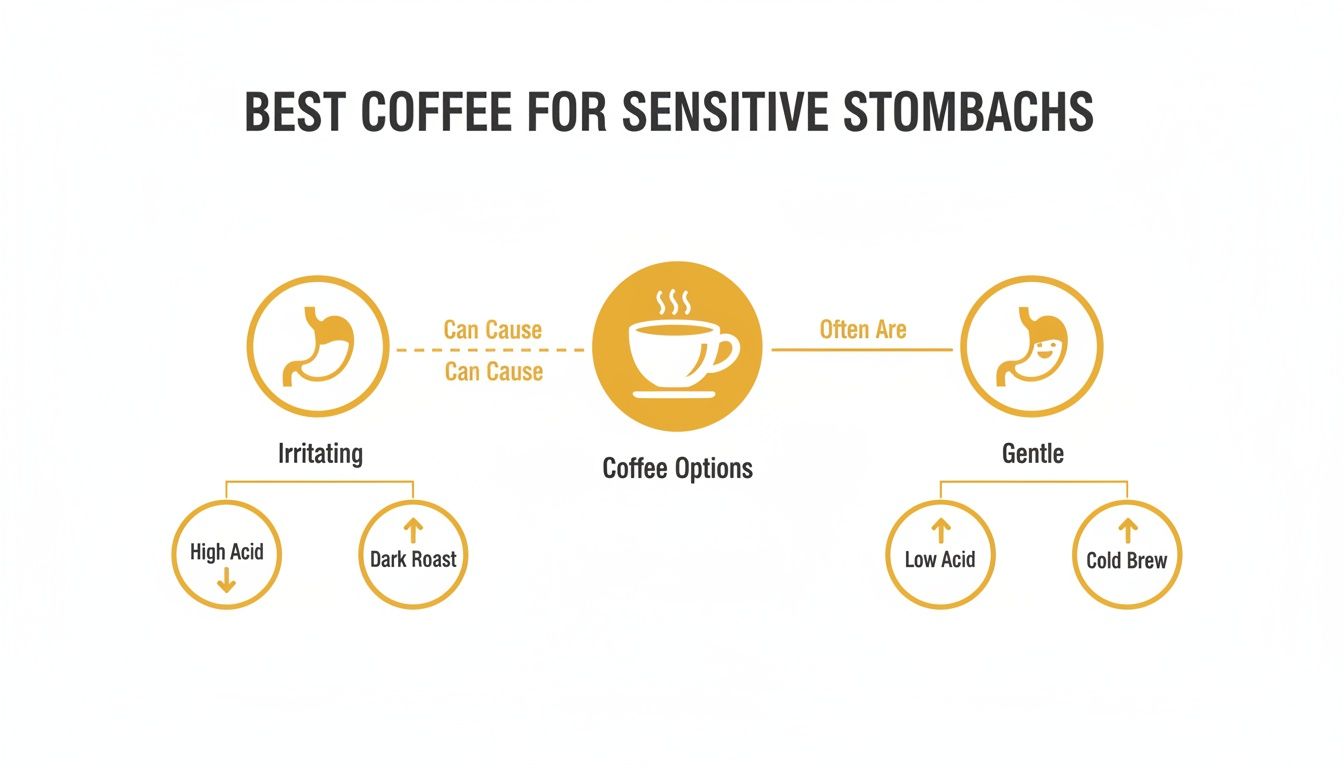
As you can see, the path to a happier stomach is paved with low-acid beans and gentler brewing techniques.
Stomach-Friendly Coffee vs. Traditional Coffee at a Glance
To make it even simpler, here's a quick comparison to help you instantly identify which coffee characteristics are likely to irritate your stomach and which ones are more likely to soothe it. Keep this in mind the next time you're shopping for beans.
| Characteristic | Likely to Irritate | Best for Sensitive Stomachs |
|---|---|---|
| Roast Level | Light or Medium Roast | Dark or Extra Dark Roast |
| Acidity Level | High (often described as bright, tangy) | Low (often described as smooth, mellow) |
| Caffeine | Fully Caffeinated | Decaffeinated or Half-Caff |
| Bean Origin | High-Altitude (e.g., Ethiopia, Kenya) | Low-Altitude (e.g., Brazil, Sumatra) |
| Brewing Method | Standard Drip | Cold Brew, Espresso, French Press |
Ultimately, finding the perfect coffee is about paying attention to the roast, the bean's origin, and how you brew it. With a little bit of knowledge, you can easily build a coffee routine that your stomach will love as much as you do.
Understanding Why Coffee Upsets Your Stomach
For so many of us, that first cup of coffee is a non-negotiable part of the morning. But when that beloved ritual leads to stomach cramps or a sour feeling, it's incredibly frustrating. If this sounds familiar, you're not alone, and it's not just in your head. There's a real science to why coffee can be tough on some digestive systems.
Think of your digestive tract as a delicately balanced ecosystem. Coffee introduces a couple of powerful elements that can throw things off kilter: caffeine and a cocktail of natural acids. Each one affects your body differently, and understanding them is the key to finding a coffee that loves you back.
Once you can pinpoint what’s causing your discomfort, you're on the right track to choosing the best coffee for your sensitive stomach without having to give it up for good.
The Role of Caffeine as a Stimulant
Caffeine is famous for waking up your brain, but it doesn't stop there. It gives your entire digestive system a jolt, too, kicking the muscles in your gut into a higher gear. This muscular contraction, called peristalsis, is what moves everything through your system.
For some people, this is a welcome effect. For others, it’s like flooring the gas pedal in a car that’s not built for speed. The system goes into overdrive, leading to cramping, urgency, and that all-too-familiar discomfort—especially for anyone with a sensitive gut or conditions like Irritable Bowel Syndrome (IBS).
It's a powerful effect. Research shows that caffeinated coffee gets the colon moving 60% more than water and 23% more than decaf coffee. It's a clear illustration of just how much caffeine can rev up your system. You can learn more about how coffee and its link to nausea work in our other article.
On top of that, caffeine also signals the release of a hormone called gastrin. Gastrin’s job is to tell your stomach to produce more hydrochloric acid (the main component of stomach acid). While this acid is crucial for breaking down food, too much of it can irritate a sensitive stomach lining, causing that familiar burning sensation or indigestion.
Key Takeaway: Caffeine is a potent stimulant that speeds up your entire digestive process. For sensitive individuals, this can lead to uncomfortable cramping and bowel urgency.
Understanding Coffee's Natural Acidity
Putting caffeine aside, the coffee bean itself is naturally acidic. It’s packed with different compounds, like chlorogenic and quinic acids, which are responsible for the bright, vibrant, and tangy flavors that coffee connoisseurs love. But when you drink coffee, these same acids can encourage your stomach to produce even more of its own acid.
Think about what happens when you squeeze a lemon into a glass of water—the pH instantly drops. The acids in coffee have a similar effect on your stomach. If your stomach lining is already a bit sensitive, or if you're prone to acid reflux, this extra acidity is often all it takes to trigger heartburn, a sour stomach, or general indigestion.
Here’s a quick rundown of the main culprits:
- Chlorogenic Acids (CGAs): These are the rockstars of green coffee beans, full of antioxidants. Unfortunately, they're also a primary source of that perceived "acidity" and can stimulate your stomach to produce more acid.
- Quinic Acid: This acid forms when CGAs break down during roasting or when brewed coffee sits out too long. It's often the reason why old or stale coffee tastes sour and is notorious for causing stomach upset.
- Citric and Malic Acids: Found in fruits like lemons and apples, these acids contribute those lovely bright, fruity notes to a brew. However, they still add to the overall acid load on your stomach.
The good news is that you have a ton of control over this. Things like where the coffee was grown, how dark it was roasted, and even how you brew it can make a massive difference in the final acidity of your cup. A few simple tweaks can pave the way for a much happier stomach.
How to Choose the Best Coffee Beans
Walking down the coffee aisle can feel like a guessing game, especially when you’re trying to find a brew that won't punish your stomach later. But it doesn't have to be. With a little insider knowledge, you can stop rolling the dice and start making a beeline for the right bag.
The secret is to ignore the flashy marketing and focus on two key details on the label: the roast level and the bean's origin. These two clues tell you almost everything you need to know about a coffee's potential acidity and how it's likely to treat your stomach.
Go Dark for a Gentler Brew
If you're hunting for a stomach-friendly coffee, your first move should be toward the darker roasts. Light roasts get a lot of love for their bright, fruity notes, but that "brightness" is just another word for acidity—the very thing you're trying to avoid.
Think of it like toasting bread. The longer the coffee beans are heated, the more their internal chemistry changes. The intense heat breaks down the chlorogenic acids responsible for much of that sharp, irritating bite. At the same time, the roasting process creates a compound called N-methylpyridinium (NMP), which actually helps calm your stomach by telling it to produce less acid.
So, a dark roast is doing double duty for you: it has less of the stuff that causes irritation and more of the stuff that soothes.
- Light Roasts: These beans are roasted just long enough to be drinkable, leaving most of their original, highly acidic compounds intact.
- Medium Roasts: A step in the right direction, but they often still have enough acidity to bother a truly sensitive stomach.
- Dark Roasts (French, Italian, Espresso): Roasted the longest, these beans have the lowest acidity and a naturally smoother, richer flavor.
When you see "French Roast" or "Italian Roast" on a bag, think of it as a good sign. These styles are specifically crafted for that deep, low-acid profile that’s much kinder to your system.
Look for Beans from Low-Altitude Regions
The next piece of the puzzle is geography. Just like the soil and climate in France produce different wines than those from California, the environment where coffee grows has a huge impact on the final bean—especially its acidity.
High-altitude coffees, grown on steep mountain slopes, ripen slowly in the cool air. This slow maturation process develops complex, bright flavors that coffee connoisseurs love, but it also means high acidity.
On the other hand, beans grown in warmer, lower-altitude regions ripen more quickly. This results in a coffee that is naturally less acidic right from the start, making it a perfect foundation for a gentle brew.
One of the smartest moves you can make is to look for single-origin coffees from places known for their smooth, mellow, and low-acid profiles. This is how you stack the deck in your favor.
Keep an eye out for these origins:
- Brazil: The undisputed king of low-acid coffee, often tasting nutty and sweet.
- Sumatra (Indonesia): Famous for its earthy, full-bodied beans that are incredibly smooth.
- Peru: While it has high-altitude farms, many Peruvian coffees are celebrated for a balanced and mild profile.
- Nicaragua: Often produces beans with a clean body and a much softer acidic finish.
Picking a dark roast from one of these regions is your best bet for a coffee that’s both delicious and comfortable. You’re pairing a low-acid bean with a low-acid roast, creating the ideal recipe for a cup your stomach will thank you for.
Exploring Decaf and Specially Processed Coffees
Sometimes, the simplest change can bring the biggest relief. If you've already tinkered with different roast levels and coffee origins but still feel that familiar discomfort, it’s time to look past the bean itself and focus on how it’s processed. For sensitive stomachs, two fantastic options often stand out: decaf and specially treated low-acid coffees.
These aren't just niche products; they're smart solutions designed to remove the very things that cause irritation. By tackling either the stimulating punch of caffeine or the harshness of natural acids, these coffees give you a direct route to a smoother, happier gut without asking you to give up your daily ritual.
The Gentle Power of Decaf
We've already touched on how caffeine can hit the gas pedal on your digestive system, leading to cramping and that urgent need to go. Decaf offers a refreshingly simple fix: it takes the main culprit out of the picture. By removing up to 97% of the caffeine, you get to enjoy the rich, satisfying flavor you crave without sending your stomach into a frenzy.
But it's important to know that not all decaf is created equal. The method used to strip the caffeine can make a huge difference in the final taste and purity of your brew.
- Solvent-Based Methods: These processes use chemical solvents, like methylene chloride or ethyl acetate, to wash the caffeine away from the beans. They're effective and generally considered safe, but many people simply prefer to avoid any synthetic chemicals in their coffee.
- The Swiss Water Process: This is a 100% chemical-free method that’s pure genius. It uses only water, temperature, and time. Green coffee beans are submerged in a unique "Green Coffee Extract," a solution saturated with all the coffee's flavor compounds but zero caffeine. This clever trick coaxes the caffeine out of the beans while leaving the delicious flavor notes right where they belong.
For anyone searching for the best coffee for a sensitive stomach, the Swiss Water Process is almost always the go-to recommendation. It has a stellar reputation for producing a clean, full-bodied decaf that tastes remarkably close to the original, so you never have to choose between comfort and quality.
Exploring Specially Treated Low-Acid Coffees
Beyond just decaf, there's a growing world of coffees that are engineered from the very beginning to be exceptionally gentle. These aren't just beans that happen to be naturally low in acid due to where they were grown; they're put through special treatments after harvesting to specifically reduce irritating compounds.
These methods often involve unique steaming or washing techniques that target and neutralize the harshest acids before the beans even see a roaster. You can think of it as a preemptive strike, giving the coffee a much smoother, stomach-friendly foundation to build upon.
This focus on gentle processing is becoming more crucial as coffee consumption rises. With a reported 18.7% increase in per capita consumption between 2014-2017, the demand for comfortable, non-irritating options has never been higher.
This is especially true for those with serious sensitivities. For them, low-acid or decaf options are often a much safer bet. This idea is backed by research that found regular coffee could aggravate GERD symptoms in certain people. You can discover more about these findings on coffee and digestion for a deeper dive.
These specially treated coffees are proof that modern techniques can deliver a brew that is both complex in flavor and incredibly easy on the system. When you see a coffee marketed as "low-acid," it often means it has undergone one of these gentle processing methods.
So, whether you reach for a high-quality, chemical-free decaf or a specially processed low-acid bean, you're making a conscious choice that puts your digestive well-being first. These options ensure that everyone can enjoy a great cup of coffee, proving that it can feel just as good as it tastes.
How Your Brewing Method Can Soothe Your Stomach
Picking the right beans is a fantastic start, but your job isn't over once you've left the coffee aisle. How you actually make your coffee at home can be just as crucial as the beans themselves. Your brewing method is what pulls all the flavor, caffeine, and—you guessed it—acid from the grounds.
Think of it like this: coffee grounds are a tiny sponge packed with different compounds. A quick, hard squeeze (like an espresso shot) is going to release a different mix of stuff than a long, gentle soak (like cold brew). If you choose a method that doesn't yank out all those harsh, irritating acids, you can make a much gentler cup of coffee.
The best part? This puts you in the driver's seat. You have a ton of control right in your own kitchen. Let's walk through three common brewing methods and how you can use them to your advantage.
Embrace the Magic of Cold Brew
If there's one MVP for sensitive stomachs, it’s cold brew. The science behind it is simple but powerful. Hot water is a super-efficient solvent, quickly dissolving everything from coffee grounds, including the bright, tangy acids that can cause trouble. Cold water, however, is a much more selective extractor.
When you steep coffee grounds in cold water for a long time—usually 12 to 24 hours—you create a coffee concentrate with a whole different chemical profile. This slow, gentle process pulls out all the smooth, sweet, and chocolaty notes while leaving a lot of the harsher acids behind in the grounds.
The result is a coffee that can be up to 70% less acidic than the same beans brewed hot. That’s not a small adjustment; it’s a total game-changer that makes coffee possible again for so many people.
Making cold brew at home is dead simple. All you need is coffee, water, and a big jar. It’s a set-it-and-forget-it method that rewards your patience with an incredibly smooth, stomach-friendly coffee.
Reconsider the French Press
The French press gets a reputation for making a big, bold cup, but it can be surprisingly kind to your stomach. It all comes down to two things: grind size and immersion brewing. A French press needs a coarse grind, and those larger coffee particles have less surface area than the fine powder you’d use in a drip machine.
Less surface area means a slower extraction, so fewer acids get pulled into your cup. On top of that, because the grounds are fully immersed in water, you have total control over the brewing time. You can play around with shorter steeping times to find that sweet spot between rich flavor and easy-on-the-stomach comfort. For more tips on this, our guide on how to reduce the acidity of coffee has some great pointers.
Why Espresso Can Be a Surprising Ally
It sounds completely backward, right? A strong, concentrated shot of espresso being gentle? But it often is, and the reason is pure speed. An espresso shot is made by forcing very hot water through tightly packed, finely-ground coffee for only 20 to 30 seconds.
That lightning-fast extraction is the secret. It’s just long enough to grab the rich flavors and oils that make espresso so delicious, but it’s too quick to pull out a significant amount of the acids that can irritate your stomach. Compare that to a drip coffee maker, which can take several minutes to brew, giving that hot water plenty of time to dissolve and wash acids right into your mug.
Here’s a quick breakdown of how these methods stack up:
| Brewing Method | Typical Extraction Time | Key Stomach-Friendly Feature |
|---|---|---|
| Cold Brew | 12-24 Hours | Uses cold water, which extracts significantly fewer acids. |
| French Press | 3-5 Minutes | Coarse grind and controlled steep time limit acid extraction. |
| Espresso | 20-30 Seconds | Extremely short brew time prevents most acids from dissolving. |
By choosing one of these methods, you’re not just brewing coffee—you’re actively crafting a drink that works with your body, not against it.
Simple Lifestyle Tips for Coffee Lovers
You’ve found the right low-acid beans and mastered your brewing technique—that’s a huge win for a happier stomach. But what you do after the coffee is brewed can be just as crucial. A few simple tweaks to your daily routine can add an extra layer of protection, turning a potentially irritating experience into a comfortable morning ritual.

Sometimes, the best fix isn't about changing your coffee at all, but about changing how you drink it. These practical, easy-to-adopt tips can make all the difference, helping you enjoy your favorite brew without any regrets.
Never Drink Coffee on an Empty Stomach
It's a familiar routine for millions: roll out of bed, brew a cup, and start sipping before anything else. While it feels efficient, this habit is a major trigger for stomach trouble. When coffee is the first thing to hit an empty stomach, its natural acids and caffeine go to work on your stomach lining directly, sparking acid production with no food to act as a buffer.
Imagine pouring a bit of vinegar straight onto a raw surface—it’s going to cause a reaction. Food acts like a protective sponge, soaking up the coffee’s compounds and slowing down their absorption.
Pro Tip: Make it a rule to pair your coffee with a meal or snack, especially something with a little fiber or healthy fat. A piece of toast with avocado, a bowl of oatmeal, or even a small handful of almonds creates the buffer your stomach desperately needs.
This one change can single-handedly prevent the direct irritation that so often leads to heartburn, indigestion, or that unpleasant sour feeling.
Add a Splash of Milk or a Plant-Based Alternative
One of the easiest ways to instantly make your coffee gentler is to add a bit of milk or a non-dairy alternative. The proteins and fats in milk act as a natural buffer, helping to neutralize some of the coffee’s inherent acidity.
This isn’t just an old wives' tale; there's real chemistry behind it. The calcium found in dairy can also bind to certain acid compounds, further dialing down their potential to cause irritation.
- Dairy Milk: Whole milk or 2% offers a great balance of fat and protein to temper the acidity.
- Almond Milk: A popular choice for its low calories, its natural alkalinity helps counteract the coffee’s low pH.
- Oat Milk: Loved for its creamy texture, it provides a smooth, gentle buffer that won't overpower the coffee's flavor.
- Soy Milk: Being rich in protein, it does a solid job of mellowing out the harshness in your cup.
Just a small splash is a quick fix that makes a surprisingly big difference in how your stomach feels after you finish your cup.
Hydrate and Practice Moderation
Finally, let's talk about two of the most fundamental habits for digestive wellness: moderation and hydration. Coffee is a diuretic, which means it can make you lose fluids. When you're dehydrated, your stomach acid becomes more concentrated, making it more potent and irritating. For a deeper look at how coffee impacts your gut, our article on coffee and bloating is a great resource.
To get ahead of this, try to drink a full glass of water either before or alongside your coffee. This simple step helps dilute your stomach acid and keeps your whole digestive system humming along.
Also, be mindful of how much coffee you’re drinking. Even the best coffee for a sensitive stomach can cause problems if you overdo it. Try to stick to one or two cups a day to get the lift you love without overwhelming your system. By staying hydrated and keeping your intake in check, you can comfortably keep coffee in your life.
Got More Questions? Let's Talk Coffee and Stomach Health
Even after dialing in your beans and brew method, you might still have a few questions. Let's clear up some of the most common ones so you can build your coffee routine with total confidence.
Is Dark Roast Really the Best Option?
For most people, yes, a dark roast is the safest place to start. The longer roast time does a couple of important things: it breaks down more of the irritating chlorogenic acids and creates a compound called N-methylpyridinium (NMP), which actually helps your stomach produce less acid. It’s a win-win.
That said, everyone is different. You might find that a high-quality, single-origin medium roast with naturally low acidity works just fine for you. If you're experimenting, I'd suggest starting with a dark roast—it gives you the best odds for a happy stomach—and then branching out from there if you feel up to it.
How Can I Get an Energy Boost Without the Upset?
Absolutely. If you love the caffeine kick but it's a primary trigger for your discomfort, you've got a few smart ways to play it. Often, the best move is just to drink a little less.
- Go Half-Caff: This is a fantastic trick. Just mix your regular beans with decaf to cut the caffeine content while still getting that gentle lift.
- Choose Espresso: It might seem counterintuitive, but a single shot of espresso has less total caffeine (about 64 mg) than a standard 8-ounce cup of drip coffee (which has around 95 mg). It's a quick, concentrated boost that's over and done with.
The key is finding your "minimum effective dose"—just enough caffeine to get you going without sending your stomach into a spin. It’s all about moderation.
What if Coffee Is Still a No-Go? Any Good Alternatives?
Sometimes, even the gentlest coffee is just too much. If you've tried everything and still feel that familiar rumble of discomfort, it might be time to explore other options. Don't worry, you can still have a delicious, warm morning ritual.
Many people have found great alternatives they love, like:
- Chicory Root "Coffee": It’s naturally caffeine-free but has a deep, roasted flavor that’s surprisingly similar to coffee. Plus, it contains prebiotic fiber, which is great for your gut.
- Herbal Teas: You can't go wrong with ginger or peppermint tea. They are famous for their ability to soothe an upset stomach.
- Mushroom Coffee Blends: These usually contain a small amount of coffee mixed with functional mushrooms (like lion's mane or chaga). You get a much less acidic, lower-caffeine drink with added benefits.
Switching things up can give your stomach a break while letting you keep that comforting morning cup.
Ready for an exceptionally smooth coffee experience that’s as convenient as it is delicious? Cartograph Coffee offers organic instant coffee crafted for quality and flavor, making it easy to enjoy a premium cup anywhere, anytime. Discover your new favorite brew at Cartograph Coffee.