You're standing in front of a shelf full of tumblers, one hand on a slim little cup and the other on a bigger travel mug, and the question is still unsettled. You don't need another generic product page that repeats dimensions and insulation labels. You need to know whether a 12 oz tumbler fits the way you drink coffee, the way you move through the morning, and the kind of heat retention you'll really live with.
A good starting point is a broad drinkware collection if you're comparing shapes and formats side by side, but the smarter move is to decide by use, not by shelf appeal. If your routine feels closer to espresso, a short commute, or a quick refill than to all-day sipping, that size can make sense. If you're sorting through everyday coffee-cup choices, the practical framing in this on-the-go coffee cups guide helps clarify why portability and portion size matter so much.
Finding the Right Tumbler for Your Morning Routine
The morning decision usually happens fast. You're half awake, the coffee's ready, and you're choosing between “just enough” and “too much to carry.” That's where a 12 oz tumbler earns its place, because it's sized for a quick drink, not a long haul.
A smaller tumbler can feel surprisingly right if your coffee ritual is brief and intentional. It's easier to tuck into a bag, easier to hold one-handed, and less likely to turn into a lukewarm commitment you keep nursing for hours. For some people, that's the whole point.
Practical rule: choose the tumbler that matches how long you actually want to drink, not how much you think you should carry.
The rest of this guide is built around that decision. You'll get a plain-English breakdown of what 12 oz really means, which features change the experience most, when a bigger cup is the better buy, and how the size behaves in real situations like commuting, camping, and family mornings. If you want a broader coffee-cup sizing reference while you compare, this standard coffee cup sizes guide is a useful companion.
A lot of shoppers start with aesthetics. That's understandable, but the better question is simpler, does the tumbler support the kind of morning you have? If your day is built around a compact coffee moment, the 12 oz format may be the cleanest fit.
What a 12 Oz Tumbler Actually Is
A 12 oz tumbler is a compact drinkware format built around a service capacity of about 355 mL. In the market, it sits in a recognizable niche, not a novelty slot, with the up to 12 oz segment accounting for 13.3% of the tumbler market and the 12 to 20 oz segment holding 26.8% in a report that values the global tumbler market at $5.2 billion in 2025 and projects it to reach $8.1 billion by 2034 (Market Intelo tumbler market report).
Capacity and shape are not the same thing
One of the biggest points of confusion is the difference between service capacity and rim-full capacity. A tumbler may be sold as 12 oz for normal use, but the actual volume to the brim can be higher because manufacturers leave headspace for lids and spill control. That means the label tells you how the cup is intended to be used, not just how much liquid it can physically hold.
Physical dimensions help explain why the format feels so manageable in hand. One product reference describes a 12 oz tumbler as 5.13 inches tall, while another lists a classic 12 oz model at 9.3 × 3.2 × 3.2 inches and 0.75 pounds (12 oz tumbler product reference). That compact footprint is part of the appeal. It's small enough for easy carry, but still large enough to feel like a real coffee vessel rather than a tiny tasting cup.
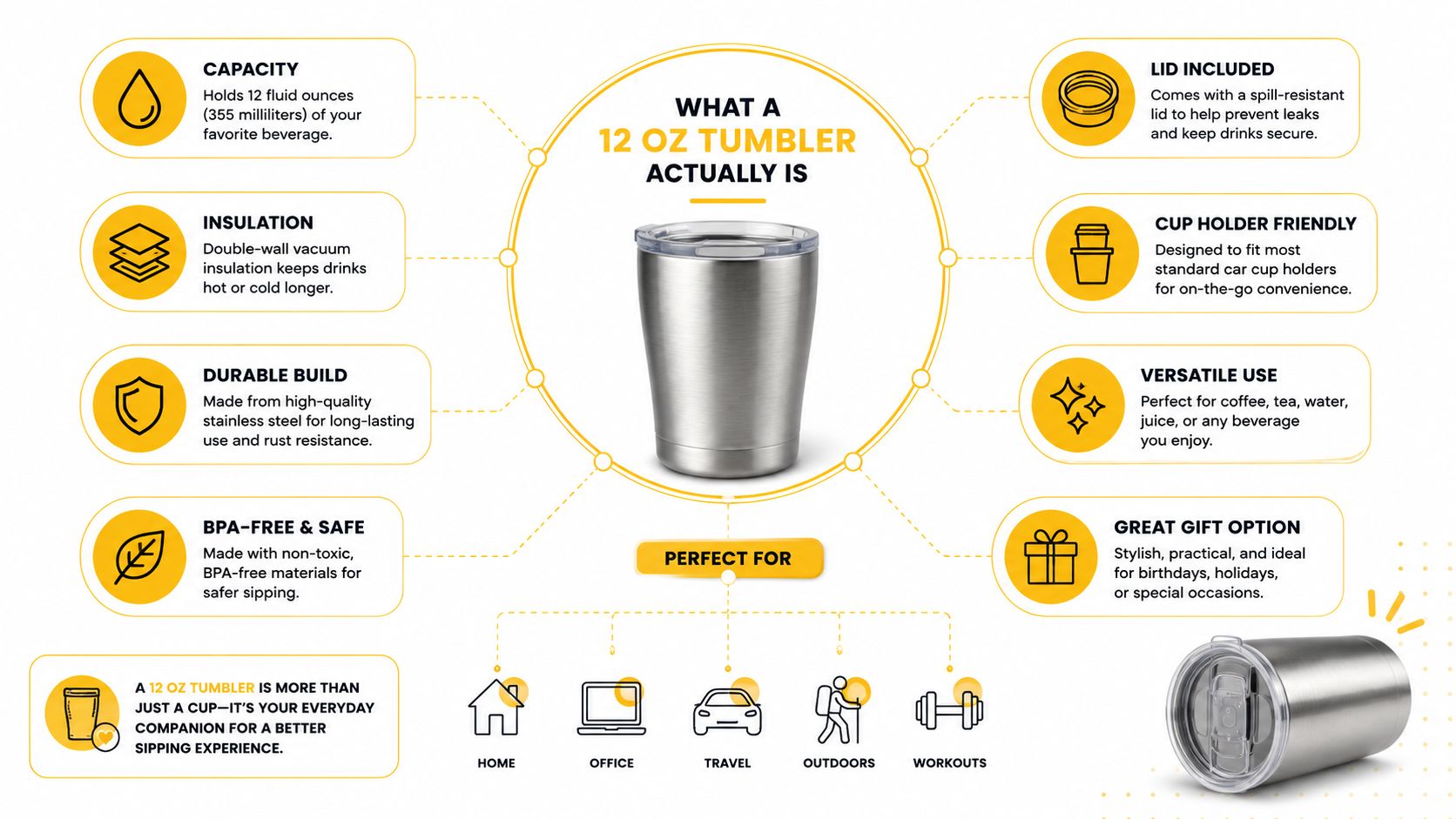
The size also lines up with retail and hospitality habits, which is why it shows up so often in compact beverage service. In plain terms, 12 oz is a practical middle ground, small enough to stay portable, substantial enough to serve coffee or tea without feeling toy-like.
Key Features That Change the Experience
A 12 oz tumbler can feel excellent or annoying based on four things, material, insulation, lid design, and cup-holder fit. The label alone doesn't tell you much. The build does.
Material and insulation set the tone
The main split is between single-wall plastic and double-wall vacuum-insulated stainless steel. SAN plastic models are usually chosen for durability, lower cost, and easy cleaning, while stainless steel versions are built to hold temperature better because the vacuum layer slows heat transfer. In simple terms, less heat escapes through the walls, so the drink stays usable longer.
Independent product specifications for 12 oz stainless models show retention measured in hours, with one example rated for 6 hours cold and 4 hours hot, and another listed at 3 hours hot and 9 hours cold under typical conditions (CamelBak Horizon 12 oz insulated tumbler). That doesn't make every stainless tumbler identical, but it does show what buyers mean when they say “insulated.”
Smaller stainless tumblers usually trade a bit of added weight for better temperature control, while plastic versions stay lighter and simpler.
The lid is where daily frustration usually starts
A splash-resistant slider can be fine for desk use, but a commuter often wants something that seals more confidently. Press-in lids, flip tops, and straw setups each change how the cup behaves in motion. If you're carrying it through a parking lot or sliding it into a bag, the lid matters as much as the cup body.
Cup-holder fit shouldn't be an afterthought
A lot of 12 oz tumblers are shaped to sit well in consoles and tray wells, but not all of them do. A stable base matters because the point of this size is convenience, and a wobbling cup defeats that advantage. Narrower bases help reduce tipping, while tapered walls and stacking-friendly shapes help in cafés, offices, and outdoor kits.
| How 12 Oz Tumbler Materials Compare | |||
|---|---|---|---|
| Build | Heat Retention | Weight | Best For |
| SAN plastic | Low thermal retention | Light | Budget use, quick drinks, easy stacking |
| Double-wall vacuum-insulated stainless steel | Stronger temperature control | Heavier | Commuting, coffee, longer carry time |
The right feature mix depends on the day you're planning for. A 12 oz tumbler can be quiet and reliable, or it can be the thing you spill in the car if the lid and base don't suit your routine.
How 12 Oz Compares to Other Tumbler Sizes
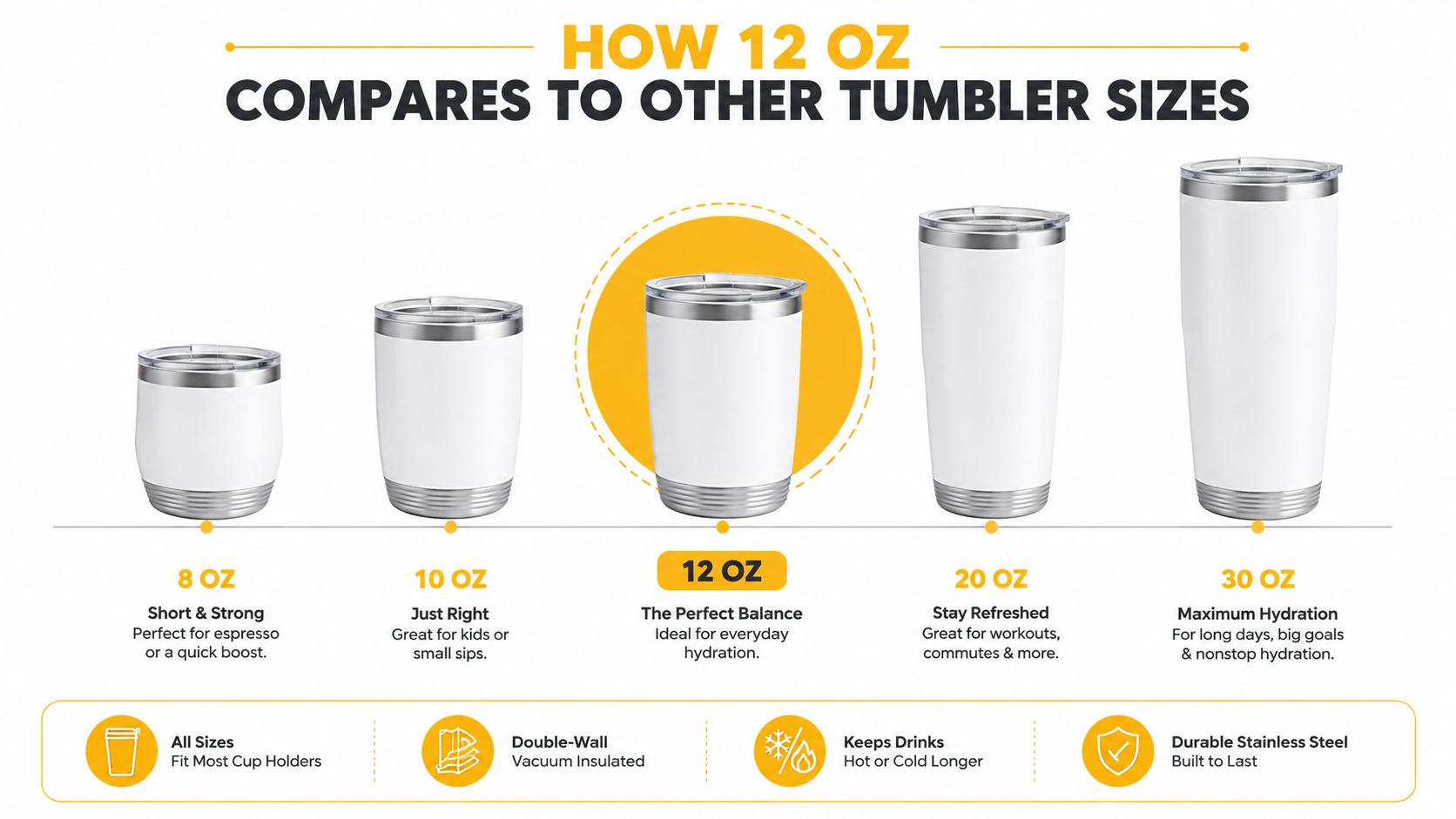
The 12 oz format makes the most sense when you want a focused drink, not a large reserve. It's roughly 1.5 cups, which is enough for a standard coffee or tea serving, but it can feel short if you're used to oversized café drinks or you like to sip slowly through a long morning.
When smaller is smarter
A 12 oz tumbler works well if you want to finish your coffee while it's still at its best. That's especially true for people who prefer concentrated drinks, shorter routines, or a vessel that disappears easily into a bag. It also makes sense if you're trying to reduce waste and avoid carrying more liquid than you'll drink.
When a larger size wins
Stepping up to 16 oz, 20 oz, or 24 oz becomes more attractive when the drink has to last. A long commute, back-to-back meetings, or a day outdoors can make a bigger tumbler the practical choice, especially if you want to avoid reheating or refilling. The larger the vessel, the more it leans toward all-day sipping rather than a quick coffee ritual.
If you want a general sizing reference while comparing everyday drinkware, this guide to modern barware sizing is helpful for understanding how capacity changes the experience across different glass and cup formats.
The trade-off is simple. 12 oz favors drink quality and portability, while larger sizes favor endurance. If you want your coffee to be hot for the longest possible stretch, going bigger often helps. If you want a lighter, neater carry and you usually finish your drink quickly, 12 oz is often the better fit.
Real-World Use Cases for a 12 Oz Tumbler
A 12 oz tumbler shines when the moment is short and specific. It's less about surviving the whole day and more about handling the parts of the day that matter.
The commuter
For a driver with a 30-minute commute, the size feels natural. The drink is small enough to finish before it gets forgotten in the cup holder, and the compact body usually feels easier to manage than a taller travel mug. A lid with a firmer seal makes the most sense here, because the car is where small spills become annoying fast.
The weekend camper
For camping, 12 oz works best when the coffee is part of a morning reset rather than a drawn-out refill situation. It packs light, takes up less room, and keeps the brew focused. If the goal is one solid hot cup before the day gets moving, the smaller size can be an advantage.
The parent on school-run duty
A parent juggling breakfast, backpacks, and the car line often doesn't need a giant tumbler. They need one cup that's easy to lift, easy to close, and easy to finish before the next task starts. For that kind of morning, 12 oz feels less like a luxury and more like a tool.
If you're comparing this with reheating behavior, this how to heat up coffee guide is useful when the size isn't enough to carry you through.
The cases where 12 oz usually misses are just as important. It's a poor match for long road trips, all-day desk sipping, and shared drinks at home. In those situations, the volume is too limited for the pace of use, even if the cup itself is well made.
Cleaning and Care That Keeps It Performing
A well-kept 12 oz tumbler should stay in regular rotation without becoming a chore. The basic habit is simple, rinse it soon after use, then give it a deeper clean when coffee oils or milk residue start to linger. That matters more with smaller tumblers because they often see daily use, not occasional use.
What to do regularly
Start with a warm rinse after each drink. For stainless steel, a gentle wash with mild soap usually does the job, and for plastic builds, the same routine helps prevent clouding and odor buildup. If the lid comes apart, separate the components so liquid doesn't hide in the seals or slider channels.
A weekly deep clean is useful when the tumbler is used for coffee rather than plain water. Baking soda or distilled white vinegar can help with odors, and a straw brush makes sense if the lid uses a narrow drinking path. Keep the approach gentle, especially on coated finishes, because abrasive scrubbers can dull the surface over time.
Care rule: if a lid smells stale, the problem is usually trapped residue, not the whole tumbler being worn out.
What to avoid
Skip bleach unless the manufacturer explicitly allows it, and be cautious with dishwasher use on vacuum-sealed lids if the product instructions don't clearly support it. If a stainless tumbler starts to lose temperature performance or shows signs of seal failure, the insulation layer may be compromised. Plastic tumblers can also show wear through cloudiness or lingering odors that won't fully wash out.
The goal isn't perfection. It's keeping the cup clean enough that the coffee tastes like coffee, not yesterday's leftovers. A few minutes of care can keep a 12 oz tumbler useful for years.
Pairing a 12 Oz Tumbler With Cartograph Coffee
A 12 oz tumbler fits a concentrated coffee routine well, which is one reason it pairs naturally with organic instant coffee. The smaller volume leaves enough room for mixing hot water and stirring without feeling cramped, and it keeps the serving centered around one drink instead of a half-day refill strategy.
That matters most when the cup is meant to move with you. A sealed lid helps if you're shaking, stirring, or carrying the drink between rooms, and the compact size keeps the ritual focused. For people who want a quick coffee moment before work, during camping, or on a busy family morning, the smaller vessel supports the rhythm instead of fighting it.

There's also a style match here. A 12 oz cup feels closer to a deliberate coffee break than a utility jug, which suits people who want a better-tasting, smaller serving rather than a large volume to babysit all morning. If your coffee moment is about quality, not quantity, that size supports the habit nicely.
For readers who like a more visual, lifestyle-driven drinkware reference, the ceramic mug for cycling fans shows how even a simple mug can feel tied to a specific routine and identity. The same idea applies here, the right vessel changes how the drink feels before the first sip.
Key Takeaways and Common Questions
A 12 oz tumbler is best understood as a tradeoff between drink quality, portability, and thermal performance. It's big enough for a normal coffee serving, small enough to stay manageable, and useful when you want a quick ritual instead of an all-day container.
Is 12 oz enough coffee?
It can be, if you like a shorter, more concentrated serving. It's a better fit for people who drink coffee quickly than for anyone who wants one cup to last for hours.
How can I tell if a tumbler is vacuum-insulated?
Look for double-wall stainless steel and product language that clearly describes insulation rather than just stainless construction. If the brand also gives temperature-retention guidance, that's usually a stronger signal than a vague “keeps drinks hot” claim.
Will a 12 oz tumbler fit in a car cup holder?
Often, yes, especially if the base is narrow and the walls taper. Fit still depends on the exact shape, so a stable bottom and compact diameter matter more than the size label alone.
Which lid style works best for commuting?
A firmer, splash-resistant lid is the safest everyday choice for commuting. Flip tops and press-in seals usually give you a better balance of convenience and spill control than an open sip-top setup.
If you're ready to choose coffee gear that matches how you drink, visit Cartograph Coffee and explore a better fit for your daily routine. Their focus on quality, convenience, and on-the-go coffee makes them a smart stop for anyone comparing compact drinkware with real-world use in mind.