Instant coffee is one of those pantry staples that feels like it lasts forever. And in a way, it does. Because it's a dehydrated product, it's incredibly resistant to the kind of spoilage that affects fresh food. The real conversation isn't about safety, but about quality. Over time, that rich aroma and bold flavor will start to fade.

Stock your pantry, desk, or travel kit
Keep quality instant coffee ready when you need it
Cartograph single-serve packets help protect freshness and make it easy to keep organic instant coffee on hand without opening a full jar.
- Organic coffee beans
- Freeze-dried for smooth flavor
- Single-serve packets for home, travel, and iced coffee
From $7.99 · Cartograph Organic Instant Coffee - Medium Roast
A factory-sealed jar can sit on a shelf for 2 to 20 years and still be perfectly fine. But once you crack it open, you'll want to use it within a few months to enjoy it at its best.
Decoding the Shelf Life of Instant Coffee
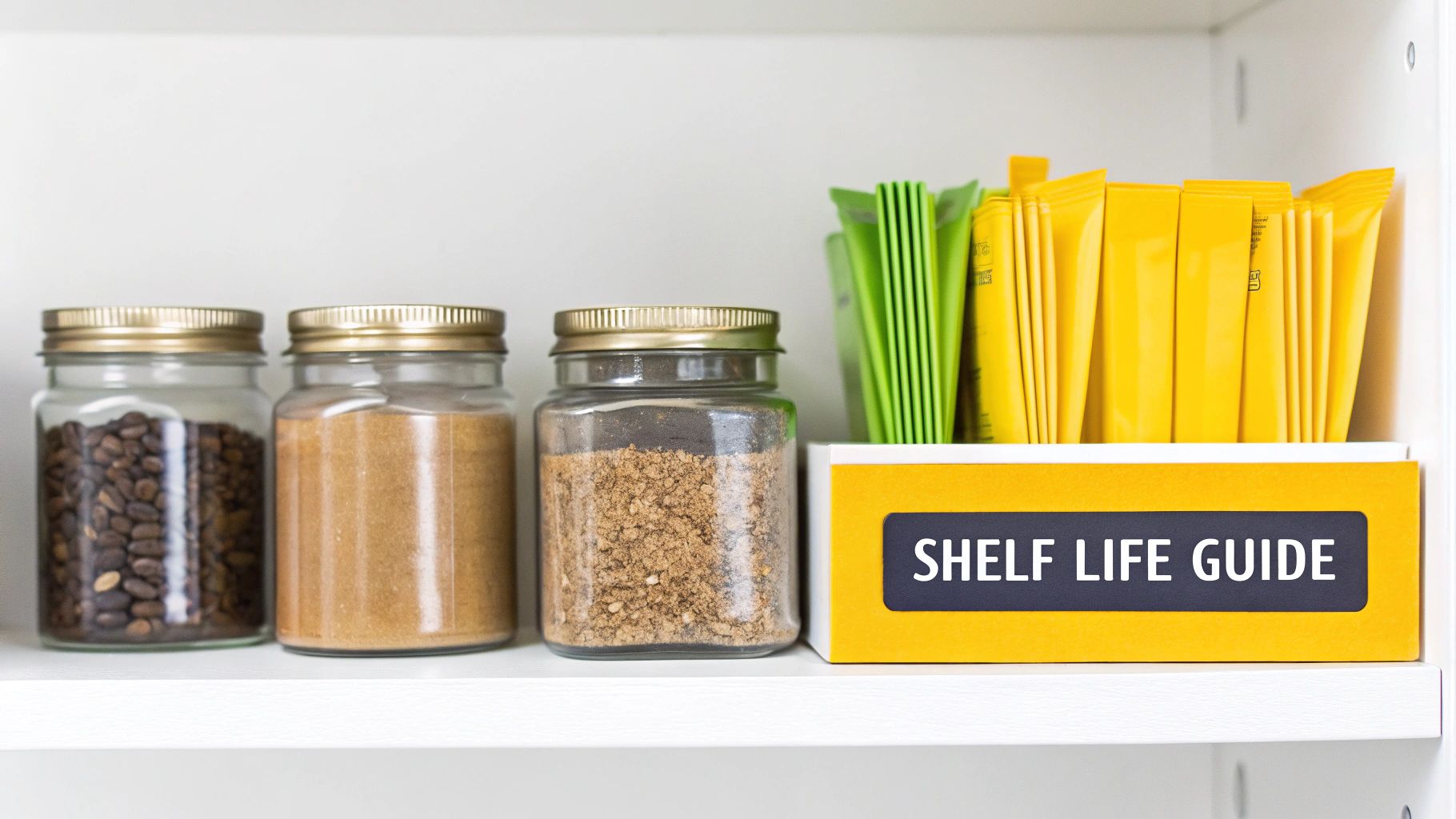
Think of the "shelf life" of instant coffee less as a strict expiration date and more as its window of peak performance. Freshly ground beans start losing their magic within weeks, but instant coffee is engineered for longevity. Its extremely low moisture content creates a desert-like environment where mold and bacteria just can't thrive.
This is why the date stamped on the package is almost always a "best-by" or "best before" date, which is the manufacturer's estimate for when the coffee will taste its best. It's a quality guideline, not a safety warning.
Unopened vs. Opened: A Tale of Two Timelines
How long your coffee stays fresh really depends on one simple factor: whether or not you've broken the seal. Here’s a quick breakdown of what you can expect from different types of packaging.
Instant Coffee Shelf Life At a Glance
To make it simple, here’s a table that summarizes the typical timelines you can expect for your instant coffee.
| Condition | Typical Shelf Life (From 'Best-By' Date) | Key Factors |
|---|---|---|
| Unopened Jar or Tin | 2 to 20 years | Factory seal protects from air and moisture. |
| Opened Jar or Tin | 3 to 6 months | Exposure to oxygen and humidity begins degradation. |
| Single-Serve Packets | 2 to 20 years | Individually sealed for maximum freshness. |
This table shows just how big of a difference that factory seal makes. Keeping air out is the single most important factor for preserving flavor.
Unopened Jars
This is your gold standard for long-term storage. A factory-sealed, unopened jar of instant coffee is protected from the elements. As long as it's stored properly, it can easily last anywhere from 2 to 20 years past the date on the label, sometimes even longer.
Opened Jars
The moment you twist that cap and break the foil seal, the clock starts ticking. Oxygen and ambient humidity immediately get to work, slowly but surely dulling the coffee's flavor and aroma. For the best-tasting cup, it’s a good idea to finish an opened jar within 3 to 6 months.
Single-Serve Packets
Individually sealed sachets offer the best of both worlds: convenience and freshness. Each packet is its own little fortress, protecting the coffee granules from their enemies. This is why their shelf life is right up there with a large, unopened jar. We dive deeper into their advantages in our guide on the convenience of instant coffee packets.
The takeaway is pretty straightforward: While instant coffee is built to last, its flavor isn't immortal. Understanding whether it's opened or unopened and storing it correctly are the keys to enjoying a great cup every single time.
Decoding the Dates on Your Coffee Jar
Ever found yourself staring at the date stamped on a jar of instant coffee, wondering if it's a hard deadline or more of a friendly suggestion? You're not alone. It's a simple thing, but it causes a lot of confusion. Let’s break down the difference between the two most common labels you'll see: “Best-By” and “Expiration” dates.
Getting this right is the key to enjoying your coffee at its best and cutting down on needless waste. Spoiler alert: the date on your instant coffee is almost always about quality, not safety.
Best-By vs. Expiration Dates Explained
Think of a “Best-By” date as the roaster's promise. It's their guarantee that, up to that point, the coffee will deliver the full flavor, aroma, and character they worked so hard to create. It’s not a cliff the coffee falls off, suddenly becoming unsafe.
An “Expiration” date, on the other hand, is a true deadline. You’ll see these on perishable foods where safety is a concern. For a product as stable and dry as instant coffee, a “Best-By” date makes much more sense.
The “Best-By” date on instant coffee is all about peak flavor, not food safety. It tells you when the coffee will be at its most aromatic and delicious, but it's generally safe to use long after this date has passed.
So, what happens when your coffee sails past that printed date? While it won't become dangerous to drink, you'll start to notice a real difference in the cup. The experience just won't be the same.
What Happens After the Best-By Date
Using instant coffee after its “Best-By” date is perfectly safe, but your taste buds will definitely notice something's off. Here’s what to expect as it ages:
- Faded Aroma: That rich, inviting smell that hits you when you open the jar? That's one of the first things to go. It will be replaced by a flatter, more muted scent.
- Weaker Flavor: The complex, vibrant notes that make a great coffee will fade away, leaving behind a taste that can be dull, flat, or even a bit stale.
- Clumping: Over a long period, even the most tightly sealed jar can let in a tiny bit of moisture from the air, causing the granules to clump together.
Ultimately, the shelf life of instant coffee is really about preserving that perfect coffee moment we're all after. Drinking it past its prime won't hurt you, but it will deliver a lackluster, disappointing brew.
It’s kind of like listening to your favorite song on old, worn-out speakers—you can still make out the tune, but all the depth and detail are lost. Sticking to the date ensures you get the full, vibrant experience every single time.
The Four Enemies of Coffee Freshness
Think of your instant coffee as a fortress, built to protect the precious flavor and aroma inside. The moment you open that seal, though, four invisible enemies launch an attack: moisture, oxygen, light, and heat. Understanding how they work is the key to keeping your coffee tasting great for longer.
Each of these elements starts breaking down the delicate compounds that give your coffee its character. Let's take a closer look at the culprits so you know how to defend your brew.
Moisture: The Clumping Culprit
Moisture is, without a doubt, the number one enemy of instant coffee. The whole point of instant coffee is that it’s dehydrated, which makes it hygroscopic—a fancy word meaning it loves to pull water right out of the air.
Even a tiny bit of humidity can make the granules clump together into hard, undissolvable rocks. Beyond just being annoying, if enough moisture gets in, it could create an environment for mold. While that's rare, keeping your coffee bone-dry is your top priority.
In the battle for coffee freshness, moisture is the most destructive enemy. An airtight seal isn't just a suggestion; it's your coffee's primary defense against clumping and spoilage.
Oxygen: The Silent Flavor Thief
Oxygen is the slow, sneaky saboteur of flavor. Through a process called oxidation, oxygen molecules react with the aromatic oils and soluble compounds in your coffee. This chemical reaction gradually dulls the flavor, leaving it tasting flat, stale, and sometimes even a bit sour.
Every time you open the jar, you're letting in more oxygen. It’s the same process that turns a sliced apple brown—oxygen is fundamentally changing its chemical makeup, and the same thing is happening to your coffee.
Light and Heat: The Accelerants
If moisture and oxygen are the enemies, think of light and heat as their getaway drivers. They don’t cause the damage directly, but they speed everything up.
-
Light: Direct sunlight and even strong kitchen lights contain UV rays that can break down the fragile aromatic compounds. This is why you’ll almost never see good coffee sold in a clear container.
-
Heat: Storing your coffee near a heat source is a recipe for disaster. Keep it away from the stove, the toaster, or a sunny countertop. Heat makes the molecules in the coffee vibrate faster, accelerating oxidation and causing those wonderful aromas to simply evaporate away.
These four enemies might seem like a lot to deal with, but they're easily defeated with smart storage. The science behind how instant coffee is made, especially freeze-drying, is designed to create a very stable product. You can learn more about this fascinating process by exploring how instant coffee works.
Ultimately, all it takes is a cool, dark, and dry place to protect your coffee and ensure every cup tastes just as good as the first.
How the Way It's Made Affects How Long It Lasts
Not all instant coffee is the same, and the way it’s made has a huge impact on how long it stays fresh. To turn brewed coffee into those familiar dry granules, producers generally take one of two routes: spray-drying or freeze-drying. Knowing the difference helps explain why some jars of instant seem to last forever while others are a bit more delicate.
A good analogy is preserving food. Spray-drying is a bit like flash-baking—using high heat to get the moisture out fast. Freeze-drying is more like freezing fresh vegetables to lock in all their goodness. Each method gives the coffee granules a different texture and structure, which changes how well they stand up to the elements over time.
The Durability of Spray-Drying
Spray-drying is the workhorse of the instant coffee world. It involves spraying a fine mist of concentrated liquid coffee into a blast of hot air. The water evaporates almost instantly, leaving behind tiny, dried coffee particles.
This process creates small, dense granules. Because they’re so compact, there's less surface area for oxygen to get to, and they’re less likely to suck up moisture from the air. That built-in toughness is why spray-dried coffee often boasts a longer shelf life.
The Flavor-Forward Approach of Freeze-Drying
Freeze-drying is a much gentler, more involved process. The coffee extract is frozen solid and then placed into a vacuum. This special environment allows the ice to turn straight into vapor without ever melting—a neat trick called sublimation.
This careful technique is incredible at preserving the subtle flavors and aromas of the original coffee, which is why it's used for more premium instant coffees. The trade-off? It creates granules that are lighter and more porous. While that porous nature helps them dissolve in a flash, it also means they're more vulnerable to their enemies: moisture and oxygen. To get the full scoop on this fascinating method, check out our guide on what freeze-dried coffee is and why it's special.
The infographic below breaks down the key external factors—moisture, oxygen, light, and heat—that will degrade the quality of any instant coffee sitting in your kitchen.
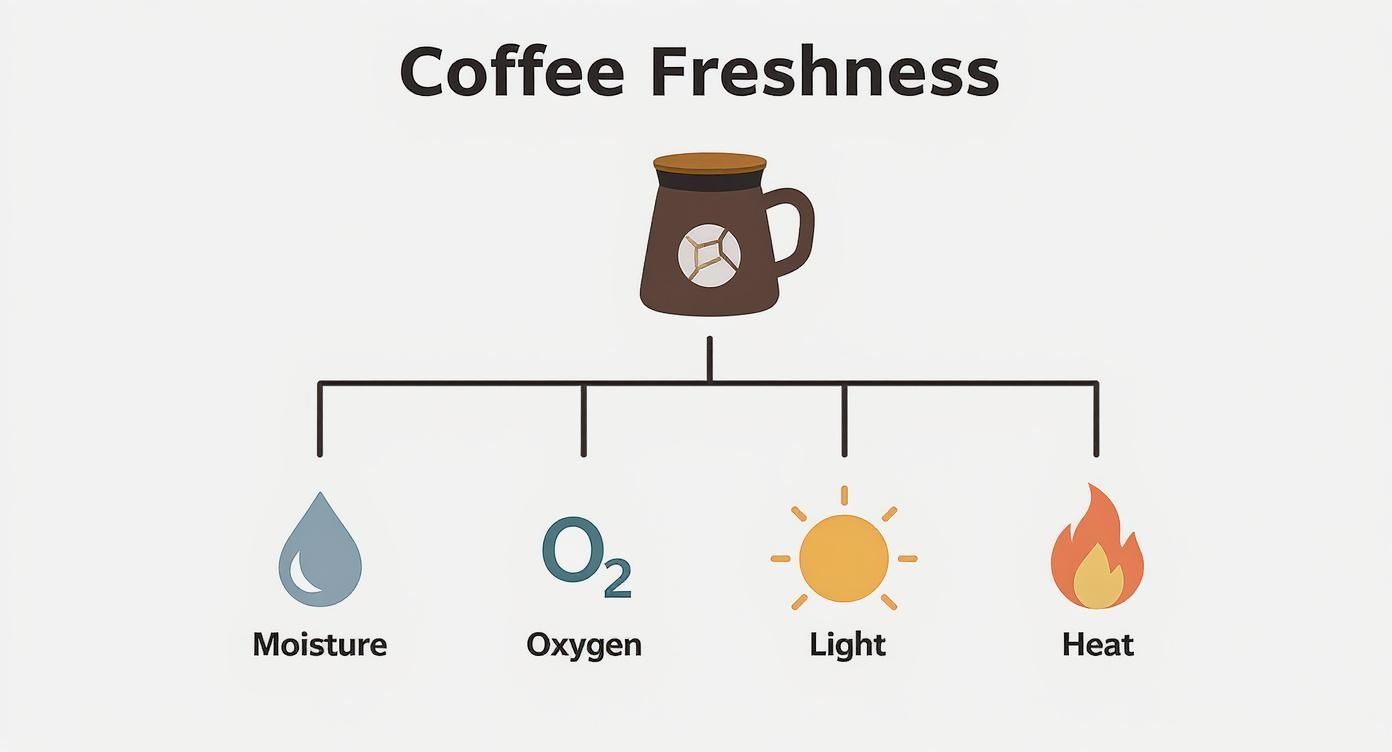
As you can see, a well-sealed container is your coffee's best friend. It’s the first line of defense against the four things that are always trying to steal its flavor.
The Bottom Line: It really comes down to a trade-off. Spray-drying is all about creating a robust, long-lasting, and cost-effective product. Freeze-drying, on the other hand, prioritizes capturing the best possible flavor and aroma, even if it means the final product is a little more fragile.
Because of its resilience, spray-dried coffee dominates the global market and typically has a shelf life of 18 to 24 months. Freeze-dried coffee, while tasting better, generally has a recommended shelf life of 12 to 18 months due to its more delicate structure. You can discover more insights about the global instant coffee market to see how these differences play out on a larger scale.
Expert Tips for Storing Your Instant Coffee
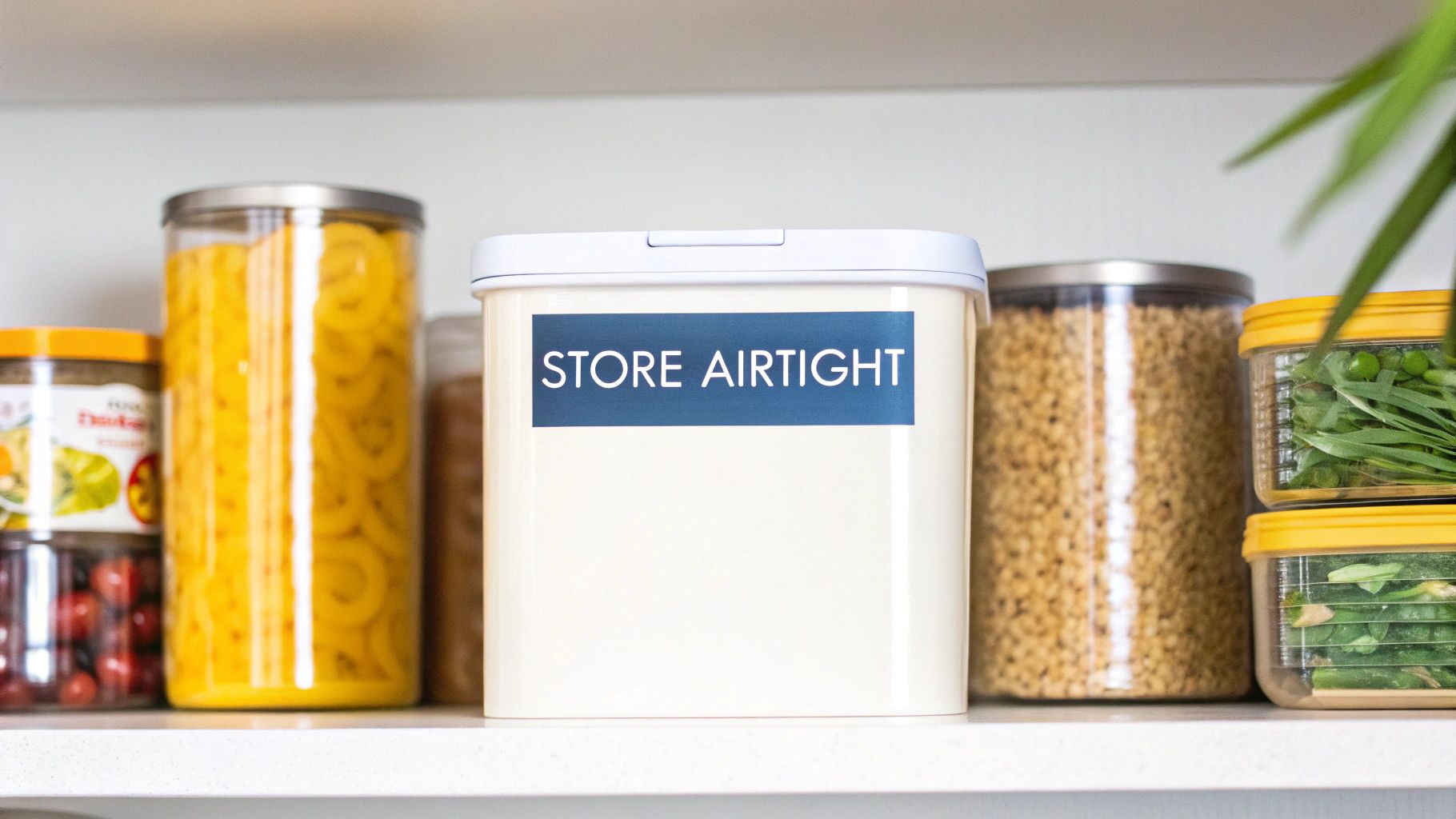
Alright, now that we know what makes instant coffee go stale, let's talk about how to stop it from happening. Protecting that rich flavor and getting the most out of your coffee’s shelf life really boils down to a few smart storage habits. These aren't complicated tricks, just simple, practical steps that make a genuine difference in every cup.
Think of your instant coffee crystals as tiny, self-contained flavor pods, just waiting for hot water to bring them to life. Good storage is all about keeping them in that perfect, dormant state until you're ready. The goal is simple: create a personal coffee vault that’s cool, dark, and completely dry.
Your Three Golden Rules for Storage
Getting coffee storage right is surprisingly easy. You're just trying to outsmart those four enemies—moisture, oxygen, light, and heat. All it takes is the right container and the right spot in your kitchen.
- Get an Airtight Container: As soon as you break that factory seal, the original packaging is no longer your best defense. The smart move is to transfer your coffee into a container with a truly airtight seal. I’m a big fan of ceramic, stainless steel, or even opaque glass jars for this.
- Find a Cool, Dark Place: A pantry or kitchen cupboard is your coffee’s best friend. You want it far away from direct sunlight and any heat sources. That means steering clear of the spot next to the stove, the oven, or even on top of the fridge, which can give off more warmth than you’d think.
- Keep It Dry, Always: I can’t stress this one enough. Always use a completely dry spoon to scoop your coffee. Just one or two drops of water can introduce enough moisture to create clumps and ruin the whole jar.
Following these three steps creates the perfect little micro-environment to keep your instant coffee tasting fresh and vibrant long after you've opened it.
Common Storage Myths Busted
You’ve probably heard some conflicting advice on this, so let's set the record straight. Some of the most popular storage methods out there can actually do more harm than good, speeding up the very staling process you're trying to prevent.
One of the biggest mistakes I see people make is storing instant coffee in the refrigerator or freezer. The constant temperature changes create condensation, which is just a fancy word for moisture—coffee’s ultimate enemy.
Here’s a closer look at why these spots are a bad idea:
- The Refrigerator Problem: Besides the condensation that forms every time you pull the jar out, coffee is like a sponge for aromas. It will absolutely absorb the smells of last night's leftovers. Garlic-infused coffee doesn't sound too appealing, does it?
- The Freezer Fallacy: Freezing seems like a great long-term solution, but it has the same condensation problem as the fridge, often even worse. The extreme cold can also damage the delicate soluble compounds that give coffee its flavor, leaving you with a dull, lifeless brew once it thaws.
Your best bet is always a stable, room-temperature environment. By picking the right container and a sensible spot, you’re actively protecting your coffee. It’s the surest way to guarantee your Cartograph Coffee delivers that rich, satisfying experience you love, from the very first scoop right down to the last.
Signs Your Instant Coffee Is Past Its Prime
So, you’ve stumbled upon a forgotten jar of instant coffee tucked away in the back of your pantry. The "best-by" date is a distant memory. Is it still drinkable? While the impressive **shelf life of instant coffee** means it's almost certainly safe to consume, the quality is a whole different ballgame.Instead of just guessing, let your senses be your guide. A quick look, smell, and taste will tell you everything you need to know about whether it's time to part ways.
The Visual Inspection
First thing's first: just look at it. Pop the lid and check the texture. Fresh instant coffee should be loose and dry, with a consistent, sandy texture.
The biggest red flag is finding hard, solid clumps. This is a dead giveaway that moisture—coffee's arch-nemesis—has found its way into the container. Not only will these chunks refuse to dissolve properly, but they also signal a serious drop in quality.
In very rare cases where moisture has been a long-term problem, you might even spot mold. If you see any fuzzy bits, no matter how small, the entire jar has to go. Don't even think about scooping them out; the contamination runs far deeper than what's visible.
The Smell Test
Next up, give it a good sniff. A decent jar of instant coffee should still greet you with a recognizable, even if subtle, coffee aroma when you open it. If it does, you're probably in the clear.
A flat, musty, or cardboard-like smell is your nose telling you the coffee's best days are long gone. The aromatic compounds have faded, leaving behind a scent that’s more pantry than coffee shop.
If the coffee has taken on the smells of other things in your cupboard, like spices or onions, it's another bad sign. It means the seal wasn't airtight, and the coffee's integrity is compromised.
The Final Taste Test
If it passes the look and smell tests, it's time for the ultimate trial: a taste test. Brew a small cup just as you normally would and take a sip. You aren't expecting a perfect cup, but you want to make sure there are no glaringly "off" flavors.
What are you tasting for?
- A weak, watery character that barely resembles coffee.
- A stale or flat flavor profile, as if all the life has been drained out of it.
- Any sour or unpleasantly bitter notes that definitely weren't there when it was fresh.
If the taste is just plain disappointing, it's time for a new jar. Sure, it probably won't hurt you, but life is far too short to drink a bad cup of coffee.
Common Questions About Storing Instant Coffee
Even after you've got the basics down, a few questions always seem to pop up. Let's dig into some of the most frequent ones I hear from fellow coffee lovers to make sure you're getting the best possible cup, every single time.
Getting these little details right can be the difference between a rich, satisfying brew and a disappointing one.
Can Old Instant Coffee Make You Sick?
This is a big one, but you can relax. It's incredibly unlikely. Because instant coffee is freeze-dried, it has almost no moisture, making it a terrible place for mold or bacteria to grow.
So, unless you see obvious mold because the coffee got soaking wet somehow, the real issue isn't safety—it's flavor. An old, stale batch will just taste flat and lifeless. It won't be enjoyable, but it almost certainly won't make you ill.
Does Freezing Instant Coffee Make It Last Longer?
I strongly recommend against this. It sounds like a good idea in theory, but freezing instant coffee usually does more harm than good. Every time you pull the container out of the freezer, you introduce temperature swings that create condensation.
And what's condensation? It's moisture—the absolute worst enemy of instant coffee. It leads to clumping, ruins the texture, and kills the flavor way faster than just keeping it in a cool, dark pantry.
What Is the Best Container for Open Instant Coffee?
Once you break that factory seal, it's time to move your coffee to a new home. You need an airtight, opaque container to shield it from its enemies: moisture, oxygen, and light.
- What to look for: A good ceramic canister, stainless steel container, or even a dark, UV-blocking glass jar will do the trick perfectly.
- Why they're better: These materials are solid and non-porous. They create a much better barrier against the elements than the original packaging can once it's been opened.
Ready to enjoy a consistently fresh cup without the guesswork? Cartograph Coffee is crafted for exceptional flavor and ultimate convenience. Explore our collection of premium, organic instant coffee at https://cartographcoffee.com and taste the difference that quality makes.