The truth is, instant coffee lasts a very, very long time. An unopened jar can sit in your pantry for anywhere from 2 to 20 years, and even an opened one will be perfectly fine for months, sometimes even a couple of years. While it almost never goes "bad" in a way that would make you sick, its flavor and aroma will definitely fade over time, especially once you've broken the seal.
How Long Does Instant Coffee Really Last?
We’ve all been there—you find a long-lost jar of instant coffee in the back of a cupboard and wonder, "Can I still drink this?" The answer is almost always yes. But the real question is, "Will it still taste any good?"
The incredible longevity of instant coffee isn't some magic trick involving weird preservatives. It’s all down to the science of how it’s made.
Think of those little granules as flavor put into hibernation. The manufacturing process, whether it's freeze-drying or spray-drying, removes virtually all the water. This dehydration is the secret sauce to its stability, stopping the bacteria and mold that spoil fresh foods right in their tracks. A factory-sealed, unopened container is like a fortress, protecting the coffee from the elements that want to ruin its taste.
Unopened vs. Opened: The Big Difference
The moment you crack that seal, the countdown begins. The two main enemies of good coffee flavor—moisture and oxygen—can now sneak in and start their work. Even if you store it perfectly, an opened jar will slowly start to lose its aromatic compounds and the punchy taste you love. It’s not an overnight change, but after a few months, you might notice your morning cup tasting a bit flat and less exciting.
To give you a clearer picture, here’s a quick guide on what to expect.
Instant Coffee Shelf Life At a Glance
This table gives a straightforward summary of how long you can expect your instant coffee to maintain its quality, depending on its state.
| Condition | Typical Shelf Life (Unopened) | Typical Shelf Life (Opened) |
|---|---|---|
| Standard Jar (Glass or Plastic) | 2–20 Years (check 'best-by' date) | 6–24 Months |
| Sealed Pouch or Packet | 2–20 Years | 3–12 Months |
| Flavored or 3-in-1 Mixes | 1–2 Years (due to added ingredients) | 2–6 Months |
Remember, these timelines are all about peak quality, not safety. According to insights from the global instant coffee market, the product is designed for a long shelf life, often retaining its quality for up to 24 months or more under ideal conditions.
The key takeaway is simple: An unopened jar of instant coffee is one of the most durable items in your kitchen. But once you open it, your mission changes from preventing spoilage to preserving flavor. Proper storage is your best friend in keeping that just-opened taste for as long as possible.
The Science Behind Its Incredible Stability
Ever wonder how a jar of instant coffee can sit in your pantry for ages and still be perfectly fine? It’s not magic or a bunch of weird preservatives. The secret is remarkably simple and rooted in age-old food science: just take out the water.
Think about making beef jerky or drying fruit. The whole point is to remove moisture. Why? Because water is the lifeblood for things we don't want in our food, like bacteria and mold. Without water, these tiny organisms can't multiply, effectively hitting the pause button on spoilage. Instant coffee's impressive shelf life comes from this exact same principle.
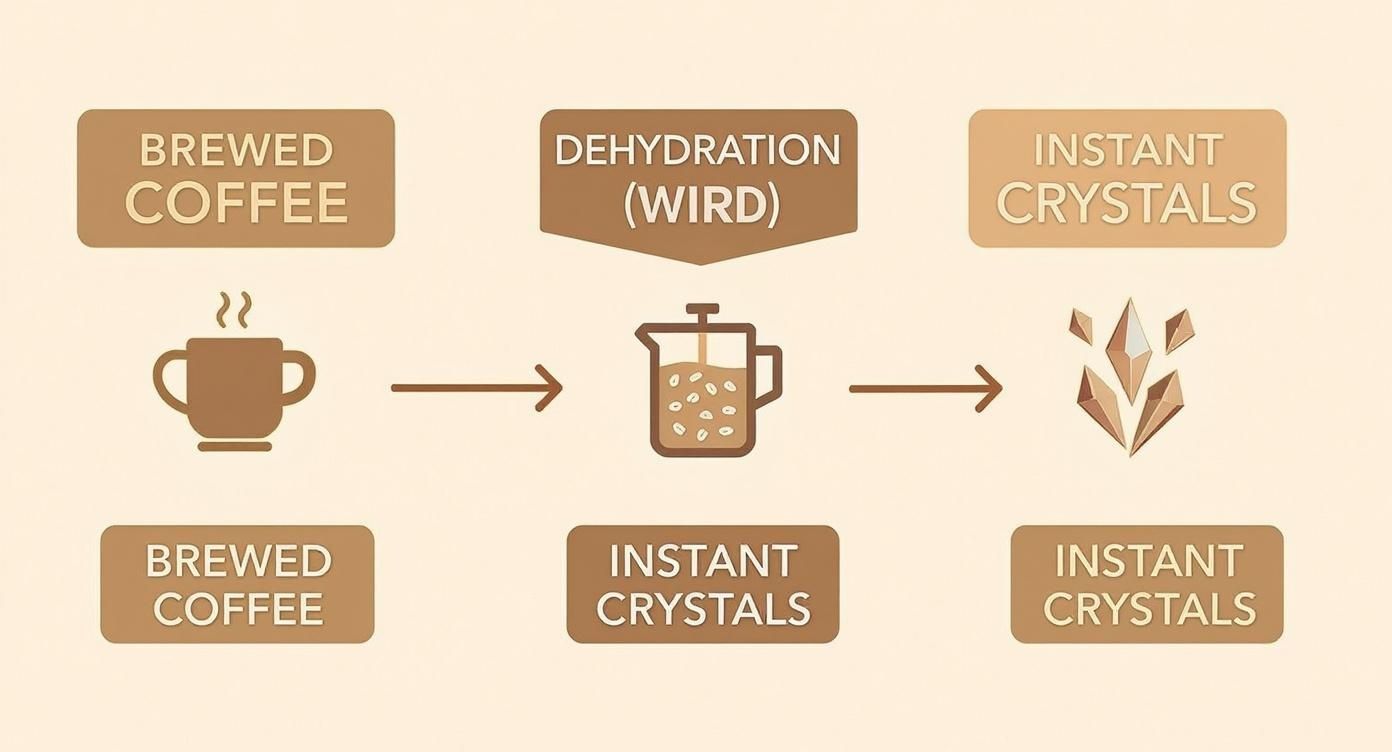
The entire journey from liquid brew to the crystals in your jar is built around this idea. It starts with real, high-quality brewed coffee. Then, through a rapid dehydration process, all the water is pulled out, locking in the rich flavor and aroma compounds. This transformation is what gives instant coffee its incredible stability.
Halting Spoilage Before It Starts
By zapping nearly all the moisture, manufacturers slash what scientists call water activity. This is just a fancy term for the amount of "free" water available for microbes to use. Instant coffee has an extremely low water activity level, turning it into a barren desert where spoilage-causing germs just can't survive.
Dehydration also puts the brakes on another enemy of freshness: oxidation. This is the same chemical reaction that makes a sliced apple turn brown. When the delicate aromatic oils in coffee meet oxygen, they start to break down, resulting in a flat, stale flavor. Removing the water slows this process to a crawl, especially when the coffee is sealed in an airtight container.
Two Paths to Preservation
So how do they get the water out? There are two main roads a coffee bean can take to become an instant crystal, each preserving the coffee's character in its own way.
- Spray-Drying: This is the fast and furious method. A fine mist of coffee concentrate is sprayed into a vortex of hot air. The water evaporates in a flash, leaving behind the fine, powdery granules we're all familiar with.
- Freeze-Drying: Often seen as the more premium route, this process is much more delicate. The coffee concentrate is frozen solid, then placed into a powerful vacuum. Here, the ice crystals turn directly into vapor without ever melting—a cool process called sublimation.
Both methods are incredibly effective. They create tiny granules, averaging around 300 micrometers with a very low density of 0.22 g/cm³, which helps them dissolve quickly and stay stable. This carefully controlled dehydration is the key to creating a product that can last for months or even years.
The Bottom Line: Instant coffee lasts so long for one simple reason: the manufacturing process is expertly designed to remove water, which is the fuel for spoilage and flavor loss.
Understanding this science really drives home why storing it properly is so critical once you've cracked the seal. To get the full story on this amazing process, take a look at our complete guide on how instant coffee is made. By keeping moisture and air out, you're just helping your coffee maintain that perfectly dry, stable state the roaster created, so every cup tastes as good as the first.
The Four Enemies of Fresh Instant Coffee
If you want to get the most out of your instant coffee, you first have to know what you're up against. Protecting that rich, deep flavor isn't about some complicated secret; it's simply about defending your coffee from four everyday elements that are constantly trying to rob it of its quality.
Think of it this way: your coffee granules are a treasure, and these four culprits are the thieves trying to crack the safe. Once you know their tactics, beating them is easy. Let's meet the four enemies of freshness and learn how to build an impenetrable defense.
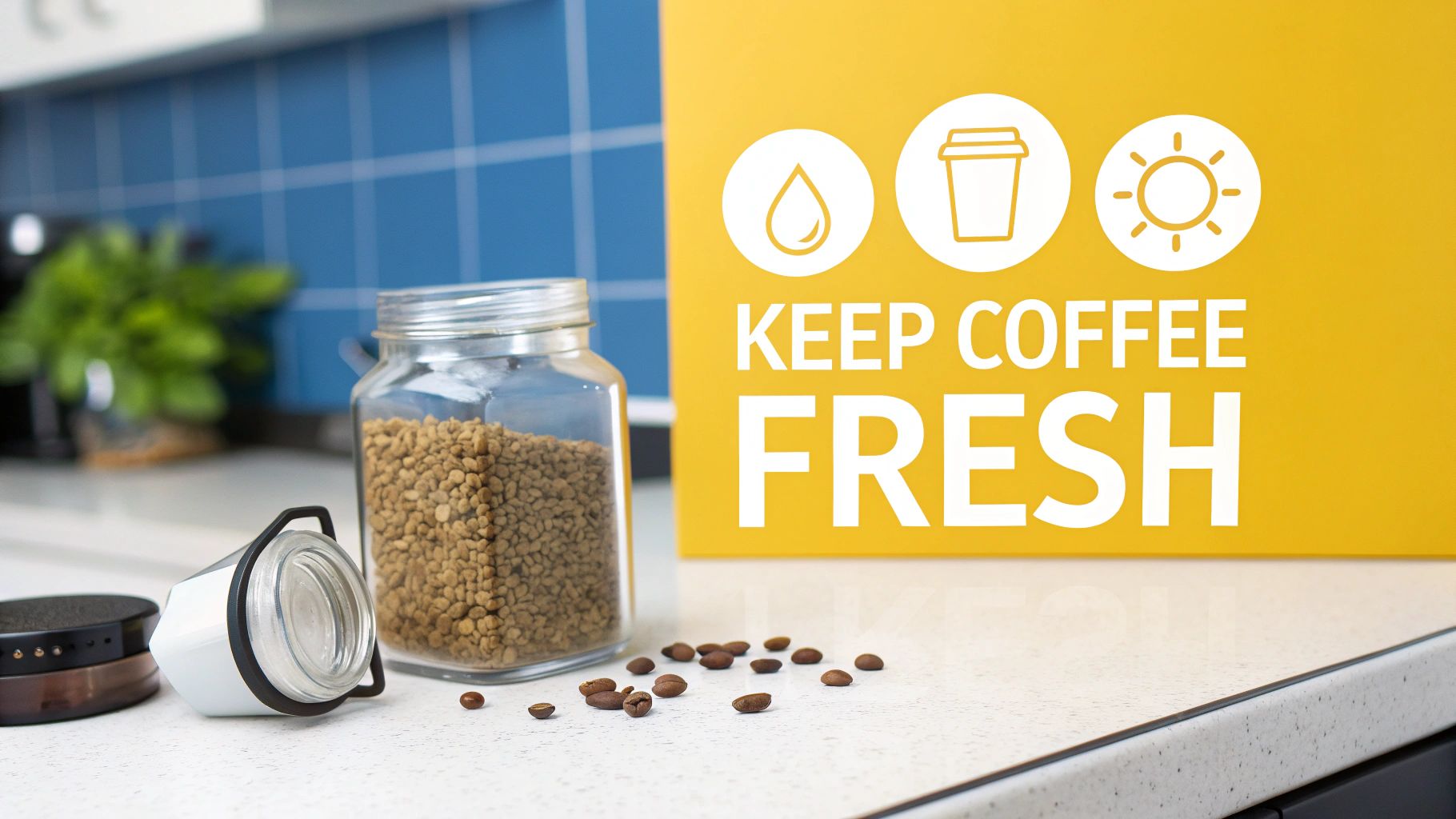
Enemy #1: Moisture — The Clump Creator
Moisture is, without a doubt, public enemy number one for instant coffee. The very process that gives it such a long shelf life—dehydration—is also its biggest weakness.
The scientific term for this is hygroscopic, which is just a fancy way of saying that dry coffee granules act like tiny, thirsty sponges. They will literally pull moisture right out of the air. Even a little humidity from a steamy kettle or a single drop of water from a wet spoon can cause the granules to fuse into hard, useless clumps.
But it’s not just about texture. As soon as moisture gets in, it restarts the chemical reactions that break down flavor. Your once-aromatic coffee quickly turns into a bland, disappointing powder. Keeping it bone-dry is the single most important rule.
Enemy #2: Oxygen — The Flavor Thief
Oxygen is the invisible enemy that makes things go stale. It triggers a process called oxidation, the same chemical reaction that turns a sliced apple brown. When the delicate aromatic compounds in your coffee meet oxygen, they begin to degrade.
This reaction slowly but surely strips your coffee of its complex notes and vibrant aroma. Over time, a coffee that was once rich and bold will start to taste flat, papery, or just plain lifeless. An airtight container is your best weapon in this fight, creating a crucial barrier that locks flavor in and keeps oxygen out.
Enemy #3: Heat — The Accelerator
If oxygen is the thief, heat is its getaway driver. Heat acts as a catalyst, speeding up all the damaging chemical reactions, especially oxidation. Storing your instant coffee near a heat source is one of the fastest ways to destroy its quality.
Watch out for these common kitchen culprits:
- Next to the stove or oven: The constant temperature swings from cooking create a hostile environment.
- On top of the refrigerator: Many fridges release a surprising amount of warmth from their coils.
- In direct sunlight on the counter: A sunny spot can bake the contents of a jar over the course of a day.
A cool, dark pantry or cupboard is the perfect hideout to keep the damaging effects of heat at bay.
Enemy #4: Light — The Degrader
Last but not least, there’s light. Direct sunlight, in particular, is a major problem because its UV rays break down the complex molecules responsible for coffee's signature flavor and aroma. This process, known as photodegradation, makes coffee taste stale.
This is exactly why you'll often see high-quality coffee packaged in opaque containers. If your instant coffee comes in a clear glass jar, it’s essential to store it in a dark cupboard to shield it from light. The meticulous process of creating a premium instant coffee is all about preserving flavor, and you can learn more about that in our guide on what is freeze-dried coffee. Proper storage makes sure all that craftsmanship doesn't go to waste.
What "Best By" and "Expiration" Dates Really Mean
That date stamped on your jar of instant coffee can feel like a final verdict. But is it a hard deadline or more of a friendly suggestion? When it comes to a product as stable as instant coffee, learning to speak the language of food dating is the key to avoiding perfectly good waste.
Here's the most important thing to know: the date you see is almost always a "Best By" or "Best Before" date. It is not an "Expiration" date. This is a critical difference. Expiration dates are about safety, signaling when a product might become unsafe to eat. A "Best By" date, however, is all about quality.
Think of it as the manufacturer's guarantee of peak performance. They're telling you, "We're confident this coffee will have its richest flavor and most vibrant aroma up until this point." It's a quality window, not a safety cliff.
The Peak Performance Window
Imagine a brand-new car fresh off the lot. For the first few years, it runs flawlessly, has that new-car smell, and delivers a perfect ride. Over time, it might not accelerate as fast or the engine might hum a little louder, but it’s still a completely safe and functional vehicle.
The "Best By" date on your instant coffee is the same idea. Before that date, you’re getting the full, intended experience—the richest, most complex flavors and aromas. After that date passes, some of those subtle notes might start to fade. The coffee is still perfectly safe to drink, it just may have lost a bit of its original magic.
Key Insight: For a shelf-stable product like instant coffee, the printed date is a guide to optimal quality, not a safety warning. When stored correctly, it can be safely enjoyed long after this date has passed.
This distinction is a cornerstone of the global coffee trade. The incredible shelf life of instant coffee, often lasting 24 months or more, is a major reason for its worldwide success. The entire industry, recently valued at over USD 80.20 billion, depends on this stability to ship products across the globe and have them sit on retail shelves without losing quality. You can dive deeper into the data of the growing instant coffee market to see just how much this longevity drives its value.
Why Safety Is Rarely a Concern
So, what makes instant coffee so tough? It all comes down to its incredibly low moisture content. As we've discussed, the freeze-drying process removes nearly all the water that nasty things like bacteria and mold need to thrive.
Without water, these microorganisms simply can't grow. That's why a jar of instant coffee can sit in your pantry for years without becoming dangerous. The risk isn't spoilage; it's just the slow, gradual loss of its best sensory qualities. With this in mind, you can confidently judge your coffee by how it smells and tastes, not just by the date on the label—letting you enjoy every last granule and cut down on food waste.
The Right Way to Store Instant Coffee
Knowing what can ruin your coffee is one thing, but actually protecting it is another. Let’s get practical. The single best way to maximize the shelf life of instant coffee is proper storage. It's what ensures the last spoonful from the jar is just as rich and aromatic as the first. This doesn't require a complicated setup, just a bit of intention.
Think of your instant coffee granules as tiny, dormant flavor crystals. Your goal is to keep them that way—perfectly preserved until you’re ready to wake them up with hot water. This means following a few simple but crucial rules for containers, location, and handling. Nail this, and you’ll keep your coffee tasting fantastic for months, if not years.
Choosing Your Container and Location
The journey to long-lasting flavor starts with the right home for your coffee. The container you choose is your first and most important line of defense against both moisture and oxygen.
-
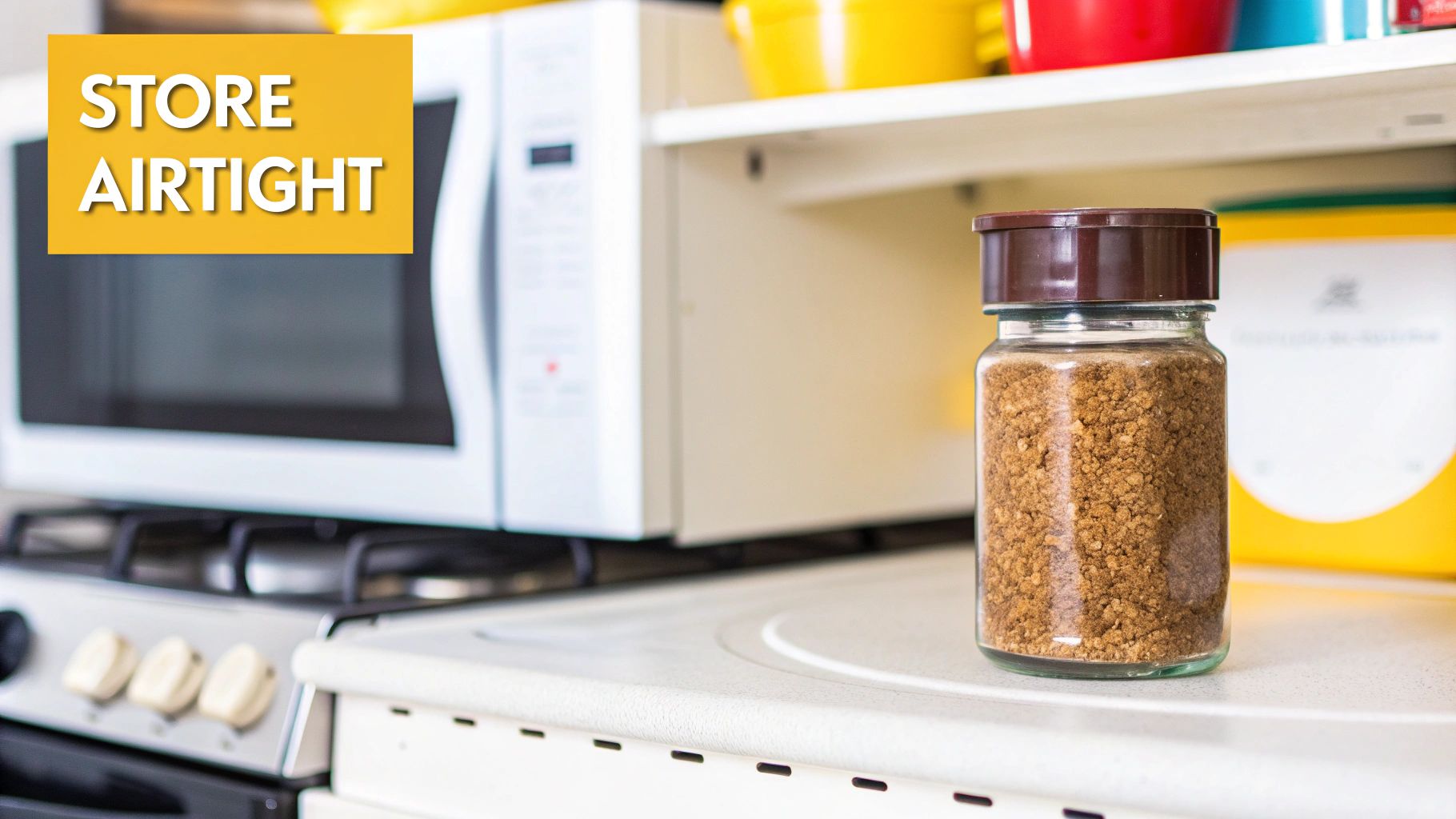
Airtight is a Must: This is non-negotiable. Look for a container with a tight-fitting lid, ideally one with a silicone or rubber seal. This creates a powerful barrier that locks flavor in and keeps stale air out. Mason jars, canisters with clamping lids, or even the original packaging (if it has a solid seal) are all great options.
-
Opaque is Better: Light is a known flavor-killer. While a clear glass jar might look nice sitting on your counter, it leaves your coffee completely exposed. An opaque container made of ceramic, stainless steel, or dark-colored glass is the ideal choice. If you do use a clear jar, just be sure to tuck it away in a dark cabinet.
Once you’ve got the right container, picking the location is simple. Just remember the mantra: cool, dark, and dry. A kitchen pantry or a cupboard away from the stove or oven is perfect. One place to avoid is on top of the refrigerator—the heat coils release more warmth than you'd think.
Busting the Freezer Myth
We hear this question all the time: should you store instant coffee in the fridge or freezer? The answer is a hard no. While freezing can be a viable strategy for whole coffee beans (under very specific, controlled conditions), it’s a recipe for disaster with instant coffee.
Every time you pull the container out of the freezing cold and into your warm kitchen, condensation forms. That moisture is instant coffee's worst enemy. It will cause the granules to clump together and will absolutely wreck the flavor. You'll do far more harm than good.
Stick to a cool, dark cupboard. Your instant coffee is stable enough that it doesn’t need extreme measures like refrigeration or freezing, which only invite moisture damage.
Unopened vs. Opened Storage Strategy
How you store your coffee changes slightly once that factory seal is broken.
-
Unopened Containers: Just leave them be. The manufacturer's seal is the best protection your coffee will ever have. Store the unopened jar or pouch in a cool, dark pantry, and it will be waiting for you in perfect condition.
-
Opened Containers: This is when your airtight, opaque container truly becomes the hero. After every use, make sure that lid is sealed on tight. And always—always—use a completely dry spoon to scoop out the granules. Even a single drop of water is enough to introduce moisture and start the clumping process. For ultimate freshness and convenience, single-serving instant coffee packets are a fantastic alternative, since each serving stays perfectly sealed until you’re ready to use it.
To keep things straightforward, we've put together a quick cheat sheet for keeping your coffee at its best.
Instant Coffee Storage Do's and Don'ts
This quick-reference guide covers the best and worst practices for storing your instant coffee to maximize its shelf life and flavor.
| Do | Don't |
|---|---|
| Do use an airtight, opaque container. | Don't store it in the refrigerator or freezer. |
| Do store it in a cool, dark place like a pantry. | Don't place it near a heat source like the stove or oven. |
| Do use a completely dry spoon every time. | Don't leave the container open or loosely sealed. |
| Do seal the container tightly after each use. | Don't store it in direct sunlight. |
By following these simple guidelines, you’re not just storing coffee—you’re actively preserving the delicate compounds that make it so delicious.
How to Tell If Instant Coffee Has Gone Bad
Instant coffee is famous for its staying power, but it's not indestructible. While it almost never becomes unsafe to drink, poor storage can definitely take a toll on its flavor. The key is knowing what to look for, so you can make sure every cup you brew is one you'll actually enjoy.
Forget the "best by" date for a moment. Your own senses—sight, smell, and taste—are the most reliable tools for the job.

Visual and Textural Clues
The biggest enemy of instant coffee is moisture, and its effects are usually pretty easy to spot. A quick look inside the jar will tell you almost everything you need to know.
- Hard Clumping: Have your coffee granules formed into solid, rock-hard chunks? That's a tell-tale sign that moisture has gotten in. Small clumps you can easily break apart with a spoon are normal, but large, dense bricks mean it's seen better days.
- Solid Mass: If the entire container has turned into one giant, solid block, it's a lost cause. Not only is it nearly impossible to scoop, but the flavor will be a shadow of its former self.
- Signs of Mold: This is incredibly rare, thanks to coffee's dry nature. But if you see any fuzzy spots of white, green, or black, don't hesitate. Throw the entire container out immediately.
These clues all point to a breach in the coffee's defenses, undermining the long shelf life instant coffee is prized for.
Changes in Aroma and Scent
A huge part of the coffee experience is that rich, wonderful smell. When that aroma fades or changes, it's a clear signal that the quality has dropped off.
The next time you open the jar, give it a good sniff. Fresh instant coffee has a pleasant, unmistakable coffee scent. If it's gone stale, you'll likely smell something else entirely.
- Musty or Moldy: A dusty, damp, or basement-like odor is a major red flag.
- Sour or Off: Any sharp or chemical-like smells just don't belong.
- Completely Flat: If there's no aroma at all—just a void where that coffee scent should be—it means all the volatile flavor compounds have evaporated.
The Ultimate Test: Even if it looks and smells okay, the proof is in the cup. Go ahead and brew a small amount. If it tastes bland, papery, or just plain bad, you have your answer. While it’s highly unlikely to make you sick, why drink a disappointing cup of coffee? A bad taste is the final confirmation that it's time for a fresh jar.
Answering Your Top Questions About Instant Coffee
Let's dive into some of the questions we hear all the time. When it comes to getting the most out of your instant coffee, a little know-how goes a long way.
Can You Get Sick from Old Instant Coffee?
This is a big one, but the short answer is: almost certainly not. You can relax. Instant coffee is a dehydrated product, meaning it has virtually no moisture. Without moisture, nasty things like bacteria and mold can't get a foothold and grow.
So, the real issue isn't safety—it's quality. A jar of instant coffee that's well past its prime might taste flat, woody, or just plain disappointing, but it won’t harm you. The only time you should ever worry is if you see visible mold, which would only happen if a lot of water got into the container. If that’s the case, don't hesitate to toss it.
Should You Store Instant Coffee in the Freezer?
It feels like a smart move, but putting instant coffee in the freezer is actually one of the most common mistakes. Freezers are surprisingly humid places. Every time you pull the container out into the warmer air of your kitchen, condensation immediately forms on the cold granules.
It's just like taking a cold can of soda outside on a summer day—it instantly gets covered in little water droplets. The same exact thing happens to your coffee granules, introducing moisture, which is their number one enemy.
This moisture leads directly to clumping and starts to break down the flavor in a hurry. Your best bet is always a cool, dark, and dry spot like a pantry or cupboard. It’s the simplest and most effective way to protect the shelf life of instant coffee.
Does Flavored or Decaf Instant Coffee Expire Faster?
Good question! Flavored and 3-in-1 varieties often do have a shorter lifespan. While pure instant coffee is incredibly durable, these other types have extra ingredients like oils, sugar, and powdered milk or creamer. These additives just aren't as stable as the coffee itself.
The fats in the creamer can go rancid, and the delicate flavorings can fade much more quickly. For these products, you'll want to pay closer attention to the "Best By" date, as it’s a much more reliable guide for peak quality. Decaf, on the other hand, usually lasts just as long as regular instant coffee since the decaffeination process doesn’t really affect its long-term stability.
What Is the Best Way to Fix Clumped Instant Coffee?
Opening a jar to find a solid brick of coffee is a real bummer. Clumping is the tell-tale sign that moisture has gotten in. You can often rescue it, but it’s good to know that the flavor has likely already taken a hit.
Here are a few things you can try:
- Break It Up: Take a clean, dry spoon or fork and gently chip away at the clumps. If it’s really solid, you might need to apply a bit of pressure.
- Sift It: To get a finer powder, you can run the broken-up pieces through a small mesh sieve. This will separate the salvageable granules from the stubborn chunks.
- Manage Your Expectations: Just remember, the coffee won't taste as fresh or vibrant as it once did. The moisture has already started to dull its aroma and flavor.
The best fix is prevention! Always use a bone-dry spoon, and make sure you seal that lid on tight every single time.
Ready for an instant coffee that’s designed to stay fresh and deliver incredible flavor in every cup? Cartograph Coffee offers premium, organic instant coffee for those who want convenience without compromise. Explore our collection and taste the difference.