When you decide to buy from pesticide-free coffee brands, you're choosing coffee grown the way nature intended—without synthetic chemicals. The easiest way to verify this is by looking for a USDA Organic certification.

Organic coffee made simple
Choose a cleaner instant coffee option
Cartograph keeps the ingredient list simple: organic coffee only. No synthetic flavors, no sugar, and no additives — just convenient freeze-dried coffee packets for home, work, and travel.
- Organic coffee beans
- Freeze-dried for smooth flavor
- Single-serve packets for home, travel, and iced coffee
From $7.99 · Cartograph Organic Instant Coffee - Medium Roast
This choice is about more than just a label. It's a vote for your own health, as you avoid potential chemical residues, and a vote for the environment by supporting farming practices that lead to healthier soil and cleaner water. Picking these brands means you're sipping a cleaner, more sustainable cup of coffee.
Why Choose Pesticide Free Coffee
So, what does "pesticide-free" really mean when you see it on a coffee bag? At its core, it means the coffee beans were grown without the help of synthetic pesticides, herbicides, or fertilizers. The most reliable badge of honor for this practice is the USDA Organic seal, which comes with a strict rulebook against using these very chemicals.
For most people, the journey to pesticide-free coffee starts with personal health. When you pick beans grown organically, you’re sidestepping the risk of exposure to synthetic chemical residues that can linger on conventionally grown coffee. It’s a simple switch that aligns with the growing desire for cleaner, more natural foods. You can dive deeper into the specific organic coffee health benefits in our dedicated article.
Health and Environmental Advantages
The health upsides of drinking cleaner coffee are a big reason for its surge in popularity. Because it’s grown without synthetic pesticides and is non-GMO, organic coffee is packed with antioxidants, which can help lower the risk of certain chronic diseases. This isn't just a niche interest; the organic coffee market is growing, as highlighted in a detailed report from Grandview Research.
But the story doesn't end with personal wellness. The environmental benefits are huge. Traditional coffee farming often involves chemical runoff that contaminates local water supplies and strips the soil of its nutrients over time. Organic farming, on the other hand, is a whole different ballgame—it helps maintain biodiversity, protects delicate ecosystems, and keeps the land fertile for generations to come.
This move toward pesticide-free farming does more than just protect the environment. It also safeguards the well-being of the farmers and their communities—the very people who live and work where our coffee is grown.
In the end, choosing pesticide-free coffee brands delivers a win-win. You get to savor a pure, high-quality coffee, and at the same time, you're backing farming methods that are kinder to the planet and its people. With this in mind, you're ready to start exploring and comparing the best brands out there.
Decoding Certifications for Clean Coffee
When you start looking for pesticide-free coffee, you’ll quickly find yourself staring at a bunch of different logos and seals on the bag. These aren't just for show; they're your guide to understanding how that coffee got from the farm to your cup and what the brand truly stands for. Learning to read these labels is the key to picking a coffee that’s not just clean, but also aligns with what matters most to you.
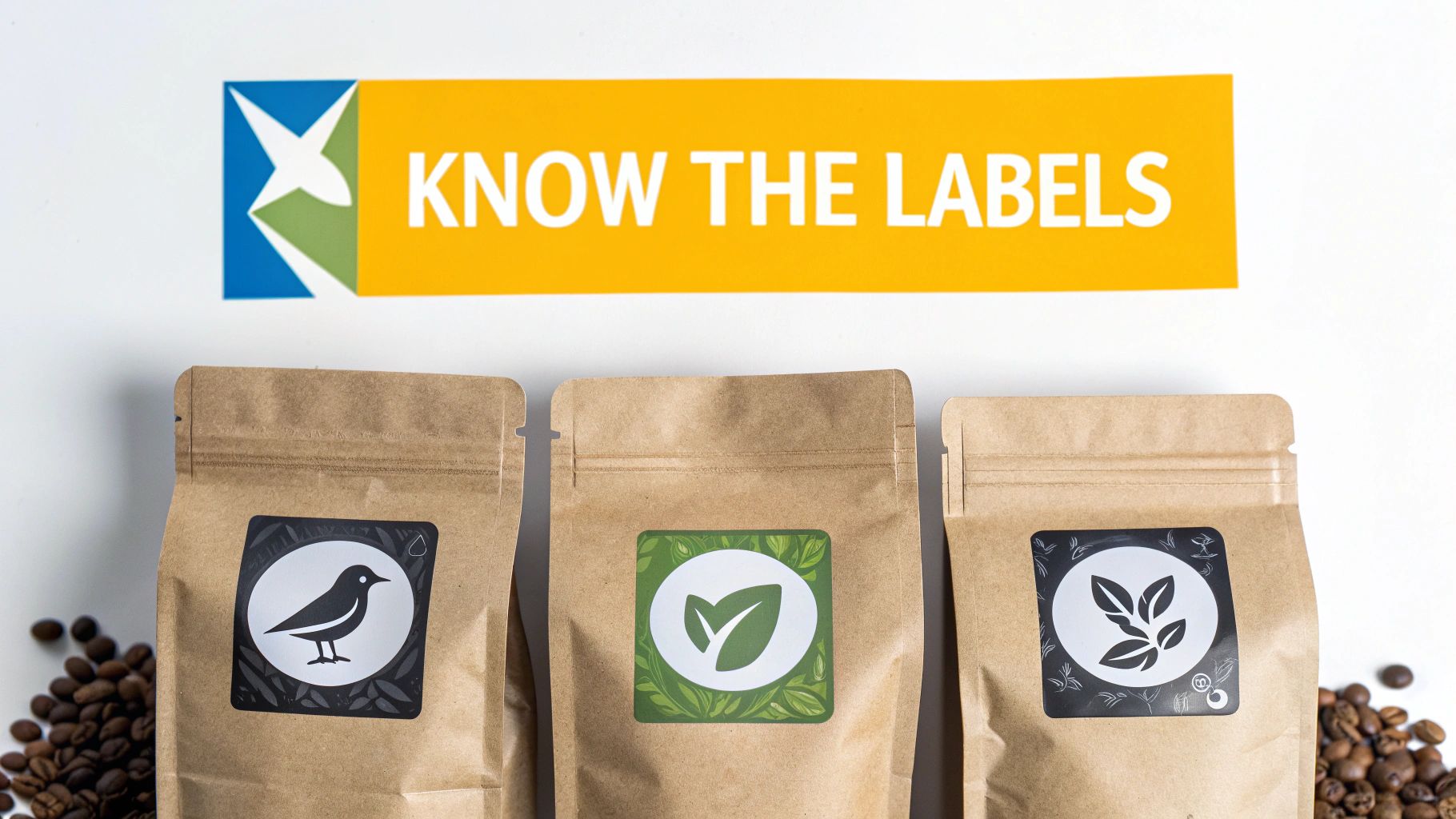
Think of each certification as telling a different part of the coffee's story—from how it was grown to how the farmers behind it were treated. Let’s break down what the most important ones really mean.
USDA Organic: The Foundation of Pesticide-Free Coffee
The one you’ll see most often is the USDA Organic seal. This is your most direct guarantee that the coffee was grown without synthetic pesticides, herbicides, or fertilizers. For a farm to get this seal, it has to pass some tough inspections and follow strict rules about everything from soil health to banning GMOs.
Bottom line: if your number one priority is avoiding chemical residues, the USDA Organic seal is non-negotiable. It's the starting point for what we consider "clean" coffee.
Fair Trade: Ethical Sourcing and Farmer Equity
While "organic" tells you about the what, Fair Trade Certified tells you about the who. This label tackles the human element of the coffee business. It's all about making sure farmers get paid a fair price for their beans, which allows them to support their families and reinvest in their farms and communities. It also sets standards for safe working conditions.
A coffee can be Fair Trade without being organic, or organic without being Fair Trade. The best brands, however, often have both, showing a commitment to both the planet and its people. If you want to dive deeper, we have a whole guide explaining what Fair Trade coffee is and its impact.
By choosing Fair Trade coffee, you are directly supporting a more equitable and stable supply chain. This helps small-scale farmers build resilient businesses and escape the cycles of poverty often associated with conventional coffee production.
Smithsonian Bird Friendly: The Gold Standard for Environmentalism
If protecting the environment is at the top of your list, look for the Smithsonian Bird Friendly certification. This is the toughest one to get, and for good reason. To qualify, coffee must be both 100% organic and 100% shade-grown. Shade-grown coffee is exactly what it sounds like—it’s grown under a natural canopy of trees, which creates a critical habitat for migratory birds and countless other animals.
This method does more than just protect wildlife. It preserves native forests, boosts biodiversity, and naturally enriches the soil, which can lead to a richer, more complex flavor in your cup. When you see this seal, you know you're supporting a coffee grown in a way that truly gives back to the earth.
How We Chose the Best
Picking the best pesticide-free coffee isn't just about finding a "USDA Organic" sticker on a bag. To give you recommendations you can actually trust, we developed a clear set of criteria to cut through the noise. Think of it as our blueprint for identifying brands that are truly committed to quality, from the farm to your cup.
We weren’t just looking at labels. We dug into what really makes a coffee brand exceptional.
Certification and Sourcing Integrity
First things first: we needed proof. Any brand we considered had to back up its "pesticide-free" claims. The USDA Organic seal was our non-negotiable starting point, since it guarantees no synthetic pesticides or fertilizers were used.
But we went deeper than that. We prioritized companies that are transparent about where their beans come from, sometimes right down to the specific farm or cooperative. When a roaster proudly shares that story, it signals a real commitment to quality and ethical practices.
Flavor Profile and Roast Diversity
Let's be honest, even the cleanest coffee is useless if it doesn't taste amazing. We tasted our way through a lot of brews to assess the quality, complexity, and overall deliciousness of each brand's offerings.
We looked for roasters who cater to a wide range of coffee lovers. Whether you prefer a bright, fruity single-origin or a deep, chocolatey dark roast, our top picks deliver exceptional flavor across the board. There’s a fantastic option for every palate.
We’ve found that the best pesticide-free coffee brands consistently prove that sustainable farming creates a more vibrant and flavorful cup. When you remove the chemicals, the bean's unique terroir—its sense of place—really gets to shine through.
Brand Ethics and Sustainability
An organic label is great, but what else is the company doing? We looked beyond the basics to see who was truly dedicated to making a positive impact.
This meant searching for additional certifications that tell a bigger story. Think Fair Trade, which ensures farmers get a fair wage, or Smithsonian Bird Friendly, the gold standard for protecting biodiversity. We gave top marks to brands that invest in things like water conservation, regenerative agriculture, and community projects in their coffee-growing regions.
Consumer Accessibility and Convenience
Finally, we had to consider the practical side of things. How easy is it for you to actually get your hands on this coffee?
We looked at how and where you can buy it, from local grocery stores to slick online shops. Brands that offer flexible subscriptions, a variety of grind options, and reliable shipping scored high. After all, great coffee should fit easily into your daily routine.
Comparing the Leading Pesticide-Free Coffee Brands
Diving into the world of pesticide-free coffee can feel like a lot to take in, but finding the right brand really just comes down to what you're looking for in a cup. It’s about more than just finding clean beans; it's about discovering a flavor profile, an ethical stance, and a sourcing story that you connect with. Some brands are masters of rich, bold dark roasts, while others shine by highlighting the delicate, nuanced flavors of a single-origin light roast.
This search for quality and purity is making waves across the coffee industry. The global market for organic coffee was valued at a huge $8.08 billion in 2022, and it’s expected to surge to $14.55 billion by 2032. That kind of growth sends a clear message: people are actively seeking out coffee that's better for them and for the planet.
So, how do you sort through the options? This handy infographic maps out the key decision points you'll face.
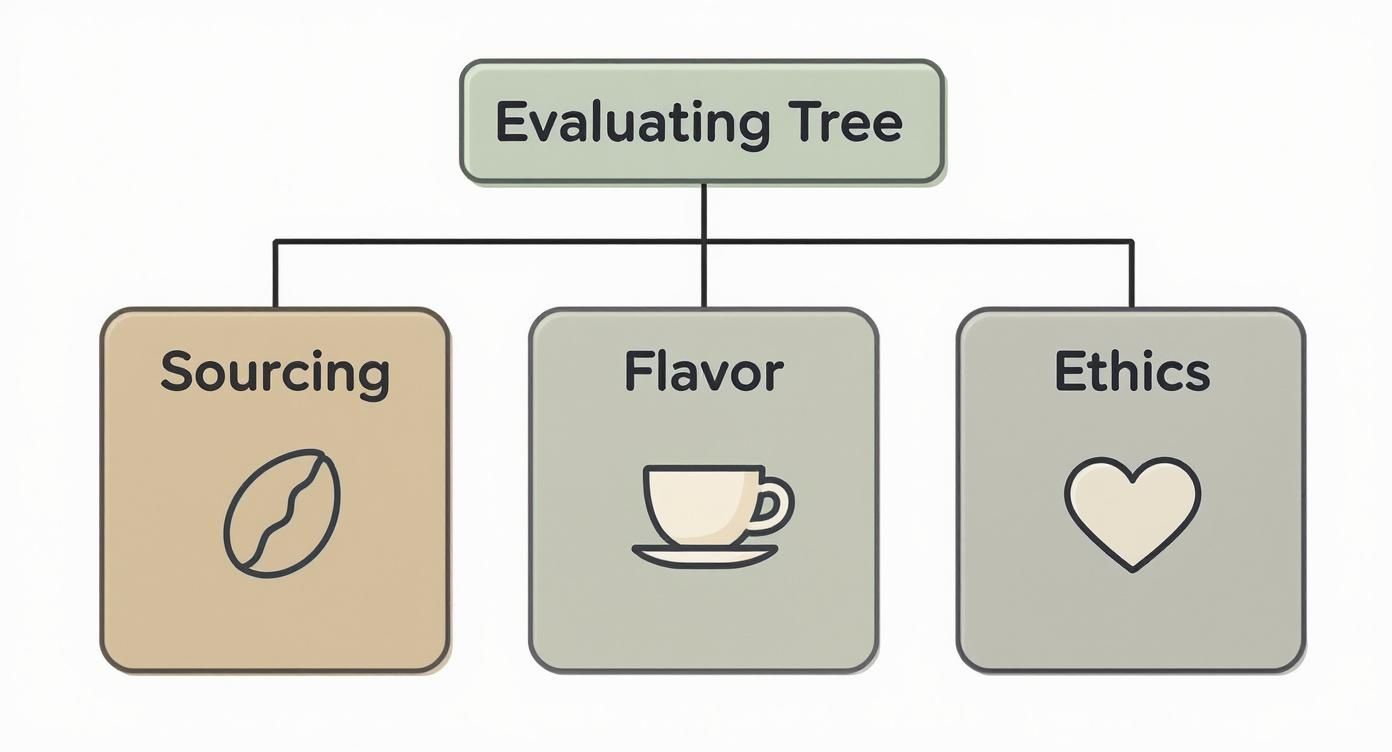
As you can see, the sweet spot is where transparent sourcing, your personal flavor preferences, and a company's ethics all align. That’s where you’ll find a truly great bag of coffee.
Deep Dive into Top Contenders
Let's take a closer look at how some of the leading pesticide-free coffee brands compare. We’ll examine their core philosophies and what makes each one stand out.
Imagine a well-known brand we'll call "The Bold Roaster." They've built a loyal following by delivering consistently powerful, smoky dark roasts. Their ideal customer is someone who wants a deep, chocolatey cup to power through their morning.
- Ideal Consumer: Perfect for traditional espresso drinkers or anyone who adds milk to their coffee. The robust flavor stands up to anything.
- Sourcing Focus: While certified organic, their main goal is consistency. They achieve this by blending beans from different farms across Central and South America.
- Key Differentiator: They are experts at dark roasting, producing a low-acidity, full-bodied coffee that’s never bitter or burnt.
On the other end of the spectrum, you have "The Explorer's Roaster." This brand is all about radical transparency and celebrating single-origin beans. They cater to the coffee aficionado who wants to taste the subtle, complex flavors that make each growing region unique.
- Ideal Consumer: The curious brewer who loves their pour-over or AeroPress and enjoys hunting for distinct notes of fruit, flowers, or spice.
- Sourcing Focus: They often share incredible detail, right down to the specific farm or washing station, complete with stories about the people who grew the coffee.
- Key Differentiator: Their offerings are always changing with the harvest seasons, turning every new bag into an exciting tasting adventure.
This really gets to the heart of the matter: the "best" brand is completely subjective. What works for a dark roast devotee might not be the right fit for someone who loves the bright acidity of a high-altitude Ethiopian bean.
The Cartograph Coffee Difference
This is where Cartograph Coffee carves out its own unique space. We bring an artisanal craftsmanship to the table, blending ethical sourcing with a roasting philosophy that is laser-focused on unlocking the most distinctive flavor profiles.
Our mission isn't just to sell clean, organic coffee; it's to create a memorable experience in every cup. We hand-select beans that tell a compelling story, whether it’s the bright, citrusy notes of a Latin American light roast or the rich, syrupy body of an Indonesian coffee. If you're looking for more great options, our guide to the best organic coffee brands is a great place to start your research.
Pesticide-Free Coffee Brand Feature Comparison
To make your decision a bit easier, we've put together a table that lays out how these different approaches stack up side-by-side. It’s a quick way to see where each brand truly shines.
| Brand Name | Key Certifications | Dominant Flavor Profile | Available Roasts | Ideal For |
|---|---|---|---|---|
| The Bold Roaster | USDA Organic, Fair Trade | Bold, chocolatey, low acidity | Medium-Dark to Dark | Daily dark roast drinkers and espresso lovers. |
| The Explorer's Roaster | USDA Organic, often Direct Trade | Bright, fruity, complex acidity | Light to Medium | Pour-over fans and adventurous coffee drinkers. |
| Cartograph Coffee | USDA Organic, Ethical Partnerships | Balanced, distinct, nuanced | Curated selection of Light, Medium, and Dark | Anyone seeking unique flavor and true craftsmanship. |
Ultimately, choosing between these fantastic pesticide-free coffee brands comes down to what you value most in your daily ritual. Are you looking for comforting consistency, an exciting journey of discovery, or a masterfully crafted cup that tells a story? The choice is yours.
Choosing the Right Brew for Any Situation
Knowing the difference between pesticide-free coffee brands is the first step. The real trick is figuring out which one fits into your life. There’s no single "best" coffee—the right choice depends on the moment, how you brew, and what you love to taste. Let’s move past the brand-vs-brand comparisons and look at real-world scenarios to help you pick the perfect coffee for any occasion.
This is all about answering practical questions. Do you need a bold, reliable dark roast to power through your workday? Or are you looking for a delicate, nuanced light roast for a slow weekend pour-over? Different moments call for different coffees.
When you match a brand’s strengths to your specific needs, you can pick a coffee that not only meets your health and ethical standards but also fits perfectly into your daily routine.
Your Go-To Daily Dark Roast
If you’re someone who needs a rich, potent cup to start the day, you know that consistency is everything. You want that deep, chocolatey kick every single morning, whether you take it black or with a little cream. For this, a brand specializing in low-acidity, full-bodied dark roasts is your best bet.
Keep an eye out for blends from Central or South America. Beans from these regions are famous for how well they handle darker roasts, bringing out notes of cocoa, nuts, and caramel without tipping into that burnt, bitter territory. This style is also a dream for espresso machines, pulling shots with a thick, beautiful crema.
The Weekend Pour-Over Enthusiast
Weekends are different. If you’re someone who loves the careful ritual of a pour-over or an AeroPress, you're chasing something else entirely. This is where single-origin coffees from transparent, flavor-focused brands really stand out. You’re not just making a cup of coffee; you’re exploring a place.
For this brewing style, seek out pesticide-free coffee brands that highlight specific farms and processing methods. Coffees from Ethiopia or Kenya often provide the bright, fruity, and floral notes that make the pour-over method so rewarding, allowing you to taste the distinct character of the bean.
Finding the Best All-Around Household Brew
Brewing for a full house with different tastes can be a challenge. The goal is to find a crowd-pleaser, and a medium roast is usually the perfect middle ground. It offers a balanced cup that isn’t too bright or too intense—it’s the versatile workhorse of the coffee world.
A well-rounded blend that combines beans from a few different regions can create a smooth, approachable flavor profile that works for everyone. Cartograph Coffee is fantastic here, offering ethically sourced, organic options roasted to hit that sweet spot between body and flavor. It’s an excellent choice for a big drip coffee maker that serves the whole family, ensuring everyone gets a high-quality, pesticide-free cup they can enjoy.
The Global Move Toward Cleaner Coffee
The buzz around pesticide-free coffee isn't just a fleeting trend. It’s a genuine shift in what people value, and it’s happening all over the world. As we learn more about how our food is grown and how it affects our health and the planet, we're starting to demand cleaner, more transparent options—and coffee is right at the top of the list.
This isn’t a localized movement, either. From European cafés to homes in the Asia-Pacific, conscious consumerism is on the rise. People are actively looking for products that match their personal health goals and ethical beliefs, transforming what was once a niche market into a mainstream expectation.
A Market Fueled by Conscious Choices
The numbers don't lie. The global organic coffee market was valued at around $7.0 billion in 2023. Projections show it’s on track to nearly double, hitting about $13.5 billion by 2032. That's a steady compound annual growth rate of 7.5%, driven by our collective awareness of what "organic" and "sustainably sourced" really mean. For a deeper dive into the data, you can check out the full market projections and insights on dataintelo.com.
Choosing to support pesticide-free coffee brands is more than just a purchase. It’s an active vote for a system that puts the well-being of people and our planet first.
This data proves you’re not alone; you're part of a growing wave of people making more thoughtful decisions. Every bag of beans you buy sends a clear signal to the industry: quality, sustainability, and transparency are non-negotiable.
Your commitment directly encourages farmers to transition to organic methods and pushes roasters to build more ethical supply chains from the ground up. Thanks for being a part of this positive change.
Where Cartograph fits
| What to look for | Why it matters | Cartograph Coffee |
|---|---|---|
| Organic coffee | Supports cleaner sourcing and avoids unnecessary additives. | Made with organic coffee beans, with no additives or chemicals. |
| Freeze-dried | Preserves aroma and dissolves quickly. | Freeze-dried medium roast packets. |
| Single-serve format | Useful for travel, work, camping, and consistent cups. | Pre-portioned sticks in multiple pack sizes. |
Got Questions? We've Got Answers
Diving into the world of pesticide-free coffee can bring up a few questions. It's a topic I get asked about all the time, so let's clear up some of the most common points to help you choose your next bag with confidence.
What's the Real Difference Between "Pesticide-Free" and "Organic"?
This is probably the number one question, and the distinction is crucial. While the terms sound similar, they don't mean the same thing. "Pesticide-free" is a general claim that a coffee was grown without synthetic pesticides, but it's not an officially regulated term. Anyone can slap it on a label.
The USDA Organic seal, however, is the real deal. It's a government-regulated certification that guarantees the coffee was grown and processed according to strict standards. This means no synthetic pesticides, herbicides, or fertilizers were used.
The Bottom Line: All certified organic coffee is, by definition, pesticide-free. But not all coffee claiming to be "pesticide-free" is certified organic. For peace of mind, the seal is your best bet.
Does Pesticide-Free Coffee Actually Taste Different?
Absolutely, and in my experience, it's a difference for the better. Organic farming isn't just about what farmers don't use; it's about what they do use. The focus is on building incredibly rich, healthy soil packed with nutrients.
That healthy soil translates directly to the coffee bean, allowing it to develop a more complex and expressive flavor profile. You get a real sense of its terroir—the unique taste of its origin. Many coffee lovers, myself included, find that pesticide-free coffees have a cleaner, brighter taste where the bean's natural notes of fruit, chocolate, or flowers can really pop.
How Can I Tell if a Brand's Claims Are Legit?
In this business, transparency is everything. A brand that's genuinely committed to clean, quality coffee will be proud to show you the proof. Here’s what I always look for:
- Look for the Seals: The USDA Organic certification is the gold standard. Other great ones to spot are Fair Trade, which ensures ethical treatment of farmers, and Smithsonian Bird Friendly, which supports biodiversity.
- Dig into Their Website: Reputable roasters will share their story. They'll tell you about their sourcing practices, the farms they partner with, and why they do what they do.
- Check Real-World Reviews: See what fellow coffee drinkers are saying. Customer reviews are a fantastic source of honest feedback on a brand's consistency, flavor, and whether they live up to their promises.
Ready to taste the difference that clean, ethically sourced coffee makes? Explore the full collection of artisanal, organic instant coffee from Cartograph Coffee and discover your new favorite brew. Find your perfect roast today!