Picture this: a morning coffee that does more than just jolt you awake. Imagine a cup that delivers clean, sustained energy, sharpens your focus, and even supports your metabolism. That's the idea behind adding MCT oil to your daily brew, turning a simple ritual into a powerful start to your day. This isn't just another fleeting wellness trend; it's a practical way to transform your coffee into a genuine powerhouse.
Your Morning Coffee Just Got a Major Upgrade
Adding MCT oil to coffee has quickly gone from a niche "biohacking" trick to a mainstream morning ritual, and for good reason. It’s about getting more than just a caffeine buzz; it's about optimizing how your body and brain perform from the very first sip.
Think of your standard cup of coffee as a quick sprint—it gives you a burst of energy to get going but can sometimes lead to a crash later. Adding MCT oil is like turning that sprint into a steady, long-distance run. It provides smooth, reliable fuel that can last for hours.
This powerful combination works by pairing the alertness from caffeine with the unique metabolic properties of Medium-Chain Triglycerides (MCTs). Your body can rapidly convert MCTs into ketones, an incredibly efficient fuel source for the brain. The result? Improved mental clarity and focus, often without the typical caffeine jitters.
Why Is This Trend Growing So Fast?
The appeal of MCT oil in coffee is simple: it packs multiple benefits into one easy step. For busy professionals, it's a tool to conquer the workday with laser focus. For adventurers, it's portable fuel for the trail. For anyone just looking for a better start to their day, it offers a lot:
- Sustained Energy: Help your body sidestep that dreaded afternoon slump by using a cleaner, longer-lasting energy source.
- Enhanced Mental Clarity: Ketones give your brain immediate fuel, helping to cut through brain fog and sharpen your concentration.
- Metabolic Support: MCT oil is well-known for promoting a feeling of fullness, which can gently support your body's fat-burning processes.
This isn't just talk. The market numbers back it up. The global MCT oil market was valued at USD 878.3 million and is projected to hit USD 1,300 million by 2030, growing at a seriously robust rate. This boom is driven largely by the demand for functional drinks like MCT-infused coffee, which people see as a smarter alternative to sugary energy drinks.
For a quick overview, here's a look at the key points.
MCT Oil in Coffee At a Glance
| Key Aspect | Quick Summary |
|---|---|
| Primary Goal | To combine caffeine's alertness with MCTs' sustained energy for enhanced mental and physical performance. |
| Main Benefit | Provides clean, long-lasting energy and mental clarity without the typical caffeine crash. |
| How It Works | MCTs are quickly converted into ketones, an efficient fuel source for the brain and body. |
| Who It's For | Anyone seeking improved focus, sustained energy, and metabolic support. Popular in keto and low-carb lifestyles. |
| Common Issue | Potential for digestive upset if you start with too large a dose. Start small and increase gradually. |
This table captures the essence of why so many people are making this simple addition to their morning routine.
By learning how to properly incorporate MCT oil, you can turn your daily cup of Cartograph's organic instant coffee into a true cornerstone of your wellness routine. It’s a small change that can make a big difference in how you feel and perform every day. And if you're looking to truly perfect your entire coffee setup at home, diving into a comprehensive coffee machine buying guide can take your ritual to the next level.
What Is MCT Oil, and Why Put It in Coffee?
To really grasp why MCT oil and coffee are such a powerful duo, it helps to think about fats in a new way. Imagine the fats you normally eat—like from olive oil, nuts, or avocados—as long, complicated necklaces. These are called Long-Chain Triglycerides (LCTs), and your body has to work pretty hard to break them down and turn them into usable energy. It's a slow, multi-step process.
Now, think of Medium-Chain Triglycerides (MCTs) as simple bracelets instead of long necklaces. Their shorter, more streamlined structure is their superpower.
Because they’re so much shorter, MCTs get a VIP pass through your digestive system. They skip the usual slow-lane digestion that LCTs have to go through and head straight to your liver. This direct route means they get processed incredibly quickly.
Once in the liver, MCTs are rapidly converted into molecules called ketones. You can think of ketones as a super-clean, high-octane fuel source for your body and especially for your brain. This lightning-fast conversion from fat to brain fuel is precisely why adding MCT oil to your morning coffee can feel so transformative.
Coffee's Perfect Partner
When you mix the well-known stimulant effect of caffeine with the clean, sustained energy from MCTs, something really cool happens. Instead of the typical caffeine jolt followed by an afternoon crash, you get a much smoother, more sustained feeling of alertness and focus. The MCT oil provides a steady stream of ketone energy that works with the caffeine, not against it, helping you power through your morning without the jitters.
This simple pairing turns your coffee into so much more than just a wake-up call.

As you can see, it becomes a multi-functional drink that supports your energy, mental clarity, and metabolism all at once. It's not just about getting going; it's about getting your brain firing on all cylinders.
Not All MCTs Are Created Equal
Just like there are different varieties of coffee beans, there are different types of MCTs. They’re named based on the number of carbon atoms they have, and that number directly impacts how quickly your body can put them to work.
Here are the four main types you'll encounter:
- C6 (Caproic Acid): This is the shortest and fastest-converting MCT. The downside? It tastes pretty funky and is notorious for causing stomach upset, so most quality brands filter it out.
- C8 (Caprylic Acid): Many consider this the "gold standard." It's the most ketogenic of the bunch, meaning it converts into brain-fueling ketones more efficiently than any other MCT. This is the one you want for that sharp mental clarity.
- C10 (Capric Acid): Still highly effective and a close second to C8 in terms of speed. It provides a fantastic energy boost and is often found in high-quality MCT oil blends right alongside C8.
- C12 (Lauric Acid): Here's the tricky one. While it's technically an MCT, your body processes it more like a long-chain fat. It's the primary fat in regular coconut oil, but it doesn't deliver that quick ketone rush that C8 and C10 are famous for.
Knowing this helps you pick the right MCT oil for the job. If you're looking for that immediate mental boost and sustained energy, an oil that's high in C8 and C10 is going to give you the best bang for your buck.
The big idea is this: The unique structure of MCTs lets them become a rapid source of clean energy for your brain. Pairing this with coffee transforms your morning ritual from a simple pick-me-up into a powerful tool for better focus and steady energy all day long.
The Science-Backed Benefits of Adding MCT Oil
Mixing MCT oil into your coffee is more than just another wellness fad; for many, it's a daily ritual with real, science-backed benefits. Once you understand how these unique fats work, it becomes clear why they're such a powerful addition to a morning cup. Let's dig into the key advantages.
The most celebrated benefit is that unmistakable boost in mental clarity. Your brain is an incredibly energy-hungry organ, but it can't run directly on the standard fats you eat. This is where MCT oil completely changes the game. When MCTs hit your liver, they're rapidly converted into ketones—a super clean and efficient fuel that easily crosses the blood-brain barrier.
Think of it like upgrading the fuel for your car. Glucose, the brain's usual energy source, is like standard unleaded gas; it gets the job done but can be a bit inconsistent. Ketones, on the other hand, are like high-octane racing fuel, delivering immediate, stable power that helps you feel sharper, more focused, and ready to take on the day.
Supporting Weight Management Goals
Beyond just brain fuel, MCT oil has earned its reputation as a solid partner in weight management. This isn't about some magic pill, but about working smarter with your body's natural systems. MCTs have been shown to increase feelings of fullness and satiety.
Simply adding a spoonful to your coffee can help keep those mid-morning hunger pangs at bay, which often leads to consuming fewer calories throughout the day. It works by influencing the hormones that control your appetite, making it far easier to stick to your nutrition goals without feeling like you're constantly fighting cravings.
On top of that, MCTs have a mild thermogenic effect, which just means your body burns a few extra calories digesting them. While it’s not a massive number on its own, it contributes to a healthier metabolic state overall, encouraging your body to burn fat for fuel. If you're curious how this fits into a specific eating plan, check out our guide on making delicious low-carb coffee.
The idea of putting MCT oil in coffee really took off with the ketogenic movement, turning a simple brew into a fat-burning powerhouse. This trend mirrors the keto diet's own rise, where about 41% of followers use MCT oil regularly for its quick energy and appetite control. You can find more data on the MCT oil market's growth and trends on marketresearchfuture.com.
Achieving Sustained Energy Without the Crash
Let's be honest—one of the biggest downsides to a standard caffeine fix is the crash that follows. You get that initial burst of energy, but a few hours later, the afternoon slump hits you like a ton of bricks, leaving you feeling drained. Adding MCT oil to your coffee helps smooth out that energy curve.
The energy you get from ketones is steady and long-lasting. It doesn't cause the blood sugar spikes and dips that come with so many other energy sources. This creates a brilliant synergy with caffeine.
- Caffeine kicks things off, providing that initial alertness and waking up your central nervous system.
- MCT Oil follows up with a sustained stream of clean fuel for your brain and body, keeping you going for hours.
This powerful combination lets you ride a smooth wave of energy all day long, helping you stay productive without desperately searching for your next pick-me-up. It's the perfect fuel whether you're powering through a long workday or heading out for a day of adventure. You’re choosing endurance over a quick jolt, making every sip count.
How to Make the Perfect MCT Oil Coffee
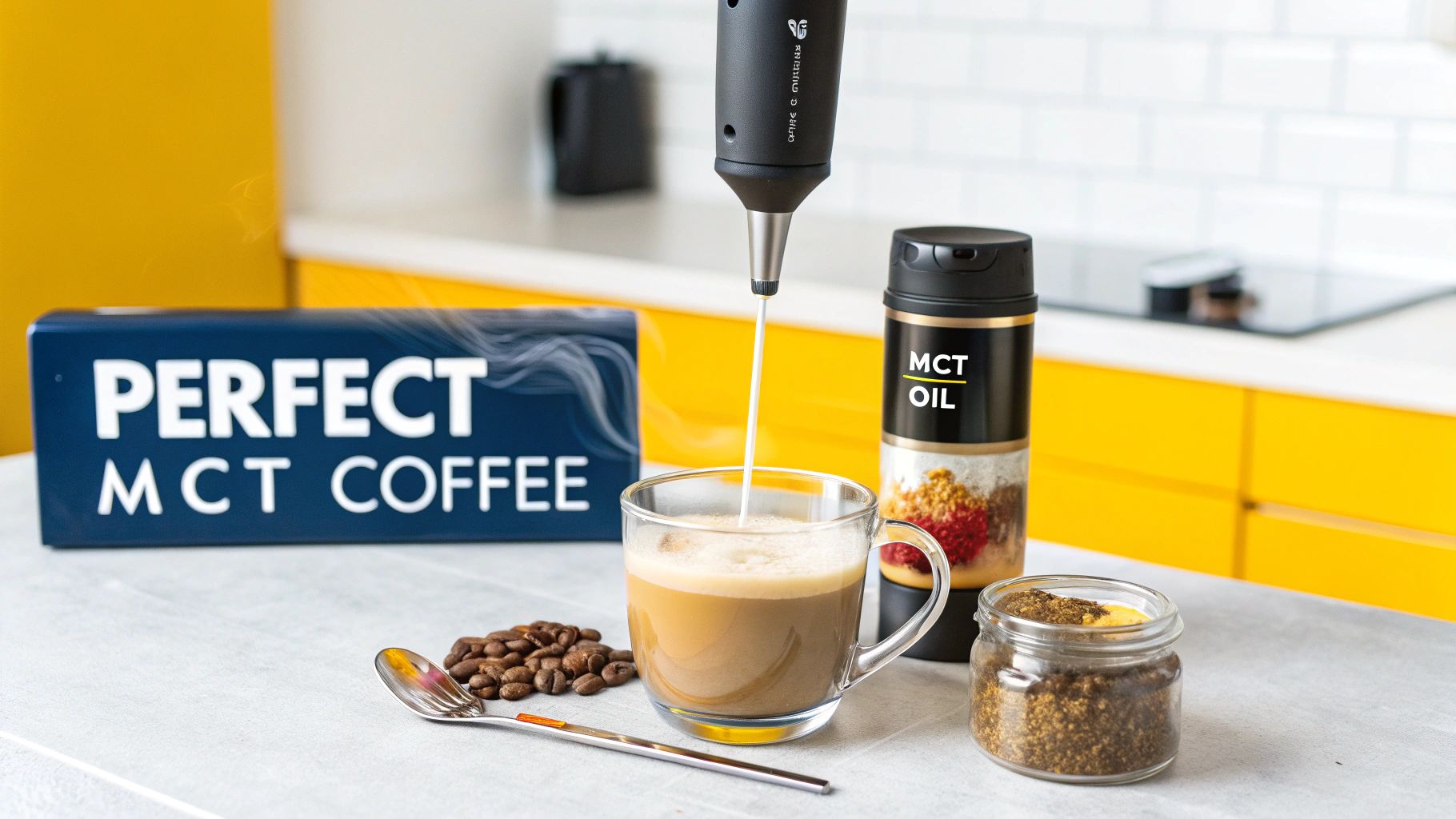
Making a great MCT oil coffee comes down to two things: the right ingredients and the right technique. The whole point is to create a smooth, creamy brew that gives you lasting energy, not an oily puddle that separates in your mug. Let's walk through how to get it right every time.
The secret weapon here is emulsification. It’s a fancy word for a simple concept: blending fat (MCT oil) and a water-based liquid (your coffee) so they become one creamy mixture. Think about how oil and vinegar separate in salad dressing until you give it a good shake—it’s the exact same idea. Getting this step right is what gives you that rich, latte-like texture instead of a disappointing oil slick.
Getting the Ratios Right
Finding the perfect balance of coffee, water, and MCT oil is ultimately a personal thing, but having a solid starting point makes all the difference. The most important rule? Start low and go slow with the MCT oil. This gives your digestive system a chance to get used to it.
Here’s a great go-to recipe using Cartograph’s organic instant coffee:
- Coffee: Start with one serving of Cartograph Coffee. It dissolves completely, which is perfect for a smooth base.
- Hot Water: Pour in 8-10 ounces of hot water—but not boiling! Water that’s too hot can scorch the coffee and give it a bitter taste.
- MCT Oil: Begin with just one teaspoon of a high-quality MCT oil. If that feels good after a week, you can slowly increase the amount up to a full tablespoon.
This simple formula is a fantastic and tasty starting point. Feel free to adjust the water for a stronger or milder coffee, but stick with a low MCT oil dose at first to avoid any stomach surprises.
The Key to Creaminess: Emulsification Methods
Once your ingredients are ready, it's time to blend. And I mean really blend. Just stirring MCT oil into coffee with a spoon will leave you with a greasy layer floating on top. To get that perfectly integrated, creamy drink, you need a little more power.
Here's a breakdown of the best ways to emulsify your coffee. Each method works, but some are better for certain situations.
MCT Oil Emulsification Methods
| Method | Best For | Pros | Cons |
|---|---|---|---|
| Handheld Milk Frother | Quick, daily use at home | Easy, affordable, creates great froth, minimal cleanup. | Less powerful than a blender; might not be as smooth. |
| Blender | The ultimate creamy texture | Creates the smoothest, most emulsified coffee. Perfect for adding other ingredients. | More cleanup involved; can be loud. |
| Sealed Travel Mug | On the go, camping, or at the office | No special tools needed, super convenient for travel. | Requires some arm strength; may not be as frothy. |
A blender is your best bet for the absolute creamiest result. If you're often making drinks like this, one of the best blenders for smoothies is a worthwhile investment. But honestly, a simple handheld frother is what most people use day-to-day, and the travel mug shake is a surprisingly effective trick when you're in a pinch.
Upgrading Your Brew with Optional Add-Ins
While Cartograph Coffee and MCT oil are a powerful duo on their own, you can always add a few things to take your brew to the next level, boosting both flavor and nutrition.
A classic "Keto Coffee" often includes both MCT oil and a source of healthy, grass-fed fat. This combination provides a richer flavor and an even more sustained feeling of fullness, making it a staple in many low-carb routines.
Consider mixing in one of these next time:
- Grass-Fed Ghee or Butter: A teaspoon or tablespoon adds a rich, buttery flavor and more healthy fats.
- Collagen Powder: Add a scoop of unflavored collagen peptides for hair, skin, and joint support. It dissolves right in and makes the coffee even creamier.
- Spices: A dash of Ceylon cinnamon adds a bit of warmth and flavor. You could also try what we discuss in our guide on the benefits of adding turmeric to coffee.
- Sugar-Free Sweetener: If you like it sweet, a few drops of liquid stevia or monk fruit are great carb-free options.
By mastering these simple ratios and techniques, you can turn your daily cup of Cartograph Coffee into a delicious tool for better focus and all-day energy.
Of course. Here is the rewritten section with a completely human-written and natural tone.
Common Mistakes and How to Avoid Them

While adding MCT oil to your coffee can be a game-changer, jumping in without a little know-how is a recipe for a bad time. I’ve seen it happen again and again: people get excited, overdo it, and end up with some… uncomfortable side effects. Let's make sure that doesn't happen to you.
The single biggest mistake is going too big, too fast. Your digestive system has never met a fat quite like this—it’s incredibly concentrated and absorbs almost instantly. Pouring in a full tablespoon right off the bat can easily overwhelm your gut, sending you straight to the bathroom.
This brings us to the golden rule: start low and go slow.
Mastering Your Dosage and Timing
To sidestep any digestive drama, begin with just half a teaspoon of MCT oil mixed into your coffee. Stick with that for a few days. If you feel good, you can slowly work your way up. Most people find their sweet spot somewhere between one and two tablespoons, but listen to your body and increase your dose gradually every few days.
Think of it like starting a new workout routine. You wouldn't try to run a marathon on day one; you'd start with a short jog and build from there. The same principle applies here.
Another common question is about timing—should you have it on an empty stomach or with a meal? Honestly, there are good arguments for both, and the right answer really depends on your goals and how sensitive your stomach is.
- On an Empty Stomach: Taking MCT oil in your morning coffee first thing gives you the quickest possible absorption. It’s a direct path to mental clarity and ketone production, which is perfect if you’re looking for an immediate cognitive lift or extending a fast. The downside? This is the method most likely to cause an upset stomach for newcomers.
- With a Meal: Pairing your MCT coffee with a small breakfast, especially one with some protein, can really soften the impact on your digestive system. It acts as a buffer. Absorption might be a little slower, but you'll still get that fantastic, sustained energy all morning.
My advice? Try both and see what works for you. Your body will tell you what it prefers.
Choosing a High-Quality MCT Oil
Not all MCT oils are created equal. This isn't just marketing hype—the quality of the oil you choose has a direct impact on your results and your experience. A cheap, poorly made oil can be loaded with unwanted fillers or sourced from unsustainable ingredients, which really defeats the purpose.
Here’s what you should look for on the label:
- Sourced from 100% Coconuts: Coconuts are the cleanest and most sustainable source for MCTs.
- Free of Palm Oil: Palm oil production is often tied to serious environmental issues like deforestation, so it's best to avoid it.
- Pure C8 and C10: For the most potent energy and brain-boosting effects, you want an oil that is mostly, if not entirely, Caprylic Acid (C8) and Capric Acid (C10).
- No Fillers or Additives: The ingredient list should be short and simple. If you see a bunch of extra stuff, put it back on the shelf.
This push for better quality isn't happening in a vacuum. We’re seeing a big shift in the industry, with 55% of producers now focusing on sustainable coconut and palm kernel sourcing. That means when you’re enjoying products like Cartograph's instant coffee on a camping trip or at home, you’re getting a clean product you can trace. For more on this trend, you can check out the global MCT oil market report on futuremarketinsights.com. And if you have a sensitive stomach in general, our guide on how to reduce the acidity of coffee might also be a big help.
Got Questions About MCT Oil in Your Coffee? Let's Clear Things Up.
As you start playing around with adding MCT oil to your coffee, it's totally normal for a few questions to pop up. Getting straight answers can help you feel more confident and really nail this powerful morning routine. Let's tackle some of the most common things people wonder about.
My goal here is to cut through the confusion and give you the practical know-how to get started on the right foot. We'll cover everything from fasting rules and dosages to the real difference between MCT oil and coconut oil.
Will MCT Oil in My Coffee Break a Fast?
This is a huge one, and the answer isn't a simple yes or no—it really boils down to why you're fasting in the first place.
Technically, yes. Because MCT oil has calories (around 120 calories per tablespoon), it will break a strict, water-only fast. If your goal is complete gut rest or to trigger autophagy (the body's cellular cleanup process), then any calories will interrupt that state.
But for those fasting to stay in ketosis or just to keep hunger at bay, the story changes.
The magic of MCT oil is that it's a pure fat that doesn't spike your insulin. For many people doing intermittent fasting for metabolic benefits, this is the key. It can actually enhance ketone production, which lines up perfectly with a keto lifestyle.
A lot of people find that a spoonful of MCT oil in their coffee makes it way easier to push their fasting window a little longer without feeling ravenous. So, if your goal is ketosis and clean energy, it's a fantastic tool. If you're aiming for true cellular rest, it’s best to stick to plain water.
Can I Just Use Coconut Oil Instead of MCT Oil?
While MCT oil comes from coconuts, they are definitely not the same thing. Think of it like this: coconut oil is the crude oil, and a pure MCT oil is the refined, high-octane gasoline you put in a performance engine.
Coconut oil is a mix of several different fatty acids, and only some of them are true Medium-Chain Triglycerides. The most common fat in coconut oil, lauric acid (C12), actually acts more like a long-chain fat in your body. It digests much slower and doesn't give you that immediate kick of ketone energy.
A pure MCT oil, on the other hand, is specifically refined to contain only the most efficient MCTs.
- C8 (Caprylic Acid): This is the superstar. It’s the fastest-converting MCT, prized for its ability to rapidly create ketones for brain fuel.
- C10 (Capric Acid): This one is also incredibly effective for energy, it just processes a little bit slower than C8.
You can absolutely put coconut oil in your coffee, and it has its own health benefits. But you just won't get that same powerful, fast-acting energy and mental sharpness that a concentrated, high-quality MCT oil provides. For that immediate brain fuel, pure MCT oil is the clear winner.
What’s the Right Amount of MCT Oil to Use?
When it comes to MCT oil, the golden rule is to start low and go slow. This is probably the single most important piece of advice for any beginner. Your digestive system needs a little time to get used to this highly concentrated, fast-absorbing fat.
Start with just a half-teaspoon mixed into your coffee for the first few days. See how your body reacts. If you feel fine and don't have any stomach grumbles, you can gradually increase the amount every couple of days.
A standard full serving for most people is one tablespoon (about 15ml). Many people find this is plenty to feel the sustained energy and focus all morning. Trying to rush this process is the number one reason people experience digestive issues, so just be patient and let your body tell you what dose works for you.
Does the Type of MCT Oil Really Matter?
Yes, absolutely. The type of MCT oil you pick can make a real difference, especially depending on what you're trying to achieve. The different MCTs (C8, C10, C12) are all metabolized a bit differently, which changes the benefits you'll feel.
As I mentioned earlier, C8 (Caprylic Acid) is widely seen as the "gold standard" because it's the most ketogenic MCT. It converts into brain-fueling ketones faster and more efficiently than any other type, making it the top pick for anyone seeking a serious mental boost.
A blend of C8 and C10 is also a fantastic and very common option that's a bit more budget-friendly. C10 is still a great source of clean energy, it's just a little slower on the uptake than C8.
For most people just getting started, a high-quality C8/C10 blend is the perfect entry point. It gives you a great one-two punch of fast mental energy and sustained physical fuel. If your main goal is to crush brain fog and find that next level of mental clarity, investing in a pure C8 oil might be worth it.
Ready to upgrade your morning ritual? With Cartograph Coffee, you get premium, organic instant coffee that serves as the perfect base for your energizing MCT brew. Experience the difference that quality and convenience can make. Explore Cartograph Coffee today.