We’ve all been there. That moment of panic when a caffeine craving hits, but your coffee maker is nowhere in sight—or worse, it's broken. Don't despair. You can absolutely make coffee without a coffee maker, and honestly, some of the best cups I've ever had were made with nothing more than a simple pot or a glass jar.
From a rustic, stovetop brew to a mellow, patient cold brew, a fantastic cup of coffee is always within reach.
Brewing Great Coffee Anywhere, No Machine Required
Let's be real, discovering your kitchen is missing a coffee maker can feel like a genuine crisis. But people have been brewing incredible coffee for centuries, long before the first drip machine was ever plugged in. The absence of a machine isn't a dead end; it's an opportunity to get back to the basics of brewing.
Think of this guide as your new playbook for becoming a self-sufficient coffee pro, ready for any situation. We’ll walk through several clever methods that use everyday items to get the job done right. Whether you're in a rush or want to slow down and enjoy the ritual, there's a technique here for you.
You're about to learn how to:
- Brew a rich, full-bodied cup right on your stovetop.
- Rig up a surprisingly effective pour-over with stuff you already have.
- Master the art of no-heat cold brew for an incredibly smooth, low-acid coffee concentrate.
These skills are a game-changer for travel, camping, or any time you’re away from home. Knowing how to adapt means you can have a perfect cup on a mountaintop or in a sparsely equipped rental kitchen. For those heading outdoors, you can find even more tips on the best coffee for backpacking to complete your setup.
At its heart, brewing is simple: you just need hot water, ground coffee, and a way to separate one from the other. Every gadget, from a fancy espresso machine to a campfire pot, is just playing with that same basic idea.
So, let go of the idea that you need expensive gear for great coffee. With a bit of know-how and a solid grasp of the fundamentals—like water temperature and the right grind size—you can unlock amazing flavor. Get ready to embrace these timeless methods and ensure you’re never caught without a great cup of coffee again.
Fast and Simple Brewing Methods for When You're in a Rush
We’ve all been there: you need a good cup of coffee now, but the last thing you want to do is fiddle with a complicated brewing process. When time is tight, you need a method that’s fast, reliable, and gets the job done.
Thankfully, there are a couple of solid ways to make coffee without a coffee maker that deliver on speed without completely sacrificing quality. These are my go-to solutions for those frantic mornings or when I’m stuck in an office with nothing but a kettle.
The New Wave of Instant Coffee
Let's get one thing straight: instant coffee isn't what it used to be. Forget those dusty jars of bitter, flavorless crystals. The game has changed. Specialty brands are now creating fantastic instant options that dissolve perfectly and actually taste like good coffee.
Take Cartograph Coffee's offerings, for example. They use high-quality, organic beans, and the result is a rich, satisfying cup that’s ready in seconds. Just heat your water to just under a boil (around 195-205°F is perfect), add a spoonful of instant, give it a stir, and you’re good to go.
The market backs this up. The global coffee industry is massive, projected to hit USD 138.37 billion in 2025, and convenience is a huge part of that. In fact, the at-home instant coffee segment is expected to jump from USD 80.2 billion in 2024 to over USD 110.28 billion by 2030. People clearly value a quick and easy solution that still delivers on taste. You can dive deeper into these trends by checking out the latest market statistics on coffee consumption.
If you're trying to figure out which machine-free method works best for your current situation, this decision tree can point you in the right direction.
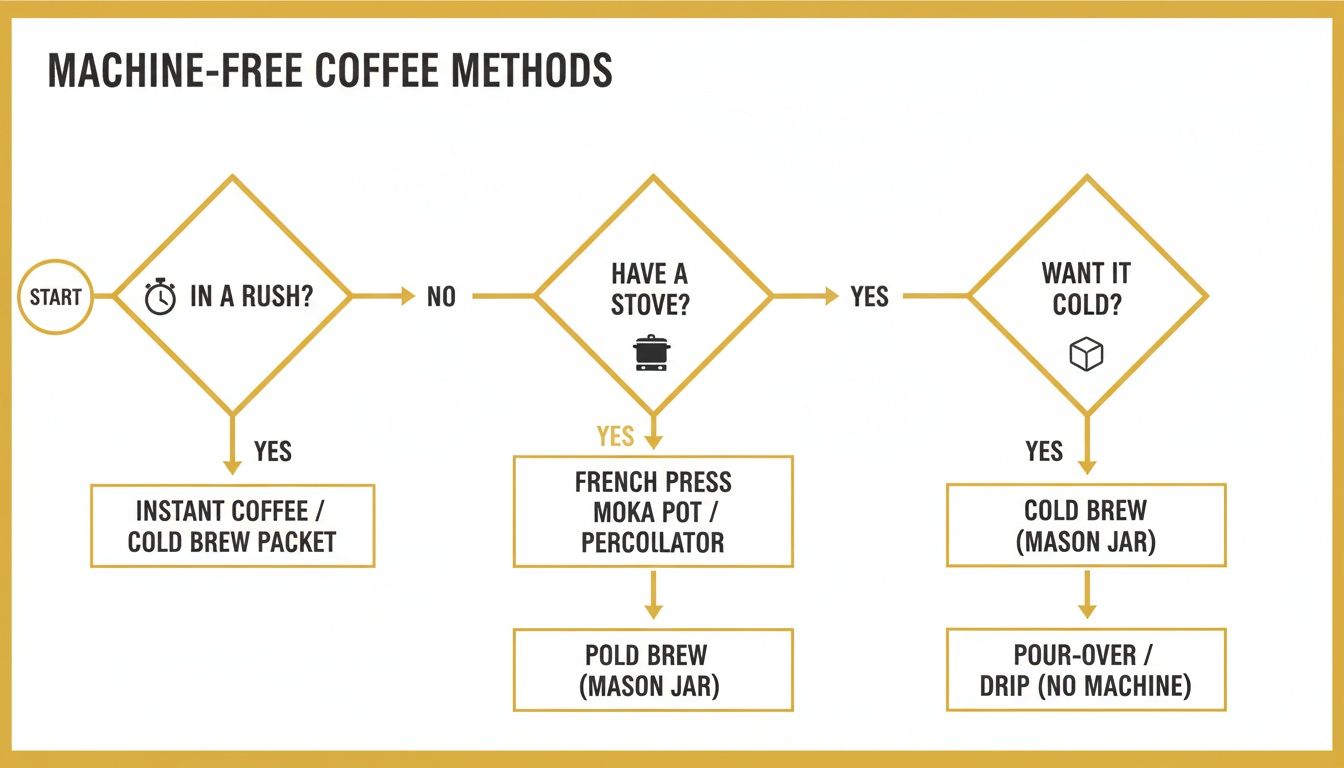
As you can see, when speed is your main concern, instant and microwave methods are your best friends.
The Microwave Method: A Surprising Contender
No instant coffee? No problem. If you have ground coffee, a mug, and a microwave, you can still brew a surprisingly decent cup. It takes a little more attention than instant, but it’s still incredibly fast and requires zero special gear.
I’ve used this trick more times than I can count when visiting relatives who aren't coffee drinkers. Here’s how it works:
- Heat your water. Fill a microwave-safe mug with water and heat it for about 1-2 minutes. You want it hot, but not boiling.
- Add your coffee. Carefully take the mug out and stir in one or two tablespoons of ground coffee.
- Let it steep. Now, just let it sit for about four minutes. This is where the magic happens—the hot water will extract the flavor from the grounds.
- Settle and pour. The grounds will eventually sink to the bottom. You can carefully and slowly pour the coffee into another mug, leaving the sludge behind. If you have a small strainer, even better.
Pro Tip: The biggest mistake you can make here is boiling the water. Super-hot water will scorch your coffee grounds and make your brew taste bitter and burnt. Think of it like making tea—hot, not scalding.
Quick Coffee Method Comparison
To make the choice even easier, here's a quick look at how these two super-fast methods stack up against each other.
| Method | Time Required | Equipment Needed | Best For |
|---|---|---|---|
| Instant Coffee | 1 minute | Mug, hot water | Ultimate speed and convenience; traveling |
| Microwave | 5 minutes | Mug, microwave, ground coffee | When you only have ground coffee on hand |
Both methods are lifesavers in a pinch. If you have quality instant coffee, it's almost always the faster and cleaner option. But knowing you can make a respectable cup with just a microwave and some ground coffee is a skill every coffee lover should have in their back pocket.
Timeless Manual Brewing Techniques
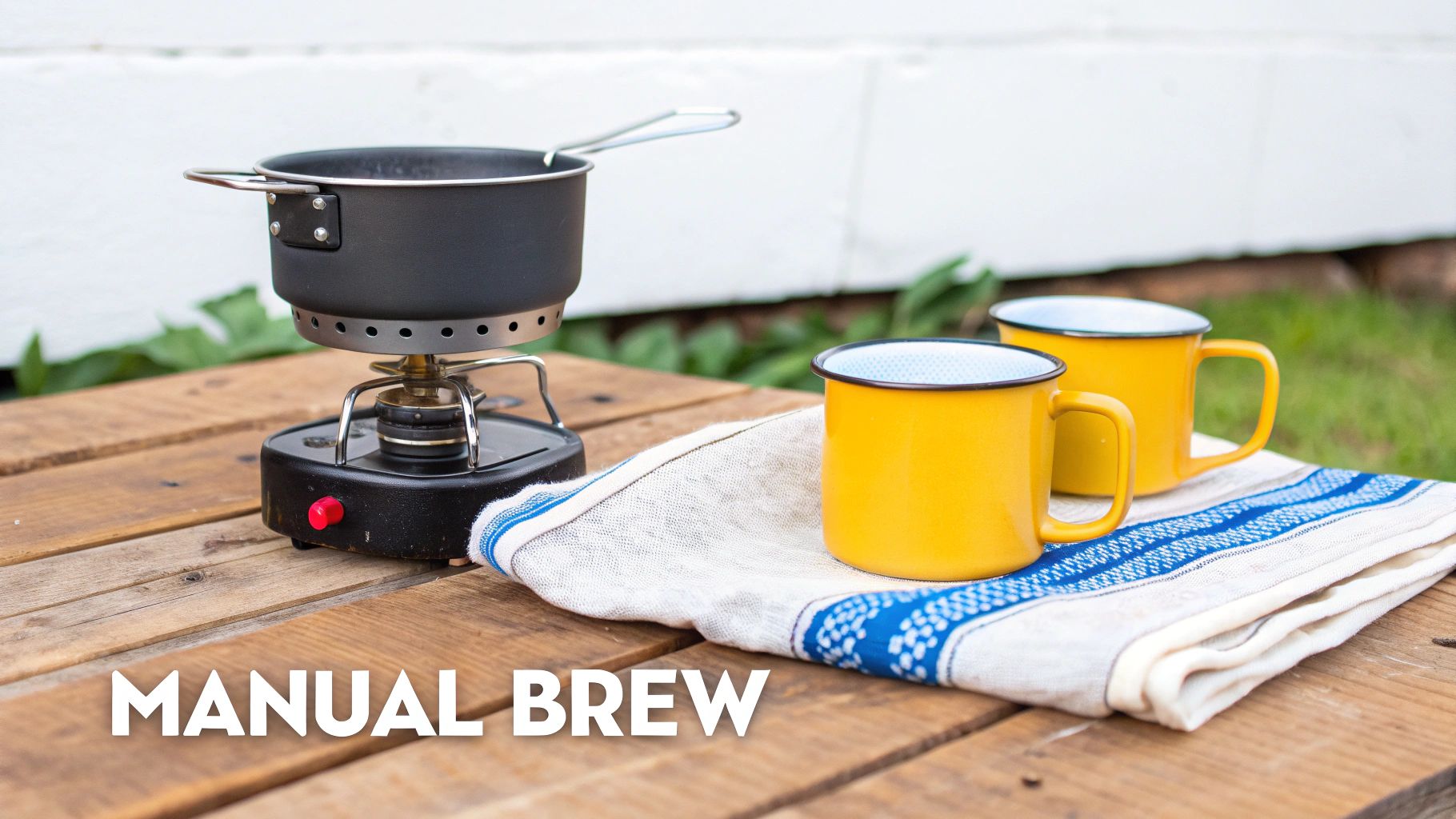
When you've got a bit more time and really want to sink into the process, these manual techniques give you incredible control over your final cup. They’re less about speed and more about the simple craft of making coffee.
These methods are my go-to for a slow weekend morning or a quiet moment while camping. There's something special about being this hands-on with your brew.
The Stovetop Cowboy Method
Don’t let the name fool you. "Cowboy coffee" is a classic, robust way to make coffee without a coffee maker using nothing but a pot. You simply boil coarse coffee grounds right in the water, which creates a rich, full-bodied brew that’s surprisingly smooth if you nail the technique.
First, bring your water to a rolling boil in a saucepan or kettle. Then, take it off the heat for 30-60 seconds. This is key—it stops the water from being so hot that it scorches the coffee. Stir in your grounds, put the pot back on low heat, and let it steep for about four minutes. Just make sure it doesn't boil again.
Now for the real trick: settling the grounds. Once steeped, take the pot off the heat and splash a little cold water over the top. This small temperature shock helps the grounds sink to the bottom, so you can pour a clean cup without getting a mouthful of grit.
This isn't just a historical novelty; it’s an incredibly efficient way to brew for a group when you're out camping. One large pot can serve everyone, making it a fantastic, communal experience around the fire.
Create an Improvised Pour-Over
If you’re a fan of the clean, bright flavors you get from a pour-over, it's surprisingly easy to rig one up with stuff you already have. This DIY approach gives you great control over the extraction, just like a fancy dripper. You just need a mug, a makeshift filter, and something to hold it in place.
For the filter, you can get creative:
- A fine-mesh kitchen sieve works perfectly.
- A clean, tightly woven cloth (like a bandana or cheesecloth) is a great reusable option.
- In a pinch, a sturdy paper towel will do the job.
Just drape or place your filter over the mug and add your medium-grind coffee. Heat your water to just off a boil, then pour it slowly and evenly over the grounds in a circular motion. A slow, steady hand is what ensures all the grounds get saturated evenly, which is the secret to a balanced, flavorful cup. If you want to dive deeper into how different variables can change your final brew, check out our guide on the best coffee brewing methods.
The DIY French Press
Love the rich, oily body of a French Press but don’t have one? No problem. You can get a very similar result with two mugs and a small plate or even a spoon. This method mimics the immersion and "pressing" of a traditional French Press, giving you that wonderfully textured cup.
Start by adding your coarse coffee grounds to one mug and pouring hot water over them. Let it all steep for about four minutes. I like to give it a gentle stir after the first minute to make sure all the grounds get a chance to bloom.
After the four minutes are up, it’s time to "press." Slowly pour the coffee into your second mug, using a small plate or the back of a spoon to hold the grounds back. It’s a simple separation technique, but it does a fantastic job of keeping the rich oils and flavors that make French Press coffee so beloved. It may not be as perfect as a metal mesh filter, but it’s a brilliant hack for getting that full-bodied experience just about anywhere.
The Ultimate No-Heat Method: Cold Brew in a Jar
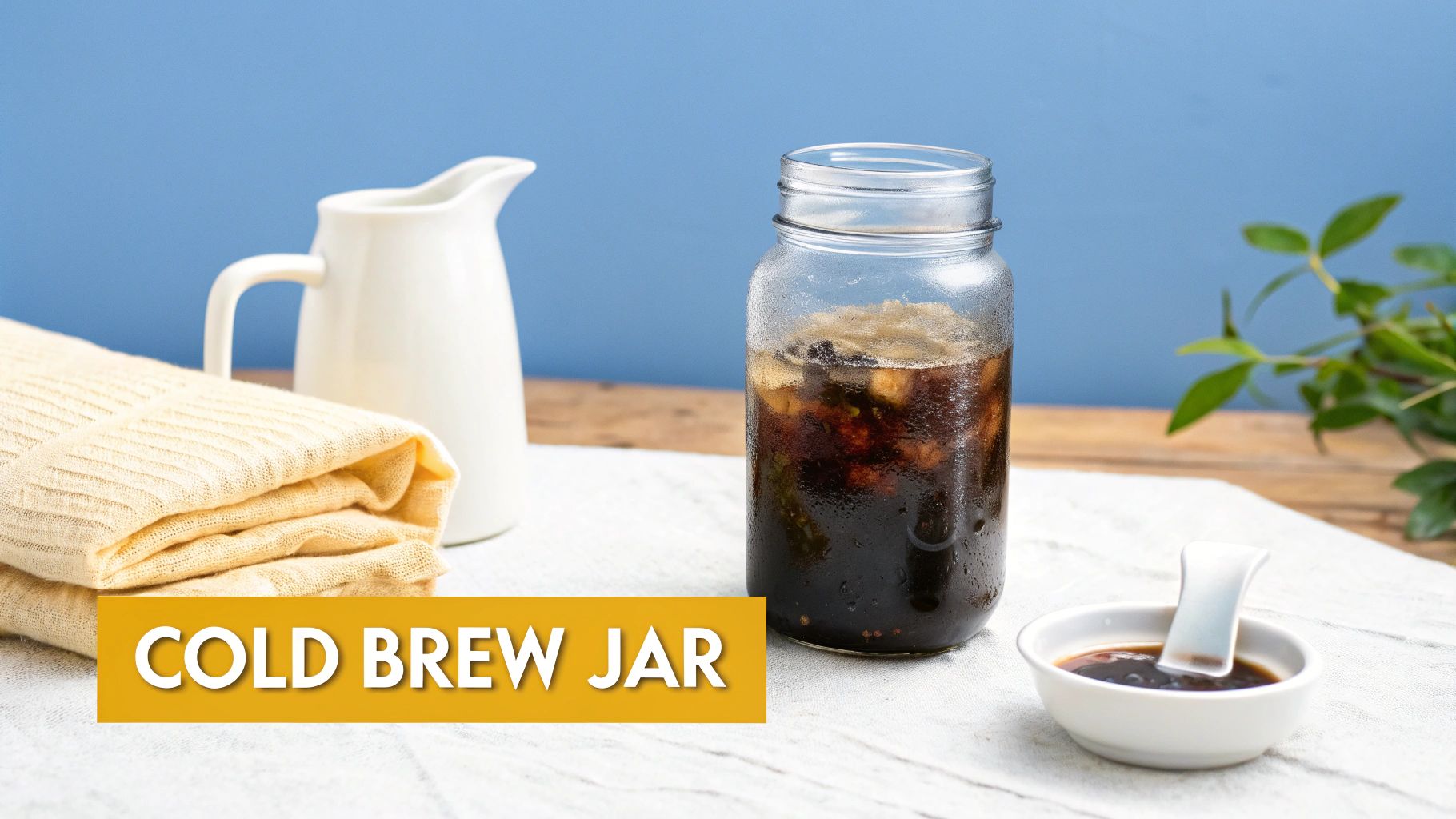
If you're after a coffee that's impossibly smooth, rich, and naturally sweet with almost no acidic bite, the cold brew method is calling your name. It's the ultimate set-it-and-forget-it technique to make coffee without a coffee maker, and it yields a beautiful concentrate that lasts for days. All you need is a big jar, some coffee, and water.
Unlike hot brewing methods that yank flavors out of the beans aggressively, cold brewing is a long, slow dance. Steeping the grounds in cold water over many hours gently coaxes out the deep, chocolatey notes and bright, fruity flavors, leaving the bitter compounds and harsh acids behind. The result is a velvety-smooth brew that’s noticeably easier on your stomach.
Getting Your Ratios and Grind Right
A fantastic batch of cold brew really comes down to two things: the right ratio of coffee to water and the perfect grind. You absolutely need a coarse grind for this—picture the texture of rough sea salt. If you go any finer, you risk over-extraction, which creates a muddy, bitter concentrate that’s a nightmare to filter.
As for the ratio, a great starting point is 1 part coffee to 4 parts water. This gives you a strong concentrate that you can dilute to your liking later.
- For a standard 32-ounce Mason jar: I typically use about 1 cup of coarsely ground beans and then fill the rest of the jar with cold, filtered water.
- Give it a gentle stir: Just enough to make sure all the grounds are wet. Then, seal it up tight.
Now for the easy part: let it steep. You can leave it on the counter or pop it in the fridge for anywhere from 12 to 24 hours. Any less than 12, and you'll get a weak, tea-like coffee. Go much past 24, and you might start pulling in some woody, funky flavors. For me, the sweet spot is usually around 18 hours.
Filtering and Storing Your Cold Brew
Once the steeping is done, it’s time to separate that beautiful, dark liquid from the spent grounds. This is probably the most important step for getting a clean, grit-free brew, but don't worry—you don't need any special gear.
Your goal is to simply pour the coffee through a filter into a clean pitcher or jar. A fine-mesh kitchen sieve is perfect for the first pass to catch the majority of the grounds. For an even cleaner finish, you can line that sieve with a cheesecloth, a clean bandana, or even a regular paper coffee filter. Just pour slowly and patiently to keep things tidy.
What you're left with is a potent, delicious coffee concentrate. If you want to dive deeper into all the ways you can use it, check out our guide on what is coffee concentrate. Store your brew in a sealed container in the fridge, and it'll stay fresh for up to two weeks.
When you're ready for a cup, just dilute the concentrate with water or milk—a 1:1 ratio is a good place to start—and adjust from there. It's fantastic over ice, but you can also gently heat it on the stove for a surprisingly smooth hot coffee.
Mastering the Details for Better Flavor
The real secret to a fantastic cup of coffee isn’t some complicated technique. It’s the small, deliberate choices you make along the way that transform a brew from just "good enough" to genuinely great, even when you make coffee without a coffee maker.
Let's start with the foundation: the coffee-to-water ratio. This single element dictates your brew's strength and overall flavor. A solid, all-purpose starting point is a 1:15 ratio. For every one gram of coffee, you'll want 15 grams (or milliliters) of water.
Don't have a scale? No problem. A good rule of thumb is about 2 tablespoons of coffee for every 6 ounces of water. Think of this as your baseline. From there, you can easily tweak it. If your first cup feels a bit weak, use a little more coffee next time. If it's too strong for your liking, just dial it back.
Why Grind Size Matters
The texture of your coffee grounds has a huge impact on the final taste. The core principle is simple: the longer the coffee and water are in contact, the coarser the grind needs to be.
- Coarse Grind (like sea salt): This is what you want for methods like Cowboy Coffee or cold brew, where the grounds steep for several minutes or even hours. A coarse grind slows down extraction, preventing that harsh, bitter taste.
- Medium-to-Fine Grind (like table salt): This is ideal for an improvised pour-over. The finer particles give the water more surface area to work with, pulling out flavor quickly as it passes through.
But what if you're caught with whole beans and no grinder? You've still got options. Just put the beans in a sealed bag and carefully crush them with a rolling pin or the bottom of a heavy pan. A blender can also work in a pinch—just use short, sharp pulses so you don't accidentally turn your beans into powder.
A tiny pinch of salt in your coffee grounds might sound strange, but it's an old-school diner trick for a reason. It can actually neutralize bitterness and round out the flavor, making for a noticeably smoother cup.
Filtration for a Cleaner Cup
Nobody wants to deal with a gritty, sludgy mouthful at the end of their coffee. Good filtration is the key to a clean finish. If you don't have paper filters on hand, a fine-mesh sieve is your next best bet.
For an even cleaner result, you can line that sieve with a piece of cheesecloth or even a clean bandana. This double-layer approach is surprisingly effective at catching even the finest sediment.
Of course, the desire to skip these steps entirely is a big reason high-quality instant coffee has seen such a resurgence. Since its debut way back in 1938, instant has evolved dramatically, fueling a market projected to grow from USD 18.12 billion in 2025 to USD 29.38 billion by 2032. This demand, driven by everyone from busy professionals to outdoor adventurers, shows just how much we value a perfect, no-fuss brew. You can dig into the numbers in this global instant coffee market forecast.
A Few Common Questions
Diving into brewing coffee without a dedicated machine can bring up a few questions. It’s a straightforward process, but getting a couple of small details right can be the difference between a great cup and a gritty, disappointing one. Let's tackle some of the most common things people ask.
What’s the Best Coffee Grind to Use?
Honestly, a standard medium grind—what you'd find in most pre-ground bags—is a great all-purpose choice, especially for a makeshift pour-over. It's versatile enough to work pretty well across the board.
But if you want to dial it in, matching the grind to your method is key.
- Coarse grind: Think chunky, like sea salt. This is perfect for Cowboy Coffee and cold brew, as it prevents over-extraction and makes filtering easier.
- Medium-fine grind: A little finer than table salt. This will give you a richer flavor with methods like the DIY French Press or an improvised pour-over.
Of course, for pure, uncomplicated convenience, you can't beat a high-quality instant coffee. It completely dissolves, so there’s zero guesswork about grind size or filtering. You just get a clean, rich cup every time.
How Do I Filter Coffee if I Don't Have Actual Filters?
You'd be surprised what you can find in your kitchen. A fine-mesh sieve or strainer is your best bet and works wonderfully. If you don't have one handy, a clean, tightly woven cloth is the next best thing—think cheesecloth, a bandana, or even a thin (and very clean!) tea towel.
In a real pinch, a sturdy paper towel will do the trick. Just be gentle and pour slowly, because it can tear. The goal is simple: create a barrier that lets the coffee through but holds back all those pesky grounds.
Don't forget the old-school settling trick from the Cowboy method. After the grounds have steeped, just a small splash of cold water will help them sink to the bottom. You can then pour a surprisingly clean cup right off the top.
Can I Make Something Like Espresso Without a Machine?
While you can't perfectly replicate the 9 bars of pressure from a true espresso machine, you can absolutely make a potent, concentrated brew that gets you close to that same intensity.
The trick is to use a much higher coffee-to-water ratio. Go heavy on the coffee and light on the water. This works best with the stovetop method or the makeshift French Press technique. You’ll end up with a rich, powerful shot of coffee that’s perfect for making a latte or just sipping straight.
For a super-fast and surprisingly rich shot, mixing a premium instant espresso powder with just an ounce or two of hot water is an incredible shortcut. It delivers that strong flavor punch with zero fuss.
For a consistently delicious brew no matter where your adventures take you, Cartograph Coffee offers premium organic instant coffee designed for people who refuse to compromise on taste. Explore our selection and see how good on-the-go coffee can be.