Making the best instant coffee is surprisingly simple. The secret is to start with high-quality, freeze-dried granules and use water that's hot, but not boiling—somewhere around 195-205°F is the sweet spot. This simple trick prevents scorching the delicate coffee crystals, giving you a smooth, rich flavor without that classic bitterness you might associate with old-school instant.
The Surprising Rise of Great Instant Coffee
Let's be honest, for a long time, instant coffee has had a certain reputation. It was often seen as the last-resort option, the thing you drank when "real" coffee wasn't around. For many, it just meant a thin, overly bitter cup that was all about speed and nothing about taste.
But that perception is quickly becoming a thing of the past. A massive shift is happening in the coffee world, turning instant from a compromise into a genuinely premium choice. This change is being led by a new wave of producers who are obsessed with quality, proving that convenience and fantastic flavor can go hand-in-hand. We're finally seeing the principles of specialty coffee applied to a format that fits our fast-paced lives.
From Necessity to Preference
These days, the demand for quick, high-quality coffee is through the roof. Busy professionals, outdoor adventurers, and really, anyone who values both their time and a great cup of coffee are looking for better options. And this isn't just a small trend; it's a major market movement.
The global instant coffee market is projected to skyrocket from USD 46.9 billion in 2025 to USD 76.4 billion by 2035. This incredible growth is being driven by consumers, especially younger ones, who expect immediate satisfaction without having to lower their standards for a great coffee experience.
So, how did this happen? The evolution really comes down to two key things:
- Superior Beans: It all starts with the coffee itself. Using high-quality, single-origin, organic beans is absolutely essential. The finished product can only ever be as good as what you start with.
- Advanced Processing: Modern techniques are a game-changer. Once you learn what freeze-dried coffee is, you understand how this gentle, low-heat method preserves the bean's original aroma and flavor profiles way better than the old-school, high-heat spray-drying methods ever could.
Why Your Technique Matters
At Cartograph Coffee, we’re firm believers that a great product is only half the story. The other half is how you prepare it. Think about it—a skilled barista can pull the perfect espresso shot using the right technique, and you can do the same thing at home by crafting a remarkable cup of instant coffee with just a few simple adjustments.
The secret to exceptional instant coffee lies in treating it with the same care as freshly ground beans. The right water temperature, a balanced ratio, and a moment of attention can elevate your daily cup from good to truly great.
That's what this guide is all about. We’ll walk you through everything, from mastering the fundamentals to exploring creative recipes that show off just how versatile a premium instant coffee can be. It's time to forget what you thought you knew and discover how to make the best instant coffee you've ever had, right from your own kitchen.
Getting the Fundamentals Right: Water and Ratios
The secret to a truly exceptional cup of instant coffee isn’t about complicated gadgets or elaborate techniques. It really just boils down to two things: the quality of your water and the precision of your measurements. Mastering these fundamentals is the single most important step you can take to transform a quick coffee into a genuinely delicious one.
So many people, without even realizing it, sabotage their coffee right from the start by using water straight from a rolling boil. This is probably the most common mistake I see, and it’s the number one reason instant coffee sometimes gets a bad rap for tasting bitter or harsh.
Pouring boiling water—that’s 212°F (100°C)—directly onto delicate coffee granules literally scorches them on contact. This aggressive heat shock doesn't just dissolve the coffee; it burns it. This destroys all the subtle, aromatic compounds and leaves you with a flat, acrid flavor. Think of it like toasting bread: gentle, even heat brings out the best flavor, while intense, direct heat just creates char.
Finding the Perfect Water Temperature
To avoid this, you need to let your water cool down just a bit. The ideal range for brewing any coffee, including a premium instant like Cartograph, is between 195-205°F (90-96°C). This temperature is still plenty hot enough to dissolve the granules perfectly and extract those rich, complex flavors without scalding them.
Fortunately, you don’t need any special equipment to hit this sweet spot.
- The Easiest Method: Just bring your water to a full boil, then take it off the heat. Let it sit for 30 to 60 seconds before you pour. That short pause is all it takes to bring the temperature down into that perfect brewing zone.
- For Precision: If you happen to have an electric kettle with temperature control, you can set it directly to your preferred temperature within the 195-205°F range.
This simple adjustment makes a world of difference. It’s the key to unlocking the smooth, well-rounded taste that a high-quality organic instant coffee is meant to have.
Nailing the Golden Ratio
Once your water is at the right temperature, the next piece of the puzzle is the coffee-to-water ratio. This is what determines the strength and body of your final cup. While personal preference definitely plays a big role here, starting with a proven baseline is essential for getting consistent results.
A great starting point for a balanced, flavorful cup is the 1:50 ratio. This simply means for every 1 part coffee, you use 50 parts water.
Pro Tip: We recommend a standard ratio of 2 grams of Cartograph Coffee for every 100 milliliters (or 3.4 ounces) of water. This creates a cup that is robust and flavorful without being overpowering.
Using a digital kitchen scale is the most accurate way to measure, especially when you're first trying to dial in your perfect recipe. If you don't have a scale handy, one slightly rounded teaspoon of our instant coffee granules is approximately 2 grams. For a more detailed breakdown, you can check out our guide on how much instant coffee to use per cup for various mug sizes.
This focus on quality and precision is exactly why premium instant coffee is making such a comeback, especially among discerning coffee drinkers. The U.S. instant coffee market, valued at USD 6.26 billion in 2024, is projected to grow to USD 8.80 billion by 2032, which shows a clear demand for convenient options that don't compromise on taste. You can dive deeper into this market growth and what it means for coffee lovers on fortunebusinessinsights.com.
The best part about these ratios? They're totally flexible. Think of them as a starting line, not a finish line. The following table offers a quick reference for adjusting the ratio to suit your taste, whether you're at your desk or setting up camp.
Instant Coffee Brewing Ratios for Different Strengths
This table provides a quick reference for achieving your desired coffee strength by adjusting the ratio of coffee to water.
| Desired Strength | Coffee Amount (Cartograph Coffee) | Water Amount (ml/oz) | Tasting Notes |
|---|---|---|---|
| Mild & Smooth | 1.5 grams | 100 ml / 3.4 oz | A lighter-bodied cup, perfect for a gentle morning start or an easy-drinking afternoon coffee. |
| Balanced & Standard | 2 grams | 100 ml / 3.4 oz | The ideal starting point. Rich and full-flavored with a satisfying balance of strength and smoothness. |
| Strong & Bold | 2.5 grams | 100 ml / 3.4 oz | For those who prefer a more intense, robust flavor profile with a powerful kick. Great for making iced coffee. |
Experimentation is absolutely key. Start with the standard 2 gram ratio, and if you find it a bit weak, add a little more coffee next time. If it’s too strong, dial it back slightly. By controlling your water temperature and your ratio, you put yourself in complete control of the final result.
Simple Techniques for a Smoother Cup
So you’ve got your water temperature and ratio dialed in. Honestly, you're already making better instant coffee than most people. Now, let's get into the little details that take a cup from "good" to "genuinely great." These simple techniques make a massive difference in the final taste and texture, ensuring every sip is perfectly smooth.
The whole point here is to get rid of any chance of clumps and create a consistently delicious brew. You don't need any fancy gear—just a bit more intention. Think of it as the final polish.
This visual guide breaks down the core process we're talking about, really emphasizing the importance of the temperature and ratios we've already covered.
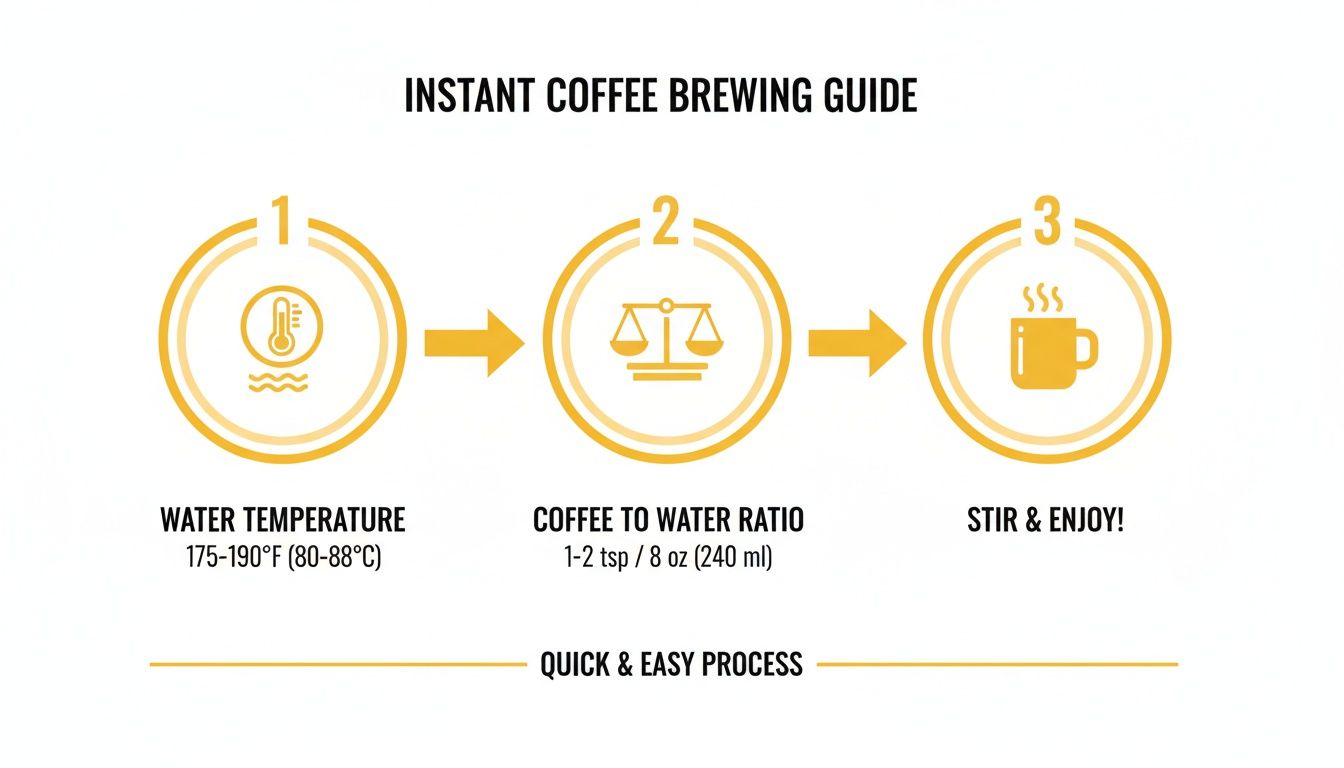
Mastering these two fundamentals—water and ratio—is the foundation for a perfect cup, every single time.
The Art of the Bloom
If you’ve ever watched a barista make a pour-over, you’ve probably seen them add a little bit of hot water to the grounds first and just let it sit. That's called "blooming," and it lets trapped gases escape. You can borrow that same principle for instant coffee to get a smoother, less bitter result.
Just add your coffee granules to the mug, then pour in only enough hot water to cover them—maybe a tablespoon or two. Let this little slurry sit for about 15-20 seconds. You’ll see the coffee dissolve into a rich, concentrated paste. This gentle start prevents shocking the granules and helps release their full flavor without any harshness.
To Stir, Whisk, or Froth
After you've bloomed the coffee, it's time to add the rest of your hot water. How you mix it in actually matters. The best method really just depends on what tools you have on hand and the kind of texture you're after.
- Gentle Stirring: A good old-fashioned spoon works perfectly well. Pour the rest of the hot water in slowly while you stir, and keep going until it’s all combined. It's the classic method for a reason.
- Vigorous Whisking: For a slightly frothier texture, a small wire whisk is fantastic. The whisking action pulls more air into the coffee, which creates a lighter body and a nice little micro-foam on top.
- Using a Frother: If you have a handheld milk frother, you've got a secret weapon. After blooming, add your water, then buzz it with the frother for just 5-10 seconds. The result is a silky, café-style texture that feels incredibly luxurious.
A common mistake is to just dump all the water in at once and give it a lazy stir. That almost always leaves undissolved bits at the bottom, which means your first sip is weak and your last one is sludgy. Taking an extra moment to dissolve it properly makes all the difference.
The Shaking Method for Iced Coffee
When you're making iced coffee, shaking is a total game-changer. Trying to dissolve coffee granules in a big glass of cold water or milk is just frustrating—you’re always left with stubborn clumps. Shaking, on the other hand, creates a perfectly smooth and frothy base in seconds.
Here’s all you have to do:
- Add your instant coffee and a small amount of cold water (or milk) to a jar with a tight lid, like a mason jar or a travel bottle.
- Screw the lid on tight and shake it like you mean it for about 20-30 seconds.
- You'll see the mixture turn into a beautiful, foamy coffee concentrate.
- Now, just open it up and top it off with more cold water, milk, and ice.
This technique isn't just effective; it's incredibly fast, which makes it perfect for those mornings when you need a great iced coffee without the fuss. The aeration you get from shaking creates a delightful texture you just can't get from stirring alone.
Creative Recipes Beyond the Basic Brew
Once you’ve nailed the perfect cup of hot coffee, a whole world of possibilities opens up. A high-quality organic instant coffee, like Cartograph’s, isn't just for a quick morning brew. Its clean taste and effortless solubility make it a secret weapon in the kitchen, perfect for crafting drinks that easily rival what you’d get at a specialty café.
This is where the real fun starts. You can forget any old notions about instant coffee and start thinking of it as a smooth, potent coffee concentrate just waiting to be transformed. Whether you need a refreshing afternoon pick-me-up or a cozy, indulgent treat, these recipes show just how versatile a great instant coffee can be.
Perfecting the Classic Iced Coffee
We’ve all been there—trying to make iced coffee at home only to end up with stubborn, undissolved clumps floating around. The most common mistake is dumping the coffee granules directly into a full glass of cold milk or water. The real key to a perfectly smooth and balanced iced coffee is to create a concentrated base first.
Here’s my foolproof method for a clump-free iced coffee every time:
- Grab a small jar with a tight-fitting lid. Add 2.5 grams of Cartograph Coffee (that’s about one heaping teaspoon) and 2 tablespoons of cold water.
- Seal the jar and shake it like you mean it for 20-30 seconds. This creates a silky, frothy coffee concentrate that’s completely dissolved.
- Fill your favorite glass with ice and pour that beautiful coffee concentrate right over the top.
- Finish it off with 6-8 ounces of cold water or your milk of choice. Oat, almond, and regular dairy milk all work wonderfully. Give it a gentle stir, and you're good to go.
That little bit of shaking aerates the coffee, giving it a much lighter, smoother texture that’s absolutely perfect for a cold drink on a warm day.
The Velvety Dalgona Whipped Coffee
Dalgona coffee became a social media sensation for a good reason—it’s as delicious as it is beautiful. This "whipped coffee" method creates a thick, velvety foam that sits like a cloud on top of chilled milk. Using a quality instant coffee is non-negotiable here, as it’s the flavor backbone of the entire drink.
Ready to craft this impressive treat?
- Combine: In a mixing bowl, add 2 tablespoons of instant coffee, 2 tablespoons of sugar, and 2 tablespoons of hot water.
- Whip: Using a handheld electric mixer or a milk frother, whip the mixture on high speed for about 3-5 minutes. You'll watch it transform from a dark liquid into a thick, glossy, light-brown foam with stiff peaks.
- Serve: Fill a glass with ice and your milk of choice, leaving an inch or two of space at the top. Spoon that glorious whipped coffee foam right over the milk.
The magic of Dalgona is all in that equal-parts ratio. You might be tempted to cut back on the sugar, but it provides the essential structure needed to keep the foam stable and fluffy. Trust the process!
Indulgent and Rich Spiced Mocha
When you’re craving something that feels like a warm hug in a mug, a spiced mocha is the answer. This recipe brings together deep chocolate notes, the warmth of cinnamon, and the robust flavor of good coffee for a truly decadent experience.
This is one of my favorite recipes to customize. Here’s a great starting point:
- In your go-to mug, bloom 2 grams of instant coffee with just a tablespoon of hot water to dissolve it.
- Stir in 1 tablespoon of high-quality cocoa powder, 1-2 teaspoons of maple syrup (or sugar), and a pinch of cinnamon. Keep stirring until it forms a smooth paste.
- Slowly pour in 8 ounces of hot or steamed milk, stirring continuously until everything is perfectly blended and creamy.
- If you want to go all out, top it with a little whipped cream and a dusting of cocoa powder.
The global coffee scene is always changing, and while classic, unflavored instant coffee still holds about 85.01% of the revenue share, people are increasingly looking for more creative options. Flavored varieties are gaining traction fast, which shows just how much we all love drinks like this mocha. You can see more consumer trends in this instant coffee market report. For even more ideas, check out some of our other favorite instant coffee recipe ideas that go way beyond the basic brew.
Your Essential Instant Coffee Toolkit
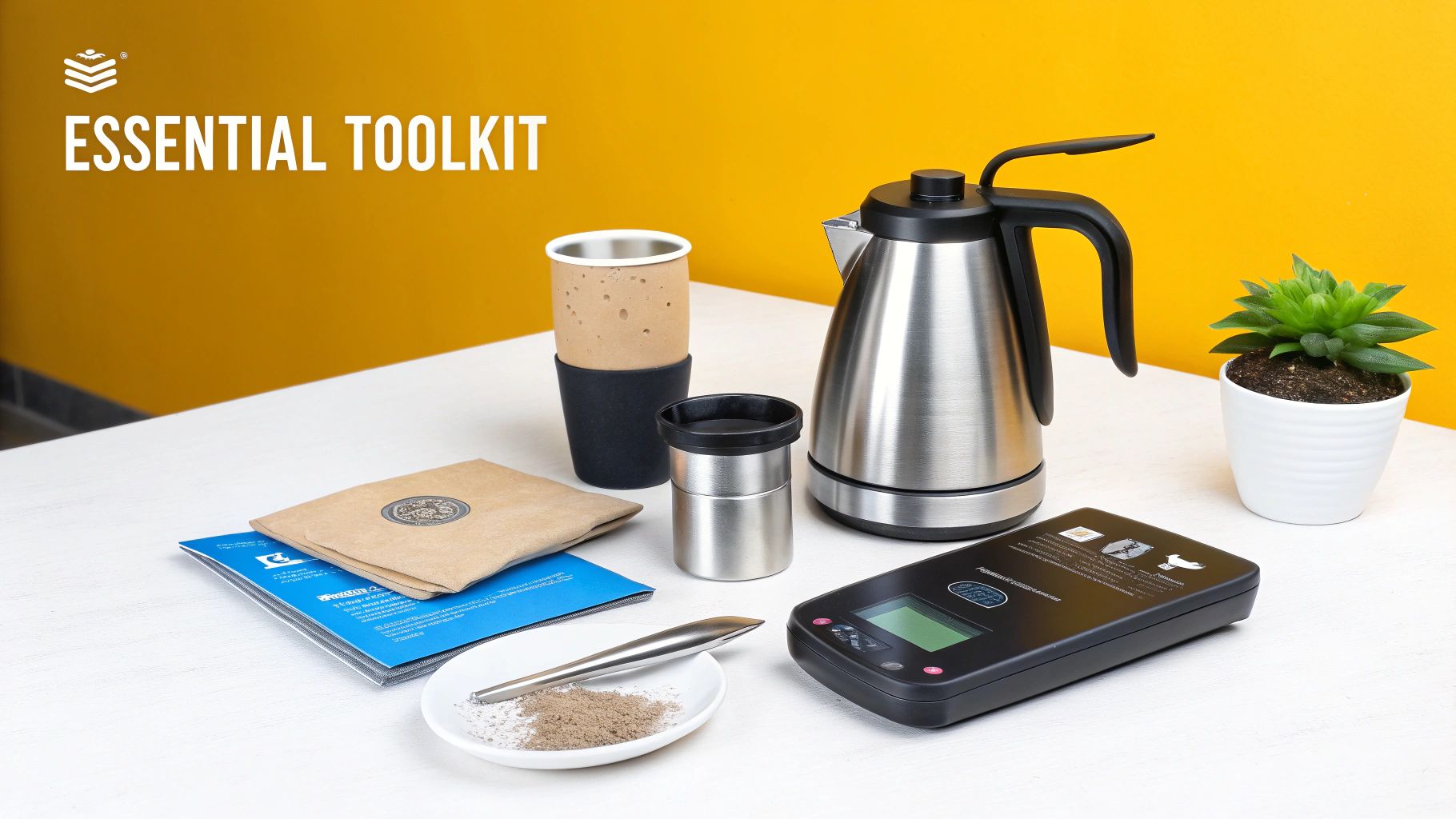
You really don't need a counter overflowing with expensive gear to make a fantastic cup of instant coffee. That’s the beauty of it—simplicity. But, a few key tools can take your daily brew from just "good" to consistently great, no matter where you happen to be.
Think of it less about complexity and more about control. Having the right equipment means you can repeat what works, guaranteeing that perfect cup every single time, whether you're in your kitchen, at your desk, or deep in the backcountry.
The Home Barista Setup
When you’re in your own kitchen, a couple of small investments pay huge dividends for your daily ritual. This is your chance to really dial in the details, and that precision translates directly into better flavor. It’s your coffee lab—a place to experiment with ratios and temperatures to find your perfect cup.
Here are the two tools that will make the biggest difference at home:
- Digital Kitchen Scale: If you want to master instant coffee, a scale is your best friend. A simple digital scale that measures in grams removes all the guesswork. A 2-gram serving can look surprisingly different from one scoop to the next, but a scale makes it perfect every time.
- Gooseneck Kettle: Honestly, any kettle will get the job done. But a gooseneck gives you incredible control over your pour, and many electric models let you set the exact water temperature. Aiming for that sweet spot of 195-205°F (90-96°C) prevents you from scorching the coffee, which is the secret to a much smoother taste.
The Efficient Office Kit
Making great coffee at the office is a completely different game. The name of the game is convenience, speed, and a tiny footprint. You need tools that can disappear into a desk drawer but still pull their weight when you need a quality brew.
Your office coffee break shouldn't feel like a compromise. A minimalist kit can easily outperform that old breakroom coffee machine, giving you a moment of genuine enjoyment in a busy day.
The goal is to replicate your home process with streamlined, office-friendly gear.
Consider stashing these essentials in your desk drawer:
- Personal Electric Kettle: A small, 0.5-liter electric kettle is an absolute game-changer for the office. It heats just enough water for a cup or two, it’s lightning-fast, and it takes up almost no space.
- Insulated Mug or Tumbler: This one’s non-negotiable. A quality insulated mug keeps your coffee hot for so much longer, meaning you can actually sip and enjoy it through a meeting without it turning lukewarm.
- Measuring Spoon: If bringing a scale to work feels like a bit much, a dedicated measuring spoon is the next best thing. Find one that consistently holds about 2 grams of your Cartograph Coffee, and you’ll keep your brews consistent.
The Ultimate Travel and Camping Rig
When you're on the move, your toolkit needs to be three things: durable, lightweight, and dead simple. This is where a premium instant coffee truly shines—no fuss, no mess, just great coffee wherever your adventure takes you.
Here, the focus shifts from pinpoint precision to pure practicality.
Your adventure-ready kit should include:
- Durable Insulated Thermos: A high-quality thermos is your all-in-one kettle and mug. Fill it with hot water before you leave the house (or at a gas station stop), and you'll have perfectly heated water ready to go for hours.
- Pre-Measured Coffee Packs: This is a pro tip for saving space and avoiding messes. Before your trip, measure out single servings of coffee into small, reusable containers or sealed bags. Brewing becomes as simple as tear, pour, and stir.
- A Sturdy Spoon or Stir Stick: Don’t overlook the basics! Pack a long-handled titanium or stainless steel spoon that can easily reach the bottom of your thermos or tall travel mug.
Common Questions About Making Great Instant Coffee
Even when you think you've got it down, a few questions always seem to pop up. Nailing those final details is what takes a cup of coffee from just "good enough" to something you genuinely look forward to drinking. Let's run through some of the most common questions we get, with quick answers to help you perfect your brew.
This is your go-to guide for troubleshooting. Whether your coffee tastes a little off or you're just wondering how to make the perfect iced latte on a hot day, you'll find the fix here.
Can I Use Cold Water to Make Instant Coffee?
You absolutely can. In fact, using cold water is my secret weapon for making fantastic iced coffee in a hurry. A quality freeze-dried coffee, like the one we've crafted at Cartograph, dissolves surprisingly well in cold liquids—you just need the right technique to avoid those annoying clumps.
Forget trying to stir granules into a full glass of cold water or milk. That's a recipe for frustration. Instead, try this:
- Toss your coffee granules into a jar with a lid that seals well. A mason jar works perfectly.
- Add just a splash of cold water or milk, about an ounce or two.
- Screw the lid on tight and give it a hard shake for about 30 seconds.
This little trick whips up a smooth, frothy coffee concentrate without a single lump in sight. From there, just pour it over a glass full of ice and top it with more water or milk. It's a game-changer for getting a refreshing, cafe-style cold coffee in less than a minute.
Why Does My Instant Coffee Taste Bitter?
If you're getting a bitter, harsh taste, the culprit is almost always water that's too hot. It's hands-down the most common mistake I see people make. Pouring water at a full, rolling boil (212°F or 100°C) literally scorches the delicate coffee crystals.
When you burn the coffee like that, you destroy all the complex, subtle flavors and are left with nothing but that acrid, bitter aftertaste.
The fix couldn't be simpler: after your kettle boils, just let it sit for 30 to 60 seconds before you pour. That brief pause is all it takes for the temperature to fall into the sweet spot of 195-205°F (90-96°C). It's still plenty hot to dissolve the coffee and extract all that rich flavor, but it's not hot enough to burn it.
What Is the Best Way to Store Instant Coffee?
To keep your coffee tasting fresh from the first scoop to the last, you have to protect it from its four biggest enemies: air, moisture, heat, and light.
The best thing you can do is store it in a completely airtight container. While the jar it comes in is a good start, a dedicated coffee canister with a solid seal is even better. Keep that canister somewhere cool, dark, and dry—a kitchen pantry or cupboard is ideal. Whatever you do, avoid the fridge or freezer. The constant temperature changes create condensation, which is just another word for moisture, and moisture is the fastest way to ruin good instant coffee.
Is Freeze-Dried Better Than Spray-Dried Instant Coffee?
Yes, and the difference is massive. It's not just marketing jargon; the drying method has a huge impact on how the coffee actually tastes in your cup.
- Freeze-Drying: This is a much more delicate, low-and-slow process. Liquid coffee is frozen solid, then put in a strong vacuum. This causes the frozen water to turn directly into vapor, leaving the coffee solids behind. Because there’s no harsh heat, all the original, fragile aroma and flavor compounds are preserved.
- Spray-Drying: This is the fast and cheap method. Liquid coffee is sprayed as a fine mist into a chamber of scorching hot air, which evaporates the water almost instantly. The problem is, that intense heat also destroys most of the nuanced aromatic oils, leading to a taste that's often flat, one-dimensional, and sometimes burnt.
There's a reason premium instant coffee is always freeze-dried. It produces a final cup that tastes remarkably close to a traditional pour-over or French press. It’s a quality difference you can smell the second you pop the lid and taste from the very first sip.
Ready to put these tips into practice with a truly superior instant coffee? The Cartograph Coffee team is dedicated to crafting organic, freeze-dried coffee that delivers exceptional flavor and convenience without compromise.
Discover the Difference and Shop Now at cartographcoffee.com