You're standing at a trailhead with a warm coffee craving, a cold water bottle, and less patience than the morning commute allows. Waiting for a batch of cold brew isn't practical, and pouring hot coffee over a few melting cubes often produces a weak, watery drink. The useful question isn't whether you have time for a café-style ritual. It's how to make iced coffee quick while keeping enough flavor and strength to make the cup worth drinking.
The fastest answer starts with instant coffee, then branches into three upgrades: a shaken concentrate for texture, flash-chilled brewed coffee for deeper flavor, and coffee ice cubes for protection against dilution. Each method solves a different problem, so the right choice depends on whether you care most about speed, taste control, caffeine consistency, or carrying everything in a pack.
Why Instant Coffee Is the Fastest Path to Iced Coffee
Instant coffee earns its place in a fast iced coffee routine because the brewing work has already happened. You're not extracting fresh grounds at the counter. You're rehydrating soluble coffee, which removes the grinder, brewer, filter, and cooling wait from the process.
That speed-first role has a long history. The earliest documented instant coffee version appeared in Britain in 1771, followed by David Strang's 1890 patent for soluble coffee powder and widespread adoption of freeze-dried forms during World War II. In the United States, instant coffee grew from one out of every 16 cups in 1946 to one out of every four cups in 1954, a sharp example of how quickly convenient coffee formats scaled when people valued ease and portability. Read the history of instant coffee

What you gain and what you give up
A jar or packet of freeze-dried granules travels cleanly in a desk drawer, glove box, or hiking kit. It doesn't need refrigeration before mixing, and the equipment list can be as short as a spoon, a bottle, and ice. That matters at a trailhead, where carrying a kettle and brewer adds bulk for a result you could make with a small portion of coffee and cold water.
The trade-off is flavor nuance. Instant coffee can deliver a satisfying roasted base, but it generally gives you less control over extraction than freshly brewed coffee. You can still adjust the cup with milk, water, sweetness, shaking, or coffee ice, but the starting point is fixed once the granules are made.
Practical rule: Use instant when the coffee needs to fit your morning, not the other way around.
Cold coffee is no longer a fringe order. One industry overview places the global cold brew market at almost USD 4 billion in 2026, with continued growth projected through 2031, while another estimate values the broader iced coffee market at USD 6.2 billion in 2026 and projects USD 12.3 billion by 2035. See the market context for cold coffee Those figures help explain why a fast homemade method feels normal now. The format is established, and instant coffee is its most portable foundation.
The Simplest No-Brew Method in Cold Water or Milk
For a clean, no-equipment iced coffee, start with a small amount of liquid instead of filling the glass immediately. Put instant coffee in the bottom of a glass, add a splash of cold water or milk, and press the granules against the side with a spoon until you have a smooth paste.
That small step prevents the familiar cold-coffee problem: dry crystals floating on top, clumps sinking to the bottom, and a gritty last sip. Once the paste looks even, add the remaining liquid, stir again, and pour over ice.
A reliable starting routine
Use one rounded teaspoon per six to eight ounces of liquid as a starting point, then adjust to taste. Milk gives the coffee more body and a naturally softer impression, while water keeps the roasted flavor more direct. If you prefer a lighter drink, add more liquid after the coffee has dissolved rather than reducing the initial agitation.
Freeze-dried granules usually dissolve in about 10 to 30 seconds with stirring, while spray-dried products can take about 20 to 60 seconds and may clump more readily in a full glass. Learn why instant coffee dissolves at different speeds A small whisk, battery frother, or tightly sealed bottle helps with stubborn crystals, but a spoon works if you form the paste first.
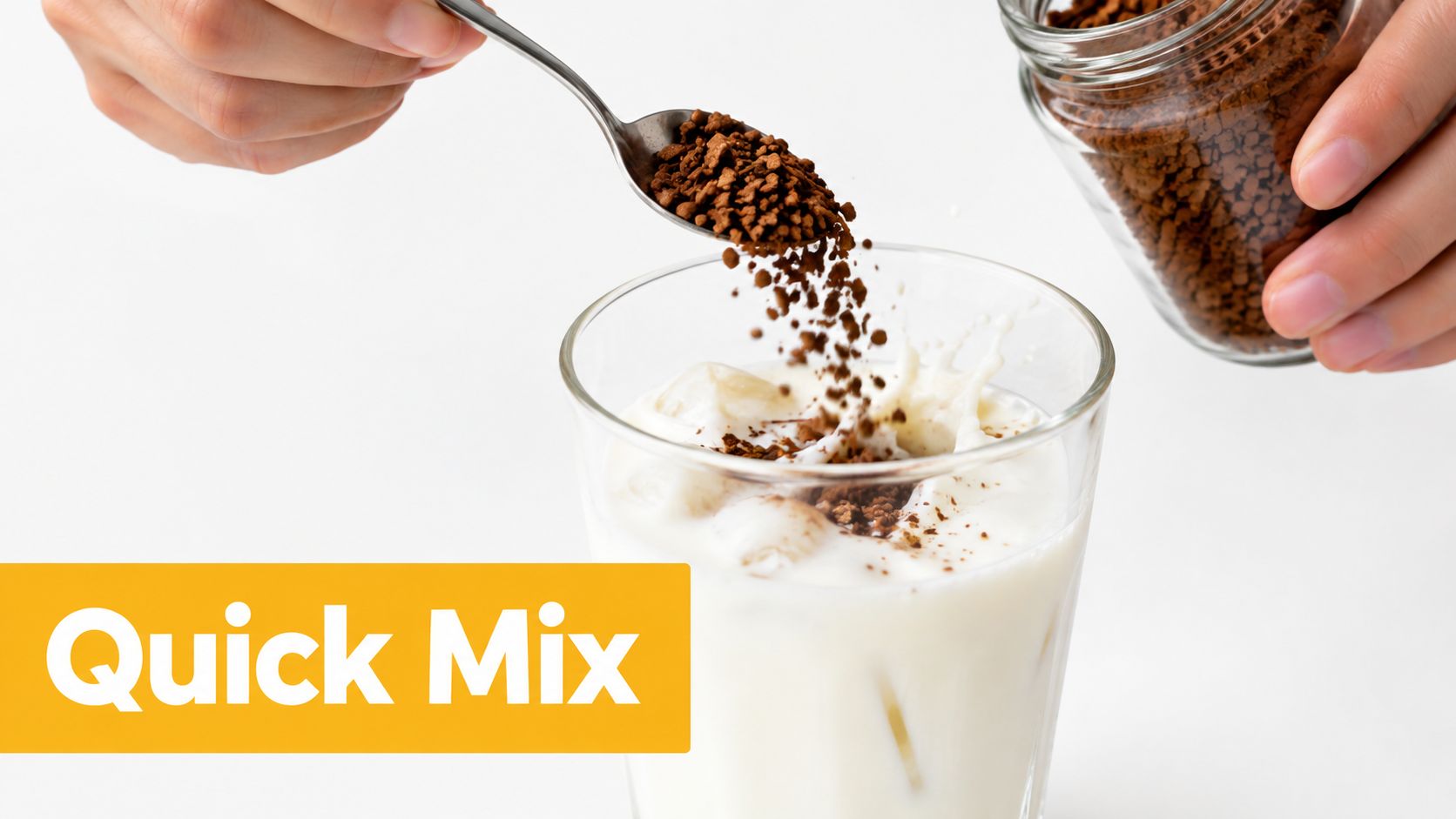
For a more detailed cold-water walkthrough, see this guide to making instant coffee with cold water. The core technique stays the same whether you're mixing in a tumbler at work or a bottle beside a campsite.
Water, milk, and ice choices
Use cold filtered water when you want clarity and a sharper coffee profile. Dairy or oat milk works better when the coffee tastes thin, because the added body makes a modest amount of coffee feel fuller. Add ice only after the coffee base is smooth, especially if you're mixing in a narrow bottle where a spoon can't reach the bottom.
This method is the best choice when you have less than a minute and no desire to clean gear. It won't reproduce the layered aroma of a fresh pour-over, but it gives you control over concentration without waiting for heat or extraction.
Shaken and Stirred Cold-Brew Style in Under a Minute
Shaking changes the experience more than the ingredient list. Instant coffee, cold water, and ice can become a frothy, café-like drink when you give them vigorous agitation in a sealed jar or cocktail shaker.
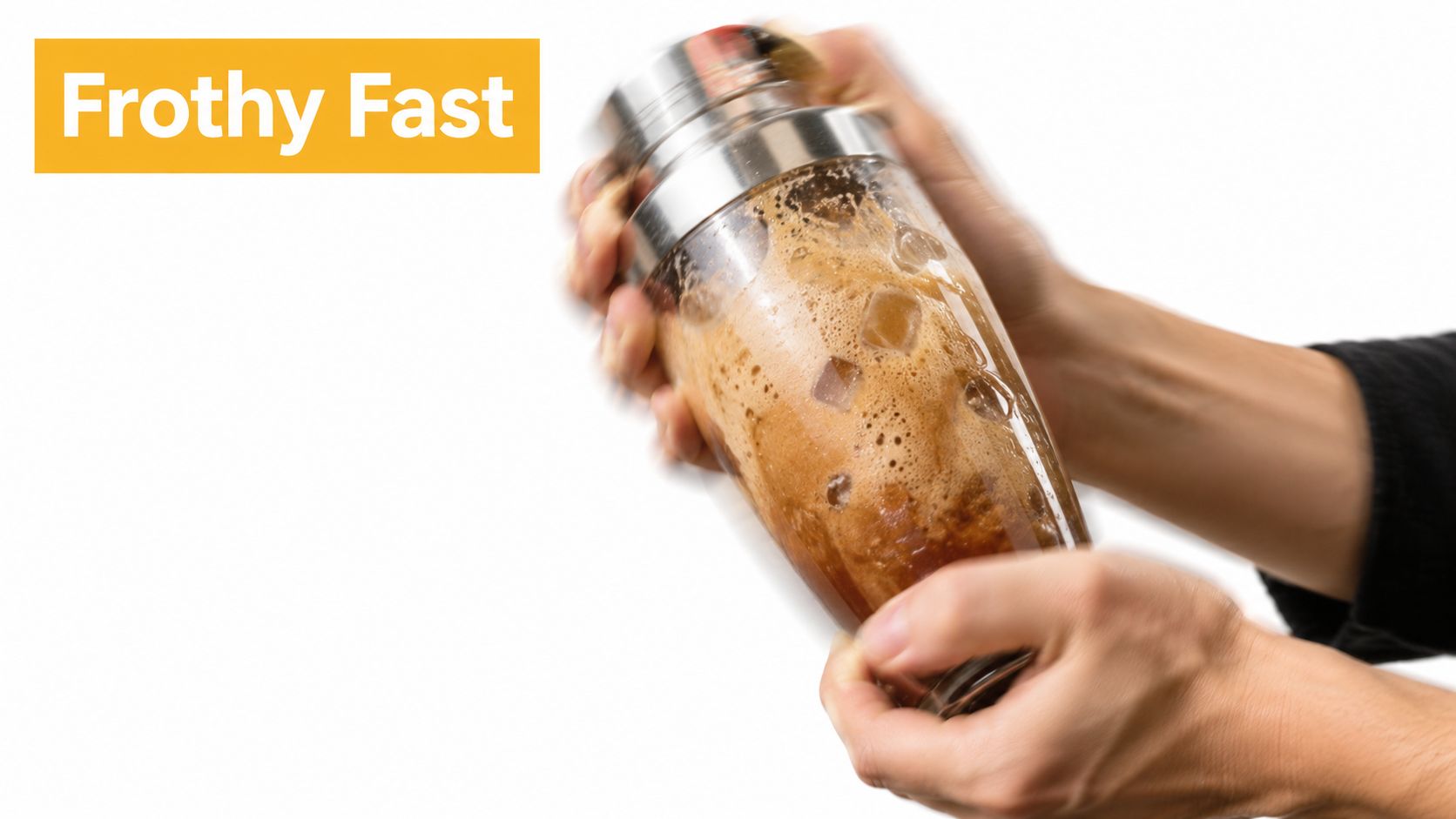
Use two teaspoons of instant coffee and four ounces of cold water in a jar. Seal it, shake hard for 15 to 20 seconds, then pour the mixture over fresh ice and add milk or more water to taste. The motion dissolves the granules quickly and whips air into the liquid, giving the surface a light foam that makes the drink feel more composed than a spoon-stirred glass.
Why the texture works
Shaking doesn't recreate the extraction of a long cold brew. The instant coffee has already been extracted before it reaches your kitchen. What agitation does provide is rapid contact between liquid and granules, even distribution, and micro-foam. That airy surface can suggest the visual richness people associate with espresso crema, although the flavor remains that of the instant coffee you chose.
Fine, easily broken crystals tend to dissolve more readily than coarse granules. If your first shake leaves sediment, use a smaller amount of water at the start, shake again, and then dilute over ice. A jar with a wide mouth is easier to clean, while a cocktail shaker produces a colder, more polished pour.
If you can't shake, stir the coffee and cold water into a paste, add the remaining liquid, and whisk aggressively. You'll lose some foam, but the drink will still be smooth when the granules dissolve fully. Compare another instant cold-brew approach
The method suits a busy desk, car cup holder, or campsite because one container can mix and serve the concentrate. Put the ice in the final glass rather than shaking large cubes for too long if you want to limit melt and keep the coffee bold.
Here's a visual walkthrough of the movement and texture this technique can produce:
Flash-Chill Hot Coffee Over Ice for Café-Style Depth
Flash-chilling is the upgrade for people who want fresh-brewed character without waiting for a full cold-brew steep. Heat extracts coffee oils, acids, and aromatic compounds efficiently, then the ice cools the drink immediately. The result is brighter and more expressive than a typical cold brew, with a fuller mouthfeel when the recipe is balanced.
The reliable framework is a 1:1 split between hot brewing water and ice. One practical serving uses about 30 grams of coffee, 175 grams of hot water, and 150 grams of ice, producing a normal single-serving yield while controlling dilution. Follow this flash-chilled iced coffee method
Build strength before the ice melts
Grind slightly finer than you would for a standard hot pour-over, and keep total brew time around three to three and a half minutes. The reduced hot-water load can lower extraction, so the finer grind and longer contact help preserve strength. Use a pour-over brewer, AeroPress, or French press, with water just off the boil and a pre-chilled serving vessel if available.
Place the ice in the carafe or glass before brewing. Pour slowly and steadily so each stream hits the ice and cools on contact, then swirl the finished coffee immediately to equalize temperature and dilution. Large, dense cubes are easier to manage than crushed ice because they melt more slowly.
The point of flash-chilling isn't merely to make hot coffee cold. It's to preserve enough extraction and aroma that the finished drink still tastes like brewed coffee.
If you're using instant coffee rather than grounds, brew a small hot concentrate first and pour it over ice. That gives the granules a more complete dissolution and makes it easier to add milk without losing the coffee's presence. Flash-chilling asks for more gear and attention than the no-brew method, but it's the better choice when aroma and acidity matter more than absolute speed.
Matching Each Method to Your Morning or Adventure
No single fast iced coffee method wins every morning. The no-brew approach is easiest to carry, shaking adds texture without adding a brewer, flash-chilling offers the most brewed-coffee character, and coffee ice cubes protect whichever base you already prefer.
| Method | Time | Taste Control | Caffeine | Portability |
|---|---|---|---|---|
| No-brew instant | Fastest | Adjust liquid, milk, and sweetness | Consistent when the portion is consistent | Excellent for desks, cars, and trailheads |
| Shaken instant concentrate | Under a minute | Strong base plus control over foam and dilution | Consistent when the portion is consistent | Very good with a jar or shaker |
| Flash-chill brewed coffee | A few minutes | Highest control over grind, brew, acidity, and body | Can be stronger depending on the brew ratio | Moderate, because it needs a brewer and hot water |
| Coffee ice cubes | An upgrade to another method | Strong protection against dilution | Depends on the coffee used to make the cubes | Best prepared at home, less useful spontaneously |
Instant coffee's caffeine amount depends on the product and portion, so a consistent scoop gives you more repeatability than guessing from cup size. Flash-chilled coffee can deliver more caffeine when you increase the coffee-to-water ratio, but the final strength still depends on the recipe and extraction.
For a sense of how coffee culture intersects with outdoor routines, the PADL rider spotlight series offers a useful perspective on intentional coffee habits around active days. The practical lesson is simple: choose the method that matches the gear you'll carry.
At a desk, instant coffee wins because cleanup is nearly absent. In a car, a sealed jar prevents spills during mixing. At a campsite, pre-portioned granules and a bottle of water beat a complete brew setup when pack weight matters. At home, flash-chilling becomes worthwhile when you're willing to trade a little time for more control over flavor.
Tuning Taste, Caffeine, and Ingredients to Your Preference
Once the base method works, small changes make a larger difference than constantly switching recipes. Start with dilution. Coffee ice cubes made from cooled brewed coffee or a strong instant concentrate melt into coffee rather than plain water, so the drink stays flavorful as it warms.
Freeze the coffee in a clean tray, then move the cubes into a sealed container to limit freezer odors. They work especially well with a milk-based iced coffee, where ordinary ice can flatten the cup before you finish it.
Adjust the liquid around the coffee
Whole dairy adds richness and softens sharper roast notes. Oat milk carries roasted flavors well and gives a rounded texture, while almond milk keeps the drink lighter but can make the body feel thinner. Water is the most revealing option, so use it when you want to evaluate the coffee itself rather than build a dessert-like drink.
Sweetness behaves differently in cold liquid. Simple syrup dissolves immediately, honey adds its own flavor, and condensed milk brings dense sweetness and texture but can quickly dominate a delicate coffee. Add sweetener to the coffee concentrate before adding ice, because cold liquid makes late stirring less effective.
For a practical guide to softening bitterness and improving texture, use these tips for making instant coffee taste better.
Tune strength without chasing bitterness
Add a little more instant coffee when the cup tastes washed out, or reduce the liquid before adding ice. With flash-chilled coffee, adjust grind and contact time before dramatically changing the water ratio. A longer brew can increase strength, but an overly fine grind or excessive contact may push the cup toward harshness.
Functional add-ins can fit a fast routine, but they should solve a real need rather than clutter the cup. Collagen, MCT oil, cinnamon, and electrolyte powder each change texture or flavor, so test them one at a time. Some powders dissolve better in the warm concentrate before chilling, while oils need thorough shaking to disperse.
Health-conscious drinkers often want low sugar, ingredient transparency, organic options, and portability in the same cup. Current cold-coffee coverage connects those preferences with growing interest in RTD drinks, concentrates, and functional formats, but the homemade advantage is direct control over the ingredients and portion. Read about these changing iced coffee preferences
Pick two or three repeatable adjustments, such as oat milk, coffee ice, and unsweetened cinnamon. A stable routine makes it easier to learn what improves your cup than changing every variable each morning.
Your Quick-Reference Playbook for Better Iced Coffee
If you have less than a minute, dissolve instant coffee in a splash of cold water. If you want foam, shake it. If you want brewed depth, flash-chill hot coffee over ice. If you need a stronger drink that won't become watery, prepare concentrate and freeze it into coffee ice cubes.
Choose by the situation
- Desk or commute: Keep instant coffee and a spoon nearby, then mix the paste directly in a tumbler.
- Trailhead or campsite: Carry pre-portioned granules in a sealed sachet and mix them in a bottle with cold water.
- Texture-focused morning: Use the shaken method in a jar or cocktail shaker, then pour over fresh ice.
- Flavor-focused morning: Use a pour-over, AeroPress, or French press with the flash-chill ratio.
- Slow sipper at home: Use coffee ice cubes so the drink retains coffee flavor as the ice melts.
Three portability upgrades make the routine easier without turning it into a gear project:
- An insulated bottle keeps the finished drink cold and reduces condensation in a bag.
- A mini scale helps repeat a flash-chill recipe when spoon measurements feel inconsistent.
- Pre-portioned instant sachets remove measuring at early hours and make trail preparation cleaner.
The fastest method in this playbook is also the least demanding. Dissolve the coffee into a small amount of liquid, smooth the paste, dilute, and add ice. You don't need a café line or a long brewing session to get a cold cup with deliberate strength and texture. Start with the no-brew version, then add shaking, flash-chilling, or coffee ice only when you know which trade-off matters most to you.
Cartograph Coffee offers organic freeze-dried instant coffee packets designed to mix into water quickly, including for iced coffee at work, home, or outdoors. Try the portable format and build your own fast routine through Cartograph Coffee, then adjust the liquid, ice, and milk until the cup fits your mornings.