Look, making great instant coffee comes down to two simple things: getting the water temperature right and nailing the coffee-to-water ratio. If you’ve been scorching your coffee with boiling water and just eyeballing the spoonfuls, you’re missing out. A few small tweaks are all it takes to unlock a surprisingly smooth and rich flavor, leaving that classic bitterness behind.
Your Instant Coffee Doesn't Have to Be a Letdown
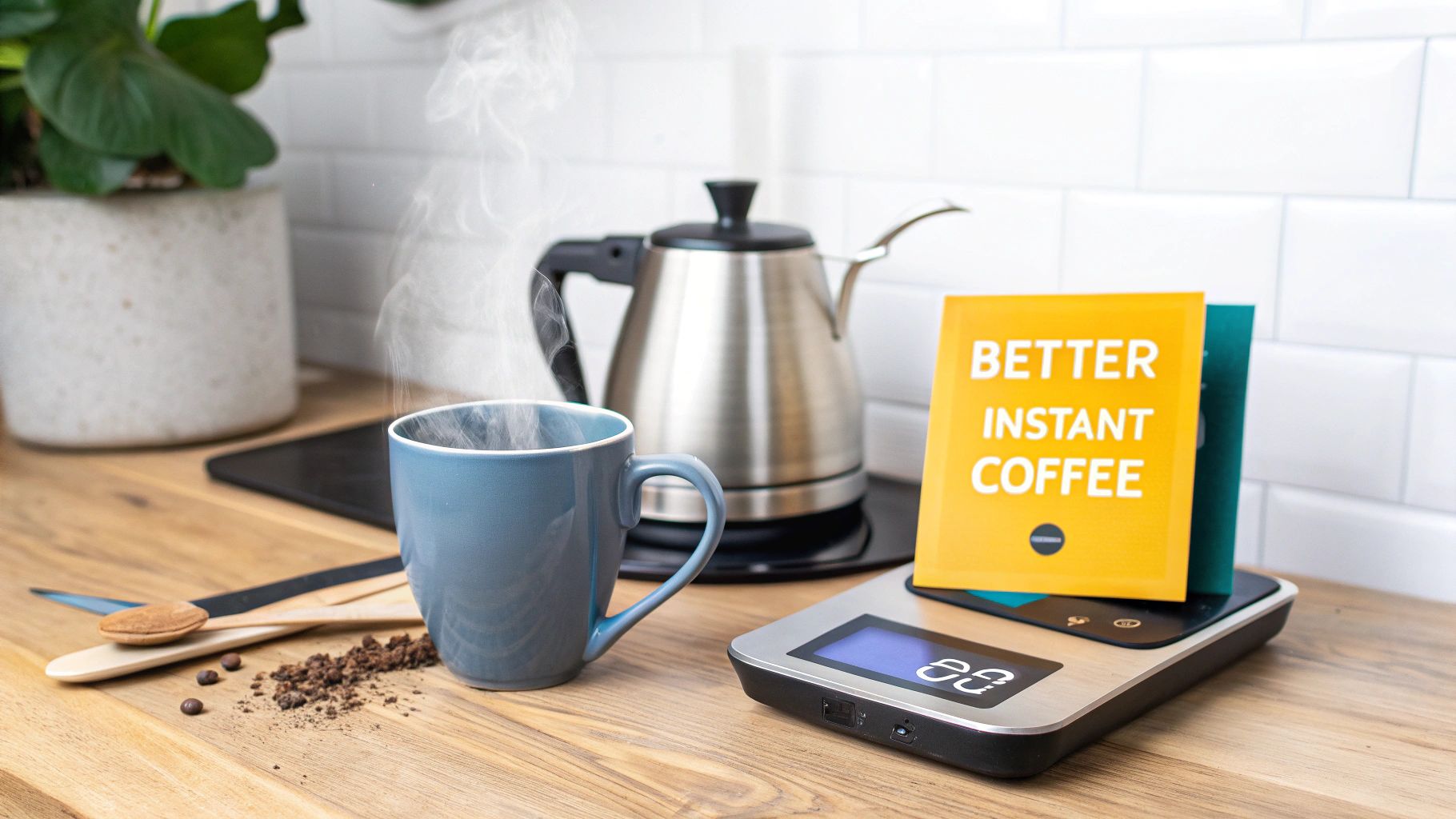
Let's be real—most people think of instant coffee as a gritty, bitter last resort. It’s what you drink when you're out of options or just desperate for caffeine. But that reputation is built on bad habits, not bad coffee. The secret to a genuinely delicious cup isn’t some fancy gadget; it’s all in how you prepare it.
The two biggest mistakes are using water straight from a rolling boil and just guessing your measurements. Pouring boiling water over instant coffee granules literally burns them. That’s where that harsh, acrid taste comes from.
Master the Two Key Variables
Believe it or not, there's a little science to this. For the best flavor, your water needs to be hot, but not that hot. The sweet spot is somewhere between 85–96°C (185–205°F). This range is perfect for dissolving the coffee completely without scorching it and creating those bitter compounds.
The same goes for your measurements. A random spoonful is a recipe for inconsistency. For a balanced, full-bodied cup every single time, aim for a ratio of 8–12 grams of instant coffee for every 240 ml (8 fl oz) of water. This range gives you a robust flavor that isn't weak or overpowering. You can even see how much a consistent product matters by looking at trends in the instant coffee industry.
The biggest leap in quality comes from treating instant coffee with the same respect as fresh grounds. A simple kitchen scale and waiting 30 seconds after your kettle clicks off are the only 'specialty tools' you need.
For a quick reference, I've put together a simple table with the key takeaways.
The Instant Coffee Golden Rules
Use this quick-reference guide to nail the ideal measurements and water temperatures for a consistently great cup.
| Factor | Recommendation | Why It Matters |
|---|---|---|
| Water Temperature | 85–96°C (185–205°F) | Avoids scorching the coffee granules, which prevents a bitter, harsh taste. |
| Coffee-to-Water Ratio | 8–12 grams per 240 ml (8 fl oz) | Ensures a consistently balanced and full-bodied flavor, not weak or overpowering. |
| Water Quality | Filtered Water | Removes chlorine and impurities that can add "off" flavors to your finished cup. |
Stick to these simple rules, and you'll find that the quality of your instant coffee improves dramatically.
Don't Forget About Your Water Quality
Beyond temperature, the water you use plays a surprisingly huge role. The wrong kind of water can completely sabotage your coffee's flavor.
- Filtered is your friend: Using filtered water is an easy win. It gets rid of chlorine and other funky stuff from your tap that can make your coffee taste off.
- Skip the distilled water: It's too pure. Distilled water lacks the minerals needed to properly extract flavor, leaving you with a flat, boring cup.
- Watch out for hard water: If your water has a high mineral content, it can mess with extraction and bring out more of those bitter notes.
By getting these fundamentals right—temperature, ratio, and water quality—you're setting the stage for a perfect cup. From here, you can start playing with different mixing techniques and recipes to take your instant coffee game to the next level.
How to Choose an Instant Coffee You'll Actually Enjoy
Before we even get to water temperature or mixing tricks, let's talk about the single most important decision you'll make: the coffee itself. The path to a genuinely good cup of instant coffee starts right on the grocery store shelf. Forget everything else for a moment, because if you start with a bad product, you'll end up with a bad drink.
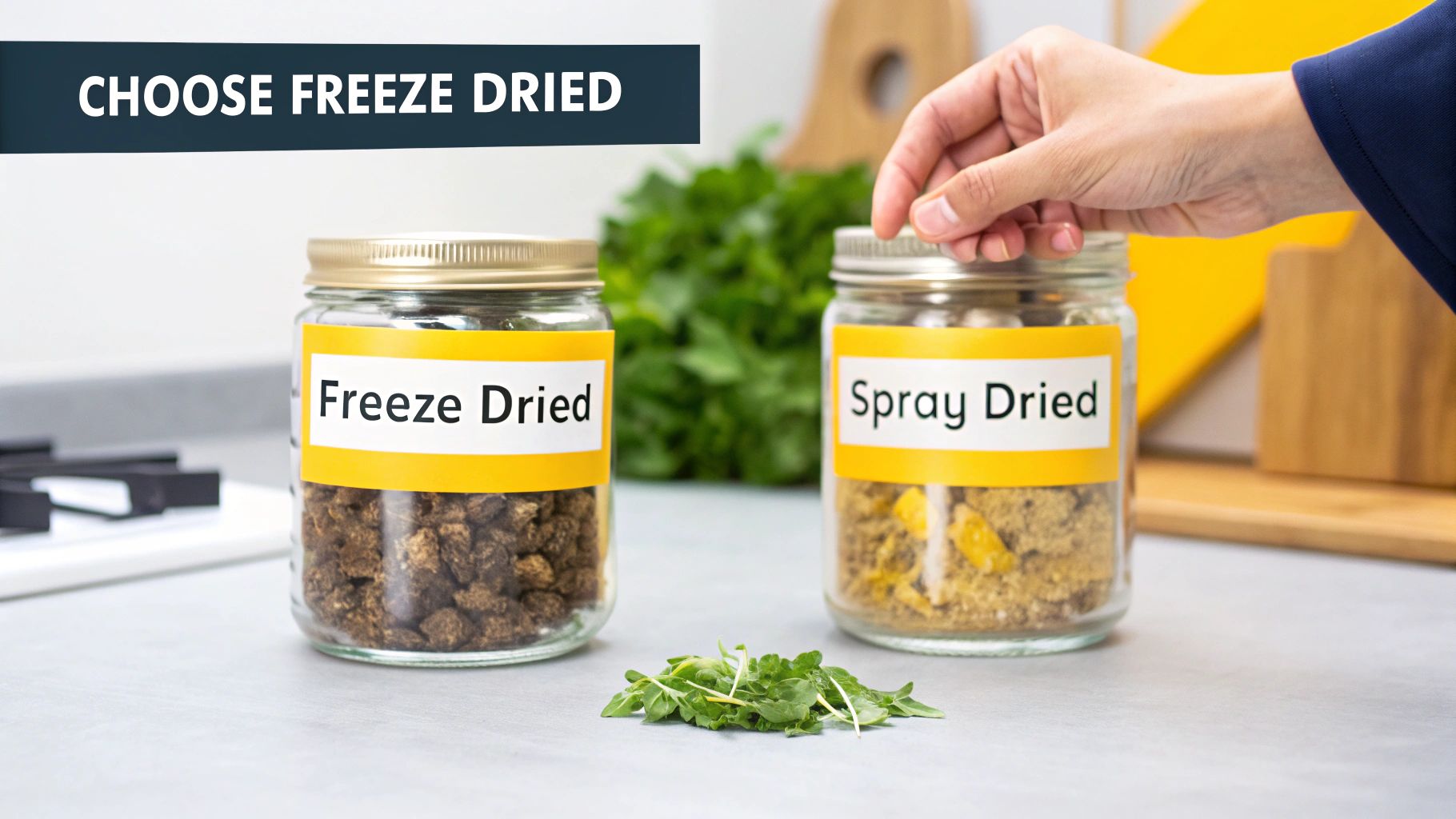
The biggest difference you’ll find comes down to how the coffee was made. It's almost always one of two methods: spray-drying or freeze-drying. Trust me, this single detail has a massive impact on what you'll taste.
Freeze-Dried vs Spray-Dried Coffee
Spray-drying is the classic, old-school method. It's fast and cheap, which is why it's so common. In a nutshell, concentrated coffee is blasted into hot air, the water evaporates instantly, and you're left with a fine powder. The problem? That intense heat torches many of the delicate oils and aromatic compounds that give coffee its amazing flavor. The result is often a flat, one-note, and overly bitter cup.
Freeze-drying is a whole different ballgame. It's a much more careful, gentle process. The coffee extract is first frozen solid, then placed into a strong vacuum. This clever trick causes the ice to turn directly into vapor, skipping the liquid phase entirely. By avoiding high heat, this method preserves the coffee's original character, keeping its complex flavors and aromas intact.
Key Takeaway: If you want a richer, more aromatic, and less bitter cup, always choose freeze-dried instant coffee. The difference in taste is huge, and it's absolutely worth the slightly higher price tag.
This isn't just my opinion. Time and again, taste tests show that people prefer the aroma and complexity of freeze-dried coffee. It simply holds on to more of the good stuff. For a deeper dive into the science behind it, check out our guide on what freeze-dried coffee is.
Look for Quality Sourcing
Once you've narrowed your search to freeze-dried options, it's time to look at the beans themselves. The world of instant coffee has come a long way from the generic, mystery blends of the past. You can now find incredible options that give your local café a run for its money.
Here’s what to look for on the label to find the good stuff:
- 100% Arabica: This is non-negotiable for great flavor. Arabica beans are known for their nuanced, aromatic profiles. Cheaper blends often use Robusta beans, which can be harsh, rubbery, and far more bitter.
- Single-Origin: This tells you the coffee comes from a specific region, like Ethiopia or Colombia. Just like with wine, the origin gives the coffee a unique personality—some are fruity and bright, others are rich and chocolatey. It’s your ticket to finding a flavor you truly love.
- Organic: Choosing organic coffee means it was grown without synthetic pesticides or fertilizers. It’s a better choice for your body and for the planet.
Starting with a high-quality, freeze-dried, single-origin Arabica coffee is the foundation. Get this part right, and you're already 90% of the way to a fantastic cup.
The Secret to a Perfectly Smooth Brew
You’ve got your quality freeze-dried coffee, and your water is at the perfect temperature. So, you just dump the water in and give it a stir, right?
Not so fast.
How you combine the coffee and water is one of those small details that makes a massive difference. It's what separates a smooth, aromatic cup from a clumpy, disappointing one.
Most people just pour hot water over the granules and hope for the best. This "dump and stir" method almost always leaves stubborn clumps of undissolved coffee at the bottom of the mug. No amount of frantic stirring seems to break them up, leaving you with a gritty final sip and wasted coffee.
Forget "Dump and Stir"—Embrace the Slurry
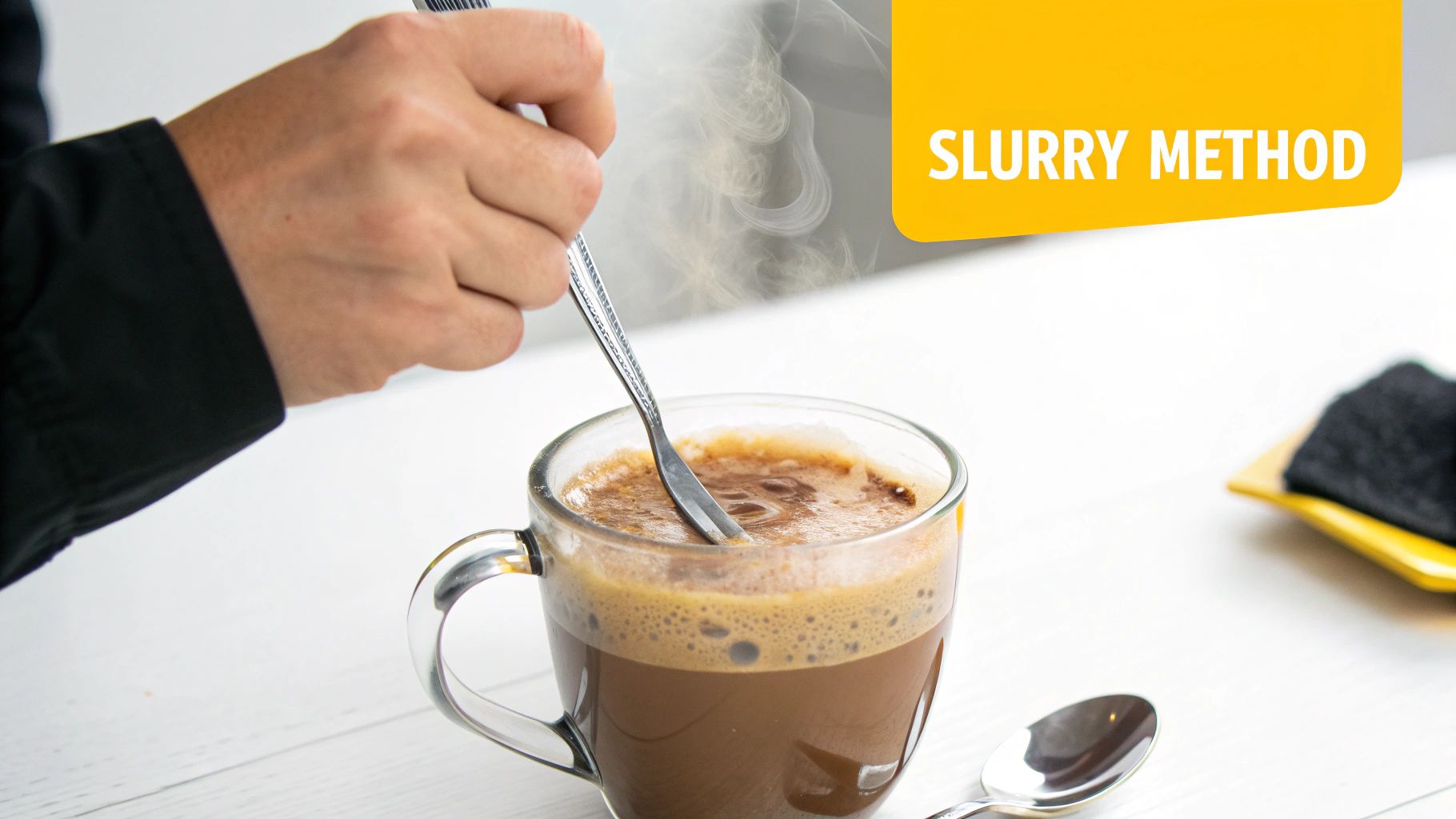
To completely change your instant coffee game, you need to use the "slurry" method. It’s a simple trick baristas and coffee pros use to make sure every last granule dissolves, unlocking the full flavor of the beans.
Instead of flooding the coffee all at once, you give it a chance to bloom. Here’s how it works:
- Put your instant coffee granules in the mug first. If you're not sure how much to use, our guide on how much instant coffee per cup will get you started.
- Next, pour in just a splash of your hot water—only a tablespoon or two. You’re not trying to make the full cup yet, just enough to wet the granules.
- Stir this mixture vigorously for about 10–15 seconds. You’ll watch it transform into a thick, glossy, and totally smooth paste, almost like melted chocolate.
This quick pre-wetting step lets the coffee dissolve evenly without clumping. It also kicks off a blooming process, which starts releasing those fragrant aromatic compounds before you even add the rest of the water.
Why this works: Creating a slurry guarantees full dissolution. That simple action means a smoother texture, a richer aroma, and more consistent flavor from the first sip to the last. It’s the single biggest technique upgrade you can make.
Finishing Your Perfect Cup
Once you have that smooth, aromatic slurry, the hard part is over.
Just pour in the rest of your hot water and give it one final, gentle stir. I like to let it sit for about 30–45 seconds before I take a sip. This brief pause allows the flavors to settle and the aroma to fully develop.
This method is about more than just avoiding clumps; it's about control and getting the most out of your coffee. By taking an extra 20 seconds to make a slurry, you ensure you're getting a great cup, every single time.
A Few Easy Ways to Level Up Your Instant Coffee
Getting a simple cup of black instant coffee right is a great start, but that's really just the beginning. Once you've nailed the basics—good quality coffee, the right water temperature, and that all-important slurry mixing technique—the real fun can begin. You don't need an espresso machine or a collection of fancy syrups to whip up drinks that feel like they came from a great café.
With just a couple of extra ingredients, that jar of instant coffee becomes your secret weapon. It’s the foundation for a whole menu of delicious creations, from a perfectly chilled iced coffee to a shockingly creamy latte. You'd be surprised at how easy it is.
Let's walk through a few simple but impressive drinks you can make in just a couple of minutes.
The Perfect Instant Iced Coffee
Great iced coffee is all about a smooth texture. The single biggest mistake I see people make is dumping coffee granules straight into cold water. It just doesn't work. You end up with a gritty, sludgy mess at the bottom of your glass.
The secret is to make a smooth, concentrated coffee base first.
Here’s how to do it the right way:
- First, make your slurry. Add 1-2 teaspoons of your favorite instant coffee to a tall glass, then pour in just enough hot (not boiling!) water to cover the granules. Stir like you mean it until you have a smooth, thick paste.
- Next, dissolve it completely. Add another splash of hot water and stir again. This creates a liquid coffee concentrate and ensures every last granule has melted away. This step is non-negotiable if you want a silky-smooth finish.
- Finally, chill and serve. Fill the rest of the glass with cold filtered water, leaving a little room for ice. Drop in your ice cubes, give it one last stir, and you're good to go.
For a complete walkthrough, our guide to making iced coffee with instant coffee breaks down every detail so you can get it right every single time. It's a simple method that guarantees a refreshing, smooth drink without any of that dreaded grit.
The Creamy No-Frother Instant Latte
Craving a rich, foamy latte but don't own a milk frother? Don't worry about it. You can get a surprisingly velvety texture using a simple tool you almost definitely have in your kitchen: a jar with a tight-fitting lid.
This little hack works by shaking hot milk so vigorously that you force air into it, creating a pretty stable foam that sits beautifully on top of your coffee.
Start by making your coffee concentrate in your favorite mug, dissolving 1-2 teaspoons of instant coffee in a few tablespoons of hot water.
Then, heat up about 6 ounces of your milk of choice—dairy or plant-based both work. Get it hot, but don't let it boil. Pour the hot milk into a clean jar, but don't fill it more than halfway.
Now for the magic. Screw the lid on tight, grab the jar with an oven mitt or towel (it’s hot!), and shake it hard for 30-45 seconds. You’ll actually see the milk double in volume as it gets wonderfully frothy.
All that's left is to pour the frothed milk over your coffee concentrate. I like to use a spoon to hold back the thickest foam at first, then spoon it right on top to finish it off.
The result is a genuinely satisfying latte. The texture is so creamy it rivals what you'd get from an electric frother. It’s a simple trick that completely changes the game for homemade coffee drinks.
The Quick and Indulgent Instant Mocha
Sometimes you just need a comforting, chocolatey treat. A rich mocha hits the spot, and this recipe feels like a special occasion but comes together in less than two minutes.
Make your coffee slurry just like you normally would. But before adding the rest of your water or milk, stir in 1-2 teaspoons of unsweetened cocoa powder and your preferred sweetener. Mix it all together until you have a smooth, chocolatey paste.
From there, just top it off with hot water or steamed milk. The result is an incredibly rich and satisfying mocha that tastes way more complex than it is.
Fixing Common Instant Coffee Mistakes
Even with the best intentions, a cup of instant coffee can sometimes fall flat. If you're getting a brew that's bitter, weak, or just plain disappointing, don't throw in the towel. The fix is usually surprisingly simple, and a tiny tweak is often all it takes to get it right.
Think of it like being a coffee detective. The final taste and texture are your clues. Once you identify what's wrong with the cup, you can easily trace it back to a step in the process and correct it for next time.
Why Does My Coffee Taste Burnt or Bitter?
That harsh, scorched flavor is the number one complaint I hear about instant coffee. Nine times out of ten, the culprit is the same: your water is way too hot.
When you pour water at a full, rolling boil (100°C / 212°F) directly onto the coffee granules, you're essentially scalding them. This obliterates any delicate, nuanced flavors and creates a rush of bitterness.
The fix? Patience. Just let your kettle sit for 30 to 60 seconds after it clicks off. This brief pause is enough to bring the temperature down into that perfect 85–96°C (185–205°F) range, dissolving the coffee without burning it.
What if My Coffee Is Weak and Watery?
If your coffee tastes thin, diluted, and just... sad, the issue is almost certainly your coffee-to-water ratio. It’s a classic case of not using enough coffee for the amount of water, which leads to a seriously under-extracted and unsatisfying brew. This is what happens when you eyeball it with whatever spoon is clean.
To solve this, you need to get a little more precise. Start with a baseline—one teaspoon of coffee for every six ounces of water—and see how that tastes. If you're like me and prefer a bolder cup, don't be afraid to add another half-teaspoon until you hit that sweet spot.
A word of advice: it's always easier to fix a strong cup than a weak one. You can add a splash of hot water to a brew that’s too intense, but you can’t really rescue a watery one. Get the ratio right from the start.
How Do I Get Rid of That Gritty Texture?
There’s nothing worse than that sludgy, gritty surprise at the bottom of your mug. This is a dead giveaway that the coffee granules didn't fully dissolve. It happens when you dump all the hot water in at once, causing the granules to clump. The outside of the clump dissolves, but the inside stays a gritty, undissolved mess.
The solution is the slurry method. Before you do anything else, mix the coffee granules with just a tiny bit of warm (not boiling!) water. Stir it vigorously until it forms a smooth, thick paste. Once you have that silky concentrate, you can go ahead and add the rest of your hot water. You’ll get a perfectly smooth, grit-free cup every single time.
Stuck on what kind of coffee to make? This little flowchart can help you decide whether you're in the mood for something cold, milky, or even a bit chocolatey.

Sometimes, the best cup of coffee starts with knowing exactly what you want to drink.
Solving Common Instant Coffee Problems
Here's a quick cheat sheet to help you diagnose and solve any issues with your instant coffee on the fly.
| Problem | Likely Cause | How to Fix It |
|---|---|---|
| Tastes bitter or burnt | Water temperature is too high (boiling). | Let boiled water cool for 30-60 seconds before pouring. |
| Tastes weak or watery | Not enough coffee granules for the amount of water. | Use a proper 1 tsp to 6 oz ratio and add more coffee if needed. |
| Gritty, sandy texture | Coffee granules didn't dissolve completely. | Create a slurry by mixing coffee with a little warm water first. |
| Flavor is flat or stale | Coffee is old or has been stored improperly. | Store granules in an airtight container away from light and moisture. |
With these quick fixes in your back pocket, you’re well on your way to mastering instant coffee and leaving bad cups behind for good.
Your Instant Coffee Questions Answered
Even after you've got the basics down, a few questions always seem to pop up. Making the perfect cup is a process, after all. Let's tackle some of the most common things people ask when they're trying to get their instant coffee just right.
Think of this as your go-to troubleshooting guide for building a coffee routine that delivers a great cup, every single time.
Does Water Quality Really Matter for Instant Coffee?
It absolutely does. It’s easy to forget, but water makes up over 98% of what’s in your mug. Switching to better water is probably the single biggest upgrade you can make to your coffee's taste.
Your tap water might have chlorine or other minerals that can make your coffee taste a bit… off. Think metallic, flat, or even slightly like chemicals. The mineral balance is a surprisingly big deal:
- Hard Water: Too many minerals (like calcium and magnesium) can actually over-extract the coffee. This pulls out all the bitter notes, leaving you with a harsh, almost chalky flavor.
- Soft Water: On the flip side, water that’s too soft (or distilled) doesn’t have enough minerals to grab onto those good flavor compounds. The result? A weak, uninteresting, and lifeless cup.
The easy fix is to just use filtered water. It gives you a clean, neutral base that lets the real flavor of your coffee come through without anything getting in the way.
Can I Make Good Iced Coffee with Instant Granules?
You sure can, and it's one of the easiest ways to make a killer iced coffee. The trick is to avoid the one mistake everyone makes: dumping the granules straight into cold water. If you do that, you're pretty much guaranteed a gritty, clumpy mess because they just won't dissolve properly.
The secret? Make a quick coffee concentrate first.
Just mix your instant coffee granules with a tablespoon or two of room-temperature water in the bottom of your glass. Stir it like you mean it until it becomes a completely smooth, syrupy liquid with zero clumps.
Once it's perfectly dissolved, go ahead and fill the glass with your cold water and ice. Give it one last stir, and you’ve got a silky-smooth iced coffee ready in seconds.
This pre-dissolving step is non-negotiable for good instant iced coffee. It’s what ensures every sip is smooth and consistent, with none of that dreaded grittiness at the bottom.
What Is the Best Way to Store Instant Coffee?
Instant coffee's two biggest enemies are moisture and air. Let either of them get to it, and you’ll end up with a clumpy, sad powder that has lost all its flavor and aroma. Storing it the right way is key.
Just keep it simple: store it in an airtight container somewhere cool, dark, and dry. A pantry or kitchen cupboard is perfect. The jar it came in usually works just fine, as long as you make sure that lid is screwed on tight every single time.
And whatever you do, don't put it in the fridge or freezer. It sounds logical, but the temperature change creates condensation each time you pull it out. That moisture is exactly what you’re trying to avoid. A simple, airtight container at room temperature is all you need to keep it fresh.
Ready to put these tips into practice with a truly exceptional coffee? The single best way to ensure a delicious cup is to start with high-quality, organic, freeze-dried beans. At Cartograph Coffee, we've sourced the best single-origin coffees to create an instant that’s rich, smooth, and convenient. Experience the difference for yourself at CartographCoffee.com.