Let's be real for a moment: instant coffee gets a bad rap. For a long time, it's been seen as the last resort—the stuff of bleak office breakrooms and desperate camping trips. We've all been there, sipping a bitter, watery brew just for the caffeine kick. But that old reputation is starting to crumble.
There's a new wave of instant coffee on the scene, and it's changing the game. This isn't just a fleeting trend; it’s a direct response to people like us who want great coffee without the fuss. The market is booming, expected to hit a staggering USD 76.4 billion by 2035, because busy people are demanding better. They want that quick, easy cup, but they aren't willing to compromise on the rich, satisfying flavor they'd get from a local café. You can dive deeper into this market growth over at FactMr.com.
The New Era of Instant Coffee
Modern premium instant coffees, especially those made from organic beans, are a world apart from the stuff you grew up with. Advanced production techniques mean today's coffee granules dissolve perfectly and actually hold onto the complex, nuanced flavors of the beans they came from. If you're curious about the science behind it, understanding how instant coffee is made can really open your eyes to the craft. Brands like Cartograph Coffee are at the forefront of this movement, proving once and for all that fast coffee can also be fantastic coffee.
The secret to a better brew isn't about fancy gadgets or becoming a trained barista. It's about learning how to unlock the incredible flavor already packed inside high-quality coffee granules.
This guide will show you exactly how to do that. We’ll focus on three simple pillars that will completely transform your coffee routine:
- Start with the Good Stuff: Using a top-tier organic instant coffee is the most important first step.
- Nail the Technique: Getting the water temperature and coffee-to-water ratio just right is key to unlocking flavor.
- Customize Like a Pro: Choosing the right milk, cream, or sweetener can take your cup from good to great.
Before we dive in, let’s quickly recap the fundamentals. Think of these three pillars as your foundation for a consistently delicious cup of instant coffee.
Your Quick Guide to Better Instant Coffee
| Pillar | Why It Matters | Quick Tip |
|---|---|---|
| Superior Ingredients | You can't make great coffee from bad beans. High-quality organic granules provide a smoother, richer flavor base without the bitterness. | Always choose a brand that specifies the origin and roast of their beans. It's a sign they care about quality. |
| Precise Technique | Boiling water scorches the coffee, creating a bitter taste. The right temperature and ratio ensure a balanced, full-bodied extraction. | Aim for water just off the boil (195-205°F). If you don't have a thermometer, let it sit for 30-60 seconds after boiling. |
| Thoughtful Additions | The right milk or sweetener complements the coffee's natural notes instead of masking them. | Try oat milk for a creamy, neutral base, or a touch of maple syrup to enhance the coffee's inherent sweetness. |
It's time to forget everything you thought you knew about instant coffee. By focusing on these core ideas, you’ll learn how to make a cup that is consistently smooth, flavorful, and genuinely satisfying. You're about to turn a simple convenience into a ritual you'll actually look forward to.
Mastering Your Water and Coffee Ratios
Believe it or not, the secret to a genuinely rich cup of instant coffee isn't some complex technique—it's about nailing two simple things: water temperature and the right coffee-to-water ratio. So many people unintentionally ruin their coffee from the get-go by pouring scorching, boiling water straight onto the granules. That's a classic mistake, and it's the fastest way to burn the coffee, leaving you with that harsh, bitter taste that no amount of milk or sugar can truly fix.
To completely sidestep this, aim for a water temperature between 195-205°F (90-96°C). This is the sweet spot where you extract all the good stuff without scorching the delicate flavors. You don't need a fancy thermometer, either. Just bring your water to a boil, take it off the heat, and let it sit for about 30 to 60 seconds. That short pause is all it takes to drop the temperature into the perfect brewing zone.
This simple process really comes down to a few key pillars: what you put in, how you mix it, and what you add at the end.
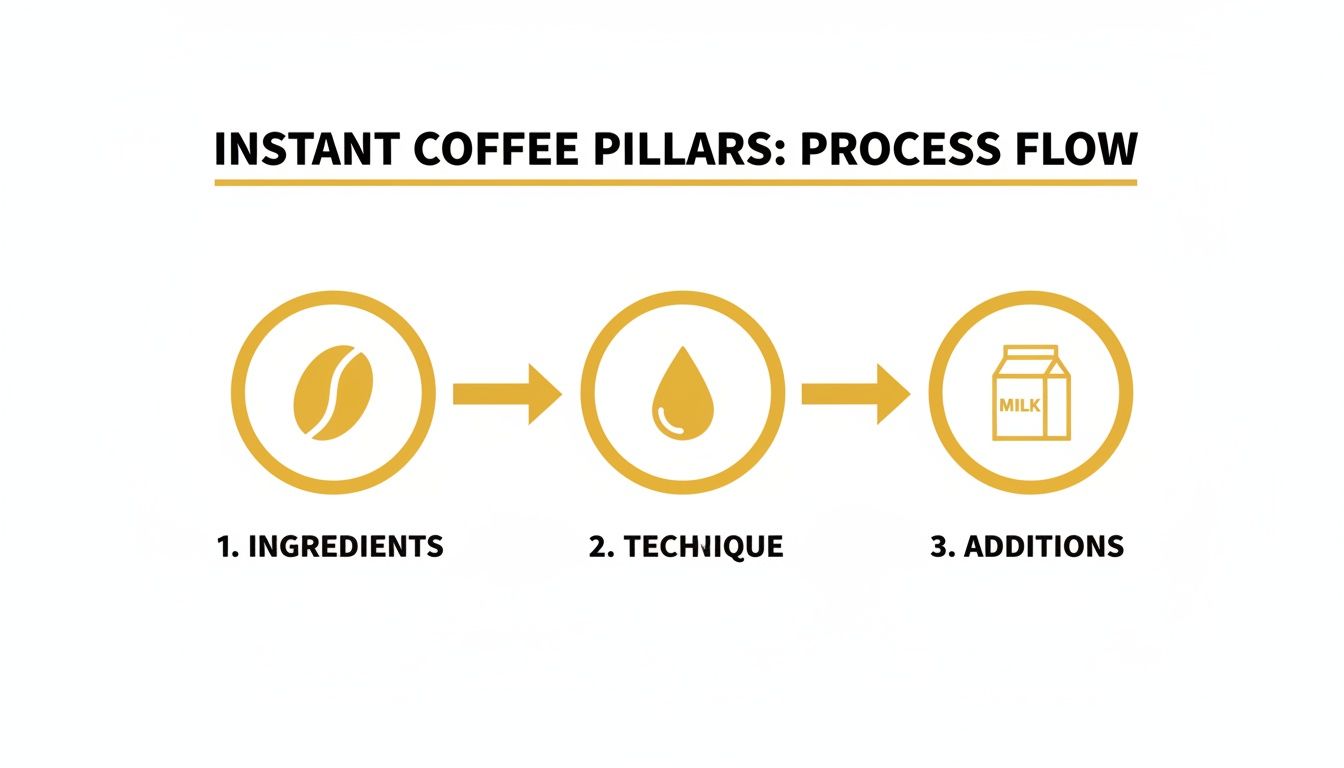
As you can see, your technique—especially with water—is the bridge between your ingredients and that final, perfect cup.
Finding Your Perfect Coffee-To-Water Ratio
Once your water temperature is on point, the next step is dialing in the ratio of coffee to water. A weak, watery cup is just as unsatisfying as one that's sludgy and overpowering. Getting the balance right is what creates that full-bodied yet smooth experience we're all after.
A great place to start is one heaping teaspoon of instant coffee for every six ounces (about 170ml) of hot water. This gives you a solid, well-rounded base that you can then tweak to match your personal taste.
Think of this as a starting point, not a strict rule. The perfect ratio is whatever tastes best to you. Use this as your baseline and start experimenting from there.
Love a bolder, more intense flavor? Easy—add a little more coffee or use slightly less water. If you prefer a milder, more delicate brew, just scale back the coffee granules. For a deeper dive into getting your measurements just right, check out our guide on https://cartographcoffee.com/blogs/news/how-much-instant-coffee-per-cup.
Don’t Overlook Water Quality
Finally, let’s talk about the water itself. It makes up most of your drink, so its quality really matters. Hard water, which is packed with minerals, can flatten the coffee's more subtle notes, while water that's too soft or distilled can leave your cup tasting a bit empty.
For the cleanest, most consistent flavor, filtered water is the way to go.
- Filtered Water: This is your best bet. It removes impurities like chlorine and balances the mineral content, letting the coffee’s true character shine through.
- Spring Water: If filtered isn't an option, bottled spring water is another excellent choice that provides a great neutral base for your coffee.
If you're really looking to perfect your brew, you can find a lot of expert advice on water quality to understand the science behind it. By paying attention to these three simple details—temperature, ratio, and water quality—you'll consistently make a delicious cup of instant coffee that can easily stand up to your favorite cafe brew.
The Secret to a Perfectly Smooth Cup
We've all been there. You get to the bottom of your instant coffee, only to find those stubborn, undissolved clumps. It’s a gritty, disappointing final sip that can ruin the whole experience. The good news? The fix is incredibly simple and requires zero fancy equipment. It all comes down to a small tweak in your technique.
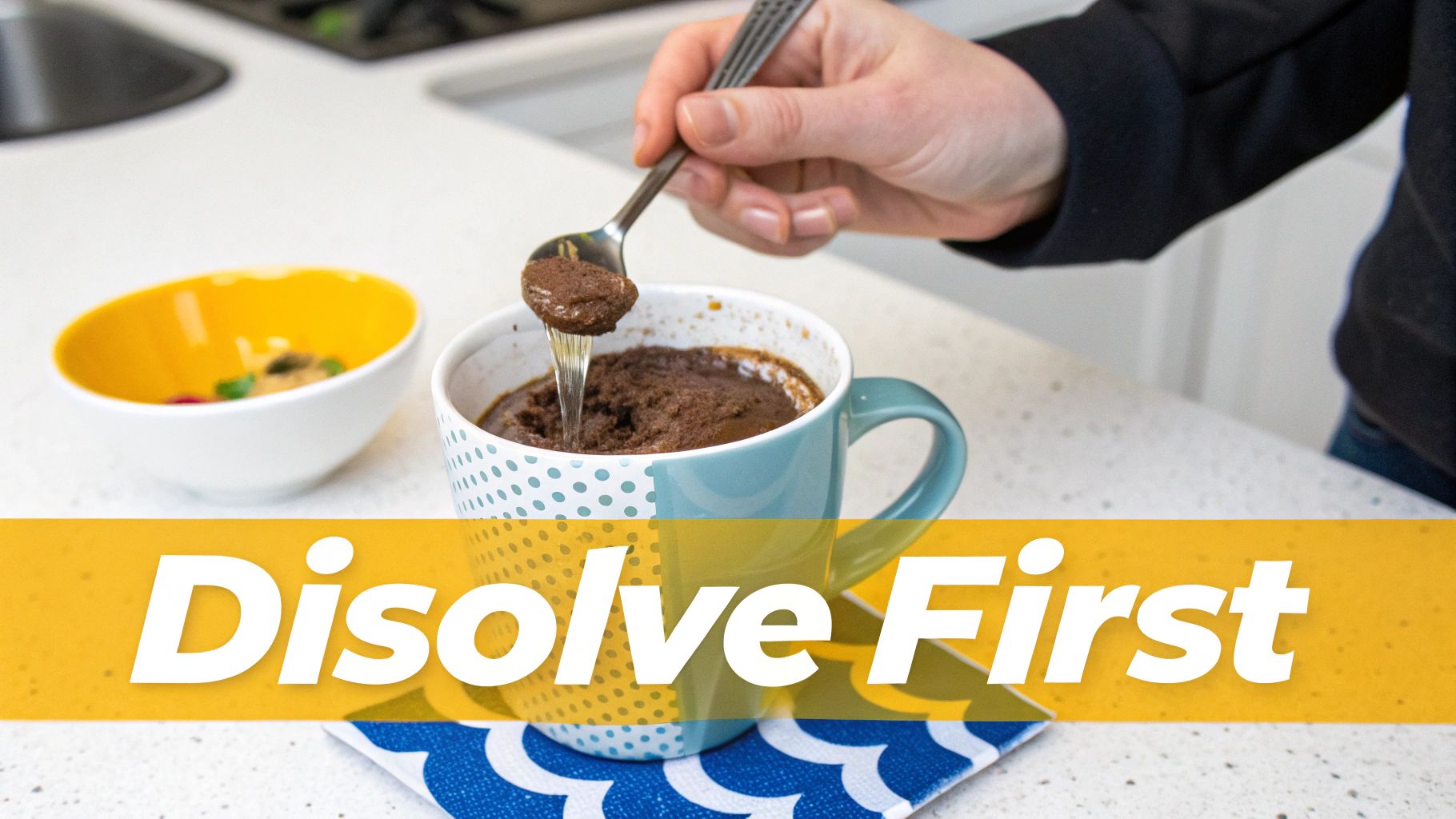
The secret to a silky-smooth brew is to create a concentrated coffee paste before you add all the hot water. This tiny but critical step guarantees every single granule dissolves, giving you a consistent, delicious cup from the first sip to the last. It’s a little trick seasoned coffee drinkers swear by.
Why This Method Works So Well
Ever wonder why those clumps form in the first place? When you pour hot water directly onto a pile of dry coffee grounds, the outside of the pile gets saturated instantly. This creates a sort of shell, trapping the dry granules in the middle and making it impossible for the water to reach them. That's what leaves you with those gritty bits.
By starting with just a splash of cool water, you’re giving the coffee a chance to dissolve gently and evenly. This technique, often called making a "slurry" in the culinary world, is the same reason you mix cornstarch with cold water before adding it to a hot sauce. It lets the powder and liquid integrate smoothly, preventing lumps and creating a velvety texture.
This isn’t just about getting rid of clumps; it's about unlocking the full flavor. When every granule dissolves, you’re tasting all the complex notes the coffee has to offer—not just the bitter compounds that dissolve the fastest.
Crafting the Perfect Coffee Paste
Getting this flawless base is surprisingly quick and easy. Once you try it, you'll never go back.
Here’s how to do it:
- Start with Coffee: Spoon your favorite high-quality instant coffee, like Cartograph Coffee, into your mug.
- Add a Splash of Water: Pour in just a tiny bit of cool or room-temperature water—about a teaspoon or two is all you need. The goal is just to wet the granules.
- Stir into a Paste: Grab a spoon and stir vigorously. You'll watch the granules melt away, forming a thick, glossy paste that looks a lot like melted chocolate.
- Top with Hot Water: Now, slowly pour in your hot water (remember, the sweet spot is 195-205°F) while gently stirring. The paste will dissolve instantly and beautifully into the water.
This small adjustment adds maybe 10 seconds to your routine, but the payoff is huge. It proves that the secret to great instant coffee isn't always about what you use, but how you use it. You’ll be left with a rich, aromatic, and perfectly smooth brew that can stand up to any coffee shop cup.
Elevating Your Brew With Milks And Flavors
Once you’ve nailed that smooth, perfectly dissolved coffee base, the real fun begins. This is where you get to play barista and turn a simple cup into something that’s uniquely yours. Even the smallest addition can completely transform the final flavor.
Finding The Right Milk Or Creamer
Choosing your milk or creamer is probably the single most important decision you'll make. Each one interacts with the coffee differently, bringing its own texture and taste to the party.
- Whole Dairy Milk: For a classic, rich creaminess that beautifully balances the coffee’s natural boldness.
- Oat Milk: A fantastic dairy-free option known for its exceptionally creamy mouthfeel and a subtle, sweet flavor that froths like a dream.
- Almond Milk: This one offers a lighter body with delicate nutty notes, perfect for complementing coffees that have similar flavor profiles.
Here’s a little trick I’ve picked up: gently warm your milk before adding it. This simple step keeps your coffee at the ideal drinking temperature and prevents the cold liquid from dulling those wonderful aromas you worked to preserve.
Choosing Your Perfect Coffee Add-In
To help you find your perfect match, think about what you want from your cup. Are you looking for rich creaminess or just a subtle hint of sweetness? This table breaks down some popular choices to guide you.
| Add-In Type | Flavor Profile | Best For |
|---|---|---|
| Whole Milk | Rich, creamy, slightly sweet | Creating a classic, balanced latte or cappuccino feel. |
| Oat Milk | Neutral, creamy, naturally sweet | Dairy-free drinkers who want a thick, luxurious texture that froths well. |
| Almond Milk | Light, nutty, subtle | A lower-calorie option that adds a hint of nuttiness without overpowering the coffee. |
| Maple Syrup | Warm, caramel-like, complex | Adding a rich, natural sweetness that complements dark roasts. |
| Honey | Floral, sweet, distinct | Pairing with lighter roasts to bring out delicate, floral notes. |
Ultimately, the best way to find your favorite is to experiment. What works for a robust, dark instant coffee might not be the best pairing for a lighter, fruitier one.
Beyond Basic Sweeteners
While plain sugar does the job, exploring other sweeteners can add surprising new layers of complexity to your morning ritual.
Consider maple syrup for a touch of warm, caramel-like depth, or a small drizzle of honey for a more floral sweetness. These natural options don’t just sweeten your drink; they contribute their own unique character, making for a much more interesting cup.
My Two Cents: Think of your add-ins as flavor pairings, not just things you dump in. The goal is to complement the coffee's profile, not completely hide it. A dash of cinnamon can highlight spicy notes, while a single drop of vanilla extract can bring out a smoother, rounder finish.
It All Starts With Better Coffee
Of course, the quality of your add-ins only matters if your foundation is solid. The instant coffee world has come a long way, thanks largely to modern freeze-drying. This method is projected to help the market grow at a 6.33% CAGR through 2031 because it does a much better job of preserving the coffee's original flavor and aroma compounds compared to older, high-heat methods.
When you start with a high-quality base, creating fantastic drinks is easy. The principles of balancing flavors are the same whether you’re making a hot coffee or an iced one. You can even pick up transferable tips by looking at guides for crafting cafe-quality iced lattes.
Ready to take your coffee to the next level? Our detailed guide shows you how to make the perfect instant coffee latte at home. Start experimenting, and you’ll discover your own perfect way to enjoy a genuinely great cup of instant coffee.
Creative Instant Coffee Recipes Beyond the Mug
Think instant coffee is just for a quick, hot drink? Let me tell you, its versatility is its secret weapon. It's the key to a whole range of delicious creations, proving you don't always need an espresso machine to make great coffee.
In fact, its convenience is a huge reason the Asia-Pacific region is seeing such a boom in instant coffee, now holding a massive market share of 38.36%. Younger consumers are really driving this trend, looking for easy, high-quality coffee that fits their on-the-go lives. If you're curious about these shifts, Grand View Research has some fascinating insights into evolving coffee habits.

So, let's step away from the standard mug and craft three cafe-style favorites right in your kitchen. Each one is surprisingly simple and perfect for treating yourself or impressing a friend.
Whip Up a Fluffy Dalgona Coffee
Dalgona coffee, or whipped coffee, went viral for a good reason—it looks amazing and is ridiculously easy to make. The magic here is something only instant coffee can do: it creates a stable, airy foam when whipped with sugar and hot water.
Here’s how you do it:
- Combine the essentials: In a medium bowl, mix 2 tablespoons of instant coffee, 2 tablespoons of sugar, and 2 tablespoons of very hot water.
- Get whipping: Use a hand mixer (or a whisk and some serious arm power) and whip the mixture until it turns light, fluffy, and forms stiff peaks. This should take about 3-5 minutes.
- Assemble your drink: Fill a glass with ice and your milk of choice—dairy and non-dairy both work great. Spoon that beautiful coffee foam generously over the top and you're done.
A quick word of advice: don't even think about using regular ground coffee for this. It just won't work. Only the unique way instant coffee granules are processed creates that thick, stable foam that makes this drink so special.
Craft a Creamy Instant Iced Latte
Craving a rich, creamy iced latte but don't have an espresso machine handy? No worries. The trick is to make a strong, concentrated coffee "shot" that won't get watered down by all the milk and ice.
- Make your coffee shot: In a small glass, dissolve 2 teaspoons of a good-quality instant coffee in 2 ounces of hot water. Stir until it's completely smooth.
- Chill it down fast: Add a few ice cubes to your coffee concentrate and give it a swirl. This cools it down quickly so it won't melt the rest of your ice when you assemble the drink.
- Build your latte: Fill a tall glass with ice, then pour in 6-8 ounces of cold milk. Slowly pour your chilled coffee shot over the top for that classic layered look.
- Sweeten and serve: Add a pump of your favorite syrup or a dash of sweetener, give it a quick stir, and enjoy a perfectly balanced iced latte.
Make a Perfect No-Watery-Mess Iced Coffee
Let's be honest, the biggest letdown with homemade iced coffee is when it tastes weak and diluted. This method guarantees a bold, robust flavor from the first sip to the last. The secret? You need to brew a much stronger concentrate than you would for a hot cup.
Follow these steps for a perfect brew:
- Create a strong base: Dissolve 2 heaping teaspoons of instant coffee in just 4 ounces of hot water. Stir until it's smooth. This high coffee-to-water ratio is the key.
- Flash chill it: Immediately fill the glass with ice all the way to the brim. Stirring it vigorously will cool the coffee in seconds, locking in all that flavor before the ice has a chance to melt and dilute it.
- Customize your cup: From here, you can top it off with a splash of cold water, milk, or creamer to get it just right. Because the base is so concentrated, it can handle the extra liquid without losing its punch.
These recipes show that learning how to make a good instant coffee is about more than just getting a morning caffeine fix. It’s about unlocking the creative potential sitting right there in your pantry.
Your Instant Coffee Questions Answered
Even when you think you've got it down, a few questions always pop up while perfecting your coffee routine. Let's walk through some of the most common issues I hear about. Getting these small details right is the real secret to learning how to make a good instant coffee.
Can I Use Cold Water to Make Instant Coffee?
Yes, you absolutely can! While we usually reach for hot water to dissolve the granules quickly, cold water is fantastic for making a super smooth iced coffee. You just need a small tweak to your method.
Start by making that coffee paste we talked about earlier, but just use a splash of cold water this time. Give it a good stir until every last granule has disappeared, then top it up with more cold water and plenty of ice. I love this technique because it completely sidesteps the bitterness you sometimes get from flash-chilling hot coffee. You'll find that high-quality, easily soluble brands work especially well for this.
This cold-brew method is my go-to for a consistently smooth iced coffee on hot days. It prevents any shock to the coffee, resulting in a cleaner, less acidic flavor profile that’s incredibly refreshing.
Why Does My Instant Coffee Taste Bitter or Sour?
This is easily the most common complaint I hear, and the culprit is almost always your water temperature.
-
If it's bitter: That burnt, bitter taste is a dead giveaway that your water was too hot. Pouring boiling water straight from the kettle scorches the coffee granules. The fix is simple: let your kettle sit for 30-60 seconds after it boils. This little pause brings the temperature down to that sweet spot of 195-205°F (90-96°C).
-
If it's sour: On the other hand, a sour or overly acidic tang usually means the water wasn't hot enough to properly extract all the flavor. If you're not bringing your water to a full boil first, you might be brewing with water that’s too cool.
If you’ve dialed in the temperature and the taste is still off, your coffee-to-water ratio is the next thing to check. Play around with your measurements until you hit that perfect, balanced cup.
How Should I Store Instant Coffee to Keep It Fresh?
How you store your coffee makes a huge difference. The three biggest enemies of fresh instant coffee are moisture, air, and light.
For the best flavor, keep your coffee in an airtight container and stash it somewhere cool, dark, and dry—a pantry or kitchen cabinet is perfect. A common mistake is to put it in the fridge or freezer. Don't do it! Condensation is inevitable, and that moisture will ruin the granules, causing them to clump and lose their flavor fast.
By keeping it sealed up and away from the elements, you’re making sure the last scoop from the jar tastes just as good as the first.
Ready to brew a better cup? Discover the rich, smooth flavor of organic instant coffee from Cartograph Coffee. Our carefully crafted coffee is designed for convenience without compromise. Explore our collection at https://cartographcoffee.com and taste the difference.