You're standing in the kitchen with a plain mug, no milk left, no sugar within reach, and the first sip tastes harsh, burnt, and drying. That's the moment many decide black coffee just isn't for them. It usually isn't a palate problem. The cup itself is often too strong, over-extracted, or made from stale beans, and no amount of willpower makes that pleasant.
Learning how to like black coffee works better as a sequence. Fix the cup first, then train in small steps, and keep caffeine effects separate from flavor so you know what you're responding to.
Fix the Cup Before You Train Your Palate
Bitterness is the complaint that stops new drinkers, so start there. Brew a baseline cup exactly the way you normally brew, with the same beans, water, and contact time. Taste it unsweetened and note whether it's harsh, drying, sour, or flat.
Don't change everything at once. Changing roast, grind, temperature, and dose together hides which adjustment helped.
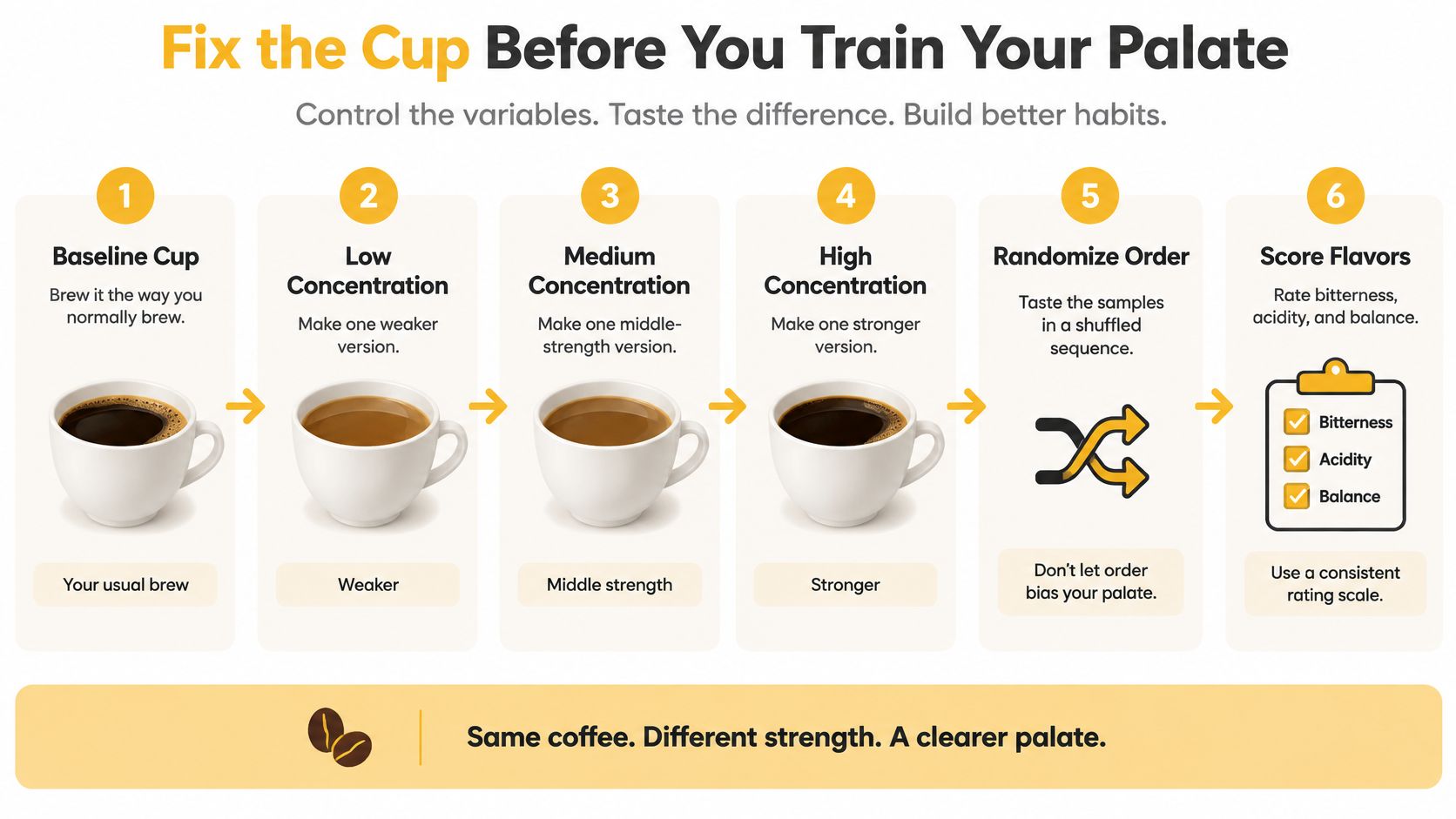
Run a Three-Sample Test
Make low, medium, and high concentration versions of the same coffee. Keep the water and contact time consistent, change only the coffee-to-water ratio in small increments, and randomize the tasting order so you don't favor the cup you expect to like.
Score each sample from 1 to 10 for bitterness, acidity, sweetness, body, and overall liking. Pick the highest-liking sample, then repeat the test the next day to check the result holds.
Controlled drip-brew findings reported in a study of brew strength and extraction found that total dissolved solids and percent extraction changed sensory perception more substantially than brew temperature when extraction was otherwise controlled. That means temperature alone is a weak fix if your cup is too concentrated or over-extracted.
You can still check your habits against guidance on the correct temperature for coffee, but adjust strength and grind first. If your water comes from a well and cups taste flat despite fresh beans, water testing guidance for well owners can help you rule out water as the hidden variable.
Practical rule: Change one lever, retaste, write it down. A second change before you retaste erases the lesson.
Match the Fault to One Fix
Taste faults, likely causes and the first change to test
| Taste fault | Likely cause | First adjustment |
|---|---|---|
| Harsh, burnt bitterness | Over-extraction or a very dark roast | Coarser grind or lower dose, then a lighter roast |
| Drying, puckering astringency | Fine grind or long contact time | Coarser grind and shorter brew time |
| Thin, sharp sourness | Under-extraction | Finer grind or a slightly higher dose |
| Flat, muddy, no aroma | Stale beans or cold water | Fresh beans and properly hot water |
| Bitter only when hot | Heat amplifies perceived bitterness | Compare a chilled or room-temperature sample |
Treat this stage as passed when you accept the same unsweetened preparation on at least three separate days. Until then, you're still troubleshooting, not training.
A Four-Stage Ladder to Enjoying Black Coffee
Once the cup is sound, use a ladder instead of forcing a full-strength mug on day one. Each stage changes one variable at a time, concentration, temperature, or roast, so you know what caused any shift in liking.
Tasting ladder from dilute cold cups to full-strength black coffee
| Stage | Roast and temperature | Serving | Move on when |
|---|---|---|---|
| 1. Start cold | Light roast, cold or chilled | 30 to 50 mL sample | Acceptable without sugar in three sessions |
| 2. Warm it up | Light roast, hot and dilute | 30 to 50 mL sample | Liking rises at least 2 points on a 1 to 10 scale across tastings |
| 3. Build strength | Light or medium roast, hot | Standard cup at the same dilution | Liking holds across three separate days |
| 4. Full strength | Your preferred roast, hot | Full-strength cup | Consistent acceptance of the unsweetened cup on three separate days |
Why the Order Matters
Stage 1 starts cold for a reason. In research on full-immersion coffee, hot brewing produced higher bitter, sour, and rubber attributes than colder brewing across origins and roast levels, while floral flavor increased as brewing temperature decreased. A small chilled sample gives you aroma with less bite.
Stage 2 keeps the same light roast but serves it hot and dilute. Compare the same coffee hot against chilled, side by side, and keep the sample small. You're isolating temperature, nothing else.
Stage 3 moves to a standard cup at that same dilution. Stage 4 raises strength gradually until the cup matches your usual preference.
Stronger doesn't mean better. As concentration rises, bitterness, sourness, and astringency rise while sweetness falls, so an over-concentrated cup works against you.
Record bitterness, acidity, aroma, and aftertaste on a 1 to 10 scale at each stage. Move up only after the unsweetened cup stays acceptable across repeated sessions. For most drinkers this takes several weeks, not days, and that's normal. If a stage feels punishing, you haven't failed. You've found the stage where you need more repetitions.
Five-Minute Drills That Train Bitterness and Acidity
You don't need a full tasting flight to train your palate. One cup and five quiet minutes will do, as long as you taste in the same order each time.
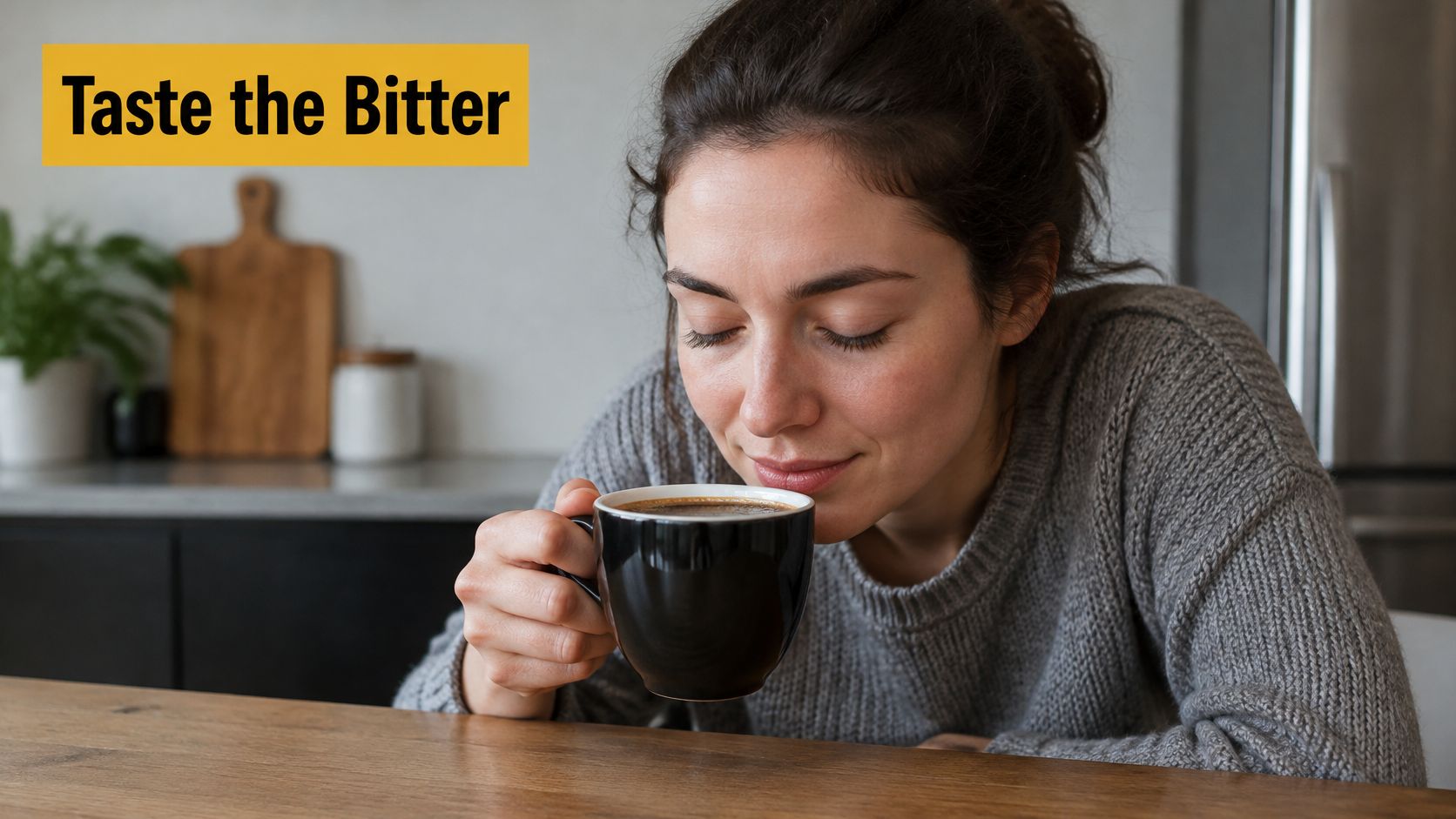
The Single-Cup Drill
- Smell first: Close your eyes and name one aroma, such as nutty, fruity, or toasted.
- Sip and hold: Take a small sip, hold it for three seconds, and rate bitterness from 1 to 10. Note whether it sits on the back or front of your tongue.
- Rate acidity separately: Ask whether the cup tastes bright and juicy or flat. Don't fold this into the bitterness score.
- Time the aftertaste: Notice whether bitterness fades in seconds or lingers. A short finish usually signals a cup you can handle.
- Reset: Drink plain water before the next sip so the previous taste doesn't carry over.
Busy tasters in other foods use the same smell, sip, pause sequence. If you want a model for slowing down and naming flavors, you can explore chocolate tasting techniques and borrow the pacing.
Keep a Four-Score Log
Write down bitterness, acidity, aroma, and aftertaste for every session. Single scores mislead, but trends across weeks show whether a stage is getting easier or whether one fault keeps returning.
Once a week, run a comparison drill. Taste a light roast and a medium roast side by side, brewed the same way, and score the same four attributes. If one cup reads sharply sour while the other doesn't, check ways to reduce the acidity of coffee before blaming the roast alone. The contrast teaches faster than either cup on its own.
Separate Caffeine Training From Flavor Training
Tolerance isn't the same as liking. Some people learn to enjoy black coffee partly because they link its bitterness with feeling alert, not because the flavor itself changed.
In genetic research on coffee taste preference, caffeine sensitivity and metabolism were more strongly associated with coffee taste preference than genetically inferred bitter-taste perception. The authors propose that people can learn to associate coffee's bitterness with caffeine's stimulating effects. Faster caffeine metabolizers may also prefer bitter black coffee because the perceived stimulation wears off sooner, so the bitter cue gets reinforced.
That link helps some drinkers and hurts others. If you're caffeine-sensitive, stronger cups may bring jitters, anxiety, a racing heart, or poor sleep, and you'll read that discomfort as disliking the taste.
The Caffeine-Safe Version
- Use decaf or half-caf for flavor sessions: You isolate taste from stimulation, so your scores reflect the cup.
- Taste earlier in the day: Morning sessions protect sleep and keep your state consistent.
- Stay with small servings: Sensitive drinkers don't need progressively stronger cups to make progress.
Track flavor and alertness in separate columns. A pleasant lift is not proof the cup tasted better, and a restless night is not proof it tasted worse.
Decide what you're training. If the goal is taste alone, decaf sessions count fully. If the goal is alertness, judge that separately and don't present caffeine tolerance as a virtue.
Routine and Pairing Tips That Make Black Coffee Stick
Home is where this ladder will mostly happen. In 2025, 87% of U.S. traditional coffee drinkers prepared their coffee at home, compared with 74% of specialty-coffee drinkers, according to the National Coffee Association figures reported by Daily Coffee News. A repeatable home setup beats occasional cafe tests.
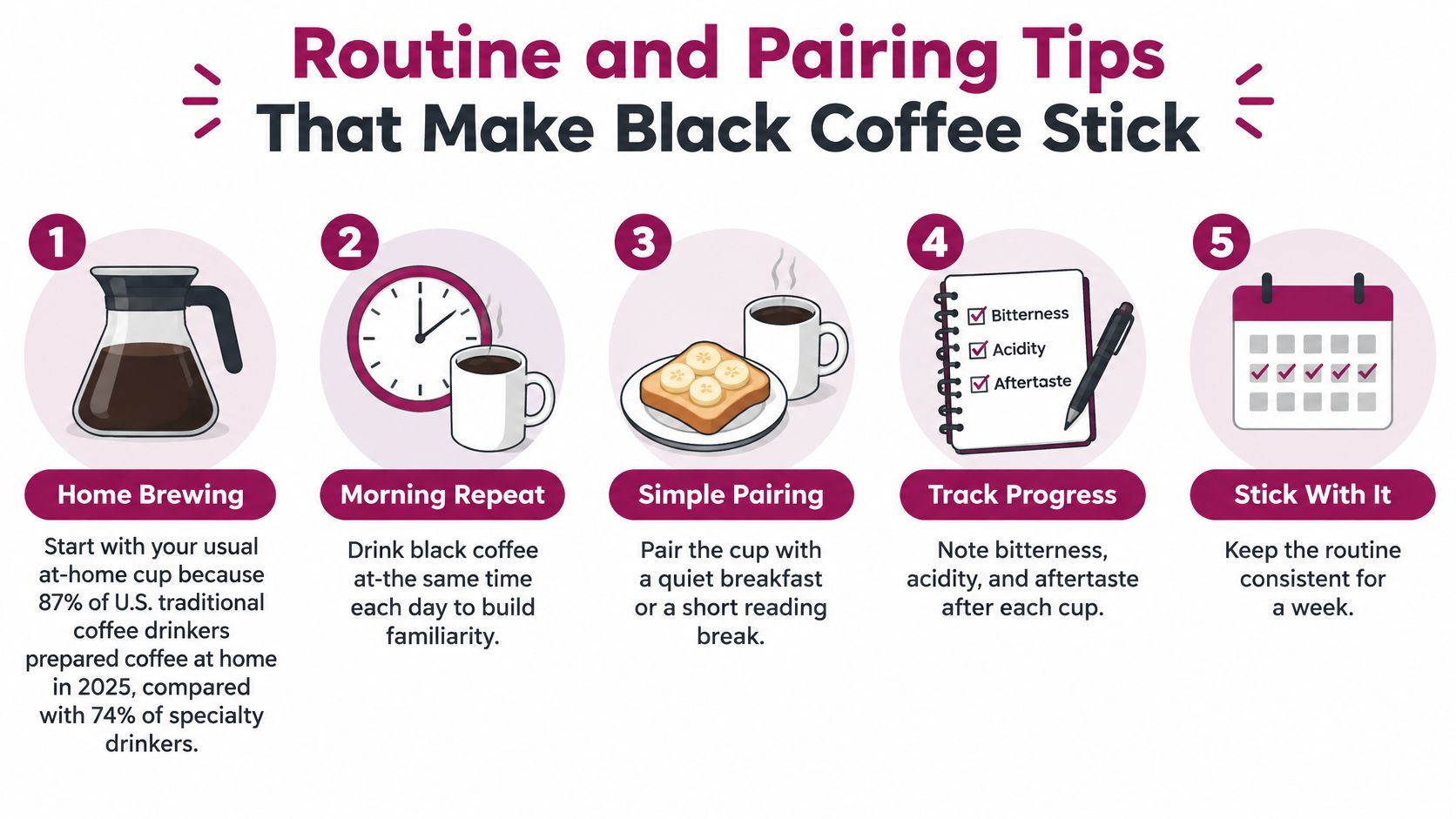
Five Habits That Help
- Brew at the same time each morning: You judge taste in a consistent state, so scores stay comparable.
- Save pairings for Stage 3 onward: Early cups need to be judged on their own, without food softening the verdict.
- Pair full-strength cups with contrast: A square of dark chocolate or a cinnamon pastry adds sweetness or richness beside the cup. For ideas, see pairing coffee and dark chocolate.
- Buy beans in small amounts: Store them sealed, since stale beans read as flat and muddy no matter how well you brew.
- Take a measured cup with you: A travel mug on the commute keeps the routine alive on busy days.
Habits stick when the cup is repeatable and the timing is fixed. A missed day doesn't reset the ladder. Just return to the same stage, brew the same preparation, and log the scores again.
Know When Black Coffee Is Your Daily Default
Black coffee is your default once the unsweetened cup is acceptable in three consecutive sessions, liking has risen at least two points across repeated tastings, and you accept the same preparation on three separate days. Until then, sugar or milk stays in the routine as a bridge, not a failure.
This week, do one thing. Pick one lever from the fault table, change only that lever, and log bitterness, acidity, aroma, and aftertaste for five sessions. Compare those logs with your baseline before changing anything else.
If scores stall for two weeks, step back one stage instead of pushing stronger. A stalled cup usually means concentration jumped too far. Once the thresholds hold, make sugar and milk optional. Serve the next cup plain and add something only if you want it.
If you're caffeine-sensitive, keep servings at 30 to 50 mL while training and still count the goal as reached. For repeatable home tastings, a measured format helps. Our Cartograph Organic Instant Coffee, Medium Roast costs $7.99 USD, each packet is a single measured serving that stays sealed until you're ready, and the freeze-dried coffee dissolves without a grinder, brewer, filters, or cleanup.
Decide what success means for you. Judge taste on the logs, and judge alertness on sleep and heart rate separately.
If you want a repeatable cup for daily tastings without extra equipment or cleanup, our organic freeze-dried instant coffee in single-serve packets gives you the same measured serving at home, at work, or outdoors. Visit Cartograph Coffee to see the medium roast and try it black at the stage of the ladder you're on now.