You're standing at a campsite, office kitchenette, or kitchen counter with good coffee in reach, but you want something warmer than a plain cup. The usual shortcut is flavored syrup. It's convenient, but it can also make coffee taste sugary, heavy, or artificial.
You can flavor coffee naturally without turning it into dessert. Whole spices, citrus peel, cacao, vanilla, and infused milk can add aroma while letting the coffee remain recognizable. The key is matching the ingredient and method to the coffee format, especially when you're working with high-quality instant coffee and limited equipment.
Understanding Natural Coffee Flavoring
A coffee can taste like chocolate, citrus, flowers, or spice without containing any added flavoring. Those impressions come from the bean's variety, growing conditions, processing, and roast. They describe the cup's character, not ingredients mixed into it.
Commercially flavored coffee follows a different process. Producers add flavor systems after roasting, often using oils or extracts. Natural flavors has a formal meaning, so the label alone does not confirm that the named ingredient was added directly or that the flavor originated in the coffee bean. For a plain-English explanation of that distinction, see natural flavors explained by Rip Van.
Three ways flavor reaches the cup
Inherent coffee character comes from the coffee itself. A naturally processed lot can suggest ripe fruit, while a darker roast may show cocoa or toasted-nut notes. These are sensory impressions, not added ingredients.
Commercial flavoring is applied after roasting. It provides consistent, pronounced flavor, though it can cover the base coffee and overwhelm a delicate roast. That trade-off matters when the beans are high quality and you want their origin character to remain clear.
Home infusion puts the adjustment in your hands. A whole cinnamon stick, cardamom pod, split vanilla bean, or strip of dried orange peel can flavor beans or a prepared drink. Whole ingredients are easy to identify and remove, and you can stop when the aroma reaches the desired level. For instant coffee, this same control works with a mug, flask, or camp cup. Add a small amount of an aromatic ingredient to the hot water or finished coffee, then taste before adding more. Strong flavors become harder to correct once dissolved.
Practical rule: Start with coffee you already enjoy black. Natural additions should support its character and should not be used to disguise stale or poorly balanced coffee.
This hands-on approach has deep roots in coffee culture, with its broader history explored in the history section below. For everyday use, the principle is straightforward: choose a clean base, add one clear flavor direction, and keep the coffee recognizable. That approach suits carefully brewed beans as well as high-quality instant coffee prepared away from a full kitchen.
Infusing Whole Beans and Grounds
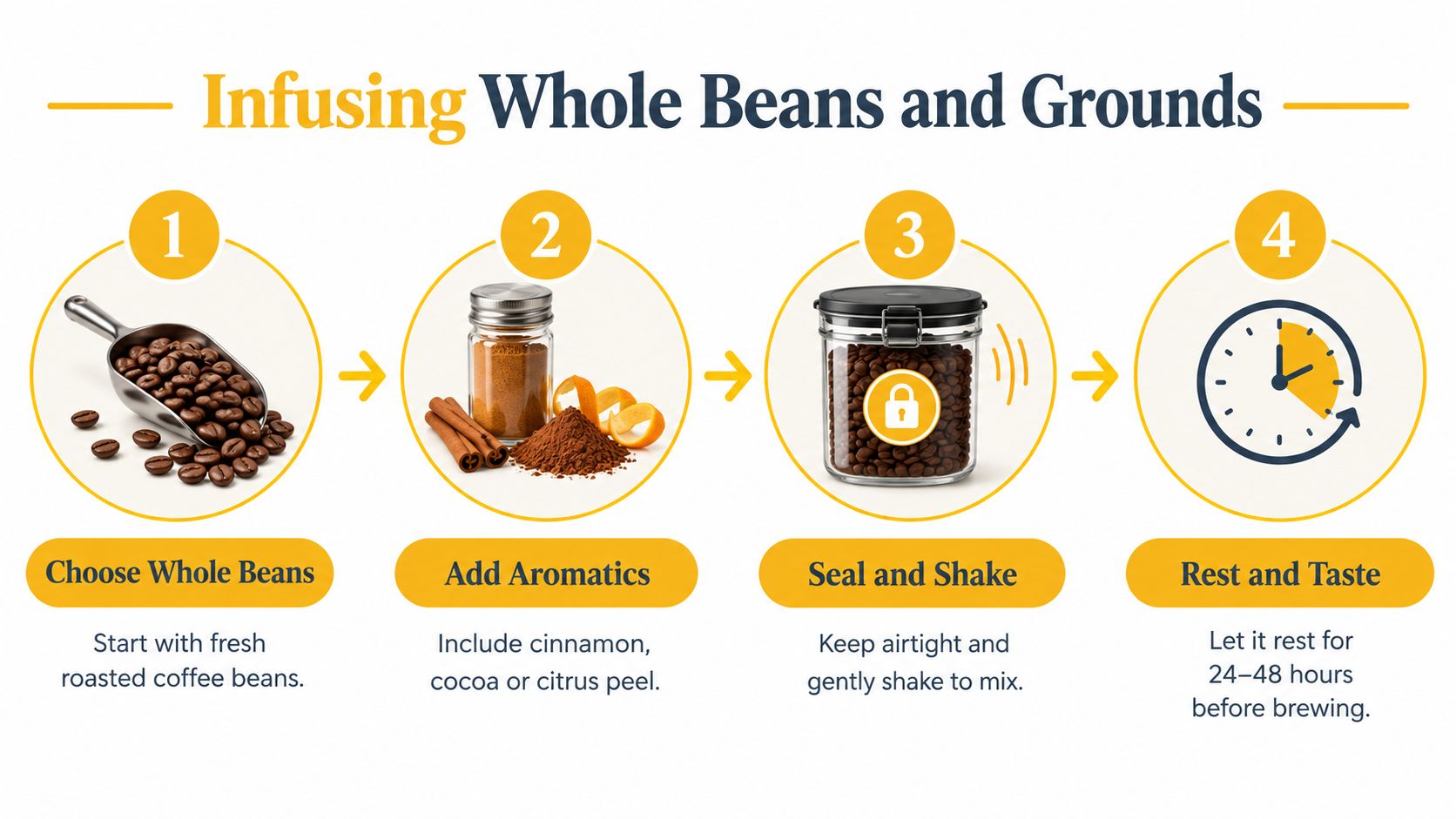
The most controlled method for flavoring a supply of coffee is to infuse whole roasted beans in an airtight container. Whole beans give the aromatics time to contact the surface without exposing a large amount of ground coffee to air. The container also lets you shake the ingredients together rather than trying to stir spices through a grinder.
A reliable whole-bean method
Use a clean, dry container that's large enough for the beans to move freely. A cramped jar creates uneven contact, while a container with room for gentle movement helps distribute the aromatics.
For about 12 ounces, or 340 grams, of beans, practical guidance recommends one to two vanilla beans or two to three cinnamon sticks. Add whole cardamom pods, a small amount of dried citrus peel, or cacao nibs when you want a different direction. The complete workflow, including the suggested ratios and resting approach, is outlined in this natural coffee infusion guide.
- Choose a suitable base. A medium roast works well with cinnamon, vanilla, and orange peel. A darker roast can handle cacao nibs or cardamom, while a delicate light roast usually needs a lighter touch.
- Add whole aromatics. Keep ingredients dry and intact where possible. Whole spices release aroma gradually and are easier to remove than powders.
- Seal the container. Store it in a cool, dark place. Light and heat can flatten the coffee's aroma and make the infusion harder to judge.
- Shake gently twice a day. The movement helps the beans contact different sides of the spices. Don't crush the beans or shake so aggressively that the aromatics break apart.
- Taste as the aroma develops. Wait at least 48 hours before making a final judgment. A one-week rest can create a stronger result, but the right stopping point depends on the spice and the coffee.
Adjusting the method for ground coffee
Pre-ground coffee has more exposed surface area, so it absorbs aroma quickly and loses freshness more easily. Use a smaller batch and a shorter contact period rather than infusing a large supply for a long rest.
Place the grounds and a small amount of whole aromatic material in a sealed container. Check the aroma frequently, then remove the spice before the coffee begins to smell flat or overly perfumed. Don't mix loose cinnamon powder directly through the grounds unless you're comfortable with sediment and uneven flavor.
Extracts require a lighter hand. Add a tiny amount to a separate portion of coffee rather than treating an entire container, because liquid can create clumps and spread unevenly. For a clean result, many home brewers will get better control by adding the extract to the cup or to milk after brewing.
Flavoring High Quality Instant Coffee
Instant coffee changes the technique because there's no filter to catch loose spices. A cinnamon stick or cardamom pod that works well in a French press can end up floating in the mug, while fine powders can settle at the bottom or create a gritty texture.
The best approach is to flavor the liquid around the instant coffee, or to use a dry blend made from ingredients that dissolve cleanly. A premium organic instant coffee can provide a convenient base for this method, especially when you're preparing coffee at work, in a hotel room, or beside a camp stove.
Three practical instant methods
Make a quick spice extract. Warm your water with a cinnamon stick, cardamom pod, or strip of dried orange peel. Let the water pick up the aroma, remove the solid ingredients, and then dissolve the instant coffee in the infused water. This keeps the cup smooth and prevents spice fragments from entering the drink.
Use a fine dry blend sparingly. Finely milled cinnamon or a trace of nutmeg can work directly with instant granules, but the powder must be used lightly. Add the coffee and spice to the mug first, pour in a small amount of hot water, and stir into a paste before adding the rest. That step reduces floating clumps.
Infuse the milk instead. Heat dairy or oat milk with vanilla, cinnamon, or cacao nibs, then strain it before adding it to the prepared coffee. This is especially useful outdoors because a small saucepan can serve both as a milk warmer and a simple infusion vessel.
For a broader set of preparation ideas, use this guide to making instant coffee taste better as a companion resource.
A dry camping blend can make the routine even easier. Combine a small amount of finely milled cinnamon with cacao powder or powdered vanilla, keep it in a sealed tin, and add a pinch to the instant granules before pouring in hot water. Keep the blend dry, label it clearly, and make only a modest amount so the aroma stays fresh.
The cleaner the instant coffee dissolves, the more valuable your flavoring method becomes. Choose ingredients that add aroma without creating sediment.
For travel, whole spices are often more practical than liquid extracts. They won't leak into a backpack, and you can use the same cinnamon stick or cardamom pod to prepare several cups of infused water. If you use an extract, add it to the finished mug, never to an espresso machine's water reservoir. Oils and concentrated flavorings can cling to internal parts and contaminate later drinks.
Choosing the Right Spices and Extracts
Different flavoring agents behave differently in heat, water, coffee oils, and milk. Whole spices release aroma gradually, while powders spread quickly but can create sediment. Citrus can brighten a heavy roast, yet too much peel can introduce bitterness.
Use the following guide as a starting point rather than a rigid recipe.
| Ingredient | Best Format | Ideal Brewing Method |
|---|---|---|
| Cinnamon sticks | Whole pieces | Hot-water infusion, French press, or instant coffee |
| Cardamom pods | Lightly cracked whole pods | Hot brewing or infused water |
| Vanilla bean | Split whole bean | Airtight bean infusion or warm milk |
| Dried orange peel | Small whole strips | Hot brewing, infused water, or cold brew |
| Cacao nibs | Whole nibs | Whole-bean infusion, cold brew, or warm milk |
| Fine cinnamon | Small measured amount | Instant coffee or finished mug |
| Pure vanilla extract | Liquid, added carefully | Finished coffee or infused milk |
| Nutmeg | Freshly grated, tiny amount | Finished mug or warm milk |
Match the ingredient to the cup
For a warm and spiced profile, cinnamon and cardamom are dependable choices. Cinnamon sticks suit hot coffee because they release aroma without leaving much debris. Cardamom is more assertive, so lightly crack the pods and remove them before serving.
For a bright and citrusy cup, use dried orange peel rather than fresh zest when you're preparing coffee away from home. Dried peel stores well and won't introduce excess moisture. Add only a small strip, especially to a light roast, because citrus oils can become sharp when overused.
For a rich and chocolate-like profile, cacao nibs pair naturally with darker or fuller coffees. They're better suited to an infusion or cold brew than to direct mixing in instant coffee, where their texture won't disappear. Warm milk can carry cacao aroma more smoothly than water alone.
The guide to adding cinnamon to coffee offers another practical reference for using this familiar spice without overwhelming the cup.
Pure extracts are useful when convenience matters, but they're less forgiving than whole botanicals. Add them after brewing, one small adjustment at a time, and stir thoroughly before tasting. Avoid flavored oils designed for baking unless the label clearly indicates that they're suitable for beverages. A pleasant aroma in the bottle doesn't guarantee a balanced result in coffee.
Cold brew needs a different level of restraint. Its long contact time can pull a lot from citrus peel, cacao, or spices, so use whole ingredients and remove them once the aroma is noticeable. Fine powders are especially poor choices for cold brew because they can remain suspended and muddy the finished drink.
The History and Market Shift Toward Natural Ingredients
Building on the early botanical tradition noted earlier, the commercial flavored-coffee category emerged much later. Flavored instant coffee reportedly appeared in 1958, while flavored whole-bean coffee became a modern trend in the late 1970s, according to Coffee Review's overview of flavored coffee history. That timeline matters for anyone brewing away from home. Natural additions have a long history, but the packaged flavored-coffee industry is comparatively recent.
The shift toward natural ingredients reflects changing expectations around labels, sourcing, and control. A coffee flavor market analysis estimates the global coffee flavor market at about $1.63 billion in 2025, with natural coffee flavors accounting for 58.3% and projected to grow at roughly 7.1% CAGR through 2034. The same analysis reports that 68% of consumers in North America and Europe actively seek natural coffee flavoring and may accept 25% to 35% price premiums for clean-label alternatives.
These figures describe commercial buying behavior, yet the same preference works at home. A traveler can carry high-quality instant coffee, a small amount of a recognizable botanical, and a compact container instead of relying on flavored syrups or heavily processed powders. The coffee remains convenient, while the drinker controls the ingredient list and strength. That balance is especially useful on hikes, road trips, and workdays when whole-bean infusion is impractical.
Natural flavoring also gives instant coffee a clearer role in the specialty conversation. High-quality instant coffee already offers speed and portability, so the goal is to support its existing character rather than cover it with an aggressive aroma. A restrained addition can make a familiar cup feel more considered without requiring a grinder, scale, or brewing setup.
The same report places broader natural flavoring growth at 7.8% CAGR, faster than artificial flavoring segments. That projection does not guarantee better taste in every product. It does show that natural positioning has moved beyond a small specialty interest and now influences product development and shopper expectations.
The practical lesson is simple. Choose a clean base, add a recognizable ingredient, and control contact or dose. For guidance on assessing the coffee before flavoring it, this overview of organic and natural coffee provides useful context. Natural flavoring works best when it supports a well-made coffee, including a carefully selected instant coffee, rather than hiding a stale or unbalanced one.
Common Mistakes and Quick Reference Tips
Natural flavoring usually fails through excess, not lack of effort. Too much spice can make coffee taste like potpourri, while fine powders can leave grit and an uneven finish.
- Use whole ingredients first: Cinnamon sticks, cardamom pods, vanilla beans, and dried peel are easier to remove and control.
- Give beans room to move: A container that's too small creates patchy contact, so use one that allows gentle shaking.
- Shake infused beans twice daily: Even distribution matters more than aggressive movement.
- Taste before extending the rest: Stop when the aroma supports the coffee. More contact isn't always better.
- Keep grounds' infusion short: Ground coffee loses freshness faster than whole beans and absorbs aromatics quickly.
- Strain infused milk and water: This prevents spice fragments from entering the cup.
- Keep extracts out of reservoirs: Add them to the finished drink or milk, not to brewing equipment.
- Store dry ingredients correctly: Protect spices and coffee from heat, light, moisture, and strong competing odors.
- Adjust for roast character: Use brighter citrus and lighter spice with delicate coffee, and deeper cacao or vanilla with fuller roasts.

Start with one aromatic and a small batch. Keep notes on the coffee, ingredient, contact time, and tasting result, then change only one variable on your next attempt. That simple habit will help you build a repeatable natural flavoring routine for both home brewing and outdoor coffee.
Cartograph Coffee offers organic instant coffee made from freeze-dried coffee beans, with smooth coffee character and no sugar, flavors, additives, or preservatives listed in the product description. Visit Cartograph Coffee to find a convenient base for naturally flavored cups at home, at work, or on your next camping trip.