Plain instant coffee contains a small but non-zero amount of carbohydrates, typically about 0.34 to 0.74 grams per teaspoon-sized serving. Flavored, sweetened, and 3-in-1 versions can contain much more because sugar, creamer, milk powder, or maltodextrin changes the formula.
So, does instant coffee have carbs if you drink it black? Yes, but the amount is usually tiny. The confusing part is that “instant coffee” can describe two very different products: pure dried coffee powder, or a pre-mixed sachet that also contains sweeteners and creamer.
That distinction matters if you're following a keto diet, counting carbohydrates for blood-glucose management, or logging every ingredient in a food-tracking app. A teaspoon of plain powder and a sweetened latte sachet may sit beside each other on a supermarket shelf, but they don't have the same nutritional profile.
Does Instant Coffee Have Carbs?
Plain instant coffee contains a small amount of carbohydrate from the coffee solids left behind after drying. A nutrition listing for instant coffee made from powdered coffee reports about 0.34 to 0.74 grams of carbohydrates per teaspoon or cup serving, with total sugars reported as 0 grams in one hospital nutrition dataset (FatSecret nutrition data).
That doesn't mean black instant coffee behaves like a sugary drink. For many people, the carb contribution from unsweetened powder is nutritionally negligible. It isn't technically zero, though, because coffee beans contain soluble material beyond caffeine and flavor compounds.
Practical rule: Treat plain instant coffee as very low carb, not automatically carbohydrate-free.
The bigger source of confusion is product format. A jar labeled “instant coffee” may contain only coffee, while a single-serve packet may include sugar, non-dairy creamer, flavoring, or milk powder. One nutrition database lists plain instant coffee at about 0.34 to 0.68 grams of carbohydrates per serving, while some formulated instant products reach 13 grams of carbohydrates and 10 grams of sugar per serving (USDA-based instant coffee data).
For accurate tracking, start with the ingredient list and the serving size. The question isn't only “does instant coffee have carbs?” It's also which instant coffee are you drinking?
Why Instant Coffee Contains Carbohydrates in the First Place
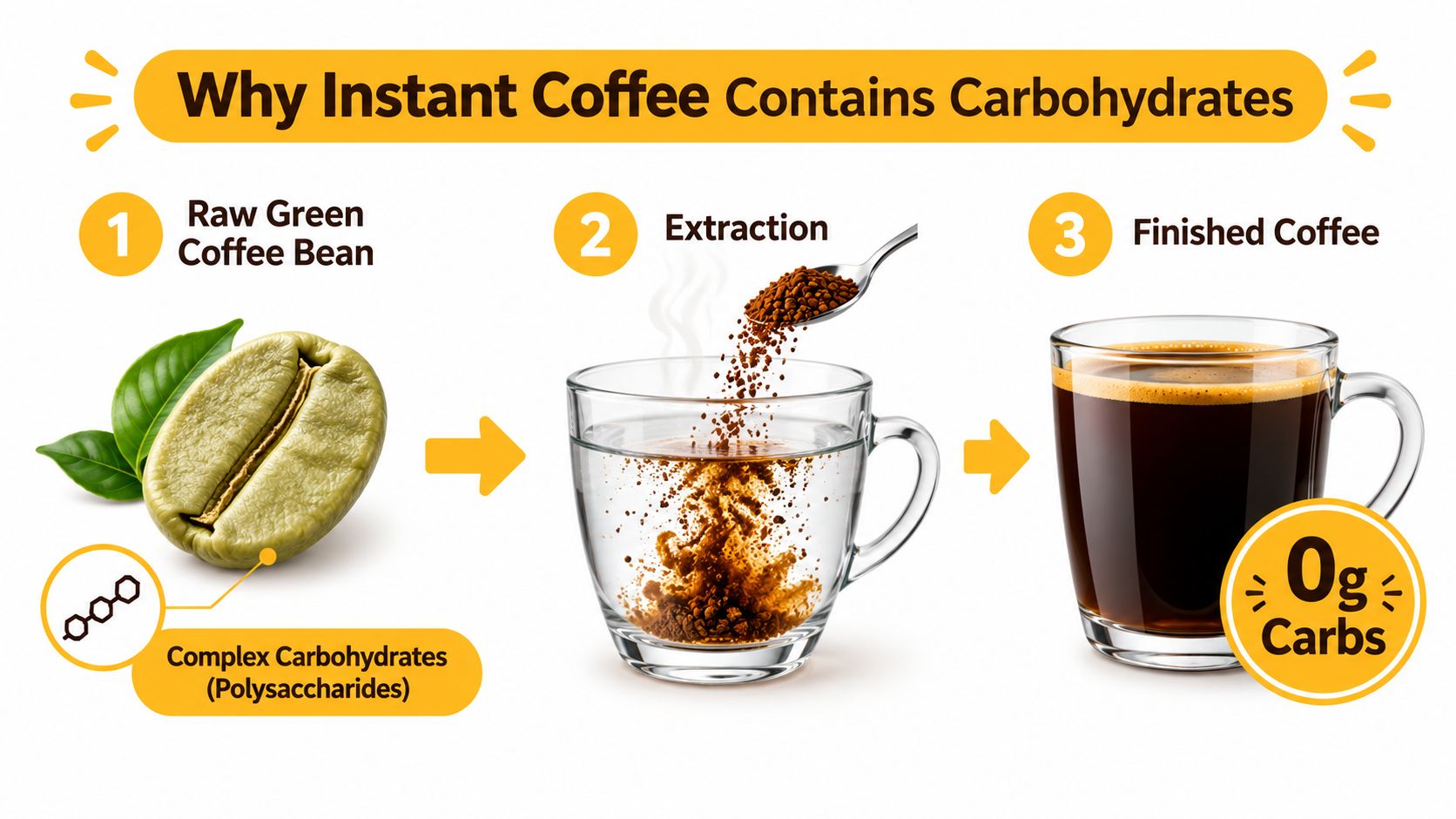
Why can plain instant coffee contain carbohydrates at all? The answer begins with the coffee bean, which holds more than caffeine and aromatic oils. Brewing extracts soluble compounds, including naturally occurring oligosaccharides and polysaccharides. These are part of the coffee solids, not added table sugar, but they still count toward the carbohydrate total.
Instant coffee works like a concentrated soup. Simmer soup and remove much of its water, and dissolved ingredients remain in the thicker concentrate. Coffee follows a similar path: manufacturers brew an extract, then remove the water through spray-drying or freeze-drying. The finished granules are therefore concentrated soluble coffee material rather than pure caffeine.
The manufacturing process explains why the powder retains some carbohydrate. Spray-dried instant coffee became commercially important in the 1930s, while freeze-dried coffee later appeared as a premium format in 1963 (history and production overview of instant coffee). Drying removes water, not every substance extracted from the bean.
Natural coffee carbohydrates versus added sugar
Research summaries describe natural carbohydrate fractions in instant coffee, including several percent oligosaccharides and around 6.5% total polysaccharides (Chemical & Engineering News overview). The amount can vary with the beans, roasting, extraction, and manufacturing method.
That distinction helps separate two very different products. In a jar of pure coffee powder, the small carbohydrate value comes from retained coffee solids. In a flavored sachet, 3-in-1 mix, or sweetened blend, a higher value can come from ingredients such as sugar, non-dairy creamer, flavoring, or milk powder.
For a visual explanation of how instant coffee is made, keep one principle in mind: water leaves, soluble coffee solids stay. Added ingredients determine whether the drink remains very low in carbohydrates or becomes a substantially different product.
Carb Counts in Plain Instant Coffee
Plain instant coffee can produce slightly different numbers across nutrition databases because serving sizes aren't always identical. A teaspoon may contain a different mass from one product to another, and a database may describe a rounded teaspoon, a measured powder weight, or a prepared cup.
| Serving Size | Total Carbs | Sugars | Fiber | Net Carbs |
|---|---|---|---|---|
| Teaspoon-sized serving | 0.34 to 0.74 g | 0 g in one hospital dataset | Not consistently reported | Depends on fiber reporting |
| 3 g instant coffee powder | 2.12 g | Not specified | Not specified | Not specified |
| 100 g instant coffee powder | 41.1 g | Not specified | Not specified | Not specified |
The 3-gram serving and the 100-gram listing come from a USDA-based nutrition entry summarized in the instant coffee reference material (instant coffee production and nutrition background). The smaller serving range comes from the prepared powdered-coffee listing cited above.
Why the numbers vary
Several factors can shift the value shown for a particular jar:
- Scoop size: One person may use a level teaspoon, while another uses a heaped spoonful.
- Product density: Freeze-dried granules and fine spray-dried powder don't occupy a spoon in exactly the same way.
- Moisture content: Small differences in water remaining in the product affect the weight of the powder.
- Coffee composition: Bean origin, roast, and extraction conditions change the soluble solids.
- Label rounding: Nutrition panels may round very small amounts down to zero.
A practical estimate for plain powder is about half a gram of carbohydrate per teaspoon-sized serving, but your product label should take priority. If you use several teaspoons, measure the powder rather than assuming the serving remains the same.
For strict macro tracking, the difference between “zero” and a fraction of a gram can matter. For a general diet, unsweetened instant coffee usually contributes very little carbohydrate.
Flavored and 3-in-1 Instant Coffee
The coffee itself usually isn't responsible for the large carb jump in flavored sachets. The added ingredients are. Sugar, glucose syrup, maltodextrin, skim milk powder, and creamer can turn a nearly carb-free-tasting black coffee into a sweetened beverage with a substantial carbohydrate load.
| Format | Typical Serving | Carbs (g) | Main Carb Source |
|---|---|---|---|
| Plain instant coffee | Teaspoon-sized serving | 0.34 to 0.74 | Natural coffee solids |
| Flavored sachet | One prepared sachet | Can be materially higher | Sugar, flavoring solids, creamer |
| 3-in-1 coffee mix | One prepared sachet | Can reach 13 g | Sugar and non-dairy creamer |
| Latte-style instant blend | One prepared serving | Depends on formulation | Milk powder, sugar, creamer |
A product with 13 grams of carbohydrate and 10 grams of sugar per serving is a useful example of how far a formulated instant coffee can move from plain powder (USDA-based product comparison). The packet may still contain coffee, but coffee is no longer the only meaningful ingredient.
How to identify the difference quickly
Check the front of the package, but verify it on the back. Words such as “latte,” “cappuccino,” “mocha,” “3-in-1,” and “sweetened” often indicate that the product includes more than coffee granules.
A pure jar generally lists coffee, or coffee extract, as its ingredient. A mixed sachet may list sugar or creamer near the beginning, which means those ingredients make up a meaningful part of the blend. The difference between plain coffee and 3-in-1 coffee comes down to formulation, not a special kind of high-carb coffee bean.
“Sugar-free” also deserves a closer look. Some products replace sugar with polyols or other sweetening ingredients, and their effect on total and net carbohydrates depends on the specific product and the way your diet counts them. Read the full nutrition panel rather than relying on the front label.
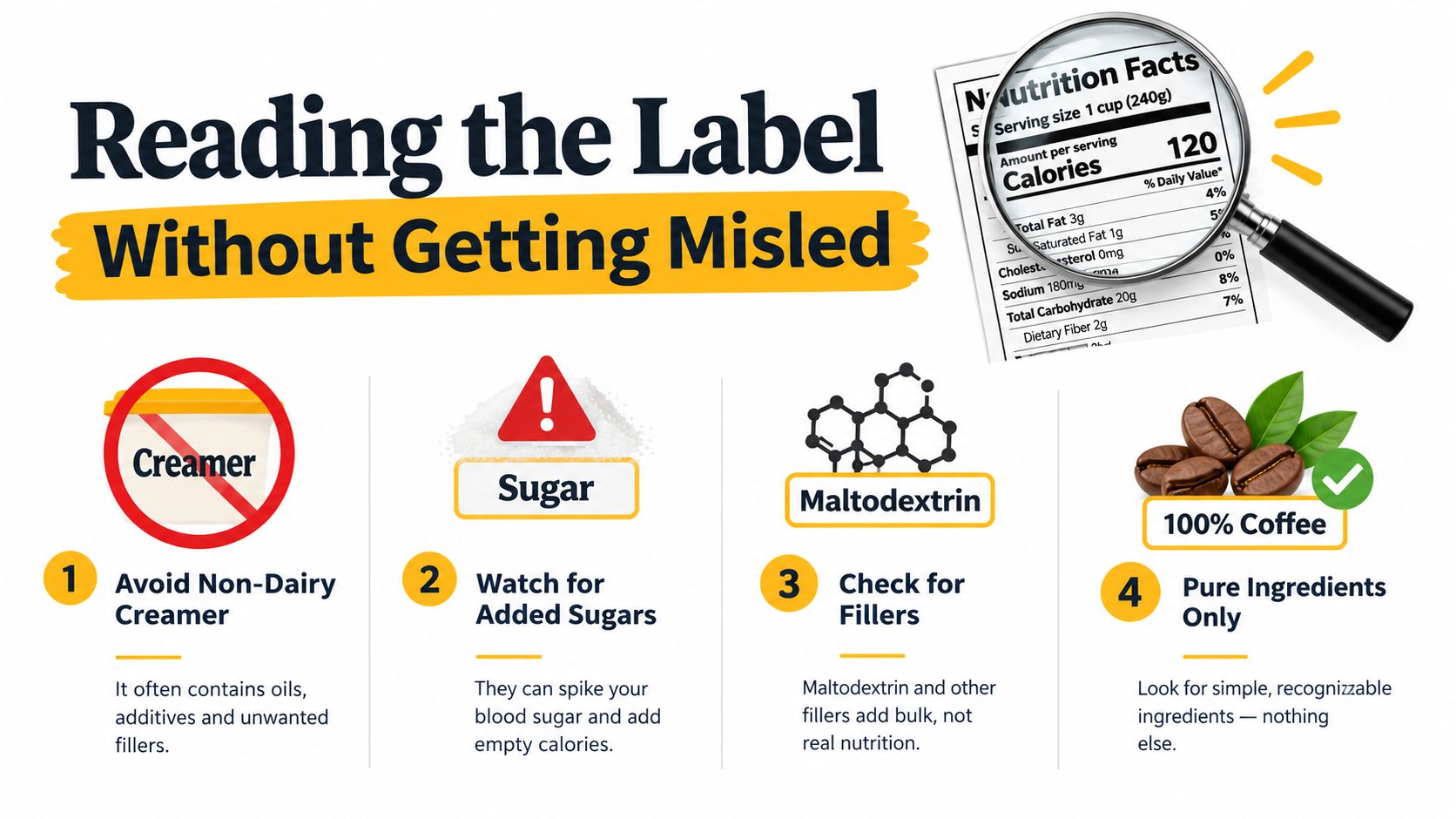
Reading the Label Without Getting Misled
Start with total carbohydrates per serving. Then look separately at sugars, fiber, and any stated added sugars. Plain instant coffee may show 0 grams on a label because manufacturers round small quantities, even though detailed nutrition databases can record a measurable amount.
Next, inspect the ingredients list. Ingredients appear in descending order by weight, so the first few entries reveal whether you're buying coffee or a powdered coffee beverage.
Ingredients that deserve attention
- Sugar or glucose syrup: These are direct sources of added carbohydrate.
- Maltodextrin: This can act as a filler, carrier, or texture ingredient and contributes to the carbohydrate total.
- Skim milk powder: Milk solids add lactose, a naturally occurring milk sugar.
- Non-dairy creamer: Creamer formulas can contain glucose-based ingredients, starches, or other carbohydrate sources.
- Hydrogenated oils: These don't automatically indicate high carbs, but their presence confirms that the product is a formulated creamer blend rather than pure coffee.
A product with several grams of carbohydrate per serving should prompt you to check for sweeteners, creamers, or other non-coffee ingredients. Authenticity testing can measure free and total carbohydrates in instant coffee, and ISO-based limits are used to help detect added sugars or adulteration (instant coffee carbohydrate and authenticity testing).
A simple label check
Use the serving size printed on the package, then adjust it to your actual preparation. If the packet is intended for one mug but you use only part of it, calculate the fraction. If you use more powder from a jar, scale the listed carbohydrates upward.
Label shortcut: A low carbohydrate value paired with a one-ingredient coffee list usually indicates plain instant coffee. A higher value means you should investigate the formulation before logging it.
Marketing terms such as “light,” “no added sugar,” and “keto-friendly” don't replace the nutrition panel. They may describe one aspect of the product while leaving other carbohydrate sources in the recipe.
Instant Coffee vs Brewed Coffee on Carbs
Does the brewing method change the carbohydrate content of your coffee? For plain, unsweetened drinks, the answer is usually no. Instant and brewed coffee have a similarly low carbohydrate profile. The main difference is how much coffee material reaches the cup and how the serving is measured, not the existence of a special carbohydrate-free bean.
Plain drip coffee is generally listed at a negligible carbohydrate level, while espresso delivers concentrated coffee in a smaller drink. Plain instant coffee follows the same broad pattern. Once sugar, milk, syrup, or creamer enters the recipe, the formulation matters more than whether the coffee began as powder or brewed liquid.
| Coffee Type | Serving Size | Carbs (g) | Calories |
|---|---|---|---|
| Plain instant coffee | Teaspoon-sized powder serving | 0.34 to 0.74 | Varies by serving |
| Plain brewed coffee | Prepared cup | Qualitatively negligible | Depends on serving and database |
| Plain espresso | Small shot | Qualitatively negligible | Depends on serving and database |
The serving unit can still create confusion. A nutrition entry for instant coffee may describe dry powder, whereas your spoon holds only part of that amount. Comparing a powder serving with a prepared cup is like comparing the ingredients before cooking with the finished dish. Use the package serving size and your actual portion when recording carbohydrates.
Additions matter more than brewing style
French press, pour-over, cold brew, and drip coffee remain unsweetened beverages unless ingredients are added. The extraction method changes flavor, strength, and volume, but it does not automatically turn coffee into a higher-carbohydrate drink.
Sugar, dairy milk, flavored syrups, and powdered creamers can raise the carbohydrate total in any format. The same applies to flavored sachets and 3-in-1 mixes, which should be compared as formulated beverages rather than plain coffee. For a fair coffee-to-coffee comparison, place black instant and black brewed coffee side by side. For a real drink comparison, count every addition.
The useful distinction is simple: brewing style usually has a smaller effect than the recipe around it.
Choosing the Right Instant Coffee for Your Diet
Which instant coffee fits your diet depends on what is in the packet, not just the word “instant.” Start with your goal, then verify the ingredients and serving size. Plain coffee solids, flavored sachets, and 3-in-1 mixes belong to different nutrition categories.
For strict carbohydrate tracking
Choose pure instant coffee powder with no sweetener, creamer, or milk ingredients. A teaspoon-sized serving typically provides about 0.34 to 0.74 grams of carbohydrates (plain instant coffee nutrition data). The serving size acts like the volume knob: using more powder raises the total, even when the product itself remains unsweetened.
For general calorie awareness
An unsweetened single-serve packet can be convenient, provided it contains coffee alone. Check the ingredient list first, then compare its carbohydrate value with the serving you prepare. A small nutrition value usually points toward plain instant coffee, while added powders can change the drink substantially.
For flavored coffee drinkers
Flavored blends should be counted as formulated beverages rather than plain coffee. Flavoring alone may not determine the carbohydrate content, but creamer, milk powder, sugar, or syrup can. Compare total carbohydrates and sugars before choosing between flavors.
Regional products can vary in both ingredients and serving instructions. Use this guide to compare Japanese instant coffee blends, then apply the same check to products sold elsewhere. Packaging can look similar while the recipe inside differs.
For keto or blood-glucose-conscious routines
Treat 3-in-1 sachets cautiously because their added ingredients can make them much higher in carbohydrates than plain powder. For greater control, use black instant coffee and add only measured ingredients that fit your routine.
For more ideas, review these low-carb coffee options. The practical rule is to treat instant coffee as a category with several formulations, not as one fixed food with one universal carb count.
Plain instant coffee is very low in carbohydrates, while sweetened blends may contribute considerably more. Check the serving size, scan the first ingredients, and record the actual product you drink. That habit separates the coffee solids from the added carbohydrates in flavored sachets and 3-in-1 mixes.
Cartograph Coffee offers organic instant coffee focused on quality, flavor, and convenience for home, work, and outdoor use. To explore its instant coffee selection, visit Cartograph Coffee.