So, does instant coffee actually expire?
The short answer is no, it doesn't "expire" in the way milk or bread does. You're not likely to get sick from it. But—and this is a big but—it definitely loses its magic over time. The vibrant aroma and rich taste will slowly fade, leaving you with a cup that’s more brown and watery than bold and delicious.
Think of it like the dried herbs in your spice rack. That jar of oregano from five years ago is probably safe to eat, but it won't bring much flavor to your pasta sauce. Instant coffee works the same way.
Understanding Instant Coffee Shelf Life
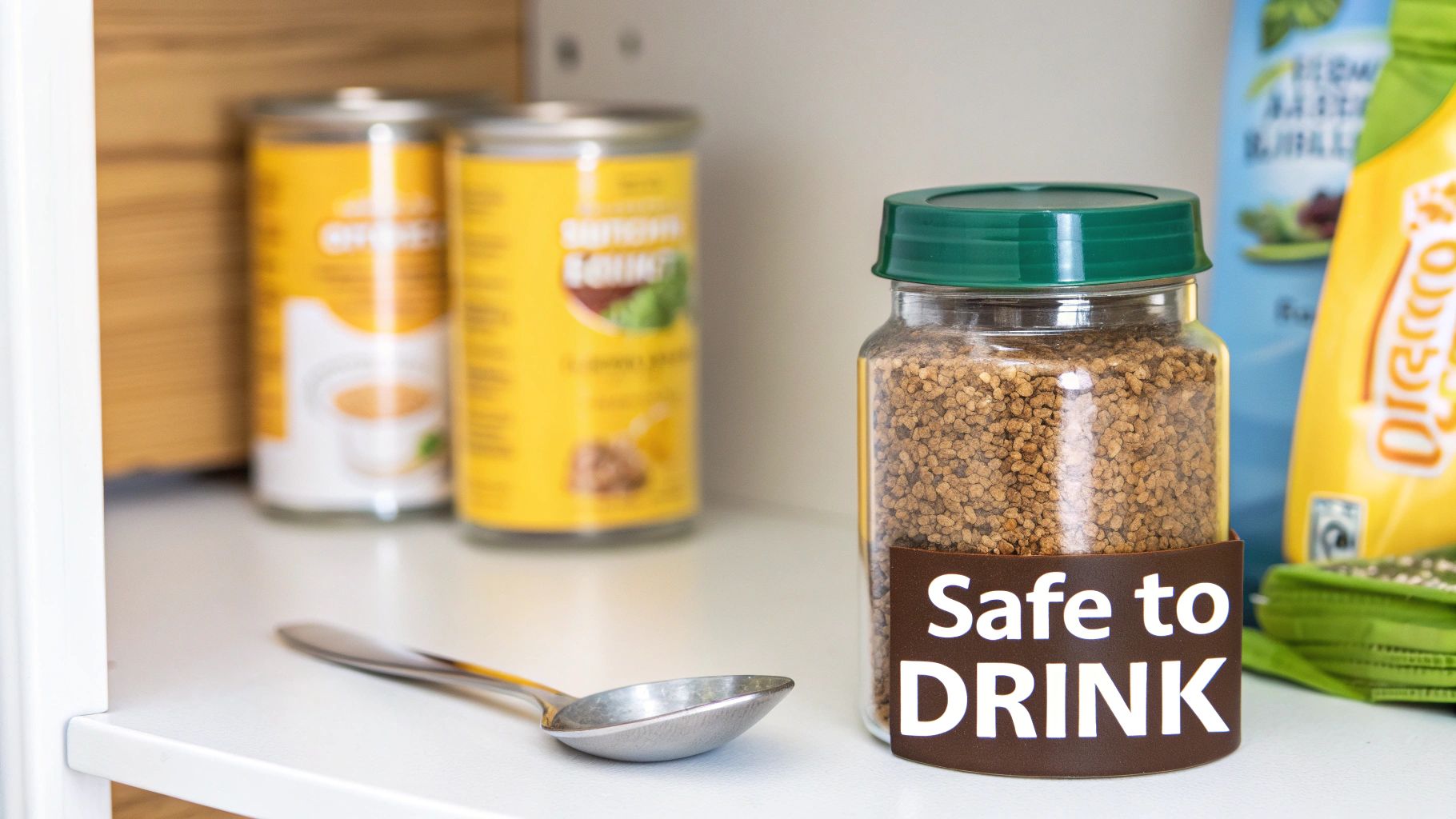
The secret to instant coffee's incredible longevity is that it's a dehydrated product. The manufacturing process strips out virtually all the water, and without moisture, mold and bacteria simply can't survive. This is why it doesn't spoil in the traditional sense.
Instead of worrying about spoilage, the real battle is against the elements that degrade its quality.
The Real Foes of Freshness
There are three main enemies that will sabotage the taste of your instant coffee:
- Moisture: Even a little humidity sneaking into the container can cause the granules to clump together, creating a solid, stale brick.
- Air (Oxygen): Oxygen is the enemy of freshness. When exposed to air, the delicate aromatic compounds in the coffee begin to oxidize and break down, taking the flavor and smell with them.
- Heat: Storing your coffee next to the stove or on a sunny windowsill is a bad idea. Heat speeds up the chemical reactions that make coffee taste flat and lifeless.
The core takeaway is this: While instant coffee is almost always safe to drink past its "best-by" date, its quality is not. The goal is simply to protect it from moisture and air to keep it tasting great for as long as possible.
This incredible stability is why a sealed jar of instant coffee lasts so much longer than a bag of whole beans. If you store it correctly, you can expect it to maintain good quality for 24 months or more. Some sources even suggest it can remain palatable for up to 20 years, though I'd personally be a bit skeptical about the taste by then!
This long shelf life is what makes it a perfect staple for emergency kits, camping trips, or for those of us who just want a reliable backup coffee on hand. If you're curious about the science, you can read more about the surprising longevity of instant coffee from the experts at Sucafina.
What Coffee Best-By Dates Actually Mean
That date stamped on your jar of instant coffee can be a little confusing. When you see "Best By," "Best Before," or "Use By," it's easy to think your coffee is on a countdown to being unusable. But here’s the secret: those dates are all about quality, not safety.
Think of it like a bag of your favorite potato chips. The date on the bag tells you when they’ll be at their peak crispiness and flavor. You can absolutely eat them a few weeks later, but they might have lost that perfect, satisfying crunch. The very same idea applies to your instant coffee.
The "best-by" date is simply a guidepost for enjoying the coffee exactly as the creators—like us here at Cartograph—intended. It marks the window of time where you’ll experience the richest aroma and the most vibrant, complex flavors. It’s a promise of quality, not a safety deadline.
Best-By vs. Expiration Dates
It's really important to know the difference between these two labels, because they mean completely different things. Getting them mixed up is a major cause of perfectly good food going to waste.
- Best-By Date: This is all about the sensory experience—taste, smell, and texture. It’s the manufacturer's best guess for when the product will start losing its peak character. For instant coffee, this is the point where the flavor profile might begin to taste a little flat.
- Expiration Date: Now, this is a safety warning. You'll find it on perishable foods like milk, fresh meat, or packaged salads. Eating these items past their expiration date can actually make you sick.
Because instant coffee has virtually no moisture, it's an incredibly stable product where harmful bacteria just can't grow. That’s why it gets a best-by date, not a hard-and-fast expiration date.
Why We Print Dates on Our Coffee
At Cartograph Coffee, we put a "best-by" date on our packaging because we're obsessed with you having an amazing coffee experience. We want every cup to deliver the bright, clean notes of the organic beans we so carefully source. That date is our way of saying, "For the truest Cartograph experience, it’s best to enjoy it by this time."
This date isn't a cliff where the flavor suddenly plummets. It’s more like the start of a gentle, rolling hill. Your coffee is still perfectly safe to drink long after this date, but its unique character will slowly and gradually fade over the next few months.
To really get a handle on what these dates mean, it helps to know how to read food labels like a pro. Understanding the bigger picture empowers you to make smarter, more confident decisions about everything in your pantry—including your favorite instant coffee. You’ll know that the date is a helpful guide for taste, not a strict rule for safety.
How Freeze-Drying Preserves Flavor Longer
Not all instant coffees are created equal, and the biggest difference usually comes down to how they're made. The two main methods, freeze-drying and spray-drying, have a massive impact on both the final flavor and how long that flavor holds up. Getting a handle on this difference is the key to understanding why some instant coffees stay delicious for so much longer than others.
Think of freeze-drying as the gold standard for preservation. It’s a sophisticated, gentle process where brewed coffee is frozen solid and then placed in a powerful vacuum. This clever technique causes the frozen water to turn directly into vapor without ever melting—a process called sublimation. By skipping the liquid stage, it carefully removes moisture while locking in the delicate, volatile compounds that give coffee its incredible aroma and complex taste.
The Heat of the Moment: Spray-Drying
On the other hand, spray-drying is a much faster and more aggressive method. Picture how powdered milk is made: a fine mist of brewed coffee gets blasted into a chamber of scorching hot air. The intense heat evaporates the water almost instantly, leaving behind the fine powder we know as instant coffee.
While this method is incredibly efficient, that blast of high heat can scorch the very compounds that make coffee so enjoyable. Many of the subtle flavor notes and aromatic oils are simply burned away, resulting in a coffee that can taste flatter or more generic right out of the jar.
A Quick Comparison
To see how these two methods stack up, let's break down the key differences. It becomes pretty clear why one method consistently produces a better-tasting, longer-lasting coffee.
Freeze-Dried vs Spray-Dried Instant Coffee
| Attribute | Freeze-Dried Coffee | Spray-Dried Coffee |
|---|---|---|
| Process | Frozen, then vacuum-dried (sublimation) | Sprayed into hot air to evaporate water |
| Heat Exposure | Very low heat, gentle on compounds | Very high heat, aggressive on compounds |
| Flavor Profile | Rich, complex, close to fresh-brewed | Often flat, one-dimensional, can taste burnt |
| Aroma | Preserves original coffee aromatics | Many aromatics are lost during processing |
| Shelf Life | Excellent flavor stability for 1-2 years | Loses flavor more quickly, best within 6-12 months |
| Cost | More expensive due to the complex process | Less expensive, faster, and more efficient |
| Texture | Lighter, more porous granules | Fine, dense powder |
The takeaway is simple: the extra care taken during freeze-drying pays off in both taste and longevity.
This infographic shows the journey from production to your cup, illustrating how a product's quality changes over time.
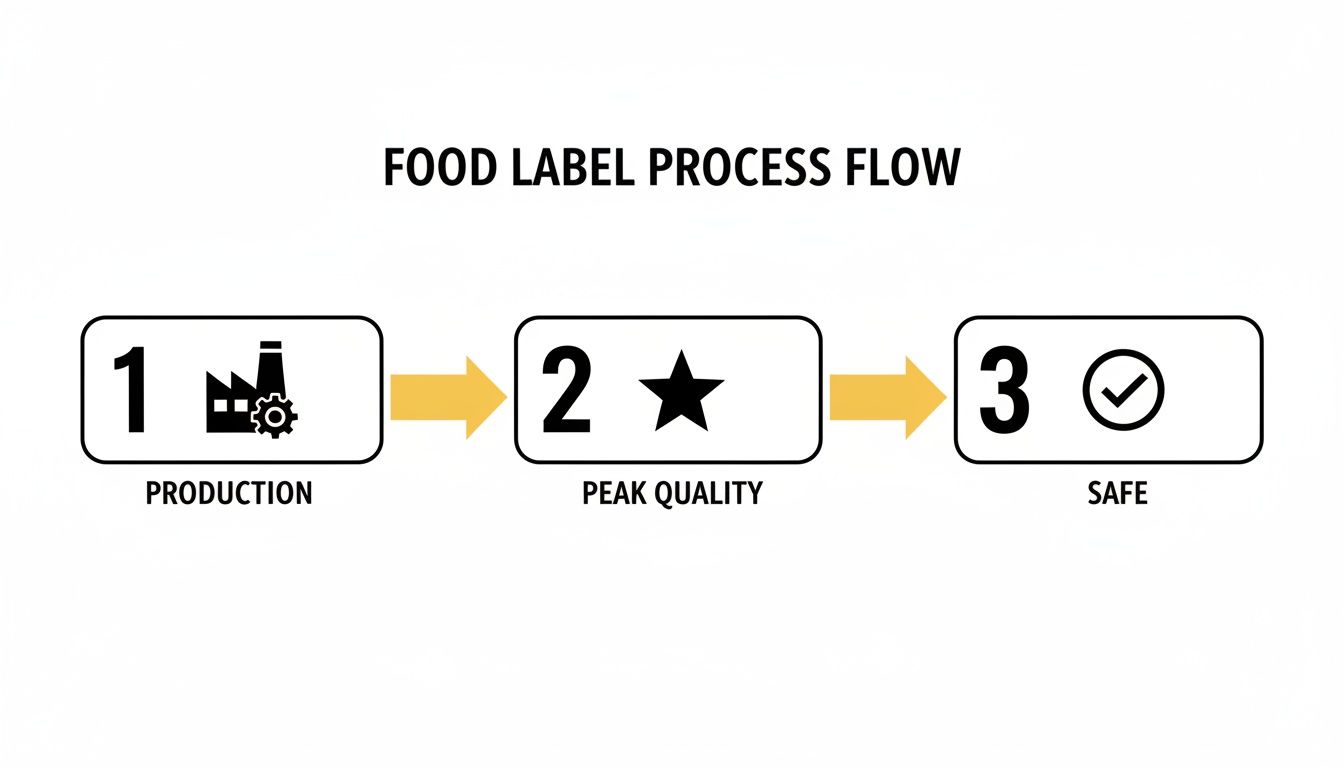
As you can see, while a product remains safe to consume long after it's made, its peak quality is a much shorter window. This reinforces why that best-by date is so important for getting the best flavor experience.
Why Freeze-Drying Is Worth It
Because freeze-drying sidesteps high heat, it preserves the original character of the coffee beans far more effectively. This is exactly why premium brands, like Cartograph Coffee, exclusively use this method. The result is a richer, more aromatic instant coffee that tastes remarkably close to a freshly brewed cup and holds onto that amazing quality for much longer in your pantry.
The gentle nature of freeze-drying is what gives our coffee its superior shelf stability and flavor retention. It’s a commitment to quality that you can taste in every single cup, ensuring a better experience from the first sip to the last.
This dedication to a better process is also showing up in market trends. The freeze-dried coffee segment is projected to grow at a 6.33% CAGR through 2031, outpacing spray-dried options as more and more people choose quality.
If you want to dive deeper into the science behind it all, check out our guide on what is freeze-dried coffee and why it makes such a difference.
Spotting the Signs of Degraded Coffee
That "best-by" date printed on the package? Think of it as a suggestion for peak flavor, not a hard-and-fast expiration date. When it comes to figuring out if your instant coffee is still good, your own senses—sight, smell, and taste—are far more reliable guides. Long before you'd ever worry about safety, the quality of the coffee itself will tell you everything you need to know.
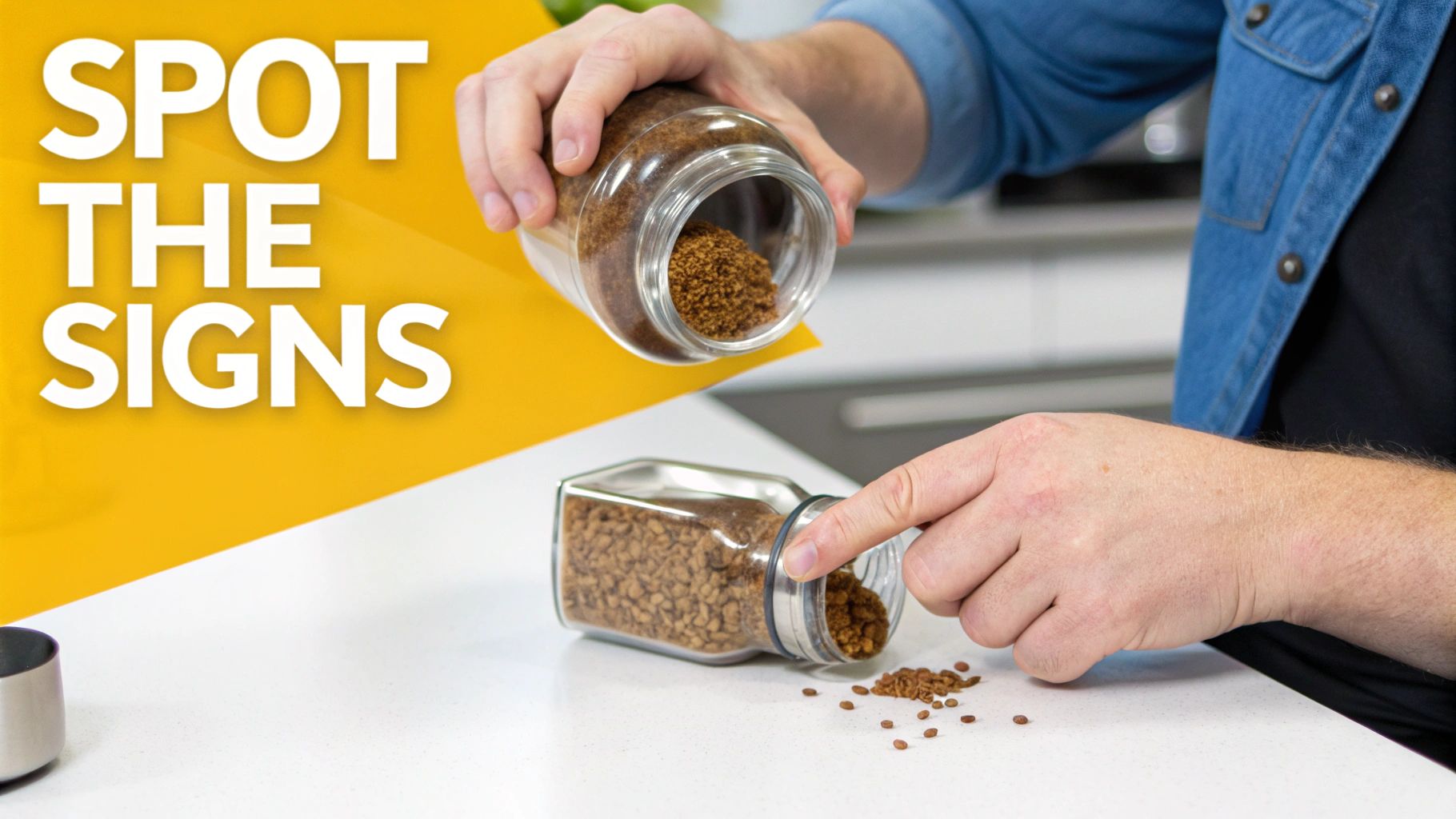
Forget the label for a moment and just look at the granules. Fresh instant coffee looks like loose, dry sand. If you pop the lid and find a solid brick or big, stubborn clumps, you've found the number one sign that moisture has gotten inside.
Moisture is the ultimate enemy of instant coffee. Once it clumps up, the quality has already taken a serious nosedive.
Your Sensory Checklist
Before you even think about brewing a cup, put your coffee through this quick check. It'll give you a clear picture of what you're working with.
- Visual Check: First, just look. Are there hard clumps? Is the color off? The granules should pour freely and look uniform.
- Aroma Test: Now, give it a good sniff. Fresh instant coffee has a sharp, unmistakable coffee smell. If you get a whiff of cardboard, dust, or worse, nothing at all, the volatile aromatic compounds that make coffee taste like coffee have faded away.
- Taste Test: If it passes the first two tests, the final verdict is in the cup. Mix up a small amount and take a sip. Stale coffee will taste flat and one-dimensional, missing all the richness and character it once had. It's just... bland.
Here’s the main takeaway: Unless you see obvious mold—which is incredibly rare and would require a lot of water getting in—these signs all point to a loss of quality, not a safety risk. The coffee is almost certainly safe to drink, but it might not be a cup you'll enjoy.
Quality vs. Safety: What's the Difference?
It’s really important to draw a line between a disappointing cup and a dangerous one. Stale instant coffee might taste bad, but it’s not going to make you sick.
The signs we just covered—clumping, a weak aroma, a flat taste—are all classic indicators of staleness. Spoilage, on the other hand, means mold or bacteria have started to grow, which is nearly impossible for a product as dry as instant coffee.
Of course, if you do spot fuzzy green spots or anything that looks remotely like mold, throw it out immediately. But in 99.9% of cases, you're just dealing with coffee that's past its prime. At the end of the day, you're the final judge of whether it's still good enough for your morning ritual.
The Best Way to Store Instant Coffee
Protecting your instant coffee’s flavor is simpler than you might think once you get a handle on its main enemies: moisture, air, and heat. The whole game is about creating a stable, protected environment where these elements can’t mess with your coffee's delicate taste and aroma. A few smart habits can make a huge difference in how long it stays fresh.
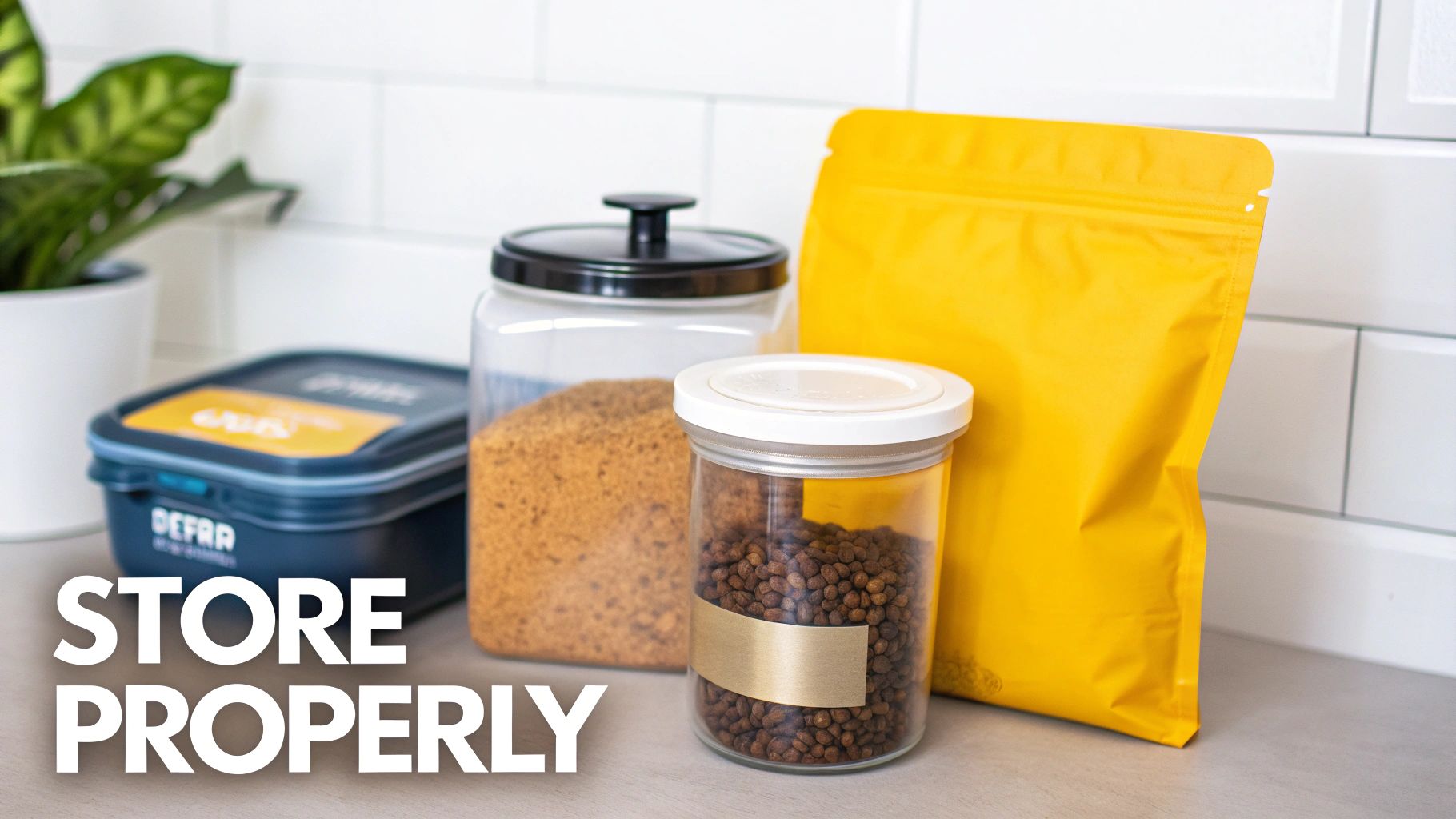
Whether you're at home or out in the wild, knowing the essential tips for freshness when storing food is a game-changer. The core principles of keeping things dry and protected from the elements apply perfectly to instant coffee, ensuring every cup tastes just as good as the first.
At-Home Storage Solutions
For your daily coffee ritual, the goal is pretty straightforward: minimize your coffee's exposure to air and humidity each time you open the container. Your kitchen pantry is probably the best spot for it—just be sure it’s not right next to the stove or another heat source.
Here’s what the ideal home setup looks like:
- Use an Airtight Container: Ditch the original packaging (unless it's a really good resealable pouch) and transfer your coffee into a glass or ceramic container with a solid, tight-fitting lid. This creates a much better barrier against oxygen.
- Keep It Cool and Dark: A dark cupboard or pantry is your best friend here. Light and heat act as accelerators for staleness, so leaving your coffee on a sunny countertop is a definite no-go.
- Always Use a Dry Spoon: Never, ever introduce moisture. Even a tiny drop of water on a spoon can lead to clumping and ruin the whole batch.
Travel and Camping Storage
When you’re on the move, portability and protection become top priorities. Lugging around that big original jar is just not practical for a backpack.
The best strategy for outdoor adventures is to repackage. Portion out exactly what you need for the trip into smaller, waterproof bags or containers. This not only saves precious space but also keeps the rest of your coffee safe at home, away from repeated exposure to the elements.
This is where pre-portioned options really shine. Our own guide to instant coffee packets digs into the convenience and freshness benefits of single-serve options, which are perfect for travel.
Busting a Common Storage Myth
You’ve probably heard it before: store coffee in the freezer to keep it fresh. It’s one of those persistent myths that actually does more harm than good.
Here’s the thing—the freezer is a high-moisture environment. Every time you take the container out and put it back, the freeze-thaw cycle creates condensation. That moisture is the fastest way to wreck your coffee's flavor and texture, turning it into a clumpy, bland mess. For the best results, just stick to a cool, dry pantry.
Your Instant Coffee Questions Answered
We’ve covered the science, storage, and tell-tale signs of stale coffee, but a few specific questions always pop up. Let's tackle them head-on. Think of this as your quick-reference guide for the most common instant coffee quandaries.
Can You Get Sick from Drinking Old Instant Coffee?
The short answer is: it’s extremely unlikely. Instant coffee's biggest advantage is that it's dehydrated. Without moisture, nasty things like bacteria and mold simply can't get a foothold and grow. As long as you've kept it dry and don't see any obvious mold (which would only happen if it got wet), it's perfectly safe to drink.
The real problem with old instant coffee isn't safety, it's quality. Over time, the flavor goes flat, the wonderful aroma disappears, and the whole experience is just... disappointing. So, while it probably won't hurt you, it definitely won't be a good cup of coffee.
Does Unopened Instant Coffee Last Longer Than Opened?
Yes, by a long shot. A factory-sealed jar or packet is like a time capsule for your coffee. It creates a perfect, stable environment, protecting the granules from their two worst enemies: air and moisture.
The second you break that seal, the clock starts ticking much faster. Every time you open the container, you let in a little more air and humidity, which immediately begins to break down the delicate flavor and aroma compounds. An opened container can still be good for many months if you seal it tightly, but an unopened one will easily hold its quality for several years.
Is It Safe to Drink Instant Coffee That Has Hardened?
Seeing your coffee granules clumped into a solid block is a clear sign that moisture has gotten in. While it’s generally still safe to consume (again, as long as there's no visible mold), it’s also a sign that the quality has taken a nosedive.
The same moisture that glued the granules together has been quietly destroying the compounds that make coffee taste like, well, coffee. That clumped coffee will be tough to dissolve, and the drink it makes will taste stale, flat, and lifeless. We'd recommend tossing it—not because it's dangerous, but because it won't give you the great coffee experience you're looking for.
If you're curious about the whole journey from bean to granule and how that process impacts longevity, you can learn more about how instant coffee works in our detailed guide.
How Long Does Cartograph's Organic Instant Coffee Last?
Our organic instant coffee is freeze-dried, the best method for locking in flavor and guaranteeing a long, stable shelf life. If you store a sealed package of Cartograph Coffee in a cool, dark, and dry spot, it will stay at its peak for at least 24 months, which you'll see noted on the "best-by" date.
But because it has virtually no moisture, it will remain safe to drink for years beyond that. For the absolute best taste—the one we worked so hard to create—we recommend enjoying it before that date. Our single-serve packets are designed to solve this problem entirely. They ensure every single cup you make is as fresh and aromatic as the first, protecting the coffee from the repeat air exposure that degrades larger jars. You get peak freshness, every single time.
At Cartograph Coffee, we believe convenience should never mean compromising on quality. Our single-serve organic instant coffee packets are crafted to deliver a rich, flavorful cup every time, whether you're at home or on an adventure. Experience the difference that meticulous sourcing and freeze-drying make. Shop Cartograph Coffee today.