It’s one of the biggest points of confusion in the coffee world: what’s the difference between Colombian and Arabica coffee? The answer is simpler than you might think.
Here's the key takeaway: all Colombian coffee is Arabica, but not all Arabica coffee is from Colombia.
Think of it this way—it's like comparing a Napa Valley Cabernet Sauvignon to wine. One is a specific, celebrated origin known for a particular style, while the other is the massive, diverse category it belongs to. You aren't choosing between two different things, but between a specific, high-quality origin and the broad species it represents.
Clearing Up The Core Confusion
When you see "Colombian coffee vs Arabica coffee" on a bag, it's easy to assume they're direct competitors. Let's clear that up right away. This isn't an either/or choice.
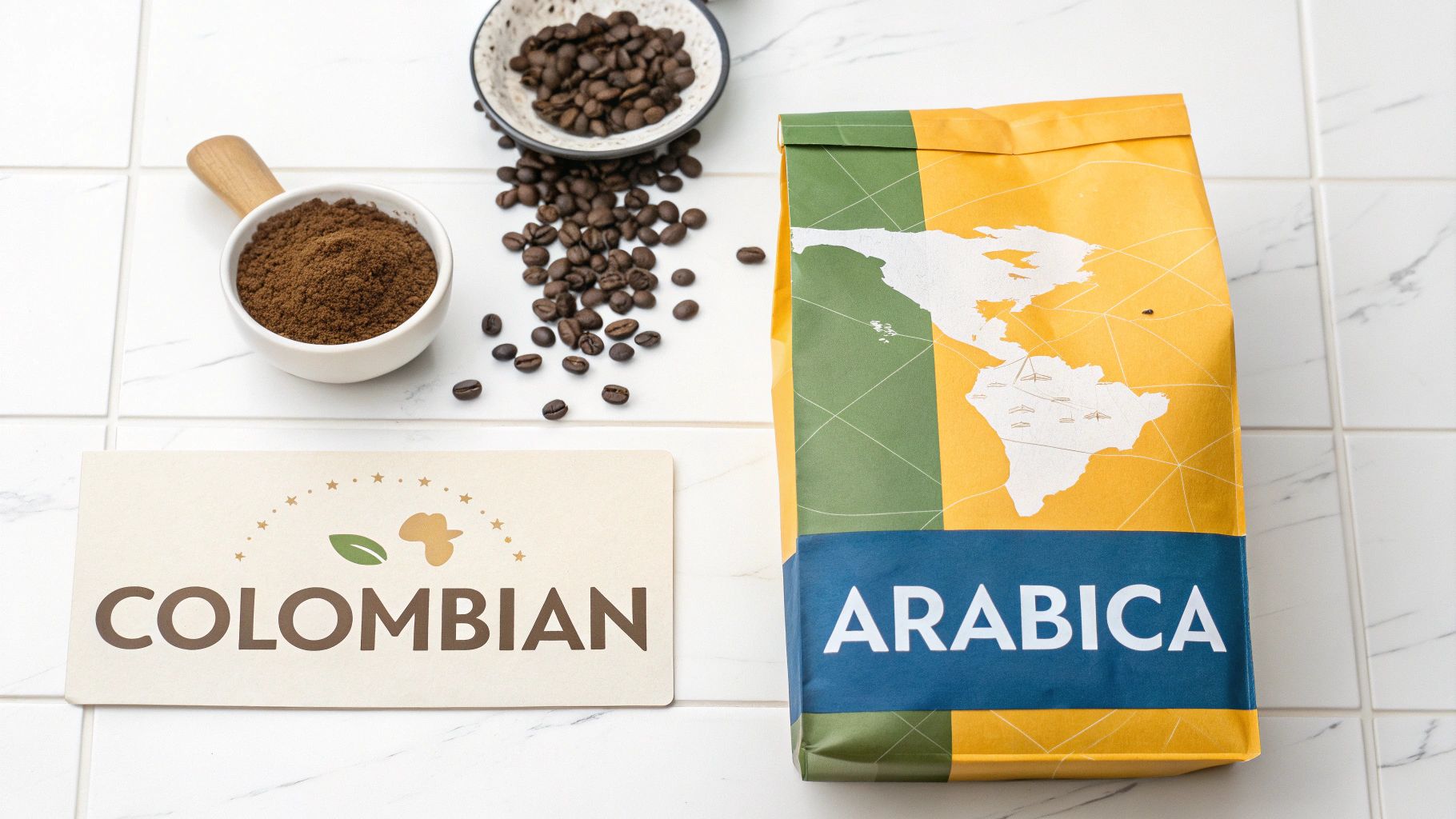
Here’s the simple breakdown:
-
Arabica (The Species): This is Coffea arabica, the most popular and prized coffee species on the planet. Known for its complex aromas, bright acidity, and delicate flavors, Arabica grows all along the world's "Bean Belt." Its taste changes dramatically depending on where it's grown.
-
Colombian (The Origin): This label tells you where the coffee came from—its terroir. "Colombian" is a guarantee you're getting 100% Arabica beans grown in the unique, mountainous landscapes of Colombia.
In short, "Arabica" tells you what the coffee is, while "Colombian" tells you where it's from. That "where" gives you a huge clue about its flavor, which is shaped by that specific region's climate, soil, and processing traditions.
At a Glance Colombian Coffee vs Arabica Coffee
This quick table helps reframe the conversation. It's not about a false choice, but about understanding the relationship between a world-class origin and the species that makes it famous.
| Attribute | Colombian Coffee | Arabica Coffee |
|---|---|---|
| Definition | A specific origin—Arabica coffee grown exclusively in Colombia. | A species of coffee (Coffea arabica) grown in dozens of countries. |
| Flavor Scope | Famous for a balanced, mild profile with notes of citrus, nuts, and caramel. | The flavor profile is incredibly diverse—fruity, floral, earthy, or chocolatey, all depending on the origin. |
| Quality | Consistently high, thanks to strict national quality controls from the FNC. | Varies widely. Quality depends on the specific country, farm, and processing methods used. |
This distinction is what makes Colombian coffee so special. The country has built its entire reputation on producing exceptional Arabica beans. While other countries grow different species, Colombia's commercial crop is almost entirely dedicated to premium Arabica.
For a deeper dive into how coffee species differ, check out our guide comparing Arabica vs Robusta beans.
Colombia consistently ranks as one of the top three coffee producers globally, accounting for roughly 8–9% of the world's total production. Nearly all of that massive output is the high-quality Arabica that has made its name a benchmark for excellence.
Exploring the World of Arabica Coffee
Before we can really get into what makes Colombian coffee so special, we need to zoom out and look at the bigger picture: the world of Arabica. Think of Arabica as the celebrated parent species in the family tree of specialty coffee. It's the genetic starting point for nearly all the world's most prized flavors.
Originally discovered growing wild in the highlands of Ethiopia, Coffea arabica has since become the most popular and widely cultivated coffee on the planet. Its global reputation is built on one simple fact: it has an incredible capacity for complex aromas and delicate, nuanced flavors.
But here’s the catch—Arabica is a notoriously picky plant. It won't just grow anywhere. It demands very specific conditions to thrive, preferring high altitudes between 4,000 and 7,200 feet. The cool temperatures and consistent rainfall at these elevations force the coffee cherries to ripen slowly, and that extended maturation is the secret sauce for developing the complex sugars and acids that coffee lovers chase.
A Global Spectrum of Flavors
What’s truly amazing about Arabica is how differently it can taste depending on where it’s grown. This concept, known as terroir, means that an Arabica bean is a direct reflection of its environment—the soil, the climate, and the altitude all leave a unique fingerprint on the final cup.
This gives us a fascinating world tour for our taste buds:
- Ethiopian Arabica: Often bright and floral, like jasmine or bergamot, with a lively acidity and hints of blueberry or lemon.
- Brazilian Arabica: Tends to be much heavier and fuller-bodied, with low acidity and comforting notes of chocolate, nuts, and caramel.
- Kenyan Arabica: Known for its bold, zesty, almost wine-like acidity, with sharp, distinct notes of black currant, grapefruit, or even tomato.
This incredible diversity is precisely why the entire specialty coffee movement is built on Arabica’s shoulders. Its genetic makeup allows the unique character of each growing region to shine through.
At its core, Arabica is a canvas. The origin, processing, and roast are the brushstrokes that create the final masterpiece in your cup, whether it's from Colombia or anywhere else along the "Bean Belt."
Arabica's Market Dominance
This preference for flavor isn't just a matter of opinion; the global market backs it up. While there are over 100 known coffee species, Arabica and Robusta are the two titans of the industry. Arabica consistently dominates the market, holding the top spot because of its superior taste.
In fact, global trade data shows Arabica's share of green coffee exports typically lands somewhere between 57% and 63% year after year. It's simply the world's favorite coffee. For a deeper dive, you can explore the global coffee trade dynamics from the International Coffee Organization.
Understanding this context is key when comparing Colombian coffee vs Arabica. "Arabica" refers to a massive, diverse family of coffee. Colombian coffee, on the other hand, is a specific, highly celebrated member of that family—one that’s famous for expressing what this incredible species can do when grown in the perfect conditions.
What Makes Colombian Arabica So Distinctive?
While the Arabica species offers a kaleidoscope of flavors from all over the world, Colombian coffee has carved out a special place for itself. It's known for a remarkably consistent and celebrated profile that isn't just a happy accident—it's the direct result of a near-perfect coffee-growing environment, a concept wine lovers and coffee pros call terroir.
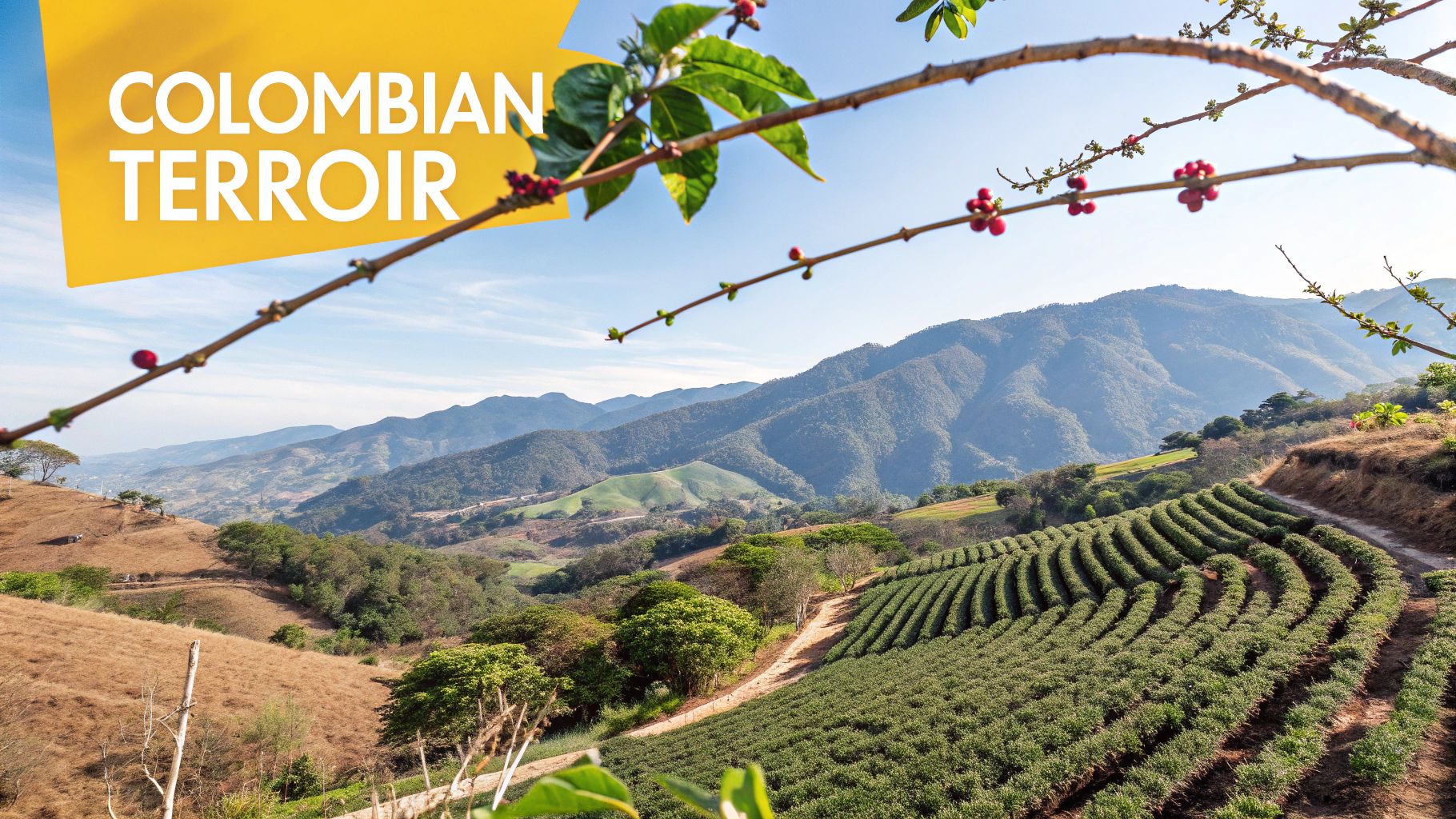
The country's dramatic landscape, where the Andes Mountains split into three separate ranges, creates a patchwork of high-altitude microclimates. This unique geography provides the exact conditions Arabica beans need to develop deep, complex flavors.
The Magic of Colombian Terroir
Several key environmental factors work together to shape that classic Colombian cup. It’s a synergy that few other coffee-growing nations can replicate with such consistency across their entire territory.
- Volcanic Soil: The mountains are blanketed in rich volcanic soil, which is naturally packed with nutrients coffee plants thrive on. This fertile ground is the foundation for healthy, flavorful coffee cherries.
- High Altitudes: Most Colombian coffee grows at elevations between 1,200 and 2,000 meters (4,000 to 6,500 feet). At these heights, cooler temperatures slow down the cherry's ripening, giving the bean more time to develop complex sugars and acids.
- Consistent Rainfall: Thanks to its tropical climate, Colombia gets steady, predictable rain year-round. This prevents the kind of stress caused by long dry seasons elsewhere and allows for harvesting throughout the year, ensuring a constant supply of fresh, top-tier beans.
These elements create a slow, gentle maturation cycle that is the secret behind Colombian coffee's balanced and nuanced flavor. The unique character of this single-origin powerhouse perfectly illustrates why terroir matters so much, a topic you can dive into with this guide on what is single origin coffee.
A Commitment to the Washed Process
Beyond its incredible terroir, Colombia’s coffee identity is also cemented by its almost universal adoption of the washed processing method. This meticulous technique is all about showcasing the pure, intrinsic flavor of the coffee bean itself.
The washed process is an art of subtraction. Producers in Colombia aren't trying to add fruity flavors from the cherry; they are revealing the clean, bright character created by the high-altitude soil and climate.
The method involves stripping the fruit pulp from the cherry, fermenting the beans in water to break down the sticky mucilage, and then washing them completely clean before drying. The result is a coffee with exceptional clarity in the cup. It’s this process that’s directly responsible for the bright, crisp acidity and lack of fermented notes that define Colombian coffee.
The Classic Colombian Flavor Profile
When you're comparing Colombian coffee vs. Arabica from other places, the flavor is the ultimate tiebreaker. Thanks to its unique growing conditions and processing, a classic Colombian coffee consistently delivers a smooth, medium-bodied cup with a bright but gentle acidity.
You can almost always count on finding these characteristic tasting notes:
- A Sweet Foundation: Look for dominant notes of caramel, brown sugar, and sometimes milk chocolate that create a comforting and easy-drinking sweetness.
- Bright and Crisp Acidity: A lively pop of citrus (like sweet orange) or red fruits (think cherry or apple) gives the coffee a clean, refreshing finish.
- Subtle Complexity: Gentle undertones of nuts, often almond or walnut, add a layer of depth that keeps you coming back for another sip.
This reliably balanced and approachable profile has made Colombian Arabica a global benchmark for quality. It’s complex enough for a seasoned coffee lover to appreciate but smooth enough to be the perfect daily brew for just about anyone.
Comparing Flavor Profiles by Origin
When we get into the real heart of the Colombian coffee vs. Arabica coffee discussion, what we're really talking about is a fascinating world tour for your palate. Colombian coffee has a celebrated and wonderfully reliable flavor profile, but the broader Arabica category is a sensory kaleidoscope. It offers a vast spectrum of tastes shaped entirely by where the beans are grown.

This is where the concept of terroir—that unique blend of soil, climate, and altitude—truly comes to life. Think of an Arabica bean as a sponge; it soaks up the characteristics of its environment and expresses them directly in your cup. Let’s see how that classic Colombian profile stacks up against other world-renowned Arabica origins.
The Colombian Signature: Balance in a Cup
Colombian coffee is, for many, the global benchmark for a balanced, approachable, and consistently delicious cup of coffee. Its flavor is a harmonious mix of sweetness, a gentle acidity, and a smooth body that makes it incredibly versatile.
You can almost always count on finding these cornerstone tasting notes:
- Nutty Sweetness: It starts with a solid foundation of caramel, brown sugar, or even milk chocolate, giving it a comforting and familiar base.
- Bright Acidity: Look for crisp, clean notes often compared to citrus fruits like sweet orange, or red fruits such as cherry and apple. This gives it a refreshing kick.
- A Smooth Finish: The coffee goes down easily, leaving a pleasant aftertaste without any harshness or lingering bitterness.
This reliable character makes Colombian coffee a fantastic daily driver. It has enough complexity to keep seasoned coffee drinkers engaged, yet it’s so smooth and balanced that it’s the perfect entry point for anyone just starting their specialty coffee journey.
A Quick Trip Through Other Arabica Origins
Now, let's contrast that with Arabica from other famous coffee-growing regions. This is where you really start to appreciate the incredible diversity the species is capable of.
-
Ethiopian Arabica: Often called the birthplace of coffee, Ethiopia produces beans that are a world away from the Colombian profile. They are typically light-bodied and almost tea-like, bursting with bright, floral aromas like jasmine or bergamot. The flavor is intensely fruity, with common notes of blueberry, lemon, and stone fruit.
-
Brazilian Arabica: As the world's largest coffee producer, Brazil is known for a profile that’s almost the polar opposite of Ethiopia's. These beans are all about low acidity, a heavy body, and deep, rich flavors. Expect dominant notes of chocolate, roasted nuts, and caramel, which is why they’re a popular backbone for espresso blends.
-
Kenyan Arabica: Kenyan coffees are celebrated for their bold, complex, and powerful acidity. This isn't a gentle brightness; it's a vibrant, wine-like tartness that can be truly stunning. Common tasting notes include black currant, grapefruit, and even a savory, tomato-like quality, all wrapped in a full-bodied cup.
The signature of Colombian coffee is its nutty sweetness paired with a clean, balanced acidity. This stands in contrast to the wild, often unpredictable flavor spectrum of other single-origin Arabicas, which can range from intensely fruity and floral to deeply earthy and rich.
To make these distinctions even clearer, here’s a side-by-side look at what you can generally expect from each origin.
Flavor Showdown: Arabica From Around the World
This table gives you a comparative snapshot of the typical flavor profiles you'll find in Arabica coffee from Colombia and other major coffee-growing regions. It’s a great starting point for finding your next favorite bean.
| Origin | Primary Tasting Notes | Acidity Level | Body | Common Aroma |
|---|---|---|---|---|
| Colombia | Caramel, nuts, citrus, red apple | Medium, Bright | Medium | Sweet, Fruity |
| Ethiopia | Blueberry, jasmine, lemon, bergamot | High, Floral | Light, Tea-like | Floral, Citrus |
| Brazil | Chocolate, roasted nuts, caramel | Low | Heavy | Nutty, Sweet |
| Kenya | Black currant, grapefruit, winey | Very High, Sharp | Full | Berry, Citrus |
Ultimately, your preference comes down to what you’re looking for in your cup. If you want a dependably smooth, balanced, and classic coffee experience, Colombian Arabica is an unbeatable choice. But if you're in the mood for an adventure and want to explore the exciting extremes of flavor, venturing into other Arabica origins will open up a whole new world of taste.
How to Select and Brew the Perfect Cup
Knowing the difference between Colombian and Arabica coffee gets you in the door, but turning that knowledge into a truly delicious cup is where the real magic happens. This is how you go from just making coffee to crafting an experience. It’s all about picking the right beans and treating them right.
Your journey starts right there on the coffee aisle. Think of the coffee bag as a treasure map—if you know how to read it, it’ll lead you straight to your perfect brew.
Reading the Coffee Bag Like a Pro
To make a smart choice, you have to look past the fancy branding. The real story is in the details that good roasters are proud to share. These clues tell you everything about the flavor locked inside.
-
Origin Details: A quality bag won't just say "Colombia." It’ll get specific. Look for a region like Huila, Nariño, or Antioquia. That level of detail often signals a single-origin coffee, where the unique character of that specific place can really shine.
-
Processing Method: The vast majority of Colombian coffee is washed, which is what gives it that classic clean, crisp, and bright profile. If a bag says "Washed," you know what to expect. If you see "Natural" or "Honey," you're in for something different—think fruitier and more adventurous.
-
Roast Level: This is a big one. A light roast is all about preserving the bean's delicate, bright acidity and citrus notes. A medium roast is the sweet spot for many, striking that perfect balance between sweetness and acidity for the signature caramel and nutty flavor. A dark roast pushes the origin character to the background, bringing out bold, roasty, and chocolatey notes instead.
-
Tasting Notes: These aren't added flavors. They're what the roaster, a trained professional, tastes in the coffee. For a classic Colombian Arabica, you'll want to look for words like "caramel," "milk chocolate," "sweet orange," or "red apple." They’re your best guide to how the coffee will taste in your mug.
Picking the right beans is more than half the battle. When you learn to decode the bag, you’re no longer guessing. You're buying coffee that you know you'll love.
Tailoring Your Brew to Colombian Beans
Once you've got the perfect bag of Colombian Arabica, the next move is picking a brew method that will make it sing. You want to highlight its balanced body, bright acidity, and those sweet, nutty notes.
Different brewers extract flavor in different ways. Some are built for clarity and delicate notes, while others go for a rich, full-bodied experience. Your choice can completely change the taste of your coffee.
Here are a few popular methods and why they’re a great match for the classic Colombian profile:
1. The French Press for a Full-Bodied Brew A French press uses a metal filter and full immersion, which means all the coffee's natural oils stay right in your cup. This is the perfect way to bring out the medium body and rich, sweet notes of caramel and chocolate in a Colombian coffee.
- Grind Size: Coarse, like rough sea salt.
- Water Temperature: Around 200°F (93°C), just off a full boil.
- Brew Time: A solid 4 minutes.
2. The Pour-Over for Clarity and Nuance Methods like the Hario V60 or Kalita Wave use paper filters that trap most of the oils, giving you an exceptionally clean and bright cup. A pour-over is ideal for showcasing the crisp acidity and subtle citrus or red fruit notes of a high-quality, light-to-medium roast Colombian bean.
- Grind Size: Medium-fine, similar to table salt.
- Water Temperature: A little hotter at 205°F (96°C) to pull out those bright notes.
- Brew Time: Usually between 2.5 to 3.5 minutes.
3. The AeroPress for Versatility and Speed The AeroPress is a fantastic all-rounder. It uses a combination of immersion and pressure to brew a smooth, concentrated, and low-acidity cup in just a minute or two. It’s incredibly forgiving and a great way to get a rich yet clean taste of a Colombian coffee’s balanced profile.
- Grind Size: Fine, but a touch coarser than you'd use for espresso.
- Water Temperature: Very flexible, anywhere from 185°F to 205°F (85°C to 96°C).
- Brew Time: Quick, often just 1 to 2 minutes.
Matching the bean to the brewer is the final step. To dive deeper, you can explore our guide to the best coffee brewing methods and find what works best for your taste and routine. It's how brewing goes from a chore to a craft.
Which Arabica Coffee Is Right for You?
Let’s pull this all together. At this point, you probably realize the question isn't really "Colombian coffee vs Arabica coffee." It's more like, "Which kind of Arabica coffee am I in the mood for today?" Thinking this way changes everything. It turns a confusing choice into a confident decision, letting you walk down the coffee aisle with a real plan.
Ultimately, your own taste is what matters most. Picking the right coffee is all about matching the bean's natural character with the kind of experience you want. Are you after a comforting, reliable morning brew, or are you looking to try something new and adventurous?
Situational Recommendations for Your Next Cup
To make it even simpler, think about what you need from your next cup. These common scenarios should point you toward an Arabica that will hit the spot.
-
The Dependable Daily Drinker: If you just want a smooth, balanced, and consistently great cup that never lets you down, grab a bag of single-origin Colombian Arabica. It's a classic for a reason. With its familiar notes of caramel, nuts, and a touch of bright acidity, it's a total crowd-pleaser that works well in just about any brewer.
-
The Flavor Explorer: Craving something a little different? Something that makes you say, "Wow, I didn't know coffee could taste like this"? Then you need to try an Ethiopian Arabica. It’s famous for its vibrant floral and fruity notes—think jasmine and blueberry. The result is a complex, almost tea-like experience that's a world away from traditional coffee profiles.
-
The Espresso Aficionado: For those pulling shots at home, a Brazilian Arabica is a fantastic go-to. It typically has low acidity, a heavy body, and big notes of chocolate and roasted nuts. This combination creates that rich, syrupy espresso that's the perfect foundation for a latte or cappuccino.
The real takeaway here is to see "Colombian" as a specific, high-quality flavor profile within the massive and varied world of Arabica. Think of it as a trusted benchmark for balance, not a totally separate thing.
This decision tree can help you visualize how your choice of brewer can bring out the best in different beans.
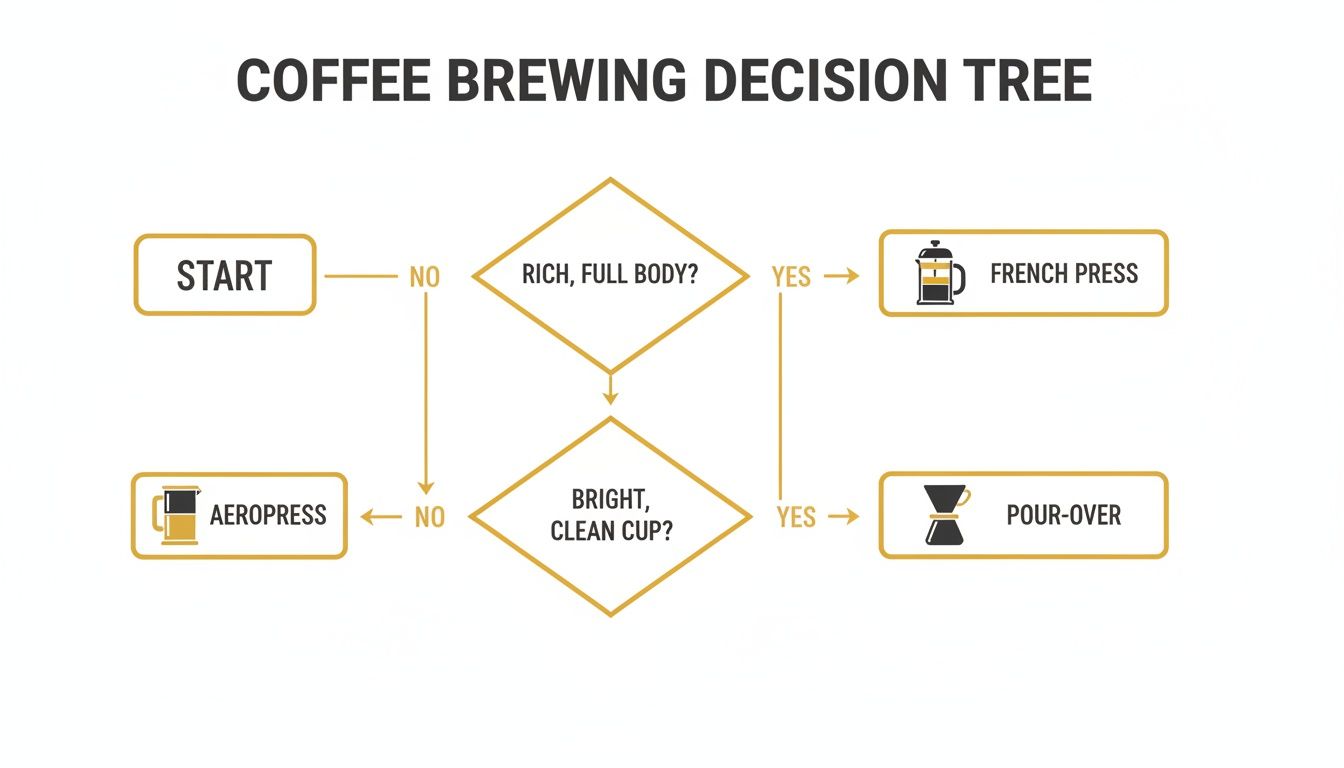
As you can see, your brew method—whether it’s a full-bodied French Press or a crisp Pour-Over—directly influences which tasting notes you'll notice in the final cup. Use this insight to explore different origins with confidence, knowing you have the tools to get the most out of every single bean.
Got Questions? Let's Talk Coffee.
Diving into the world of coffee can feel a bit overwhelming, so let's clear the air on a few common questions about Colombian and Arabica beans. Think of this as a quick cheat sheet to help you buy better coffee and feel more confident doing it.
Is All Colombian Coffee Arabica?
For all practical purposes, yes. 100% of the coffee Colombia exports is Arabica. The country has staked its entire global reputation on producing premium Arabica, and they take it seriously.
This isn't just a casual choice; it's a national strategy. The National Federation of Coffee Growers of Colombia (FNC) acts as a guardian of quality, ensuring that the "Café de Colombia" label means you're getting pure, high-grade Arabica. While other coffee-growing nations might hedge their bets with the hardier Robusta species, Colombia goes all-in on the delicate, complex flavors only Arabica can deliver.
How Can I Spot the Best Colombian Beans?
Finding great Colombian coffee is about looking past the obvious. The secret is learning to read the story on the bag.
- Pinpoint the Region: A bag that just says "Colombia" is fine, but one that names a specific region like Huila, Nariño, or Antioquia is telling you it’s from a special, single-origin lot with a distinct character.
- Check the "Born-On" Date: Coffee is a fresh product. Always hunt for a bag with a recent roast date, preferably from the last couple of weeks. This is your best guarantee for vibrant, peak flavor.
- Trust the Tasting Notes: Roasters aren't just being poetic when they write "caramel," "citrus," or "red apple." These notes are your roadmap to the coffee's flavor profile.
When you start noticing these details, you're no longer just buying coffee; you're selecting a brew with a specific identity and origin. It's the surest way to get a truly exceptional cup.
Is Colombian Coffee "Stronger" Than Other Kinds?
"Strong" is a tricky word in coffee. If you mean a dark, bold, or intense flavor, then the answer is: it depends entirely on the roast. A light-roast Colombian will be bright and nuanced, while a dark-roast Sumatran Arabica will taste much more "powerful."
But if by "strong" you mean more caffeine, then it's a clear no. All Arabica beans, whether from Colombia, Ethiopia, or Brazil, have roughly the same amount of caffeine, which is significantly less than Robusta. You’ll get a similar kick from any Arabica coffee brewed the same way—the real difference is always in the taste.
At Cartograph Coffee, we're obsessed with making world-class coffee easy to enjoy. We pack the best single-origin flavors into our organic instant coffees, so you can have a perfect cup no matter where you are. Discover your next favorite coffee today.