Coffee is a universal ritual, a morning comfort, and a social connector. But how do you ask for it when you're far from home? The word for coffee in different languages changes from country to country, but the love for it is a shared language.
This guide explores how to say and order coffee across cultures, offering a passport to local café cultures worldwide. From the bustling espresso bars of Italy to the serene coffee houses of Japan, knowing the local term, be it "café," "koffie," or "qahwa," is your key to connecting.
We'll dive into pronunciations, cultural notes, and simple phrases to help you order with confidence. Whether you're a traveler exploring the globe or a brand like Cartograph Coffee aiming to connect with a diverse audience, this list has you covered.
To appreciate the diversity of linguistic expressions, we can explore how other words translate across cultures, much like the Celtic language of Kernow preserves its own unique vocabulary.
Let's begin our linguistic journey and discover the world, one cup at a time.
1. English - Coffee (KAW-fee)
The word "coffee" traces back to the Arabic "qahwa," filtering through Turkish "kahve" and Italian "caffè" before landing in English during the 1600s. It is the anchor term for anyone exploring coffee in different languages, serving as the baseline against which all other variations are compared.

For Cartograph Coffee, English is the primary market language. The term appears across packaging, social media campaigns, and product descriptions targeting North American, British, and Australian consumers. Its familiarity removes friction from purchasing decisions.
"Coffee" is one of the most recognized words on the planet. That recognition is a brand asset worth protecting.
Practical applications for English-speaking audiences:
- Packaging: Lead with "specialty coffee" or "premium instant coffee" to signal quality and justify price positioning
- Convenience messaging: Pair the word with speed-focused phrases like "quality coffee, instantly" for busy professionals and campers
- Digital campaigns: English SEO terms around morning routines and outdoor adventures convert well across search and social platforms
Global chains like Starbucks and Dunkin' cemented this word in everyday vocabulary. English-language instant coffee manufacturers further normalized it for quick, accessible consumption. When building a brand that travels, starting with "coffee" gives you the widest possible entry point.
2. Spanish - Café (kah-FEH)
Spanish-speaking markets stretch from Spain to virtually every country in the Americas, making "café" one of the most commercially important terms for anyone studying coffee in different languages. The accent mark on the final syllable distinguishes it from the English "coffee" and gives it a distinct, recognizable sound worldwide.
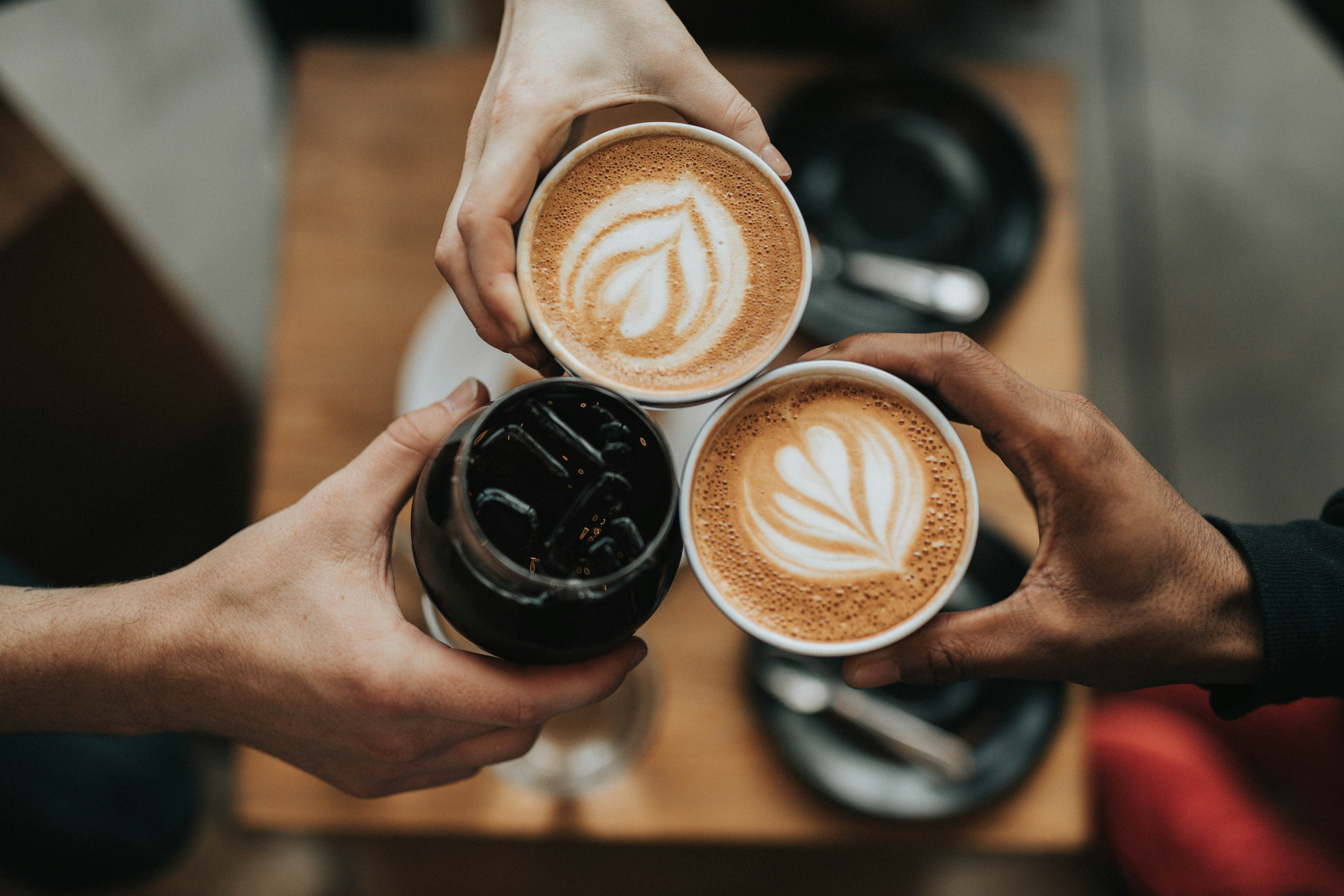
For Cartograph Coffee, Spanish-language outreach connects with North America's second-largest language group. Brands like Nescafé have built decades of loyalty in Spanish-speaking households, normalizing instant coffee as a family staple. Regional traditions like café de olla show deep cultural roots that modern brands can tap into respectfully.
A single word like "café" opens doors across 20+ countries with distinct coffee cultures.
Practical applications for Spanish-speaking audiences:
- Bilingual packaging: Lead with "Café Instantáneo Orgánico" to capture both markets simultaneously
- Certifications: Highlight organic and fair-trade badges prominently, as health-conscious Latino consumers prioritize transparency
- Professional messaging: Frame instant coffee as a solution for busy professionals who want quality without sacrificing morning routines
Spain and Latin America have coffee histories dating back centuries, from colonial-era plantations to modern specialty roasts. Learn more about café de olla instant coffee traditions here. When you understand that weight behind a single word, you understand why Spanish-language packaging and marketing deserve serious investment from any brand with global ambitions.
3. French - Café (kah-FAY)
French pronunciation lands with emphasis on the final syllable, carrying a bright "ay" sound that feels effortless. Among coffee in different languages, few terms carry the same weight of cultural prestige. Parisian café society has shaped how the world thinks about coffee culture for generations, and the word itself signals artisanal care, sophistication, and slow enjoyment.
For Cartograph Coffee, French terminology taps into European heritage positioning. It communicates premium quality to discerning professionals who value authenticity over speed. The word pairs naturally with instant coffee products that want to shed their convenience-food image and enter the premium tier.
"Café" in French carries centuries of intellectual and social tradition. That heritage transfers directly to brand perception.
Practical applications for French-inspired branding:
- Market targeting: Use "Café Instantané" when packaging for French-Canadian consumers and European audiences who respond to Romance-language quality cues
- Organic positioning: Pair French terminology with organic certification badges and single-origin sourcing details to justify premium pricing
- Urban professional appeal: Position instant coffee as "café quality, instant convenience" for affluent city workers who drink their morning cup at desks or in busy bistros
- Beverage extensions: Consider how the word connects to French preparations like café au lait, which adds warmth and familiarity to your product line
Brands like Lavazza built entire premium tiers on French and Italian coffee vocabulary. Parisian café culture remains the gold standard for lifestyle marketing. When your product needs to signal European craftsmanship in a single word, French delivers that message instantly.
4. Italian - Caffè (kah-FEH)
In Italy, coffee is not a drink. It is a ritual, a social institution, and a daily rhythm woven into the fabric of life. Understanding coffee in different languages means reckoning with Italian first, because the country's espresso culture shaped how the world thinks about quality coffee.
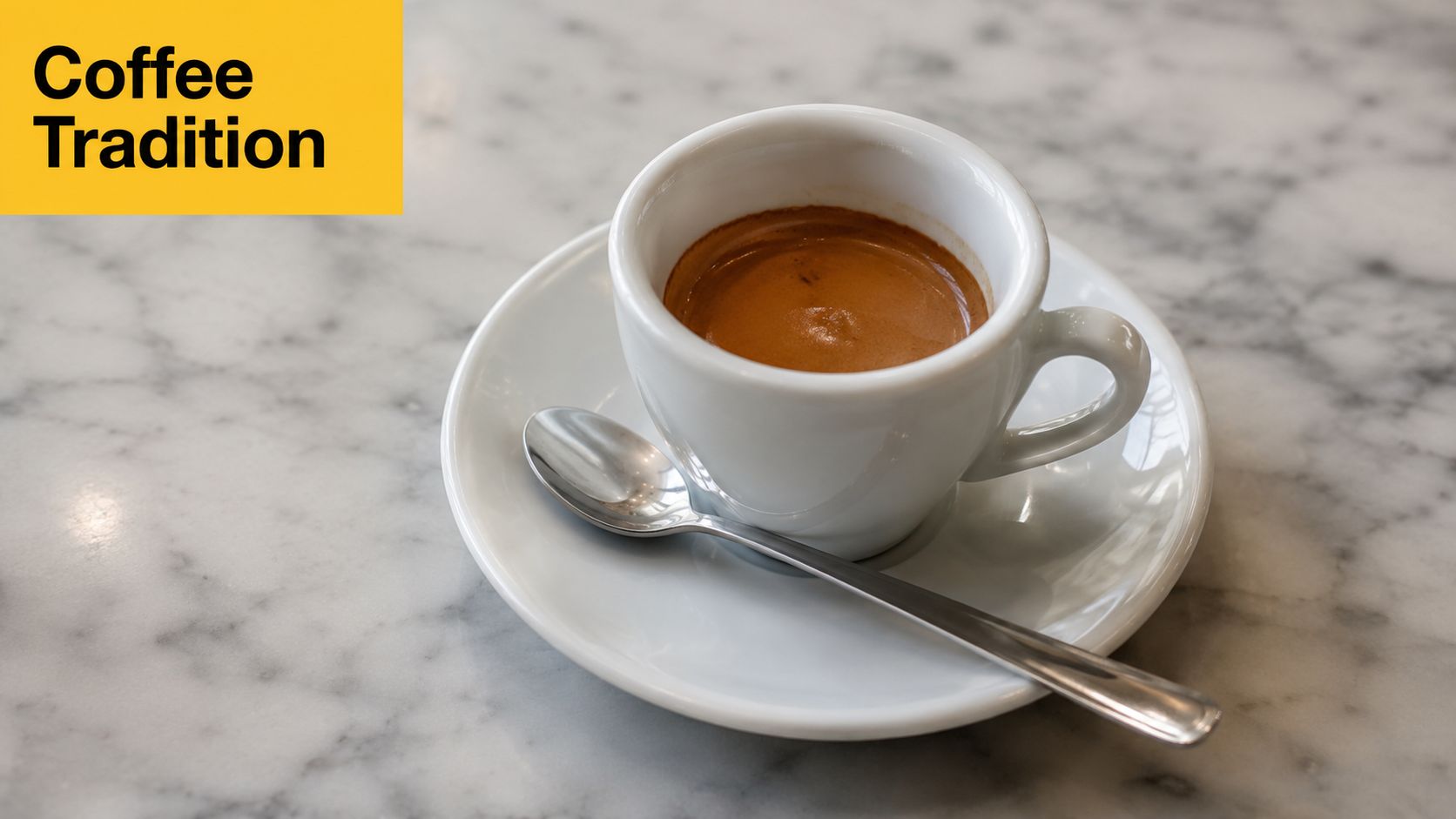
The term "caffè" entered European vocabulary through Ottoman Turkish "kahve" and was cemented in Italian culture by the early 20th century. Italy's espresso machine innovation in the 1900s turned a simple beverage into an art form, with strict customs around when and how to drink it.
Calling it "caffè" signals quality before a single sip. That word carries centuries of tradition in two syllables.
Practical applications for brands using Italian:
- Premium positioning: Lead with "Cartograph Caffè" or "Italian roast" to instantly elevate perceived quality on packaging and menus
- Heritage storytelling: Reference traditional roasting methods and Italian craftsmanship in product descriptions and social campaigns
- Specialty market targeting: Pair the term with organic and fair-trade certifications to appeal to discerning, health-conscious consumers
Brands like Illy and Lavazza built global empires on this single word, proving that "caffè" sells itself to audiences who care about authenticity. For anyone exploring coffee culture beyond their home country, learning this term opens doors, and perhaps pairs well with discovering the Italian countryside through insider tips for Lake Garda. Travelers who pair regional coffee knowledge with destination insights create richer experiences.
Learn more about the Italian cappuccino cup and its cultural significance to deepen your understanding of how vessel and tradition shape the drinking experience.
5. German - Kaffee (KAH-fay)
The German "Kaffee" carries a crisp, efficient sound that mirrors the country's deep-rooted coffee culture. Pronounced with a soft "ee" ending and emphasis on the first syllable, it reflects values of precision and quality that German consumers expect from every cup. Germany ranks among Europe's top coffee markets, making this term essential for anyone exploring coffee in different languages.
German instant coffee brands have built a reputation for delivering quality without compromise. The market thrives on efficiency, with busy professionals and outdoor enthusiasts alike reaching for quick solutions that still taste good.
German consumers rank among the most discerning in Europe. Meeting their standards means delivering on both convenience and flavor.
Practical applications for German-speaking audiences:
- Organic positioning: Highlight certifications prominently, as German buyers prioritize organic and sustainably sourced products
- Efficiency messaging: Pair "Kaffee" with phrases emphasizing speed and quality, like "schnell und gut" (fast and good)
- Outdoor targeting: Market to hiking and camping communities in Alpine regions where portable coffee solutions are in high demand
European health-conscious brands have found success by combining organic credentials with instant formats. German manufacturers proved that quick coffee doesn't have to mean low quality. When entering this market, lead with trust signals and let the product speak for itself.
6. Portuguese - Café (kah-FEH)
Portuguese places the stress on that final syllable, giving "café" a crisp, rising finish. Brazil grows more coffee than any other country on earth, and the Portuguese-speaking market remains a massive opportunity for coffee in different languages strategies, especially for Cartograph Coffee looking to expand its reach.
The word carries centuries of plantation heritage. From sprawling Minas Gerais farms to tiny neighborhood padarias, café is woven into daily ritual. That deep cultural connection means Portuguese-speaking consumers take quality seriously.
Brazil produces roughly one-third of the world's coffee. Speaking their language is more than translation. It is respect.
Practical applications for Portuguese-speaking markets:
- Packaging: Lead with "café orgânico" or "café premium instantâneo" to signal quality to health-conscious buyers
- Convenience messaging: Position instant coffee as a modern solution for busy families in São Paulo and Rio de Janeiro
- Digital campaigns: Portuguese SEO terms around morning routines and organic living perform well across Brazilian search platforms
- Fair-trade storytelling: Highlight direct relationships with Brazilian producers to build trust and authenticity
Nescafé built dominance in Brazil through decades of Portuguese-language advertising. A growing specialty coffee movement in cities like Curitiba and Florianópolis shows consumers are ready for premium alternatives. Cartograph Coffee can tap that shift by combining organic certifications with the convenience Brazilian professionals demand.
7. Japanese - コーヒー (Kōhī - KOH-hee)
The Japanese word for coffee, コーヒー (kōhī), is written in katakana, the script reserved for foreign loanwords. It entered the language through Dutch and Portuguese traders in the 1600s, later reinforced by European influence during the Meiji era. Understanding coffee in different languages means recognizing how Japan absorbed the concept and made it entirely its own.
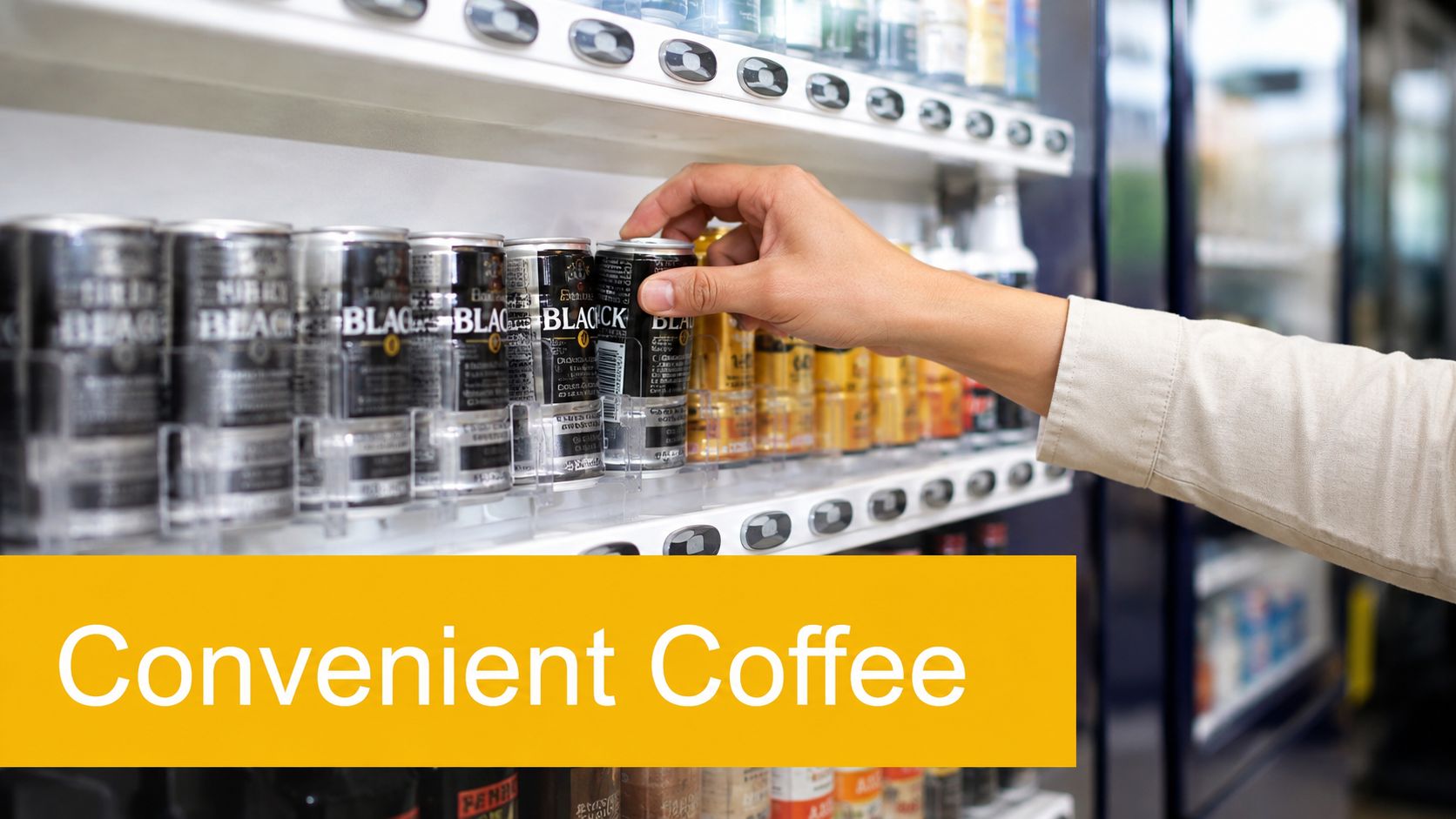
Japan's coffee culture sits at an unusual intersection. Third-wave specialty shops in Tokyo pour single-origin beans with surgical precision, while vending machines dispense canned coffee on nearly every street corner. Both coexist without contradiction.
Japan treats coffee as both an art form and a daily utility. That duality opens doors for brands at every price point.
Practical applications for the Japanese market:
- Organic certification matters: Japanese consumers rank organic labels as a top purchasing factor, especially for instant and ready-to-drink products
- Convenience positioning: Phrases like "instant, anytime, anywhere" resonate with commuters and outdoor enthusiasts who expect quality without ceremony
- Minimalist packaging: Clean, restrained design signals premium quality and aligns with Japanese aesthetic preferences
- Health-conscious messaging: Highlight low-acid, organic, or single-origin attributes to appeal to professionals aged 30-55
Brands like Maxim and Nescafé Gold Japan have built loyalty by balancing convenience with perceived quality. Meanwhile, chains like 7-Eleven and FamilyMart serve freshly brewed coffee at convenience stores, normalizing premium expectations at affordable prices. To explore the unique culture and destinations of Japan, you might find this guide helpful: Explore Effortlessly Japan guide. For any brand entering this space, the lesson is clear: Japanese consumers will pay more for coffee that respects their time and their standards.
8. Arabic - قهوة (Qahwa - KAH-wa)
Arabic "qahwa" is the origin of every word for coffee in different languages worldwide. Pronounced with emphasis on the first syllable, it traces back to Yemen and Ethiopia, grounding coffee in the Middle East's ritualistic traditions.
The Arabic coffee ceremony remains central to social bonding, hospitality, and business meetings across the Gulf. This tradition shapes how brands can position products in Middle Eastern markets.
Every global variation of "coffee" traces back to Arabic. That heritage is a brand asset worth protecting.
Practical applications for Middle Eastern audiences:
- Packaging: Use Arabic script prominently alongside English to signal authenticity and local respect
- Positioning: Emphasize organic and fair-trade certifications for health-conscious consumers
- Community focus: Highlight ethical sourcing and community partnerships with Yemeni or Ethiopian farmers
The growing specialty coffee movement in the UAE, Saudi Arabia, and Qatar shows rising demand for premium products. Instant coffee brands targeting mobile professionals can frame modern convenience as honoring ancient tradition.
9. Mandarin Chinese - 咖啡 (Kāfēi - KAH-fay)
The characters 咖啡 (kāfēi) were chosen purely for their sound, approximating the English word "coffee" when spoken aloud. This phonetic borrowing reflects how coffee in different languages often absorbs foreign terms rather than inventing entirely new ones. As the world's second-largest coffee market, China has transformed from a tea-dominant culture into a thriving hub of specialty and instant coffee consumption.
Urban centers like Beijing and Shanghai drive most demand, with young professionals gravitating toward premium instant options and organic blends. Nescafé and Starbucks established early footholds, while a growing domestic specialty movement now pushes quality expectations higher.
China's coffee market rewards brands that balance convenience with perceived health benefits, especially among younger, wellness-minded consumers.
Strategic approaches for the Chinese market:
- Organic positioning: Highlight certifications and health benefits prominently on packaging to appeal to wellness-focused buyers
- Premium instant coffee: Target busy professionals with positioning around quality and time savings
- Character choice: Always use Simplified Chinese characters for mainland audiences to ensure readability and cultural alignment
- Distribution channels: Partner with Alibaba and JD.com to reach first and second-tier cities where coffee adoption is strongest
- Sustainability messaging: Ethical sourcing and eco-friendly packaging resonate with increasingly conscious Chinese consumers
The explosive growth in China means brands entering this space must move quickly. Consumers are still forming loyalties, making this a critical window for establishing trust and recognition.
10. Dutch - Koffie (KOH-fee)
Dutch "koffie" carries the same Arabic roots as its English cousin, but the pronunciation lands harder on that first syllable, reflecting broader Germanic language patterns. The Netherlands ranks among the highest per-capita coffee consumers globally, making it a standout entry when exploring coffee in different languages.
Amsterdam and Rotterdam have cultivated thriving specialty coffee scenes, with independent roasters and third-wave cafés dotting nearly every neighborhood. Dutch consumers consistently rank sustainability and ethical sourcing among their top purchasing priorities.
The Dutch don't just drink coffee. They evaluate where it comes from, who grew it, and how it reached their cup.
Practical applications for Dutch-speaking markets:
- Sourcing transparency: Lead with fair-trade and direct-trade certifications on packaging to meet Dutch consumer expectations
- Sustainability messaging: Highlight organic certification and eco-friendly production methods prominently
- Retail partnerships: Collaborate with eco-conscious retailers and health food stores that align with Dutch values
- Founder storytelling: Share Cartograph's origin story, as Dutch consumers connect deeply with brands that demonstrate genuine values
- Outdoor positioning: Market to Alpine-region campers and outdoor enthusiasts who prioritize portable, quality coffee solutions
The Dutch fair-trade movement helped shape how Europeans think about ethical coffee sourcing. Brands entering this market succeed when they treat sustainability as a baseline requirement rather than a marketing afterthought.
Coffee Names Across 10 Languages
| Name | Implementation Complexity 🔄 | Resource Requirements ⚡ | Expected Outcomes 📊 | Ideal Use Cases 💡 | Key Advantages ⭐ |
|---|---|---|---|---|---|
| English - Coffee (KAW-fee) | 🔄 Low — no localization needed | ⚡ Low — standard packaging & campaigns | 📊 Wide reach, reliable volume in NA/UK/AU | 💡 Primary-market retail, mass digital ads | ⭐ Universal recognition; easy pronunciation |
| Spanish - Café (kah-FEH) | 🔄 Medium — bilingual materials required | ⚡ Medium — translation, targeted media | 📊 Access to growing Hispanic segments | 💡 Bilingual packaging & Latino-focused promos | ⭐ Strong cultural fit; market growth access |
| French - Café (kah-FAY) | 🔄 Medium — premium positioning nuance | ⚡ Medium–High — premium packaging, certifications | 📊 Higher-margin premium perception | 💡 Premium instant lines, French-Canadian/Europe | ⭐ Sophistication and artisanal associations |
| Italian - Caffè (kah-FEH) | 🔄 Medium — heritage messaging adaptation | ⚡ Medium–High — storytelling, specialty channels | 📊 Premium/heritage appeal to enthusiasts | 💡 Specialty shops, upscale retail, brand story | ⭐ Espresso tradition credibility; craft appeal |
| German - Kaffee (KAH-fay) | 🔄 Medium — EU market strategy needed | ⚡ Medium — certifications, regional marketing | 📊 Quality-aligned uptake in European markets | 💡 Organic/fair-trade positioning in Europe | ⭐ Perception of efficiency, quality and sustainability |
| Portuguese - Café (kah-FEH) | 🔄 Medium — regional market differences | ⚡ Medium–High — local partnerships in Brazil | 📊 Growth potential via Brazil's large market | 💡 Urban Brazilian professionals, family marketing | ⭐ Direct sourcing story; ties to world’s largest producer |
| Japanese - コーヒー (Kōhī - KOH-hee) | 🔄 High — cultural & aesthetic localization | ⚡ High — packaging, retail partnerships, design | 📊 Premium pricing acceptance; niche loyalty | 💡 Convenience-channel premium products, vending & konbini | ⭐ High quality expectations; innovation-friendly market |
| Arabic - قهوة (Qahwa - KAH-wa) | 🔄 High — RTL packaging & cultural sensitivity | ⚡ High — localization, cultural consultants | 📊 Strong heritage appeal; premium segment gains | 💡 Heritage/ethical campaigns for Gulf professionals | ⭐ Authentic origin story and ritual associations |
| Mandarin Chinese - 咖啡 (Kāfēi - KAH-fay) | 🔄 High — extensive localization & distribution | ⚡ High — e‑commerce partnerships, local marketing | 📊 Rapid growth potential; large urban uptake | 💡 Premium instant for urban professionals; online launch | ⭐ Access to fastest-growing market; scale potential |
| Dutch - Koffie (KOH-fee) | 🔄 Medium — values-driven messaging needed | ⚡ Medium — sustainability certifications, niche PR | 📊 Loyal, high-value niche with strong ethics alignment | 💡 Test-market for premium sustainable products | ⭐ Strong alignment with sustainability and direct-trade values |
Connecting the World, One Cup at a Time
You have just traveled through ten languages, picking up more than vocabulary along the way. Each word for coffee in different languages carries its own rhythm, history, and cultural fingerprint. The Arabic qahwa gave us the root that rippled across continents. The Italian caffè brought theater to the everyday espresso bar. The Japanese kōhī reflects a culture that adopted and perfected Western coffee traditions into something distinctly its own.
Why These Words Matter
Learning these terms pays off in real situations. Picture yourself in a Lisbon bakery pointing at a menu. Knowing café (kah-FEH) turns a hesitant moment into a confident exchange. Standing in a Tokyo convenience store, spotting コーヒー on the label removes guesswork entirely.
For brands operating internationally, this knowledge shapes how products feel to local audiences. Packaging that respects linguistic nuance signals authenticity rather than translation-by-software. A social post that uses the correct regional term builds trust before the first sip.
Practical Takeaways to Remember
- Pronunciation builds rapport. Even a rough attempt at the local word shows respect and often earns a warmer response.
- Phrases beat single words. Pairing the word with "please" and "thank you" in the local language multiplies the effect.
- Etymology tells the story. Understanding that many European terms trace back to Arabic roots deepens appreciation for how interconnected coffee culture truly is.
- Consistency strengthens branding. Choosing the right term for your target market prevents the awkwardness of sounding foreign when you want to sound familiar.
The Bigger Picture
Every cup of coffee links you to a global chain of farmers, roasters, baristas, and drinkers spanning dozens of languages. The simple act of ordering outside your native tongue is a small gesture toward connection. It says you care enough to meet someone halfway.
Coffee already does the heavy lifting as a universal experience. Adding even a handful of words from this list makes that bridge stronger.
Ready to taste that global connection yourself? Cartograph Coffee sources quality beans and roasts them with care, giving you the perfect reason to practice your new vocabulary with every brew. Explore their collection at Cartograph Coffee and find your next cup to celebrate the world's favorite drink.