You've measured the flour, softened the butter, and brewed coffee for the cake. Then the first bite arrives. Instead of a warm coffee aroma, there's barely any flavor, or worse, a bitter aftertaste and a heavy crumb. The problem usually isn't coffee itself. It's choosing the wrong format or adding it without protecting the batter's liquid balance.
A reliable coffee in cake recipe treats coffee as a controlled flavor ingredient. Instant coffee, espresso powder, brewed coffee, and coffee grounds don't behave the same way, so the right choice depends on the component you're making. The method below uses clear ratios, practical substitution rules, and component-specific placement so you can build a moist cake with either a quiet roasted note or a more pronounced espresso character.
Why Coffee Belongs in Cake and How It Changes Flavor
Coffee in cake isn't automatically meant to make the finished crumb taste like a cup of coffee. In a chocolate batter, a small, well-dissolved amount can deepen cocoa and make the overall flavor seem more rounded. That's different from a coffee-flavored cake, where coffee should be recognizable as its own primary note.
The distinction matters because coffee cake can also mean a cake served alongside coffee rather than a cake containing coffee. Food history reflects that older meaning. Coffee cake traditions are usually traced to Northern and Central Europe in the 17th century, when coffee became common enough for bakers to serve sweet breads and cakes with it. The name “coffee cake” didn't become common until 1879, while American recipes appeared in newspapers around the 1850s and coffee cakes were described as extremely popular in parts of the United States by the 1870s. These historical details are documented by the Food Timeline's history of cakes.
Choose the flavor you actually want
For a subtle result, use instant coffee in a measured amount and dissolve it before it enters the batter. It spreads evenly, adds little extra liquid, and lets you increase the roasted character gradually. Espresso powder is useful when you want a concentrated flavor, especially in chocolate mixtures, fillings, or frosting.
Brewed coffee is more appropriate when the recipe already contains a meaningful liquid phase and you're deliberately replacing part of that liquid. It can bring aroma and color, but it also changes hydration. Grounds are a poor choice for a smooth sponge or buttercream because they add gritty particles and can create bitter pockets.
Practical rule: If you want control, start with instant coffee. If you want coffee to be the headline flavor, use a concentrated format in a component where its intensity can be balanced.
Why instant coffee works well at home
Home bakers often need repeatability. A brewed cup can vary in strength, temperature, and remaining volume, while instant coffee can be weighed or measured directly into a small amount of liquid. That makes it convenient for a weekday cake, a camping bake, or a recipe you'll make again without setting up brewing equipment.
Coffee's role also changes with the surrounding ingredients. Sugar softens bitterness, salt sharpens the flavor, dairy rounds it out, and cocoa gives the roast note somewhere to attach. The right coffee cake doesn't taste harsh. It tastes fuller, with a clear relationship between sweetness, cocoa, butter, and roast.
What You Need Before You Bake With Cartograph Coffee
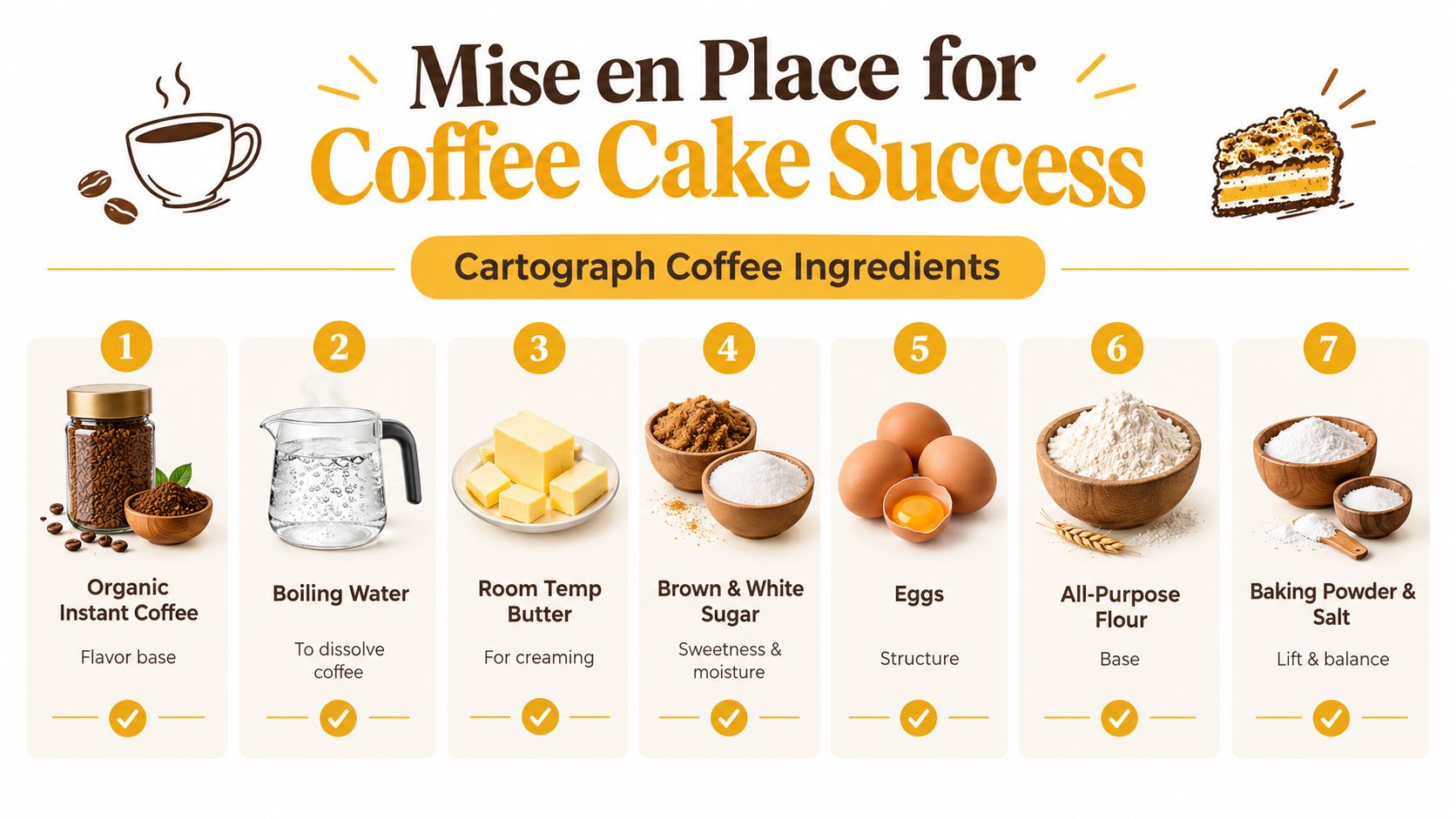
A smooth coffee cake is largely decided before the mixer starts. Set out the butter, eggs, and dairy until they lose their chill, then measure everything before combining ingredients. Cold eggs can make a creamed mixture look curdled, and cold butter will not trap air evenly.
For the base, prepare all-purpose flour, baking powder, salt, butter, brown sugar, white sugar, eggs, milk or another approved liquid, vanilla, and instant coffee. A crumb layer needs flour, brown sugar, cinnamon, salt, and cold butter. For chocolate cake, keep unsweetened cocoa ready, while allowing for its moisture absorption. Cocoa can make batter feel noticeably thicker.
Match the coffee format to the mixture
Organic instant coffee from Cartograph Coffee gives you direct control over flavor without brewing equipment. Dissolve it in a small amount of boiling water, cream, milk, or syrup, then add that mixture where the coffee will do the most work. The batter stays closer to its intended hydration than it would with an unmeasured pour of brewed coffee.
For a standard batter, start with 1 teaspoon of instant coffee in 1 tablespoon of boiling water. Let it cool before it reaches butter or eggs. A stronger batter can use 2 teaspoons in 1 tablespoon, provided that tablespoon replaces part of the recipe's milk or water. For a pronounced espresso-style flavor, use 1 tablespoon in 2 tablespoons of boiling water, again subtracting that liquid from the original recipe.
Espresso powder suits concentrated applications, especially chocolate frosting, mocha filling, or a coffee glaze. Instant coffee and espresso powder differ in strength, solubility, and intended use, so check this comparison of espresso powder and instant coffee before substituting.
Brewed coffee works when the recipe already has a defined liquid phase. Replace part of that liquid instead of adding coffee on top of the original amount. Use brewed coffee in the batter when you want aroma and color, and reserve ground coffee for a spice-like accent or decoration. Grounds usually make smooth cake and frosting gritty.
Prepare the coffee before mixing
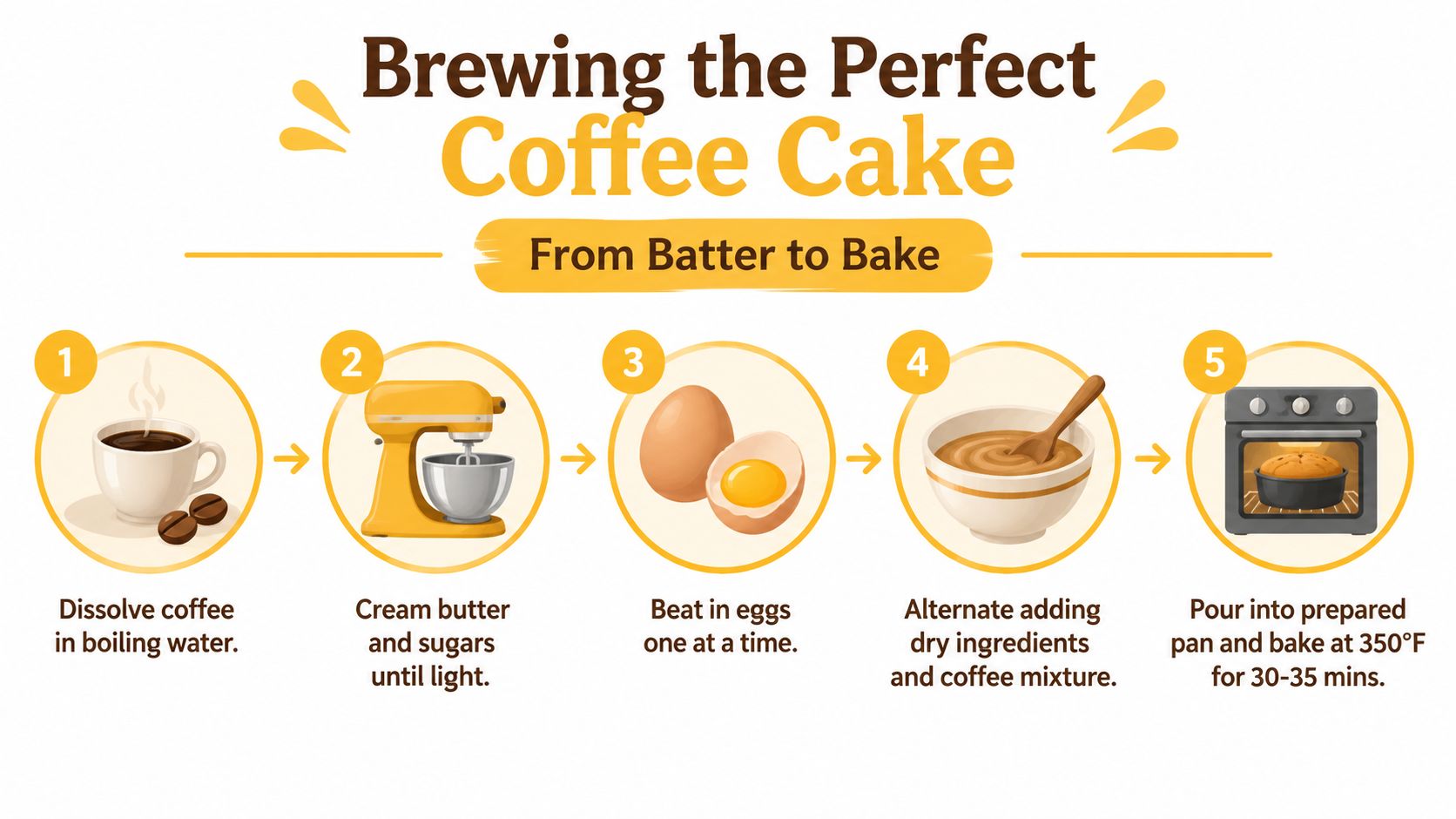
Dissolve instant coffee in boiling water, then cool the solution until it will not melt butter or scramble eggs. If the batter includes milk, count the coffee solution as part of that milk or other liquid. This keeps the texture predictable.
For streusel, coffee usually belongs in the dry mixture only as a finely measured accent, if used at all. In frosting, dissolve it in a small amount of cream or syrup before beating it in. A cold infusion gives cream or syrup a gentler flavor when steeped for about 12 to 36 hours. Hot infusion releases aroma faster, but it can also make bitterness more noticeable and darken the crumb.
Set up the equipment
Use a digital scale if available, a fine whisk, rubber spatula, hand mixer or stand mixer, and a light-colored metal pan. Grease the pan thoroughly, especially a Bundt pan with deep grooves. The Bundt pan was introduced in the 1950s, and historical baking accounts connect it with handling heavier batters and fillings evenly. This development helped popularize ring-shaped coffee cakes, as noted in this history of coffee cake ingredients and pans.
Keep the prepared pan beside the bowl, preheat the oven fully, and make the streusel before the batter. This setup prevents the coffee mixture from sitting too long and reduces hurried overmixing while you search for an ingredient.
How to Make Coffee Cake With Instant Coffee From Batter to Bake
The batter is already balanced around a set amount of liquid. Add coffee by replacing part of that liquid, not by pouring brewed coffee into the recipe on top of the milk or water. With Cartograph Coffee, instant coffee gives a concentrated flavor without the extra water that can loosen the emulsion. This practical approach is also explained in this guide to using instant coffee in baking.
Prepare the coffee mixture
For a gentle roasted note, dissolve 1 teaspoon of instant coffee in 1 tablespoon of boiling water. Let the mixture cool before it touches softened butter or beaten eggs. The coffee flavor stays restrained, and the recipe's total hydration remains nearly unchanged when that tablespoon comes from the existing liquid.
For a more noticeable coffee cake, use 2 teaspoons of instant coffee in 1 tablespoon of boiling water. Remove that tablespoon from the recipe's milk or water. For an espresso-style result, dissolve 1 tablespoon of instant coffee in 2 tablespoons of boiling water, then subtract both tablespoons from the original liquid. These ratios are substitutions, not extra liquid.
| Coffee Intensity | Instant Coffee Amount | Liquid Adjustment | Best Use Case |
|---|---|---|---|
| Subtle | 1 teaspoon | Dissolve in 1 tablespoon of the recipe's liquid | Vanilla cake with a warm roasted background |
| Noticeable | 2 teaspoons | Remove 1 tablespoon of liquid from the recipe | Coffee-forward batter or cinnamon cake |
| Bold | 1 tablespoon | Dissolve in 2 tablespoons of liquid and subtract both | Espresso-style cake or mocha base |
Whisk until every granule disappears. Brewed coffee can work when the recipe is designed for it, but it brings much more water and a milder concentration. Espresso powder is more concentrated and can be mixed directly into dry ingredients, although dissolving it first gives more even flavor. Instant coffee sits between those options in convenience, so use the liquid adjustment above.
For cream or syrup, cold infusion gives a softer aroma after about 12 to 36 hours. Hot steeping works faster and produces a darker, more immediate flavor. It can also make bitterness more noticeable and deepen the crumb's color.
Build the batter
Cream softened butter with brown and white sugar until lighter and aerated. Add the eggs one at a time, scraping the bowl after each addition. Mix in vanilla, then add the cooled coffee solution. Keeping the coffee with the wet ingredients helps it spread through the emulsion instead of forming concentrated pockets.
Whisk the flour, baking powder, salt, and any cocoa or cinnamon separately. Add the dry mixture in alternating portions with the remaining dairy, beginning and ending with the dry ingredients. Mix on low speed until the flour just disappears, then finish with a rubber spatula.
Stop mixing promptly. Extra mixing develops gluten and makes a tender crumb chewy. Extra coffee liquid weakens the structure, which can leave the center dense or gummy. The coffee cake chemistry guidance also highlights the narrow balance between flour, fat, sugar, and liquid in this style of batter.
Add streusel or a swirl
Keep coffee out of streusel unless you are making a very small paste. For a dry topping, mix instant coffee with brown sugar, cinnamon, and flour, then rub in cold butter. The granules disperse through the sugar mixture without adding free liquid to the crumb.
For a swirl, dissolve the coffee in a spoonful of an ingredient already in the filling, such as sour cream, cream cheese, or melted butter. Dot it over the batter and make a few shallow turns with a skewer. Deep, repeated swirling can pull the filling toward the bottom, where it may interfere with release.
Dissolve coffee before it reaches the cake. Dry granules can collect in one bitter bite, while coffee grounds remain gritty throughout the crumb.
Bake and judge doneness
Scrape the batter into the prepared pan and smooth the surface. Coat every ridge and the center tube of a Bundt pan. A square pan releases more easily, but its crumb has a different edge-to-center balance.
Bake at 350°F for 30 to 35 minutes when using the process shown in the required visual. Pan shape and batter depth can change the timing, so check the cake rather than relying on the clock alone. The center should look set, the top should spring back gently, and a skewer should come out with a few moist crumbs, not wet batter.
Let the cake stand in the pan until it feels firm enough to release. Turn it onto a rack and cool completely before frosting. Cutting while warm compresses the crumb and can make a correctly baked cake seem gummy.
For another example of carrying a concentrated flavor through a cake without flooding the batter, compare the method with this perfect matcha green tea cake.
Easy Variations for Mocha Espresso Vegan and Gluten Free Cakes
The base method is flexible, but each adaptation changes the balance of flavor, fat, or structure. Keep the coffee preparation controlled, then adjust the surrounding ingredients rather than adding more liquid at random.
Mocha cake
Add unsweetened cocoa to the dry ingredients and use the noticeable coffee ratio, with 2 teaspoons of instant coffee dissolved in 1 tablespoon of liquid. Remove that tablespoon from the recipe's original liquid so the cocoa doesn't push the batter toward a heavy consistency.
Mocha works especially well with brown sugar, vanilla, and a pinch of salt. If the cake tastes flat, the answer isn't always more coffee. A little additional salt or a darker, more aromatic cocoa may create better balance without increasing bitterness.
Espresso-strength cake
Use espresso powder or a bold instant coffee solution when coffee should remain obvious after baking. Put some of the coffee in the batter, then reserve the strongest expression for the filling or frosting. This layered approach tastes more intentional than making the entire cake aggressively bitter.
Avoid scattering dry grounds through the crumb. They don't dissolve, and their texture becomes more noticeable as the cake softens.
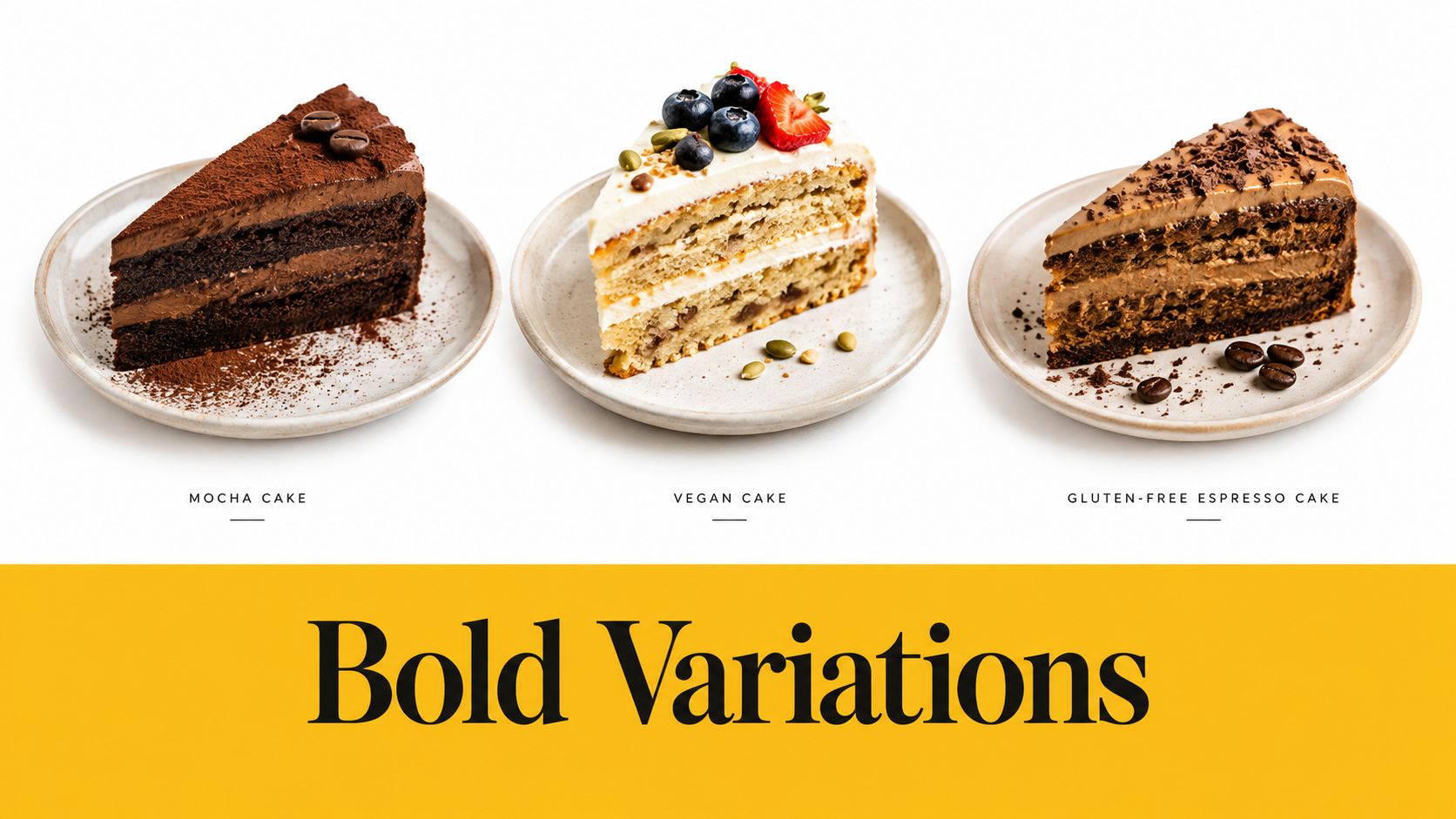
Vegan coffee cake
Replace butter with a neutral plant-based baking alternative that behaves well during creaming, and replace eggs with a tested vegan binder suitable for the recipe. Use plant milk as the liquid and dissolve instant coffee directly into part of it.
The key is to preserve the batter's thickness. Don't add coffee in addition to the plant milk, and don't compensate for the absence of eggs by pouring in extra liquid. A vegan batter often needs a gentle hand because additional mixing can make the crumb heavy.
Gluten-free coffee cake
Use a reliable all-purpose gluten-free flour blend designed for cakes, preferably one that includes a structure-building binder. Measure it carefully, let the batter rest briefly if the blend needs time to hydrate, and avoid adding extra coffee while waiting.
Gluten-free cakes can become either fragile or dense depending on the flour blend. A coffee solution made from instant coffee is easier to manage than brewed coffee because it adds flavor without forcing a larger liquid substitution.
| Variation | Coffee placement | Main adjustment | What stays unchanged |
|---|---|---|---|
| Mocha | Batter and optional filling | Add cocoa and protect hydration | Dissolve coffee first |
| Espresso-strength | Batter, filling, or frosting | Use a concentrated format | Mix gently |
| Vegan | Plant milk or frosting | Replace dairy and eggs with tested alternatives | Keep total liquid controlled |
| Gluten-free | Batter | Use a cake-oriented gluten-free blend | Check crumb before removing from pan |
The coffee baking guide from Sprudge also distinguishes brewed coffee, cold brew concentrate, espresso powder, instant coffee, and ground coffee. That distinction is useful because each format solves a different problem, flavor, hydration, or texture.
Frosting Pairings and Serving Ideas That Highlight Coffee
Frosting decides whether coffee tastes integrated or pasted on top. Match the intensity of the finish to the cake beneath it. A lightly coffee-infused cake can handle a bold buttercream, while an espresso-strength crumb usually benefits from vanilla, cream cheese, or a lightly sweetened glaze.
For coffee buttercream, dissolve instant coffee in a small amount of warm cream or milk, then cool it before beating it into softened butter and confectioners' sugar. Don't add dry granules directly unless you're certain they'll dissolve. A concentrated pocket of coffee can taste harsh and leave a sandy texture.
Match the finish to the cake
Vanilla buttercream gives the coffee room to show itself. It's a strong choice for a subtle batter because its sweetness and dairy notes soften roast bitterness.
Chocolate buttercream creates a mocha profile. Add coffee cautiously because cocoa already intensifies the darker flavors. A little salt can keep the frosting from tasting one-dimensional.
Cream cheese frosting brings tang and cuts through a rich crumb. It suits cinnamon coffee cake, streusel-heavy versions, and cakes served after a substantial meal.
Coffee glaze is lighter and quicker. Dissolve instant coffee in a small amount of warm liquid, whisk it into powdered sugar, and drizzle it over a fully cooled cake. A thin glaze keeps the cake suitable for transport and avoids the heaviness of a thick buttercream.
For a more cacao-forward direction, the Maximum Health Products guide to cacao powder in coffee is a useful reference for thinking about how cacao and coffee can share a drink or dessert without making either flavor muddy.
Put coffee where it has the most impact
Coffee doesn't need to appear in every component. Place it in the batter when you want the whole crumb to carry the flavor. Put it in streusel when you want concentrated roasted notes between bites. Add it to frosting when you want the aroma to arrive first.
Serve a mild cake with brewed coffee, tea, or milk. A bold espresso-style cake can work with lightly sweetened cream or a simple vanilla drink. For a dessert table, cut the cake into small pieces and use a restrained glaze so guests can taste the coffee without committing to a heavy finish. More pairing ideas are available in Cartograph Coffee's guide to coffee and desserts.
Troubleshooting Storage and Make Ahead Tips for Perfect Results
A dense coffee cake isn't proof that you needed more leavening. It may mean the coffee displaced too much liquid or was added without subtracting anything from the original formula. Coffee works best when it replaces part of the aqueous phase, not when it turns a balanced batter into a looser one.
Fix the common failures
- Gummy center: Reduce the coffee liquid next time, bake until the center springs back, and cool the cake fully before slicing.
- Bitter finish: Lower the coffee concentration, avoid grounds, and pair a strong coffee note with enough sugar, dairy, or vanilla to round it.
- Weak flavor: Dissolve instant coffee more efficiently, move some of the coffee into the frosting or streusel, and avoid relying on a mild brewed coffee.
- Dry edges: Check the pan size and batter depth, coat the pan properly, and remove the cake once the center is set rather than waiting for the skewer to come out completely dry.
- Uneven coffee pockets: Dissolve the granules before mixing, then scrape the bowl so the coffee solution doesn't remain at the bottom.
Cooling rule: A cake can seem underbaked while it's hot because the crumb hasn't finished setting. Let the structure stabilize before diagnosing texture.
Store it without losing the crumb
Cool the cake completely before wrapping it. Seal an unfrosted cake tightly at room temperature if you'll serve it soon, and keep exposed cut surfaces covered so they don't dry out. Refrigeration can firm the crumb and dull some aroma, so bring a chilled cake back toward room temperature before serving when the frosting allows it.
For make-ahead baking, wrap cooled slices individually and freeze them in an airtight container. Thaw them while wrapped so condensation forms on the wrapping rather than directly on the cake. A short, gentle warming can revive the softness, but don't heat frosted slices aggressively or the topping may split and slide.
A Bundt cake travels well once fully cooled and wrapped, which makes it practical for a work gathering, family visit, or outdoor trip. Keep frosting separate when transport conditions are warm, then glaze or finish the cake after arrival.
Bake Your Best Coffee Cake and Share It With Confidence
A dependable coffee cake comes from controlled flavor and controlled hydration, not from pouring an arbitrary amount of brewed coffee into the bowl. Decide first whether coffee should support chocolate, complement cinnamon, or stand as the main flavor. Then choose instant coffee for direct control, espresso powder for concentrated accents, or brewed coffee only when you're prepared to replace part of the recipe's existing liquid.
Start with the subtle ratio if you're uncertain. Dissolve the coffee, cool it, and mix it into the batter's liquid phase. Once you know how that version tastes, move the stronger coffee expression into a swirl, streusel, glaze, or frosting instead of making the entire crumb bitter.
The same discipline protects the cake across dietary adaptations. Vegan and gluten-free versions can stay moist when you preserve the total liquid balance, use tested structural substitutes, and resist the urge to keep mixing until the batter looks perfectly smooth. Cool the finished cake before judging it, wrap leftovers tightly, and thaw frozen slices while covered.
Bake the base recipe first, make notes about the coffee intensity, and choose the next variation based on what the cake needs. A subtle coffee cake belongs beside an afternoon cup, while a mocha or espresso-style version can anchor a dessert plate.
Cartograph Coffee offers organic instant coffee designed for convenient preparation at home, work, or outdoors, and it can be dissolved directly into cake batter, fillings, or frosting. Visit Cartograph Coffee to choose a coffee format for your next bake and start with the ratio that matches the flavor you want.