Here’s the simple truth: a standard 8-ounce cup of plain, black instant coffee has next to no calories. The real calorie count comes down to one thing—what you decide to stir into it. With just a few additions, that nearly calorie-free drink can quickly become something else entirely.
The Surprising Truth About Calories in Instant Coffee
When you're keeping an eye on your daily intake, every little bit counts. This often leads people to ask, "Just how many calories are in my morning cup of instant coffee?" The good news is, the coffee itself is not the culprit.
Think about it: those little granules are just dehydrated brewed coffee. All the water is gone, leaving behind pure coffee essence. A typical serving, made from about one teaspoon of plain instant coffee, contains only 2–4 calories. That's so negligible it barely registers, making black instant coffee a fantastic choice for anyone watching their calorie intake.
The calorie story only changes when you start adding things like milk, sugar, or creamers. That's when the numbers start to climb.
The main takeaway is simple: Plain instant coffee is a virtually zero-calorie choice. The calories that matter are the ones you add yourself.
To put this into perspective, let's look at a quick comparison of how those additions stack up.
Instant Coffee Calorie Snapshot at a Glance
Here’s a quick summary showing how a simple cup of black instant coffee compares to one with common additions.
| Coffee Type | Estimated Calories (per 8 oz cup) |
|---|---|
| Plain Black Instant Coffee | 2-4 Calories |
| Instant Coffee with 1 tsp Sugar | 18-20 Calories |
| Instant Coffee with Milk & Sugar | 60-80+ Calories |
As you can see, the moment you add even a little something extra, the calorie count jumps significantly. This is why understanding what's in your cup is so important.
How Add-Ins Take Your Coffee From (Almost) Zero to Sixty… Calories, That Is
Think of a cup of plain instant coffee as a blank canvas. On its own, it’s a simple, straightforward brew that’s practically calorie-free. But that’s also where the calorie story can take a very sharp turn. Every little thing you stir in, no matter how insignificant it seems, adds up, quickly changing your humble coffee into something far more decadent.
The real calorie culprit in your daily cup isn't the coffee itself—it's everything that goes in with it. The coffee is just the foundation; each splash of cream or spoonful of sugar is another layer, building the final calorie count higher and higher.
This visual really drives the point home, showing the night-and-day difference between a simple black coffee and one with all the fixings.
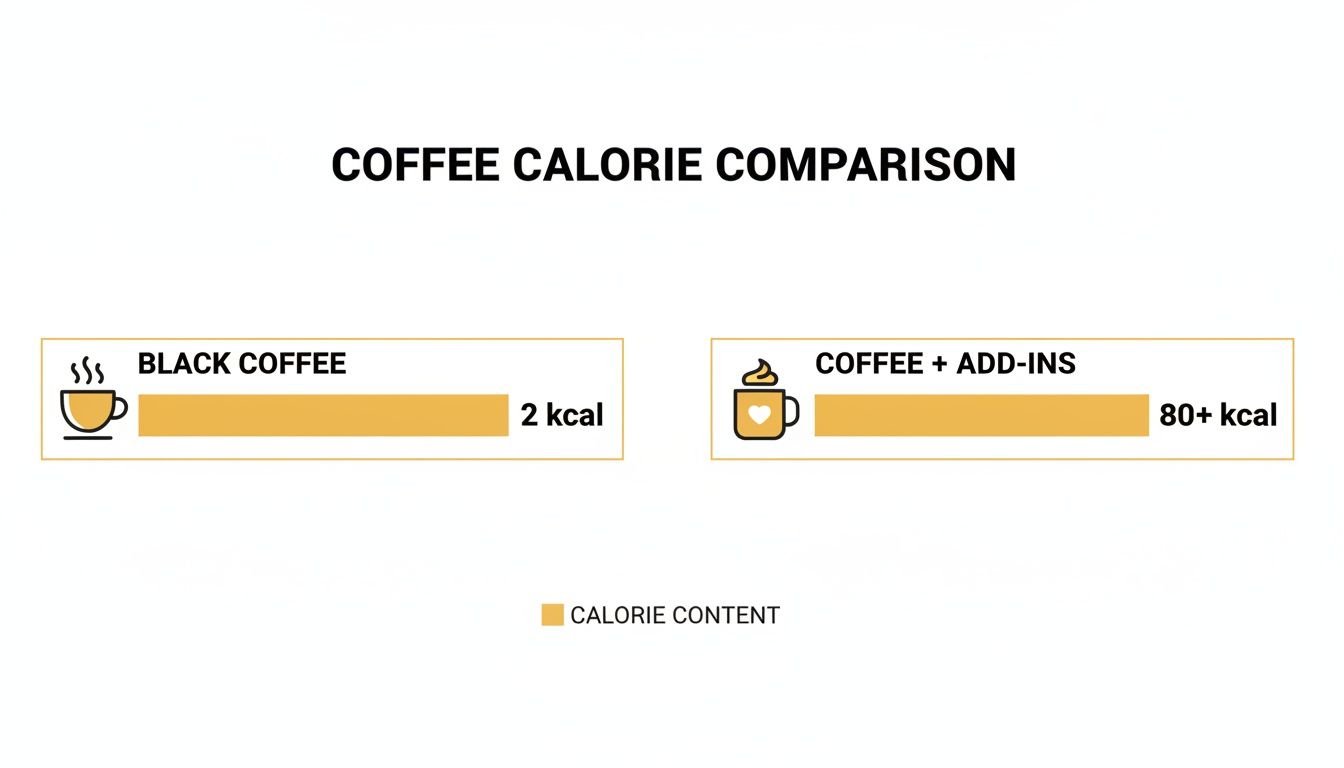
As you can see, the moment you introduce creamers and sweeteners, the numbers jump dramatically. It’s a powerful reminder that the extras are what pack the biggest caloric punch.
Breaking Down the Calorie Cost of Add-Ins
Let’s get into the nitty-gritty of how quickly those calories can pile up. The everyday things we grab from the fridge or pantry are precisely why a nearly zero-calorie drink can morph into a 100+ calorie treat.
For instance, just one level tablespoon of granulated sugar tacks on about 60 calories. A single spoonful! And if you add two tablespoons of whole milk, you’re looking at another 18 calories. Swap that for heavy cream, and you’ve just added a whopping 100 calories. It's easy to see how a typical homemade coffee can land squarely in the 60–200 calorie range without a second thought.
The kind of milk you pour makes a huge difference, too. Whole milk gives you that creamy texture but comes with more calories, while plant-based milks offer entirely different nutritional profiles.
The most important thing to remember is that you are in complete control of the final calorie count. The single best way to manage the calories in your instant coffee is to be mindful of every ingredient you add.
Knowing your options is the key to making choices that fit your health goals. And if you're looking to move beyond traditional dairy, there are some fantastic alternatives out there. Curious? We've put together a guide on finding the best substitute for milk in coffee.
To help you visualize the impact of these choices, here's a handy guide.
Calorie Guide for Common Coffee Additions
Below is a quick breakdown of what you can expect from some of the most popular coffee additions. It really highlights how a small swap can make a big difference.
| Addition | Serving Size | Approximate Calories |
|---|---|---|
| Skim Milk | 2 Tbsp (30 ml) | ~10 Calories |
| Whole Milk | 2 Tbsp (30 ml) | ~18 Calories |
| Unsweetened Almond Milk | 2 Tbsp (30 ml) | ~5 Calories |
| Oat Milk (Barista) | 2 Tbsp (30 ml) | ~30 Calories |
| Half-and-Half | 2 Tbsp (30 ml) | ~40 Calories |
| Heavy Cream | 2 Tbsp (30 ml) | ~100 Calories |
| Sugar (Granulated) | 1 Tbsp | ~60 Calories |
| Flavored Creamer | 1 Tbsp | ~35 Calories |
This table makes it crystal clear: switching from heavy cream to unsweetened almond milk can save you nearly 100 calories in a single cup. Once you understand these differences, you can easily craft a delicious coffee that fits your lifestyle perfectly.
Figuring Out the Calories in Your Daily Cup
Alright, now that we know where the calories are hiding, let's get practical. Tallying up the calories in your instant coffee is actually pretty straightforward—you just add up the ingredients. When you break your daily cup down into its basic parts, you can see exactly what you're drinking.
Think of it like a "calorie budget" for your coffee. The starting point—the plain instant coffee itself—is practically free, costing you only 2-4 calories. Everything else you add, whether it's a splash of milk or a spoonful of sugar, gets added to that base number. This simple mindset puts you in control, letting you make informed choices every time you pop the kettle on.
Real-World Coffee Calculations
To really bring this to life, let’s look at a few typical ways people make their instant coffee. These examples are perfect for seeing how fast the calories can climb depending on what you stir in. Of course, it all starts with knowing how much instant coffee per cup you’re using.
Example 1: The Minimalist
- Instant Coffee: 1 teaspoon (~4 calories)
- Granulated Sugar: 1 teaspoon (~16 calories)
- Total Estimated Calories: ~20 calories
This is your classic, no-fuss cup. It’s lightly sweetened but still an incredibly low-calorie drink, making it a great guilt-free pick-me-up.
Example 2: The Classic Creamy Cup
- Instant Coffee: 1 teaspoon (~4 calories)
- Whole Milk: 2 tablespoons (~18 calories)
- Granulated Sugar: 2 teaspoons (~32 calories)
- Total Estimated Calories: ~54 calories
This is how a lot of us drink our coffee. It's got that creamy, satisfying taste but manages to stay under 60 calories, so it fits easily into just about any diet.
Remember, these are just estimates. The specific brands of milk, creamers, and sweeteners you use will have their own nutritional information, so always check the label for the most accurate count.
Example 3: The Indulgent Morning Treat
- Instant Coffee: 1 teaspoon (~4 calories)
- Flavored Coffee Creamer: 2 tablespoons (~70 calories)
- Total Estimated Calories: ~74 calories
This is where things can change quickly. A shot of flavored creamer can single-handedly add a surprising number of calories and sugar, turning your simple coffee into something closer to a dessert. It’s delicious, for sure, but it’s a perfect example of how hidden calories can sneak in.
Unpacking the Hidden Calories in Coffee Sachets
A plain cup of instant coffee is a fantastic low-calorie choice, but the story changes completely when you grab one of those pre-mixed coffee sachets. You know the ones—the convenient 3-in-1 or flavored latte packets that promise a perfect brew in seconds. They’re an easy shortcut, but they often hide a surprisingly high calorie count.
That convenience comes with a trade-off. These sachets are packed with much more than just coffee; the main ingredients are usually sugar and powdered milk or creamer. This mix turns what should be a simple drink into a sweet, creamy beverage that’s often closer to a dessert in a mug.
Reading Between the Lines
This is where checking the nutritional label becomes so important. A single one of those sachets can pack anywhere from 40 to over 180 calories, all depending on the brand and flavor you choose. The main culprits are the added sugars and fats from the powdered creamers, which are put there to maximize flavor and shelf life.
The speed and ease of a pre-mixed sachet often come at the cost of a big spike in your daily sugar and calorie intake. Always flip the box over and read the ingredients—if sugar is the first thing listed, you know what you’re really drinking.
It's no surprise these have become so popular; people love how easy they are. As the demand for flavored, ready-to-go instant coffee has grown worldwide, so has the sheer variety of these high-calorie options. Some of these mixes can even push 250 calories, which is a world away from the 2-4 calories in a cup of plain instant coffee.
At the end of the day, opting for these mixes is a conscious choice. If you're keeping an eye on your calorie intake, understanding what's inside those convenient instant coffee packets is the first step. They might be quick, but they deliver a caloric punch that a simple, homemade cup of instant coffee just doesn't have.
Crafting a Delicious Low Calorie Instant Coffee
Think a healthier cup of coffee means giving up on flavor? Think again. With just a few simple tweaks, you can make a delicious, satisfying brew that fits your wellness goals without loading up on unwanted calories. The secret is all about small, smart swaps that deliver a big impact.
This isn't about restriction; it's about making sustainable changes that actually feel like an upgrade. You can turn your daily instant coffee into a guilt-free pleasure, one sip at a time. It all starts with being a little more mindful about what you stir into your mug.
Smart Swaps for Sweetness and Creaminess
One of the quickest calorie-cutting wins comes from rethinking how you sweeten your coffee. That innocent-looking teaspoon of regular sugar brings about 16 calories with it. Instead, you could try a natural, zero-calorie alternative.
- Stevia or Monk Fruit: These are great plant-based options that give you the sweetness you're looking for without adding a single calorie to your cup.
- Erythritol: Another popular choice with a clean taste and practically no calories.
If you love a creamy coffee, your milk choice can make a massive difference. Just swapping two tablespoons of whole milk for skim milk cuts the calories almost in half. Unsweetened almond milk is another fantastic option, adding only about 5 calories for the same amount.
The goal is to build flavor intelligently. By choosing lower-calorie additions, you can create a rich, satisfying coffee that still feels like a treat without the hidden caloric cost.
Add Flavor Without Adding Calories
Beyond milk and sweeteners, spices and extracts are your secret weapons for a flavorful, low-calorie brew. These are essentially calorie-free but pack an incredible punch, adding real depth and complexity.
Next time you make a cup, try one of these simple enhancements:
- A Dash of Cinnamon: This classic adds warmth and a subtle hint of sweetness.
- A Sprinkle of Nutmeg or Cardamom: Perfect for when you want a more aromatic, exotic flavor.
- A Drop of Vanilla Extract: A tiny bit goes a long way, giving your coffee a smooth, rich taste.
- Unsweetened Cocoa Powder: Craving a mocha? A spoonful of this gives you that chocolatey goodness with a minimal caloric footprint.
Experimenting with these little additions helps you create a custom coffee that you’ll look forward to every morning. It’s these small, mindful choices that let you enjoy your coffee exactly how you like it.
Your Instant Coffee Calorie Questions Answered
Alright, let's wrap this up by hitting some of the most common questions that pop up about instant coffee and calories. Think of this as a quick-fire round to clear up any lingering doubts you might have.
Does the Brand of Instant Coffee Affect Its Calorie Count?
When you're talking about plain, black instant coffee, the brand makes almost no difference. You're looking at a tiny range of 2-5 calories per serving across the board, which is practically nothing in the context of your daily intake.
Where the brand really matters is with those pre-mixed sachets, like the 3-in-1s. Those are packed with sugar, powdered creamers, and other flavorings, and the calorie count can vary wildly from one brand to the next.
Is Instant Coffee Less Healthy Than Brewed Coffee?
From a calorie perspective? Nope. If you drink it black, instant coffee has virtually the same calorie count as its brewed counterpart. One isn't inherently "healthier" than the other based on that alone.
The real decider for how "healthy" your coffee is comes down to what you put in it. The brewing method is a minor detail; the sugar and cream are the game-changers.
How Can I Make Instant Coffee Taste Better Without Adding Calories?
This is my favorite question, because it starts with a better bean. If you begin with a high-quality organic instant coffee, you're already 90% of the way to a great-tasting cup. From there, you can get creative without piling on calories.
A few of my go-to tricks:
- A dash of cinnamon adds a lovely warmth and a phantom sweetness.
- Just one drop of good vanilla extract can make the flavor feel richer and smoother.
- A sprinkle of unsweetened cocoa powder gives you a hint of mocha for just a handful of extra calories.
One pro tip: always use hot water, but don't let it come to a rolling boil. Super-hot water can scorch the coffee crystals and make them taste bitter.
Are There Any Zero-Calorie Flavorings for Coffee?
You bet. The coffee aisle has exploded with options beyond just spices. Zero-calorie syrups are everywhere now, and natural sweeteners like stevia or monk fruit are great for adding sweetness without the sugar. Don't forget flavor extracts, either—a little almond or peppermint can completely change your coffee experience for zero calories.
Ready for an instant coffee that actually tastes amazing on its own? Cartograph Coffee is made from high-quality organic beans, so you get incredible flavor without needing to cover it up with high-calorie additions. Discover the difference today.