You've got a jar of instant coffee, a mug, and about two minutes before the day starts barking at you. That's exactly when black coffee with instant coffee either feels like a solid habit or a disappointing compromise. The difference usually isn't the brand alone, it's the way you mix, heat, dose, and dissolve it.
Instant coffee has never been a novelty item. It has a long paper trail, from an early British patent in 1771 to David Strang's modern soluble coffee patent in 1890 and George Constant Louis Washington's first successful mass-produced instant coffee in 1909, and by the 1970s it was already a major commercial category in the U.S. instant coffee's documented history. That matters because the format has always been about function. Today, the question isn't whether instant coffee is “real” coffee, it's whether you're making it in a way that respects what it can do.
Why Instant Black Coffee Deserves a Real Method
The first mistake is treating instant coffee like a backup plan that doesn't deserve attention. The second is assuming every bad cup means the product is the problem. In practice, most weak, gritty, or harsh mugs come from sloppy water temperature, rushed dissolving, or a dose that's too heavy for the cup.
A clean cup of black coffee with instant coffee is a useful thing. It travels well, it mixes fast, and it doesn't need a machine that clutters the counter or the campsite. It can also be adjusted in small, repeatable ways, which is why a simple method matters more here than in a lot of other coffee formats.
If you're thinking about it like a mug, not a ritual, the job gets easier. A hotel room at 6 a.m., a desk drawer at work, a folding chair outside a tent, all of those settings reward the same habits. You want the granules fully dissolved, the water hot enough to extract properly but not so hot that it turns harsh, and a ratio that fits the cup instead of fighting it.
A lot of people land on instant coffee through convenience, then give up because they never dialed in the basics. That's why a real method helps.
Practical rule: start with a normal cup, not a giant travel tumbler, then scale up only after the base cup tastes clean.
If you want a quick sanity check on the broader question of whether instant can still count as coffee in a serious sense, this plain-language look at whether instant coffee is real coffee is worth keeping in mind. Once that question is settled, the only thing left is technique.
The Core Method for a Clean, Hot Cup

The cup starts with the dose. For black instant coffee, the repeatable range is about 1 to 2 teaspoons of granules per 200 ml, or roughly 6 to 8 oz of water. That range gives you room to choose between a lighter everyday cup and something more concentrated without wandering into bitterness from sheer overdosing. The exact spoon depends on the brand and grind size, which is why a teaspoon measure is a starting point, not a moral law.
The water matters just as much. The most reliable range is about 190°F to 205°F, or 88°C to 96°C, which is hot enough to dissolve well without pushing the cup into the scorched, thin, or papery zone. Some guides recommend water that is just off the boil, while one major instant brand recommends 80°C rather than boiling water directly, which supports the same practical lesson, don't pour at a raging boil if you want a cleaner cup good black coffee with instant coffee. Let the kettle rest briefly if it's just boiled.
A small bloom changes texture more than you might expect. Put the granules in the mug, add a splash of hot water first, and stir until the crystals are fully wetted. That first wetting breaks up dry pockets and keeps the cup from drinking like sweet grit. Then top up with the rest of the water and stir again until the surface looks uniform.
Filtered water helps here, too. Cleaner water gives you a clearer cup, especially if your tap water is heavy or mineral-laden. Black instant coffee doesn't hide behind milk or sugar, so whatever the water brings, the mug will show.
A straight recipe you can use tonight is simple. Measure 1 heaped teaspoon for a lighter cup or 2 teaspoons for a stronger cup, bloom with a small splash, stir until fully dissolved, then fill to 200 ml with hot water in the recommended range. That's the core of it, and it works because each step addresses a real failure mode instead of relying on luck.
A cup that tastes clean is usually the result of boring consistency, not clever tricks.
If you want a reference point for dose sizing, the basic guide on how much instant coffee per cup lines up with the same practical logic.
Tuning Strength, Body, and Flavor Without Added Ingredients
Dose first, temperature second
If the cup tastes too strong, the first fix is usually less coffee, not hotter water. Strength comes mainly from dose, while water temperature mostly affects how clean or harsh the result feels. That's why increasing temperature to “make it stronger” is a bad habit. You often get more edge, not more depth.
A shorter, more intense mug works when you want a fast hit before the commute or during a work break. A smaller dose gives you a cup you can sip without fatigue, which matters more than people admit. If the mug starts tasting hollow, adjust the granule amount first, then check how long you stirred and whether the crystals disappeared.
Granule texture changes the cup
Fine granules usually dissolve faster and give you less residue at the bottom. Coarser instant coffee can still taste good, but it may need a longer stir and a brief pause before you drink. That tiny pause lets the texture settle, especially if the brand tends to float before it fully hydrates.
Water quality also shapes body. Hard water can flatten brightness, while cleaner water makes the cup feel more open. That's one reason two people can brew the same jar and end up with different opinions about it. The method is the same, but the water isn't.
Useful shift: if the cup feels flat, make it stronger by dose, not hotter by temperature.
There's also a practical upper limit. If you keep pushing dose upward, the cup can turn muddy or heavy instead of rich. For daily drinking, the sweet spot is usually the smallest amount that still tastes complete. For a short, concentrated serving, move up slowly and stop as soon as the cup stops tasting balanced.
A lot of instant coffee problems are really tuning problems. Once you treat the mug like something you can calibrate, not just mix, it gets much easier to land in a cup that feels clean rather than generic.
Fixing Bitterness, Harshness, and Flat Flavor
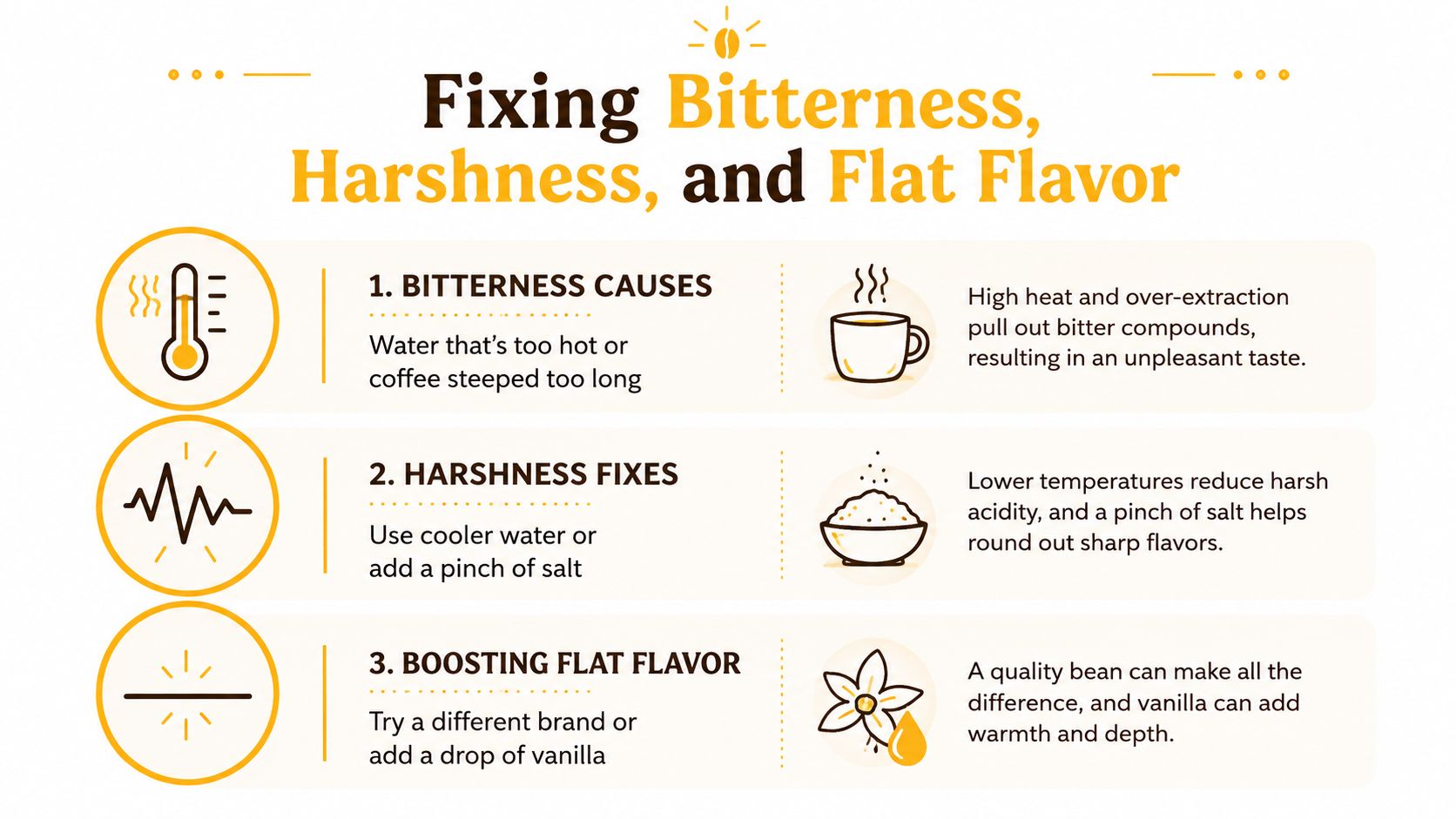
It's easy to blame the brand first when instant coffee tastes bad. That's too simple. In many cups, bitterness comes from water that's too hot, granules that didn't fully dissolve, or a dose that's too heavy for the mug. Those are brewing problems, not identity problems.
Start with the harsh cup
If the coffee feels sharp on the tongue, lower the water temperature slightly. A lot of guides already point toward water that sits just below boiling, and that's the right instinct for avoiding a burnt edge hot water guidance for instant coffee. If you've been pouring directly from a full boil, let the kettle rest before mixing. That small wait often fixes more bitterness than any fancy add-in would.
Fix grit before you fix flavor
If the bottom of the mug feels sandy, the coffee wasn't fully dissolved. Add a little more hot water to the granules first, stir with intent, then give it a moment before topping up. The point is to eliminate concentrated pockets, because those pockets drink harsh even when the overall cup is otherwise fine.
Don't ignore stale granules
Flat flavor often means the jar has lost its edge. Instant coffee is dry and convenient, but it still loses liveliness if it sits open too long or gets exposed to heat and moisture. Dull, papery coffee usually needs better storage before it needs a different recipe.
A less obvious point matters here, too. Instant coffee quality varies a lot, and some products now taste closer to drip coffee in blind tasting than older consumers expect instant coffee brewing guidance. That means a bad cup isn't proof that instant can't be good. It may just mean the cup needs temperature, dissolve time, or dose adjusted before you judge it.
If bitterness keeps showing up, use this order of attack. Cool the water a little, bloom longer, then reduce the dose. If the cup still feels dead, the jar may be the weak link.
Harshness usually comes from process. Flatness usually comes from storage or stale product.
Iced and Portable Variations for Real Life

Iced instant coffee works best when you respect the dissolve step. Put the granules in the glass, add a small amount of hot water first, stir until they vanish, then add ice and cold water. If you skip the hot water and dump granules straight onto ice, you invite clumps and a weak, uneven cup. For a stronger iced drink, build the base a little more concentrated before the ice goes in.
Cold-water mixing can work when hot water isn't available, but it takes more patience and a good stir. There's also a practical question people ask in offices and on the road, whether instant black coffee is a smarter fit than brewed coffee for portable routines. For that comparison in a workplace setting, comparing cold coffee for offices is a useful way to think through convenience and format without pretending the drinks are identical.
Portable coffee is simpler than many assume. A mug, a spoon, a small bottle of clean water, and single-serve packets are enough for a lot of situations. Campers and travelers benefit from packets because they stay dry and avoid the clumping problem that comes with a jar rattling around in a bag. If you're using a jar, keep it sealed and out of heat.
If you've ever tried making coffee in a hotel sink area, the same rules apply. Use the smallest clean vessel you have, dissolve first, then build the drink. The fewer steps that depend on perfect equipment, the more reliable the cup becomes.
For a plain cold-water approach, this guide to making instant coffee with cold water matches the basic logic of patience and full dissolution. It's not the same as a hot bloom, but it's still about getting the granules fully incorporated before you expect a decent sip.
Sourcing and Storing Quality Instant Coffee
Black coffee shows everything. If the instant coffee has a harsh finish, a papery note, or a muddy middle, you'll taste it without milk covering the edges. That's why granule quality matters so much. Freeze-dried and spray-dried products don't behave the same in the cup, and black coffee makes those differences obvious because there's nowhere to hide them.
Bean origin matters too, but in a practical way, not a snobby one. Better raw coffee tends to give you a more articulate cup after processing, while lower-grade material can taste dull even when brewed correctly. The better the instant coffee, the more clearly your preparation choices show up. The worse the product, the less room you have to rescue it.
Storage is the part often overlooked. Keep the jar cool, dry, airtight, and away from light. Moisture is the enemy, because once granules pick up humidity, they stop dissolving cleanly and the flavor goes stale faster. Opened instant coffee holds up best when you treat it like a pantry item, not a decorative object left beside the kettle.
Single-serve packets make sense if you travel often or drink coffee away from home. They keep the dose consistent and protect freshness better than a jar that gets opened all day. If you brew at home, the jar is fine as long as you close it immediately and don't leave it near steam.
One option in this space is Cartograph Coffee's organic instant coffee packets, which are built for a simple coffee-and-hot-water workflow. That kind of format makes the method easier to repeat, especially for office drawers, luggage, and camping kits. It doesn't replace technique, but it does reduce avoidable storage problems.
Great black instant coffee is half product and half method. If either one slips, the cup shows it.
The last thing worth saying is blunt. A lot of people give up on instant black coffee because they only ever tried it with boiling water, a vague spoonful, and stale granules. That's not a fair test. Start with fresh product, store it properly, and use the same temperature and dissolve habits every time, and the cup gets much more dependable.
Visit Cartograph Coffee if you want organic instant packets that fit the same hot-water, black-coffee routine described here. Keep the method simple, keep the jar sealed, and make the cup with intention instead of guesswork.