When you come across a truly fantastic bag of coffee, it's rarely from a massive, faceless corporation. The best small-batch coffee roasters are artisans, obsessed with quality over quantity. They meticulously craft unique flavor profiles that mass-market brands simply can't touch.
Think of roasters like Onyx Coffee Lab, Verve Coffee Roasters, and Black & White Coffee Roasters. These are the folks who transform humble green coffee beans into exceptional experiences, one carefully monitored batch at a time.
The Art and Soul of Small-Batch Coffee
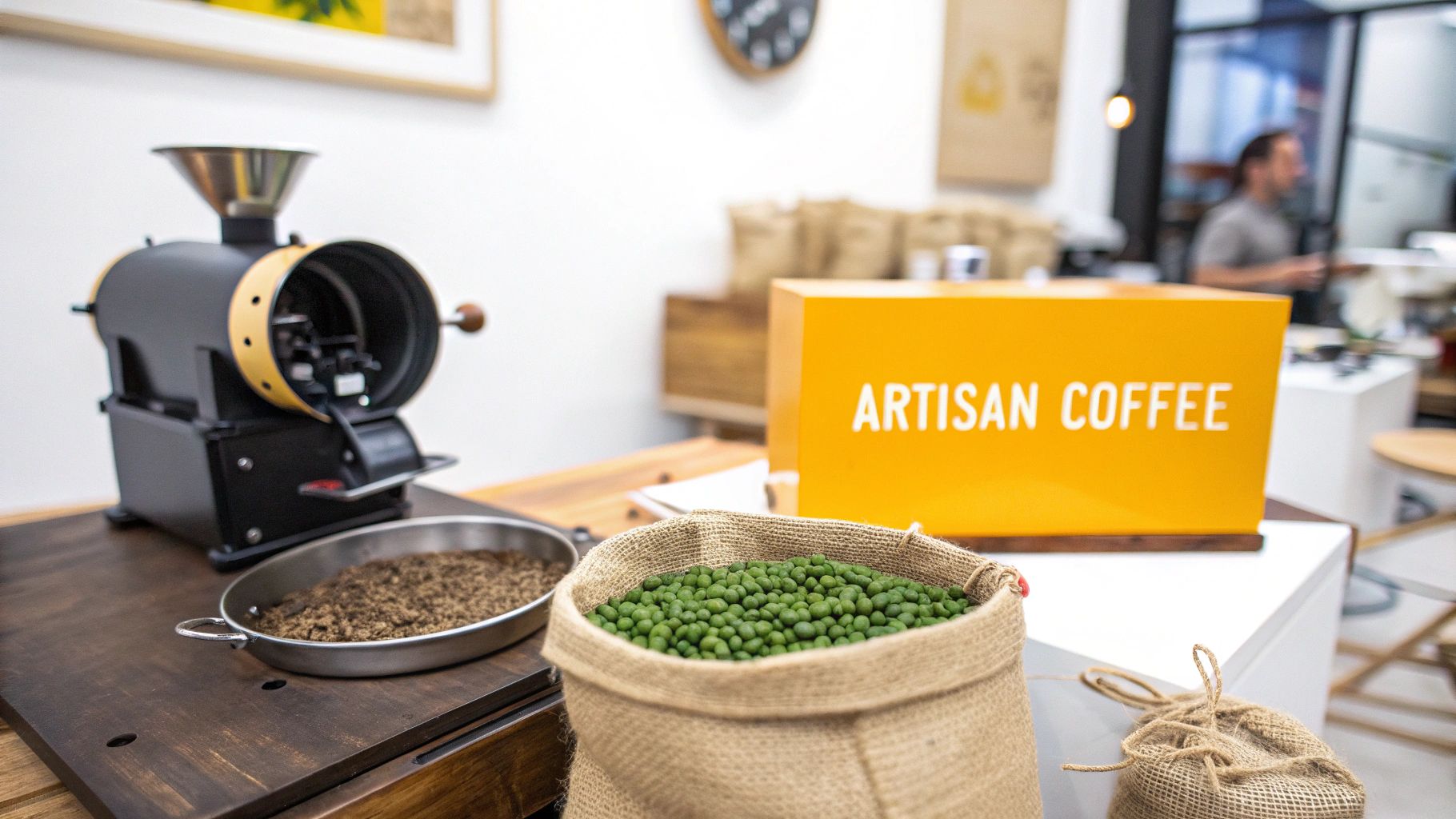
Welcome to a world where coffee is far more than a morning habit—it's a genuine craft. Getting to know small-batch roasters is a lot like discovering a local artisan bakery. Just as a baker coaxes an unforgettable loaf from simple flour and water, these roasters turn raw green coffee seeds into something truly remarkable.
This deep appreciation for detail is a cornerstone of the third-wave coffee movement, which pulled the spotlight away from mass production and onto celebrating the unique character of each coffee. This shift in philosophy is what makes finding your "best" roaster such a personal journey, one guided entirely by your own palate.
Why Quality Trumps Quantity
In the small-batch universe, every decision is deliberate and aimed at creating a superior cup. This dedication isn't just a niche trend; it's a rapidly expanding part of the coffee industry. The global batch coffee roaster market is projected to grow from an estimated $1.5 billion in 2025, a surge fueled by our growing thirst for specialty coffee. This growth says one thing loud and clear: people want better, more flavorful coffee.
As you dive into this world, you'll start to see coffee through the eyes of a roaster, focusing on the key elements they've mastered:
- Bean Origin: It all starts with the bean. A coffee from Ethiopia will taste wildly different from one grown in Colombia, and knowing what makes each unique is part of the fun. Understanding what single-origin coffee is can completely change how you shop for beans.
- Roast Profile: This is where the magic happens. The roaster’s precise control over heat and time unlocks specific notes, coaxing out everything from bright, fruity flavors to deep, chocolatey richness.
- Ethical Sourcing: Great coffee shouldn't come at a hidden cost. The best roasters are committed to fair practices, ensuring a sustainable and equitable supply chain all the way from the farm to your cup.
By focusing on these details, small-batch roasters don't just sell coffee; they share a story. Each bag represents a specific place, a distinct process, and a roaster's passionate pursuit of perfection.
This guide is your roadmap, whether you're a curious newcomer or a seasoned coffee lover. You'll learn how to spot the roasters who align with your values and taste preferences, turning your daily brew from a routine into a truly intentional and rewarding experience.
What Really Makes a Roaster “Small Batch”?
You see the term "small batch" on coffee bags everywhere these days, but what does it actually mean? It’s not just a trendy marketing slogan; it’s a whole philosophy built around precision and a hands-on approach.
Think about the difference between a chef carefully searing one perfect scallop versus baking a massive tray of lasagna. The level of control and personal attention is completely different. That's the heart of small-batch roasting.
At its core, it means the roaster is working with a quantity of beans small enough to allow for constant, subtle adjustments during the roast. They aren’t just turning on a machine and walking away. They’re conducting a delicate symphony of heat, airflow, and time to bring out the very best in that specific coffee.
The Science of Flavor Control
Every coffee bean arrives at the roastery with a unique story—one told by its origin, the specific coffee types explained, and how it was processed at the farm. The small-batch roaster’s mission is to tell that story faithfully through the roast.
To do this, they create a roast profile, which is like a detailed recipe of temperature changes over a specific period, tailored to that single batch of coffee. They listen for crucial audio cues, the most important being the "first crack." This is an audible popping sound, a lot like popcorn, that signals a critical chemical reaction is happening inside the bean, unlocking its flavor potential.
The brief window between the first crack and the end of the roast is called the development phase. A difference of just a few seconds can be the difference between a coffee with bright, citrusy notes and one with deep, caramel sweetness.
From Green Bean to Perfect Brew
A roaster's skill in managing this delicate phase is what truly separates good coffee from unforgettable coffee. Working with a smaller volume is their secret weapon—it lets them react in an instant to what the beans are doing.
- Temperature Adjustments: They can tweak the heat by just a few degrees to speed up or slow down the roast, steering clear of any burnt or underdeveloped "baked" flavors.
- Airflow Control: They can adjust the fan speed to pull smoke and chaff (the bean's papery skin) out of the drum, resulting in a cleaner, more even roast that lets the bean's natural character come through.
This constant, hands-on attention is precisely why coffee from a small-batch roaster tastes so alive and full of character. The roaster isn’t just pushing a button; they are actively shaping the flavor, making sure every single batch reaches its full, delicious potential.
How to Choose Your Ideal Coffee Roaster
Diving into the world of specialty coffee can feel a bit like walking into a library with a million books. It's exciting, but where do you even start? Finding a roaster that nails your personal taste is actually simpler than it seems. The trick is to look past the pretty packaging and get to know what makes the best small-batch coffee roasters tick.
Once you know what to look for, you can start to connect the dots between a roaster's philosophy and your own preferences. It’s all about finding that perfect match in flavor, ethics, and quality.
Start With the Bean Itself
Every great cup of coffee starts with a great bean. A roaster who is open and proud about where their beans come from is already sending a strong signal about their commitment to quality. When you're browsing, notice how they talk about their single-origin coffees versus their blends.
-
Single-Origin Beans: These coffees come from one specific farm or a small, defined region. They’re a pure expression of that place's unique climate and soil—what the pros call terroir. If you love exploring distinct flavors, like the bright, berry notes of an Ethiopian Yirgacheffe or the deep chocolate of a Colombian bean, single-origins are your ticket to a world tour in a cup.
-
Thoughtfully Crafted Blends: Don't mistake blends for being a lesser option; creating a great one is a true art form. A skilled roaster carefully combines beans from different origins to craft a flavor profile that’s balanced, complex, and reliably delicious. Blends are often the workhorses of a cafe, designed to be versatile enough to taste amazing as both a drip coffee and a shot of espresso.
Think of it this way: a single-origin coffee is a soloist, letting one incredible voice shine. A blend is a perfectly harmonized choir, where different voices come together to create something beautifully complete.
This infographic really drives home the difference between the broad strokes of commercial roasting and the fine-tuned precision of a small-batch artisan.
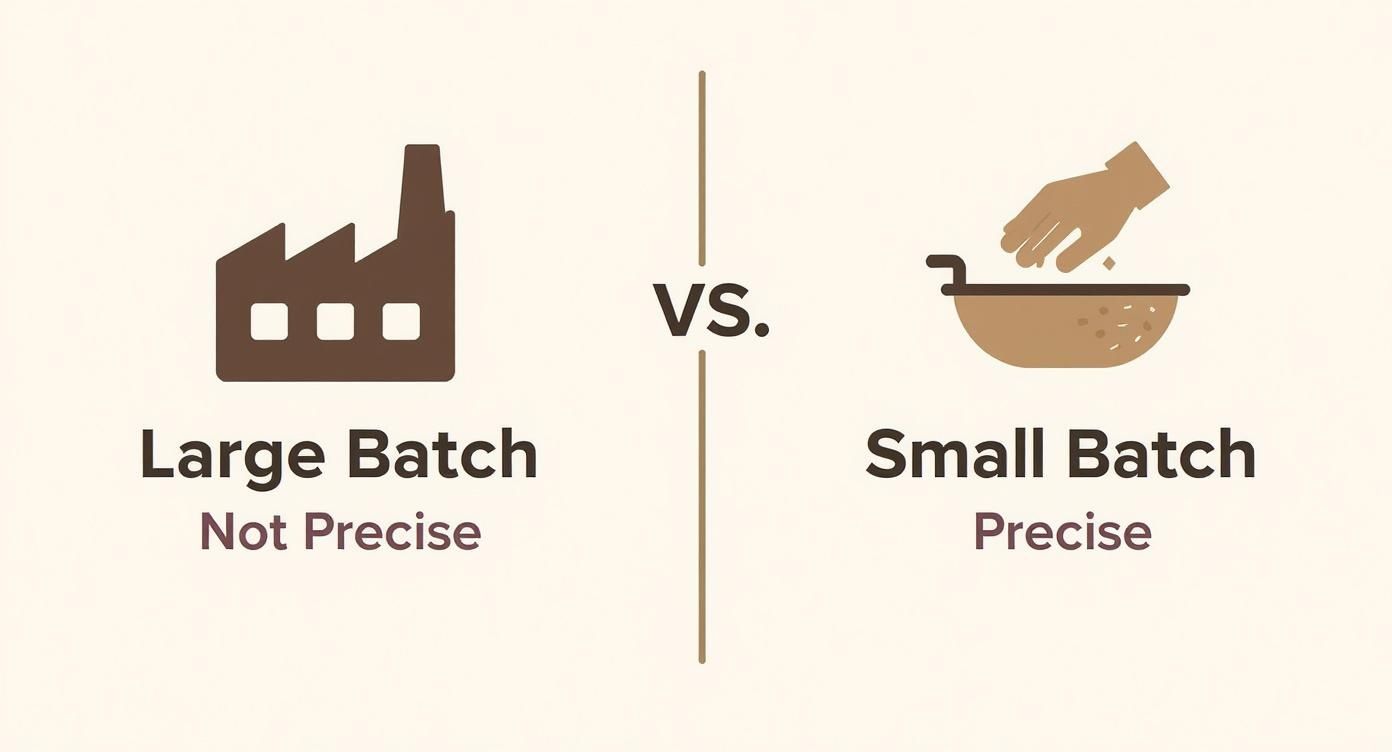
As you can see, small-batch roasting gives the roaster the control needed to unlock all those subtle, nuanced flavors hidden inside each bean.
Evaluate Roasting Philosophy and Equipment
A roaster’s technique and the tools they use have a huge say in how that coffee tastes in your mug. The variety of roast profiles they offer gives you a peek into their craft. Are they all about light roasts that let the bean's delicate, acidic notes sing? Or do they lean into the rich, deep flavors that come from a darker roast?
The quality of their equipment is another piece of the puzzle, and it's a bigger deal than you might think. The coffee roaster machine market was valued at an impressive USD 1.3 billion in 2025 and is on track to hit USD 2.4 billion by 2035. That growth is fueled by new tech that gives roasters more precision than ever before, which means better and more consistent coffee for us.
To help you put all these pieces together, here’s a quick-reference table to guide your search.
Comparing Small Batch Roaster Selection Criteria
This table breaks down the key characteristics to look for when you're evaluating a new roaster, helping you connect their practices to the coffee you'll be brewing.
| Selection Criterion | What to Look For | Why It Matters for Your Coffee |
|---|---|---|
| Bean Origin | Transparency about farms or regions. Clear distinction between single-origins and blends. | Tells you if the roaster values unique flavors (terroir) and helps you find specific taste profiles you enjoy. |
| Roast Profiles | A range of light, medium, and dark roasts. A clear description of the flavor notes for each. | This shows the roaster's skill and lets you match their style to your personal taste, whether you like bright and acidic or rich and bold. |
| Equipment Quality | Mentions of specific high-quality roasting machines or modern technology like software-assisted profiling. | Better equipment means more control and consistency. This translates to a reliably delicious cup every time you brew. |
| Sustainability Practices | Certifications like Fair Trade or Direct Trade. Stories about their relationships with farmers. | Ensures the coffee is ethically sourced, supporting farmers and sustainable practices for a better coffee industry overall. |
By keeping these points in mind, you can move beyond just buying a bag of coffee and start building a relationship with a roaster whose values and craft you genuinely admire.
Look for a Commitment to Sustainability
Finally, the best small-batch roasters know that an amazing cup of coffee shouldn't come at a high cost to people or the planet. Look for brands that are upfront about their sourcing practices.
Certifications like Fair Trade and Direct Trade are great signposts of an ethical approach. These programs ensure that farmers receive a fair price for their hard work, which in turn helps support their communities and promotes sustainable farming. When you choose a roaster who champions these values, you're not just buying coffee—you're investing in a more equitable and healthy future for the entire industry. You can learn more by reading about what Fair Trade coffee really means in our detailed guide.
How to Read a Bag of Specialty Coffee
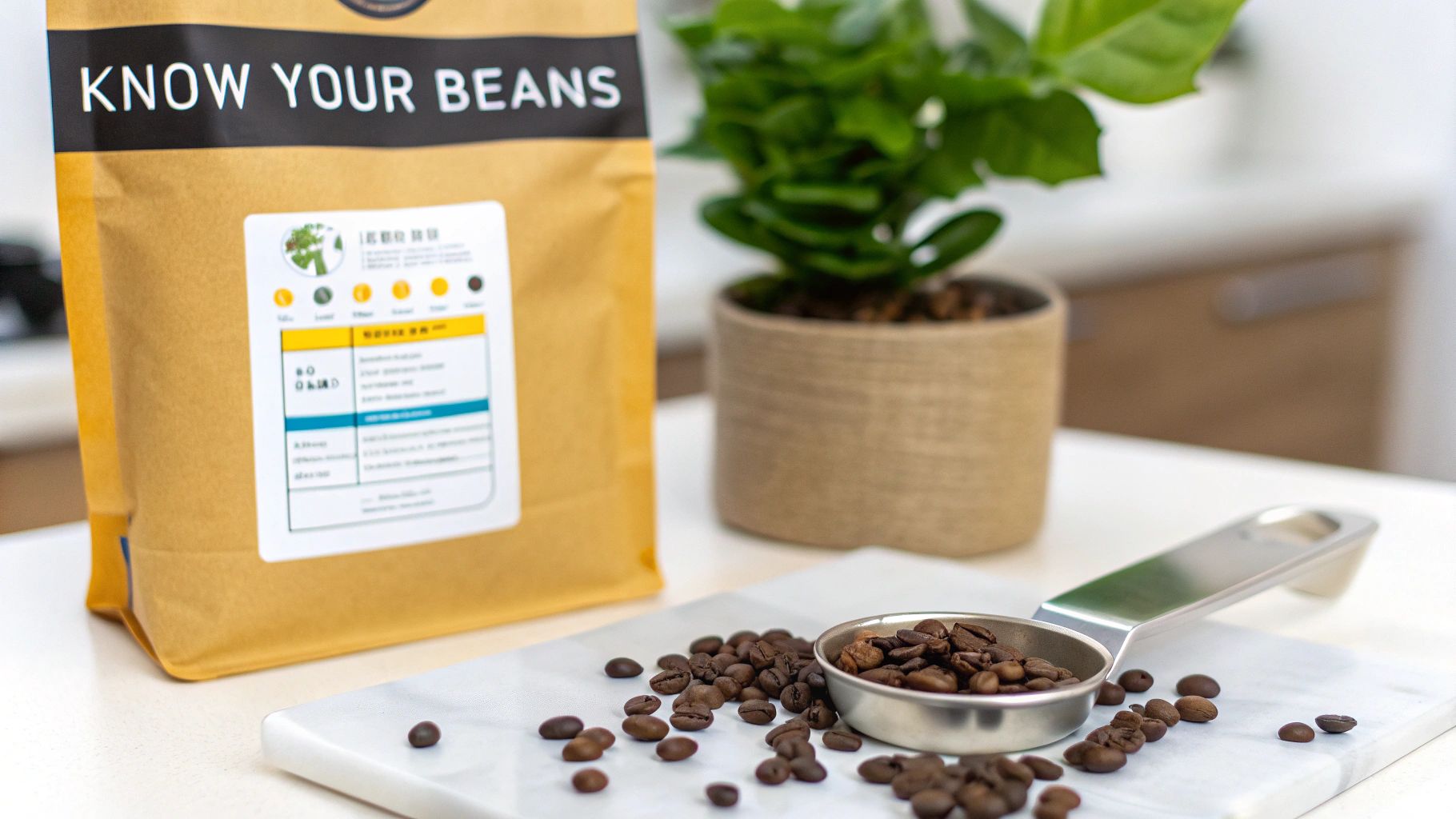
Think of a bag of coffee from a great small-batch roaster like the cover of a good book—it’s telling you a story about what’s waiting inside. Learning to decipher these details is your ticket to moving from just grabbing any coffee to picking one you’ll genuinely fall in love with. It's the difference between a shot in the dark and a sure thing.
All that information printed on the bag is essentially a flavor map. It gives you clues about the coffee’s incredible journey, from a small farm halfway across the world all the way to your kitchen. Once you understand what to look for, you can start to piece together what the coffee will taste like before you even open the bag.
Unpacking the Origin and Varietal
The first thing that usually jumps out is the coffee's origin. This is so much more than a country name. It hints at the coffee’s terroir—the unique combination of soil, climate, and altitude that gives the bean its personality. For example, a coffee from Sidama, Ethiopia, will taste completely different from one grown in Antigua, Guatemala. It's all about place.
Right next to the origin, you might see the varietal. This is just the specific type of coffee plant, like Gesha, Bourbon, or Typica. Just as a Granny Smith apple has a different flavor from a Red Delicious, each varietal brings its own unique taste potential to the table. When roasters call these out, they're showing off the exceptional beans they worked hard to find.
A roaster who lists the specific farm or cooperative isn't just filling space—they're signaling a deep commitment to quality and transparency. This level of detail almost always means they have a direct relationship with the farmers, which is a huge sign of ethical sourcing.
From Tasting Notes to Processing Methods
Now for the fun part: the tasting notes. No, these aren't flavors that have been added to the coffee. They're the natural aromas and tastes that the roaster has skillfully coaxed out of the bean. Words like "stone fruit," "milk chocolate," or "jasmine" are simply there to give your palate a roadmap and set your expectations.
You'll also see something called the processing method. This describes how the coffee cherry was stripped away from the seed (the bean) after being picked. It’s a geeky detail, but it has a massive impact on flavor:
- Washed (or Wet) Process: The fruit is washed off the bean before it's dried. This usually results in a super clean, crisp cup that lets the bean's own inherent flavors shine.
- Natural (or Dry) Process: The entire cherry is left to dry around the bean. This process infuses the coffee with intense, fruity, and often wine-like sweetness and gives it a heavier body.
- Honey Process: This is a happy medium where some of the fruit pulp is left on the bean while it dries. The result is a beautifully balanced cup with a ton of sweetness and a smooth, mellow acidity.
Finally, the single most important detail on the entire bag: the roast date. Freshness is everything in specialty coffee. The beans are at their absolute best between three days and three weeks after they've been roasted. If you see a bag without a roast date, just put it back on the shelf. That date is your ultimate guarantee of a fresh, aromatic, and flavorful cup.
Meet Three Distinct Styles of Roasters
Alright, you've got the basics down—bean origin, roast profiles, the whole shebang. But theory only gets you so far. The real "aha!" moment comes when you see how actual roasters put these ideas into practice.
To help you connect the dots, I’ve dreamed up three distinct (but fictional) roaster profiles. Think of them as archetypes you’ll encounter out in the wild. Once you can spot their philosophies on a bag or a website, you’ll be that much closer to finding a coffee that truly speaks to you.
The Purist: Terra Origin Roasters
First, let's talk about Terra Origin Roasters. These are the purists, the terroir-obsessed folks who believe the coffee bean has the most compelling story to tell all on its own. Their mission is simple: get out of the way and let the origin shine.
You won't find many dark roasts or fancy blends in their lineup. What you will find is a meticulously curated selection of light-roasted, single-origin coffees, often from tiny micro-lots in places like Ethiopia or Panama. They live to highlight those bright, floral, and tea-like notes that can get lost in a darker roast.
- Who they're for: Anyone who geeks out on nuanced, delicate flavors. If you love a bright, acidic cup and want to taste the difference between two farms just a few miles apart, this is your jam.
- What to look for on the bag: Super-specific origin details (farm, elevation, varietal), tasting notes like "jasmine," "bergamot," or "lemon," and a roast date from just a few days ago.
The Community Builder: The Daily Grind Collective
Next up is The Daily Grind Collective. Their philosophy is all about balance, consistency, and people. They believe that amazing coffee should be approachable and that the farmers who grow it deserve a spotlight.
These roasters are masters of the blend, creating versatile coffees that work just as well in your morning drip machine as they do in a rich shot of espresso. They put a huge emphasis on ethical sourcing, often showcasing their Direct Trade relationships right on the bag.
The Daily Grind Collective excels at crafting a coffee that is comforting and reliable. They are the artisans who create that perfect, everyday cup you can always count on—the one that tastes like home.
It's less about chasing wild, exotic flavor notes and more about delivering a consistently superb and heartwarming cup, day in and day out.
The Innovator: Methodical Coffee Labs
Finally, we have Methodical Coffee Labs, the forward-thinking experimenters. These are the roasters driven by a deep curiosity, viewing their craft as equal parts art and science. They’re constantly asking, "What if?"
Methodical Coffee Labs geeks out on the tech, logging precise temperature data and roast parameters for every single batch. This data-driven mindset is a huge part of the modern small-batch movement, which is growing at a projected CAGR of 9.3%—blowing the industrial segment out of the water. You can read more about the growth of specialty coffee roasting on grandviewresearch.com.
They're the ones playing with anaerobic fermentation or carbonic maceration to unlock truly unique flavor profiles. Their menu might feature a coffee that tastes shockingly like passionfruit or one with a natural cinnamon-like spice, all created through a deep understanding of coffee processing.
- Who they're for: The adventurous coffee drinker. If you get excited by new, experimental flavors and appreciate the incredible skill behind a complex roast, you've found your people.
- What to look for on the bag: Descriptions of unusual processing methods, experimental varietals, and bold, unexpected tasting notes.
Finding Your Perfect Roast
Think of finding your perfect coffee less like a final destination and more like a delicious journey. Now that you know what makes small-batch coffee tick, you can start putting that knowledge to use. The goal is to stop guessing and start exploring with confidence.
The best place to begin is with your own taste. What do you actually like? Are you someone who loves the bright, almost citrusy kick of a light roast, or do you prefer the rich, comforting notes of a chocolatey medium roast? Pinpointing your go-to flavors is the first real step to finding a roaster that gets you.
Your Actionable Checklist
Once you have a rough idea of your flavor profile, use this checklist as your guide, whether you're browsing the shelves at a local café or scrolling through roasters online:
- Read the Label: The first thing to look for is the roast date. If it’s not recent, put it back. Freshness is everything when it comes to incredible flavor.
- Prioritize Ethics: Keep an eye out for sustainability markers. Certifications like Fair Trade or a roaster's commitment to Direct Trade are great signs.
- Trust Your Taste: This is the fun part—be adventurous! If you see a single-origin from a region you've never tried, give it a shot. Or just ask the barista what they're excited about right now.
At the end of the day, the "best" roaster is simply the one that makes coffee you can't wait to drink. Use these tips to explore, taste, and discover the roasters who share your values and make your taste buds happy.
Your Small-Batch Coffee Questions, Answered
Diving into the world of specialty coffee can feel like learning a new language, and it's natural to have a few questions. Getting a handle on the basics will not only help you appreciate what's in your cup but also make you a more confident buyer. Let's tackle some of the most common things people ask.
So, Why Does It Cost More?
It's one of the first things people notice: the price tag on a bag of small-batch coffee is usually higher than what you see at the supermarket. The simple reason is care. Every single step, from the farm to the roaster, involves an incredible amount of focused, hands-on work.
It starts with the beans themselves. Small-batch roasters are paying a premium for ethically sourced, high-grade green coffee. Then there's the roasting process—it's pure craft. Instead of relying on automated, large-scale production, a skilled roaster is personally overseeing every batch, making tiny adjustments to bring out the absolute best in the beans. That level of expertise and labor adds real value.
Why Is Everyone So Obsessed With the Roast Date?
You'll hear coffee pros talk about the roast date constantly, and for good reason. Think of coffee like fresh bread from a bakery; it's at its absolute best right after it's made. The moment coffee beans leave the roaster, they start a process called degassing, releasing CO2 and all those amazing aromatic compounds.
The flavor peaks in a specific window, usually somewhere between three days and three weeks after roasting. This gives the beans enough time to settle down for a balanced extraction but keeps them fresh enough to showcase their vibrant, complex flavors. If you can't find a roast date on a bag, it's a huge red flag—you're likely looking at stale coffee.
Where Should I Even Begin Looking?
With so many options, finding the right roaster can feel a bit overwhelming. But you don't have to go in blind. Here are a couple of easy starting points:
- Ask Your Local Barista: Head to a coffee shop you love and trust. Baristas are on the front lines of coffee and are usually thrilled to talk about the beans they're using or recommend other local roasters doing great work.
- Explore Online: Some of the best roasters in the country will ship freshly roasted beans right to you. Their websites are often packed with tasting notes and farm details, making it easy to find something that sounds good.
Starting this way takes the guesswork out and lets you explore with a little guidance.
Ready to brew a better cup without the hassle? Cartograph Coffee offers premium, organic instant coffee that delivers exceptional flavor wherever you are. Explore our collection and elevate your coffee experience today.