Your meeting starts soon, the coffee pot is empty, and you're deciding whether the jar in the cupboard is good enough to rescue the morning. Or you're packing for a camping trip and wondering whether saving space means settling for a cup you'll tolerate rather than enjoy.
The best instant coffee in the USA is the one that solves your actual coffee problem without hiding its compromises. My buying priority is straightforward: start with flavor, check the ingredients, then choose packaging that suits where you'll drink it. Don't pay extra for an impressive origin story if the manufacturer won't explain what's inside the packet.
Why Instant Coffee Deserves a Second Look in 2026
The rushed morning isn't an unusual coffee occasion. It's exactly the situation where a complicated brewing routine stops being useful, even if you love the results when you have time.
Consider the office drawer, the kitchen cupboard, and the camping food bag. Each needs something different: predictable preparation at work, a sensible everyday purchase at home, and a protected portion outdoors. Treating all those purchases as the same taste contest misses the point.
An everyday option deserves better buying standards
Instant coffee has become more common in American coffee routines. Among past-day coffee drinkers, 11% consumed instant coffee in fall 2025, compared with 6% in 2021, while 35% of American adults had instant coffee at home in spring 2025, up from 27% in 2020, according to the National Coffee Association's coffee consumption reporting.
Those figures describe different groups, so don't treat household ownership and daily consumption as interchangeable. Together, though, they support a practical conclusion: instant deserves consideration as a regular format, not merely an emergency substitute.
My recommendation is to buy for the cup you make. Someone drinking black coffee should scrutinize aroma and finish. Someone preparing coffee with milk might reasonably prioritize value and consistency.
| Your situation | My recommended starting point | Trade-off to examine |
|---|---|---|
| Black coffee at home | Plain freeze-dried coffee | Whether better flavor justifies the price |
| Shared office | Individually sealed plain portions | Packaging cost versus dependable portions |
| Camping | Protected single-serve packets | Portability versus packaging waste |
| Frequent household use | A well-sealed jar | Lower unit cost versus repeated opening |
| Health-conscious purchasing | Clearly labeled coffee without unwanted additions | Ingredient transparency versus convenience |
| Sweet, creamy coffee without extras to carry | A coffee, sugar, and creamer mix | Simplicity versus control over the recipe |
Buy the solution, not the prestige
A premium packet that you dislike drinking black isn't a smart purchase just because it names a growing region. Equally, a modest jar that makes your preferred breakfast mug doesn't need an apology.
Decide what matters most before shopping. Decide whether they're flavor, organic verification, caffeine information, portion control, or storage convenience. Then compare products against those requirements rather than a reviewer's overall winner.
What Actually Makes an Instant Coffee Good
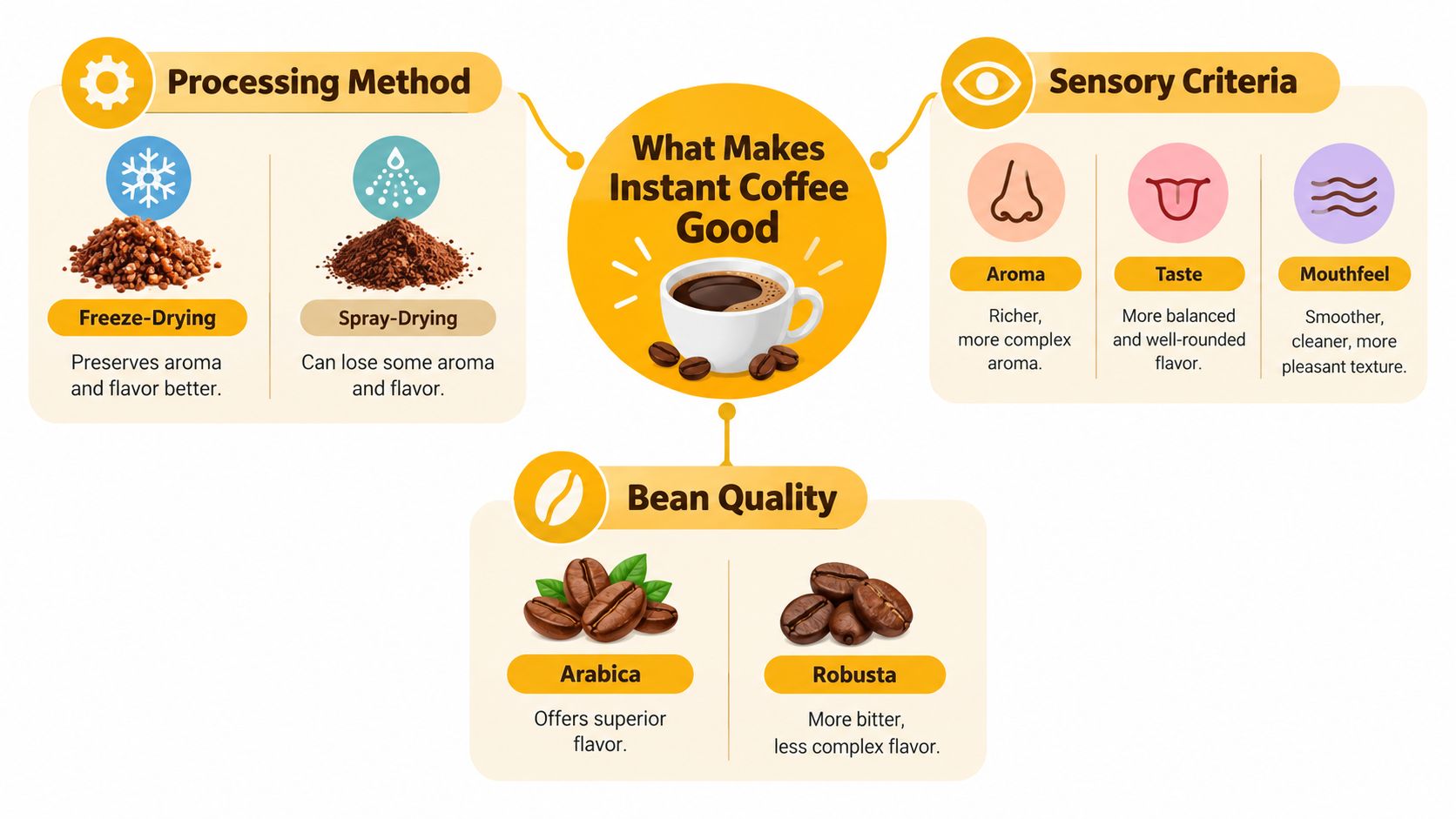
Freeze-drying is my preferred starting point for flavor-focused buyers, not an automatic guarantee of excellence. It removes water through sublimation under vacuum, with less thermal exposure than spray-drying, helping preserve heat-sensitive aroma and flavor compounds.
A controlled comparison found significantly better acceptance for black freeze-dried beverages than spray-dried beverages at p ≤ 0.05, while also identifying practical advantages for spray-dried products on other measures in the research comparing instant-coffee drying methods. That supports a buying preference, not a claim that every freeze-dried coffee beats every alternative.
Separate manufacturing claims from cup quality
Read the processing description before the tasting notes. If the seller doesn't identify the method, treat it as unknown rather than inferring it from large granules, attractive packaging, or a premium price.
Next, examine the bean information. I'd shortlist a clearly identified Arabica coffee for a flavor-led purchase, but I wouldn't accept Arabica or single-origin wording as proof that I'll enjoy it. Origin is useful information, not a substitute for tasting.
Freshness deserves similar scrutiny. Look for the product's date information and storage instructions, and distinguish a stated manufacturing or packing date from a roast date. A detailed description of the original beans doesn't tell you how the finished instant has been handled.
- Aroma: Evaluate the prepared cup, not just the smell when you open the package.
- Flavor: Notice whether you enjoy the finish after swallowing, not merely the first sip.
- Mouthfeel: Decide whether the texture suits drinking black or with your usual additions.
- Dissolution: Follow the preparation directions and watch for persistent clumps or residue.
- Recipe: Compare plain coffee with plain coffee, not a sweetened mix against an unsweetened cup.
Control the variables before blaming the coffee
Use the same mug, water, and intended strength when comparing options. Otherwise, you may prefer the preparation rather than the product.
Water deserves attention without becoming an excuse to buy more equipment. If your current water distracts from the cup, Praz Pure Water, Inc.’s discussion of why filtered water tastes crisper is a useful starting point for considering that variable.
For the enthusiast, sensory quality comes first. For the professional, reliable preparation matters more; for the camper, package protection matters; for a health-conscious household, a clear ingredient list is essential. Good instant coffee combines an enjoyable cup with usable information and appropriate packaging.
Profiles of the Best Instant Coffee Options in the USA
I'd compare product profiles, not pretend that an unsupported brand ranking can settle this purchase. Current prices, formulations, origins, and certifications need checking on the exact item you're considering.
These profiles represent meaningful buying choices. They're recommendations for what to look for, not claims that every product in a category shares the same specifications.
Premium and everyday choices
Premium organic single-origin freeze-dried coffee is my shortlist for someone who drinks coffee black and wants a traceable description of the beans. Require the seller to state the origin, processing method, ingredients, and organic certification clearly. Don't assume that organic status also establishes fair-trade status.
This profile makes sense when the coffee itself is the attraction. It makes less sense when your main requirement is an inexpensive mug under a generous helping of flavored creamer.
A mainstream freeze-dried staple is the sensible office starting point. Look for plain coffee, straightforward preparation instructions, and a package you can manage without leaving a communal jar open beside the kettle.
I wouldn't dismiss this category because it lacks a detailed farm narrative. Consistency and an acceptable finish are legitimate reasons to buy coffee.
A value-tier jar suits frequent household use when you're comfortable adjusting the amount to your preferred strength. Check the actual processing description rather than assuming every inexpensive jar is spray-dried.
The weakness to watch isn't the unglamorous label. It's buying a container so large that you don't want to finish it. Start with a manageable package before committing to a bulk purchase.
Specialty and all-in-one alternatives
A craft roaster's instant coffee is worth considering when the product page gives meaningful detail about the coffee and its manufacture. A roaster's reputation for whole beans isn't enough; ask what distinguishes its instant product.
This is the category where I'd be strictest about vague language. If the price asks you to treat it as specialty coffee, the seller should offer more than attractive tasting notes.
A coffee, sugar, and creamer sachet solves a different problem. It's for someone who wants a complete sweetened drink without carrying separate ingredients.
Don't mark it down merely for failing to resemble black coffee. Instead, judge whether you like the finished recipe and accept the ingredient list. It's a poor match for buyers who want independent control over coffee strength, sweetness, and creamer.
Instant coffee profiles at a glance
| Product profile | Processing | Origin and bean | Organic status | Packaging | Approx. price per cup |
|---|---|---|---|---|---|
| Premium organic single-origin | Seek explicitly stated freeze-drying | Require named origin and bean details | Verify certification | Assess sealed portions or jar barrier | Check current listing |
| Mainstream freeze-dried staple | Verify freeze-dried label | Check exact product | Don't assume | Choose jar or portions for the setting | Check current listing |
| Value-tier jar | Check manufacturer's description | May require further inquiry | Verify any claim | Assess closure and practical size | Calculate from labeled servings |
| Craft roaster's instant | Require disclosure | Look for specific sourcing details | Product-dependent | Inspect the actual format | Check current listing |
| Coffee, sugar, and creamer mix | Verify coffee component if important | Check available disclosure | Assess the complete product | Portion sachets | Calculate per prepared sachet |
For a useful cost comparison, divide the current purchase price by the number of servings you'll prepare. A low advertised cost per cup means little if the suggested serving makes coffee weaker than you enjoy.
Reading the Label for Health and Organic Buyers
Instant coffee's convenience isn't new: it was introduced commercially in 1938 and issued to American soldiers during World War II, according to the USDA's history of American coffee consumption. That history explains the format's practical appeal, not whether a particular modern product fits your dietary needs.
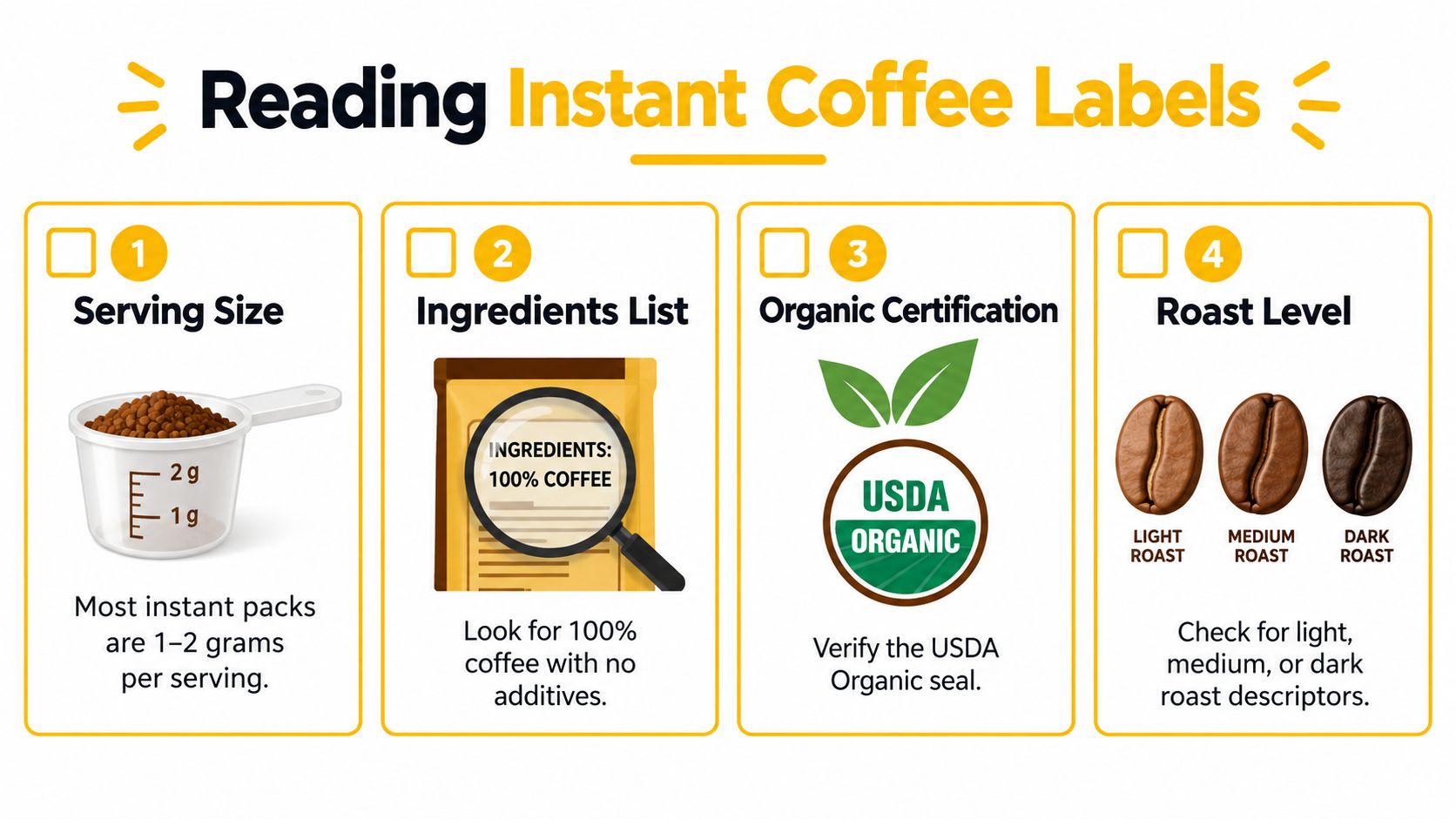
Start with the actual product label. Organic wording, attractive packaging, and a simple preparation method don't answer questions about caffeine, sugar, or serving size.
Read the serving before the claims
Check the labeled serving amount against what you put in your mug. If you use more coffee than directed, don't assume the label's per-serving information still describes your drink.
Caffeine requires product-specific information. Don't estimate a precise amount from roast color, granule appearance, or a generic claim that instant coffee is mild.
The most useful label habit: Read the serving size and ingredients before deciding what a front-of-pack claim means for your cup.
- Ingredients: Choose plain coffee if you want to control additions yourself. For a mixed sachet, examine the sugar and creamer ingredients rather than treating the entire packet as coffee.
- Caffeine: Look for a disclosed amount per serving. Ask the manufacturer when that information matters to your intake.
- Organic status: Check certification information rather than treating natural imagery or sustainability language as equivalent.
- Decaffeination: If the method matters to you, require the seller to identify it rather than assuming a process.
- Other sourcing claims: Assess fair-trade, origin, and packaging claims separately. One doesn't verify another.
Fit the purchase to the household
A household coffee station should make regular and decaffeinated options easy to distinguish. Don't assume the same serving suits everyone, and don't turn a family convenience purchase into a blanket health recommendation.
For a more focused shopping checklist, consult this guide to choosing organic instant coffee. If you're also selecting drinks for a shared workplace, Vendmoore Enterprises' overview of healthy drink brands for vending offers adjacent options to evaluate using the same label-first approach.
My recommendation is plain coffee with transparent serving guidance when dietary control is the priority. Choose organic because you want a verifiable certification, not because you expect the word alone to establish better flavor or suitability.
Matching Instant Coffee to Real-World Situations
Buy the package for the place you'll open it. A convenient kitchen jar can be an awkward choice in a damp campsite or a crowded carry-on.
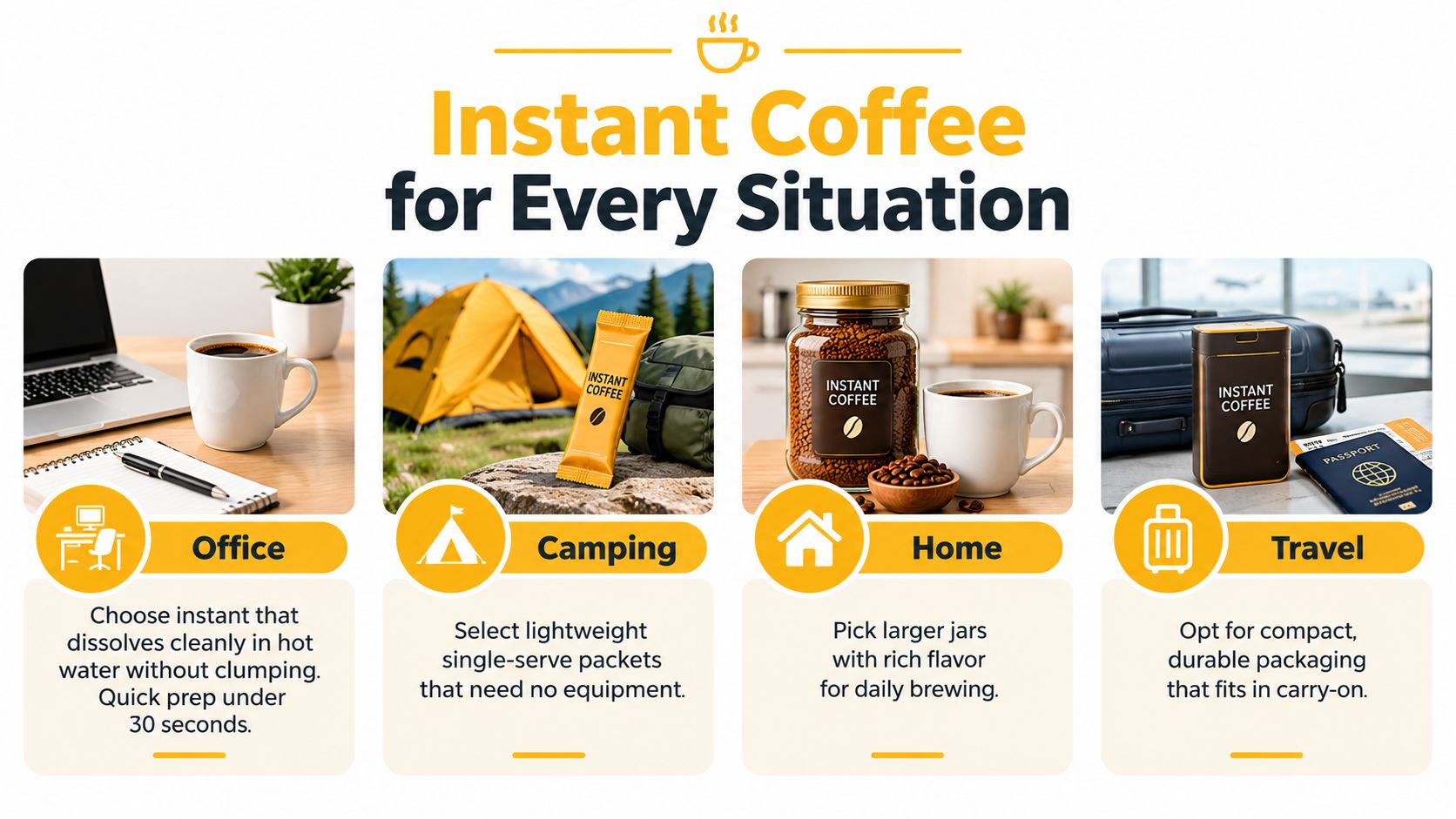
Use the format comparison below as a packing prompt, then check the actual package and preparation instructions.
Office and home need different compromises
At the office, you're making coffee between tasks, not staging a tasting. I'd choose plain portions that fit in a drawer, open cleanly, and prepare successfully with the available mug and hot water.
Test a product with your workplace setup before buying a large supply. A packet that needs preparation steps you won't follow isn't convenient for you, regardless of its positioning.
At home, a jar becomes more attractive when you'll use it regularly and close it properly. Choose a size that fits your routine instead of buying the largest container solely for a lower advertised serving cost.
Keep the coffee away from steam during preparation. Use a dry utensil, close the container promptly, and follow the storage directions.
Camping and travel put packaging first
A study of different instant-coffee formats found visible quality loss at approximately 10–12% moisture on a dry basis, supporting close attention to package barriers and repeated exposure in the instant-coffee packaging research. That's a technical quality finding, not a household moisture level you need to measure.
For camping, I'd choose individually sealed portions and protect them inside a food bag. Take a coffee you already enjoy rather than using a remote campsite to discover whether a bulk bargain was worthwhile.
The practical questions in this instant coffee for camping guide can help with preparation planning. If you also need a way to heat water, check Barrons for stove options and select equipment appropriate to your trip and its safety requirements.
An outdoor taste-test video can help you see how someone else compares cups, although your preference may differ.
For travel, favor compact portions in a protective pouch over a fragile container. Check current airport and destination requirements yourself rather than relying on a coffee seller's blanket travel-friendly claim.
Pack for the water and equipment you will have. Do not assume a hotel room, rest stop, or campsite will provide your preferred setup.
The Case for Premium Freeze-Dried Single-Origin
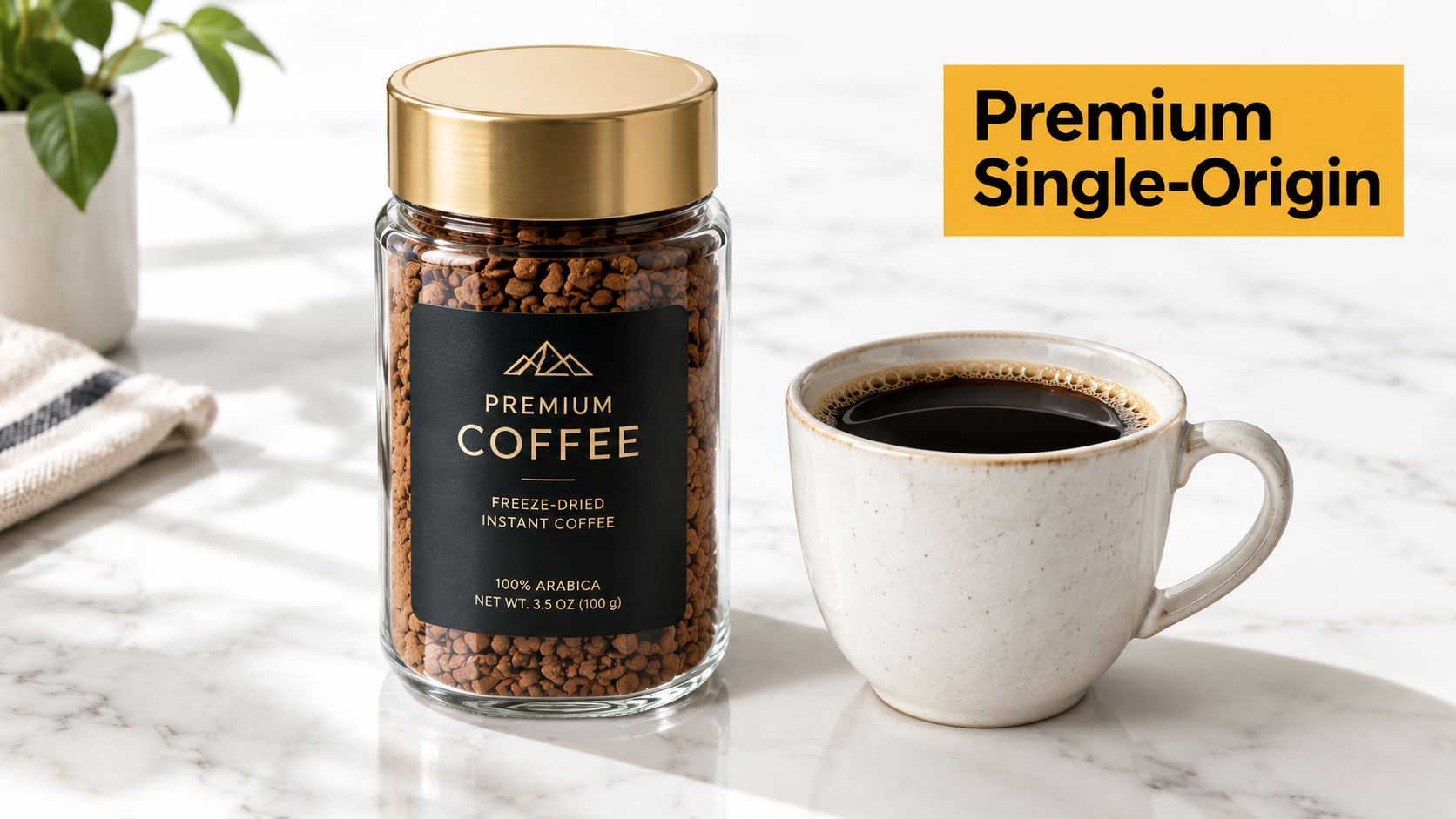
For a quality-focused buyer, my preferred shortlist is plain, freeze-dried coffee with a named origin, clear bean information, and protective packaging. That combination gives you a sensible processing preference and enough product detail to make an informed choice.
The sensory research discussed earlier supports prioritizing freeze-drying. It doesn't establish that single-origin coffee always tastes better, or that an Arabica label excuses poor manufacturing.
Pay for information you can use
Single-origin information matters most when you want to connect your preferences with a defined coffee rather than buy an anonymous blend. It gives you something specific to investigate and compare, provided the seller explains what the term means for that product.
This discussion of single-origin instant coffee is a useful starting point for the questions to ask. Look beyond the origin name to processing disclosure, ingredients, and the finished package.
The package remains part of the purchase, not an accessory.
Convenience gets instant coffee into your cupboard. Flavor and transparency determine whether it deserves to stay there.
Know when not to upgrade
A premium product isn't automatically the right household default. Choose a mainstream option if it satisfies your preferred recipe; choose an all-in-one mix if a fixed sweetened recipe is exactly what you want.
I'd spend more only when the seller provides meaningful detail and the resulting cup earns the difference. Buy a small package first, prepare it as you normally drink coffee, and decide whether you'd willingly reach for it again.
Choosing Your Best Instant Coffee and Common Questions
For flavor and origin, shortlist clearly described freeze-dried coffees and compare them black. For the office, prioritize reliable preparation and manageable portions over an elaborate product story.
For camping, choose protected portions of a coffee you already like. For a health-conscious household, favor transparent ingredients and serving information, with separately identified decaf when needed.
Common buying questions
Does instant coffee have less caffeine than brewed coffee?
Don't assume the format settles that comparison. Use product-specific caffeine information and the amount you prepare; a weak cup and a concentrated mug aren't equivalent servings.
Do coffee, sugar, and creamer sachets count as coffee?
They're coffee-containing drinks with a set recipe. Buy them if you enjoy that recipe, but don't compare their packet weight or ingredient list directly with plain instant coffee.
How should I keep an opened jar fresh?
Follow the manufacturer's instructions, keep utensils dry, and close the lid immediately after use. If you repeatedly forget to reseal a jar, portion packets may suit your habits better.
Is decaf instant worth buying?
Yes, if you want the convenience while managing caffeine intake. Apply the same standards for flavor, ingredients, packaging, and disclosure rather than accepting an unpleasant cup because it's decaf.
The right purchase is the one you'll enjoy preparing and drinking in your real routine. Don't buy a reputation when you need a dependable mug.
Cartograph Coffee offers organic freeze-dried instant coffee in single-serve packets for coffee at work, at home, or outdoors. Visit Cartograph Coffee to review the available options and compare their product details with the flavor, packaging, and label standards that matter to you.