The debate over Arabica coffee vs Colombian coffee is simpler than it seems: all Colombian coffee is Arabica, but not all Arabica coffee is from Colombia. This means you're not choosing between two different species, but rather between a broad coffee category (Arabica) and a world-renowned coffee from a specific origin (Colombia).
Untangling the Arabica and Colombian Coffee Myth
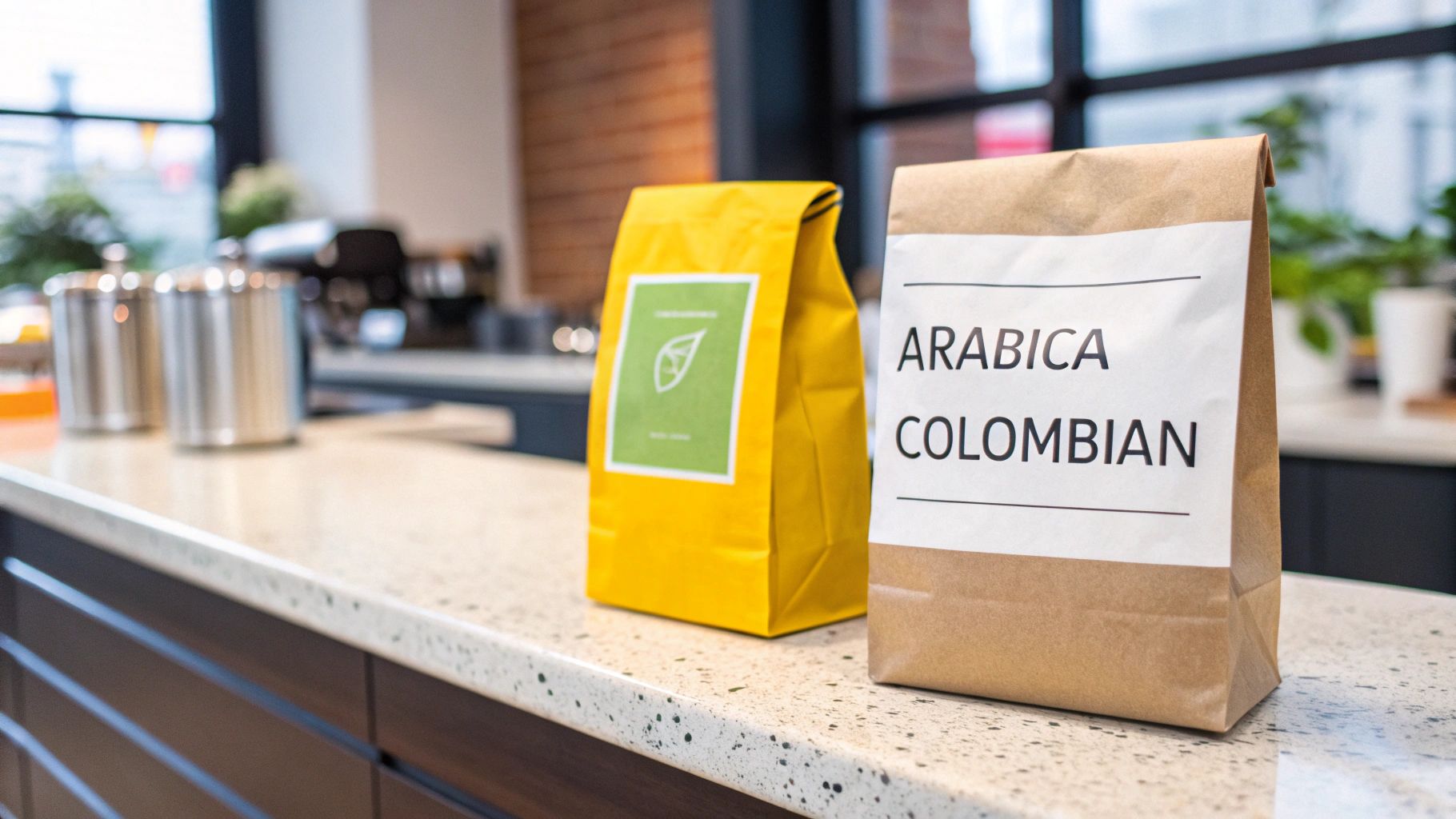
Think of the relationship like comparing sparkling wine to Champagne. While all Champagne is sparkling wine, only sparkling wine from the Champagne region of France can carry the name. Similarly, Colombian coffee is a specific type of Arabica grown exclusively in Colombia, known for its consistent quality and distinct flavor profile.
This distinction is crucial for any coffee enthusiast. The "Colombian" label signifies more than just a place; it represents a commitment to 100% Arabica beans, specific growing altitudes, and meticulous processing standards enforced by the National Federation of Coffee Growers of Colombia (FNC). These factors combine to create a reliable and beloved coffee.
Globally, Arabica coffee accounts for about 55.9% of total coffee production, with Colombia standing as one of the largest and most respected contributors to this market. This highlights how Colombian beans are not a niche product but a cornerstone of the premium Arabica world that has earned its distinct reputation. Learn more about the Colombian coffee market dynamics.
The key takeaway is simple: "Arabica" is the species of coffee plant, while "Colombian" is a protected geographical indication that guarantees the coffee is 100% Arabica from Colombia.
To help visualize this relationship, here’s a quick breakdown:
Arabica vs Colombian Coffee At a Glance
| Attribute | Arabica Coffee (General) | Colombian Coffee (Specific) |
|---|---|---|
| Definition | A species of coffee (Coffea arabica) grown worldwide. | A type of Arabica coffee grown exclusively in Colombia. |
| Flavor Scope | Extremely diverse, from fruity and floral to nutty and earthy. | Balanced, mild, and clean with notes of citrus and caramel. |
| Quality | Varies widely depending on origin, farm, and processing. | Consistently high due to strict national quality controls. |
| Best For | Exploring a vast range of global flavor profiles. | A reliable, smooth, and classic daily coffee experience. |
Understanding this difference frames the entire comparison. You are essentially weighing the incredible variety of the entire Arabica world against the benchmark quality and balanced taste of a specific, highly regulated origin. This guide will explore what truly sets Colombian beans apart by comparing their flavor, processing, and cost against other Arabicas.
Understanding the World of Arabica Coffee
Before we can really get into the whole Arabica vs. Colombian coffee comparison, we first need to get on the same page about what Arabica actually is. Think of it as the bedrock of the specialty coffee world. It all started in the highlands of Ethiopia, where Coffea arabica first grew. Today, it’s the most popular and widely grown coffee species on the planet, hands down, loved for its complex aromas and delicate flavors.
Arabica is a bit of a diva, though. This plant is picky, demanding very specific conditions to thrive. It loves high altitudes—we're talking 4,000 to 7,200 feet—and needs just the right amount of rain and steady temperatures. You'll find these perfect spots all along the "Bean Belt" near the equator. This slow, high-altitude maturation process is the secret sauce, allowing the coffee cherries to develop those deep, interesting flavors we all crave.
A Spectrum of Global Flavors
Here’s where it gets really interesting. The beauty of Arabica is its incredible range. The exact same type of plant can taste completely different depending on where it’s grown. It’s like a world tour for your taste buds.
Just to give you an idea:
- An Ethiopian Arabica often hits you with bright, floral notes, maybe even hints of jasmine or fresh blueberries.
- Travel over to a Brazilian Arabica, and you’ll find something totally different—a heavier, fuller body with deep nutty and chocolatey tones.
- Then there's Kenyan Arabica, famous for its zesty, almost wine-like acidity and sharp notes of black currant.
This is exactly why the specialty coffee scene is almost exclusively built on Arabica. Its genetic potential allows the terroir—that magical mix of soil, climate, and altitude—to shine through in the final cup. While its cousin, Robusta, packs a bigger caffeine punch, it just can't compete with the sheer variety and subtlety of Arabica. We dive deeper into this in our Arabica vs Robusta beans comparison.
Arabica's Market Dominance
The numbers don't lie. People love the taste of Arabica, and it dominates the global market. In the 2022/23 coffee year, Arabica's slice of the global pie grew to 55.9%, showing just how much it’s preferred in cafes and homes everywhere. If you're a data nerd, you can find more global coffee production statistics to dig into.
At its core, Arabica is a canvas. The origin, processing, and roast are the brushstrokes that create the final masterpiece in your cup, whether it's from Colombia or anywhere else along the Bean Belt.
So, when we talk about "Arabica," we're really talking about a massive, diverse family of coffees. Colombian coffee is a superstar member of that family, but it's just one of many stunning flavor profiles Arabica brings to the table from all over the world.
Defining the Colombian Coffee Profile
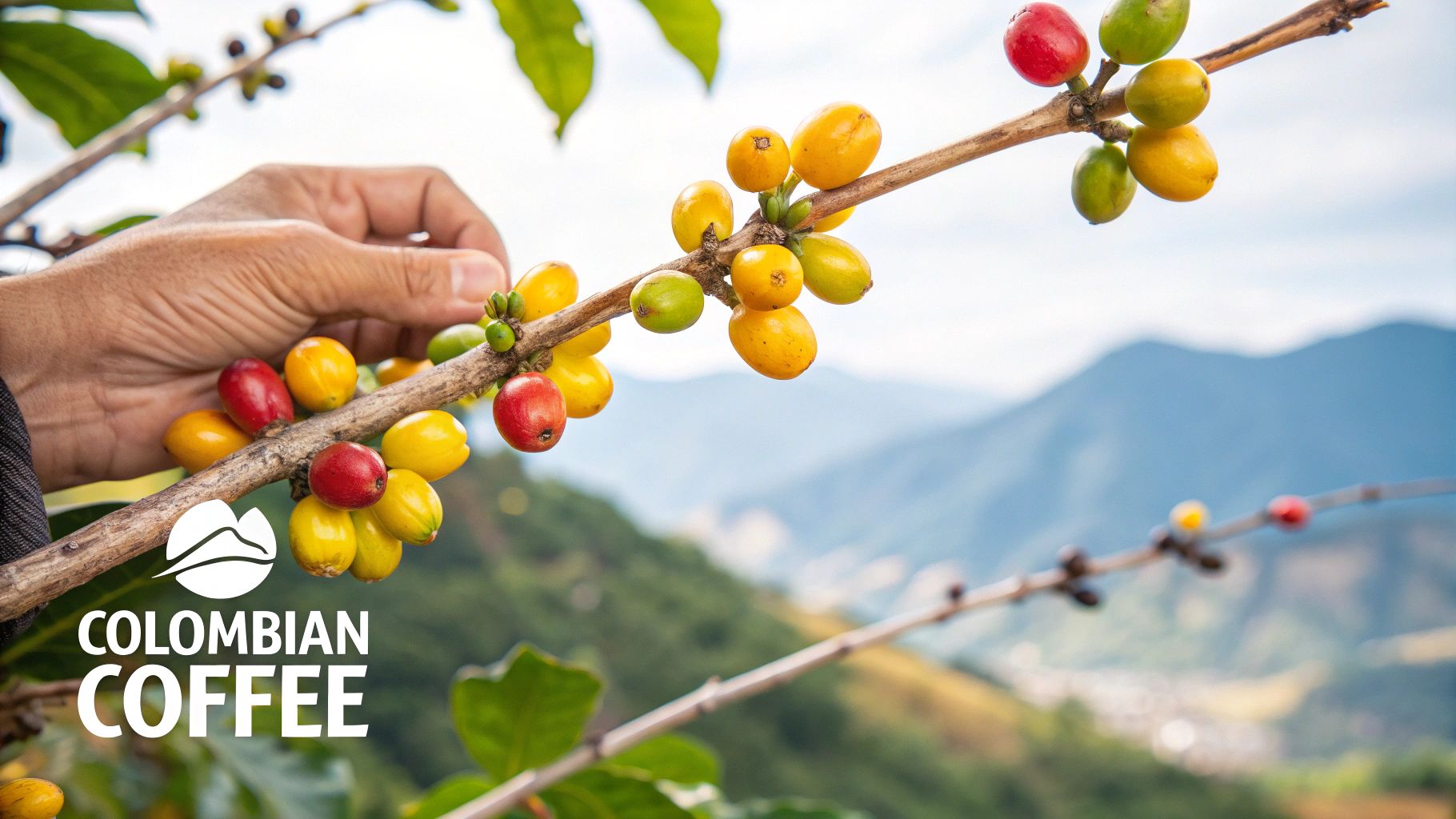
While Arabica is the broad species, Colombian coffee is a deep dive into how a specific origin can perfect it. The country's unique identity is forged in its dramatic geography, where the Andes Mountains split into three ranges. This creates a tapestry of microclimates that are pretty much perfect for growing top-tier Arabica.
The combination of this rugged, mountainous terrain and rich volcanic soil is the secret sauce. Beans mature slowly at high altitudes—typically between 1,200 and 2,000 meters—which gives them time to develop the complex sugars and acids that lead to that famously balanced and clean Colombian flavor.
This unwavering commitment to quality has turned Colombia into a global coffee powerhouse. In 2023 alone, the country shipped out over 10.5 million bags of coffee, locking in its spot as the second-largest producer in Latin America. Because the industry focuses almost exclusively on Arabica, every bag comes with a promise of mild, well-rounded flavor. You can get a better sense of its market presence by exploring more insights on Colombian coffee's global impact.
The Hallmark of Colombian Flavor
When you put Arabica coffee vs Colombian coffee head-to-head, you’ll notice Colombian coffee is prized for its incredible consistency. An Arabica from Ethiopia might hit you with a wild burst of blueberry, but a Colombian bean nearly always delivers a smooth, medium-bodied cup with a bright but gentle acidity.
You can almost always count on finding these tasting notes:
- Caramel and Brown Sugar: A rich, comforting sweetness that forms the backbone of the flavor.
- Citrus and Red Fruits: Lively notes of orange, cherry, or red apple that give it a crisp, clean finish.
- Nutty Undertones: Subtle hints of almond or walnut that add to its satisfying complexity.
This dependable profile makes it the perfect go-to coffee for your daily brew. It’s interesting enough for experienced palates but incredibly approachable for anyone just starting their specialty coffee journey. If you're curious about how a coffee's home turf shapes its taste, our guide explains what single origin coffee is in more detail.
That "Café de Colombia" logo you see on bags isn't just clever marketing. It's a genuine seal of quality, managed by the National Federation of Coffee Growers of Colombia (FNC). It guarantees you're getting 100% Colombian-grown Arabica beans that have met some seriously strict standards.
Regional Diversity Within a Consistent Profile
While known for that classic, crowd-pleasing flavor, Colombia also offers a fascinating landscape of regional nuances. For example, a coffee from the southern region of Huila often shines with a brighter acidity and more pronounced fruit notes.
Meanwhile, beans from Nariño, one of the highest-altitude growing areas, are celebrated for their delicate floral and citrus character. It's this diversity within a reliably high-quality framework that makes exploring Colombian coffee so much fun.
Comparing Flavor Profiles and Tasting Notes

When we talk about Arabica coffee vs. Colombian coffee, the conversation really comes alive once we get to the flavor. This is where the most meaningful differences show up. Think of the broader Arabica category as a sensory kaleidoscope—it offers an incredible spectrum of tastes that can change completely depending on where the beans were grown.
For example, grab an Arabica from Ethiopia's Yirgacheffe region, and you'll likely be hit with bright, floral notes of jasmine and a vibrant, lemony acidity. Now, switch to a Sumatran Arabica from Indonesia. It’s a whole different world: low acidity, a full, almost syrupy body, and deep, earthy tones of cedar and dark chocolate.
This wild diversity is what makes Arabica so special. Its genetics seem to soak up the terroir—the unique soil, climate, and altitude of its home—and express those characteristics right in your cup. It's why exploring single-origin Arabicas is such a fantastic journey for any coffee lover.
The Colombian Signature Balance
Colombian coffee, on the other hand, is famous for something else: its incredible consistency and balance. Yes, it’s 100% Arabica, but its specific flavor profile has become the global benchmark for what many people think of as a "classic" cup of coffee. It’s the one you can count on for a medium body, bright (but not sharp) acidity, and a satisfyingly clean finish.
The typical Colombian profile is a beautiful harmony of sweetness and subtle fruit notes. You can almost always expect to find these cornerstones:
- Nutty Sweetness: A solid foundation of caramel or brown sugar, often with a hint of milk chocolate.
- Bright Acidity: Crisp, clean notes that people often compare to citrus, like a sweet orange, or red fruits like cherry and apple.
- A Smooth Finish: The coffee goes down easy, leaving behind a pleasant aftertaste without any harshness.
This reliable character makes Colombian coffee one of the most approachable and versatile beans out there. It has enough complexity to keep seasoned coffee drinkers interested, but it's so smooth and balanced that it makes a perfect daily brew for just about anyone.
The signature of Colombian coffee is its nutty sweetness paired with a clean, balanced acidity. This stands in contrast to the wild, often unpredictable flavor spectrum of other single-origin Arabicas, which can range from intensely fruity to deeply earthy.
Acidity and Body: The Key Differentiators
If you want a practical way to tell these coffees apart, focus on acidity and body. In coffee, acidity isn't about sourness; it’s that bright, lively sensation that makes your mouth water, like biting into a crisp apple. Body is all about the texture—the weight and feel of the coffee on your tongue.
Here's a simple breakdown to guide your choice:
| Sensory Element | General Arabica (Varies by Origin) | Classic Colombian Profile |
|---|---|---|
| Acidity | All over the map, from very high (think Kenyan) to very low (like a Sumatran). | Consistently medium and bright, often described as citrusy or crisp. |
| Body | Can be light and tea-like (Ethiopian) or heavy and syrupy (Indonesian). | Reliably medium-bodied, creating a smooth, balanced mouthfeel. |
| Flavor Notes | A huge range: floral, berry, winey, chocolatey, earthy, spicy. | Focused on caramel, nuts, citrus, and red fruits. |
Ultimately, choosing between a general Arabica and a specifically Colombian bean is a matter of mood and preference. Are you looking for an adventure, a flavor journey with surprising notes? Or do you want a reliably delicious, balanced, and classic coffee experience? Your answer will point you to the perfect cup.
How Farming and Processing Shape Your Brew
The story of your coffee doesn't start in the roaster; it begins on the farm. How a coffee cherry is grown and, just as importantly, how it's processed after being picked, has a massive impact on what you taste in the cup. This journey from fruit to bean is where a lot of the magic happens.
While Arabica growers all over the world use different techniques, Colombia has staked its reputation on one particular method, and it’s a crucial point in the Arabica coffee vs Colombian coffee conversation. Regions like Brazil or Ethiopia, for example, often lean on the natural process. They dry the whole coffee cherries in the sun, letting the fruit’s sugars ferment and soak into the bean. The result? Wildly fruity, bold, and sometimes wine-like flavors.
The Colombian Washed Process
Colombia, on the other hand, almost exclusively champions the washed process. Think of this method as a pursuit of purity. It’s designed to strip away the outside influences and let the true character of the coffee bean—the terroir, the altitude, the varietal—take center stage.
It’s a meticulous, multi-step craft:
- Pulping: Right after picking, the cherry's skin and fruity pulp are scrubbed off by a machine.
- Fermentation: The beans, now covered in a sticky layer called mucilage, are soaked in water tanks for 12-24 hours. This controlled fermentation gently breaks down that sticky layer without letting it impart heavy flavors.
- Washing: Next, the beans are washed thoroughly with fresh, clean water, removing any last trace of fruit.
- Drying: Finally, the squeaky-clean beans are spread out on raised beds or patios to dry in the sun.
This careful process is exactly why Colombian coffee is so renowned for its clean, crisp, and bright profile. It’s a method that lets the notes of citrus, caramel, and nuts—born from the region's volcanic soil and high-altitude farms—ring through with stunning clarity.
The washed process is an art of subtraction. Colombian producers aren’t adding flavor; they’re revealing it by carefully removing the fruit to let the pure essence of the Arabica bean shine.
How Processing Defines Your Choice
So, what does this all mean for you? Simple. The processing method directly sculpts the final taste, creating two completely different experiences from beans that might otherwise be quite similar.
| Processing Method | Key Characteristic | Typical Flavor Profile | Best For You If... |
|---|---|---|---|
| Washed (Colombian) | Purity & Clarity | Clean, bright, crisp acidity with citrus and floral notes. | You love a balanced, nuanced, and dependably smooth cup. |
| Natural (Other Arabicas) | Fruit & Ferment | Bold, heavy-bodied, with intense fruit-forward notes like berry and cherry. | You enjoy a wild, complex, and adventurous flavor experience. |
At the end of the day, neither method is better—they’re just different paths to a great cup of coffee. Choosing a Colombian coffee means you're opting for the clean precision that the washed process delivers. If you grab a natural-processed Arabica from another part of the world, you’re signing up for a brew that’s all about the rich, fruity influence of the cherry itself. Knowing this helps you appreciate the incredible artistry in every single sip.
Choosing and Brewing the Right Coffee for You
Navigating the world of coffee can feel overwhelming, but picking between a huge category like Arabica and a specific origin like Colombian coffee really just comes down to your personal taste and how you plan to brew it. It's not about which one is definitively "better," but rather what kind of experience you're hoping to find in your cup.
Finding Your Perfect Match
If you're someone who loves a delicate, nuanced brew with bright, almost surprising flavors, then exploring the wider world of Arabica is your ticket. Think about a light-roast African Arabica, for example. Its floral and fruity notes really come alive when you use a pour-over, as the slow, controlled extraction is perfect for coaxing out all those subtle complexities from high-altitude beans.
On the other hand, if what you're after is a rich, balanced, and consistently smooth coffee that feels classic and comforting, then you simply can't go wrong with a great Colombian bean. Its trademark profile—caramel, citrus, and nuts—makes it incredibly versatile. This kind of coffee really shines in a French press or your daily drip machine, where its medium body and clean finish deliver that satisfying, familiar coffee flavor we all know and love.
To get a better sense of how processing plays into these flavors, take a look at this simple decision tree.

As you can see, Colombia's heavy reliance on the washed process is a major reason for its characteristically clean flavor, while other Arabicas that use the natural process tend to produce a much fruitier cup.
Cost and Quality Considerations
You've probably noticed that top-shelf Colombian coffee can command a premium price. That's not just clever marketing. It's a direct reflection of the meticulous, often hand-picked harvesting that happens on steep mountainsides, plus the incredibly strict quality control standards upheld by organizations like the FNC. For those who value a reliable, top-tier brew, that investment guarantees a level of consistency you can count on.
When it comes down to the arabica coffee vs colombian coffee debate, your choice really hinges on what you prioritize. Are you seeking adventure in your cup, or do you prefer dependable excellence? Answering that question will point you to the right bean every single time.
Of course, picking the bean is only half the battle; how you brew it is what truly brings it to life. To really get the most out of your coffee, you need to match it with the right brewing technique. You can dive deeper into this with our guide to the best coffee brewing methods. Arming yourself with that knowledge will help you shop with confidence and brew a cup that perfectly hits the mark.
Got Questions? We've Got Answers.
Still curious about the whole Arabica vs. Colombian coffee thing? Let's clear up a few common questions we hear all the time.
Is Colombian Coffee “Stronger” Than Other Arabica?
That really depends on what you mean by “strong.” If you're talking about a powerful, in-your-face flavor, then not necessarily. Colombian coffees are famous for their well-rounded, medium body—a far cry from the heavy, earthy punch of a Sumatran Arabica, for instance.
But if “strong” means more caffeine, the answer is a clear no. All Arabica beans, whether they're from Colombia, Ethiopia, or anywhere else, have pretty similar caffeine levels. They're all lower in caffeine than their Robusta cousins.
Why Does Colombian Coffee Cost More?
That premium price tag comes from a few key places. First, the sheer effort involved. A huge amount of Colombian coffee is grown on incredibly steep mountainsides where everything has to be picked by hand—a seriously labor-intensive job.
Then you have the FNC (National Federation of Coffee Growers of Colombia) and its iron-clad quality control. The powerful "Café de Colombia" brand is more than just marketing; it's a guarantee of consistency and excellence that naturally fetches a higher price on the world stage.
Can You Pull a Good Espresso Shot with Colombian Coffee?
You absolutely can. In fact, Colombian coffee is a phenomenal choice for espresso. Its natural balance of sweetness, acidity, and body creates a shot that is smooth, rich, and hits all those classic espresso notes.
It's a reliable workhorse for espresso because it doesn't have the biting acidity or overwhelming bitterness that some single origins can bring. This makes it a solid, delicious foundation for a straight shot, a latte, or any other espresso drink you can dream up.
Ready to explore the world of high-quality, convenient coffee? Cartograph Coffee offers premium organic instant coffee perfect for any adventure. Discover your new favorite brew at https://cartographcoffee.com.