When it comes to Arabica vs. Robusta, the main difference boils down to two things: taste and caffeine. Arabica beans are known for their complex, aromatic, and smoother flavors with a bright acidity. Robusta, on the other hand, packs a bold, strong, and more bitter punch with nearly double the caffeine.
Your perfect cup really depends on what you're looking for—a nuanced, flavorful experience or a powerful jolt to start your day.
Understanding The Two Dominant Coffee Beans
Every coffee lover has a preference, whether they realize it or not. The world of coffee is ruled by two titans: Coffea arabica and Coffea canephora, known to us as Arabica and Robusta. These two species account for over 98% of all coffee consumed globally, yet they couldn't be more different. Getting to know them is the first step toward mastering your brew.
Arabica makes up about 60% of the world's coffee production and is the darling of the specialty coffee scene. Think of it as the bean behind the artisanal movement. Its delicate and intricate flavor profile often reveals hints of fruit, flowers, and sweet sugars, which is why you’ll find it at high-end cafes that use brewing methods like pour-over or drip to highlight its subtle aromas.
Then there’s Robusta, the unapologetic powerhouse. Just as its name implies, this plant is hardy, easier to grow, and more resistant to disease. This resilience translates into a bolder, more intense flavor often described as rubbery or chocolatey. And, of course, it packs a serious caffeine wallop.
The simplest way to think about it is this: Arabica is all about aroma and complexity, while Robusta brings the body and intensity. Neither one is "better" than the other—they just play different roles.
To really see how they stack up, let's put their key traits side-by-side. Think of this as your cheat sheet before we dive deeper into what makes each bean tick.
Arabica vs Robusta At a Glance
Here’s a quick breakdown of the core differences between Arabica and Robusta beans.
| Characteristic | Arabica | Robusta |
|---|---|---|
| Flavor Profile | Sweet, soft, with fruity & floral notes | Bold, strong, with rubbery & chocolatey notes |
| Acidity | Higher, creating a crisp, bright taste | Lower, resulting in a smoother, less sharp feel |
| Caffeine Content | Around 1.5% by weight | 2.5% or more by weight |
| Bean Shape | Oval | Circular |
| Ideal Uses | Drip, pour-over, specialty coffee | Espresso blends, instant coffee |
This table gives you a high-level view, but the story of each bean is far more fascinating. Now, let's explore these differences in more detail.
Tracing The Origins And Cultivation Differences
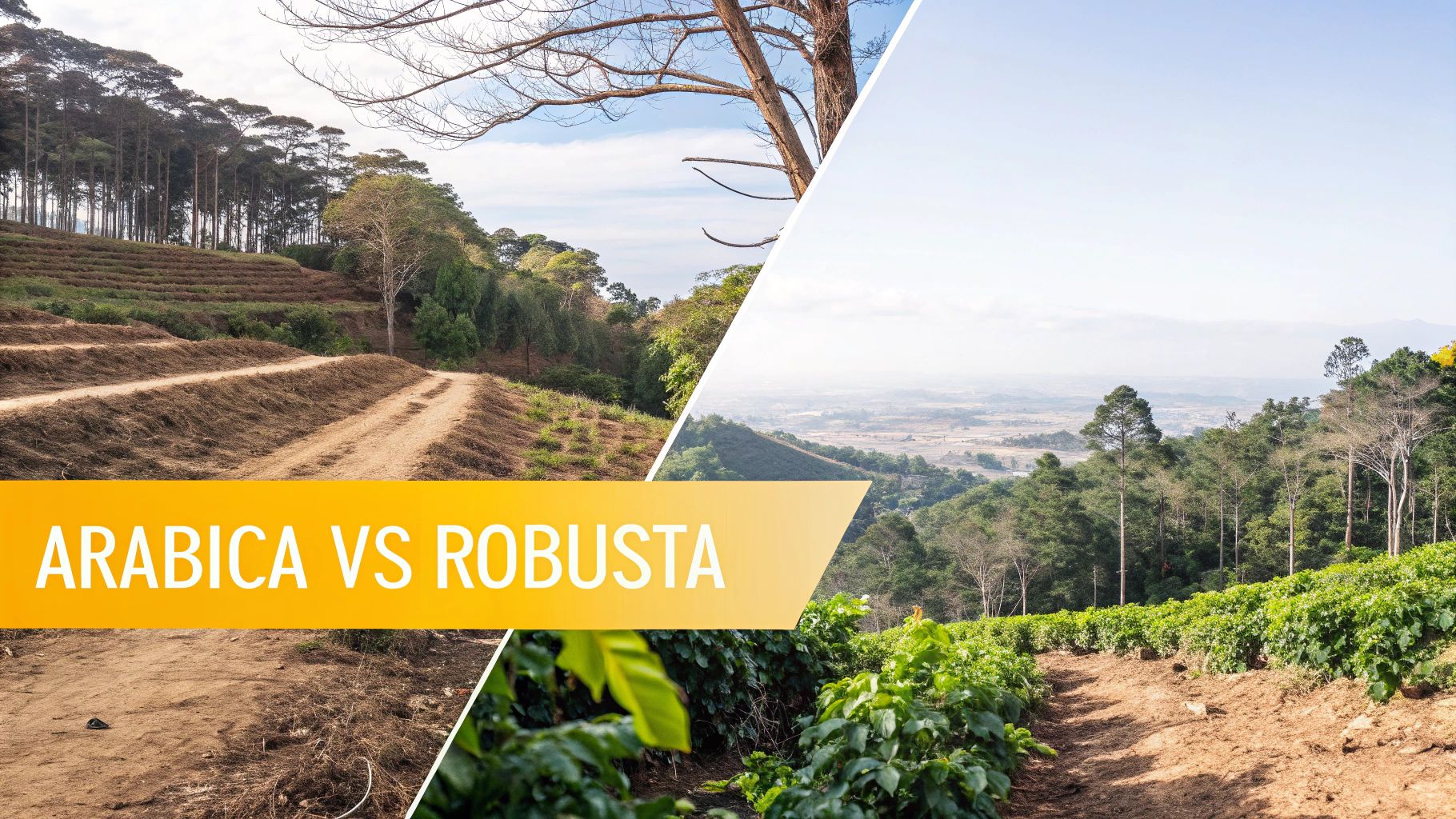
The distinct character in every cup of coffee begins long before it ever hits a roaster or a brewer—it all starts with the plant's journey from seed to cherry. The story of Arabica vs. Robusta is deeply rooted in their vastly different origins and the unique agricultural challenges each one presents. Their native environments didn't just determine where they first grew; they fundamentally shaped their taste, resilience, and even their chemical makeup.
This map gives you a great visual of the "Bean Belt," the equatorial band around the globe where specific climates allow coffee to thrive. You can see how the biggest producers are concentrated in these regions, each with its own distinct geography.
Arabica: The Highland Original
Arabica (Coffea arabica) traces its lineage back to the lush, high-altitude plateaus of Ethiopia. This is a plant that truly loves the mountains, thriving at elevations between 600 to 2,000 meters (that’s about 2,000 to 6,500 feet). To grow well, it demands a delicate balance of conditions: consistent rainfall, mild temperatures, and just the right amount of shade, making it a particularly sensitive and labor-intensive crop to cultivate.
This fragility is a huge reason why Arabica is so often linked with the specialty coffee scene. The immense care needed to grow these plants, combined with their lower yield per hectare, directly contributes to their higher price tag on the market. These finicky requirements are met in very specific parts of the world, like Colombia, Guatemala, and of course, its homeland of Ethiopia. This context helps you better understand what is single-origin coffee (https://cartographcoffee.com/blogs/news/what-is-single-origin-coffee) and why its flavor is so connected to its home.
Robusta: The Hardy Lowlander
In stark contrast, Robusta (Coffea canephora) comes from the hot, humid forests of sub-Saharan Africa. And as its name suggests, this plant is incredibly resilient. It flourishes in hotter climates and at lower altitudes—from sea level up to about 600 meters—and is far more resistant to the pests and diseases that can wipe out an entire Arabica crop.
This natural hardiness makes Robusta cultivation a much more straightforward and cost-effective endeavor for farmers. It produces a higher yield and can be grown in a much wider range of environments, making it a true cornerstone of the global coffee supply.
The core difference in cultivation is simple: Arabica is a temperamental artist that requires a perfect, climate-controlled studio. Robusta is a resilient workhorse that thrives almost anywhere. This agricultural reality dictates their price, availability, and their distinct roles in the coffee industry.
This geographical specialization is clearly reflected in global production statistics. In 2023, Brazil led the world with its massive Arabica crops, while second-place Vietnam focused its efforts almost entirely on Robusta—with over 95% of its output being this hardier bean. This division shapes international trade, with Arabica exports reaching 84.14 million bags in 2023/24 compared to Robusta's 54.52 million.
A Tale of Two Tastes: Flavor and Aroma
When you lift a cup of coffee to your nose, long before you even take a sip, you're experiencing the heart of the bean. It’s not the caffeine or the origin story that hits you first—it’s the scent and the flavor. This is where the real drama unfolds in the Arabica vs. Robusta debate. Their wildly different profiles are rooted in their chemical makeup, a direct result of their genetics and the environment they grew up in.
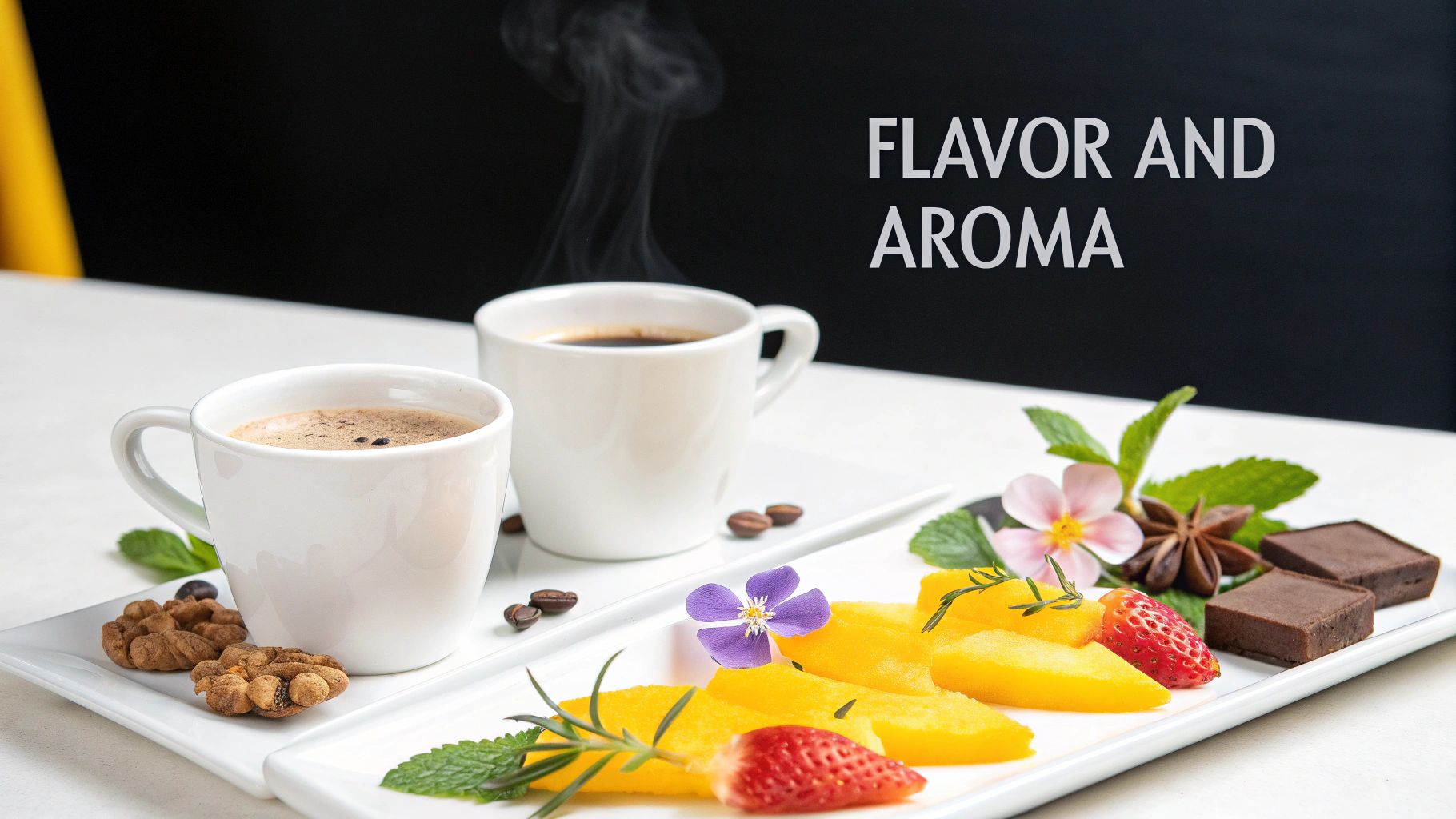
It helps to think of Arabica like a fine wine. It’s celebrated for its complexity, its elegance, and a whole spectrum of delicate, nuanced notes. The aroma alone can be incredibly fragrant, often smelling of flowers or sweet, fresh fruit.
The Nuanced World of Arabica
Arabica’s sophisticated flavor is what makes it famous. It has nearly 60% more lipids and almost double the sugar content of Robusta. When you roast these beans, all those sugars begin to caramelize, which is what creates that smooth, sweet taste with very little bitterness. This is the secret behind the diverse tasting notes that specialty coffee lovers chase after.
So, what should you expect from a great cup of Arabica?
- Aromatic Notes: Think floral, like jasmine, or fruity, like bright citrus and sweet berries.
- Flavor Complexity: You'll find layers of flavor, from caramel and nuts to rich chocolate.
- Bright Acidity: It has a pleasant, crisp tang that gives the coffee a really lively, clean finish.
This acidity is a defining characteristic of Arabica. While some people might prefer a less acidic coffee, that brightness is exactly what gives many single-origin beans their prized character. If you're curious about taming that tang, you can learn more about how to reduce the acidity of coffee without losing all the delicate flavors.
The Bold Character of Robusta
If Arabica is a wine, then Robusta is a dark, punchy stout. It’s powerful, straightforward, and intense. Forget subtlety. Robusta is all about a deep, potent coffee experience. Its aroma isn’t light and fragrant; it’s rich, dark, and earthy.
This bold personality comes from its lower sugar content and a higher concentration of pyrazines—organic compounds that give it those classic earthy, and sometimes bitter, notes.
Robusta's flavor isn't "bad," it's just different. Its signature bitterness and strong body are precisely what make it an excellent base for espresso blends, as it cuts through milk beautifully and creates a thick, stable crema.
Let’s break down Robusta’s sensory profile:
- Dominant Flavors: Often described as rubbery or earthy, with notes of dark, unsweetened chocolate.
- Low Acidity: This results in a smoother but much less vibrant mouthfeel than Arabica.
- Bitter Finish: It leaves a strong, lingering aftertaste that is a core part of its identity.
In the end, choosing between them based on flavor is a completely personal decision. Arabica takes you on a delicate, aromatic journey with bright, sweet notes. Robusta, on the other hand, delivers a powerful, bold, and earthy punch with that classic "coffee" bitterness. Knowing the difference is the first step to finding the perfect bean for your brew.
Analyzing The Caffeine And Chemical Makeup
When you get right down to it, the real differences between Arabica and Robusta are written in their chemical DNA. These scientific distinctions go way beyond just taste and smell—they explain why each bean delivers such a unique experience. The most famous of these components, caffeine, is the perfect place to start.
Robusta beans pack a serious punch, containing nearly double the caffeine of Arabica. A typical Robusta bean is about 2.5% caffeine by weight, whereas an Arabica bean hovers around 1.5%. This isn't just a coincidence; it's a brilliant evolutionary trick. Caffeine acts as a natural insecticide, so Robusta’s high dosage helps fend off pests and diseases, making the plant live up to its “robust” name.
Sugars and Lipids: The Building Blocks of Flavor
While caffeine gives Robusta its kick, it’s the sugars and lipids that give Arabica its famous nuance and complexity. Arabica beans boast nearly 60% more lipids—fats and oils—and almost twice the concentration of natural sugars as their counterpart.
This high sugar content is a game-changer during the roasting process. As the beans tumble in the heat, these sugars caramelize, creating the delicate, sweet, and often fruity notes that make a great cup of Arabica so special. The lipids contribute to a smoother, richer mouthfeel and are fantastic at locking in those volatile aromatic compounds that give the coffee its incredible scent.
Robusta's chemical profile is all about survival, with high caffeine and chlorogenic acids creating a bitter, protective shield. Arabica's makeup, rich in sugars and lipids, is built for sensory complexity, producing a smoother, sweeter, and more aromatic cup.
On the flip side, Robusta’s lower sugar levels mean less caramelization happens when it's roasted. That, combined with higher levels of pyrazine and chlorogenic acids, is what creates its bold, earthy, and sometimes rubbery or bitter notes. It’s a chemical reality that explains why we turn to Arabica for nuanced flavor and Robusta for raw power.
Here’s how they stack up chemically:
- Arabica: Higher in sugars and lipids, which translates to a sweeter, more aromatic profile with a smoother body.
- Robusta: Higher in caffeine and chlorogenic acids, creating a bolder, more bitter flavor with that signature powerful kick.
Ultimately, their chemical blueprint is what defines their distinct personalities in the cup.
Understanding the Price: Market Value and Economics
When you look at the price tag on a bag of coffee, you're seeing the end result of a complex agricultural and economic story. The market values for Arabica and Robusta beans couldn't be more different, and it all boils down to the classic principle of supply and demand.
Arabica is the high-maintenance star of the coffee world. It demands specific high-altitude growing conditions, just the right amount of rain, and a stable climate. It's also notoriously susceptible to diseases like coffee leaf rust. These factors mean it's a riskier, more labor-intensive crop for farmers, resulting in lower yields. That agricultural reality is why you pay a premium for a bag of specialty Arabica beans.
The Reliable Workhorse
Robusta, on the other hand, lives up to its name. It’s a tough, resilient plant that can grow in hotter climates and a wider range of altitudes. It’s far more resistant to pests and diseases, which translates to bigger, more reliable harvests for farmers.
This hardiness makes Robusta an economic powerhouse. It's the go-to bean for the instant coffee market and the bulk of pre-ground coffee you see in supermarkets. Many espresso blends also include a bit of Robusta to boost the caffeine kick and produce a thick, stable crema without breaking the bank. It's the bean that makes coffee an affordable daily ritual for millions.
The price gap isn't arbitrary—it’s a direct reflection of what it takes to grow each bean. Arabica is an artisanal crop with high risks and high rewards, while Robusta is a dependable commodity that keeps the global coffee engine running.
Of course, these market pressures have a real human impact. The push for lower costs can put a squeeze on farmers, which is why ethical sourcing is so important. To understand how we can support these producers, take a look at our guide explaining what Fair Trade coffee is and its role in building a more sustainable industry.
The global demand for both beans is only getting stronger. Market projections estimate the combined value will jump from USD 58.53 billion in 2025 to USD 90.03 billion by 2032, growing at a rate of 6.3% annually. This growth is fueled by two distinct trends: an increasing thirst for high-quality specialty Arabica in some parts of the world, and a rising demand for Robusta-based instant coffee and blends in emerging markets. Discover more insights about these coffee market trends.
Choosing The Right Bean For Your Brew
So, which bean is better? That’s the wrong question. It’s not about finding a single "best" bean, but about matching the right coffee to the right moment. The choice between Arabica and Robusta comes down to your brewing method, what flavors you enjoy, and how much of a caffeine kick you’re after. Get this right, and every cup will be a winner.
Think of your coffee maker as a tool built to bring out specific characteristics. Brewing methods that rely on a slow, gentle extraction—like a pour-over or a classic drip machine—are practically made for Arabica. They give its delicate floral and fruit notes time to open up, creating a complex, aromatic cup that a more aggressive brewing style would completely overwhelm.
This decision tree gives you a great visual for picking a bean based on what matters most to you, whether it's your budget or your taste.

As you can see, letting your priorities lead the way makes the choice a whole lot simpler.
Go for Arabica When You Want Nuance and Complexity
Arabica is your go-to when you're after a refined, flavorful cup where subtlety is the star of the show. It’s the perfect bean for those moments when you can actually sit down and savor the coffee itself.
- Perfect for Pour-Overs and Drips: These gentle methods are ideal for pulling out all the delicate, complex flavors locked inside high-quality, single-origin Arabica beans.
- Best for Drinking Black: When you’re not adding milk or sugar, you can truly appreciate Arabica’s bright acidity and sweet, fruity undertones.
- Lower Caffeine is Your Friend: If you’re sensitive to caffeine or just want an afternoon coffee that won’t keep you up all night, Arabica’s lower caffeine content is the smart move.
Robusta Is the Unbeatable Choice for Power and Punch
On the flip side, Robusta is the undisputed king when you need pure power and intensity. Its bold, punchy character is built to stand up to milk, sugar, and high-pressure brewing.
Robusta's real talent lies in creating that rich, stable crema on an espresso shot and delivering a caffeine kick that doesn't apologize. It’s the workhorse behind many of our favorite coffee-shop drinks.
Here’s where Robusta truly shines:
- The Backbone of Espresso Blends: Just a small amount of Robusta in an espresso blend gives you that beautiful, thick crema and a powerful caffeine jolt that many people expect from their shot.
- Stands Up to Milky Drinks: For a latte, flat white, or cappuccino, Robusta’s intense flavor punches right through the milk, so you never lose that core coffee taste.
- When You Need a Serious Jolt: Need to jump-start your morning or push through a deadline? Robusta delivers almost double the caffeine of Arabica. No contest.
In the end, the whole Arabica beans vs Robusta debate is about purpose. Are you in the mood for a delicate, aromatic journey, or do you need a bold, powerful brew to get you going? Match the bean to your method and your mood, and you’ll nail the perfect cup every single time.
Got More Questions? We've Got Answers
Still have a few things you're wondering about when it comes to Arabica and Robusta? Let's clear up some of the most common questions people have.
Can You Actually Mix Arabica and Robusta?
You bet. In fact, it's one of the coffee world's oldest tricks, especially for pulling a killer shot of espresso. Most espresso blends you'll find in classic Italian cafes do exactly this.
A common recipe is adding 10-15% Robusta to an Arabica base. Why? The Robusta gives you that thick, stable, and beautiful crema on top and an extra jolt of caffeine. Meanwhile, the Arabica keeps the flavor profile interesting with its complexity and aroma. The final ratio really just comes down to the taste the roaster is shooting for.
Is Robusta Just a Cheaper, Worse Version of Arabica?
That’s a common misconception, but the answer is no, not always. It's true that the cheap, bitter Robusta you find in most instant coffee has given it a bad rap. But there's a growing movement for "fine Robusta," where the beans are grown and processed with the same care as high-end Arabica.
When handled properly, a good Robusta can be incredibly smooth and full of rich, chocolatey notes—not harsh at all.
Here's the bottom line: The quality of your coffee has more to do with how it's farmed and processed than the specific species. A carefully cultivated Robusta can easily taste better than a mass-produced, poorly handled Arabica.
Which One Should I Use for Cold Brew?
This depends entirely on what you want from your cold brew. There's no single right answer, just different outcomes.
- Go with Arabica if you're after a super smooth, sweet brew with delicate fruity or floral hints. It’s more subtle and nuanced.
- Choose Robusta when you want a bold, powerful, and intensely chocolatey drink that packs a serious caffeine punch.
Can't decide? Try a blend. An Arabica-Robusta mix can give you the best of both worlds—a balanced flavor with a satisfying kick.
At Cartograph Coffee, our mission is simple: make great coffee accessible, wherever your journey takes you. See what a difference quality makes by trying our premium organic instant coffee. Find your next adventure in a cup at the official Cartograph Coffee website.